This post contains affiliate links. We may earn a small commission when you buy through our links — at no extra cost to you.
Climbing shoes carry their tradeoff right in the rubber: the tighter and more downturned the shoe, the more precisely you can stand on an edge the size of a dime — and the sooner you want to peel it off. Beginners get steered into aggressive shoes they can’t wear for a full session; veterans buy something roomy and then wonder why their feet skate off small footholds. What matters is a shoe that matches the climbing you do most weeks, not the climbing in the photos.
I’ve spent years in half-resoled shoes, and I’ve watched friends limp out of the gym with blisters after sizing down on forum advice. Over eight months, my team and I climbed in 12 pairs and the pattern held: a snug-but-flat toe beats a curved one for most people, half sizes are the whole game, and price says less about quality than you’d think. Get fit and toe shape right and edging, smearing, and simply trusting your feet all get easier — the picks below are grouped by the kind of climbing each one does best.



Best for All-Day Routes
La Sportiva Finale
Key Features
- Upper: Leather
- Toe box: Wide
- Break-in: Molds to foot
- Price: Premium
The Finale’s wide toe box is why it tops this list, and it’s the first thing you notice pulling the shoe on: your toes reach the front and stop, instead of curling sideways into each other. The leather upper gives rather than clamping, and the throat opens far enough to get a high-volume foot in without a fight. We kept coming back to this pair for long sessions because nothing about it demands attention — no hot spot at the toe knuckle, no reason to kick it off between burns.
It climbs better than a comfort shoe has any right to. The shape is comfortable rather than aggressive, which is what vertical and gently overhanging sport routes ask for: it edges on small footholds, smears predictably, and doesn’t fight you when you stand up on your feet instead of pulling with your arms. In our sessions it was the pair we trusted on unfamiliar gym routes, because a shoe that fits is a shoe you can press into a hold with confidence. The leather also molds to the shape of your foot rather than bagging out at the heel, and durability is the one category where we found nothing to complain about.
Sizing takes a little judgment. The fit splits between climbers who found their usual size roomy and climbers who found it tight, and that split usually follows foot volume rather than a badly built shoe. Start with the size you wear in a running shoe, check that your toes touch the front without curling, and only go down if the heel lifts when you stand on a small edge. Leather gives a little over the first month; it won’t give you a size.
As a neutral, comfort-first shoe it gives away power on steep ground, which is a real boundary rather than a flaw — the Instinct VS exists for that terrain. For everyone else, paying once for a pair that fits and lasts is the cheaper decision, and that is the argument for the Finale in one line.
Pros
- Wide toe box fits a broad range of feet
- Leather molds to the foot instead of bagging
- Comfortable through long sessions and belays
- Holds up through a season of regular climbing
Cons
- Comfort-first shape gives up power on steep routes
The Finale is the shoe we recommend to nearly every sport climber: roomiest in the group, forgiving, and still a genuine edging shoe on vertical routes.
Best for Gym Sessions
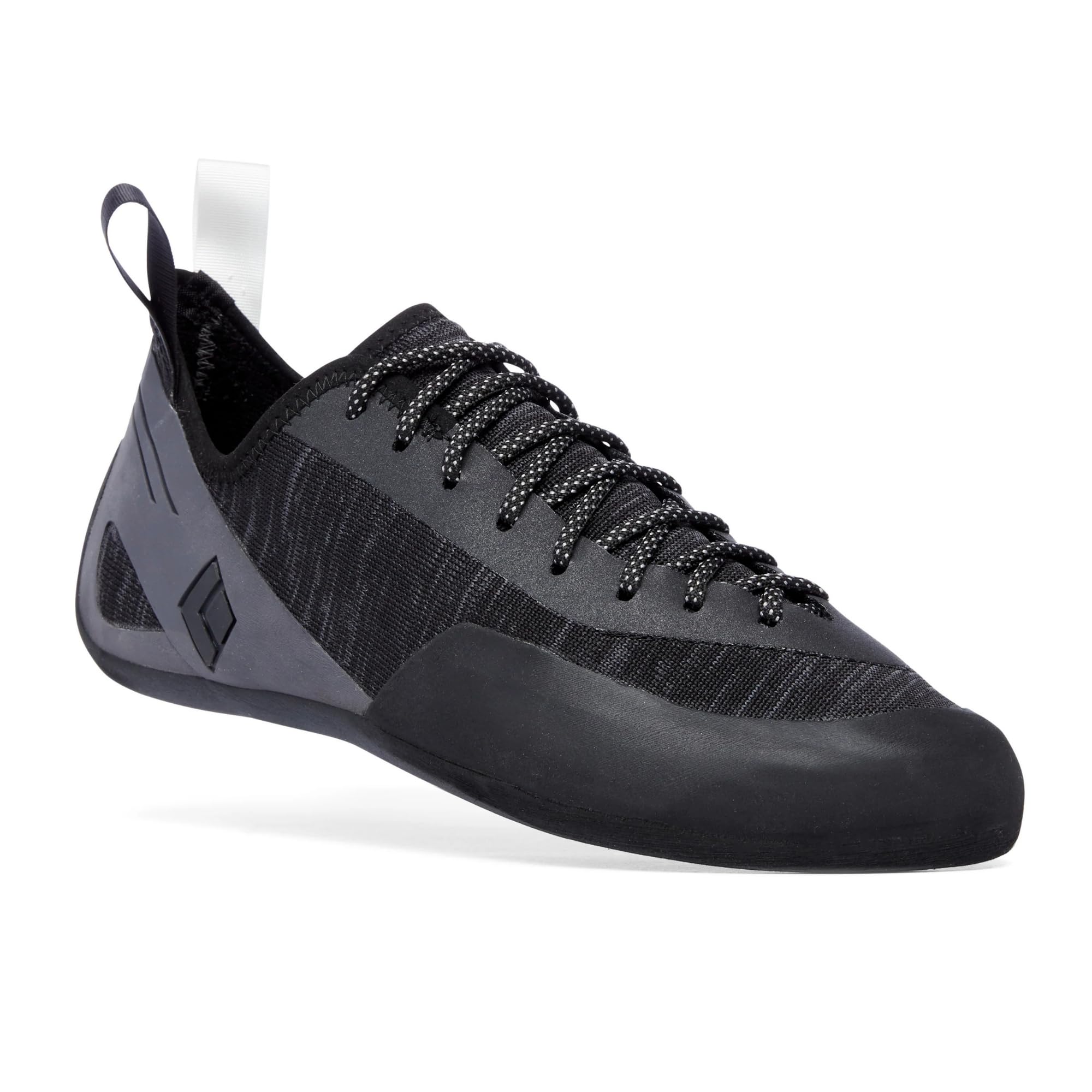
Black Diamond Momentum Lace
Key Features
- Upper: Engineered knit
- Closure: Lace-up
- Midsole: Soft flex
- Outsole: 4.3 mm rubber
- Price: Budget
The Momentum Lace is the pair we point new climbers toward, and price is only part of the reason. It’s the least expensive shoe we recommend here, but it’s also the easiest one to live with while your footwork catches up with your ambition: the knit upper breathes, the padded tongue keeps the laces off the top of your foot, and nothing about the shape punishes you for standing on a hold badly.
The knit is what we ended up valuing most. Climbing shoes run hot, and a synthetic shell that doesn’t breathe turns a two-hour session into a bag you don’t want to open; the Momentum dries between visits and stays comfortable with the laces cinched. The 4.3 mm rubber is on the thick side for this group, which is the right call for a shoe that will spend its first year dragging across plastic rather than edging on rock, and the soft midsole still lets you feel what you’re standing on. It’s the pair we suggest for someone who climbs indoors through the winter and outdoors in summer, because a thicker sole takes more abuse before it needs replacing.
Fit is the catch, and it’s worth being honest about. The Momentum is built on a narrow last: a wide forefoot feels the sides pressing before the toes reach the front, and no amount of lace adjustment adds width. If that’s your foot, the Finale is the answer. The lace version also runs small against street-shoe sizes, so start above your sneaker size rather than below it, then use the laces to hold the heel down.
Pros
- Knit upper breathes and dries between sessions
- Thick 4.3 mm rubber takes gym abuse
- Laces dial in fit around a narrow foot
Cons
- Grip is inconsistent on polished holds
Our value pick: a breathable knit shoe that gets a new climber onto the wall for less than any other pair we recommend here.
Best for Steep Routes
SCARPA Instinct VS
Key Features
- Last: Moderately aggressive
- Rubber: Sticky
- Toe box: Roomy
- Price: Premium
Set the Instinct VS next to the Finale and the difference in intent is obvious: a more aggressive shape, more rubber where the toe meets the rock, a shoe built to keep you attached to steep ground rather than to keep you comfortable at a belay. On vertical routes both work. Tilt the wall past vertical and the SCARPA is the one still doing its job, particularly on heel hooks where a flatter shoe slides out.
What we appreciated is how much performance arrives without the usual punishment. The rubber is properly sticky and the toe is sensitive enough to feel a small edge through it, so the shoe rewards precise footwork instead of asking you to rely on strength. For an aggressive shoe it also tolerates a long session — we weren’t racing to pull them off between goes, which is not something we can say about every downturned pair.
It is a specialist, and it’s priced like one. If your season is mostly vertical mileage, long days at the crag and easy multi-pitch, the Finale does that work with less shoe underneath you. Buy the Instinct VS when the routes you care about are steep, the footholds are small, and you’re happy for the shoe to be a tool rather than a slipper. Sizing is the other thing to sort early: they run snug, and a pair that’s too small turns every session into a countdown.
Pros
- Sticky rubber bites on small footholds
- Supportive heel for overhangs and hooks
- More comfortable than its aggressive shape suggests
Cons
- Stiff through the first several sessions
- Roomy toe box leaves narrow feet swimming
Buy the Instinct VS when your projects are steep and powerful; its sticky rubber and supportive heel are the strongest performance package in this group.
Best for New Climbers
SCARPA Helix
Key Features
- Sole: Solid rubber
- Upper: Soft leather
- Toe profile: Slightly curled
- Price: Midrange
The Helix is the shoe we hand to someone who has been told that climbing shoes are supposed to hurt. The soft leather and the shape of the last spread pressure across all the toes rather than concentrating it on the big one, and the fit is comfortable enough to put on once at the start of a session and leave on. That isn’t a small thing while you’re learning: a foot that isn’t complaining is a foot that will try one more move.
There’s real function under the comfort. The sole is solid rubber rather than a soft slipper compound, which gives a new climber something to push against when edging on small footholds, and the traction on gym walls and rough rock is dependable. It’s a forgiving, comfort-first shoe that suits moderate sport routes and long days on easier ground — which is the climbing most people do in their first two years, before they know what kind of climber they are.
At its price the Helix is the most comfortable entry point in this group, and comfort is what keeps beginners coming back for a second season. It won’t flatter a strong climber on a steep route the way the Instinct VS does, and it doesn’t pretend to. What it does is get a new pair of feet up a lot of moderate ground without a single wince.
Pros
- Even pressure across all the toes
- Solid rubber sole supports early edging
- Comfortable from the first session
Cons
- Leather stretches out with use
- Rubber wears quickly under heavy gym use
For a first pair that won’t punish you, we point new climbers to the Helix: soft leather, even pressure, and enough support to trust small holds.
Best for Moderate Ground
La Sportiva Tarantulace

Key Features
- Upper: Leather
- Sizing: Runs large
- Outsole: Rubber
- Price: Midrange
The Tarantulace has been a default first shoe for years, and its shape explains the persistence: a roomy leather upper, a throat that opens wide enough for a high-volume foot to get in without a shoehorn, and nothing specialised anywhere on it. That last part is the point. A new sport climber needs a shoe that tolerates bad footwork and long belays, not one that asks for precision they haven’t built yet.
We found it comfortable in the way an all-day shoe is comfortable: put it on at the car, keep it on through the walk-in and the easy pitches, take it off when the day ends. The leather softens quickly and the toe is stiff enough to stand on moderate edges, which is more than the price suggests, and the rubber grips well enough on gym walls and rough rock that you won’t blame your feet for a slip.
Where it sits in this group is as the sensible floor. It isn’t the most comfortable shoe here, and it isn’t the one we reach for once a route gets steep or polished. What it is: a leather lace-up that handles moderate sport routes and gym sessions without drama, and a reasonable place to start before you know what you want from a shoe. If you already know you’ll climb for years, the Finale is the one to stretch for.
Pros
- Leather and rubber feel sturdy for the money
- Comfortable across long moderate days
- Roomy shape suits high-volume feet
Cons
- Sizing varies between pairs
- Wears through faster than the pricier picks
A roomy leather lace-up for moderate routes, the Tarantulace is the shoe we suggest when you want a first pair and a low ceiling on cost.
How We Tested Sport Climbing Shoes
We started with the models that keep turning up in gym rental fleets, gear shop recommendations, and climber forums, then filtered that list by closure type, rubber stiffness, toe shape, size range, and whether the maker actually offers a full half-size run. Price mattered, but not as much as whether a shoe could be resoled and worn for more than one season.
Twelve pairs stayed in rotation for eight months. They went to Tuesday-night bouldering, weekend sport crag days, a few long slab routes where smearing matters more than edging, and one overhung cave where your heel does most of the work. We sized down half to a full size from street shoe the way each maker recommends and wrote down exactly where the pressure landed — big toe, little toe, or arch — and how long a pair took to get on and off between burns.
Every shoe got worn for a full two-hour session without coming off, and we noted which ones we wanted off first. We judged traction on polished gym volumes and on damp rock, edging on footholds narrow enough that placement had to be exact, and durability by how many sessions passed before the toe rand went smooth or stitching and rand glue started to lift. Three people in their first year of climbing wore a couple of pairs for a month to see whether the fit punished them, and we tracked how each shoe held its shape and color after months of chalk and scuffing to judge whether the price per month of use stacked up.
How to Choose Sport Climbing Shoes
The right sport climbing shoe matches your foot and the rock you actually climb, in that order — everything else is a detail.
Fit before anything else
A climbing shoe should be snug enough that your toes touch the front, and long enough that they don’t curl under each other. The old advice to downsize until it hurts is wrong for sport climbing, where you wear the shoes for an hour at a stretch and stand on your feet between bolts. Leather uppers give a little; knit and synthetic uppers barely move. If you can’t try a pair on, order from the brand’s own size chart and choose a retailer with easy exchanges, because you will probably use that option once.
Match the shape to the routes you climb
Shoes split into comfort-first shapes and downturned, aggressive ones. The flat, forgiving end of the range — the Finale and the Helix here — puts your foot in a natural position and works well on vertical and slabby ground, where you stand on small edges for minutes at a time. A moderately downturned shoe like the Instinct VS curls the toes and concentrates power at the tip for steep routes, overhangs and heel hooks.
Most sport climbers are better served by comfort first and aggression later. A performance shoe bought before your footwork is ready mostly makes every session hurt.
Upper material decides how the shoe ages
Leather molds to your foot and shrugs off abrasion, at the cost of a few stiff sessions and a little stretch — which is why a leather shoe tends to feel better in month three than in week one. A knit upper like the one on the Momentum Lace breathes and dries fast, a real advantage if you climb indoors several times a week. Knit doesn’t take a mold the way leather does, so the fit you get out of the box is roughly the fit you keep.
Rubber: grip versus mileage
Soft, sticky rubber grips best and wears fastest; thicker, firmer rubber lasts longer and gives up a little feel for the rock. If most of your climbing is indoors on plastic, or you’re still learning to place your feet without dragging them, the thicker sole on the Momentum Lace is the more economical choice. If you’re projecting steep routes and you accept replacing shoes as part of the cost of climbing, softer rubber does more of the work for you.
Frequently Asked Questions
Should I wear socks with climbing shoes?
Almost nobody does, and for good reason: a sock takes up volume inside a shoe that is already snug and shifts where your toes sit. If you blister easily, climb in cold weather, or share shoes, a thin liner sock is a reasonable compromise — just try the shoe on with that sock. Whichever you choose, keep it consistent so the fit you dial in stays the fit you climb in.
How long do climbing shoes last, and can they be resoled?
The toe goes first, usually long before the upper shows wear. Run a thumb over the tip: while rubber still covers the rand underneath, a resole costs less than a new pair and keeps a shoe you’ve already broken in. Once the rand is worn through or the sole is separating from the upper, replace them. Heavy gym mileage shortens the interval, so check the toe every few sessions rather than once a season.
Is it worth buying shoes as a beginner, or should I keep renting?
Rentals are fine for your first session or two while you find out whether you like climbing. Once you’re going regularly, your own pair pays for itself in rental fees and fits better than a shared shoe broken in by someone else’s foot. Buy a forgiving, comfortable lace-up — the Helix or the Tarantulace — rather than a performance shoe, and upgrade when your footwork gives you a reason to.
Final Verdict
The La Sportiva Finale is the pair we tell most sport climbers to buy. It fits more foot shapes than anything else in this group, it stays comfortable through a full day at the crag, and it holds up.
Buy the SCARPA Instinct VS instead if your projects are steep and you want a shoe that works as hard as you do. Buy the Black Diamond Momentum Lace if you’re new and the budget decides. Everyone else: start with the Finale.