This post contains affiliate links. We may earn a small commission when you buy through our links — at no extra cost to you.
Many ski touring backpacks are designed with resort use in mind, leaving backcountry skiers short on dedicated avalanche tool storage. The right pack balances ski carry, organization, and capacity for a full day off-piste.
The real choice often comes down to prioritizing specialized backcountry features like an ice tool loop and helmet stow versus a versatile pack that transitions seamlessly from lifts to short tours. Avoiding the wrong fit saves weight and frustration.
This guide focuses on packs that deliver on the specific needs of ski touring—whether you’re doing a quick sidecountry lap or a full day in the backcountry.


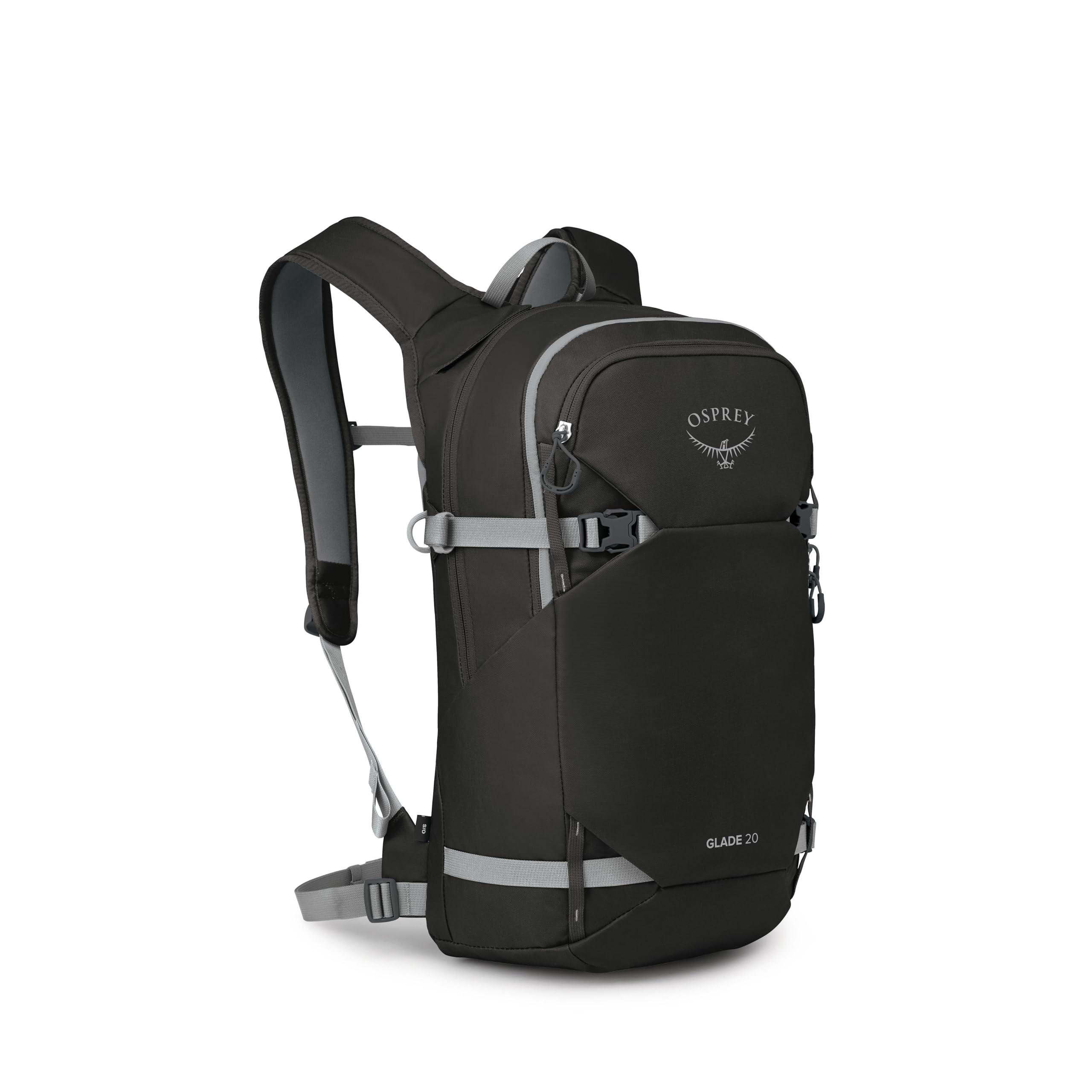

Best for Backcountry Touring
Osprey Kamber 20L
Key Features
- Capacity: 20L
- Ski Carry System: A-frame, diagonal
- Avalanche Gear Org: Dedicated compartment
- Hydration Compatibility: Insulated sleeve
- Price: $$
The Osprey Kamber 20L’s dedicated avalanche compartment with internal shovel and probe sleeves keeps safety gear organized and accessible without rummaging. An ice tool loop, helmet stow, and multiple ski carry options (vertical, horizontal, diagonal) mean you can switch between approaches without changing packs.
Best for backcountry skiers who day-tour in known terrain and want a pack that handles avy gear, hydration, and layers without bulk. At 2.6 lb it’s heavier than ultralight alternatives, but the added features — like the internal reservoir sleeve with insulated hose route and hipbelt pockets — offset that weight for most riders who prioritize organization over grams.
Pros
- Dedicated avalanche compartment keeps shovel and probe in their own sleeves for quick access.
- Ice tool loop, helmet stow, and three ski carry methods handle varied backcountry needs.
- Osprey’s All Mighty Guarantee covers the pack for any reason, adding long-term value.
Cons
- At 2.6 lb, heavier than sub-2lb packs — choose this for features, not minimum weight.
- 20L capacity limits multi-day tours; better suited for day trips with room for layers and lunch.
For day-long backcountry tours where avalanche safety and tool carry are non-negotiable, the Kamber 20L delivers a well-organized, durable package that justifies its weight.
Best for Resort & Sidecountry
Dakine Heli Pro 20L
Key Features
- Capacity: 20L
- Ski Carry System: Diagonal ski, vertical snowboard
- Avalanche Gear Org: Snow tool sleeves
- Weight: 1.8 lb
- Price: $$
The Heli Pro 20L undercuts the top pick by nearly a full pound while offering a thoughtful pocket layout and comfortable mesh back. What it gives up is dedicated backcountry hardware: no ice tool loop, no helmet stow, and fewer avalanche-specific organization features. That tradeoff makes sense for skiers and snowboarders who want one pack that handles resort laps and quick sidecountry hikes, not full-day tours where 20L capacity or specialized tool carry becomes essential.
Pros
- Well-organized storage with fleece-lined goggle pocket
- Lightweight at 1.8 lb with comfortable quick-dry mesh back
- Diagonal ski carry and vertical snowboard carry included
Cons
- Strap adjusters can feel less sturdy than the rest of the pack
- No ice tool loop or helmet stow — better suited for resort than serious touring
A well-loved pack for resort and short sidecountry — choose it for its light weight and smart organization, not for dedicated backcountry features.
Best for Cold-Weather Hydration
Osprey Glade 20L
Key Features
- Capacity: 20L
- Ski Carry System: A-frame, diagonal, vertical snowboard
- Avalanche Gear Org: Dedicated compartment
- Hydration Compatibility: Includes 2.5L reservoir
- Weight: 2.31 lb
- Price: $$
The Glade’s key difference is its integrated 2.5-liter reservoir and insulated hose routing — this setup keeps water flowing when temperatures drop, a genuine advantage over the Kamber’s standard hydration sleeve. The reservoir’s insulated tube runs through the shoulder strap, minimizing freeze risk during active use. For resort skiers and short backcountry tours where quick hydration matters more than avalanche tool organization, this pack delivers cold-weather performance without extra gear. The dedicated avalanche compartment is present but the pack omits the Kamber’s ice tool loop and helmet stow — tradeoffs that keep weight at a reasonable 2.31 lb. The hydration system eliminates the need for a separate bladder purchase, simplifying prep for day trips. Best for skiers who want an all-in-one hydration solution at a competitive price with Osprey’s warranty.
Pros
- Insulated hose prevents freezing in sub-zero temperatures
- Includes 2.5L reservoir and harness, ready out of the box
- Versatile ski carry: A-frame, diagonal ski and vertical snowboard options
Cons
- 20L capacity suits day trips only — not enough for extended tours or overnight gear
- Fixed 2.5L bladder may not suit users who prefer to use their own hydration system or go ultralight
For skiers who prioritize hydration reliability in cold conditions over dedicated backcountry tool storage, the Glade 20L delivers focused performance at a competitive price.
Best for Extended Mountaineering
Thule Upslope 35L
Key Features
- Capacity: 35L
- Ski Carry System: Adjustable loop
- Hydration Compatibility: Insulated sleeve
- Weight: 3.52 lb
- Price: $$$
The Thule Upslope is the only 35L ski touring pack in this set with Mammut airbag compatibility, making it the clear choice for mountaineers planning multi-day objectives with avalanche safety gear. At 3.5 lb it’s heavier than the top pick, and its smaller ownership base means long-term field performance is less documented — a reasonable tradeoff for those who need the extra capacity and airbag readiness. This pack suits skiers who prioritize storage for extended tours and safety layers over chasing the lightest setup.
Pros
- 35L capacity handles multi-day gear, layers, and safety equipment
- Compatible with Mammut Removable Airbag 3.0 for serious mountaineering
- Insulated hydration sleeve helps prevent water from freezing on cold tours
Cons
- Heavier build (3.5 lb) compared to more touring-focused packs — a real consideration for weight-conscious skiers
- Long-term durability under hard use is less documented than with more established packs
The right pack for ski mountaineers who need airbag readiness and maximum storage for multi-day objectives.
Best for Compact Resort
Dakine HELI 12L
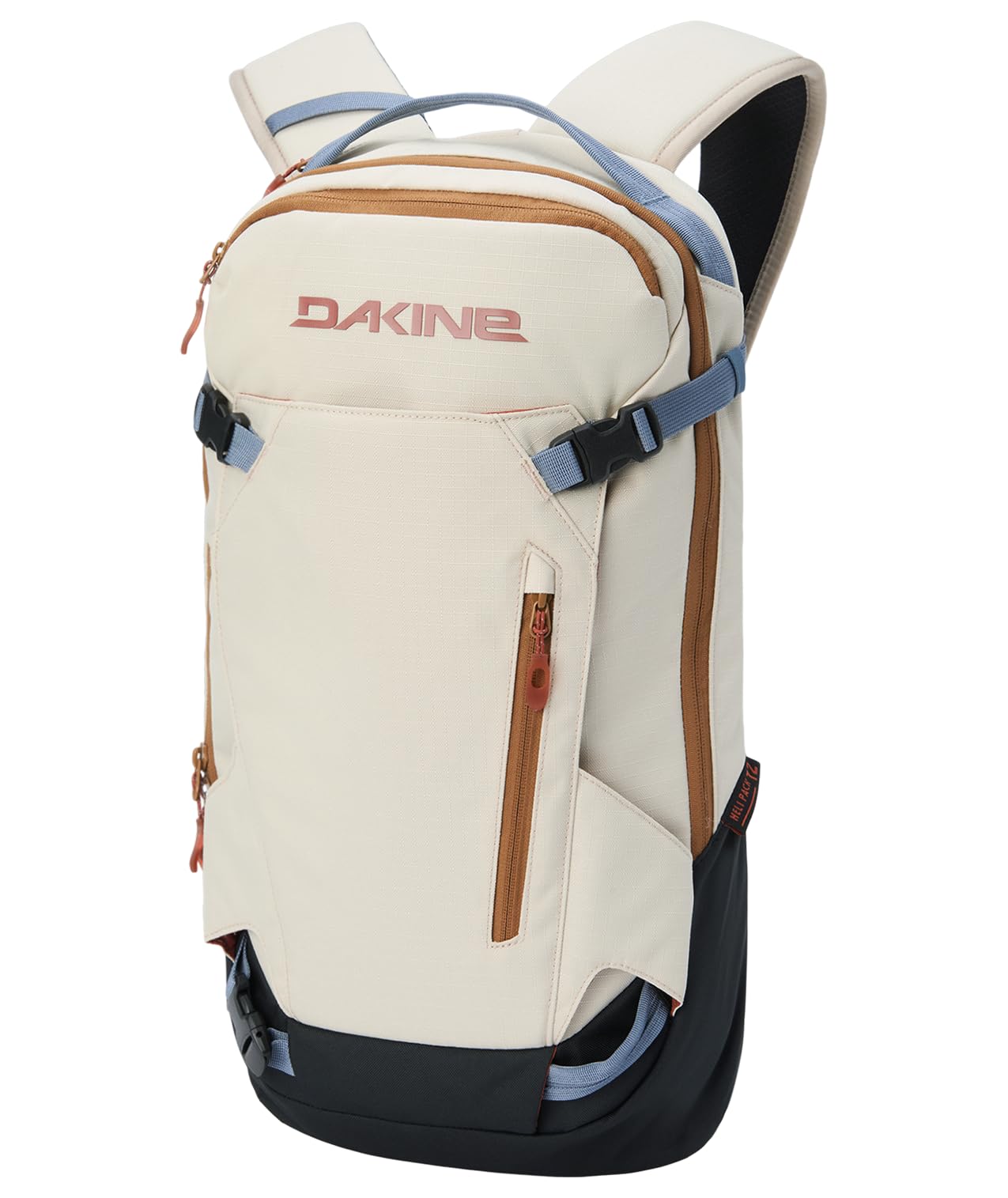
Key Features
- Capacity: 12L
- Ski Carry System: Diagonal ski, vertical/horizontal snowboard
- Avalanche Gear Org: Snow tool sleeves
- Weight: 1.9 lb
- Price: $
This 12L pack is ideal for resort skiers who want a light carry for snacks and goggles, and handles sidecountry hikes with minimal gear. However, its capacity prevents carrying avalanche safety tools and extra layers needed for true backcountry touring, making it a resort-only tool.
Pros
- Compact and lightweight for quick resort trips.
Cons
- At 12L, the pack cannot accommodate avalanche gear and extra layers for backcountry touring.
Best for resort skiers who want a minimalist pack for in-bounds days and short sidecountry hikes where gear is minimal.
Dakine Women’s Heli Pack Backpack
Dakine Women’s Heli Pack Backpack

This pack delivers a women-specific fit and sturdy construction for resort skiing at a budget price. Its ~12L capacity and minimal pocket layout, however, make it impractical for carrying avalanche gear and layers required for backcountry touring.
Pros
- Women-specific fit designed for comfortable all-day wear.
- Solid build quality at an entry-level price.
Cons
- Capacity and pocket layout may be insufficient for carrying avalanche gear and layers.
Best suited for resort day trips where a compact, affordable women-specific pack is the priority.
How to Choose
The single most important factor in a ski touring backpack is matching its capacity and carry system to the length and intensity of your tours.
Capacity
Capacity determines whether you can carry avalanche gear, extra layers, food, and water for a full day. A 20L pack is the minimum for day tours—enough for a shovel, probe, shell, snacks, and a 2L bladder.
Dropping to 12L forces you to leave behind either avalanche safety equipment or critical layers, making it unsuitable for backcountry use. For multi-day objectives, 35L+ packs like the Thule Upslope add room for an airbag and camping gear.
Ski Carry System
Most packs offer either an A-frame or diagonal ski carry. A-frame holds skis vertically on the pack’s back, distributing weight evenly but limiting side-to-side clearance. Diagonal carry straps one ski across the pack—more compact but can shift during sidehilling.
Check that the straps accommodate your ski width. Some adjustable loops work better than others; a loose fit leads to floppy carry on steep terrain.
Avalanche Gear Organization
Dedicated avalanche compartments with shovel and probe sleeves save seconds when seconds matter. A J-zip or clamshell opening gives quick access without unloading the whole pack.
Entry-level packs often use external snow tool sleeves or a simple shovel blade pocket—fine for sidecountry but slower in a rescue scenario. For true backcountry, a dedicated compartment is the safer choice.
Hydration Compatibility
Insulated hose sleeves and designated reservoir pockets prevent freezing in sub-freezing conditions. Packs without insulation force you to blow water back after each sip or risk ice blockages.
An included reservoir (like the Osprey Glade’s 2.5L system) eliminates compatibility guesswork but adds weight and a specific shape to the pack’s internal layout.
Weight
Lighter packs (under 2 lb) reduce fatigue on long ascents but often strip out backcountry-specific features like ice tool loops, helmet stow, or padded hipbelts. Heavier packs (2.5–3.5 lb) add durability and organization at the cost of climbing efficiency.
The trade-off is practical: a 1.8 lb pack like the Dakine Heli Pro saves ounces for resort laps, while a 2.6 lb Kamber adds structure for carrying heavier loads on full backcountry days.
FAQ
Can a 12L ski backpack hold avalanche safety gear like a shovel and probe?
Barely. A 12L pack can fit an ultralight shovel and probe, but leaves no room for a shell, extra layers, snacks, or hydration. For any backcountry tour beyond a short sidecountry lap, 20L is the realistic minimum.
What is the difference between Osprey Kamber and Osprey Glade ski backpacks?
The Kamber is a backcountry-focused pack with a dedicated avalanche compartment, ice tool loop, and helmet stow. The Glade prioritizes hydration with an integrated 2.5L reservoir and insulated hose. Choose the Kamber for touring; choose the Glade if cold-weather hydration is your main concern.
Is the Dakine Heli Pro 20L good for backcountry ski touring?
It works for short tours and sidecountry because of its tool sleeves and ski carry, but it lacks dedicated avalanche gear organization (just sleeves) and an ice tool loop. For full-day backcountry, the Osprey Kamber offers better organization and faster access.
How do I carry a helmet on a ski touring backpack?
Look for a dedicated helmet stow system—usually a mesh pocket or clip system on the front panel. Packs like the Osprey Kamber include one. Without it, you’ll need to clip the helmet to the outside with carabiners, which can swing during climbs.