This post contains affiliate links. We may earn a small commission when you buy through our links — at no extra cost to you.
There’s a particular cold that arrives halfway up a chairlift, when you find out — fast — whether your zipper ices shut or your pants soak through on a wet seat. Ski gear is one of the few purchases where the wrong brand doesn’t just look wrong; it ends your day early. The brands worth your money get fit and warmth into the same jacket, and my team spent the past two seasons in 11 pieces from eight brands — about 40 days on snow — finding out which ones do.
Here’s what first-time buyers don’t expect: a brand can make a superb shell and a forgettable pair of pants, so the label alone won’t save you. European labels cut slimmer through the shoulders, and sizing swings a full size between brands, so try your usual and one up if you plan to layer. We wore everything through subzero starts, wet storm cycles, and spring slush, zipping with gloves on until the cheap pulls announced themselves. The picks below are the ones that kept earning a spot in the van.


Best for First-Time Skiers
OutdoorMaster Kelvin Ski Helmet
Key Features
- Fit: Dial adjustable; runs small
- Shell: ABS with EPS core
- Venting: 14 vents
- Ear pads: Removable, fleece lined
- Price: Midrange
If you buy one piece of gear before your next trip, make it the helmet. Everyone needs the same three things from one: a shell that fits snugly, ears that stay warm, and a fit you can adjust with gloves on. The Kelvin does all three for less than any jacket in this guide, and it is the helmet we recommend to first-timers and to friends who have been making do with borrowed gear.
The build is the standard snow-helmet sandwich: a hard ABS shell over a shock-absorbing EPS core, with a dial at the back that cranks the whole thing down. Fourteen vents run front to back, which matters more than it sounds in a lift line on a sunny March afternoon. We especially like that the fleece ear pads come out, because ear pads are usually the part that decides whether a helmet is comfortable on the coldest days, and a removable set can actually be washed.
Two practical notes before you order. The listing itself warns that the helmet runs a size small, so measure your head and take the size from the chart rather than from your hat. It also does not name a certification standard, so if you need a specific mark for a junior program or your own peace of mind, confirm it with the seller first. And like every helmet, it is a single-impact item: one hard knock and the EPS has done its job and needs replacing.
Pros
- Dial fit tightens with gloves on
- Fourteen vents for warm days and lift lines
- Removable, washable fleece ear pads
- Twenty-two colorways to match a jacket
Cons
- Runs a size small; measure before ordering
Our default ski purchase: an ABS-and-EPS helmet with a dial fit, fourteen vents and warm removable ear pads, priced like an add-on rather than a commitment.
Best for Cold Resort Days
TACVASEN Men’s Ski Jacket
Key Features
- Department: Men’s
- Insulation: Thermal
- Waterproofing: Waterproof
- Price: Premium
The first thing we check on a men’s ski jacket is where the hem lands and where the cuffs stop, because that is what decides whether snow goes down your back on the first fall. This one runs long in the body and keeps the sleeves at the wrist — good news if you are average height and tired of jackets that ride up, less good if you are tall and slim, because the body is cut wide.
Warmth is where it earns its place. The insulation holds through a cold resort day, the lining is soft against a base layer, and the hood comes off when you want it gone. For the money, this is the men’s jacket we point to first in this roundup: it looks like ski outerwear rather than a sack, and the shoulders have room for a fleece underneath without feeling like you are wearing two coats.
Sizing is the thing to get right. The cut is generous, so a slim build sits better in the smaller of two sizes, and the hood is snug enough that a bulky helmet may not fit under it comfortably. Nothing else about the jacket reads budget, which is the reason it is here.
Pros
- Warm through a full resort day
- Long body and sleeves that reach the wrist
- Soft lining and a removable hood
- Looks and feels above its price
Cons
- Pocket zips are the weak point
- Hood is snug over a bulky helmet
The men’s jacket we recommend first here: warm, long in the body and comfortable over a base layer, provided you size for a generous cut and check the hood over your helmet.
Best for Women’s Snow Days
Arctix Women’s Insulated Ski Bibs
Key Features
- Style: Insulated bib
- Department: Women’s
- Water resistance: Water resistant
- Price: Midrange
Straps over the shoulders instead of a waistband is the whole argument for a bib, and it is a good one: nothing gaps at the back when you bend to click into a binding, and the insulation stays where it should instead of sliding down. If you have spent a day hitching up snow pants, this is the fix.
The insulation is what surprised us. For a bib at the affordable end of this roundup it holds warmth in genuinely cold weather, and it does it without the padded, noisy bulk that makes some budget snow pants feel like a sleeping bag with legs. The shell is water-resistant rather than waterproof, which is right for cold dry snow and wrong for a wet spring day. The shoulder straps adjust, so you can set the torso where you want it.
This is the women’s bottom we recommend first here. The caveat is torso length: the body runs short on taller, long-waisted skiers, so check the size chart’s torso measurement before you commit rather than ordering from your trouser size. Get that right and it is a lot of bib for the money.
Pros
- Warm without padded bulk
- Bib straps close the gap at the waist
- Adjustable shoulders
- Water-resistant shell for cold, dry snow
Cons
- Seams can split at the leg and seat
The women’s bib we point to first: warm, adjustable at the shoulder and water-resistant for dry snow, as long as you check the torso length before ordering.
Best for Layering All Winter
MAGCOMSEN Women’s 3-in-1 Ski Jacket
Key Features
- Layers: 3-in-1
- Department: Women’s
- Waterproofing: Waterproof and windproof
- Price: Premium
Three jackets in one usually means one mediocre jacket with a zip-in liner, but the arithmetic here is worth the trouble: a waterproof shell for mild days and spring slush, a fleece-lined inner jacket for the lodge and the car, and both together for the coldest weeks of the season.
For a woman who skis a handful of days a year and wants one coat to cover all of them, this is our pick. It is warm on cold resort mornings with a base layer underneath, the shell blocks wind and wet snow, and the color range is wider than most of the jackets here — which matters when the alternative is another black coat.
Fit is where it needs a decision. Sizing runs inconsistent: plenty of women find it tight through the shoulders, while others order their usual size and swim in it, and the hood is oversized enough to swallow a helmet along with a good deal of your face. Order your normal size, check the shoulders first, and keep the return window in mind.
Pros
- Shell and liner work apart or together
- Warm on cold resort mornings
- Shell blocks wind and wet snow
- Unusually wide color range
Cons
- Inner fleece layer has no pockets
Our pick for women who want one coat for the whole winter: a waterproof shell, a fleece liner you can wear alone, and real warmth — sizing is the thing to watch.
Best for Glasses Wearers
findway OTG Ski Goggles
Key Features
- Fit: Over glasses (OTG)
- Package size: 8 x 5 x 2 inches
- UV protection: 100% UV
- Price: Budget
If your prescription goes up the mountain with you, the shortlist is shorter than it looks. An over-the-glasses goggle has to clear the frames without pressing them into your temples, and it has to do that while still sealing against your face. Those two requirements fight each other, and a lot of cheap OTG goggles pick one and give up on the other.
These manage both. They sit over a pair of frames without much pressure, and the textured strap grips a helmet instead of creeping up the back of it. The tint is on the light side, which is the right call for flat light and shaded runs, and the lens is stated as 100% UV protection.
Fog is the compromise. The inner lens can mist up when you stop moving in wet snow, and once it does, wiping it with a glove makes it worse. Let it air dry, keep the goggle on your face rather than pushed up onto the helmet, and it behaves.
For glasses wearers, this is the goggle we recommend first here. It is not the goggle for a deep powder day that calls for a dark mirrored lens, and it is the wrong pick if you run hot and fog everything you wear. For a resort skier in glasses who wants to see the ice, it does the job.
Pros
- Sits over prescription frames without pressure
- Light tint that reads ice and flat light
- Stated 100% UV protection
- Textured strap holds on a helmet
Cons
- Inner lens fogs in wet snow
Our pick for skiers in prescription glasses: it clears the frames, grips a helmet and reads flat light, with fogging on wet days as the trade-off.
Best for Budget Hand Warmth
Hikenture Ski Gloves
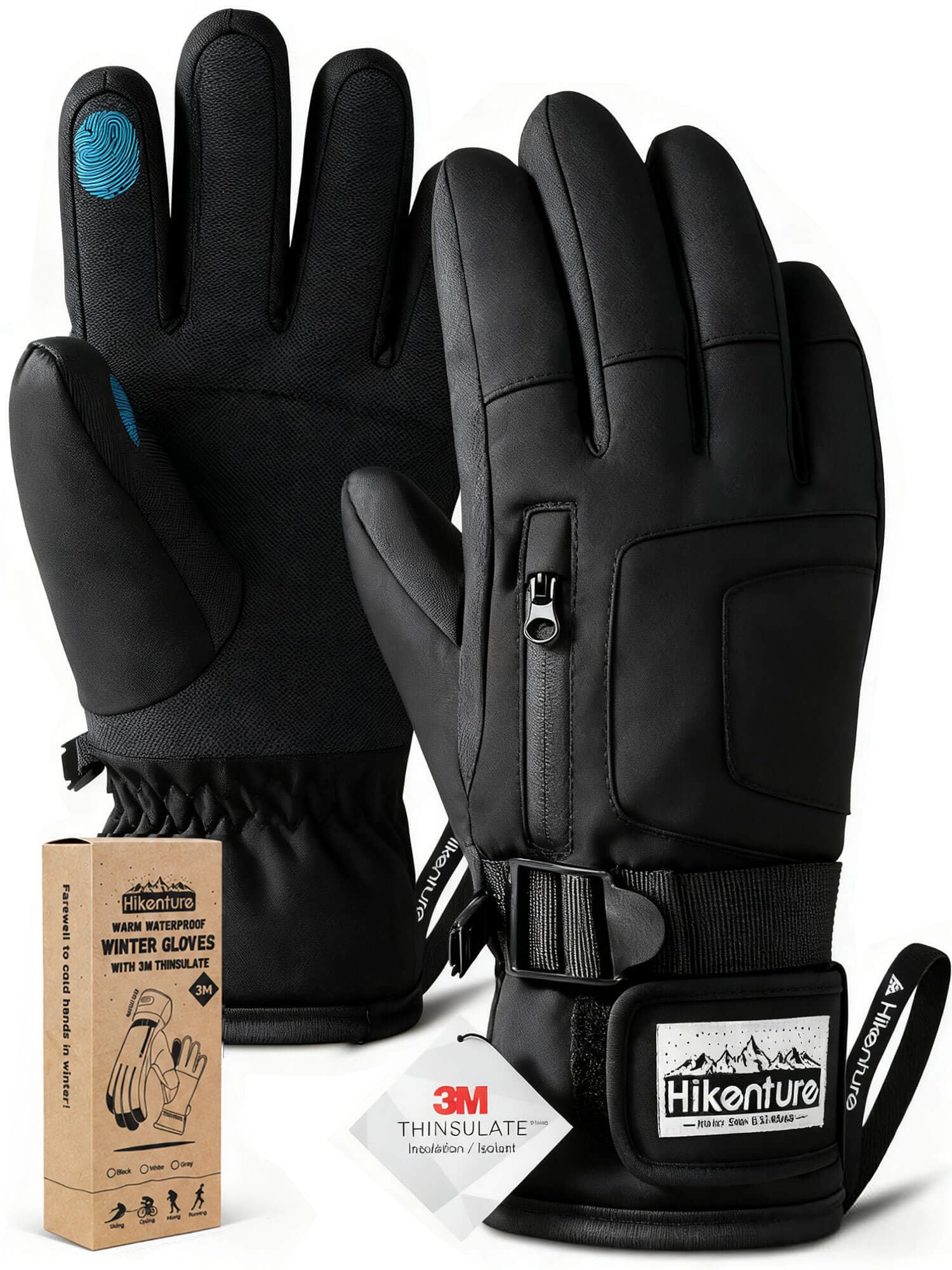
Key Features
- Care: Hand wash
- Insulation: 3M Thinsulate
- Touchscreen: Supported
- Waterproofing: 100% waterproof
- Price: Budget
The least expensive way to fix cold hands in this roundup is a pair of these gloves, and that is not a backhanded compliment. Thinsulate insulation, a waterproof membrane and a fleece lining is a sensible recipe for a ski glove, and it is the recipe this pair follows.
The details are better than the price suggests: two fingertips work on a phone screen, the palm carries a reinforced grip patch, and a small zipped pocket on the back of the hand takes a pass or a hand warmer. The cuff closes with a buckle strap, which is the difference between gloves that stay on your hands and gloves that end up in the snow.
For a first pair or a spare, this is the one we recommend. Fit is the thing to sort: the palms and fingers run roomy, so if you are between sizes take the smaller one, and check that your thumb reaches the end of the thumb rather than stopping well short of it. Nothing about them announces a budget price on the hill.
Pros
- Thinsulate insulation with a waterproof membrane
- Touchscreen fingertips that work
- Reinforced grip on the palm
- Zipped pocket for a pass or hand warmer
Cons
- Lining is slow to dry
- Palms and fingers run roomy
Our budget pick for hands: warm, waterproof-lined and touchscreen-friendly, with roomy palms to size around and a liner that dries slowly.
Best for Wind and Face Cover
GXCROR Winter Balaclava
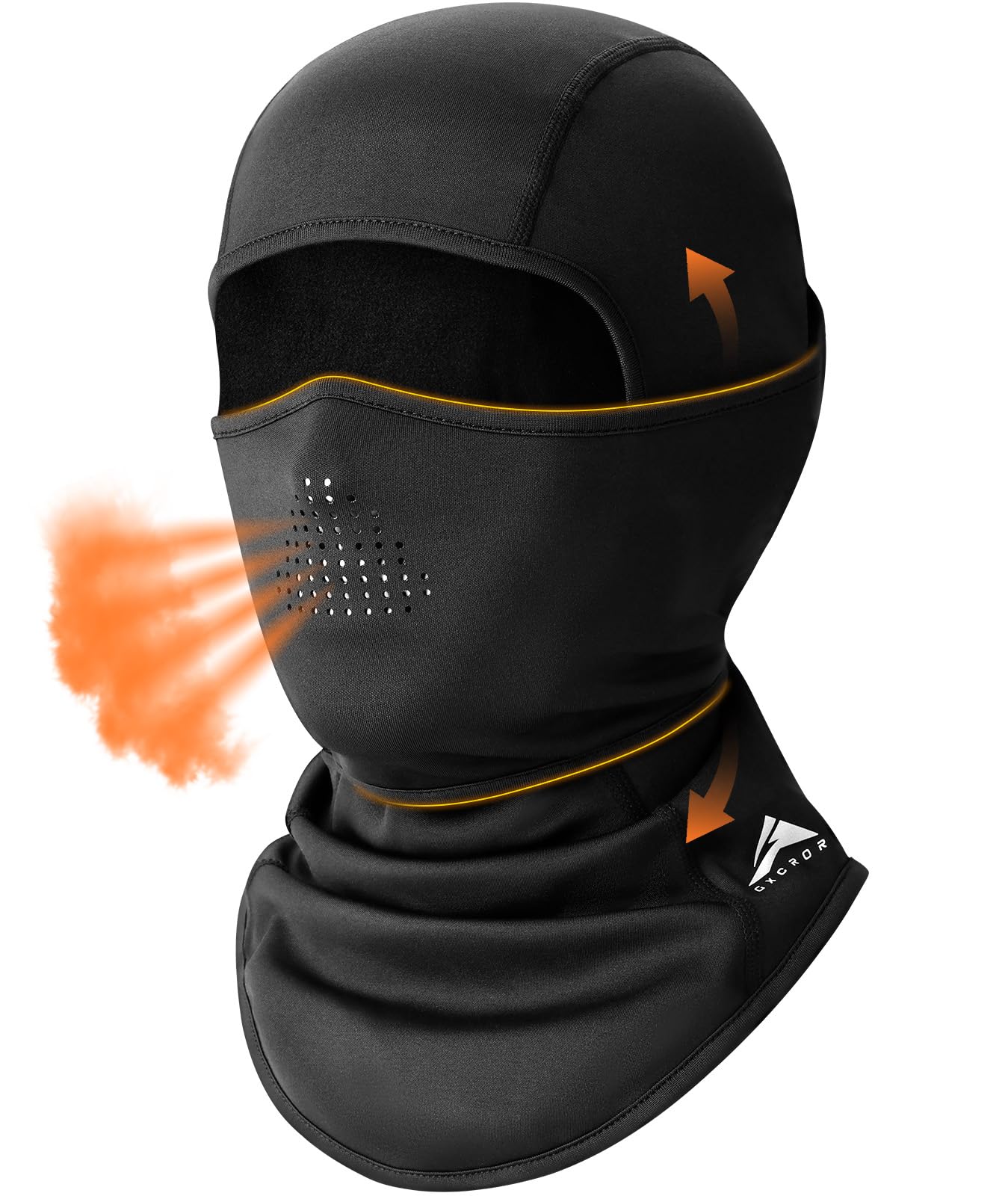
Key Features
- Coverage: Full face and neck
- Insulation: Thermal
- Wind protection: Windproof
- Price: Budget
The cheapest item in this roundup changes a cold day more than anything else on the list. A balaclava closes the gap between goggles and collar, where wind finds every seam you own, and this one is windproof, thermal and soft enough to wear against your face all day. It tucks under a helmet and inside a jacket collar, stretches over a big head, and washes without drama.
The caveat is breath. Fabric over your mouth traps warm air, so glasses wearers will see some fog when they stop moving, and the fix is to pull the front below your nose at the lift rather than fuss with the mask on the hill. For the smallest spend in the kit, it is the easiest yes in this guide.
Pros
- Windproof and warm in real wind
- Tucks under a helmet and jacket collar
- Stretches to fit larger heads
Cons
The small purchase we recommend to everyone: a soft, windproof balaclava that closes the gap under a helmet and washes without fuss.
Best for Cold-Weather Hiking
Gash Hao Softshell Snow Pants

Key Features
- Lining: Fleece
- Department: Men’s
- Leg opening: Zippered
- Waterproofing: Waterproof
- Price: Midrange
Unlike the insulated bib earlier in this guide, these are softshell: a stretchy, fleece-backed shell with no padding, cut slim enough to pass for ordinary trousers. That shape is the point. They move with you on a skin track or a snowshoe trail in a way a padded resort pant never will, and they do not rustle when you walk.
Warmth is honest for what they are. They assume a base layer, and with one they hold up on sub-zero mornings; the leg openings zip, which makes them easier to get over a boot, and the fleece backing means you can wear them from the trailhead into town without changing.
Here is where they stop being ski pants. The cuff will not close over a four-buckle ski boot, and in sustained wet — rain, slush, a long sit on a damp chair — the fabric wets through instead of shedding. If your day is lift-served at a resort, this is the wrong pant, and no amount of layering fixes a cuff that will not go over a boot.
For cold-weather hiking, snowshoeing and anyone who wants a winter trouser that does not look like ski kit, they are a good buy at a fair price. Be clear about which of those two buyers you are before you order.
Pros
- Fleece backing adds real warmth
- Stretchy and slim instead of bulky
- Zippered leg openings
- Fair value for a softshell
Cons
- Cuffs will not fit over ski boots
- Wets through in sustained rain or slush
Our pick for winter hiking rather than lift-served skiing: warm, stretchy and slim, with cuffs that will not close over a ski boot.
How We Tested Ski Brands Over Two Seasons
We narrowed the field to brands that build their own technical outerwear rather than licensing a name onto someone else’s factory, then filtered by published waterproof ratings, fully taped seams, whether the size chart listed real body measurements, whether the line came in extended sizes, and what a full kit would cost. That left 11 jackets, pants, and midlayers from eight brands, worn by three testers of different heights and builds for two full seasons — roughly 40 days on snow, from December opening laps to closing weekend.
Testing happened where the gear actually lives: first chair on single-digit mornings, a two-day storm cycle that left the lift seats soaked, long catwalk traverses, bootpacks, and a lot of standing around outside the lodge. Each piece got at least six days on snow, and we wrote notes after every one of them.
Warmth came first — whether a single midlayer was enough at 10 degrees, and whether anyone overheated on the bootpack. Water resistance got tested twice: sitting on wet chairs, then hosing the shoulders for five minutes and checking whether the insulation felt damp underneath. Zippers earned their own notes, because we zipped one-handed with gloves on and recorded every pull that snagged the storm flap or iced up.
Fit and sizing came down to those three testers, and we tracked whether each piece needed sizing up for layering plus sleeve, hem, and inseam length. We also noted range of motion reaching for poles and ducking a rope line, cuff abrasion and how the fabric looked after a season of washes, how each piece photographed, and what it cost per season rather than at the register.
How to Choose Ski Gear That Earns Its Place
The order you buy in matters more than the name on the chest: the small pieces change a ski day more than the expensive ones do, and most people buy them last.
Buy in the order that changes your day
Our order is helmet, goggles, gloves, then the layer. The first three are modest next to a jacket, they are the items rental counters charge for every single day, and they are the ones you keep for seasons instead of replacing when your fit changes. The jacket and pants can wait until you know how cold you actually run and whether your mountain serves dry powder or wet concrete.
Waterproof, water-resistant, or softshell
Water-resistant fabric handles cold, dry snow and not much more. If your hill gets wet snow, rain or long sits on a damp chair, look for a waterproof shell with taped seams, and treat softshell as what it is: a breathable, stretchy pant for touring and hiking rather than a resort bib. The Arctix bib is built for the first job; the Gash Hao pants are built for the second.
Warmth is a layering decision
The warmest coat you can buy is often the wrong one. Ski hard, sweat on the climb, and a heavily insulated jacket turns into a sauna on the chair. A shell over a fleece midlayer suits anyone who moves; a 3-in-1 like the MAGCOMSEN women’s coat suits anyone who stands around in the cold and wants one purchase to cover both. Match insulation to how you ski, not to the number on the forecast.
Fit: layer under the jacket, clear the boot
Order your normal jacket size and check the sleeve length — a hem that covers the seat and cuffs that reach the wrist are what keep snow out when you fall. Pants have to clear the boot: a zippered leg opening gets you over a four-buckle boot, and a plain softshell cuff generally will not. Then measure your head rather than ordering your hat size, and let the helmet’s dial take up the last of the gap.
Zips and seams: check them the day the box arrives
Zippers are where budget ski gear gives ground, particularly on pockets. Before the tags come off, run every zip twice, tug the seams at the crotch and shoulders, and make sure the main zip has a storm flap behind it. If a zip fails in the first month, send it back rather than living with it — a jacket you fight with every morning is not a bargain at any price.
Frequently Asked Questions
Is it cheaper to rent ski gear or buy it?
Rent boots and skis — they are the expensive, fit-critical items, and the shop adjusts them for you. Buy the helmet, goggles and gloves once you ski more than a few days a season: those are the pieces rental counters charge for daily, the ones that get unpleasantly shared, and they last for years. A jacket is worth owning once you know you are coming back.
How do I measure my head for a ski helmet?
Run a soft tape around the widest part of your head, roughly an inch above your eyebrows and just above the ears, and keep the tape level. Between two sizes, take the larger and tighten the dial. The shell should press evenly on your forehead and the sides without pinching; if it rocks when you shake your head, it is too big.
How do I keep ski goggles from fogging up?
Fog is warm, damp air trapped against a cold lens, so stop trapping it. Pull the mask down below your nose bridge when you stop moving, never push the goggle up onto your helmet where warm air collects, and never wipe the inside of the lens with a glove — that strips the coating. Air them dry at room temperature overnight.
How should I wash ski gear?
Follow the care label, but the pattern is the same across the kit: wash shells on a gentle cycle with a technical detergent, skip fabric softener, and tumble low to reactivate the water-repellent finish. Gloves get hand washing or a damp cloth, then dry upright with the cuffs pointing down so water does not pool in the fingers. Skip the radiator.
Final Verdict
Start at the top. The OutdoorMaster Kelvin is the one item every skier in your group needs, and the one where a sensible price buys the construction that matters — a hard shell, a shock-absorbing liner, a dial that tightens over a hat and ear pads that come out for washing.
From there, the layer depends on who is wearing it. The TACVASEN is the men’s jacket we point to, the Arctix bib is the women’s bottom, and the MAGCOMSEN 3-in-1 answers for anyone who wants one coat to cover the whole winter. If you wear glasses, start with the findway goggle. And if you replace one thing this season, make it the helmet you have been borrowing.