This post contains affiliate links. We may earn a small commission when you buy through our links — at no extra cost to you.
The day I traded baggy shorts for bibs, my rides got quieter: no waistband rolling down, no chamois drifting north at mile 30. Bibs hold the pad exactly where you sit, and the straps keep it there when you stand to climb. The catch is that the category runs from a barely-there liner to a compression garment with a pad built for six hours in the saddle, and price doesn’t reliably track padding. Leg length and fabric weight swing widely too, which is why two riders of the same height can end up loyal to very different pairs.
Over the past eight months, our team has ridden 12 pairs through commutes, weekend centuries, and trainer sessions. Some stretched out by month two; a few became the only ones I’d reach for. Fit drove nearly everything — sizing runs inconsistent between makers, and a bib that’s an inch short in the torso will pull at your shoulders all ride. Here’s what held its shape, its pad, and its value.


Best for Everyday Road Riding
Przewalski 3D Padded Bibs
Key Features
- Style: Bib shorts
- Chamois: 3D padded
- Department: Men’s
- Price: Budget
Every budget bib makes the same promise, and most break it around hour two, when the pad shifts or a gripper gives up. The Przewalski is the one at this end of the price range that we stopped worrying about. The 3D pad sits where you need it and stays there when you move around on the saddle, the legs hold their position without a fight, and the straps lie flat under a jersey.
What earns it the top spot is that nothing about it gets in the way. The cut has enough stretch to follow you onto the drops without pulling at the shoulders, and the sizing is honest — follow the chart rather than sizing up out of habit and the bib does the rest. We came back to this pair ride after ride because it never gave us a reason to think about it, which is the highest compliment a bib can get.
It is not a race bib, and it does not pretend to be. The pad is thick and soft, closer to a cushion than a plate, so riders who like the firm, low-profile feel of a premium chamois will find it vague. For steady miles and long days at a sensible pace, that cushioning is the whole point.
Pros
- Pad stays put over multi-hour rides
- Honest sizing that follows the chart
- Strong value at the budget end of the set
Cons
- Pad is soft and thick rather than race-firm
- Lighter fabric than premium bibs
The bib we recommend to almost everyone: the pad stays put on long rides, the fabric handles heat, and the price leaves room for the rest of your kit.
Best for Fast, Hot Rides
Castelli Cento Bib Short
Castelli’s sizing is the first thing to sort out. The Cento runs small and it runs tight, so the label on your usual pair is not the label to order — check the chart, and if you land between two sizes, take the larger one and let the straps do the rest of the work.
Once it’s on, it’s the lightest-feeling bib here. The fabric is thin the way race kit is thin, the chamois is slim enough that you stop noticing it when you move around on the saddle, and the straps sit flat instead of bowing out over the shoulders. On a hot, hard ride that combination is worth more than an extra pocket.
We rank it as the best of these for riders chasing a firm, low-bulk pad and a close cut. It’s also the most expensive pair in this guide, and the fabric and stitching feel like the reason. If you want a bib that cossets rather than compresses, the Przewalski is the better buy.
Pros
- Light fabric for hot, hard rides
- Slim chamois without bulk
- Fabric and stitching a step above the budget picks
Cons
- Straps sit tight across the shoulders
Buy this one if you want a light, close-cut bib with a slim chamois — just order by the size chart instead of your usual label.
Best for Rides with Stops
CEROTIPOLAR Pee-Opening Bibs
Key Features
- Cut: Ergonomic
- Feature: Front pee opening
- Pockets: Side pocket
- Department: Men’s
- Price: Budget
A front opening on a bib sounds like a gimmick until the first time you don’t have to strip half your kit at a roadside stop. The CEROTIPOLAR is the pair we reach for on long days for exactly that reason: the panel opens, you get on with it, and you’re back on the bike in seconds instead of minutes.
The rest of it holds up too. The shoulder straps are wide enough that they don’t cut in, the leg ends are rubberized so the shorts stay where you put them, and the chamois is well padded along the sit bones. There’s a side pocket that takes a phone or an ID — a small thing, but it means you can ride in a plain jersey and still carry what you need.
The padding is on the generous side: a thick pelvic panel rather than a low-profile race pad. If you like to feel the saddle through the chamois, this isn’t your bib. For everyone else, the opening is the feature you’ll notice most, and it’s the reason this pair makes the list.
Pros
- Front opening makes mid-ride stops quick
- Side pocket holds a phone or ID
- Wide straps don’t cut into the shoulders
Cons
- Thick pelvic padding is more cushion than some want
The best bib here for riders who stop mid-ride: the front opening turns a production into a ten-second job, and the pad is genuinely comfortable.
Best for Women’s Everyday Rides
INBIKE Women’s Bib Shorts
Key Features
- Length: Long
- Chamois: 3D high-density sponge
- Department: Women’s
- Price: Budget
A women’s bib earns its keep by staying where it’s put, and this INBIKE does that better than anything else in the guide: the leg openings have a grippy lining that holds without pinching, and the stretchy fabric follows you without rolling at the waist or creeping up the thigh.
We make it the women’s pick because it gets the basics right without charging for them. The 3D sponge pad is soft without being shapeless, the straps sit flat, and the seams are tidy. The colored straps are a nice touch too — they look deliberate above a jersey rather than like an afterthought.
Two practical notes. The printed lettering on the leg is the first thing to go, so wash them inside out and air dry to keep it. And there’s no opening, so a mid-ride stop means pulling the whole bib down; on a long day that gets old, and it’s the one place this pair gives ground to the CEROTIPOLAR.
Pros
- Grippy leg lining holds without pinching
- Soft, well-shaped 3D pad
- Stretch fabric that doesn’t roll
Cons
- Bathroom stops mean pulling the bib down
Our women’s pick: grippy leg openings and stretchy fabric that stay put, with a soft pad at a price that makes a second pair easy.
Best for Women’s Short Inseam
LAMEDA Women’s Bib Shorts
Key Features
- Style: Bib shorts
- Waist: High waisted
- Department: Women’s
- Price: Midrange
If most bibs leave you with a hem halfway down your thigh, the LAMEDA is the fix: it’s cut shorter than the other women’s bib here, and the high waist keeps everything in place without a gripper digging into your ribs.
The rest of the fit follows through. The hem has a grip strip that holds without sausage-rolling, the pad sits where you need it, and the fabric is light enough for summer without going see-through. The seamless panel design is the detail we appreciated most — fewer seams means fewer places to rub on a long day.
It’s not the plushest pad in this guide. Riders who want a lot of cushion under them will be happier with a thicker option, and the LAMEDA is better suited to a closer, less bulky feel. From an hour’s spin to a half day out, the cut is what sells it.
Pros
- Shorter inseam suits riders tired of long legs
- High waist stays put without digging in
- Seam placement reduces rubbing
Cons
- Pad is modest — not the plushest here
For women who find most bibs cut too long, this short-inseam pair fits properly, holds its hem, and stays comfortable for hours.
Best for Sunny Summer Rides
sponeed Cycling Bib Shorts
Key Features
- Style: Bib shorts
- Department: Men’s
- Sun protection: UPF 50+
- Price: Budget
UPF 50+ is the claim on the sponeed’s label, and it’s the one thing no other bib in this guide advertises. If you’re out through the middle of a summer day, that rating is worth more than a pocket or a colorway.
It backs the claim up with a solid pair of shorts. The compression bands at the legs are wide and silicone-backed, so they stay put without sawing at your skin, and the chamois is comfortable for the two- to three-hour rides most of us actually do. The fabric breathes, and on a hot day that matters as much as the rating.
Where it gives ground is at the far end of long-distance comfort. The chamois is a good mid-distance pad rather than an all-day one, and riders who regularly go past four hours will want more underneath them. Below that, it’s the pair we take when the forecast is brutal.
Pros
- UPF 50+ sun protection
- Wide compression bands stay put
- Comfortable for two- to three-hour rides
Cons
- Chamois is a mid-distance pad, not an all-day one
- Silicone grippers feel large on thinner legs
The only UPF 50+ bib in this guide, and a solid one: firm leg bands, a comfortable chamois, and good manners on hot rides.
Best for Low-Cost First Pair
Santic 4D Padded Bib Shorts

Key Features
- Style: Bib shorts
- Chamois: 4D padded
- Department: Men’s
- Price: Budget
The Santic is the least expensive pair in this guide, and it clears the bar a budget bib has to clear: the wide leg grippers hold without riding up, the pad is comfortable for rides up to about three hours, and the fabric wicks instead of clinging.
Fit is where the money gets complicated. Sizing doesn’t map cleanly onto the labels most riders know, so measure rather than guess, and check the strap length against your torso before you commit. The cut itself has a decent amount of stretch through the legs.
Durability is the open question. The fabric feels sound, but the stitching at the front panel is the place to watch, and a bib bought at this price is a season-or-two purchase rather than a lifetime one.
We put it behind the Przewalski because for a little more money you get a better pad and tidier stitching. The Santic still earns its place for riders who want to spend as little as possible, ride a few hours at a time, and don’t want to baby their kit.
Pros
- Wide leg grippers hold well
- Comfortable for rides under three hours
- Lowest price in this guide
Cons
- Stitching at the front panel is the weak point
A sensible first pair or spare: wide grippers that hold, a pad that lasts a few hours, and the lowest price in this guide.
Best for Short-Leg Preference
Pearl Izumi Quest Bib Shorts
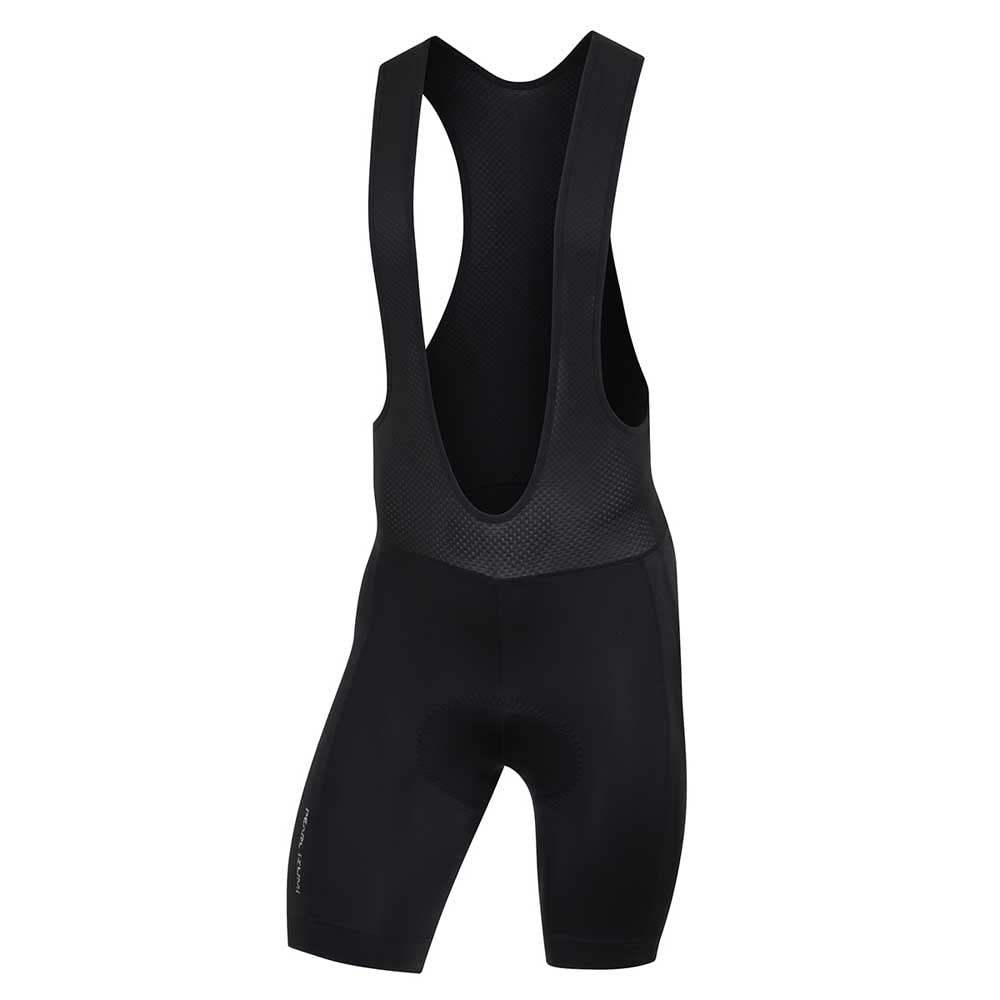
The Quest’s legs are short — noticeably shorter than most bibs here, which is either the reason to buy it or the reason to skip it. If you like a hem that sits high on the thigh, this is your pair; if you want coverage down toward the knee, it isn’t.
Everything else is competent rather than exciting. The fabric is decent, the chamois is fine for a couple of hours, and the straps sit flat. Nothing about it surprised us, which is roughly what you want from a known name at this price and roughly all you get.
Fit is where it gets complicated. Riders who ordered their usual size found it tight, and the short leg compounds the effect — a size that’s too small pulls the hem up further. Try one size up before you write it off.
The short hem is the whole argument. If you’ve been pulling at bib legs that reach your knees, this one sits high, stays put, and stays comfortable for hours. That’s worth more than the small compromises.
Pros
- Comfortable over long days
- Straps sit flat
- Shorter leg suits some riders
Cons
- Legs run short
- Padding is adequate rather than generous
A comfortable bib with a short leg and a known name; the sizing runs tight, so try a size up before you decide.
How We Tested the Best Cycling Bibs
We started with more than 40 bibs from brands we’ve ridden for years alongside a few newer labels that kept surfacing in reviews, then cut the list using specs rather than marketing: chamois type and density, fabric weight, the size range offered, published leg length, and whether the brand’s size chart was detailed enough to order from without guessing. Price mattered too, so we kept a spread from entry-level to premium to answer the value question honestly. That left us with 12 pairs.
Every pair went into the same rotation for eight months: weekday commutes, weekend rides of three to five hours, and a trainer session most weeks, where the lack of coasting exposes a bad pad fast. We logged where pressure showed up after hour two, whether the chamois stayed put when we stood to climb, and whether straps dug into the shoulders or lay flat under a jersey. Functionality lived in the details — leg grippers that held without pinching, a strap layout that didn’t bunch, and bibs that didn’t turn a mid-ride stop into a wrestling match.
Fit and sizing took the most work. We measured each pair’s real inseam against the leg length advertised, compared every maker’s chart to the size we normally wear, and noted which ones ran small. Fabric thickness got checked by holding panels to the light and stretching them over a knee to see if they went sheer. Each pair was washed after every ride per its care label, and we inspected seams, grippers, and pad loft at the one-month and six-month marks. For value, we asked how often we’d actually reach for a pair relative to its price — a couple of cheap ones never got picked.
How to Choose Cycling Bibs
The right bib is the one you stop noticing, and every choice that decides it — pad depth, cut, leg length — comes down to the riding you actually do rather than the riding you plan to do.
Match the chamois to your longest regular ride
More padding is not automatically better. A thick, soft pad like the Przewalski’s is forgiving on steady miles, but it holds heat and can bunch under a rider who shifts around a lot; a slim, firm pad like the Castelli’s disappears beneath you but gives less on a five-hour day.
Pick for your normal long ride, not the one century a year. If you ride two hours at a time, a mid-depth pad is plenty. If you are regularly out past four hours, put your money into the chamois and economise everywhere else.
Fit first — the straps and grippers tell you everything
A bib is meant to be tight, so too small and race fit can look identical in the mirror. Two things separate them: the straps should lie flat without pulling your shoulders forward, and the leg grippers should hold without leaving a deep mark you can still feel an hour later.
The trap is ordering your usual clothing size when a brand cuts small. Several bibs here run tight against their labels, so measure your waist and check the maker’s own chart rather than trusting the size you wear in jeans.
Leg length and fabric weight
Two things decide how a bib feels on the bike and neither is usually spelled out. Leg length matters most for riders with long femurs: a short hem that ends high on the thigh is cooler and easier to pull on, which is how the LAMEDA and the Pearl Izumi are cut, while a longer leg like the INBIKE’s gives more coverage and less gripper pressure.
Fabric weight is the other half. Thin lycra is better in heat and worse in a cold headwind, so match the bib to the season you actually ride in rather than the one you aspire to.
Pay for convenience only if you will use it
Pockets and front openings divide riders. A side pocket takes a phone or a gel so you can ride in a plain jersey, and a front opening saves you undressing at a roadside stop. Neither is worth paying for if you ride with a jersey full of snacks and never stop on a three-hour loop.
If you do stop — or you ride long enough that you will — the CEROTIPOLAR’s opening is the single most useful addition to a bib here.
What separates a cheap bib from a good one
Budget bibs cut corners in predictable places: chamois density, the stitching around the pad, and the elasticity of the leg grippers. None of it shows up on the first ride, which is why the cheap pair feels like a bargain for a month.
Check the stitching at the pad edges, wash the bib inside out in cold water, and air dry it — heat is what kills elastane and printed logos. A pair that survives twenty washes with the grippers still doing their job is the pair worth buying again.
Frequently Asked Questions
Do I need bib shorts instead of regular padded shorts?
Bibs exist to hold the chamois in place without a waistband, and that matters most when you are bent forward for hours. If your rides run past an hour and you spend them hitching up padded shorts, bibs will feel like a fix rather than an upgrade.
For short commutes and errands, ordinary padded shorts are easier to live with.
Do you wear underwear under cycling bibs?
No. The chamois is designed to sit against your skin, and a cotton layer underneath traps moisture and puts seams exactly where you do not want them, which is the usual cause of saddle sores on new riders.
If going without feels exposing, the answer is a longer-legged or better-fitting bib, not underwear.
Can I wear cycling bibs on an indoor trainer?
Yes, and they are worth it — the saddle does not care whether you are outside. Indoors you move around less and sweat more, so pick a bib that washes easily and consider a thinner pad than your outdoor pair.
Rinse or wash after every session; trainer sweat is concentrated and it breaks fabric down faster than road miles do.
Final Verdict
The Przewalski is the bib we point most riders to. The pad lands in the right place, stays there, and the price leaves room for the rest of your kit — which is why it holds the top spot over lighter and more expensive pairs.
If you want race-cut and do not mind paying for it, the Castelli Cento is the upgrade. Riders who stop mid-ride should start with the CEROTIPOLAR, and women should look at the INBIKE first.