This post contains affiliate links. We may earn a small commission when you buy through our links — at no extra cost to you.
A ski bib only proves itself when the weather turns mean: the chairlift seat is wet, the wind is sideways, and you’re kneeling in powder to dig out a binding. That’s when you learn whether the seams hold, the fabric blocks slush, and the fit leaves room for a fleece without making you feel like a sausage. The right pair keeps snow out of your jacket, warmth in, and your mind off your waistband.
I’ve worn bibs that fit in the parking lot and turned clammy by lunch, and I’ve learned that sizing charts, waterproof fabric, and a warm lining only matter if they work together. Over one full season, from November through April, our team tested 12 pairs on lift-served days, on bootpacks, and in wet spring slush. We checked how each pair handled layering, long chair rides, hard use at the knees, and the price you actually pay for the features. The picks below are the ones that held up.


Best for Resort Snowboarding
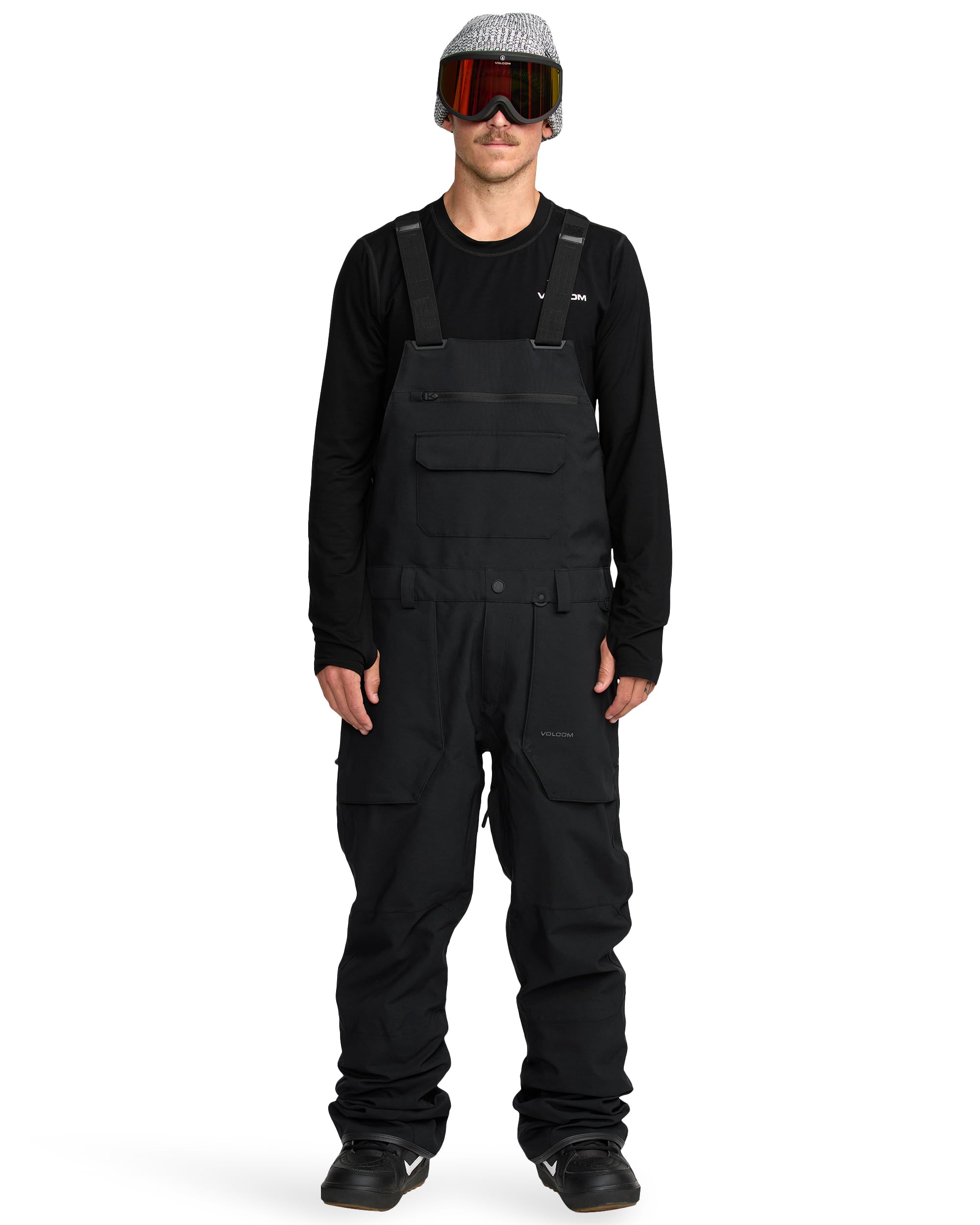
Volcom Roan Bib
Key Features
- Style: Snowboard bib
- Fabric: 2-layer Repreve
- Department: Men’s
- Waterproof rating: 15K
- Price: Premium
The Roan Bib is the one we reach for when the forecast looks wet rather than merely cold. Its 15K waterproof rating and two-layer Repreve fabric are the reason: this is a shell, so you add base layers and a midlayer instead of relying on built-in insulation. That makes it more flexible than an insulated bib across a cold January storm and a slushy spring day, and the cut leaves enough room for a thermal underneath without feeling like you’re swimming in fabric.
Where it earns its keep is in the details that matter on the mountain: the pockets are useful for a phone and a pass, and the legs have enough room to layer without bunching at the boot. It is a trimmer cut than the baggy GSOU, so it feels like ski gear rather than a snowboard costume. The waist is close and the legs are long, so check the size chart before ordering.
Compared with the budget insulated bibs here, this is the one that stays drier in wet snow. That is what the upgrade buys: weather protection and a cleaner layering piece, not a bib you can toss on over jeans. The fabric itself feels substantial, and the 15K rating is the difference on a wet chairlift.
Pros
- 15K waterproof shell handles wet snow
- Two-layer Repreve fabric layers without bulk
- Useful pockets and room for a midlayer
Cons
- Crotch seam is a hard-use wear point
We recommend the Roan Bib for resort skiers who want a genuinely weatherproof shell and will layer for warmth; it is not the simplest pull-on option.
Best for Cold-Weather Skiing
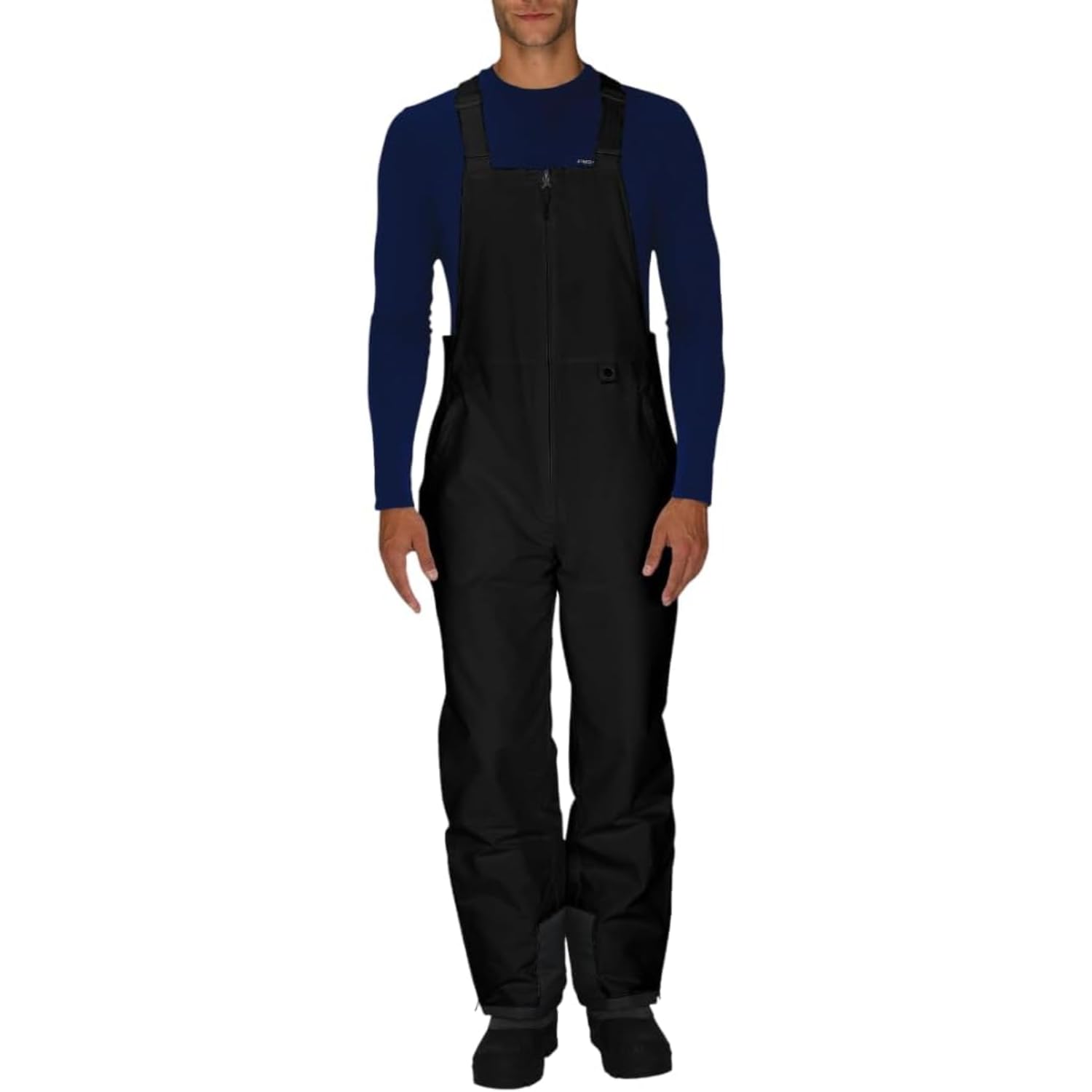
Arctix Essential Bib
Key Features
- Style: Bib overalls
- Insulation: Insulated
- Ankle detail: Rubberized ankle bit
- Price: Budget
The Essential is the bib we point to when the goal is staying warm without spending much. It is insulated, and warmth is the part of the package we trust most: it holds heat on cold lift rides and snowy workdays. The cut adds to that impression. It is not a bulky snowsuit; the fabric has some stretch, so you can bend and step without feeling locked up.
Fit is where you need to pay attention. The chest runs close while the legs stay roomy, so the size that fits your waist may not leave room for a fleece. Check the chart against your chest and inseam, and size for the layers you actually wear. The rubberized ankle detail is a small but useful touch; it gives the cuff more coverage over a boot and helps keep snow from packing in.
The hardware is the budget part. The zippers and plastic buckles feel basic, and the seams and suspender straps are the places to inspect before a trip. None of that changes the value case for cold, dry resort days; it just means this is a bib you replace when it wears out, not one you hand down.
Pros
- Insulated warmth for cold lift rides
- Stretchy fabric moves without bulk
- Rubberized ankle helps seal over boots
Cons
- Seams and suspender straps can fail
- Zippers and plastic buckles feel basic
We recommend the Essential for cold-weather skiers who want insulated warmth on a budget, as long as they size for the chest and accept basic hardware.
Best for Baggy Park Riding
GSOU SNOW Baggy Bib
Key Features
- Fit: Baggy
- Waist: Zip-on adjustment
- Department: Unisex adult
- Suspender straps: Removable
- Price: Midrange
The GSOU is the bib we choose when the look matters as much as the specs. It is cut baggy through the hips and legs, with removable suspenders and a zip-on waistband that lets you tighten things down without fighting the straps. On a snowboard, that loose shape is comfortable and forgiving; you can layer underneath and still have room to move.
Warmth is better than the price suggests, and the vents are a welcome detail when you’re working hard or hiking a park lap. The removable suspenders also make the bib easier to live with off the slope, because you can drop the top without pulling the whole thing over your head. The trade-off is weather protection: this is a dry-snow bib, not the one we grab for wet, heavy snow.
Sizing is the catch. The run is small enough that you should start with the chart and consider going up if you want the baggy look the photos promise. If you’re hard on pockets and seams, treat this as a fun park bib rather than a daily driver for rocky sidecountry.
Pros
- Baggy cut leaves room for layers
- Removable suspenders and zip waistband
- Vents help on active laps
Cons
- Sizing runs small
- Water resistance is inconsistent
We recommend the GSOU for riders who want a roomy, baggy bib with removable suspenders; it is a dry-snow style pick, not the most protective or durable option here.
Best for Layered Resort Days
Arctic Quest Snow Bib
Key Features
- Style: Snow bib
- Leg shape: Straight
- Department: Men’s
- Suspender straps: Adjustable
- Price: Midrange
The Arctic Quest is the straight-leg option in this group. The legs drop cleanly over bulky boots and leave room for a midlayer, which makes the bib feel more relaxed than the trim athletic cuts. The shoulder straps stay put, and the whole thing is easy to pull on when you’re getting ready in a cold parking lot.
We like the warmth for cold resort days; it holds heat without needing a heavy base layer, and the relaxed legs don’t fight a midlayer. The upper body is cut closer than the legs, though, so broad-chested skiers should check the chart and consider sizing up. The buckles and crotch seam are the weak points we look at first; a loose thread or a strained stitch is easier to catch at home than on the lift.
Against the Arctix Essential, this one gives you more room through the leg and a straighter silhouette; against the Volcom, it gives up wet-weather confidence. That makes it a good midrange choice for cold, dry days when you want a relaxed fit and don’t need a technical shell.
Pros
- Straight legs clear bulky boots
- Warm for cold resort days
- Relaxed cut leaves room for layers
Cons
- Crotch seam and buckles are weak points
- Sizing is inconsistent
We recommend the Arctic Quest for skiers who want a straight-leg bib with room for layers; check the chest sizing and seam quality before you commit.
Best for Occasional Snow Days
Amazon Essentials Bib

Key Features
- Style: Bib overall
- Department: Men’s
- Insulation: Insulated
- Water resistance: Water-resistant
- Price: Budget
The Amazon Essentials bib is the plain, low-cost option we keep for impromptu snow days. It is insulated and water-resistant, and warmth is the strongest part of the package: it takes the sting out of a cold morning without a lot of bulk. The design is simple, with no bib pocket and only basic hand pockets, so you need to plan where your phone and pass go.
The fit is the catch. It runs small and snug, and the size chart is not much help, so order a size up if you want room for a base layer. The legs are long enough to cover boots, but the trim cut means you should try it on with the layers you plan to wear. Items in the hand pockets can get wet even when zipped, which is why a waterproof phone pouch is worth adding.
Construction is basic. The seams and straps are not built for a full season of hard use, and this is better suited to sledding, shoveling, and occasional resort days than to daily patrol. For the money, that is a fair trade; just don’t expect it to be the last bib you buy.
Pros
- Insulated warmth for occasional snow days
- Simple water-resistant shell
- Low-cost backup bib
Cons
- Runs small and snug
- Seams and straps can fail
We see the Amazon Essentials as a spare or first bib for occasional snow days; it is warm and simple, but size up and keep your phone in a waterproof pouch.
How We Chose and Tested Men’s Ski Bibs
We started with a shortlist of men’s bibs that had a real waterproof rating, articulated knees, and a size range beyond the usual small-to-XL, then cut anything with fussy buckles, thin seams, or a price that didn’t line up with its features. The 12 pairs that made the cut went through a full season, November through April, mostly on resort days but also on bootpacks and wet spring slush.
I wore the same base layer and fleece under each pair and noted where I overheated on the hike up and chilled on the lift. To check water resistance, I sat on wet chairlift seats, sprayed the seat and knees with a hose, and looked for damp spots after twenty minutes. For fit and sizing, I tried each bib over a thin base layer and a bulky midlayer, then checked whether the suspenders stayed put when I bent over to adjust bindings and whether the length worked with boots.
After each day, I inspected knees, cuffs, and zippers for abrasion and pulled on seams to see if stitching started to separate. We also counted pockets, opened vents, and tested the bathroom break without taking off a jacket. At the end, we compared the price to the features that actually got used and the wear we could see.
How to Choose Men’s Ski Bibs
The first decision is not the brand or the price tier; it is whether you want a shell you layer under or an insulated bib you pull on.
Shell or Insulated: Start With the Weather
The first choice is whether you want a shell you layer under or an insulated bib you pull on. A shell like the Volcom Roan stays flexible across wet snow and active skiing; you add a base layer and a midlayer for warmth. An insulated bib like the Arctix Essential is simpler for cold, low-output days. If you run hot or ski in mixed conditions, the shell is the better tool. If you feel the cold on the lift, insulation earns its place.
The trap is assuming a waterproof shell is warm. It is not; it is a weather barrier. A shell needs the right layers underneath, while an insulated bib can be too warm for spring slush or a hard hike. Match the bib to the day you actually ski most, not the coldest day you can imagine.
Waterproofing: Look for a Number and Check the Seams
A waterproof rating is more useful than the word waterproof on its own. A 15K rating, like the Volcom’s, is a resort-ready benchmark for wet snow and damp chairlifts. A water-resistant bib can handle dry snow and short exposures, but it is not the same promise. We put the rating first because a bib that wets through is miserable no matter how warm it is.
Seams matter as much as the fabric. The crotch, seat, and knees take the most abuse, and a reinforced seam is worth more than a fancy face fabric. If you ski in wet coastal snow, spend here. If you ski dry powder, a water-resistant bib can be enough, provided you keep a spare layer in the car.
Fit: Chest, Inseam, and Room for Layers
A ski bib should let you raise your arms without pulling the crotch up. Check the chest and waist first, then the inseam. The legs need enough room to drop over bulky boots without dragging, and the suspenders should adjust without digging in. If you are between sizes, size for the layers you wear, not the T-shirt you wear in the store.
Be careful with the word athletic. In ski bibs it often means a close chest and waist, not just tapered legs. A bib that fits in the store can feel restrictive with a fleece underneath. We prefer a cut with room through the chest and a straight or relaxed leg for resort skiing; a trimmer cut makes more sense for a dedicated park rider who wants less fabric.
Durability: Check the Crotch Seam and Hardware
The crotch seam, suspender attachments, zippers, and buckles are the first places a bib shows its price. A low-cost bib can be warm and still fail at a seam or a plastic buckle. We look for clean stitching, reinforced stress points, and zippers that feel substantial rather than fragile.
If you ski a handful of days a year, a budget bib can be a sensible trade. If you are out every weekend, spend for construction; replacing a failed bib midseason costs more than the upgrade. Either way, inspect the crotch and strap anchors before your first trip, and keep a repair patch in your pack.
Pockets, Passes, and Getting It On
A bib’s pockets are part of its usability. You want a secure place for a phone and a lift pass, and zippered hand pockets are more useful than open ones. A bib with no chest pocket, like the Amazon Essentials, forces you to plan; a small waterproof pouch solves the wet-pocket problem. Removable suspenders and a zip-on waistband, as on the GSOU, make bathroom breaks and temperature changes easier.
Check the leg openings over your boots before you commit. A straight leg or a roomy cuff is easier to pull on; a narrow cuff can turn a cold parking lot into a wrestling match. If you wear bulky boots or have wide calves, prioritize the opening over the trim look.
Frequently Asked Questions
Do I need snow pants under a ski bib?
No. A ski bib replaces snow pants; it is the outer layer that covers your legs and torso. Wear a base layer underneath and add a midlayer with a shell bib if it is cold. If the bib is insulated, skip the extra insulating pants; doubling up only makes you sweat and then chill.
How do I wash a ski bib without ruining the water repellency?
Use a technical wash made for waterproof clothing, skip fabric softener, and tumble on low or hang dry according to the care label. Regular detergent can leave residue that dulls water beading. If water stops beading, a spray-on or wash-in DWR treatment restores the surface repellency; do that before the fabric starts soaking through.
Can I use a ski bib for shoveling or winter work?
Yes, a ski bib works for shoveling, sledding, and cold outdoor chores; it is warm and keeps snow out. The difference is in the cut and fabric: work bibs often use heavier canvas and more tool pockets, while ski bibs prioritize mobility and water resistance. If you kneel on rough concrete, check the knees for reinforcement or wear a pad.
Final Verdict
Buy the Volcom Roan Bib if you ski resort snow and want a shell that keeps wet weather out while you tune warmth with layers. Its 15K waterproof fabric is the clearest performance advantage in this group, and the cut leaves room for a midlayer.
If you want insulated warmth for less, the Arctix Essential is our budget alternative; size it for your chest and check the seams. For a baggy park fit, the GSOU SNOW is the fun choice, but it is not the wet-snow pick.