This post contains affiliate links. We may earn a small commission when you buy through our links — at no extra cost to you.
Road shoes carry a tradeoff most shoppers don’t spot until it’s too late: the pairs that feel weightless on the first run are often the ones that go flat within a couple of months, while the tanks built to survive a year can make an easy five-miler feel like homework. The right pair splits that difference — light enough that you stop thinking about your feet, cushioned enough for cracked sidewalks and long Sunday miles, and structured enough under the arch that nothing aches at mile eight. That balance is what turns a shoe you tolerate into the one you keep reaching for.
I’ve logged a lot of asphalt over the years, and my team and I have now run in 12 pairs of men’s road shoes across six months of real mileage — easy mornings, weekend long runs, the occasional tempo. Two things I wish every first-time buyer knew: your feet swell as you run, so shop late in the day, and sizing swings wildly between models, which is why we flag the ones that run small. The picks below are the ones that held their shape, their fit, and their looks.



Best for Daily Road Miles
Brooks Glycerin 22
Key Features
- Ride: Neutral
- Sizing: Runs small; half size up
- Cushioning: Plush, soft underfoot
- Arch support: Supportive for flat feet
- Price: Midrange
Soft underfoot but structured through the arch, the Glycerin 22 is the shoe we hand to someone whose knees have started complaining on Tuesday evening loops. The foam takes the sting out of pavement without the sinking feeling you get from the tallest cushioning shoes here, and the ankle collar holds without pressing, so a flat-footed stride gets supported rather than squashed. It also looks like an ordinary sneaker, which matters if your running shoes double as the pair you wear to the store.
Sizing is the one thing to sort before you order. This model comes up small and the toe box is snug rather than generous, so unless you’ve worn a Glycerin before, go up half a size; if your foot is genuinely wide, start with one of the wide-width shoes instead of hoping this one stretches. Nothing needs breaking in — the first run feels like the fifth.
What it gives up is pace and a little polish. There’s enough padding that the shoe feels slightly clunky when you’re walking rather than running, and the outsole squeaks on smooth floors. Neither matters once you settle into an easy rhythm, which is where this one wants to live. For daily miles, long weekend walks, and standing around afterward, it’s the safest buy in this article.
Pros
- Plush ride that stays supportive
- Dependable arch and ankle support
- Works for running and long walks
- Looks like a normal sneaker
Cons
- A little clunky off the run
- Outsole squeaks on smooth floors
We recommend the Glycerin 22 as the default men’s road shoe: plush enough for long pavement miles, supportive enough for flat feet, and priced under the premium cruisers here. Just size up.
Best for Long Road Runs
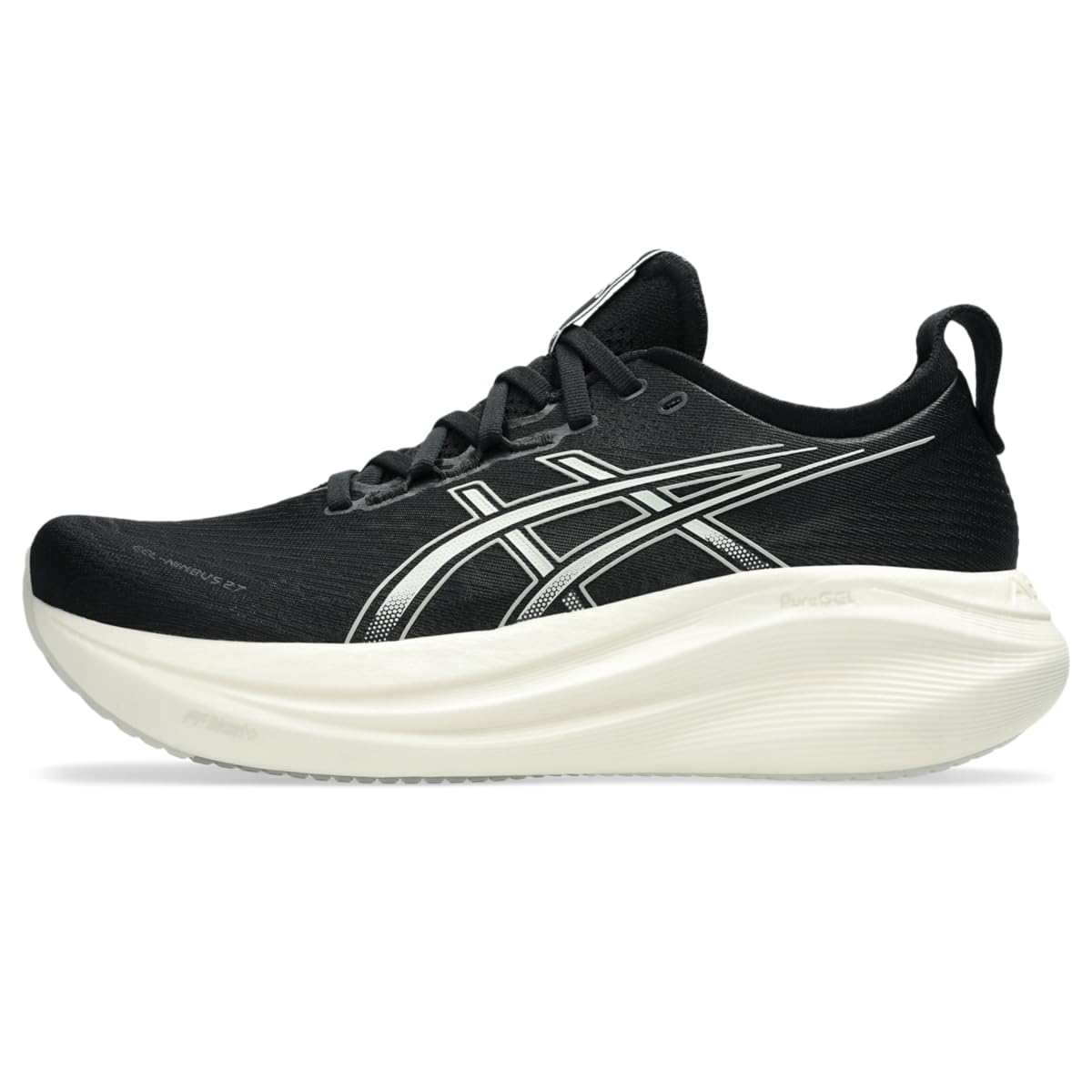
ASICS Gel-Nimbus 27
Key Features
- Sizing: True to size
- Toe box: Extra room
- Cushioning: Deep and soft
- Breathability: Airy mesh upper
- Price: Premium
Set the Gel-Nimbus 27 next to our top pick and it’s the same idea pushed further: more foam underfoot, a roomier toe box, and an upper that moves air instead of trapping it. On a warm afternoon that last difference is the whole run.
We rate it near the top of this set on breathability and toe-box room, and the cushioning is genuinely deep — the kind of soft that shortens a slow ten-miler. The heel is held firmly without pressure across the top of the foot, and the arch support is there without announcing itself, which not every shoe here manages.
Fit is the easy part: true to size, with enough length at the toe that most runners won’t need to go up. The upper is the piece to watch, because the mesh at the toe can wear through before the midsole is finished. That makes this a shoe to rotate rather than wear into the ground — keep two pairs going and it’s a non-issue; run one pair until it dies and the Glycerin is the safer spend.
Pros
- Deep, forgiving cushioning for distance
- Roomiest toe box of the premium picks
- Breathes well in heat
- Supportive heel without pressure
Cons
- Premium price within this group
Our pick for long, hot road runs: deeper foam and a roomier toe box than our top pick, at a premium price and with an upper worth rotating carefully.
Best for Stability Runs
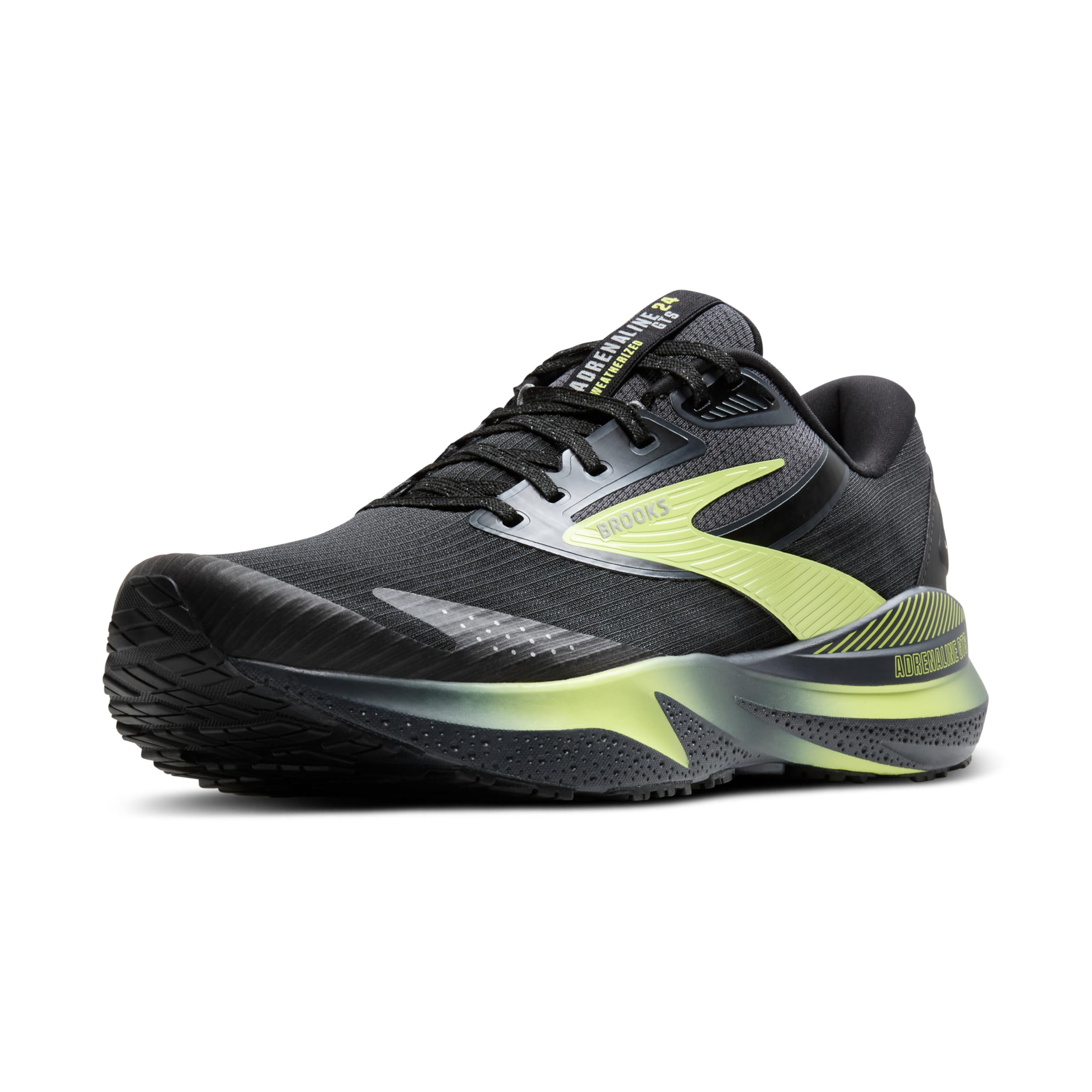
Brooks Adrenaline GTS 24
Key Features
- Ride: Stability
- Sizing: Runs small; half size up
- Cushioning: Balanced, firm-leaning
- Arch support: Strong for flat feet
- Price: Midrange
If the inner edge of your old shoes wears down first and your knees drift inward when you get tired, the Adrenaline GTS 24 is the shoe here built for you. It’s a stability model, which in practice means a firmer, more guided ride than the plush cruisers: the shoe nudges your stride rather than forcing it, and the arch support is the most convincing in this group for flat feet and feet that roll in.
Cushioning is balanced rather than cloud-like — enough to soften concrete, firm enough that you can feel the road and push off it. It’s happiest at an easy-to-steady pace, holds a line on uneven pavement, and is comfortable enough to leave on for the rest of the day.
The fit needs planning. It runs small, so half a size up is the sensible default, and the toe box stays snug even then — a wide forefoot should look at a wide-width shoe instead. Give it the extra half size and it’s the most dependable stability option on this list, with the sort of underfoot firmness that holds up better under a heavier runner than the marshmallow picks do.
Pros
- Best arch support here for flat feet
- Guided, stable ride without forcing the stride
- Balanced cushioning you can push off
- Comfortable for a full day on foot
Cons
- Outsole tread can wear thin within months
The stability shoe we point flat-footed, inward-rolling runners to first: firmer guidance, serious arch support, and a fit that needs a half size up.
Best for All-Day Standing
Hoka Bondi 9
Key Features
- Sizing: True to size
- Toe box: Wide
- Cushioning: Soft EVA, deepest here
- Price: Premium
The Bondi 9 is the most cushioned shoe in this article, and it feels like it: soft EVA underfoot, a broad stable platform, and a toe box that lets your toes spread out. A long shift on concrete is the job it does better than anything else here.
What you pay for is that cushioning and not much else — the upper and the trim are ordinary, and this is the priciest shoe we’re recommending. If you replace running shoes twice a year, the maths doesn’t work in its favour. If your shoes last because most of your miles are easy and the rest of your day is on your feet, the comfort is worth the premium.
Our read is that it’s a walking and standing shoe that can run, rather than a running shoe that can walk. If your runs are short and gentle and your day is spent on your feet, nothing here beats it for comfort. If you’re training to a plan, the Glycerin or the Nimbus are the better running shoes.
Pros
- Deepest cushioning in this group
- Wide toe box with a stable platform
- Made for all-day standing and walking
- Dresses up or down
Cons
- Lining and outsole wear before the foam
The most comfortable shoe here for standing and walking all day, and a premium one to replace; runners logging real mileage should look at our other picks.
Best for Budget Daily Miles
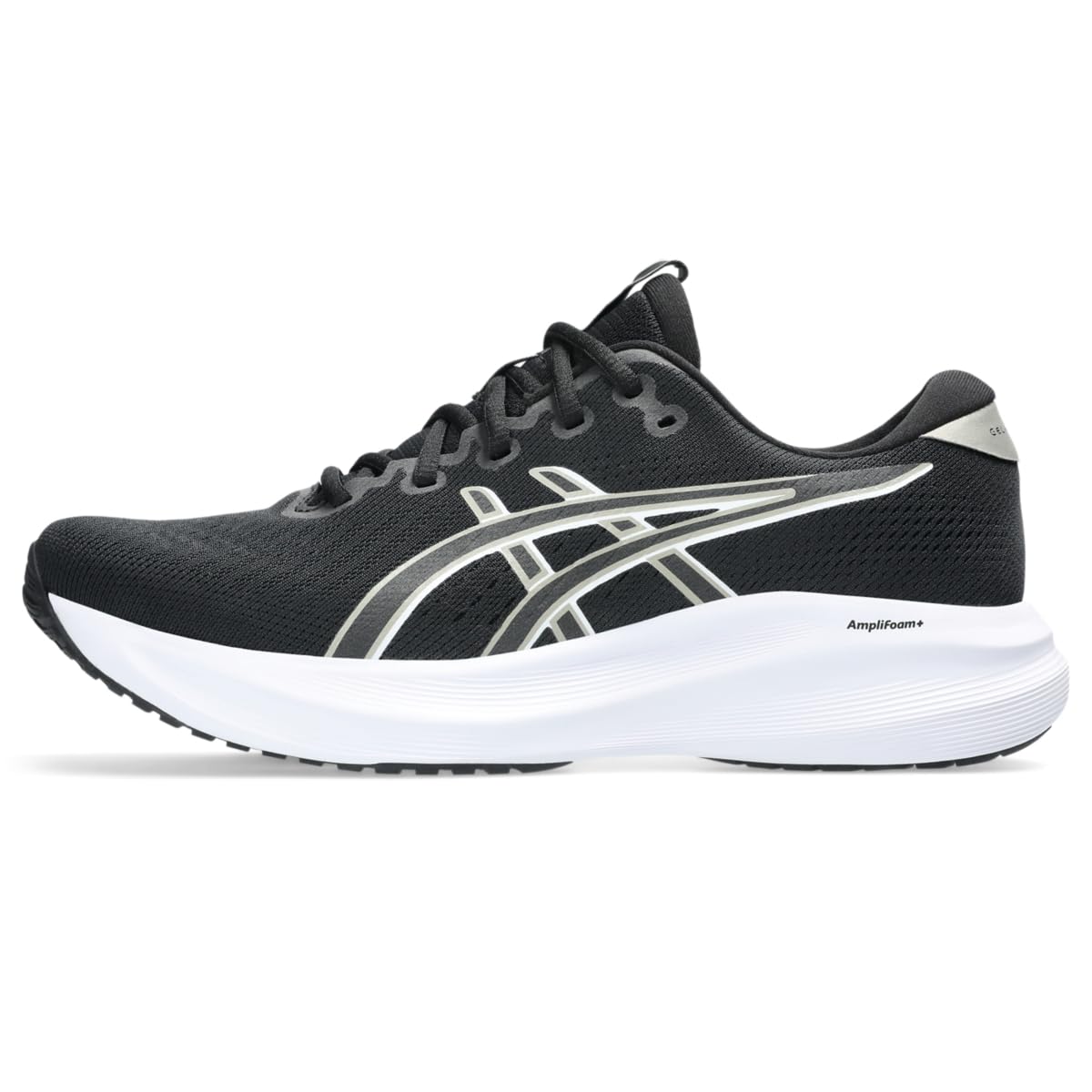
ASICS Gel-Excite 11
Key Features
- Sizing: Runs small for some
- Widths: Standard to extra wide
- Cushioning: Soft for easy miles
- Price: Midrange
The Gel-Excite 11 sits in the middle of this group on price and near the front on comfort per dollar. It’s the least fussy shoe here: soft enough to feel kind on an easy five miles, stable through the ankle, and roomy over the toes — and the extra-wide version is one of the few genuinely wide road shoes on this list.
We like it as the everyday shoe for someone building a base: three or four easy runs a week, one pair doing all of it. There’s nothing to break in, the grip is sure on wet pavement, and the cushioning stays soft rather than sharpening up as the miles add.
Sizing needs a look before you order. It runs small for some feet, so half a size up is the safe call, and if you need a wide fitting, order the extra-wide rather than going longer in the standard. Get that right and it’s the pair here that asks the least of your wallet while still being a proper running shoe.
Pros
- Comfortable straight out of the box
- Real wide and extra-wide fittings
- Steady through the ankle
- Cheapest of the mid-priced picks
Cons
- Firm and unresponsive at faster paces
Our budget-friendly daily trainer: soft, stable, and genuinely wide in the extra-wide fitting, as long as you don’t expect much when you pick up the pace.
Best for Light Daily Runs
Nike Run Defy
Key Features
- Fit: Snug midfoot, roomy toe
- Upper: Breathable mesh
- Weight: Light
- Price: Budget
The Run Defy is about as light as anything we’re recommending, and the mesh upper lets air straight through — a difference you notice on the second half of a summer run rather than the first. We think it’s the smart choice for someone who runs a few miles at a time, lifts, and wants one airy pair for all of it.
Fit is snug through the midfoot with more room at the toe, so if you’re between sizes, take the larger. The laces come short — long enough for a single knot, not for a double — which is the kind of thing you find out on the first run and fix by swapping them out.
Where it stops is distance. There’s less shoe underfoot than the plush picks, and the cushioning you feel at three miles is thinner at eight. At the bottom of this group’s price range, that’s a fair trade for a second pair, a gym shoe, or a first running shoe for someone who isn’t sure yet how much they’ll run.
Pros
- Light on the foot
- Breathes in hot weather
- Strong value at the low end
- Versatile for gym and short runs
Cons
- Laces too short for a double knot
We keep the Run Defy for short, hot, everyday runs: it’s light, it ventilates, and it costs the least here, though it runs out of shoe on long efforts.
Best for Value Daily Runs
Under Armour Charged Assert 9

Key Features
- Sizing: Runs small and narrow
- Widths: Wide option available
- Cushioning: Firm, with road feel
- Price: Budget
The Charged Assert 9 comes up small and runs narrow in the standard width, so a half size up or the wide version isn’t optional advice — it’s the difference between a shoe that works and one that rubs. Get the size right and it’s the most shoe for the least money in this article.
What it does well is hold up. This is a plain, firm, hard-wearing trainer: the cushioning is there but you feel the road through it, the grip is good enough for gym floors and stretching, and it takes daily wear at a hundred miles a month without the upper giving out. It’s the pair here for someone who wants one shoe to do everything and doesn’t want to think about it.
What that firmness buys you is durability and price, and it’s one of the cheapest shoes in this group. Nothing here is asked to do quite as much: gym sessions, three-mile loops, a whole shift on your feet. If your running is measured in short loops rather than weekend long runs, the trade works in your favour.
Pros
- Very cheap for how much it takes
- Takes daily wear without falling apart
- Grip is good for gym and stretching
- Wide option sorts narrow feet
Cons
- Firm ride with limited impact damping
A cheap, plain, hard-wearing trainer for short daily runs and gym sessions — but order half a size up and consider the wide fitting first.
Best for Wide Feet
New Balance Fresh Foam 520 v9

Key Features
- Sizing: Runs small; full size up
- Widths: Wide and extra wide
- Cushioning: Soft Fresh Foam
- Price: Budget
If your foot doesn’t fit a standard width, the Fresh Foam 520 v9 is the most accommodating shoe here. It comes in wide and extra-wide, the toe box is roomy in those fittings, and the rounded sole rolls you forward without asking much of your ankles.
The Fresh Foam is genuinely soft — cushioned enough that a long walk feels like less work — and the all-black version is the pair here most likely to pass with jeans. It’s a comfortable shoe first and a fast shoe never, which is the right priority at this price.
Sizing is the catch: it runs small, and a full size up is the usual fix, especially in the wide fitting. Sort that and you get the roomiest, softest cheap shoe on this list for a broad forefoot — the sort of pair that ends up worn for everything except the run you bought it for.
Pros
- Genuine wide and extra-wide sizing
- Soft, cloud-like underfoot feel
- Lowest price in this group
- Smart enough for everyday wear
Cons
- Outsole and toe box wear early
For wide feet on a budget, the 520 v9 is the easy answer: extra-wide sizes, soft foam, and the lowest price here.
How We Tested 12 Pairs of Men’s Road Running Shoes
We started by pulling every road shoe we could find from brands we already trust and a few we didn’t know well, then filtered by the specs that actually change how a shoe runs: heel-to-toe drop, stack height, listed weight, arch support, and the size run each model comes in. Anything that only came in a narrow range of sizes, or had a reputation for running a half size off, got cut before we ever laced up. That left us with 12 pairs.
Each pair went on my feet and on the feet of two other runners on the team for at least 30 miles, logged over six months of easy four-milers on asphalt before work, weekend long runs on a paved bike path, and a handful of treadmill sessions when the weather turned. We weighed every shoe ourselves in a men’s size 10 instead of trusting the spec sheet, and we sized each one the way a shopper would — starting true to size, then going up or down a half size when the toe box or heel felt off.
Fit got judged on the run, not in the store: heel slip in the first mile, whether the toe box crowded our toes on downhills, whether the arch felt supported at mile eight or started to press. We kept a running note of hot spots and blisters. For durability, we checked outsole wear at 50, 100, and 200 miles and pressed a thumb into the midsole to see whether it sprang back or stayed dented. And since most of us wear these straight from the run to the coffee shop, we judged looks honestly too — a few of the fastest pairs looked like lawn-mowing shoes. Value came down to miles per dollar, and the most expensive pairs were not the ones that lasted longest.
How to Choose Men’s Road Running Shoes
Two decisions do most of the work: how much guidance your stride wants and how much foam you can use. Settle those and the right pairs narrow themselves.
Neutral or stability, decided by a worn-out pair
Most men running easy road miles are fine in a neutral shoe, and the neutral picks here cover that ground generously. Stability models like the Adrenaline GTS 24 add a firmer, more guided ride for feet that roll inward under load; the shoe nudges the stride rather than forcing it.
You already own the test. Look at the outsole of a retired pair: wear concentrated along the inner edge of the heel and the inside of the forefoot points toward a stability shoe, while wear spread across the middle says neutral. If you have no injury history and no inner-edge wear, don’t pay for guidance you don’t need.
How much cushioning you can actually use
More foam is not automatically better; it changes what the shoe is for. The plush end of this group softens repeated pavement miles and makes long easy runs feel shorter, but the deeper stack costs road feel and a little weight. Firmer shoes let you feel the ground and push off it, which suits steady running and gym work.
Match the shoe to your longest regular run rather than your shortest. If your week tops out around three to five miles, a lighter, firmer shoe is plenty. If a long weekend run is the point of the week, the extra foam earns its weight.
Sizing and toe-box width, where returns come from
Most of the disappointment in this category starts with size. Several shoes here run small, so treat the number on the box as a starting point rather than an answer: order a half size up if you’re between sizes, and measure your foot late in the day when it’s at its largest.
The trap is assuming your gym shoe size transfers. A running shoe wants roughly a thumb’s width between your longest toe and the end of the shoe, because feet swell as you run. If the squeeze is across the forefoot rather than at the toe, a wide or extra-wide fitting is the better fix than a longer shoe.
Weight, breathability, and what gives out first
Light shoes feel wonderful in the store and honest at mile eight. Breathable mesh is worth paying for if you run in heat or your feet run hot; the Gel-Nimbus 27 is the airiest shoe we’re recommending, and the Run Defy is close behind at a much lower price.
Then decide how long you want the shoe to last, because the upper and lining usually go before the midsole does. A mesh toe box is both the coolest part of a shoe and the first part to wear through. Keep two pairs in rotation and it matters less; run one pair into the ground and buy for durability, accepting the weight.
Frequently Asked Questions
How many miles should a pair of road running shoes last?
Most midsoles lose meaningful cushioning somewhere between 300 and 500 miles, and light, cheap shoes sit at the lower end. Judge by feel rather than the calendar: press the foam at the outer heel and see whether it springs back, check whether the outsole is smooth there, and notice if an easy run suddenly feels hard.
Can I wear road running shoes on gravel or light trails?
On packed dirt, rail trails, and dry gravel paths, yes, though you give up grip and underfoot protection. Road shoes have shallow tread and little rock shielding, so wet roots, mud, and loose scree are where they stop working. If more than a third of your running is off pavement, buy trail shoes instead.
Do I need a separate pair for racing?
Not for a first 5K or 10K. Train and race in the same pair until you’re chasing a time, then add a lighter shoe for race day and keep the cushioned pair for easy days. The shoes here are daily trainers, which is the right place to spend money first.
Final Verdict
Buy the Brooks Glycerin 22. It’s the most complete shoe in this article: plush enough for long pavement miles, structured enough for a flat-footed stride, comfortable enough that you’ll keep it on afterward, and mid-priced against the premium cruisers here. Order a half size up and you’re done.
If your feet roll inward, the Brooks Adrenaline GTS 24 gives you the same idea with firmer guidance. If you stand all day and run short and easy, the Hoka Bondi 9 is the better chair for your feet.