This post contains affiliate links. We may earn a small commission when you buy through our links — at no extra cost to you.
Choosing a mountaineering tent means cutting through a tangle of marketing labels. Many tents sold as ‘4-season’ are simply 3-season shells with a thicker rainfly — missing snow skirts and reinforced pole hubs needed for alpine storms. The real choice comes down to how much weight you can carry and how much condensation you’re willing to manage.
Heavier tents offer more storm protection and interior space, but they slow you down on approach hikes. Lighter models shed pounds at the cost of livability and moisture control. This guide focuses on the few tents that genuinely balance these trade-offs for alpine use — helping you match a shelter to your climbing style, not a spec sheet.



Best for Base Camp, Winter
ALPS Tasmanian 2P
Key Features
- Seasons: 4 Season
- Weight: 7.9 lbs
- Waterproof: 5000mm floor
- Poles: 7 Aluminum
- Price: Mid-Range
The ALPS Mountaineering Tasmanian 2-Person Tent handles 60-70 mph winds and heavy rain, thanks to its 7 aluminum poles and 5000mm floor waterproofing. Two large vestibules offer ample storage for packs and boots, keeping the interior uncluttered. The clip system makes setup quick despite the 4-season construction, and the interior comfortably fits two adults with room to spare.
At 7.9 lbs, this tent is heavy for alpine ascents, but the weight makes sense for base camps or trips where you split the load between two people. The double-wall design reduces condensation compared to many budget 4-season options, and the snow skirt helps seal out drafts and drifting snow.
This tent suits mountaineers who drive to base camp or share the carry with a partner. It is not the right choice for solo fastpackers or anyone counting ounces for long alpine traverses. The warmth retention holds up in near-freezing temperatures, making it viable for shoulder-season camps and milder winter nights.
The dual vestibules are a standout feature: each side can store a full pack and wet gear without crowding the sleeping area. Setup is straightforward even in windy conditions, and the pole clips engage securely without fumbling.
Pros
- Room for two adults plus gear in separate vestibules
- Wind and rain protection capable of handling alpine storms
- Quick clip system for a 4-season tent
- Warmth retention in near-freezing conditions
Cons
- Too heavy for fast alpine ascents at 7.9 lbs
For mountaineers who value storm resilience and generous gear space over pack weight, the Tasmanian delivers with a proven design that suits base camps and two-person trips.
Best for Winter Car Camping
GEERTOP Navigator 2P
Key Features
- Seasons: 4 Season
- Weight: 6.27 lbs
- Waterproof: 8000mm fly
- Poles: 3 Aluminum
- Price: Mid-Range
The Navigator 2P delivers solid waterproofing (PU8000mm fly, PU5000mm floor), a full snow skirt, and three aluminum poles — all for a mid-range price that undercuts most competitors. That combination makes it a rare find for anyone wanting true four-season capability without the premium cost.
In winter conditions down to 20°F, the tent retains warmth effectively. Condensation is present in still, humid air — site selection and venting help, but some interior moisture should be expected. The high hydrostatic head keeps rain out even during heavy storms, which is a strong point for wet alpine conditions.
This tent suits budget-conscious mountaineers who need 4-season protection but can work around a moderate weight of 6.27 pounds and manage condensation with careful camp setup. It is less ideal for fast alpine missions where every gram counts or for those who find interior moisture unacceptable.
Pros
- High hydrostatic head waterproofing keeps occupants dry in heavy rain.
- Retains warmth effectively in sub-freezing temperatures.
- Sturdy aluminum poles and reinforced materials handle wind and snow load.
Cons
- Condensation buildup occurs in humid or still conditions; venting reduces but does not eliminate moisture.
- Zipper quality may be inconsistent, with some units experiencing issues after limited use.
A solid 4-season tent for the budget-minded mountaineer who prioritizes protection over weight and can manage condensation with careful site selection.
Best for Solo Fastpacking
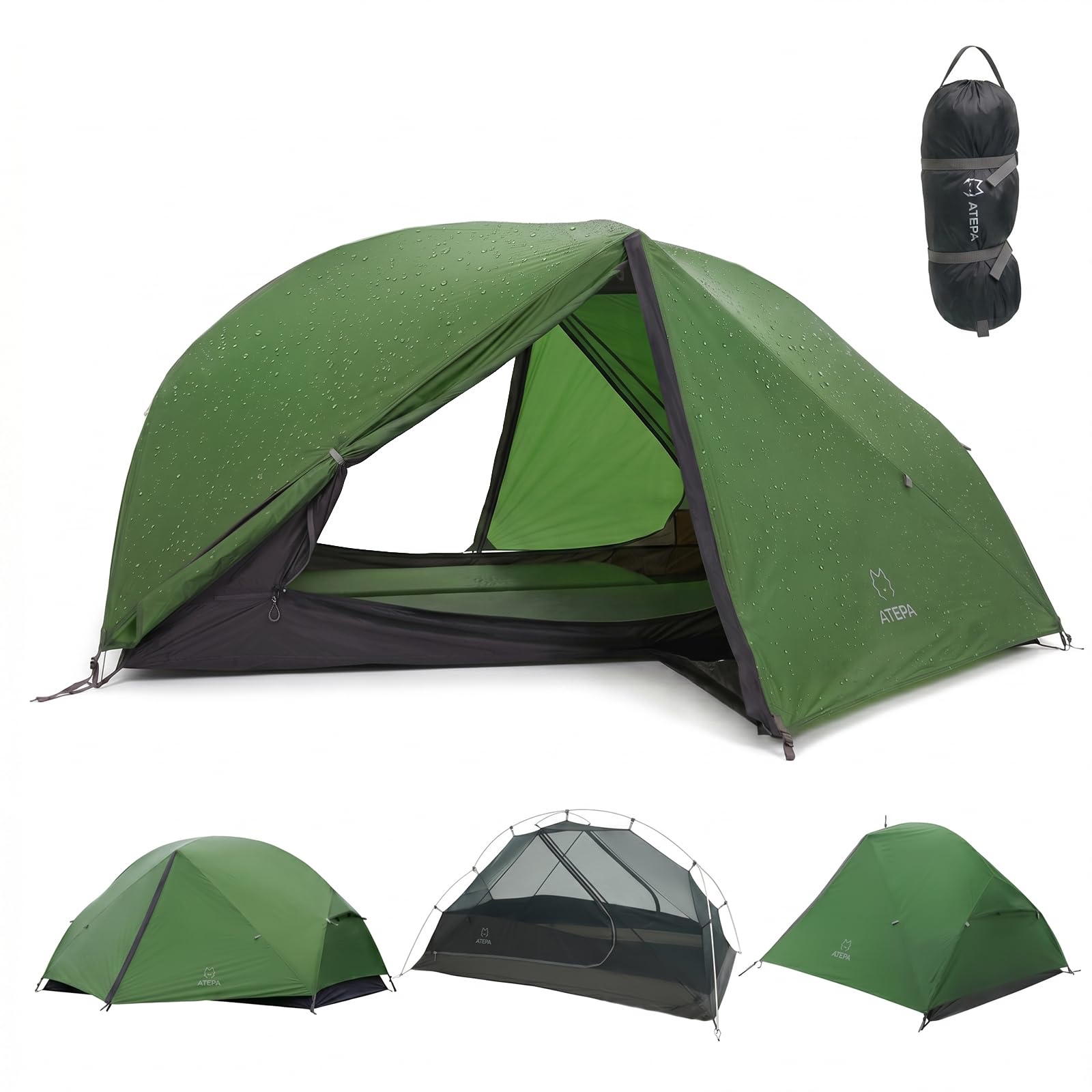
ATEPA Voyage 1P
Key Features
- Seasons: 4 Season
- Weight: 3.78 lbs
- Waterproof: 4000mm
- Poles: 1 Aluminum + cross
- Price: Mid-Range
The ATEPA Voyage 1P packs 4-season protection into a frame that barely registers on the scale — a real advantage for fast alpine ascents where every ounce matters. With a 4000mm waterproof coating and a freestanding aluminum pole structure, it sets up quickly on snow or rock. The packed size is small enough to stow inside a summit pack, and the cross beam adds headroom without adding noticeable bulk.
This tent is built for solo fastpackers who are comfortable trading interior room and absolute weather certainty for weight savings. In sustained rain, the fly may allow moisture through the seams unless you apply aftermarket sealant — a tradeoff common in ultralight silnylon shelters. The interior is snug: enough for one person and minimal gear, but not for two or bulky winter equipment. For the right buyer, these limits are acceptable boundaries, not dealbreakers.
Pros
- Ultralight and compact enough for fastpacking and alpine bivouacs
- Freestanding design simplifies setup on snow, rock, or tent pads
- Good value for a 4-season shelter under 4 pounds
Cons
- In wet alpine conditions, factory seam taping may not provide full waterproofing — aftermarket seam sealing is recommended
- Interior is a true solo shelter; gear storage alongside the occupant is limited
For the fastpacker who wants 4-season capability without the typical 6+ lb weight, the Voyage 1P delivers — just budget time and sealant for the weatherproofing.
Best for Solo Light Snow
camppal 1P 4-Season
Key Features
- Seasons: 4 Season
- Weight: 3.75 lbs
- Waterproof: 4000mm
- Poles: 1 Aluminum ridge
- Price: Budget
The camppal 1P 4-Season tent packs down to a compact size that fits inside a backpack alongside other alpine gear, making it one of the lighter four-season shelters at a budget-friendly price. Compared to ultralight solo alternatives that require aftermarket seam sealing, this tent arrives ready to pitch with a solid 3500-4000mm waterproof coating for reliable snow and rain protection.
Setup takes minutes thanks to a single aluminum ridge pole and clip system — a welcome feature after a long approach. The 3.75-pound carry weight is reasonable for alpine bivouacs where every ounce counts, and the build quality holds up well for the price point.
This tent suits solo climbers and backpackers on a tight budget who need a four-season shelter for short, moderate trips. It is not built for extended storms or tall users, but for those who prioritize lightweight packability over interior space and are comfortable with managing condensation through careful venting and site selection, it provides entry-level alpine protection at a cost that leaves room in the budget for other gear.
Pros
- Lightweight and compact for solo alpine missions, fitting easily into a backpack.
- Setup is quick and simple with a single pole and clip system.
- Build quality is solid for the price, with decent waterproofing and pole strength.
Cons
- Inside a one-person shelter, the floor area and peak height suit smaller-framed users — taller individuals and those wanting to store gear inside will find it cramped.
- With the rainfly fully sealed against precipitation, interior moisture buildup can occur; selecting a well-ventilated campsite or cracking vents helps reduce condensation.
For budget-minded solo climbers who can accept a compact interior and stay on top of venting, this tent offers a low-cost way to get four-season coverage on short alpine trips.
How to Choose
The most common mistake is ignoring snow skirts and pole reinforcement – features that separate a true mountaineering tent from a 3-season tent with a thicker fly.
Seasons Rating
A 4-season rating is not a guarantee of alpine readiness. Many tents labeled ‘4-season’ lack a snow skirt and fully closable vents, relying instead on a thicker rainfly. In a real storm, that missing skirt allows spindrift to enter under the fly, and unsealed vents let in snow.
Look for a tent that explicitly lists a snow skirt and pole hubs that can take snow loads. If the manufacturer says ‘suitable for winter camping’ instead of ‘4-season mountaineering,’ it is likely a 3-season tent with extra fabric.
Weight vs. Durability
Every pound saved in a mountaineering tent comes from thinner fabric, fewer poles, or smaller floor space. Thinner fabrics tear more easily under snow stress, and fewer poles reduce the tent’s ability to shed wind loads.
A 6-8 lb 2-person tent offers a reasonable balance for most alpine approaches. Below 4 lbs, the tent becomes a solo shelter that must be pitched with care to avoid collapse in high winds.
Waterproof Rating
Hydrostatic head ratings above 3000mm are adequate for rain, but alpine snow often melts and pools on the fly, increasing sustained pressure. A rating of 5000mm or higher on the fly and 8000mm on the floor provides a safer margin for snowmelt.
Ratings below 3000mm will wet out under prolonged snow exposure. Always check the fly material – 20D SilNylon is lighter but less abrasion-resistant than 40D polyester.
Snow Skirt and Vents
A snow skirt prevents spindrift from entering under the fly, but it also reduces airflow, increasing interior condensation. Fully closable vents allow you to adjust ventilation without letting in precipitation.
Look for a tent with at least one top vent that can be operated from inside – this lets you exhaust moist breath while keeping the snow skirt deployed.
Floor Area and Vestibules
In a mountaineering tent, floor area is less critical than vestibule space. Gear stored inside a wet tent increases frost buildup. Dual vestibules allow each person to store gear outside the inner tent.
For a 2-person team, a combined vestibule area of at least 8 sq ft is sufficient for packs and boots. Solo users can get by with a single vestibule that fits a pack.
FAQ
Why does my 4-season tent get so much condensation inside at night?
Condensation happens when warm, moist air from your breath hits a cold fly surface. In alpine tents, especially those with a full-coverage fly, ventilation is limited. To reduce it, pitch the tent with the fly vent open on the leeward side, and avoid cooking inside the vestibule. Even with perfect venting, some frost is normal in sub-freezing conditions.
Can I use a 3-season tent for light snow camping if I add a footprint?
A footprint does not turn a 3-season tent into a winter shelter. The real danger is pole failure under snow load – 3-season poles are not designed for heavy snow. A gust of wind or an inch of wet snow can snap a pole. Stick to 4-season tents for any snow where drifting or accumulation is possible.
What is the best weight for a 2-person mountaineering tent?
For most alpine ascents where two people share the load, a trail weight of 6-8 lbs offers a good balance of stormworthiness and packability. Below 6 lbs, you start sacrificing fabric durability or pole strength. Above 8 lbs, the tent becomes better suited for base camp than for moving camp daily.