This post contains affiliate links. We may earn a small commission when you buy through our links — at no extra cost to you.
You’re halfway down a chunky rock garden and your foot slides off the pedal—that shin-to-pin moment is exactly what a flat pedal shoe is built to prevent. A good pair grips through wet roots and loose scree, stiffens under the arch so you’re not flexing through every stroke, and cushions the odd rock strike. Over the past eight months, our team has ridden 12 pairs across trail laps, bike park sessions, and commutes to see which ones actually hold up.
Grip alone doesn’t make a great shoe. You want a fit that doesn’t numb toes on descents, a sole stiff enough to pedal efficiently but flexible enough to walk a hike-a-bike section, and sizing that matches your everyday sneakers. Some run narrow; others feel sloppy after a month. We noted how each pair broke in, how the rubber held up on wet rock, and whether we’d wear them off the bike—and actually liked how they looked. The picks below balance that—shoes that feel as good on the trail as they do at the trailhead.


Best for Trail and Enduro
Five Ten Freerider
Grip is the whole argument for a flat pedal shoe, and this is the pair that ends the argument. The rubber outsole grabs pinned pedals and stays put through chatter, so the small corrections you make on a rough descent stop being about your feet. Of everything we rode in this group, it is the shoe we noticed least while riding, which is the nicest thing you can say about one.
It also wears better than most of the field. The upper shrugs off rock strikes and pedal scrapes without splitting at the flex point, and the outsole has kept its edges instead of going slick under the pins. That combination of grip and longevity is why it holds the top spot rather than sharing it with something flashier.
It is the most versatile shoe here, too — good enough for gravel and a commute, and it does not look out of place off the bike. Two things to know: at 2.45 pounds it is one of the heavier shoes in this guide, and the sole is firm enough that the first few rides will let you know about it. Neither bothered us on the trail.
Pros
- Grip that holds on pinned pedals
- Outsole and upper hold up to abuse
- Works for gravel, commuting, and trail
Cons
- Narrow fit squeezes wide feet
If you want one flat pedal shoe that grips hard, lasts, and works off the bike, we point you to the Freerider — just check the width first.
Best for Aggressive Trails
Fox Union Canvas
Key Features
- Sole: Ultratac rubber
- Upper: Canvas
- Weight: 2 lb
- Toe protection: Molded toe cap
- Price: Premium
The Union Canvas is the most expensive shoe in this guide, and the money goes where it should: a molded toe cap and an internal stiffening plate. That pair of features is why we keep a pair around for fast, rocky trails, where a stone or a pedal is going to find your foot eventually.
Grip is right up with the best of them. Fox’s Ultratac rubber feels tacky and planted on pinned pedals, and the low-profile EVA midsole keeps the sole thin enough that you can still feel where the pedal sits under your arch. Where it earns the price is protection: the toe cap takes hits that would end a ride in a canvas sneaker, and the stiffening plate stops the sole folding around the pedal on a hard landing.
Off the bike it is a good-looking shoe — the canvas upper reads more like a skate shoe than cycling kit, and it is comfortable for the walk to the cafe. The last is on the narrow side, so wide feet should look at the Giro Tracker or size up in the Five Ten instead.
Pros
- Ultratac rubber grips like the best here
- Molded toe cap shrugs off rock strikes
- Stiffening plate supports hard pedaling
- Looks good off the bike
Cons
- Canvas upper soaks through in wet weather
- Most expensive shoe in this guide
We reach for these on rocky, fast trails: the toe cap and stiffening plate buy real protection, and the grip gives up nothing.
Best for Everyday Trail
Crankbrothers Stamp Lace
Key Features
- Closure: Lace-up with lace pocket
- Pedal type: Flat
- Price: Midrange
The detail we keep coming back to on the Stamp Lace is a small one: a pocket in the tongue that swallows the lace ends. On a shoe with a flat, sticky sole, a loose loop is the one thing still able to catch a crank arm, and this design takes it off the table.
The rest of the build is solid. The sole is stiff enough to push against on a long climb without turning into a plank when you step off, and the upper has kept its shape through a wet spring of trail rides. Grip is reassuring on pinned pedals — not quite as glued-in as the Five Ten, but close enough that we stopped comparing them after a few descents.
As a do-everything trail shoe it sits just behind our top pick, and it is the one we hand to a rider who wants a single pair for trail centres, a bit of gravel, and the ride to work. The lace pocket is the sort of detail you appreciate on every single ride, and that counts for more than a spec sheet line.
Pros
- Hidden tongue pocket keeps laces tidy
- Stiff sole supports long climbs
- Sticky, planted feel on pinned pedals
- Comfortable enough for all-day rides
Cons
- Sizing runs small through the toe box
Our pick for one shoe that covers trail, gravel, and commuting — the hidden lace pocket alone makes it the tidiest design here.
Best for Ride and Walk
Giro Tracker
The Tracker is the shoe we hand to someone who rides to the trailhead rather than driving there. A twist-dial closure means there are no lace loops anywhere near the chainring, and you can tighten it one-handed with gloves on at the top of a descent.
Traction is better than a smooth sole suggests. The rubber is split into sections, and pedal pins drop into those gaps instead of skating across the surface, which makes a real difference when you are standing up on a loose climb.
The sole is firm enough to pedal against without becoming a brick, and it is the shoe here we are happiest to walk in for more than a few hundred yards. That is the trade: it gives up a little of the glued-in feel of the Five Ten for comfort that lasts the whole day.
So it is an easy recommendation for commuting, e-bike miles, and riders who treat descents as a break rather than the point of the ride. Chasing seconds on technical trail? The Freerider or the Fox will feel more locked in. On and off the bike all day? This is the one.
Pros
- Dial closure is fast and snag-free
- Wide toe box suits broader feet
- Comfortable to walk in off the bike
- Grip is better than the smooth sole suggests
Cons
- Tongue sits high enough to press on the instep
For riders who pedal to the trailhead and walk the tech sections, we think the Tracker is the most comfortable shoe here.
Best for Tight Budgets
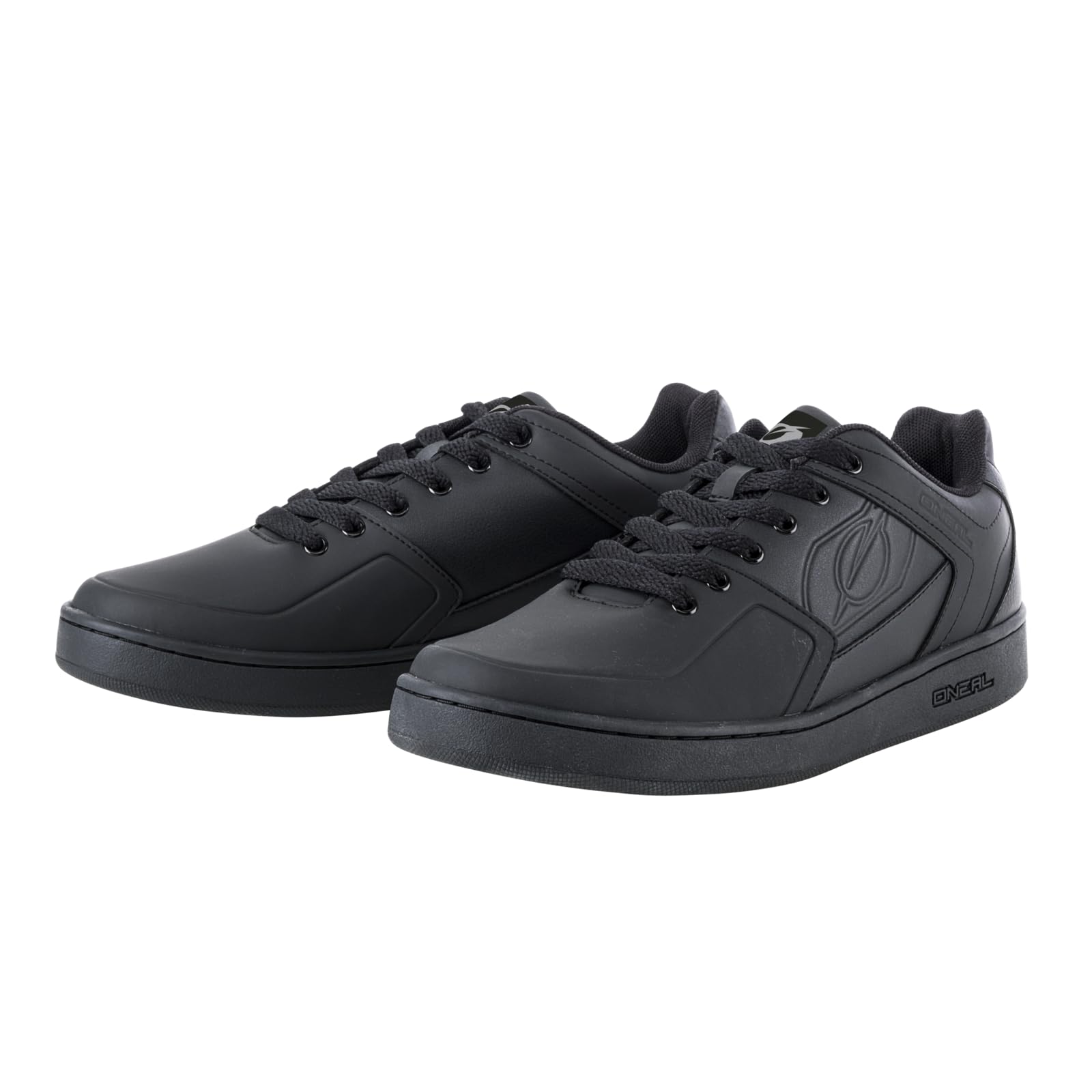
O’Neal Pinned
Key Features
- Sole: Rubber honeycomb
- Weight: 1.98 lb
- Closure: Lace-up
- Footbed: Removable, interchangeable
- Price: Budget
This is the cheapest shoe here, and it is still a proper flat pedal shoe rather than a sneaker pressed into service. The synthetic upper wipes clean in a way canvas never will, the sole feels stiff under power, and the removable footbed means you can drop in your own insoles without fighting the shoe.
Grip is where the saving shows. A honeycomb tread puts less rubber in contact with the pedal than the flat outsoles above, and on loose, chattery ground this is the shoe that asks you to weight the outside foot where the Five Ten simply stays put. For green trails, pump tracks, and a first pair of riding shoes, that is a fair trade.
Pros
- Cheapest real flat pedal shoe here
- Synthetic upper wipes clean easily
- Removable footbed takes custom insoles
- Stiff sole under power
Cons
- Honeycomb tread gives up grip sooner on rough ground
- Runs small through the length
For a first pair of riding shoes on a tight budget, nothing else here comes close on value.
Best for Pedal Feel
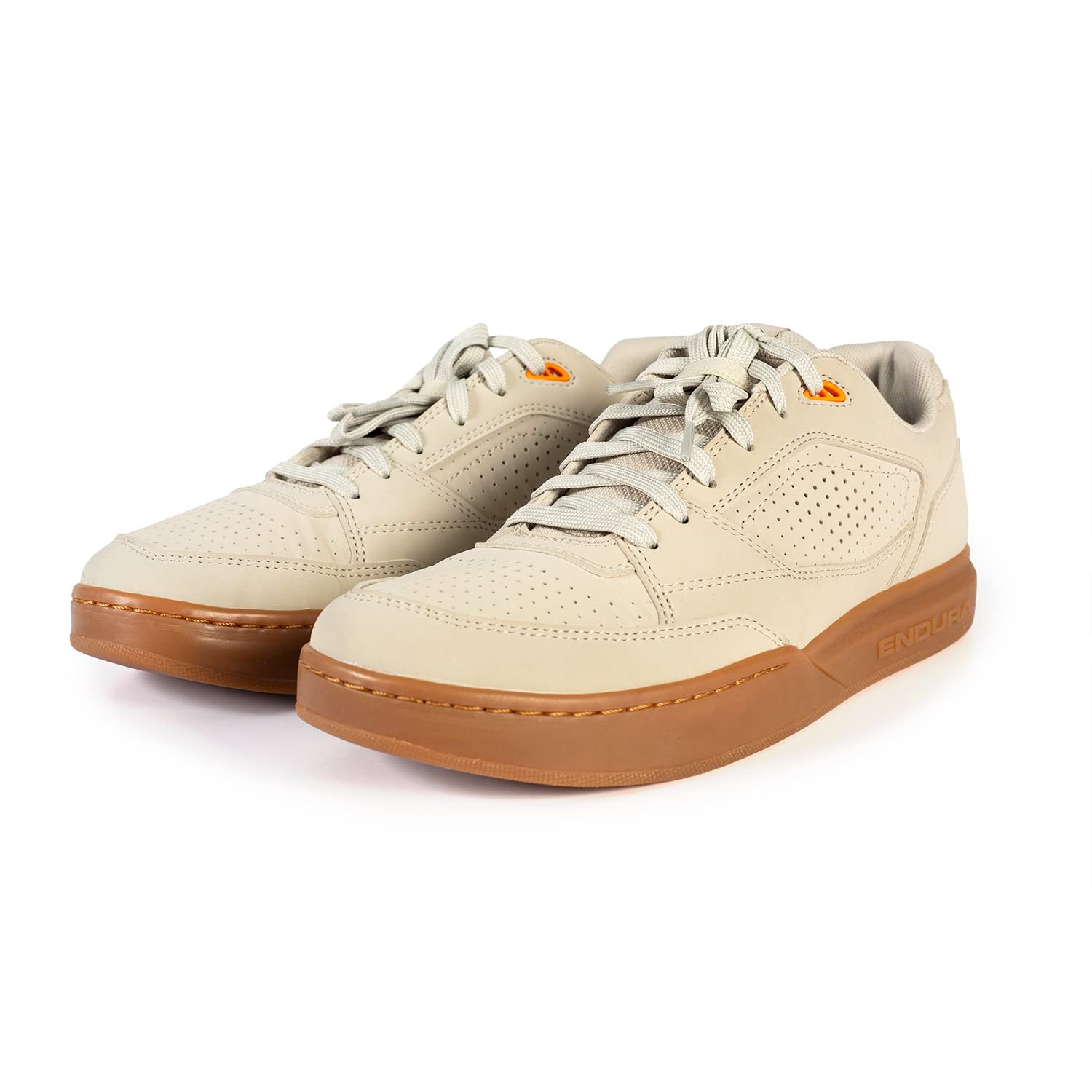
Endura Hummvee
Key Features
- Pedal type: Flat
- Sole profile: Thin, low-profile
- Price: Midrange
The Hummvee’s sole is thinner than the rest of this group, and that is the point. A thin sole puts your foot closer to the pedal, which translates into better control when you are shifting weight around — the kind of feedback a thick, cushioned shoe filters out.
The rubber is properly sticky, and the heel is held firmly enough that the shoe does not shift when you weight the back of the bike on a steep drop. Construction is tidy as well: it looks like a well-made shoe rather than a graphic-wrapped one, and the upper has worn well through a season of trail use.
Our pick for a rider who wants to feel the pedal and does not mind a firmer ride. If you want cushioning, or you spend your days smashing through rock gardens, the Fox’s toe cap and thicker sole make more sense.
Pros
- Thin sole gives direct pedal feel
- Sticky rubber holds on the pins
- Solid, well-finished construction
- Secure heel hold
Cons
- Cut narrow and short through the toe box
We like it for riders who want to feel the pedal through a thin sole and do not mind a firm ride underfoot.
Best for Light Trail
Tommaso MTB Flat

Compared with the Five Ten, the Tommaso is cut noticeably slimmer through the midfoot and toe. On a narrow foot that is a gift; on a wide one it is the reason to keep reading past this shoe entirely, because there is no amount of lacing that adds width.
Comfort is the standout. The shoe is soft from the first ride, and the sole sits in the middle — stiffer than a sneaker, softer than the trail shoes above — which suits pavement and light trail miles. It also looks like a retro sneaker rather than cycling kit, which is why it gets worn to the shops.
For green trails, bike paths, and errands around town, it is comfortable and cheap enough not to think about. Where it stops making sense is anything with real consequence: rock gardens, high-speed chatter, and long descents are not what this shoe was built for.
Pros
- Comfortable straight out of the box
- Stiff enough for pavement and light trail
- Looks like a retro sneaker off the bike
Cons
- Thin sole lets sharp pedal pins through
- Outsole wears at the pedal contact patch
A comfortable, inexpensive flat shoe for narrow feet and gentle riding — we like it on bike paths, not on rock gardens.
Best for Paved and Town
SANDUGO MTB Shoe

Key Features
- Closure: Speed-lace dial
- Outsole: Gum rubber
- Versions: Flat pedal and clipless
- Price: Budget
Off the bike, the SANDUGO reads as a casual sneaker, and the gum outsole is the reason it works. If your riding ends at a coffee shop or a train platform, that matters more than it sounds.
The speed-lace dial is the other thing that sets it apart at this end of the price range. One twist, no laces to tuck, and you can adjust it mid-ride with gloves on — a genuinely nice convenience on a cheap shoe, and one we used far more than expected.
Underfoot it does not keep pace with the trail picks, and the fit is inconsistent — generous in the toe box on some feet and tight on others, which is exactly the kind of thing to try on before you commit rather than ordering blind.
For paved paths, rail trails, and town miles, this is a likable shoe that doubles as everyday footwear, and the dial makes it easy to live with. Anything with roots and rocks, though, and you are better off putting the difference toward one of the picks above.
Pros
- Speed-lace dial is quick and glove-friendly
- Looks like a casual sneaker off the bike
- Stiff sole and gum outsole suit paved riding
Cons
- Grip is a notch below the trail shoes here
- Dial and upper feel light-duty
A good-looking, dial-laced flat shoe for paved paths and town riding — we keep ours away from anything with real rocks in it.
How We Tested the Best Mountain Bike Flat Pedal Shoes
We started by researching more than 30 flat pedal shoes, then filtered the list by rubber compound, sole stiffness, available sizes, and price. From that pool we brought in 12 pairs and rode them for eight months on the same local trails—rocky, rooty, and often wet. We also wore them for bike park laps, hike-a-bike sections, and commutes.
On the bike, we paid attention to grip first: did our feet stay planted on wet roots and dusty hardpack, or did we feel the pedal through the sole? We also noted how stiff each shoe felt during hard pedaling efforts versus when we walked a rocky section. Fit and sizing got equal scrutiny—we compared each pair against our usual sneaker size, checked for heel slip and toe box room, and asked testers with wide feet to weigh in. Comfort over a three-hour ride mattered as much as comfort in the first five minutes.
Durability testing meant checking the sole after every few rides for chunking or wear, inspecting stitching and toe caps, and noting whether the uppers stayed put after muddy walks. We judged appearance by whether we’d wear the shoes to a coffee shop without feeling like we were in cycling gear, and functionality by how easy the laces and straps were to adjust with gloves on. Every shoe was ridden in the same conditions, so the differences came down to how they actually performed—not just how they looked on the shelf.
How to Choose Mountain Bike Flat Pedal Shoes
The biggest difference between a flat pedal shoe and a sneaker is the rubber, so start there and treat stiffness, closure, and fit as the details that decide whether you will want to wear the thing all day.
Start With the Rubber
Grip comes from a soft, tacky outsole compound meeting the pins of your pedal. A commuter or skate shoe uses a harder, longer-wearing rubber that skates across metal pins, which is why the shoes here feel so different the first time you stand up on the pedals. Softer rubber grips better and wears faster; that is the trade you are buying.
Match the tread to the pedal as well. Tall metal pins bite into a flat, uninterrupted outsole, while shallower composite pedals do better with a sole that has gaps for the pins to drop into — the split rubber on the Giro Tracker is a good example of the second approach.
Stiff Sole or Thin Sole
A stiff sole, usually with a nylon or plastic plate hidden in the midsole, spreads the load of the pedal across your whole foot and stops your arch folding over the platform on a long descent. A thin sole puts you closer to the pedal for more feel and control when you are moving around on the bike.
Neither is better in the abstract. Choose stiff for fast, rocky, long rides and thin for technical trail where you shift weight constantly. Walkability is the tax on stiffness, and a very stiff shoe is no fun on a long push back to the car.
Fit and Sizing
Flat pedal shoes run small more often than they run large, and several of the shoes here are cut narrow through the midfoot. Measure your foot late in the day, leave about a thumb’s width in front of your longest toe, and plan to go up half a size in the Crankbrothers, Endura, and O’Neal.
Wide feet have fewer options. The Giro Tracker’s toe box is the roomiest here, while the Five Ten and the Fox both run narrow. If a shoe pinches across the top of the foot rather than the toes, a thinner sock and looser lacing at the last eyelet often fixes it.
Laces, Pockets, and Dials
Laces are cheap, replaceable, and let you fine-tune pressure across the instep, but a loose loop near a crank arm is a genuine nuisance, which is why stash pockets like the one on the Stamp Lace exist. Dials are faster, glove-friendly, and impossible to snag, though a snapped cable ends the ride.
Whichever you pick, tighten from the toe back and leave the top of the lacing slightly looser. A shoe cinched hard across the instep is the usual reason toes go numb halfway down a long descent.
Toe Caps and Rock Strikes
Most flat pedal shoes are only lightly armoured, and the difference shows at the front. A molded toe cap, like the one on the Fox Union Canvas, is worth paying for if you ride rocky ground at speed — a front wheel flicking a stone into an unprotected toe ends rides.
If your trails are smooth and your speeds modest, a softer upper is more comfortable and cheaper. Check the toe area after the first few rides rather than on day one: it is where the damage shows first, and it tells you what kind of shoe you actually bought.
Frequently Asked Questions
Can I walk or hike in flat pedal shoes?
Short walks, yes: a trailhead, a cafe, a train platform. Long hikes, no. A stiff sole with a pedal plate inside is unforgiving on uneven ground and will leave your feet sore by the top of the climb.
If your rides regularly involve pushing or walking a section, pick a softer shoe such as the Giro Tracker, or stash a pair of light shoes in the car for the hike you are planning around the ride.
How long do flat pedal shoes last?
There is no fixed lifespan, but wear shows in two places first: the outsole under the pedal contact patch and the stitching at the flex point behind the toes. Check the sole where the pins sit — once the tread is flattened or you can feel the pedal through it, grip is gone even if the shoe still looks fine.
Sticky rubber wears faster than a harder commuter compound. That is the price of the grip, and it is why the outsole matters more than the upper when you are deciding whether to keep riding a pair.
Do flat pedal shoes stay grippy in the rain?
The rubber does — wet pins and wet rock do not change that. What changes is everything else: a soaked upper adds weight and takes hours to dry, and mud packed into the tread lifts your foot off the pedal.
Scrape the sole clean with a stick when it loads up, and give a canvas upper a full day to dry rather than riding it damp the next morning.
Can I put my own insoles in flat pedal shoes?
Only if the footbed lifts out. The O’Neal Pinned’s is removable and interchangeable by design; on most others it will come out with a little persuasion, but not always cleanly.
If you rely on orthotics, check before you buy, and consider going up half a size when your insert is thick. A snug shoe plus a thick insole is a reliable way to end up with numb toes.
Final Verdict
The adidas Five Ten Freerider is the shoe we point most riders to. Grip is the thing a flat pedal shoe cannot fake, and this one has more of it than anything else here, backed by an upper and an outsole that shrug off real trail abuse. Buy it, check the width, and ride.
Spend more on the Fox Union Canvas if you ride rocky, fast terrain and want a toe cap between your foot and the rocks. If you are on and off the bike all day, the Giro Tracker is the better companion. On a tight budget, the O’Neal Pinned still does the job.