This post contains affiliate links. We may earn a small commission when you buy through our links — at no extra cost to you.
A mountain bike shoe has to do two jobs that fight each other: stay stiff under the pedal for power, and flex enough to scramble up a rocky hike-a-bike without waddling. Most pairs get that tension wrong—too stiff and a stream crossing becomes a slip hazard; too soft and your arch aches on the second lap. The right pair grips wet roots, fits straight out of the box (sizing swings wildly between brands), and shrugs off rock strikes and pedal scuffing for more than a season.
Comfort is the sneaky variable—great in the parking lot, a hot spot by mile 15. We rode 14 pairs for eight months on rocky descents, wet singletrack, and gravel grinds; the winners share a few design details: a closure that holds tension without pressure points, a toe cap that protects, and drainage that empties after a stream crossing. We noted which pairs look like bike shoes and which you’d wear to the coffee shop, and where a higher price buys better materials. The picks below are the ones we kept reaching for.
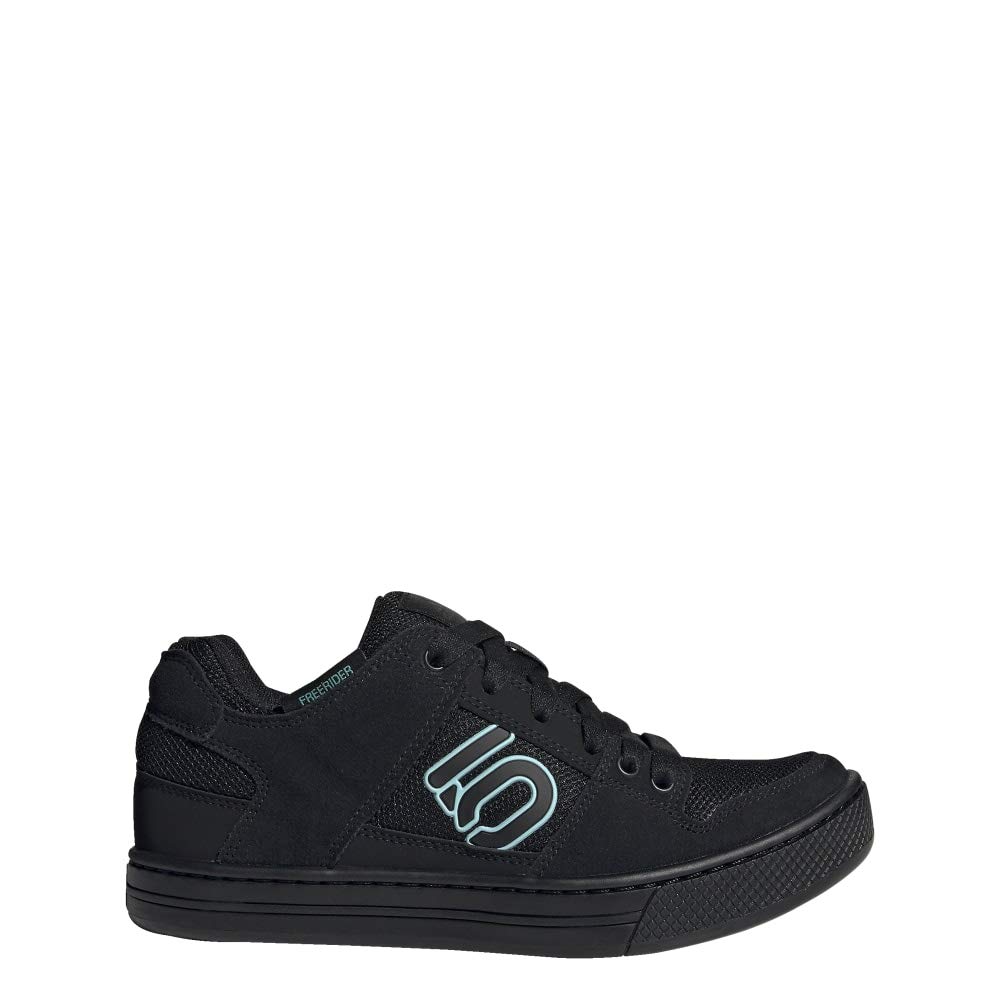


Best for All-Around Trail Riding
Five Ten Freerider Pro
Key Features
- Sole: Stiff, grippy
- Pedal system: Flat
- Listed weight: 1 lb
- Toe protection: Reinforced
- Price: Midrange
The Freerider Pro puts a firm, planted layer between your foot and the pedal. The sole is stiff enough that your foot does not curl around the platform, and the rubber has the kind of grip that keeps a flat-pedal shoe from skipping when the trail gets chattery. We noticed the reinforced toe right away too; it gives you a little more confidence when rocks and roots crowd the line.
That combination is why it is our top pick. It is the flat-pedal shoe we recommend first to trail riders who want one pair to handle climbs, descents, and the occasional walk out. The sole is firm enough for efficient pedaling, but not so rigid that a short hike feels punishing. The upper hugs the foot without pinching, and the reinforced toe earns its keep.
Fit is the caveat. Sizing is inconsistent enough that we do not recommend ordering blind: some pairs feel true, others run large or narrow. Buy from a seller with easy exchanges, and check heel lift and toe room with the socks you ride in. Once the size is right, the shoe disappears under you – the highest compliment we can pay a flat-pedal trail shoe.
Pros
- Stiff sole keeps feet planted
- Grippy tread on flat pedals
- Reinforced toe for rock strikes
Cons
- Inconsistent fit; try before committing
- Firmer sole is less forgiving off the bike
We recommend the Freerider Pro as the flat-pedal default: its stiff, grippy sole and reinforced toe make trail riding feel planted, and the price stays reasonable for the performance.
Best for Hike-A-Bike Days
Five Ten Trailcross LT
Key Features
- Grip: Sticky on pedals
- Sole: Stiff with walking flex
- Weight: 14.4 oz
- Pedal system: Flat
- Price: Midrange
The Trailcross LT is the pair we reach for when a ride includes as much walking as pedaling. The sole is stiff enough to pedal efficiently, but it has more give than a pure downhill shoe, so hiking a rocky section does not feel like walking in a plank. The grip on flat pedals is still the main event: the rubber sticks, and the shoe feels stable when you are up on the pedals.
We also noticed the lighter feel. This is not a delicate shoe – it has enough structure for trail riding – but it does not drag on your feet when you are off the bike. The overall shape looks more like a sneaker than a race shoe, which makes it easy to wear to the trailhead.
The trade-off is fit and stiffness. The fit draws a mixed picture, with some feet finding it roomy and others finding it narrow, so try your usual size before committing. The sole is not the stiffest here, which costs a little pedaling snap on smooth climbs. For long trail days, hike-a-bike sections, and riders who want one flat-pedal shoe that works on and off the bike, it is an easy recommendation. We kept reaching for it on days when the route was uncertain, and that is the clearest sign of a good trail shoe.
Pros
- Grippy on flat pedals
- More flex for walking
- Lightweight feel
- Sneaker-like looks
Cons
- Fit can run roomy or narrow
- Less pedaling snap than stiff race shoes
We like the Trailcross LT for rides that include walking: it keeps the flat-pedal grip and support while feeling easier on your feet when you shoulder the bike.
Best for Casual Flat-Pedal Rides
Crankbrothers Stamp Lace
Key Features
- Sole: Stiff, grippy
- Closure: Lace-up
- Lace storage: Hidden pocket
- Pedal system: Flat
- Price: Midrange
The detail that sets the Stamp Lace apart is the hidden lace pocket. It swallows the extra lace so nothing dangles near the chainring or snags on a branch. That sounds small, but it solves a real annoyance.
On the trail, the sole feels sturdy and grippy, with enough stiffness to push against the pedals without turning every rock into a pressure point. The build feels solid, and the navy-and-gum finish looks more like a lifestyle shoe than a race shoe. Sizing is the catch: the shoe tends to run small, and the fit can feel cramped across the foot. Going up a size is the safer move if you are between sizes.
We recommend it to riders who want a flat-pedal shoe they can wear off the bike without looking like they are heading to a race. It has the grip and lace security for real trail riding, but the fit and sizing demand attention. If you have a wide foot, try this one carefully; if you want a casual flat shoe with a smart detail and a sturdy sole, it earns its place. What we remember after a ride is not a spec but the absence of fuss: no loose lace, no slipping foot, no reason to think about the shoe.
Pros
- Hidden lace pocket secures laces
- Sticky sole on flat pedals
- Sturdy, casual-looking build
Cons
- Runs small; size up
- Fit can feel cramped
The Stamp Lace is our pick for a casual flat-pedal shoe: the hidden lace pocket keeps laces out of the drivetrain, and the sole stays planted without feeling like a race shoe.
Best for Budget Clipless Trail
Giro Gauge
Key Features
- Sole: Medium-stiff
- Closure: Lace-up
- Walkability: Cleat recess clears pavement
- Pedal system: 2-bolt clipless
- Price: Budget
The Gauge is aimed at riders who want to try clipless pedals without buying a race shoe. It uses a medium-stiff sole, a walkable shape, and a simple lace-up build.
We noticed the walkability first. The cleat sits recessed enough that you can walk on pavement without the hardware clacking with every step, which is not a given at this end of the category. The sole is stiff enough for pedaling but not so rigid that a short hike feels awkward. The trade-off is a narrower fit, especially through the toe box.
The Gauge is our budget clipless pick here, with one condition: try it on before you commit if you have a wide forefoot. The fit is the limiting factor, more than the ride quality. If it suits your foot, it is a lot of shoe for the money, and a smart way to decide whether clipless riding is for you. The cleat is the part you notice first, and the part you stop noticing once the fit is right.
Pros
- Walkable SPD design
- Medium-stiff sole for pedaling
- Low-cost way to try clipless
Cons
- Narrow toe box
- Laces can wear through early
The Gauge is the budget clipless shoe we recommend for trail riders who want to try SPD pedals without spending much, as long as the fit works.
Best for Premium Xc Clipless
Fizik M6 UOMO BOA
Key Features
- Sole: Stiff
- Closure: BOA dial
- Pedal system: 2-bolt clipless
- Listed weight: 1.3 lb
- Price: Premium
The M6 UOMO BOA is built around two ideas: a stiff sole for putting power down and a BOA dial for getting the fit right in seconds. The shoe feels light in the hand, and the closure is easy to tighten on the fly. The sole is firm enough that the pedal platform feels direct, which is exactly what you want for XC and gravel-style riding.
We think the M6 makes the most sense for riders who prioritize pedaling efficiency and low weight over hike-a-bike comfort. It is not the shoe we reach for when the route includes a long walk; the stiff sole and narrow fit make it feel more race-focused than casual. But for fast trail loops and mixed-surface rides, the BOA closure and firm platform are genuinely useful.
Fit is the main caveat. The shoe runs narrow for some feet, and the stiff sole leaves little room for forgiveness if the size is off. The BOA dial is secure and quick, but the close-fitting shape will not suit everyone. If you have a narrow-to-average foot and want a light clipless shoe that feels fast, this is a strong premium choice; if you want slippers-for-the-trail comfort, look elsewhere. The M6 rewards a rider who knows their fit and wants the shoe to disappear into the pedal stroke.
Pros
- Stiff sole for efficient power transfer
- Lightweight feel
- Quick, secure BOA closure
- Easy on and off
Cons
- Runs narrow
- Stiff sole is less comfortable for walking
We see the M6 UOMO BOA as the premium clipless pick for riders who want a stiff, light shoe and quick BOA adjustment, provided the narrow fit suits them.
Best for Entry Spd Commuting
Tommaso Montagna

Key Features
- Cleats: Not included
- Closure: Three hook-and-loop straps
- Cleat recess: Walkable
- Pedal system: SPD
- Price: Budget
The Montagna is the pair we hand to someone trying clipless for the first time. The three hook-and-loop straps are easy to adjust, the shoe goes on and off without a fight, and the forefoot can feel roomy for wider feet. The SPD cleat recess lets you walk into a cafe without clacking across the floor, which matters more than new clipless riders expect.
On the bike, the sole is stiff enough to put power down without feeling like a race shoe, and the shoe feels stable when you are clipped in. The closure is simple to adjust, and the walkable cleat makes it a practical choice for spin class and commuting. The trade-off is durability: the straps and buckles are the parts to watch, and the soles can separate over time. That does not make it a bad first shoe, but it does mean you should check the straps and cleat bolts regularly.
It is a smart first SPD shoe for riders who want to try clipless without spending much and who value an easy fit over a racey feel. It is also a good option for spin class and commuting, where the walkable cleat and simple closure make more sense than a stiff race shoe. Just do not expect it to be the most durable shoe here. For a first clipless shoe, a little maintenance is a fair trade for an easy start.
Pros
- Easy on/off with three straps
- Roomier forefoot
- Walkable SPD cleat recess
- Budget-friendly first clipless option
Cons
- Straps and buckles are durability weak points
- Soles can separate over time
We point first-time clipless riders to the Montagna for its easy on/off, roomier forefoot, and budget-friendly entry, with straps and durability as the caveats.
Best for Xc Clipless Value
Shimano XC300

Key Features
- Sole: Stiff
- Closure: BOA dial
- Outsole: Rubber
- Pedal system: 2-bolt XC clipless
- Price: Midrange
The XC300 looks and feels like a race shoe. The sole is stiff, the upper is close-fitting, and the BOA dial sits low on the foot rather than high up near the ankle. That placement pulls the shoe snug across the forefoot, and it gives the XC300 a distinct fit compared with a traditional laced shoe.
On the trail, the stiffness is the point. The shoe puts power straight into the pedal, and the rubber outsole gives you enough traction for short walk sections. The BOA closure is quick to adjust, and the overall build feels solid. We noticed the low BOA placement most when tightening the shoe: it pulls across the top of the foot, and it can take a little fiddling to get even pressure.
Fit is the bigger issue. The XC300 runs narrow through the toe box, and the stiff sole does not leave much margin if the size is off. The BOA or cleat hardware can loosen over time, so check the cleat bolts and dial before rides. That is not a reason to avoid the shoe entirely, but it is a reason to buy from a seller with easy returns and to stay on top of maintenance.
The XC300 suits riders who want a stiff XC shoe for race-paced trail riding and who have a narrow-to-average foot. It is not the most forgiving choice for wide feet or long hike-a-bike days, and the closure needs a careful setup. But if the fit is right, it delivers a direct, efficient ride at a mid-range price. The XC300 is at its best when you are clipped in and pushing; it is the walk back that exposes the compromise.
Pros
- Stiff sole for efficient pedaling
- Secure BOA closure
- Walkable rubber outsole
Cons
- Narrow toe box
- BOA fit can be fiddly
We put the XC300 in the race-leaning clipless slot: stiff and secure, but narrow enough that fit should decide the purchase.
How We Tested 14 Pairs of Mountain Bike Shoes
We started by pulling every current mountain bike shoe we could find—lace-up trail models, dial-closure enduro shoes, flat-pedal skate styles, and a few budget options—then narrowed the field by sole stiffness, lug depth, closure system, size range, and price. That left 14 pairs, which we rode for eight months.
Testers wore each pair for full trail days in wet rooty singletrack, rocky descents, bike park laps, and long gravel grinds, plus the less glamorous stuff: hike-a-bike scrambles, stream crossings, and the drive home. We noted whether the lugs bit into wet roots or slid, whether drainage ports emptied after a stream crossing, whether the sole flexed comfortably on a quarter-mile carry, and where hot spots showed up after hour three. We also compared half sizes across brands—some run a full size small—and checked heel hold, toe box width, and arch support for testers with wide and narrow feet.
After each ride we inspected stitching, toe caps, and closure hardware for scuffs and loosening; after eight months we looked at tread wear, upper abrasion, and whether the shoes still cleaned up. We asked testers whether they’d wear each pair off the bike—some look like bowling shoes, some pass at a coffee shop—and whether the price felt justified by the materials and construction. The shoes that scored best weren’t the stiffest or the cheapest; they were the ones that fit well, gripped predictably, and held together.
How to Choose Mountain Bike Shoes
Start with your pedal system, then tune fit and sole stiffness to the riding you actually do.
Match the shoe to your pedals
The first decision is flat or clipless, because it changes the sole, the cleat recess, and how you ride. Flat-pedal shoes like the Freerider Pro and Crankbrothers Stamp Lace use a flat, grippy sole and no cleat; clipless shoes like the Giro Gauge and Fizik M6 UOMO BOA take a two-bolt cleat and lock your foot to the pedal. We think most new trail riders are better served by flats, while XC and gravel-focused riders get more efficiency from clipless. Do not buy a clipless shoe until you have the matching pedals and cleats.
Fit is the real wildcard
Mountain bike shoes fit differently from sneakers, and the same size can feel long in one model and narrow in another. We treat fit as the first performance question. Check toe room with the socks you ride in, then check heel lift by standing and pushing your weight forward. If you are between sizes, do not automatically size up: a longer shoe will not fix a narrow toe box. The Freerider Pro and Crankbrothers Stamp Lace both reward a careful fit check, and the Giro Gauge is one to try before committing if you have a wide forefoot.
Sole stiffness buys efficiency, costs comfort
A stiffer sole spreads pressure across the pedal and makes long climbs feel more direct. That is why the Fizik M6 and Shimano XC300 feel race-fast, and why the Freerider Pro stays planted on descents. But stiffness works against you when you are off the bike. The Trailcross LT gives up a little pedaling snap for a more forgiving walk, which is the right trade for hike-a-bike routes. We choose stiffness by the ride: firm for XC and gravel, more flex for technical trail and all-day wandering.
Grip is a system, not a sole
On flat pedals, grip comes from the shoe’s rubber, the tread pattern, and the pedal pins working together. A sticky sole still feels vague on a small, worn platform, and aggressive pins can chew through soft rubber. On clipless pedals, the cleat and pedal mechanism do the holding, so the shoe’s job is a secure fit and a sole that protects the foot. We match the shoe to the pedal rather than chasing the softest rubber: Freerider Pro and Stamp Lace for flats, Giro Gauge and Fizik M6 for clipless.
Closure and toe protection
Laces are simple, repairable, and easy to replace, but they need somewhere to go; the Stamp Lace’s hidden pocket is a small detail we value because it keeps loops away from the drivetrain. BOA dials like the Fizik M6 are quick to adjust and secure, though they can be fussy if the fit is not right. Hook-and-loop straps on the Tommaso Montagna are easy on and off, but the straps are the first place we check for wear. A reinforced toe is worth having if you ride rocky ground.
Frequently Asked Questions
Can I use regular sneakers or hiking shoes for mountain biking?
You can on gentle flat-pedal rides, but regular sneakers usually lack the stiff sole, toe protection, and grippy tread that make a dedicated mountain bike shoe feel secure. Hiking shoes add tread but can be too stiff and tall for pedal feel. If you are testing the idea, stay on flat pedals, keep speeds down, and check that your toe does not overlap the front wheel when the bars turn.
Do mountain bike shoes come with cleats?
Clipless shoes generally do not include cleats; the Tommaso Montagna is explicitly sold without them. You need two-bolt cleats that match your pedals, plus a pedal system designed for them. Before ordering, confirm the shoe accepts your cleat standard and budget for cleats if they are not in the box.
Are expensive mountain bike shoes worth it?
Spend first on fit and the right pedal system; those decide whether you enjoy the shoe. Above budget level, extra money buys stiffer soles, lighter builds, and better closures such as BOA, which matter most for race-paced riding. For casual trail rides, a mid-range flat shoe or budget clipless shoe can be the smarter buy.
How do I know when to replace mountain bike shoes?
Replace them when the tread is worn smooth under the pedal, the toe cap is torn through, the closure no longer holds tension, or a clipless cleat pocket feels loose. Check cleat bolts and sole wear every few months. If a shoe has started separating at the sole, stop riding it and replace it rather than gluing it and hoping.
Final Verdict
For most trail riders, the Five Ten Freerider Pro is the strongest default: it has the grip, stiff sole, and toe protection to handle flat-pedal mountain biking without turning every walk into a chore. If you ride clipless, choose the Giro Gauge for a budget entry or the Fizik M6 UOMO BOA for a stiffer, lighter premium shoe. Match the shoe to your pedals first, then get the fit right; that order settles more of this decision than any single specification.