This post contains affiliate links. We may earn a small commission when you buy through our links — at no extra cost to you.
Every lightweight hiking shoe makes the same promise: less weight on your feet, more miles in your day. The catch is that trimming ounces usually means trimming what protects you — cushioning underfoot, a footbed with real arch support, a sole with bite on wet granite. I’ve worn featherweight pairs that felt like slippers on the climb and left my heels shredded by mile eight. The right pair disappears on your foot while still absorbing the pounding and holding its shape season after season.
Over the past six months, my team and I hiked, scrambled, and ran errands in 12 pairs, from barely-there trail runners to sturdier low hikers. Two things I wish I’d known sooner: sizing up a half size saves your toenails on long descents, and waterproof liners trade breathability for dryness in ways you’ll really notice in July. The picks below are the ones we kept reaching for.


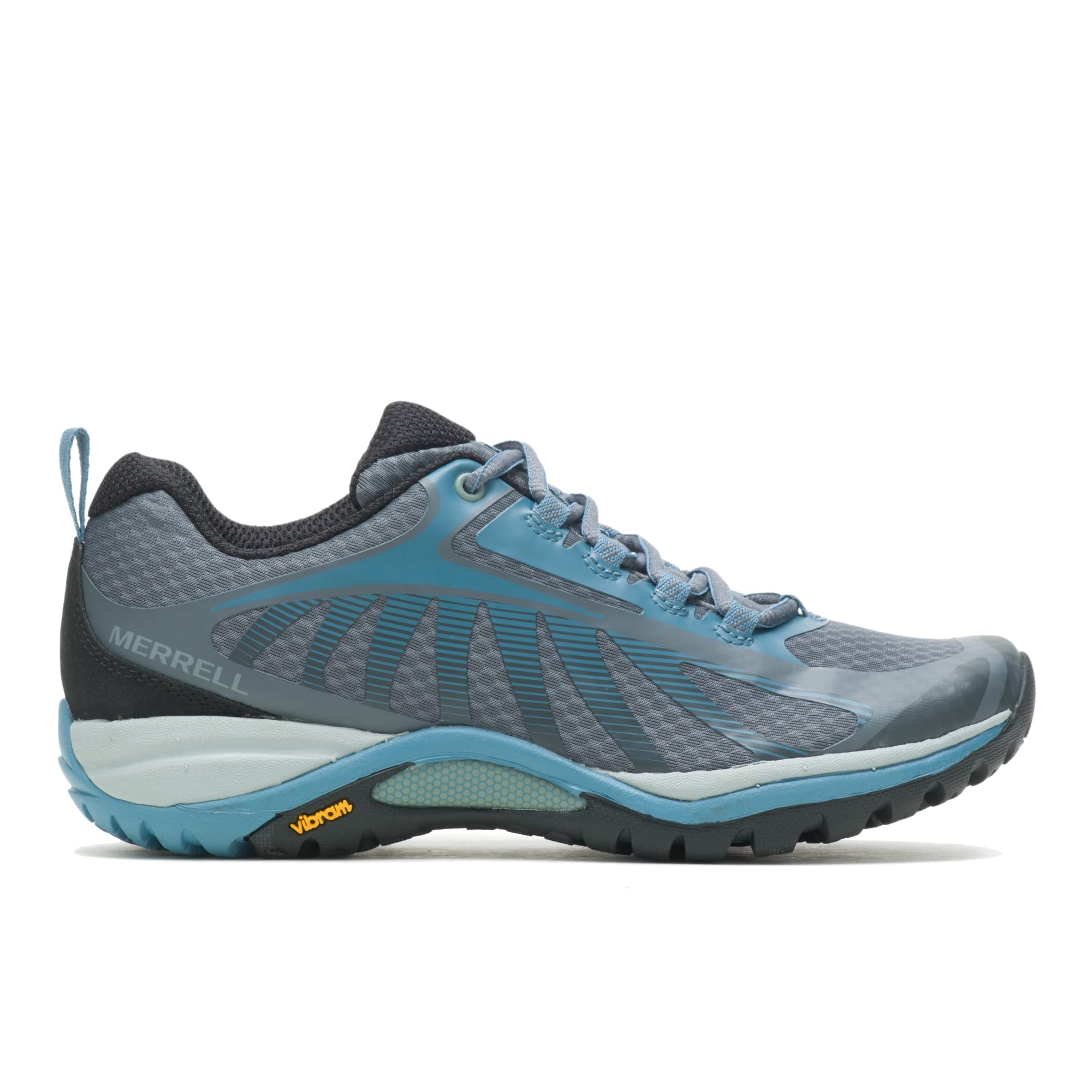
Best for All-Round Day Hikes
Merrell Moab 3
Key Features
- Fit: Generous; runs large for some
- Type: Low-cut hiking shoe
- Arch support: Firm and stability-focused
- Package weight: 2.6 lb
- Price: Midrange
The first question a lightweight-shoe shopper asks is how much the pair weighs, and the honest answer for the Moab 3 is that it carries more than the lightest shoes here. We still hand it to most women. The weight sits low, the arch is firm, and the shoe steadies your foot on loose rock instead of letting it hunt for a platform — the trade we make on any trail with a rough descent in it. On gravel and wet rock the outsole bites and holds.
Sizing is where we slow down. The toe box suits a wider forefoot, but the length runs generous for a lot of feet, and the fit is the one mixed note on an otherwise settled shoe. Order your usual size from a seller with easy returns, try them on with the socks you actually hike in, and test a downhill before you commit: if your heel lifts or your toes graze the front, exchange rather than hope.
Water is the other boundary. Damp grass, a shallow puddle and a drizzly hour are fine; a long soaking is not, and this is not a waterproof model. We prefer that trade because the upper breathes on a hot climb and dries fast afterwards. What we did not expect was how little breaking-in the pair wanted — a short walk around the block and they were ready for a full day, which is not something we can say about the stiffest shoe in this group.
Pros
- Firm arch support that steadies you on rock
- Reliable traction on gravel and wet rock
- Almost no break-in before a full day
- Holds up over seasons of use
Cons
- Heavier than the lightest picks here
We recommend the Moab 3 over everything else here for three-season day hikes: supportive on rock, grippy on gravel, and comfortable from the first mile once the sizing is right.
Best for Wide Feet, Orthotics
KEEN Voyageur
Key Features
- Fit: Runs large
- Type: Low-cut hiking shoe
- Insole: Removable, orthotic-friendly
- Toe box: Wide
- Price: Premium
The Voyageur is the priciest shoe on this page, and it is the one we hand to a hiker with a wide forefoot, a high arch and a drawer full of orthotics. The toe box is wide enough that toes sit flat rather than stacked, and the pair arrives feeling as if it has already been worn in — no blister window, no week of short walks to soften anything up.
What the money buys is structure. There is more shoe under the arch than in the Crestwood or the Siren Edge 3, which is why it holds together on long days and why it felt the most secure of these on uneven ground. Stability is the quality you notice on the last mile, not the first. The insole lifts out, so an orthotic drops in without crowding the toes, and that alone makes it the only real option here for some feet.
Two things to know. The fit runs big — this is the shoe where going down half a size is the sensible first move, and ordering both sizes is more sensible still. And the ride is planted rather than lively, which feels like work on a quick after-work loop. For the trips you plan a season ahead, that is exactly the trade you want.
Pros
- Genuinely wide toe box
- Strong arch support for high arches
- Removable insole takes orthotics
- Wearable straight out of the box
Cons
- The most expensive pick in this group
Our pick for wide feet, high arches and orthotics: it feels broken in on day one, and the removable insole takes a custom insert without changing the upper’s fit.
Best for Fast, Light Hikes
Merrell Siren Edge 3
Key Features
- Fit: True to size
- Type: Low-cut hiking shoe
- Insole: Firm, minimal cushioning
- Package weight: 1.74 lb
- Price: Midrange
Halfway down a pebbly descent, the Siren Edge 3 stops being a line on a spec sheet and starts being the reason your knees are quiet at the bottom. There is simply less shoe swinging off the end of each leg, and on loose gravel the sole still finds purchase instead of skidding through the top layer.
It is the lightest pair with a listed weight in this group, and lightness is the quality its feedback agrees on most firmly — no clunk, no drag, nothing that rubs on a first long day. For fast day hikes, a hut trip with a light pack, or a travel shoe that doubles as a trail shoe, that counts for more than any feature list. Sizing is friendly too: true to size for most feet, with a shape that suits narrow, high-arched feet better than the Moab 3 does.
Underfoot is where we part company with it. The insole is firm — firm enough that a rocky descent sends more through the ball of the foot than we like — and it is the one thing we wish Merrell had done differently. The fix is cheap and quick: drop a cushioned footbed in before your first real hike and the ride softens without losing the ground feel that makes the shoe feel quick. Do that, and it is the most enjoyable pair here on a well-made trail.
Pros
- Lightest listed weight in this group
- Grip holds on gravel and pebbles
- Supportive arch without bulk
- True to size for most feet
Cons
- Firm insole with little cushioning
The lightest pair here, and the one we take when the day is short and the pace is quick — just plan on adding a softer insole before your first real hike.
Best for First Pair, Value
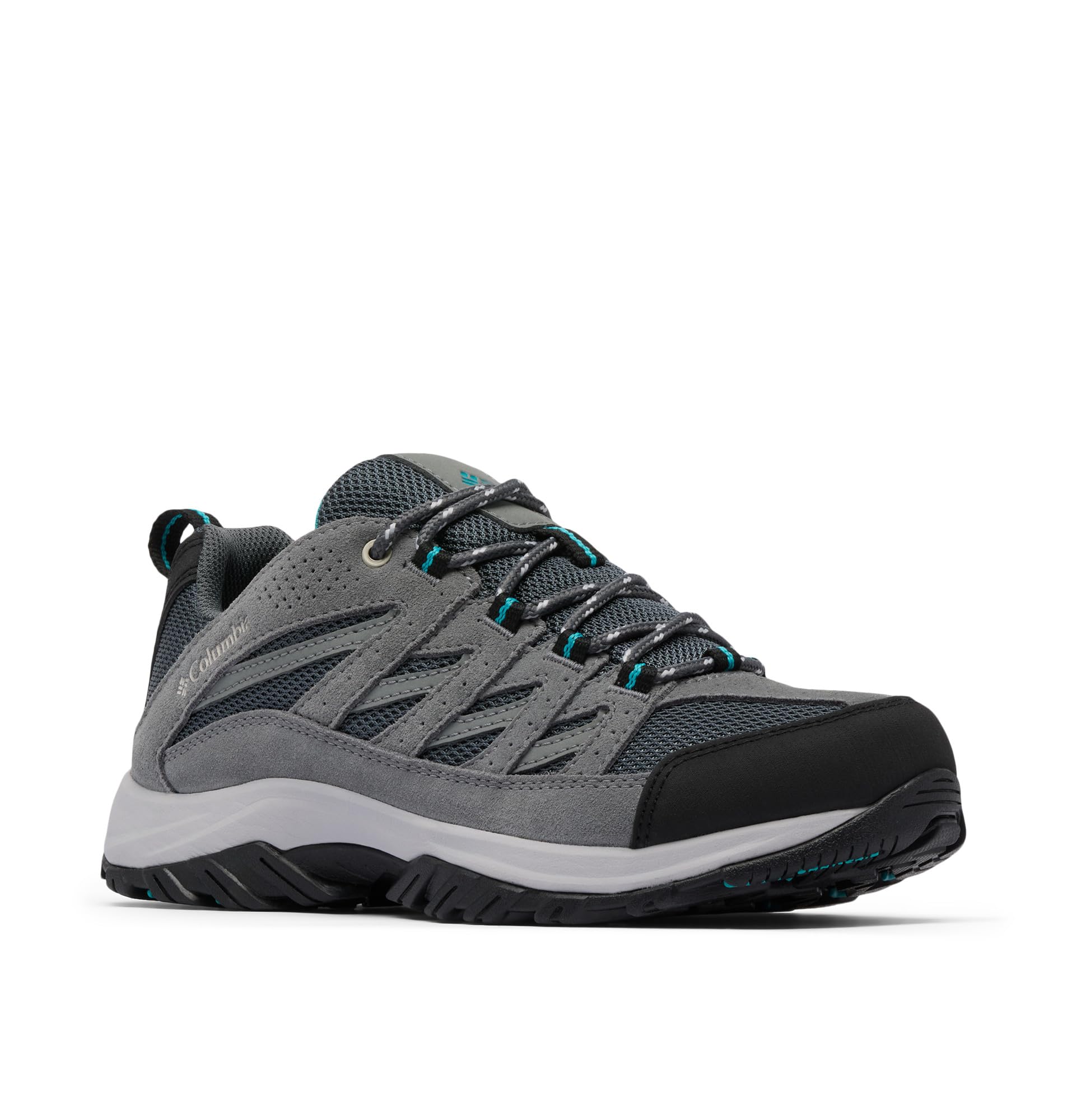
Columbia Crestwood
Key Features
- Type: Low-cut hiking shoe
- Upper: Breathable mesh
- Toe box: Roomy
- Width options: Standard and wide
- Price: Midrange
Value is the whole argument for the Crestwood, and it is a good argument: the same middle price bracket as our top pick, well below the premium option here, and no obvious corner-cutting where it counts. It is the pair we point first-time buyers to. Comfortable from the box with no blister period, roomy through the toes, and built with a solidity that reads more expensive than it is. If you are not yet sure how often you will actually go hiking, that is the right place to start.
It also lasts. The soles hold up on gravel roads and repeated trail days, and the upper keeps its shape instead of collapsing at the heel. Arch support is honest rather than exceptional — enough for most day hikes, though a high arch will probably want an added insole. Traction is better than the price suggests, gripping rock and soft dirt without drama.
The mesh that keeps these cool on a summer climb is the same mesh that lets water straight through a wet meadow, so treat the Crestwood as a dry-weather shoe. If your season is mostly mud and rain, look at a shoe with a membrane instead. For everything else — dry trails, gravel paths, the dog walk before the hike — it is the easiest recommendation on this page to justify.
Pros
- Comfortable with no blister period
- Roomy toe box in standard and wide
- Dependable grip on rock and dirt
- Solid build for the money
Cons
- Mesh upper soaks through on wet ground
For a first hiking shoe or one pair that covers trails and errands, the Crestwood is the value pick: roomy, comfortable immediately, and better made than its place here suggests.
Best for Budget Travel Shoe
NORTIV 8 Quick Lace

Key Features
- Fit: Narrow through the forefoot
- Type: Low-cut hiking shoe
- Style: Sneaker-like
- Closure: Quick-pull drawstring
- Price: Budget
The drawstring lacing is the detail that separates this shoe from everything else here: one pull tightens the whole upper evenly, there is no bow to retie halfway up a climb, and nothing dangles where it can catch on brush. Tuck the loose end back under the crossing or it swings as you walk — a small thing that you notice on the first mile and then never again.
For the least money here, you get more than the price suggests. We were surprised by the grip: on wet, sloping rock this shoe holds where a budget outsole has no business holding, and it gives you a bit of confidence on descents. The finish looks more like a lifestyle sneaker than a trail shoe, which is why it works as a travel pair that goes from airport to path without looking out of place.
Where it gives ground is longevity and fit consistency. The upper and the seams are the parts that go first, so this is a shoe to buy for a season of weekend trails rather than years of hard use, and the forefoot runs narrow for anyone with wide feet. Buy it as a first pair, a packable travel shoe, or something you will not grieve if it gets destroyed in mud. That is a legitimate job, and it does that job well.
Pros
- Pull-cord lacing tightens in one go
- Grip holds on wet, sloping rock
- Sneaker looks that work off-trail
- Least expensive pair here
Cons
- Durability is inconsistent; uppers and seams give out early
- Narrow through the forefoot
A cheap, good-looking first pair with a clever lace system and confident grip; we recommend it for travel and short trails, not for years of hard use.
How We Tested the Best Lightweight Hiking Shoes for Women
We started by rounding up women’s hiking shoes that stayed genuinely light without landing in the premium price bracket, then cross-checked the specs that shape how a shoe feels on trail — stack height, heel-to-toe drop, lug depth, and whether wide sizes were offered — against reviews from people who were still wearing their pair months in. That narrowed the field to 12 models from brands we’ve had good luck with, plus a couple of newer names worth a look.
Each pair logged at least 20 miles of trail over six months: rocky ridge scrambles, rooty singletrack, loose gravel fire roads, and one very wet weekend. We also wore them where shoes actually spend most of their life — airport concourses, grocery runs, rainy dog walks — because a shoe that only works on summit day isn’t much use.
Fit was judged standing still and, more importantly, on steep descents, where a slipping heel turns into a blister and a cramped toe box turns into a lost toenail. Arch support came down to how the stock footbed felt after a full day and whether swapping in a custom orthotic left the shoe feeling sloppy or secure. Cushioning we tracked over time — a couple of pairs felt plush in week one and noticeably thinner underfoot by week eight.
For traction, we walked down wet rock slabs and across loose gravel to see which soles bit and which skated. Water resistance got a shallow stream and a paper towel stuffed inside, so we could see exactly what seeped through. Durability and overall quality came from a 50-mile inspection: wear at the heel, seams pulling apart, overlays peeling, eyelets still holding their shape.
How to Choose Lightweight Hiking Shoes for Women
The lightest shoe on the shelf is rarely the right shoe for every trail, so the useful question is how many ounces you are willing to trade for support, grip and dry feet on the hikes you actually do.
Match the Weight to the Day, Not the Label
The lightest pair here is a genuine pleasure on a two-hour trail and a liability on a ten-mile one, because low weight usually comes out of the midsole and the structure under the arch. We match the shoe to the day: firm and supportive like the Moab 3 for long rocky routes, light and quick like the Siren Edge 3 for fast, well-made trails and travel. If you keep one pair for everything, err toward support and accept a few extra ounces — your feet notice support before they notice weight.
Fit Beats Every Specification
Sizing is the most common way a good hiking shoe goes wrong. Toe boxes vary enormously between these picks, and length varies even within a brand: the Voyageur runs large enough that sizing down is normal, while others are true to size. Shop where returns are easy, order your usual size first, and test on a downhill with your hiking socks on. Toes should not touch the front, the heel should not lift, and you should be able to wiggle your toes. If two of those fail, try the next size rather than hoping it breaks in.
Traction: What the Lugs Do on Wet Rock
Tread matters most where it is wet. Deep, widely spaced lugs clear mud; softer rubber sticks to wet rock and wears quickly on pavement, which is why a light trail shoe used mostly on asphalt loses its edge fast. If your local trails mix wet roots and rock, prioritise grip over grams. If you mostly walk gravel paths and dry singletrack, almost any outsole in this group is enough and you can choose on fit and comfort instead.
Waterproof or Breathable, Rarely Both
A waterproof membrane keeps rain out and keeps sweat in, and on a warm climb that trade can leave your feet wetter than mesh would. Mesh dries fast and breathes; it also lets a wet meadow straight through. Decide by your climate rather than the label. A dry-summer hiker is better served by something breathable like the Crestwood, while anyone walking in sustained rain or wet snow should buy a purpose-built waterproof shoe and accept warmer feet.
Insoles, Break-In and When to Retire a Pair
Most of these shoes need little or no break-in, so a hot spot in the first mile is information, not something to walk off. Insoles are the simplest fix in the category: a firm footbed is why the Siren Edge 3 divides people, and a cushioned replacement changes the ride for a modest cost. On the Voyageur the insole lifts out, so a custom orthotic drops straight in. Retire a pair when the lugs under the ball of the foot are flattened; wet rock gets slippery at that point and tread depth elsewhere does not save you.
Frequently Asked Questions
Are lightweight hiking shoes enough for backpacking?
Only for light loads. These shoes are built around a daypack — water, lunch, a spare layer — and their low weight comes from less structure under the arch. Once you add a tent, a stove or several days of food, that load pushes through a thin midsole and your feet pay for it. Move to a sturdier shoe or a boot for that kind of trip.
How do I dry hiking shoes overnight on a wet trip?
Pull the insoles out, loosen the laces wide, and stuff each shoe with dry newspaper or a spare wool sock, swapping the paper once before bed. Keep them away from a hot car, a dryer and a stove — heat shrinks uppers and can warp the sole. Mesh shoes usually dry overnight this way; a waterproof model takes longer, so plan for it.
Can I wear lightweight hiking shoes in winter?
For cold, dry days, yes, with wool socks — but the mesh uppers here let wind straight through, and none of these outsoles is built for ice. On packed snow or a frozen traverse, carry traction spikes and treat the shoe as the platform rather than the grip. Deep snow is boot territory: low-cut shoes fill the first time you posthole.
Final Verdict
If we were outfitting one reader with one pair, it would be the Merrell Moab 3: the most complete balance of support, grip and out-of-box comfort in this group, and the pair that is least likely to ruin a long day.
The exceptions are specific. A light pack and a fast pace point to the Siren Edge 3, provided you drop in a softer insole. Wide feet, high arches or orthotics move you to the Voyageur. And a tight budget or a first season on trails makes the Crestwood the sensible buy.