This post contains affiliate links. We may earn a small commission when you buy through our links — at no extra cost to you.
Trail shoes usually make you pick a side. The burly pairs bite into wet rock and then feel like bricks by mile six; the featherweight ones disappear on your feet right up until a root jabs through the sole. The shoes actually worth buying refuse that tradeoff — they hold their grip on slick granite, keep the cushioning alive on the descent, and still fit the same at hour four as they did at the trailhead. What you’re paying for is a shoe that stays comfortable after your feet swell and the trail turns ugly.
I have narrow heels and a high arch, which means most pairs that feel fine in the store have eaten my socks alive by the second switchback, so I’ve gotten picky about arch support and heel lock. Over the past six months, my team and I logged miles in a dozen pairs of women’s hiking shoes, and the gaps in fit, comfort, and durability were not subtle. One thing I’d tell a first-time buyer: never trust the fit on the first try, because feet swell on climbs — size for the end of the day and wear the socks you’ll actually hike in. The picks below are the ones that earned their spot by their second trip out.


Best for Rocky Day Hikes
Merrell Moab 3
Key Features
- Department: Women’s
- Model number: J036344W
- Package dimensions: 13.35 x 9.02 x 5.08 inches; 2.6 pounds
- Price: Premium
Rock and roots are where the Moab 3 makes its case, and it’s why this is the pair we recommend first. On loose gravel, stepped rock, and the kind of ground that pushes every stone up through a thin sole, the platform stays flat and quiet, and the arch support is the strongest in this set: the midfoot stays held rather than rolling inward when the trail tilts. Downhill, there’s enough length in the toe box that your toes don’t jam the front.
Sizing is the one loose thread. Feet seem to land on either side of the label, some at their usual number with room to spare and others finding a half size too much shoe, so treat the first wear as a fitting rather than a hike and keep the box until you’ve walked a mile in them. Past that, there’s no break-in to plan around: our pair went from box to trail without a hot spot, and the cushioning under the ball of the foot was still doing its job at the end of a long day.
Wet weather is a matter of degree rather than a flaw. Damp grass, mud, and a quick splash at a stream crossing are fine; standing water and a morning of steady rain are not what this shoe is built for, and it will eventually soak through. What you get in exchange is toughness. A run of rocky days left the uppers and soles in far better shape than we expected, and nothing about the shoe felt looser afterward.
Pros
- Strongest arch support in this set
- Steady on gravel, rock, and descents
- Comfortable all day without a break-in
- Tough enough for a season of rough trail
Cons
- Sizing runs big for some feet
Our pick if you hike rocky, uneven ground: the Moab 3 has the strongest arch support and steadiest platform in this set, with only sizing to sort out first.
Best for Wide Forefeet
Columbia Crestwood
Key Features
- Department: Women’s
- Manufacturer: Columbia
- Model number: 178114
- Price: Midrange
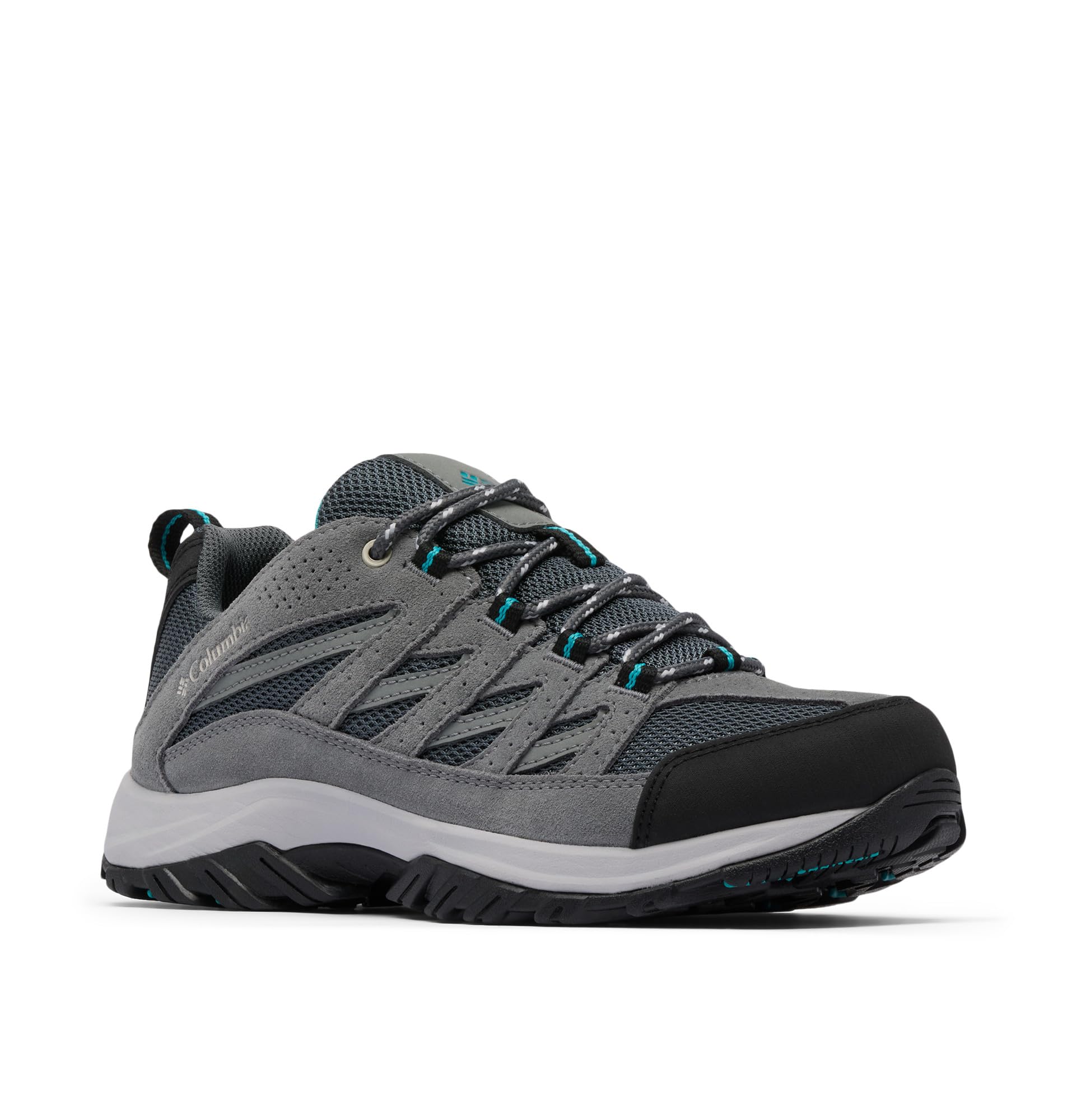
Room across the toes is what sells the Crestwood, and it’s the reason it survives a head-to-head with the Moab 3 that it doesn’t quite win. If your forefoot has spent years being squeezed by shoes you sized up to compensate for, this is the pair to try in your real size, and if the standard width still pinches, the wide version is worth hunting down.
What surprised us is how little it asks in return. It walked a long first day without a hot spot, the cushioning under the ball of the foot held out past the point where lighter shoes go thin, and the upper bent where the foot does instead of needing to be talked into it. High insteps and tender joints get on with it, and that roomy forefoot is the difference between a shoe you tolerate and one you reach for.
Grip is better than the rest of the package suggests. Wet rock, packed dirt, and loose gravel all felt secure, without the skittish feel of a road-leaning hybrid. It isn’t the lightest shoe here and it isn’t the fastest, but for a day hike on mixed ground it’s the one that asks the least of your feet.
Pros
- Roomy toe box for wide forefeet
- Comfortable from the very first wear
- Grip on rock and packed dirt
- Soles that hold up over time
Cons
- Mesh upper wets through quickly
Start here if your forefoot needs room: a genuinely wide toe box, an easy first wear, and grip that holds past what the price suggests.
Best for Value Day Hikes
CC-Los Hiking Shoes
Key Features
- Department: Women’s
- Manufacturer: CC-LOS
- First available: September 12, 2023
- Price: Midrange
The CC-Los sits in the middle of this group on price and near the front on grip, which is the combination that makes a value pick. Wet rock and steep, rocky trail both came and went without a slide, and it kept its footing on the loose, sloping gravel where cheap soles usually give up.
Comfort lands where the price says it shouldn’t. First day out, hours of walking, no blisters and nothing that needed breaking in, and the cushioning is soft enough to be kind on pavement while firm enough not to fold over a rock edge. It’s also easy to get on and off, which sounds like a small thing until you’re at a trailhead with cold hands.
Sizing is the part to slow down for. A fair share of feet find it short, so if you’re between sizes take the longer one; nobody has ever regretted toe room on a descent. For everything else, day hikes, travel, a mixed week of pavement and trail, it does more than its share of the work.
Pros
- Grip as good as anything here on wet rock
- Comfortable for hours on the first wear
- Build quality beyond the price
- Easy on and off at the trailhead
Cons
- Water protection fades on longer wet walks
Grip and comfort that feel like a much pricier shoe make this the value pick of the set, as long as your wet days stay short.
Best for Light Travel Hikes
Merrell Siren Edge 3
Key Features
- Department: Women’s
- Manufacturer: Merrell
- Package dimensions: 12.24 x 8.5 x 4.21 inches; 1.74 pounds
- Price: Midrange
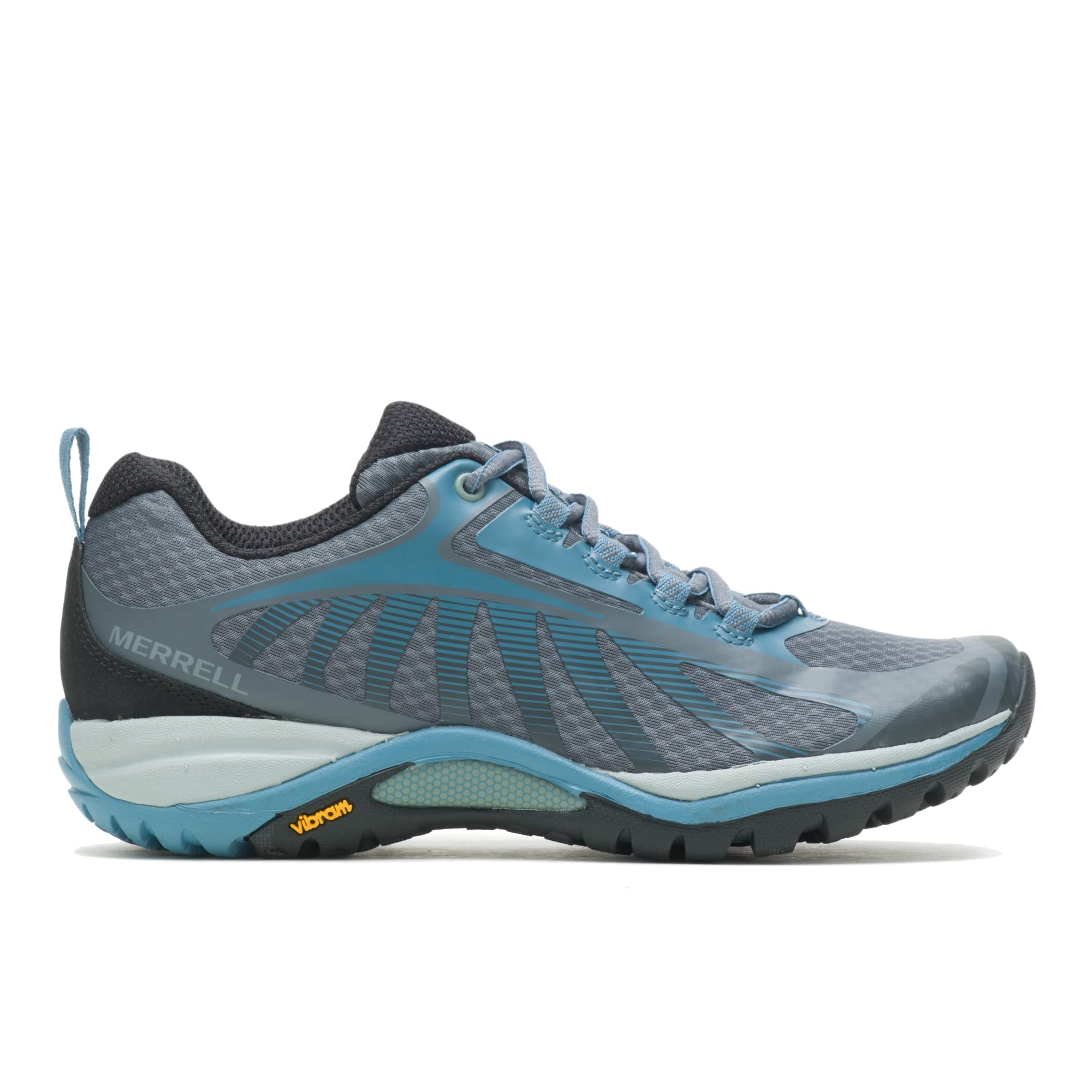
At a listed 1.74 pounds for the package, the Siren Edge 3 is the lightest shoe here, and lightness is its whole personality. On smooth trail and long pavement it disappears underfoot, the low, close ride makes easy ground feel effortless, and it’s the pair that lives in a duffel bag, the one we pack when the shoe has to work on the street as well as the trail.
It’s also the surest fit in this set for a narrower foot. Thin, high-arched feet settle into it without the heel lifting, and downhill the toe box doesn’t crush your toes forward. Think of it as a pavement-to-trail shoe: comfortable on packed dirt and rolling singletrack, less at home on loose scree, where the Moab 3’s stiffer platform does more of the work.
Arch support is the other reason it stays on the list. The midfoot is held without pressure anywhere, and the ride stays low and predictable rather than springy. Sizing runs short for plenty of feet, so if you’re on the line between two sizes, take the longer one and save yourself the return postage.
Pros
- Lightest shoe in this set
- Sure fit for narrower, high-arched feet
- Supportive arch without pressure points
- Grip on pebbly, sloping trail
Cons
- Firm insole with very little give
The lightest pair here, and the surest fit for narrow, high-arched feet — our choice for travel and easy trail days.
Best for Occasional Trails
NORTIV 8 Hiking Shoes

Key Features
- Department: Women’s
- Manufacturer: NORTIV 8
- First available: February 22, 2023
- Price: Budget
Order half a size up. That’s the first thing to know about the NORTIV 8, and it’s the difference between a useful budget trail shoe and a return, because length is where this one runs tight. Get that right and it does the job on maintained paths and modest hills, with grip that holds on wet rock and a step that stays light and cushioned.
The outsole is where the money went, and it shows. Traction is the strongest thing about this shoe, and we walked wet, sloping ground without thinking about our feet, which isn’t something we assume at this end of the range. It’s also the best-looking shoe here by a distance: the styling reads as a modern sneaker rather than a hiking shoe, which is a real advantage if you want one pair for the trail and the rest of the day.
Where it fits is the occasional trail: a camping weekend, a first pair for someone working out whether they like hiking, a spare set for the car. It isn’t the shoe for a long thru-hike or a season of shale, and it doesn’t pretend to be. For the money, the part that keeps you upright is the part they got right.
Pros
- Grip on wet rock and sloping trail
- Best-looking shoe here by a distance
- Strong value for occasional hikers
Cons
- Durability falls short over a full season
- Water resistance doesn’t hold
Order a half size up and the budget pick delivers: the best-looking shoe here, with grip that punches past what you pay.
How We Tested the Best Women’s Hiking Shoes
Every pair started as research. I read spec sheets and customer reviews, filtered out anything that didn’t come in a true women’s-specific fit or that was priced beyond what most people want to spend on a shoe they’ll wear into the ground, and landed on 12 pairs to put on my own feet. Testing ran six months, from late winter into summer, and the shoes went everywhere I did: muddy local day hikes, a week of steady drizzle, a three-day trip with a 25-pound pack, and plenty of rocky, rooty climbs where a weak outsole announces itself immediately.
Fit got checked first, and then checked again. I wore each pair with a thin liner sock and with a thick wool sock, walked uphill to see whether my heel lifted, and walked back down to see whether my toes jammed the front of the shoe. Comfort and cushioning were judged on long days rather than laps around the block — I noted where I felt pressure at mile eight and whether the arch support was still doing anything at the end of a ten-mile day, or whether the stock insole had already flattened into a sheet of cardboard.
Traction was tested on wet granite slabs and loose gravel, and I logged every slip, including the small ones that don’t put you on the ground. For water resistance I walked through soaked grass and stood in a shallow creek, then checked whether my socks were damp or dry. Durability and quality came last, after 40 or so miles in each pair: I looked at lug wear, toe caps, seam stitching, and whether the uppers had started to crease, stretch, or fray where the shoe flexes.
How to Choose Women’s Hiking Shoes
Fit and outsole decide more than any feature list: a budget shoe that fits your foot and grips the ground beats a premium one that doesn’t.
Start With Fit, Not Features
Your feet swell over a day of walking, and on a descent everything slides forward. Toe-box length matters more than any feature list: a shoe that fits snug in the shop can be bruising your toes by mile four. We start every fitting with the toes, then check that the heel stays put. Try candidates late in the day, in the socks you’ll actually hike in, and if you’re between sizes take the longer one. Wide forefeet should look at the Crestwood first; narrower, higher-arched feet get on better with the Siren Edge 3.
What Support Means on a Low-Cut Shoe
There’s no ankle collar here, so support comes from the platform: a midsole that doesn’t fold over a rock edge, a stable base, and arch support that holds the midfoot rather than letting it roll inward. It’s the difference between the Moab 3, which stays flat and quiet on stepped rock, and a lighter shoe that lets every stone through. Cushioning is a separate and more personal question. A firm insole is easy to swap for something softer; one that packs out flat is not something we can fix.
Match the Outsole to the Ground You Hike
Deep, widely spaced lugs clear mud and bite loose dirt; shallower, softer rubber is quieter on pavement and rock slabs. Our rule is to buy for the ground you hike most weekends, not the trip you take once a year. If most of your miles are a rail trail with one rocky weekend in the fall, a lighter, flatter shoe is the better buy. If the rock is the point, buy for that and accept the extra weight on the flat. None of these is a mountaineering sole, and for day hiking none needs to be.
Waterproofing: What the Label Doesn’t Promise
A waterproof membrane keeps rain out and sweat in, adds weight, and dries more slowly once water comes over the collar. On a low-cut shoe, a stream crossing deeper than the collar soaks you whatever the membrane says. The trap is the product title: a shoe can be sold as waterproof and still have a mesh upper that wets through in tall grass. Decide by your climate. Dry, warm trails favor breathable mesh and wool socks; a wet, cool one is where a membrane earns its keep.
Weight, Travel, and How Much Shoe You Need
Every ounce comes off your feet thousands of times a day, which is why the lightest shoes here feel so good on easy ground, and why they pack flat in a duffel. The trade is stability under a load and protection on sharp rock. For travel and gentle day hikes, light wins. For rough ground and long days with a pack, we take the extra structure every time, and the Moab 3 is the pair in this set that justifies its weight.
Frequently Asked Questions
How do I keep my toes from jamming on steep descents?
Lace a heel lock. Thread each lace end back through the top eyelet on the same side so it forms a small loop, cross the ends over, pass each one through the loop on the opposite side, then pull down toward the heel before tying. It pulls your heel into the back of the shoe and stops the foot sliding forward.
It takes about ten seconds once you’ve done it twice, and it’s worth the trouble on any shoe with a roomy toe box, including the Crestwood.
How long should a pair of women’s hiking shoes last?
Judge by the outsole, not the calendar. When the lugs under the ball of the foot are worn smooth, or the midsole has compressed into a visible dent, the shoe has lost the grip and cushioning you bought it for, even if the upper still looks fine. Check the tread at the end of each season and retire worn pairs to dog walks rather than to a rocky trail.
What’s the right way to clean muddy hiking shoes?
Knock the mud off while it’s still damp, rinse the upper with plain water, pull the insoles out, and air-dry everything away from a radiator or direct sun. Heat is what warps a midsole and shrinks an upper, so skip the dryer and the hot car. Laces and insoles wash separately and dry faster on their own.
Final Verdict
Most women buying one pair for real trails should start with the Merrell Moab 3. It has the strongest arch support and the steadiest platform in this set, and it handles rock, gravel, and long days without asking for a break-in. Sorting out sizing before a trip is the only homework it gives you.
If your forefoot needs room the Moab doesn’t give, the Columbia Crestwood is the more forgiving fit. And if the budget is the deciding factor, the CC-Los delivers grip and comfort well past what it costs, as long as your wet days stay short.