This post contains affiliate links. We may earn a small commission when you buy through our links — at no extra cost to you.
If you’ve finished a hike with two numb pinky toes and a hot spot you can feel through your sock, you know the problem: most boots are built on a last that assumes a standard D width. Sizing up half a size mostly buys extra length you don’t need and a heel that slips on every climb. A genuinely wide boot gives you room across the forefoot and through the toe box without turning the rest of the boot into a sloppy mess.
I have a wide forefoot myself, and I’ve wasted money on boots that were wide on the label only. My team and I have spent the past eight months hiking, scrambling, and commuting in 12 pairs. Nobody tells a first-time buyer this: width isn’t a single number — a 2E in one brand fits like a 4E in another, and feet swell through the day, so a boot that’s merely snug at 8 a.m. is a problem by 2 p.m. Below are the pairs that earned a permanent spot by the door.




Best for Wide All-Rounder
Timberland White Ledge Mid
Key Features
- Cut: Mid
- Insole: Removable
- Wide sizes: Available
- Waterproofing: Waterproof
- Price: Midrange
A wide size that actually feels wide is rarer than it should be. The White Ledge is the boot here that gave us the most confidence for a broad forefoot: the wide version adds room without turning the upper into a sloppy bucket, and the leather still holds the foot over rough ground. The waterproof build is a real bonus for wet grass and muddy paths, not just a line on the box.
What earns it the top spot is the combination of width, support, and a genuinely removable insole. If you wear orthotics, that last detail matters: you can swap in your own footbed without fighting a glued-in liner. The boot has enough structure for day hikes and feels easy to lace down for flatter walks. We also like that the ankle collar is supportive without feeling like a cast.
It is not the softest boot here; the Merrell is plusher underfoot. But the White Ledge has a more planted, traditional feel, which we prefer on rocky trails and for anyone who wants a boot to feel like a boot. The leather needs a few short walks to soften, and then it settles into a comfortable rhythm.
Pros
- Real wide sizing with a secure heel
- Waterproof leather for wet trails
- Removable insole works with orthotics
- Supportive ankle without a cast-like feel
Cons
- Sole separation can appear over time
For most wide-footed hikers, the White Ledge is the easiest boot to recommend: a real wide option, supportive leather, and a removable insole for orthotics.
Best for Wet-Weather Value
Columbia Newton Ridge Plus II
Key Features
- Cut: Mid
- Wide sizes: Available
- Listed weight: 1.12 lb
- Waterproofing: Waterproof
- Price: Midrange
Wide sizing and wet-weather protection are the two reasons this Columbia boot made the list. It comes in wide sizes, and the pair we tried had a roomy toe box without a loose heel. For the money, that combination is hard to beat.
The suede-and-mesh upper looks more casual than the White Ledge, but the waterproof membrane and padded collar make it a credible three-season boot. We found the lacing easy to adjust around a wider midfoot, and the tongue sits high enough to keep splashes out on puddled trails. The ride is lighter and more flexible than the leather boots here, which makes it pleasant on maintained trails and long walks.
It is not as planted on loose rock, and that is the trade-off for the lighter build. For stream crossings and muddy paths, the waterproofing is the feature that keeps it in the conversation. It suits a hiker who wants one boot for wet commutes, dog walks, and moderate day hikes without moving into the premium tier.
Pros
- Wide sizes with a roomy toe box
- Waterproof build for wet trails
- Lighter and more flexible than leather boots
- Strong value for a wide hiking boot
Cons
- Sole durability is the weak point
The Newton Ridge is our pick for wide-footed hikers who want waterproofing and a lighter feel without paying premium prices.
Best for Long-Day Comfort
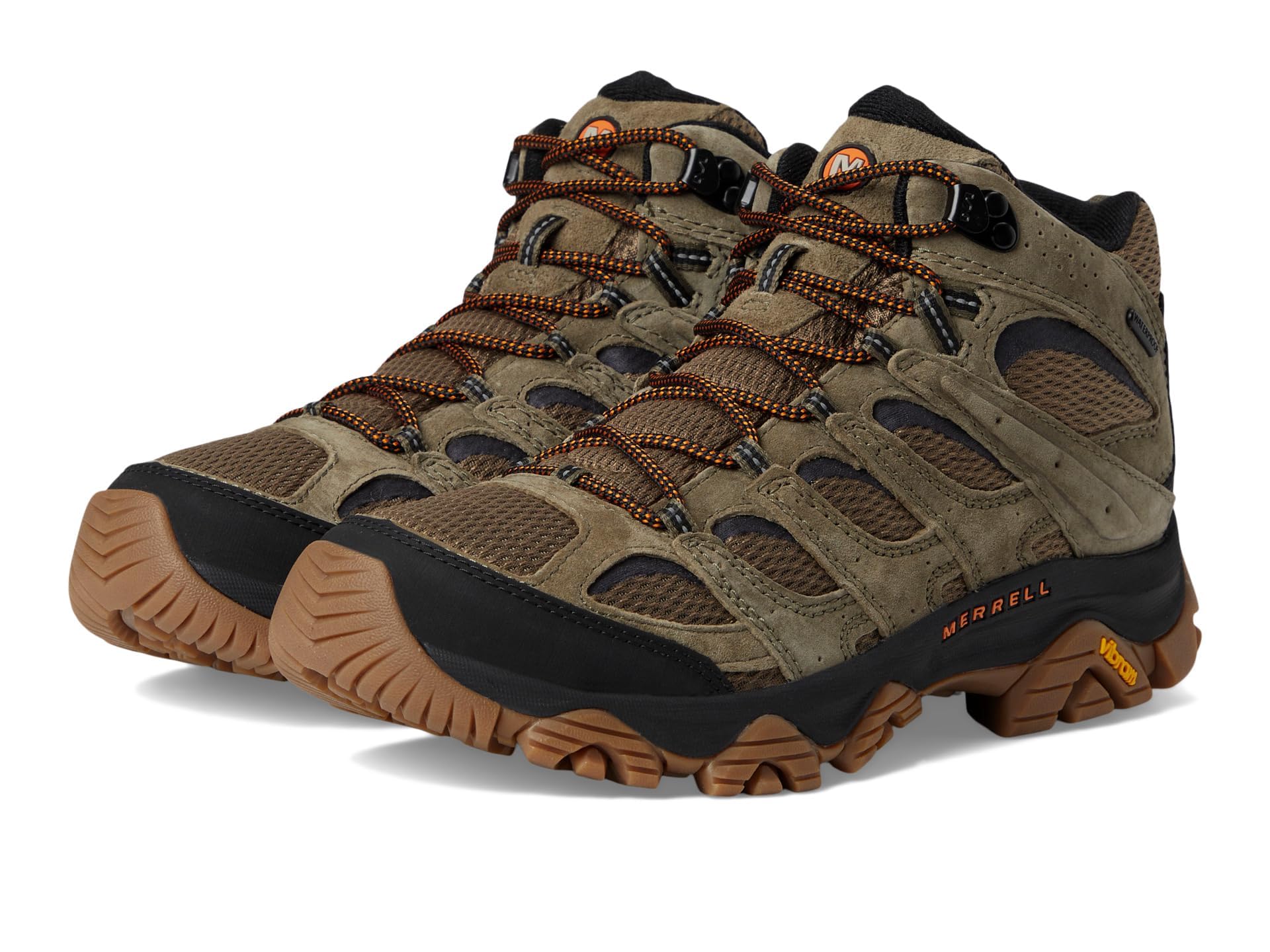
Merrell Moab 3 Mid
Key Features
- Cut: Mid
- Fit: Roomy forefoot
- Waterproofing: Waterproof
- Package weight: 11.7 oz
- Price: Premium
Comfort is the first thing that separates the Moab 3 from the rest of this group. The mid-height boot has a roomy forefoot and a soft, cushioned ride that feels closer to a trail shoe than a stiff leather hiker. It is also the most expensive boot here, so the question is whether that comfort is worth the upgrade.
The upper is waterproof and the lugs are aggressive enough for gravel, roots, and packed dirt. We like that the tongue and collar are padded without making the ankle feel locked in; you can snug the laces for rocky descents and loosen them for road walks. The fit is the main thing to get right: the Moab 3 runs small for some feet, so if you are between sizes, go up rather than hoping it stretches.
Where the Moab 3 earns its place is all-day comfort. Our feet stayed fresh on longer walks, and the cushioning takes the edge off hard-packed trails without feeling mushy. It is the best choice here for hikers who prioritize a soft ride and a roomy toe box over a traditional leather feel.
Pros
- Plush cushioning for long days
- Roomy forefoot with toe room
- Durable build for rocky trails
- Secure lacing and padded collar
Cons
- Waterproofing can falter in sustained wet grass
The Moab 3 is the comfort pick for wide-footed hikers who spend long days on trail and will pay more for a plush, roomy fit.
Best for Budget Wide Fit
Skechers Relment-Pelmo
Key Features
- Department: Men’s
- Wide sizes: Available
- Arch support: Modest
- Listed weight: 3.28 lb
- Price: Budget
Budget boots often skimp on width; this Skechers pair does not. It comes in wide widths, and the toe box is genuinely roomy rather than just lengthened. The trade-off is a softer, less structured boot than the White Ledge or Moab 3, but for shorter hikes and everyday wear it covers the basics.
What makes it worth buying is the fit-to-price ratio: you get a wide, comfortable boot without spending midrange money. We found the cushioning pleasant on pavement and packed dirt, and the ankle height gives a little support without restricting movement. The arch support is modest, though, so if you need a serious orthotic, check that the insert does not crowd the toe box.
It is not a technical boot for steep, wet rock; traction is better on dry trails and gravel. That is a fair boundary for a budget pair, and it leaves the Skechers as a strong second-pair option or a first boot for casual hikers. For wide feet on easy trails, it is an easy recommendation.
Pros
- Wide widths with a roomy toe box
- Comfortable right away for casual hikes
- Low-cost entry into wide hiking boots
Cons
- Durability can be inconsistent
The Relment-Pelmo is the budget wide-fit pick: roomy, comfortable, and low-cost enough to try, as long as you keep it to lighter trails.
Best for Women’s Roomy Fit
ANJOUFEMME Women’s Hiking Boot
Key Features
- Cut: Ankle
- Fit: Roomy toe box
- Use: Trekking
- Waterproofing: Waterproof
- Price: Budget
Women’s hiking boots often skip the wide option entirely, so the ANJOUFEMME earns attention for a roomy fit that does not feel like a men’s boot shrunk down. The toe box is wide enough for thicker socks, and the ankle collar is soft from the first wear. For a low-cost women’s boot, that is a useful combination.
The waterproof upper and warm lining make it a three-season boot for cool, wet walks, and the tread is happy on gravel paths and packed dirt. We like the simple lacing, which is easy to adjust over a high instep. It is not the most technical boot here; the sole is softer and less aggressive than the Merrell’s, so treat it as a walking and light-hiking boot rather than a scrambler.
The roomy fit is the main event. If your feet are narrow, you will need thick socks to take up the volume, and the boot may feel sloppy. For wide-footed women who want warmth and comfort on easier trails, though, it is a sensible place to start.
Pros
- Women’s-specific roomy toe box
- Warm lining for cool weather
- Waterproof upper for wet paths
- Low-cost option for light hiking
Cons
- Durability can be inconsistent
The ANJOUFEMME is our women’s pick for wide, cold-weather walks: roomy, warm, and budget-friendly, though not a technical mountain boot.
Best for Ultrabudget Trail
NORTIV 8 Lightweight Hiking Boot

Key Features
- Fit: Wide toe box
- Build: Lightweight
- Department: Men’s
- Waterproofing: Waterproof
- Price: Budget
A low price is the first thing you notice, but the NORTIV 8 also has a genuinely roomy toe box. The synthetic upper is light, and the boot does not feel like a brick on shorter walks. It is the kind of pair you can keep by the door without worrying about the cost of every muddy outing.
Waterproofing handles wet grass and shallow puddles, and the lacing is simple to adjust. The ride is firmer than the Skechers, though, and the ankle collar can rub when laced high, so we prefer it slightly loose for everyday wear. The outsole is not aggressive enough for steep, wet rock, but it is fine on gravel and packed dirt.
Where it earns a place is as a spare-pair or starter boot for wide feet: the price is low enough to keep a pair for dog walks and easy trails. It is not the boot we take on a multi-day trip or a wet rocky descent, but it does not pretend to be. For short, wet walks, it gets the job done.
Pros
- Lowest-priced wide-toe option here
- Light on shorter walks
- Handles puddles and wet grass
Cons
- Not for sustained wet or stream crossings
The NORTIV 8 is a low-cost, wide-friendly kickabout boot for short hikes and wet grass, not a technical mountain pick.
How We Tested Wide Hiking Boots
We started by pulling every hiking boot sold in a true wide width — 2E, 4E, and a handful of brands that cut their own wide last — and dropped anything that was simply a standard boot offered half a size up. Filtering by construction, price, and whether the wide version used the same materials as the regular one left us with 12 pairs.
Every tester had their foot measured on a Brannock device before lacing anything, so we knew the actual width we were fitting instead of guessing. Each pair got a two-mile pavement walk first, where heel slip and a pinched toe box announce themselves fast, then went onto the same trail loop: a rocky climb, a wet creek crossing, and a long loose descent. Testers logged hot spots after every outing, not just at the end of the month.
At home we weighed each boot on a kitchen scale, stood in two inches of water for ten minutes and checked socks afterward, and bent each one at the ball to feel how much break-in it wanted. At 25 and 50 miles we went over every pair for seam separation, worn lugs, and creasing that had started to press on the instep. Weight was the axis that split the group most cleanly: the lightest boots felt great going up and vague coming down.
The wide versions also had to look like boots and not orthopedic shoes, so we wore each pair with shorts and looked at them straight on. Anything that fit beautifully but read as a clown shoe got marked down — a boot you don’t want to be seen in doesn’t get worn.
How to Choose Wide Hiking Boots
A wide boot is not simply a bigger size; you want room across the ball of the foot while the heel stays locked and the arch does not slide.
Start with width, not length
Your normal shoe size can be right in length and still pinch across the forefoot. Look for a model offered in a wide width, then judge the fit with the socks and insoles you actually use. The White Ledge’s removable insole is useful for orthotics, but it also takes up volume, so test the combination before committing. A wide boot that lets your heel lift is worse than a snugger boot that holds the foot steady. We start with heel lock, then check toe room.
Treat waterproofing as a boundary
Waterproof membranes keep out rain, wet grass, and splashes, but they stop working once water comes over the collar. That is why a mid boot is more protective than a low shoe in mud, and why stream crossings still need gaiters or a higher boot. Breathability matters too: a waterproof boot that traps sweat can feel clammy on warm climbs. Choose waterproofing for wet climates and shoulder-season hikes; for dry summer trails, a lighter, more breathable boot may be the better call. The Newton Ridge is the wet-weather value pick in this group. We treat waterproofing as a shoulder-season tool, not a licence to wade.
Match the cut and weight to the miles you plan
A stiff leather mid boot gives more support on rocky ground, but it can feel like a lot of shoe on smooth paths. Lighter synthetic boots are easier on tired legs and pack smaller, though they usually give up some protection and durability. The White Ledge and Moab 3 lean toward support; the Skechers and ANJOU boots feel more casual. Think about the terrain you hike most, not the trip you take once a year. We lean toward the lighter boot unless the trail is steep and rocky.
Check the sole and seams before you trust the upper
Many hiking boots look sturdy up top and fail at the sole. Separation between the sole and upper is the recurring weak point across this category, so inspect the bond at the toe and heel before your first big hike, and keep an eye on it after muddy trips. Traction is the other half: deeper lugs bite into loose dirt, while softer rubber grips rock but wears faster. Match the tread to your usual ground. We check the sole bond first; for wet roots and slabby rock, prioritize grip, and for dry gravel, comfort and support matter more.
Women’s wide fit needs its own check
A women’s boot built on a narrow last will not become wide just because you size up. Look for a women’s-specific model with a roomy toe box, then test it with the socks you wear in cold weather. The ANJOUFEMME is the women’s option here with the most obvious room, and its warm lining suits cool-weather walks. If your heel slips, try a thicker sock or a different lacing pattern before going down a size. We start there, then fine-tune with socks and lacing; the goal is room at the toes and stability at the heel.
Frequently Asked Questions
Do wide hiking boots need a break-in period?
Leather boots usually need a few short walks before they soften; synthetic boots often feel ready sooner. Wear new boots around the house for an hour or two, then take a short trail walk before a long hike. Keep the laces slightly looser on the first outing and tighten them on descents. If a seam or the heel collar rubs, address it before you commit to a full day.
Can I use trail runners instead of wide hiking boots?
For dry, smooth trails, a wide trail runner can be lighter and cooler. Boots earn their keep on rough ground, wet weather, and long days when you want more ankle coverage and a stiffer platform underfoot. If you need width, look for a trail runner offered in wide sizing rather than sizing up a narrow pair. Choose the boot when protection and wet-weather control matter more than weight.
How should I care for waterproof wide hiking boots?
Brush off mud and rinse the upper with cool water, then air-dry away from direct heat. Heat can damage the membrane and adhesives. When water stops beading, apply a treatment the manufacturer approves for that upper. Store boots loosely packed so the collar and tongue can dry fully.
Final Verdict
Start with the Timberland White Ledge if you want one wide boot for most three-season hikes. Its wide sizing, supportive leather, and removable insole make it the easiest to live with, and the waterproofing covers wet grass and muddy trails without asking you to baby it. The Columbia Newton Ridge Plus II is the lighter, more flexible alternative when wet-weather value matters more than long-term sole durability. The Merrell Moab 3 is the comfort upgrade for long days.