This post contains affiliate links. We may earn a small commission when you buy through our links — at no extra cost to you.
The first time I pulled up through the bottom of the stroke with my foot locked to the pedal, the whole thing clicked — the pedal is the only place your effort gets into the bike, and a sloppy one quietly wastes it. A good road pedal puts your foot in the same spot every time, lets go the instant you ask it to, and asks for almost nothing in return beyond a wipe-down and the occasional bearing service. That’s a short list of jobs, but the gap between a pedal that disappears underfoot and one you’re always aware of is wider than the spec sheets suggest.
Over the past eight months, my team and I have ridden about a dozen pairs through training blocks, group rides, and a lot of rain, and the surprise was how little price predicted satisfaction. A couple of the lightest, priciest sets developed bearing play before the cheaper ones did, and a wide, stable platform mattered more to my knees than a few grams ever did. There are picks below for every budget, but they all earned their spot the same way.




Best for First Road Clipless
Shimano PD-RS500 SPD-SL
Key Features
- Tension: Adjustable, lighter spring
- Platform: Extra-wide
- Cleat system: SPD-SL / 3-bolt
- Included cleats: SM-SH11
- Price: Midrange
The pair that makes the most sense for a first road clipless setup is the Shimano PD-RS500. It arrives with SM-SH11 cleats, so you are not hunting for a second purchase, and the lighter spring plus larger entry target make the first clip-in far less intimidating. We like that combination for newer riders who want road efficiency without a race-day temperament.
The extra-wide platform gives your shoe a clear place to land, and the adjustable tension lets you start light while you build the habit. We spent our early clips with the spring backed off and found the release predictable; riders who want a firmer hold can add tension as they get comfortable.
The RS500 is not the most exciting pedal here, and that is part of the appeal. It feels planted under a road shoe, the three-bolt SPD-SL interface is widely supported, and the cleats in the box keep the first setup simple. If you want a different road feel or already own LOOK shoes, the Keo Classic 3 is the other clipless route to consider.
Durability is the caveat. The pedals are simple and serviceable, but early bearing or body trouble can happen, so check for play after the first few rides and buy from a seller with easy returns. That is a small piece of insurance on an otherwise easy recommendation.
Pros
- Includes SM-SH11 cleats
- Lighter spring and broad entry target
- Extra-wide platform for stable pedaling
Cons
- Heavier than premium road pedals
We recommend the PD-RS500 for newer road riders who want an easy first clipless pedal with cleats included and tension that can grow with them.
Best for Mixed Shoe Duty
Shimano PD-EH500 SPD/Flat
Key Features
- Weight: 1.2 lb
- Tension: Adjustable
- Pedal type: SPD / flat dual-sided
- Cleat system: SPD / 2-hole
- Price: Premium
The PD-EH500 answers a different question: what if one bike has to serve a clipped-in training ride and a flat-shoe coffee run? One side is SPD, the other is a pinned flat platform, and the changeover is a matter of turning the pedal over.
We like it most on a bike that does errands and workouts. The flat side has enough pin bite for everyday shoes, while the SPD side clips with two-bolt shoes and adjustable tension. It is the pedal we choose when the rider has not committed to one shoe system, or when a partner or family member shares the bike.
The flat side’s pins hold a sneaker, but it is not a substitute for a wide downhill platform; riders with very large feet may prefer a full flat pedal. On a dedicated road bike, the RS500 is the cleaner choice because it is all business on one side and lighter in spirit.
The extra metal is the price of that flexibility. It is the heaviest pedal in this group, so it makes the most sense on a commuter, gravel bike, or indoor setup where convenience beats gram-counting. If you want one pedal to do two jobs, this is the one.
Pros
- Runs SPD or flat shoes on one bike
- Adjustable cleat tension
- Secure grip on the flat side
Cons
- Heavy at 1.2 lb per pair
We recommend the PD-EH500 for commuters and one-bike riders who want to clip in for workouts and ride flat in everyday shoes without swapping pedals.
Best for Look Road Feel
LOOK Keo Classic 3
Key Features
- Body: Composite
- Tension: 8 to 12
- Cleat system: LOOK Keo
- Platform area: 400 mm²
- Price: Midrange
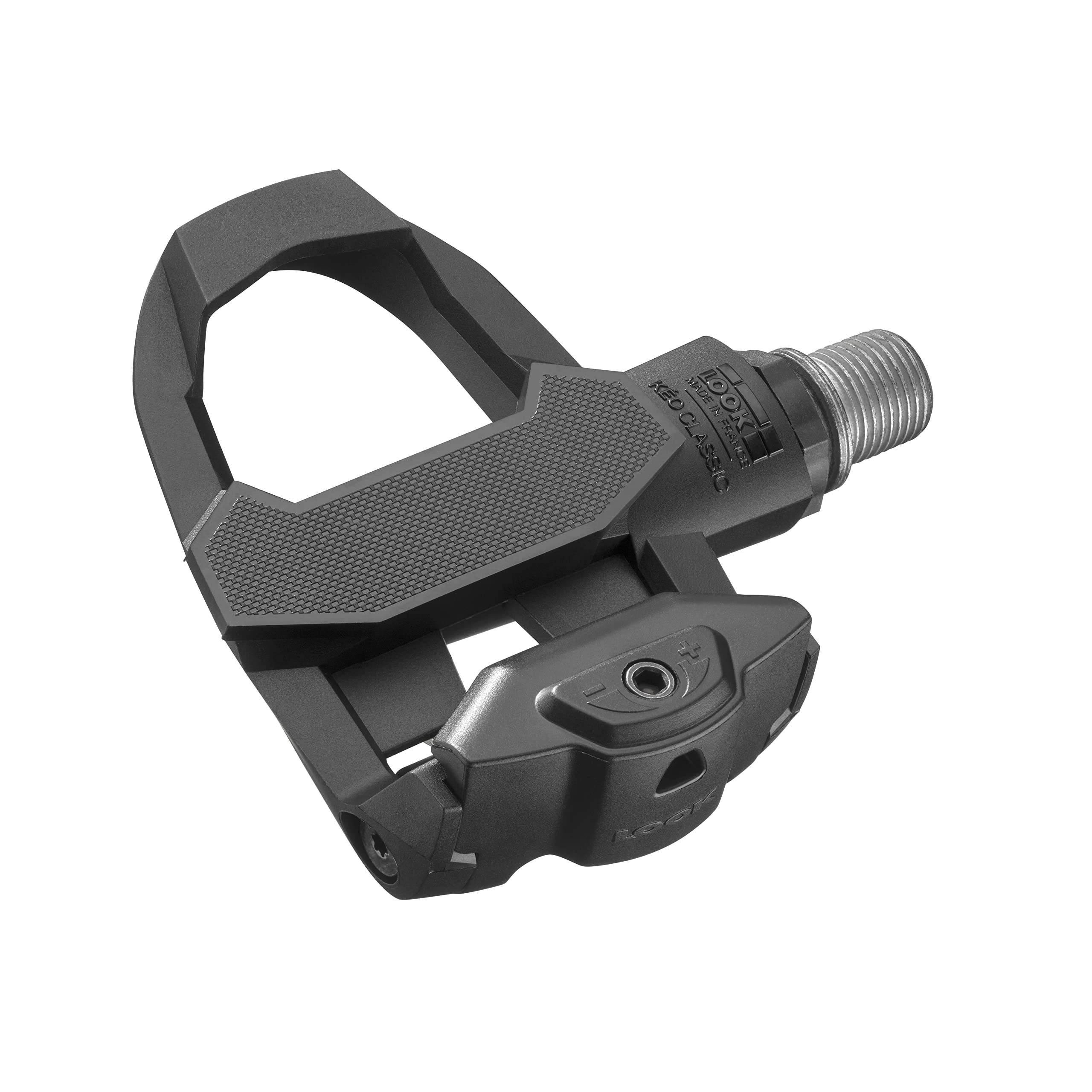
The Keo Classic 3 is the other road-clipless route here: a 400 mm² contact area, LOOK Keo cleats in the box, and tension adjustable from 8 to 12. That range gives riders a clear way to tune how firmly the shoe is held.
The broad platform is meant to spread load across the shoe, and the chromoly spindle and composite body keep the pedal light. Setup is straightforward with an 8 mm Allen key, which is one less tool to own. We noted that the cleats are included, so the first ride does not depend on a separate order.
We recommend it for riders who already know they want the LOOK system or who prefer a broad, composite road pedal. The RS500 remains the easier first step for most new clipless riders, but the Keo gives a different feel and a tension range that some riders will prefer.
The composite body is the part that gives us pause. It can develop play or damage under hard use, and the pedal feels less substantial than an aluminum-bodied option. For fair-weather road miles it is fine; for heavy commuting or regular curb strikes, choose the Shimano.
Pros
- 400 mm² contact area
- Adjustable 8 to 12 tension
- Keo cleats included
Cons
We recommend the Keo Classic 3 for road riders who want a broad, adjustable clipless platform and already prefer the LOOK cleat system.
Best for Budget Flat Grip
CXWXC Aluminum Flat
Key Features
- Body: Aluminum
- Pins: 8 per side
- Weight: 0.4 lb each
- Platform size: 4.13 x 4.09 in
- Price: Budget
Flat-pedal road riders do not need to spend much to get a broad, grippy platform. The CXWXC uses a 4.13 by 4.09 inch aluminum body with eight pins per side, and it weighs about 0.4 pound per pedal.
We think it is the budget flat pick because the platform is wide enough for bigger shoes and the pins hold a sneaker without feeling like a bear trap. On our test bike, the sealed bearings spun smoothly and installation took one Allen key. It is a clear step up from the plastic pedals that come on many entry-level bikes.
The trade-off is finish and long-term wear. Wet weather and road salt can dull the body, and the bearings are the first place to check if the pedal starts to feel rough. Dry the spindles after wet rides and inspect the pins before they wear down.
For a second bike or a first flat-pedal setup, this is an easy recommendation. If you want lower weight, the ROCKBROS is the lighter pick; if you want reflectors for commuting, the GEWAGE makes more sense.
Pros
- Wide platform for larger shoes
- Eight pins per side hold securely
- Aluminum body at a budget price
Cons
- Not the lightest flat pedal here
We recommend the CXWXC for budget-minded road riders who want a wide, pinned flat platform and do not mind a little extra weight.
Best for Light Flat Setup
ROCKBROS MTB Flat
Key Features
- Body: CNC aluminum alloy
- Pins: Stainless steel spikes
- Weight: 5.28 oz
- Platform size: 98 x 90 mm
- Price: Budget
If you want a flat pedal that disappears underfoot, the ROCKBROS is the one we reach for. Its listed 5.28-ounce weight is the lowest among the flat pedals here, and the 98 x 90 mm platform is wide enough for a road shoe without looking like a downhill plank.
The stainless steel pins give useful bite without the full shin-chewing aggression of a 16-pin trail pedal. The CNC aluminum body and sealed bearing plus DU bearing combination keep the pedal feeling smooth, and the 9/16-inch spindle fits the road cranks in this group.
The light build has a cost. A hard pedal strike can bend a corner, and the body will not shrug off rocks the way a heavier flat does. On a road bike, where strikes are rarer, we accept that trade; on rocky trails, choose a beefier platform.
For road and light gravel riding, the slim profile is the point. It feels less like a boat anchor when you accelerate, and the grip is enough for dry-weather road shoes. This is the flat pedal for the rider who cares about weight first.
Pros
- Low 5.28 oz listed weight
- Slim 98 x 90 mm platform
- Sealed and DU bearings
Cons
- Less impact-resistant than heavier flats
We recommend the ROCKBROS for road and light-gravel riders who want a low-weight flat pedal and accept a less impact-resistant body.
Best for Commuting Visibility
GEWAGE Flat with Reflectors
Key Features
- Pins: 9 per side
- Weight: 13.2 oz
- Reflectors: Yes
- Platform size: 101 x 98 mm
- Price: Budget
The GEWAGE flat pedal puts a reflector strip on each side and nine pins per side around a 101 x 98 mm platform. That is a small detail on a spec sheet and a very useful one on a dark commute.
The 375-gram weight is not the lightest here, but the three sealed bearings and broad platform make it feel stable under a commuter shoe. Installation is straightforward with the included tool, and the reflectors are already mounted rather than being an extra you have to remember.
We recommend it for riders who ride at dusk or in traffic and want a flat pedal that helps them be seen. The reflectors catch headlights from the side, which is exactly where a driver needs a cue. It is a more thoughtful commuter pedal than its plain black body suggests.
The nine pins per side are less aggressive than the 16-pin flats here, so a very wet, muddy shoe can shift. For road commuting, that is a reasonable trade for a pedal that does not chew up everyday soles.
Pros
- Reflectors on both sides
- Three sealed bearings
- Wide 101 x 98 mm platform
Cons
- Nine pins per side, less aggressive than 16-pin flats
We recommend the GEWAGE reflector pedal for commuters who want flat-pedal grip and side visibility without giving up a sealed-bearing design.
Best for Basic Replacement
BV Universal Bike Pedals
Key Features
- Body: Nylon
- Weight: 8.16 oz
- Spindle: Boron steel
- Platform: 5 x 3.5 in
- Price: Budget
The BV pedal is the pair you buy when the goal is simply to replace a worn-out platform and get rolling again. It uses a one-piece nylon body, a boron steel spindle, and a 5 by 3.5 inch platform, and it comes as a pair.
The nylon body keeps the weight low and the price down, and the brushed surface holds a sneaker well enough for errands, indoor bikes, and casual paths. Installation is a five-minute job if the threads start cleanly.
The fit is the part to check. The 9/16-inch thread is standard for most adult bikes, but some cranks are tighter or have damaged threads, and forcing a pedal can ruin the crank. Start it by hand, and stop if it binds.
We recommend the BV for a basic replacement, a kid’s bike, or a stationary bike where you want a flat pedal without spending much. It is a straightforward pair that does what it promises, as long as you keep expectations in line with its simple build.
Pros
- Very low-cost basic replacement
- Light nylon body with steel spindle
- Simple six-minute installation
Cons
- Nylon body is not built for aggressive riding
We recommend the BV pedal as a low-cost replacement for a basic bike, indoor trainer, or casual runaround where a simple flat platform is enough.
How We Tested the Best Road Bike Pedals
We started by rounding up every road pedal we could get our hands on, then cut the list down by cleat standard, spindle thread, body and spindle material, and claimed weight, keeping a spread from budget composite bodies to carbon-bodied sets with titanium spindles. Twelve pairs made the cut. Each went onto the same bike and was torqued to spec, but I threaded every set in by hand first to see whether the threads started cleanly or fought back — pedal threads are nearly universal, so a set that won’t spin in easily is telling you something.
Riding happened where pedals actually live: trainer intervals in the garage, a weekly group ride, long weekend climbs, and a stretch of wet commutes. I did clip-in and clip-out drills at every stoplight for a week with each set, noting release tension and whether a foot ever hung up when I wanted out fast. Under hard efforts I paid attention to whether my foot rocked on the platform, and I ran each set through standing sprints to feel for wobble where the body meets the spindle. When a set came with a flat-pedal side, I also took it onto gravel and checked the pins against a wet shoe.
Back in the garage, we weighed each pair, measured platform width and stack height with calipers, and re-checked for bearing play at the start and end of every month, which is how the expensive sets that loosened up early got caught. We walked each set’s cleats into a café, knocked the bodies against curbs, and watched how every finish and color held up to scuffs, since material quality shows fastest at the edges. Grip and value came last: I bolted the keepers onto my own bike and left them there.
How to Choose Road Bike Pedals
The first decision is not brand or weight: it is whether you want to clip into the pedal or ride on a flat platform.
Clipless or Flat: Start With Your Shoes
A road clipless pedal such as SPD-SL or LOOK Keo uses a three-bolt cleat and a stiff shoe; it holds your foot in one spot and makes hard efforts feel connected. A two-bolt SPD system is easier to walk in and is what the PD-EH500 uses on its clipped side. Flat pedals work with everyday shoes, but choose a stiff sole and a wide platform so your foot does not roll over the edge. If you ride in cycling shoes most days, go clipless; if you mix shoes and errands, flat or dual-sided makes more sense.
Entry, Release, and Tension
Beginners should prioritise a light spring and a broad entry target over a low weight. The PD-RS500’s lighter tension and larger target are why it is the easiest first clipless pedal here; the LOOK Keo lets you set tension from 8 to 12, which suits riders who want a firmer hold. Start with the lightest setting that keeps your foot secure, practice clipping out before you need to, and add tension only when release feels vague. A pedal that is hard to enter will make you avoid riding it.
Platform Size, Pins, and Shoe Grip
Flat pedals live or die by the platform and pins. A 98 to 104 mm width supports a road or commuter shoe without forcing your foot onto a narrow spine; the CXWXC and GEWAGE pedals sit in that range. More pins give more bite, but aggressive pins chew soft soles and shins. For road riding, eight or nine pins per side is plenty; 16-pin designs are better for wet off-road use. Pair any flat pedal with a flat, stiff sole, and check that the pins are replaceable before they wear down.
Bearings, Weight, and What Wears Out
Bearings matter more than the number on the scale. A smooth-spinning pedal with sealed cartridge bearings and a steel spindle is the safer long-term bet; a light pedal that develops side play will feel worse with every mile. Weight is worth paying attention to, but a 100-gram difference matters less on a road bike than reliable entry and a body that survives curb strikes. Spin the pedal in your hand, check for side-to-side play, and buy from a seller that makes returns easy.
Road Fit, Threads, and Commuting Details
The pedals here use a 9/16-inch thread, the standard for most adult road cranks, while some BMX and kids’ bikes use 1/2 inch. Check the marking on your crank before ordering, and start the pedal by hand; cross-threading can ruin the crank arm. Left and right pedals thread in different directions, so follow the L and R marks. If you commute at dusk, a reflector strip such as the one on the GEWAGE pedal is a small but genuinely useful detail.
Frequently Asked Questions
How often should I replace my cleats?
Replace road cleats when the tips look rounded, release feels vague, or you can rock the shoe on the pedal. Walking on pavement wears them faster, so use cleat covers for café stops. Check the bolts monthly and after any ride where you clipped out awkwardly.
Can I use mountain-bike pedals on a road bike?
Yes, if the pedal has a 9/16-inch thread and you accept the trade-offs. A two-bolt SPD pedal is easier to walk in and clears mud better, but it has a smaller contact patch than a road clipless pedal. A flat MTB pedal works too; choose a slim 98 to 104 mm platform rather than a wide downhill body.
Why do my pedals click or feel loose?
Check the cleat tension first on a clipless pedal, then the bearing preload or pedal-to-crank tightness. A small amount of side play can come from the bearing, while a click at the shoe usually means a worn cleat or loose cleat bolts. Tighten cleat bolts to spec and replace cleats when the tips are rounded.
Final Verdict
The Shimano PD-RS500 is the pedal we recommend first for a road bike: it includes the cleats, the lighter spring and wide target make clip-in easier, and the price stays in the midrange. If you need one bike to handle both clipped workouts and flat-shoe errands, the Shimano PD-EH500 is the better buy; it is heavier and less single-minded, but it removes the pedal swap.
For weight-focused flat-pedal riders, the ROCKBROS is the light alternative; for commuting visibility, the GEWAGE reflector pedal makes more sense. The right pick follows your shoes and your rides, not the other way around.