This post contains affiliate links. We may earn a small commission when you buy through our links — at no extra cost to you.
Bear canisters are the most resented item in a backpack: a rigid, heavy barrel that swallows a third of your pack and forces you to rebuild your load around it. The alternative — a food hang in the dark — is worse. A good canister does both jobs at once, keeping a determined bear out while staying packable enough that you quit dreading the weight. We’ve carried 12 of them over the past eight months, and the ones worth the space aren’t the prettiest — they’re the ones that latch cleanly, swallow a real food load, and don’t shred your pack.
One thing first-time buyers always get wrong: the capacity on the label is optimistic. Pack real food — a stove, a bag of oats, four dinners — into a canister rated for five days and you’ll usually run out at three. Look for independent bear-resistant certification, and remember that a canister is only bear-proof when the lid is actually latched. The picks below held up to cold hands and rocky ground.

Best for Multi-Day Solo Trips
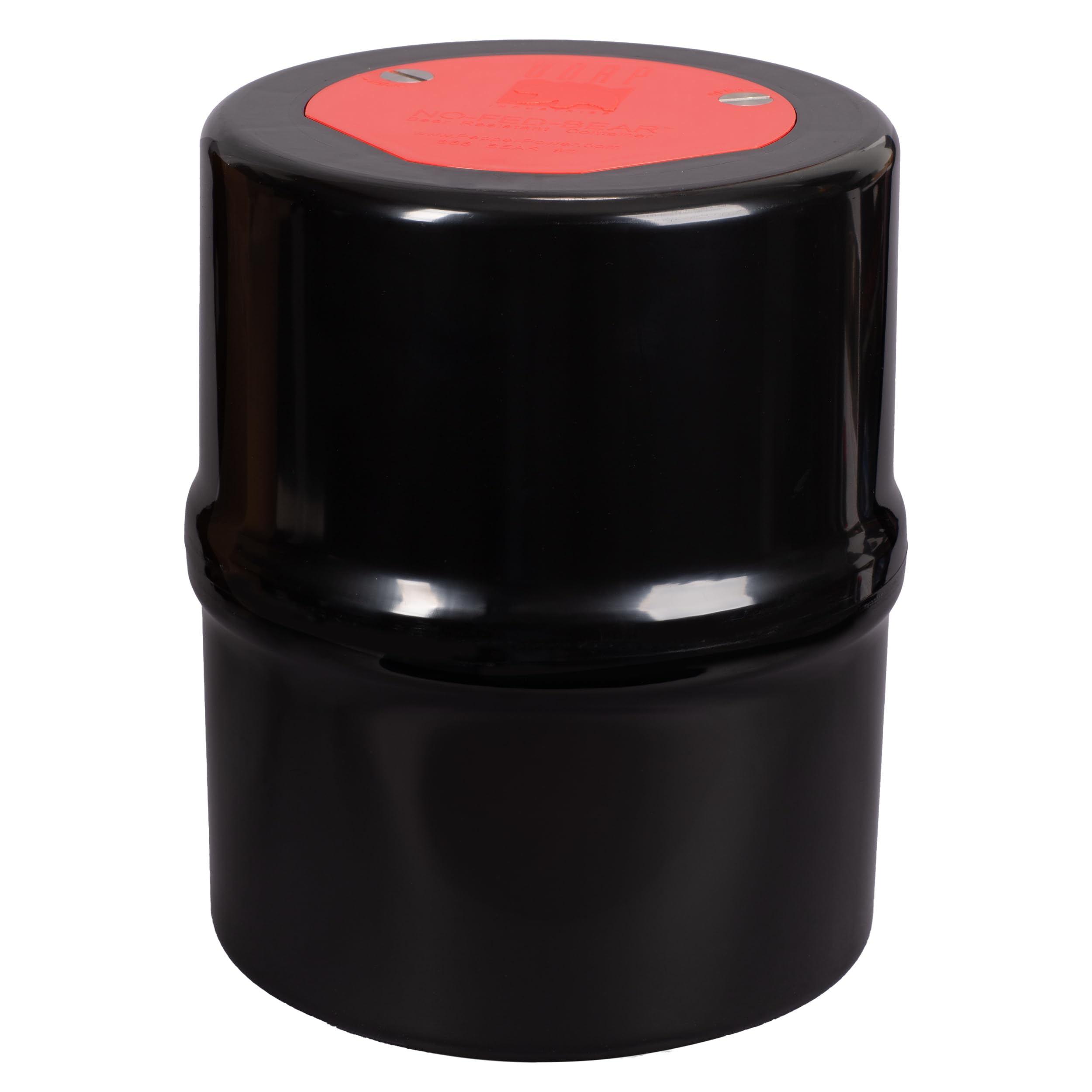
UDAP No-Fed-Bear BRC
Key Features
- Weight: 2.4 lb
- Closure: Coin-turned metal fastener
- Capacity: 2.1 gallons (8 liters)
- Certification: IGBC approved
- Price: Budget
2.4 pounds, eight liters, and an IGBC stamp — that combination is why this is the canister we point most backpackers toward. Eight liters is enough for four to six days of dehydrated food for one person, or a couple sharing a shorter trip, and at 2.4 pounds it comes in half a pound or more under the Backpackers’ Cache and the Bear Keg. You feel that on the climb out, not at the trailhead.
The lid is the part to understand before you commit. Three metal screw heads turn with the edge of a coin, and that is the entire security system — slow and fiddly enough to frustrate claws, quick enough that you won’t dread a midnight snack. Keep a quarter in your hipbelt pocket and it stops being a thought. Forget one, and you’re improvising in the dark, which is exactly the small failure that ruins a morning.
What it gives up is visibility. The shell is opaque, so finding the last bar means emptying everything onto your sleeping pad, and the round body rolls into whatever gap your pack leaves. Neither is a dealbreaker at this weight. This has become the canister we reach for when the trip is long and the forecast isn’t, which is the highest compliment we can pay a plastic barrel.
Pros
- 2.4 pounds, lighter than the other big cans here
- Eight liters covers four to six days solo
- IGBC approved for parks that require one
- Solid shell that takes a knock
Cons
- Opaque body hides what’s left inside
Our default for most backpackers: a certified eight-liter canister at 2.4 pounds, lighter than the other big cans here, with a lid that keeps bears out without keeping you out.
Best for Long Trips
Backpackers’ Cache
Key Features
- Shape: Rectangular
- Volume: 200 fluid ounces
- Weight: 3 lb
- Dimensions: 12 x 12 x 12 inches
- Price: Midrange
Twelve inches on every side makes this the odd shape of the group, and it is exactly why it swallows a four-day load. Dehydrated dinners, bars, oatmeal, and the small scented odds and ends that have to go in with them all fit, with corner room left at the end of a trip. If you have ever rationed food because the canister filled up on day two, this is the correction.
Packing it is a different habit from a cylinder. The flat sides sit against your back panel instead of rolling into the gap behind your hipbelt, and 12 inches is a fixed cost you feel in a 45- or 50-liter pack. At 3 pounds empty it’s heavier than the UDAP, and on a steep day you’ll know it.
The latches are the one part to make peace with: work them a few times at home, because a stiff latch is a miserable thing to meet in the rain at dawn. For a two-person weekend or a solo week of dehydrated food, this is the canister we trust with the load, and the ABS shell shrugs off being sat on, dropped, and strapped to a frame. Check your destination’s approved-canister list before you commit, as with any canister here.
Pros
- Four days of dehydrated food for one
- Flat sides pack against your back panel
- ABS shell shrugs off drops and sitting
- Good value for the capacity
Cons
- Big cube eats pack space
- Three pounds before you add food
The one we hand over for long trips and two-person loads — a 12-inch cube that swallows four days of food and takes the knocks that come with them.
Best for Varying Trip Lengths
BearVault BV ONE
Key Features
- Closure: Push button
- Capacity: 8.3 liters
- Certification: IGBC #255500
- Adjustable range: 1 to 4+ days of food
- Price: Premium
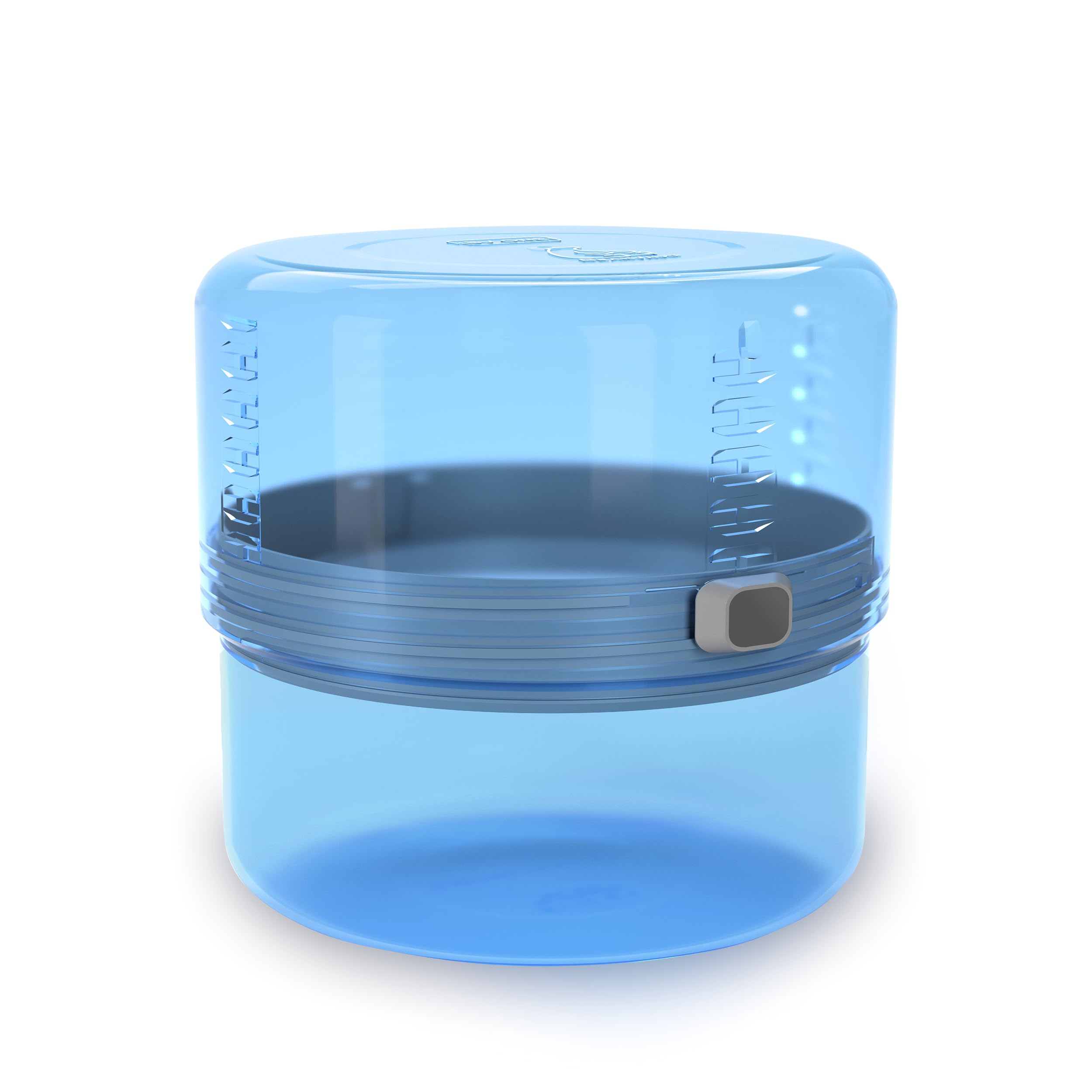
Somewhere around day three, a canister stops being a container and becomes dead weight — liters of empty air you haul over a pass. The BV ONE is built around that moment: two telescoping halves that shrink an 8.3-liter canister down as the food disappears, so the pack gets lighter in more ways than one.
We think the shrinking is the smartest idea in this group. The two soft-touch buttons target the other classic failure, cold hands fumbling a screw lid at dawn, and the center opening means you reach in rather than excavate from the top. Pull the halves apart and you have two bowls at camp, a small pleasure that counts for a lot on a wet morning.
What holds it back is history. This is the newest design here, with nowhere near the track record of the Backpackers’ Cache, and it’s the premium of the group. If your trips run from an overnight to a long weekend and you resent carrying empty volume, that trade is worth making; if you want the design with a decade of trips behind it, the older cans on this page are the conservative call.
Pros
- Shrinks as your food supply drops
- Push-button lid is easy in the cold
- Halves double as camp bowls
- IGBC approved
Cons
- Two-button latch takes practice to seat
We recommend it to anyone whose trip length changes: it shrinks as the food goes, and the push-button lid is built for cold hands rather than against them.
Best for Solo Overnights
BearVault BV425 Sprint
Pick it up empty and 1.8 pounds barely registers. This is the lightest canister in the group by a wide margin, and the one that disappears into a small pack on a fast overnight — 9 by 9 by 7 inches slides in where the big cans have to ride on top.
What it holds is one to two days of food for a regular hiker, or a share of a group’s load when two people split the weight. The clear polycarbonate is the detail we appreciate most: you can see the last packet of peanut butter from outside, which kills the dump-everything-out ritual at the bottom of a canister. The wide opening helps, and if you’re the sort who sits down to think, the lid takes a person’s weight.
The screw lid is the known friction point. Start the threads cleanly and it’s smooth; cross-thread it in the cold and you’ll be there a while, and gloves make it worse. Since it only carries a day or two, treat it as a second canister rather than an only canister — the one for fast overnights, or the small one you hand a partner so the group’s food spreads across two packs.
Pros
- 1.8 pounds, the lightest here
- Clear sides show what’s left
- Wide opening makes packing easy
- Doubles as a camp stool
Cons
- Only one to two days of food
- Screw lid fights cold, gloved fingers
For overnights and splitting a group’s load, we take this one: 1.8 pounds, clear sides, and only enough room for a day or two of food.
Best for Group Basecamps
Counter Assault Bear Keg

Key Features
- Weight: 3.5 lb
- Capacity: 716 cubic inches
- Dimensions: 9.5 x 9.5 x 14.12 inches
- Certification: IGBC and SIBBG approved
Bright yellow isn’t decoration. At 9.5 inches across and more than a foot tall, this is a canister you set down in the dark and have to find again at breakfast, and the color does that job better than any of the black or clear cans here.
716 cubic inches is the largest stated capacity in this group, enough for two people over a few nights, and it carries both IGBC and SIBBG approval — worth knowing if your plans run through the Sierra, where the SIBBG list is the one that matters. Three screw heads turn with a coin, the same low-tech interface as the UDAP, and the lid lifts off with a firm pull once they’re backed out.
The shape is the catch. Fourteen inches tall stacks badly in most packs: it rides high, pulls the load off your hips, and leaves an awkward void beside it. At 3.5 pounds it’s the heaviest canister here, and the opaque body means you pack by memory. As a basecamp store for two, or a week’s food that never travels far, it makes sense. As a solo ultralight choice, it doesn’t.
Pros
- Largest stated capacity here at 716 cubic inches
- Bright yellow is easy to find in camp
- Approved by both IGBC and SIBBG
- Three coin-turned screws open simply
Cons
- Tall body rides awkwardly in a pack
- Opaque, so you pack by memory
We keep this one for basecamps and two-person weeks: the largest stated capacity here, and a yellow shell you can spot from across a clearing.
How We Tested the Best Bear Canisters
We started with every canister we could find that carries a current independent bear-resistant certification, then filtered for real-world carry: nothing over about three pounds empty, nothing so bulky it only makes sense on a mule, and nothing we couldn’t justify the price of. That left 12 canisters, which we’ve packed, carried, and repacked for eight months.
The same three-day menu went into every one — oats, a stove, four dinners, snacks — and we noted how much of the rated capacity we could actually reach once the food was in stuff sacks. Each lid was opened and shut ten times in fleece gloves and once with wet hands, because the honest test is breakfast at 6 a.m. when it’s near freezing. We also checked whether a lid could be cross-threaded and whether the latch stayed put after the canister was rolled down a slope.
We dropped each loaded canister from waist height onto pavement and checked the rim, hinge, and lid for cracks and play, then loaded every one into a 50-liter pack to see whether it rode vertically, sideways, or only strapped on top. Empty and full weights went on a kitchen scale so we knew what each one actually cost us in carry.
Finally, we looked at the finish — scuffed shells we could live with, sharp mold seams that snagged pack fabric we could not — and divided each price by the usable liters it genuinely held. We never did get a real bear test, and we’re not hoping for one.
How to Choose a Bear Canister for Backpacking
The right canister is the one you’re still willing to carry on day four, so capacity and pack fit decide more than any figure on the box.
Start with days of food, not liters
Volume on the label and meals in your pack are two different numbers. Eight liters holds roughly four to six days of dehydrated food for one person, and about half that if you’re carrying fresh bread, fruit, or a stove and fuel inside the canister. The small cans here, rated for a day or two, are for overnights and for splitting a group’s load between two packs.
The practical test takes ten minutes: pack one full day of the food you actually eat into a bag, then multiply. Dense, repackaged meals buy you an extra day or two of room; bulky fresh food eats it fast. Buy for the trip you take most often, and borrow or rent for the outlier.
Weight and shape decide how it rides
A cylinder rolls into whatever gap your pack leaves and sits high; a rectangle lies flat against your back panel and claims a square hole in the load. Neither is better in the abstract. A 12-inch cube is superb in a 65-liter pack and awkward in a 45-liter one, and a 14-inch-tall keg pulls the weight off your hips no matter how carefully you strap it.
Stated empty weights here run from 1.8 to 3.5 pounds, and you feel all of it on the climb out. Load your pack with the canister plus a full day of water and walk a mile before you commit. That tells you more than a number on a box.
The lid you can work with cold hands
Every closure here keeps bears out; the difference is what it demands from you at 6 a.m. in the rain. Screw lids and coin-turned screws need dexterity and a tool, while push buttons are the friendliest with gloves on.
Stash a quarter in your hipbelt pocket and the coin style stops being a nuisance. Whichever you choose, open and close it a dozen times at home wearing gloves — the gap between stiff and impossible only shows up when your hands are cold and the light is bad.
Certification and the list that matters
Two stamps come up: IGBC approval from the Interagency Grizzly Bear Committee, and SIBBG approval for the Sierra. Many national parks and ranger districts require an approved canister and rangers do check, so start with the land manager’s list for your specific destination rather than with the packaging.
Don’t let the stamp decide the purchase on its own. Check the list first, then choose on capacity, weight, and a lid you can open in the dark.
Frequently Asked Questions
What should actually go inside a bear canister?
Anything with an odor: food, wrappers, trash, toothpaste, sunscreen, lip balm, and the snacks you’d otherwise keep in your tent. Repackage at home so you aren’t carrying cardboard, and use the corners for small scented items.
The canister is a hard shell, not a scent-proof box, so treat everything inside as still smellable and wipe the outside down before you turn in.
Where should I put the canister at night?
Flat ground, well away from where you sleep, and downwind of your cooking area. Leave it closed and untied — a bear that can’t crack it can still roll it away, and a canister lashed to a tree gives it something to work against.
Mark the spot before dark. A yellow or clear canister is far easier to find at 5 a.m. than a black one.
Can I rent a bear canister instead of buying one?
Yes. Many ranger stations and outfitters near busy trailheads rent canisters by the trip, which is the sensible move for a single outing or a flight with tight luggage space.
If you’ll be out more than a couple of times a season, owning one pays back quickly and lets you pack the night before instead of detouring at the trailhead.
Do bear canisters really keep food smells in?
No. A gasket and a tight lid slow the smell down, but a bear’s nose works through plastic, and the canister’s job is to make your food not worth the effort rather than to hide it.
That’s why the routine is the same for every model: store it away from your tent, keep food residue off the lid, and don’t leave a scented trash bag sitting beside it.
Final Verdict
The UDAP No-Fed-Bear BRC is what we point most backpackers toward: 2.4 pounds, eight liters, IGBC approved, and a lid simple enough that you stop thinking about it. It’s lighter than the other big cans here, and for a four- or five-night solo trip it does everything they do.
Stretch past five days, or feed two people, and the Backpackers’ Cache adds the extra room and a shape that packs flat. If what bothers you is hauling empty liters on the way out, the BearVault BV ONE solves exactly that — for a premium, and with a shorter history behind the design.