This post contains affiliate links. We may earn a small commission when you buy through our links — at no extra cost to you.
A bear canister is the most thankless piece of gear in your pack. It’s heavy, it’s awkward, and on most nights it does nothing — until the one night it doesn’t. The right one disappears into your routine: you pack it, latch it, wedge it between two rocks, and sleep. The wrong one fights you every morning and eats half your pack space. What a good canister fixes is simple: it keeps your food, and the bear, out of trouble.
I’ve carried bear canisters on weekend trips and long pushes, and over eight months our team tested 10 of them in black bear country. We packed real meals for real days, weighed each one loaded and empty, and noted what matters when you’re tired and hungry: capacity that matches your trip, a lid that opens with cold hands, and construction that survives a drop on granite. The best ones also looked like gear you’d be happy to strap to your pack — and cost enough to justify the space.

Best for All-Round Backpacking
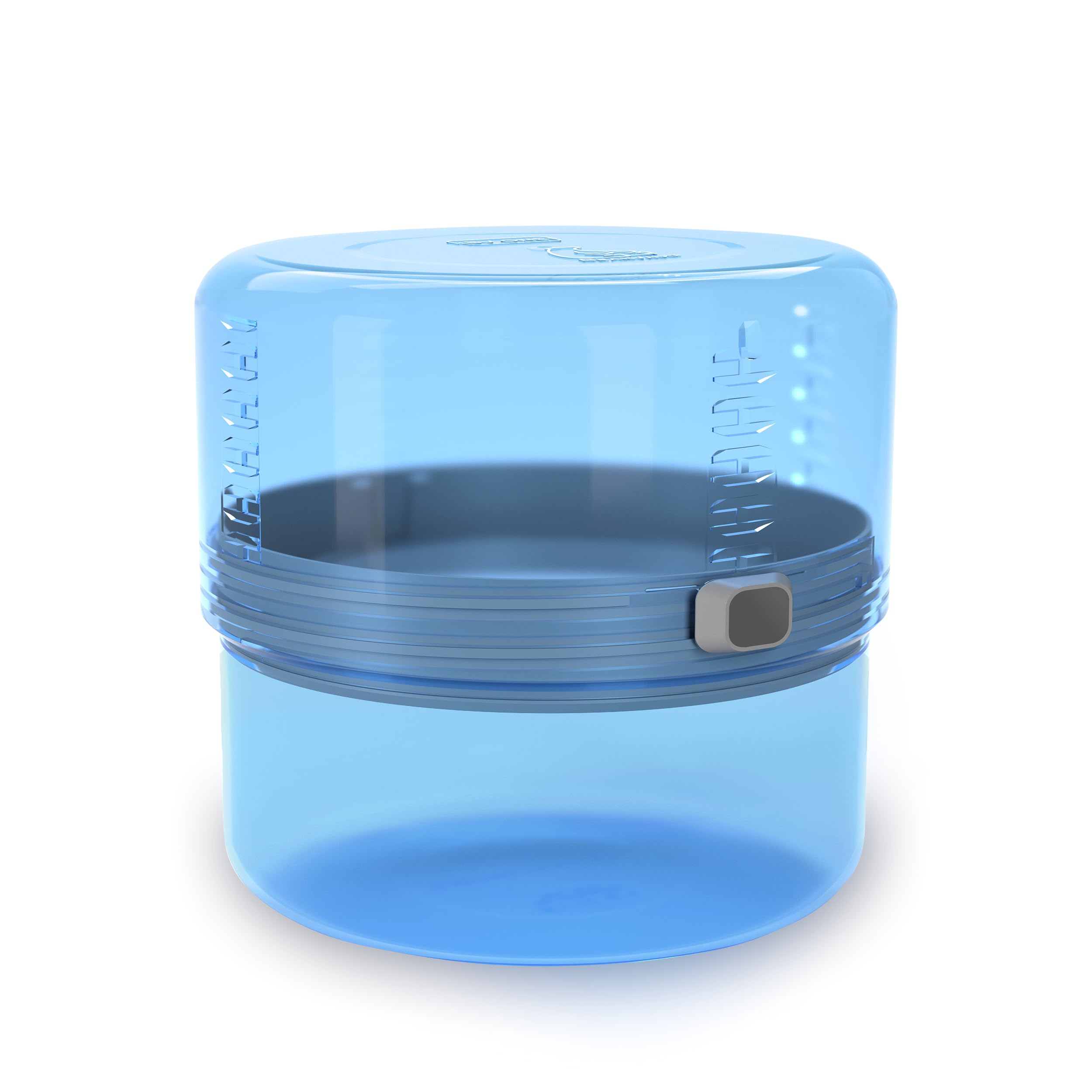
BearVault BV ONE
Key Features
- Closure: Push button
- Capacity: 8.3 liters
- Material: Polycarbonate
- Certification: IGBC approved (#255500)
- Price: Premium
Two halves, two buttons, and a canister that gets shorter as your food disappears. The BV ONE is the only adjustable canister in this group, and that trick is why it is our top pick: set it long for a four-day load, collapse it after the last dinner, and you stop hauling dead space over the final pass.
We think the adjustability earns its keep. Most backpackers end up owning two canisters eventually, a small one for overnights and a big one for the annual long trip, and this covers both ends of that. The center opening and the divider make it easier to pack than a jar-shaped canister, because you load it from the middle instead of through a mouth you can barely get a hand into.
The closure is the part we were curious about, and it is the most thoughtful design here. Soft-touch buttons and smooth threads are BearVault answering the oldest complaint about screw-lid canisters, that they are miserable to open with cold, stiff hands. Two buttons in sequence is a puzzle for a bear and a small puzzle for you the first time; by the second morning it is automatic.
IGBC approval is there, certification number 255500, which is what actually matters in grizzly country. It is not unlimited, though: 8.3 liters is a comfortable four days of dehydrated food and a much shorter trip if you are carrying fresh bread, cans, or a partner’s share of the load. One more thing we appreciate more than we expected — the halves come apart into shallow tubs, so cleaning beats reaching into a barrel with a sponge.
Pros
- Adjusts from a four-day load to an overnight one
- Push-button lid is friendlier in cold weather
- IGBC tested and approved, number 255500
- Center opening and divider simplify packing
Cons
- The most expensive canister in this group
For most backpackers we recommend the BV ONE: one purchase covers an overnight and a four-day trip, and the lid works with cold hands.
Best for Long Trips
Backpackers’ Cache
Key Features
- Weight: 3 lb
- Capacity: 200 fluid ounces
- Material: ABS polymer
- Dimensions: 12"L x 12"W x 12"H
- Price: Midrange
Food volume is what the Backpackers’ Cache refuses to compromise on: a rigid rectangular box that takes a multi-day dehydrated menu and still has room for the toothpaste and the bars you do not want in your tent.
The shape is the argument for it. Flat faces lie against your back instead of bulging into it, and the body does not roll off a sloped tent pad while you are arranging camp. That broad lid does double duty as a seat and a prep surface; we used it for the second far more than the first.
Where food is the constraint and the walk in is short, nothing else here comes close on volume. Two latches hold the lid rather than threads, and they want the lid seated square before you flip them; force one at an angle and it binds. It is hand wash only, so plan on a sink session after a week out — a fair trade for walls this thick.
Pros
- Holds a four-day dehydrated menu with room left
- Rectangular body packs flat and will not roll
- Broad lid works as a seat and prep surface
Cons
- Heaviest canister in this group at three pounds
- Cube-shaped body crowds a small pack
Buy the Cache when food volume is the constraint and the walk in is short; it holds a multi-day menu and packs flat against your back.
Best for Budget Backpacking
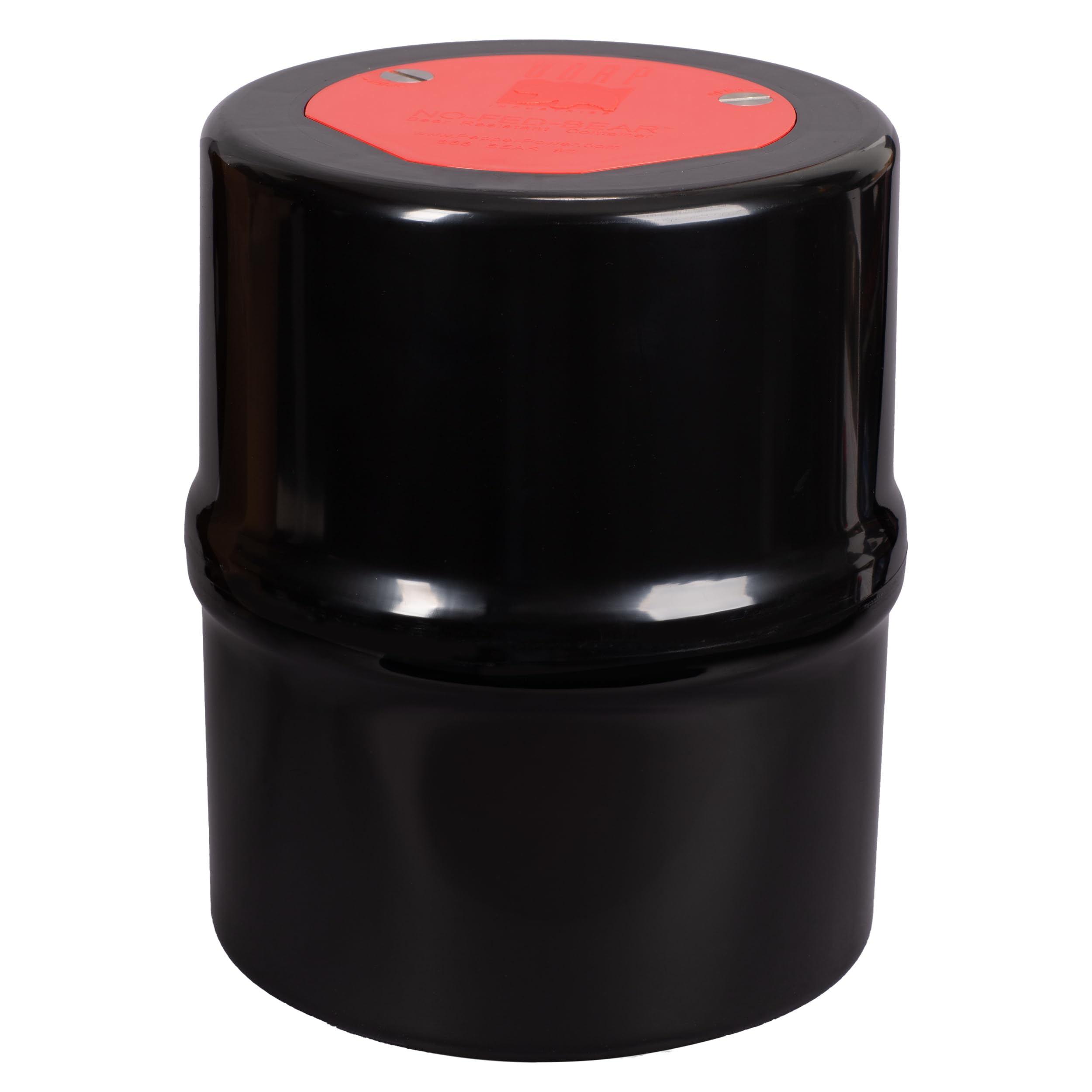
UDAP No-Fed-Bear
Key Features
- Weight: 2.4 lb
- Capacity: 2.1 gallons / 8 liters
- Diameter: 8 inches
- Certification: IGBC approved
- Price: Budget
A coin opens it. The No-Fed-Bear’s lid is held by a metal fastener you turn with a quarter or the edge of a key, and that one detail decides whether this canister suits you before anything else about it matters.
Everything else is plain value. It is IGBC approved, it holds a claimed 2.1 gallons / 8 liters, and at 2.4 pounds it is an easy carry for that much food. It is the least expensive canister here, and we did not find anything skimped: thick polymer, metal hardware, and a lid that seats with a firm turn.
The opening is the other quirk. The mouth is narrower than the barrel, so packing becomes a shingle-by-shingle job: pouches go in on edge, and a wide cook pot has to be worked past the shoulder. Once you know that, you pack for it, and the round body still finds a spot in most packs without a fight.
Keep a coin in your cook kit and the fastener stops being a story. It is a mechanism designed to defeat claws, and a human with a quarter beats it in a couple of seconds. Lose the coin and you will be improvising with a spoon handle at breakfast, which is the one morning you will remember.
Pros
- IGBC approved at the lowest price here
- Eight liters and 2.4 pounds is an easy carry
- Thick polymer shell with metal hardware
Cons
- Opening narrower than the barrel makes packing fussy
If you want IGBC-approved storage at the lowest price here, the No-Fed-Bear is the canister we hand over — put a coin in your cook kit and it is ready.
Best for Solo Overnights
BearVault BV425 Sprint
The Sprint is the smallest canister here — 9 inches across, 7 tall, 1.8 pounds — and the only one that disappears into a pack built for a single overnight. We keep it for exactly that: one person, food that is mostly dehydrated, and no spare liter to give away.
Clear blue sides turned out to be the detail we did not expect to care about. You can inventory dinner from the outside without unpacking anything, which matters most on the last morning when you are scraping the bottom. It is also the only canister here you can sit on without thinking about it.
The lid is the trade. It is a screw-on with several turns, which is slower than a button or a coin latch when your hands are cold and gloved. What you get for it is a seal that never argues and a lid that reseats by feel in the dark. On a freezing morning, do the last turn with your palm rather than your fingertips.
Pros
- Lightest canister here at 1.8 pounds
- Clear sides let you see what is left
- IGBC approved with a wide, tool-free opening
Cons
- Caps out at a day or two of food
We pack the Sprint for solo overnights because nothing else here disappears into a small pack the way it does, and the clear sides tell you what is left.
How We Tested Bear Canisters in Real Bear Country
We started by gathering more than 30 canisters — classic heavy hitters alongside newer, lighter shapes — and cut the list to 10 based on capacity options, closure design, weight, price, and whether the size range made sense for weekend versus weeklong trips. Then we lived with them for eight months: on weekend car-camping trips, a couple of overnight backpacking loops, and one long week in the Sierra. Each canister got packed with real food for the days it claimed to hold — oatmeal, tortillas, snacks that go soft in the sun — so capacity was measured in breakfasts and dinners, not liters.
At the trailhead we weighed every canister empty and loaded, then strapped it to a pack and walked. We noted whether it carried close to the back, whether the shape wasted pack space, and whether the lid opened with cold, tired hands or turned into a two-handed wrestling match. We dropped each one onto rock and pavement, loaded and unloaded it repeatedly, and watched for cracks, sticky hinges, or lids that never lined up again. We also paid attention to the small stuff: how the latch felt, whether the rim seated cleanly, and whether the thing looked like gear you’d be happy to strap to your pack or a plastic tub you’d hide in the car.
Safety got its own checks: we looked at whether the lid sat flush, whether the latch could pop open if the canister rolled, and whether the design gave us confidence leaving it out overnight. For size flexibility, we noted which canisters genuinely worked for a solo overnight versus a week of food for two, and whether the smaller versions were worth the weight savings. Value came last but not least: a canister that costs more than a weekend of campsite fees has to earn it.
How to Choose a Bear Canister
The right canister is the one you will carry without resenting it and open without a fight, and those two things decide more trips than the bear rating does.
Capacity: buy for your longest trip
Capacity is quoted in liters or gallons, but what you get depends on what goes in. A canister that swallows four days of freeze-dried meals can shrink to two days once you add fresh food, a fuel canister, or a coffee kit. Buy for your longest trip of the year, then pack a trial load before you commit.
The BearVault BV ONE is the interesting case in this group because it collapses as you eat, recovering pack space on the walk out instead of leaving you hauling air. If you only ever go one night at a time, a small canister like the Sprint spends your weight better.
Round or rectangular, and how it rides
A cylinder concentrates the load in one lump; a box lies flat against your back and leaves usable gaps around it. That is why the Backpackers’ Cache is often the easier carry in a full pack, since its flat faces tuck against your spine instead of bulging outward.
The catch is that a rectangular canister needs a rectangular space, so measure the inside of your pack rather than the outside. Anything that does not fit inside ends up strapped on top, and that is exactly where a loaded pack starts to feel unstable on rough ground.
Lid design is what you will curse at dawn
You open a bear canister twice a day, hungry, often in the cold and dark. Screw lids seal hard but take turns; coin fasteners defeat claws and mildly irritate the human holding the coin; push buttons are quickest with gloves on. Learn the mechanism at home in daylight before your trip.
A coin on your keyring solves the UDAP fastener. Nothing solves a screw lid you cannot grip, so if your hands are weak or arthritic, favor the button on the BV ONE.
Approval, and the list that actually counts
IGBC approval is the closest thing this category has to a standard: canisters are tested against live grizzlies, and land managers in grizzly country build their required-gear lists around the results. BearVault and UDAP both state it on the canisters here.
That does not mean every ranger waves you through. Requirements are set area by area and some name approved models, so check the managing agency’s list for the exact place and season before you buy. Keep the approval marking visible instead of covering it with stickers.
Frequently Asked Questions
Can I rent a bear canister instead of buying one?
Yes, and for a single trip it is often the sensible call. Many ranger stations, park concessioners, and outfitters rent canisters by the trip, and some backcountry permit offices lend them out. Availability gets thin on holiday weekends, and you still have to drive it back.
Call the managing agency for your trailhead about a week ahead and ask what they rent and which models they accept. If you are heading out more than a couple of times a season, buying starts to look cheaper.
Where do I leave a bear canister at night?
On flat, open ground well away from where you sleep, well away from where you cook, and away from lakes and streams. Lid on, latches closed, and nothing tied to it — a bear that gets it moving should find nothing to drag.
Drop a pin on your phone or tie a bright band to the handle so you can find it in the dark, and use the same spot every night of that trip.
Does anything besides food need to go in the canister?
Anything that smells. Toothpaste, sunscreen, lip balm, bug repellent, hand sanitizer, wrappers, and the shirt you cooked in all belong inside. A canister full of food with a scented ditty bag sitting in your tent misses the entire point.
Do a pocket sweep before you turn in and put the whole lot in with the food. That sweep does more for your safety than the brand of canister you bought.
Final Verdict
The BearVault BV ONE is what we tell most people to buy. One canister that shrinks from a four-day load to a single overnight covers the trips you actually take, and the push-button lid is the friendliest thing here to open with cold hands.
If food volume is the constraint and the walk in is short, the Backpackers’ Cache holds more and loads flatter. If money is the constraint, the UDAP No-Fed-Bear is IGBC approved for the least here, as long as you pack a coin.