This post contains affiliate links. We may earn a small commission when you buy through our links — at no extra cost to you.
The best part of a family camping trip arrives around 8 p.m., once the kids are horizontal and the fire has burned down. The worst part comes twelve hours later, when everyone wakes up in a puddle — or at 6 p.m. the night before, while two adults argue over poles. A good family tent removes the second feeling: room to stand and change, a floor that stays dry through overnight rain, and a setup you can manage in the dark.
I’ve pitched plenty of bad ones, and the number on the box is closer to a suggestion than a promise: a six-person tent can feel cramped for four once sleeping pads and a duffel move in. Over the past seven months my team and I have pitched and slept in 10 family tents, from weekend domes to cabin shelters you can stand up in. We cared less about headline specs than about whether the zipper snags at 2 a.m., whether seams hold in a real downpour, and whether a tent still feels solid on its fourth trip. The ones below are what we’d hand to our own families.




Best for Most Families
CORE 9 Person Instant Cabin Tent
Key Features
- Setup: 2 minutes, pre-attached poles
- Floor area: 126 square feet
- Peak height: 78 inches
- Doors and rooms: 2 doors, 2 rooms
- Price: Midrange
The poles are already attached to the shell, so setup is a matter of unfolding the legs and locking them. That is the whole argument for an instant tent, and it survives contact with a real evening: we had ours standing while the cooler was still in the trunk, with no manual and no argument about which pole goes where. The rainfly is a separate step, and reaching the ridge to clip it is easier with a second pair of hands.
Nine is a number for sleeping bags laid shoulder to shoulder. With two queen air beds down on the 14-by-9 floor, four people have room to walk between them and a duffel at each corner — that is the honest capacity, and it matches the four-with-gear figure in the listing. The divider is what we keep coming back to: it splits the cabin into two rooms, and with a door at each end, a parent leaving early does not wake the children on the other side.
Rain is where you need to pay attention. The fly covers the roof and the upper walls, but the lower seams are the spot to watch in a long, wind-driven soaking, and that is the job to do before your first trip: seam sealer along the exposed seams, and the fly staked out tight rather than draped. Do that, and an ordinary wet weekend passes without drama. The mesh panels and two zipped windows move a lot of air, which matters more than people expect on a warm night with four bodies breathing inside.
At 27.6 pounds it is car-camping kit rather than something you carry to a backcountry site, and the bag has a shoulder strap for the walk from the trunk. Against the 12-person CORE below, you give up 50 square feet and eight inches of ceiling and get a tent one adult can put up alone in the dark — the trade most families should take.
Pros
- Pre-attached frame stands in about two minutes
- Two queen beds plus floor space for gear
- Two doors and a room divider
- 78-inch peak for standing and changing
Cons
- Pole joints are the weak part of the frame
Our default family tent: the frame stands in about two minutes, two queen air beds fit with floor left over, and the divider gives a family of four the two rooms it actually uses.
Best for Large Families
CORE 12 Person Straight Wall Cabin Tent
Key Features
- Floor area: 176 square feet
- Peak height: 86 inches
- Wall design: Straight wall
- Doors and rooms: 2 doors, 2 rooms
- Price: Premium
Sixteen by eleven feet is a cabin, not a dome, and the walls go up rather than curving inward. At 86 inches the ceiling is the tallest of the tents here, and the practical result is that the strip of floor along each wall is usable — you can stand at the edge to change, and a cot pushed against the fabric still has headroom above it. We think that is the difference between a tent you sleep in and one you can spend a wet afternoon in.
The capacity math is worth doing before you commit. Twelve is a number for sleeping bags; the realistic figure is six with gear, or four queen air beds laid wall to wall across 176 square feet. Nine windows and two doors keep it from feeling like a shed, and the bag carries a full set of 22 guylines and stakes, which is the hardware a tent this tall needs.
Rain is its best argument. Among the big tents here, this one has the strongest record in wet weather, thanks to a fully taped fly and sealed seams staked out at 22 points rather than four. Plan on two adults for the pitch, because the frame is long and reaching the ridge solo is awkward, and put every one of those stakes in if the wind gets up.
Pros
- Tallest ceiling here at 86 inches
- Straight walls make edge floor usable
- Strongest rain record among the large tents here
Cons
- Front zipper catches unless the flap is held clear
For five or more people, this is the one: straight walls and a 7-foot ceiling make the whole floor usable, and it has the best wet-weather record of the big tents here.
Best for Sleeping In
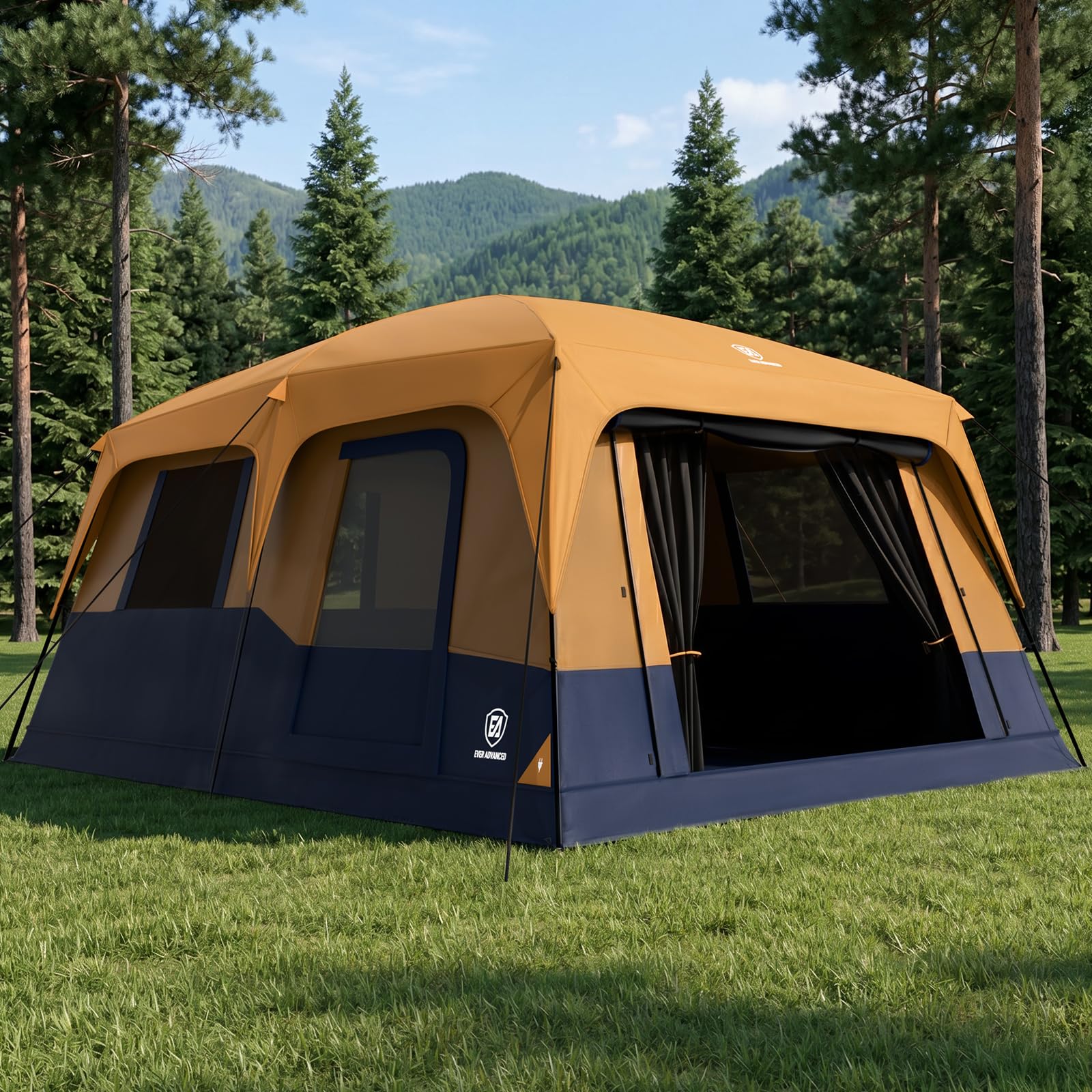
EVER ADVANCED 8 Person Blackout Tent
Key Features
- Weight: 43.1 lb
- Floor area: 112 square feet
- Peak height: 80 inches
- Water resistance: 4000 mm
- Price: Midrange
A summer sunrise arrives around six, and thin nylon does nothing to stop it. This tent’s interior is dark fabric, and the effect is the one we noticed first: the inside reads as night even at mid-morning, so a child who woke at dawn settles back down and a midday nap does not need a blanket thrown over the roof. It also runs cooler than a pale shell in direct sun, though the same fabric holds warmth on a still night, so bring a fan for August.
The rest of it is solid for a family of four or five. Fourteen by eight feet takes two queen air beds with a walkway between, the peak is 80 inches so most adults stand, and the four mesh windows unzip and roll up rather than only unzipping. There are two doors, and the 4000 mm coating is the highest waterproofing rating in this group — though a coating only helps where water actually lands, which is the fly and the seams.
Whether the dark is worth it comes down to your household. With a toddler who treats quarter to six as morning, nothing else here does this job; it is the only true blackout tent on the list. If your crew is up with the coffee anyway, you are carrying a heavier bag for a feature you will never use.
Pros
- Blackout interior keeps the inside genuinely dark
- 80-inch peak with standing room throughout
- 4000 mm coating, the highest rating in this group
Cons
- 43 pounds to lift and pack
- Sleeve frame makes the first pitch a two-person job
Buy it if your children wake with the sun: the blackout shell keeps the inside genuinely dark, and 80 inches of headroom means nobody has to dress lying down.
Best for Rainy-Day Hangouts
UNP 8 Person Tunnel Tent with Screen Porch
Key Features
- Poles: 8 steel leg poles
- Floor area: 180 square feet
- Peak height: 80 inches
- Screened porch: 6 feet
- Price: Midrange
Six of this tent’s twenty feet are a screened porch, and that is the reason to consider it. It is the spot for a camp chair, a cooler and muddy boots at the end of the day, with mesh on three sides so you can watch the site while rain taps the roof. Nothing else in this group offers a dry room with a view, and on a wet trip it changes the mood of the whole family.
Behind the porch, the sleeping area is 14 feet deep and 9 wide with 80 inches of headroom, and the floor takes two full air mattresses without stacking them end to end. Four oversized mesh windows and a mesh ceiling move a lot of air through the middle of the tent, which is what keeps condensation down on a cold, still night when the walls would otherwise run with breath.
The structure is steel: eight leg poles, eight guylines and 19 stakes under a 1500 mm shell. Colour-coded poles take most of the argument out of the pitch, and a tunnel this long catches a crosswind along its flank, so use every guyline rather than the four corners.
What swung it for us is the porch solving a problem the other tents here only mitigate: a rainy day with children. Instead of everyone lying on air beds with a tablet, you have somewhere to sit. The cost is a long footprint — you need 20 feet of level ground and a site that allows it — and this tent does not stand convincingly until every stake is in, which makes it a poor choice for a quick one-night stop.
Pros
- Six-foot screened porch on the front
- 80-inch headroom across a 180-square-foot floor
- Steel leg poles and 19 stakes in the bag
Cons
- Two-person pitch of about 15 minutes
- Needs 20 feet of level ground
The pick for a family that does not want to be sealed in: a six-foot screened porch gives you somewhere to sit out the bugs and the drizzle without retreating to the beds.
Best for Small Families
FanttikOutdoor Zeta C6 Pro 6 Person Tent
Key Features
- Setup: 60 seconds
- Weight: 19 lb
- Floor area: 90 square feet
- Peak height: 66 inches
- Price: Budget
A nine-person cabin is a lot of empty floor to heat, cool and carry when the household is two adults and two children. At 10 by 9 feet this one is honest about it: 90 square feet, one room, and a frame that unfolds from the bag with the poles already attached, which is why it is the tent we reach for on a Friday arrival when the children are already half asleep in the car.
The 66-inch center height is the number that decides it. That is shoulder height on most adults, so this is a tent you use sitting down — fine for sleeping and changing in a crouch, wrong if you want to stand up through three days of rain. We found the trade fair for weekends and cramped for a wet week, which is where the taller cabins here earn their money. Two queen mattresses fit side by side, and four mesh windows plus a mesh ceiling keep the air moving.
The 1500 mm coating, a drainage channel at the base of the door and a taped fly are more weather engineering than this class usually gets, and the fabric feels denser than the price suggests. The single door is the daily friction: the slider wants the waterproof flap pulled clear with your other hand, and it is stiff enough that a child will need help with it.
Pros
- Frame opens in about a minute
- 90 square feet takes two queen air beds
- 1500 mm coating and a door drainage channel
Cons
- One door, and the zipper catches the flap
The right size for four people and a dog: one adult can throw it up in a minute, and two air beds plus gear still fit inside.
Best for Two Adults
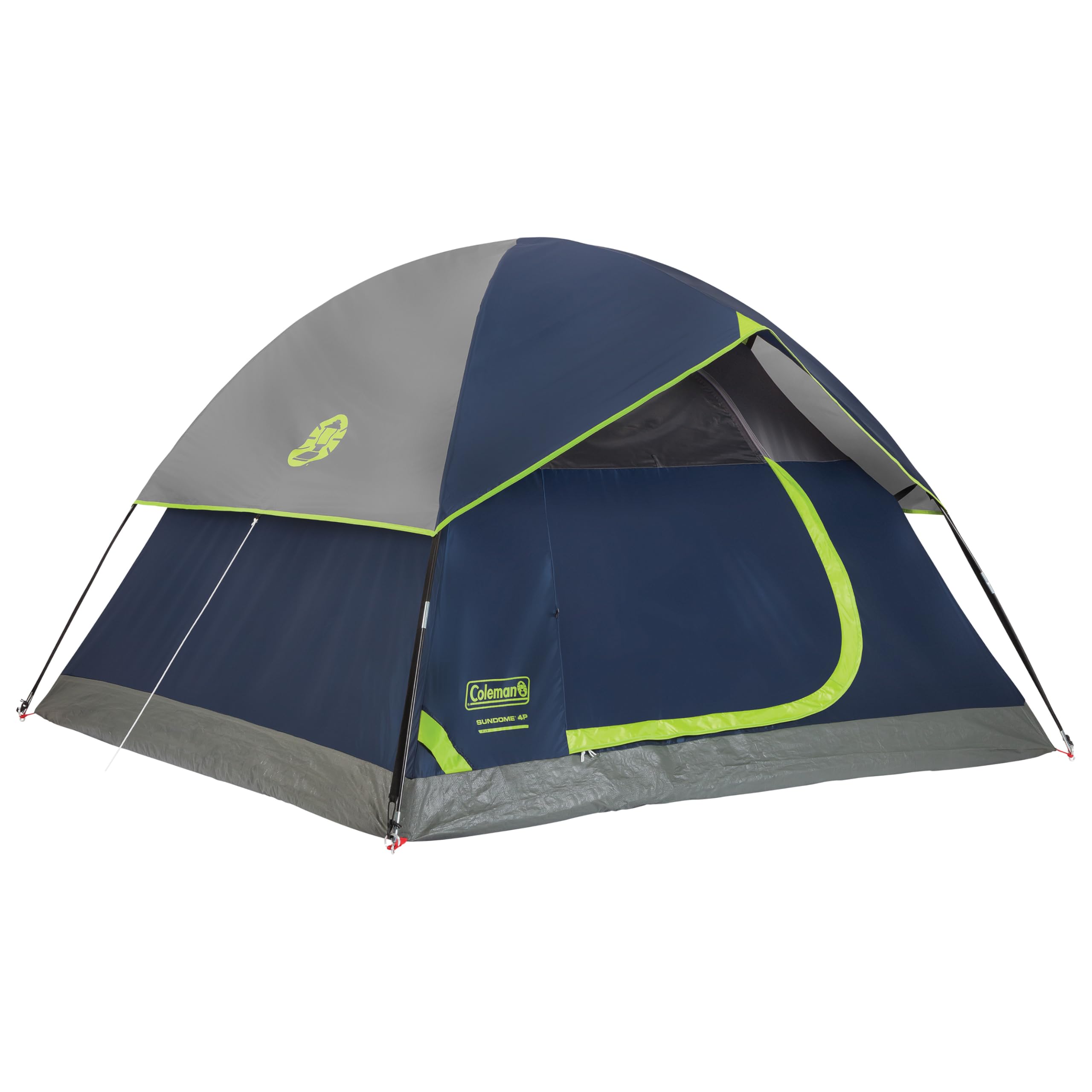
Coleman Sundome 4 Person Tent
Key Features
- Doors: 1
- Weight: 9.1 lb
- Floor area: 63 square feet
- Sleeping capacity: 4 person
- Price: Budget
Sixty-three square feet is a two-person floor. Lay a queen air bed in this tent and you have a walkway the width of a duffel down one side, which is fine for a couple and tight for four — the four-person label is a sleeping-bag count, not a family count. What you get instead is the simplest tent here: four poles, clips rather than sleeves, and a pitch one adult can manage in the dark.
It weighs 9.1 pounds and packs small enough to live in the trunk, which is why ours lives there between trips. Ventilation is better than the shape suggests, with a large back window and a ground vent pulling air through, and the weatherproofing is real work rather than a marketing line: welded corners, inverted seams and a rainfly that covers the roof where it matters. Most of the wet nights reported on this tent end with people dry.
Where it gives ground is the frame. The poles are the lightest here by feel, and in a gust this tent wants its guylines and a proper stake-out rather than trust. For two adults in three-season weather that is a fair trade; for a family of four facing a week of storms it is not, and the Fanttik or the CORE instant is the better buy.
Pros
- Lowest price of any tent here
- Packs to 9.1 pounds and lives in the trunk
- Welded corners and inverted seams shed rain
Cons
- Low peak; nobody stands up inside
- One door for the whole tent
The budget answer for two adults and one child: small, low and simple, and drier in rain than its place at the bottom of the price range suggests.
Best for Big Group Budget
UNP 10 Person Family Tent

Key Features
- Weight: 21 lb
- Floor area: 162 square feet
- Peak height: 78 inches
- Doors and rooms: 2 doors, 2 rooms
- Price: Budget
The roof is mesh, so on a clear night you fall asleep looking at stars. It is the feature that makes this tent feel bigger than its floor plan, and the one to weigh if you have a light sleeper: sunrise arrives early through a mesh ceiling, and a summer morning starts before six.
Eighteen by nine feet gives 162 square feet, which takes three queen air beds or ten sleeping bags laid out end to end. A divider makes two rooms, there are doors at both ends, and the whole thing weighs 21 pounds, which is light for the floor space. Setup takes two people and a quarter of an hour; the fiberglass poles clip on rather than threading, which saves time.
Structure is where the money went. The poles meet the floor at plastic grommets, and that is this tent’s weak point — it is where poles have given way, and a snapped pole at a corner takes the shelter down. Seal the seams before the first trip, pitch with the fly tight and a tarp underneath, and add a repair sleeve to the kit. Treat it as a fair-weather family tent rather than a storm shelter and it earns its keep.
Pros
- 162 square feet for a large group
- Mesh roof for stargazing
- Divider creates two separate rooms
- 21 pounds packed for the floor space
Cons
- Corner grommets are the weak point under load
The cheapest way to sleep a big group: 162 square feet, a room divider, and a mesh roof that is genuinely lovely on a clear night.
Best for Divided Space
CAMPROS CP 8 Person Tent

Key Features
- Doors: 1
- Rooms: 2 with divider
- Floor area: 126 square feet
- Peak height: 72 inches
- Price: Budget
A curtain down the middle is a small thing that changes how a family uses a tent. This one hangs from the ceiling and splits the 14-by-9 floor into two rooms — parents on one side, children and their mess on the other — and it is the reason this tent stays on our list despite doing a couple of basic things worse than the tents above it.
The interior is 72 inches at the center, so most adults stand with an inch or two to spare, and five mesh windows plus a full mesh ceiling keep it from turning into an oven by nine in the morning. Two queen air beds fit with room left at the foot for bags. The frame is colour-coded and goes up in about five minutes with two people.
Where it falls down is the door, and on a family tent that is not a small thing. There is one of them, and the zipper is stiff and catches — the kind of friction that gets worse at two in the morning with a child who needs the bathroom. Pull the flap clear before you move the slider; it helps, but it never becomes effortless.
Water is the other caveat. The fly covers the roof and the upper panels, but the seams below its hem are exposed, and in a long, wind-driven rain that is where moisture shows up. A tube of seam sealer and a tarp under the floor make a real difference. Seal it before you go and this is a lot of divided space for the money; skip the prep and a wet weekend will find the seams.
Pros
- Hanging divider splits it into two rooms
- 126 square feet with a 72-inch peak
- Colour-coded frame up in about five minutes
Cons
- One door for an eight-person tent
A divided two-room tent at a low price: 126 square feet and a curtain down the middle, provided you can live with one door and a fussy zipper.
How We Picked and Tested Family Tents
We began with roughly 40 tents and cut the list on paper before anyone slept in one: usable floor dimensions rather than advertised capacity, peak height, pole and fabric construction, packed size, and price. That left 10 tents — dome, cabin, and blackout styles — spanning the range of what families actually spend.
Testing ran seven months, from early spring into a wet fall. Every tent got a practice pitch at home, where I timed setup solo on the first attempt with the instructions still in the bag, then timed it again with two kids and a dog underfoot. We noted where poles hung up, whether color-coded sleeves actually helped, and how teardown went in the rain. Each tent then went on real trips: an exposed ridge site with a steady wind, a three-day rain stretch, and one hot week where ventilation mattered more than anything else.
At camp we laid out four sleeping pads and a duffel to see how much floor the advertised size really left, and had the tallest adult stand up and change clothes to judge headroom. Each tent got a ten-minute hose soak, then a hand run along the seams and corners looking for damp. Zippers were opened and closed dozens of times, often one-handed in the dark, and every snag got logged. After each trip we checked poles for bends and stake loops for strain, and packed everything back into its bag to see whether it still fit. By the end, value came down to which tents had survived seven months without a bent pole or a wet corner — and which ones still looked good pitched on a sunny morning.
How to Choose a Family Camping Tent
The most useful thing to know before you shop is that the number on the box is a sleeping-bag count, not a family count — buy floor area and standing height, and let the label follow.
Read capacity as beds, not people
The arithmetic that matters is a queen air bed: 60 by 80 inches, about 33 square feet. Two of them take 66 square feet, so a 126-square-foot tent like the CAMPROS leaves roughly half its floor for bags, chairs and a walkway, which is why tents in that class are honestly described as fitting four people with gear. A 162-square-foot floor takes three queen beds; the ten-person label on it means ten sleeping bags shoulder to shoulder with nothing else inside.
Count the beds your family actually sleeps on, add a couple of square feet per person for duffels, and shop from that number. It is the only capacity figure that survives contact with a real trip.
Standing height and wall shape
Seventy-two inches is the common peak, and it lets most adults stand at the center of the tent and nowhere else. Eighty-six inches, as on the CORE 12-person, lets you stand along the walls too, and straight walls are what put the floor at the edges to use instead of losing it to a slope. If your trips involve a wet afternoon with everyone inside, pay for height and vertical walls; if you pitch at dusk and leave after breakfast, a 72-inch dome is perfectly liveable.
Setup: the frame first, then the fly
Instant tents with pre-attached poles really do go up in a couple of minutes, and the difference shows on the trip where you arrive late with hungry children. Two caveats. The rainfly is a separate job that no listing counts in its setup time, and reaching the ridge of an 80-inch tent to clip it wants a second pair of hands. And the tenth pitch is always faster than the first, so put the tent up in the yard once, in daylight, before you rely on it.
Poled tents with clips or sleeves take longer but pack smaller and usually cost less. Either way, the dry run at home is worth more than any setup-time claim on the box.
What rain protection actually means
Hydrostatic ratings across these tents run from 1000 mm to 4000 mm, and higher is better, but the number is not where leaks start. Water gets in at seams the fly does not cover, at the base of the walls where wind drives rain sideways, and through a floor that is not turned up into a shallow tub. Check three things: a fly that reaches below the wall seams, taped seams, and a floor with a raised edge.
Condensation is the other false alarm. A wet inner wall on a cold, still morning is breath, not a leak, and more mesh is the fix rather than more coating.
Doors, dividers and children
A room divider only works if each side has its own door. Otherwise the family in the back room walks through the front room to get out, and everybody wakes up. Two doors also let a parent leave for the bathroom without unzipping the wall the children are asleep against. If you are buying a divided tent for privacy, look for two doors on the spec sheet — the CORE instant and the straight-wall cabin both have them, and the CAMPROS, with one door and a curtain, does not.
Frequently Asked Questions
Will a big family tent fit in my car?
Check the packed weight and the bag size before you commit, because instant tents fold long and flat rather than short and fat. The 10-person UNP packs into a bag 25.6 inches long, while the EVER ADVANCED blackout cabin weighs 43 pounds. If the tent lives in the trunk between trips, keep it near 20 pounds and measure the bag against your trunk’s shortest dimension.
Do I need a footprint or tarp under the tent?
Yes, and a cheap tarp does the job. Cut it so it sits a couple of inches inside the tent’s floor outline — any overhang catches rain and channels it under the floor instead of away. A ground sheet protects the polyethylene base from gravel and roots, which is what wears a floor out first, and it stops groundwater wicking up through the fabric on saturated ground.
Can I run a camp stove or a heater inside the tent?
No. Any fuel-burning appliance — propane stove, catalytic heater, charcoal — produces carbon monoxide, and a tent is a sealed box. Cook outside and well clear of fabric, and light the interior with a battery lantern or a headlamp. If the nights are cold, a warmer sleeping pad and a proper bag do far more for you than a heater ever will.
Are the stakes that come with the tent good enough?
Usually not for anything but calm, soft ground. The steel pins in most of these bags bend on hard pitches and pull out in wind. Buy a set of 8-inch galvanized stakes, plus a few screw-in anchors for sand, and use the guyline loops rather than trusting the corners alone. It is the cheapest upgrade you can make to any tent in this guide.
Final Verdict
The CORE 9 Person Instant Cabin is the tent we point most families to, because it handles the three things that decide a weekend: it goes up in minutes, it sleeps four with gear still on the floor, and its two doors and divider mean nobody climbs over anybody at night.
With five or more people, the 12-person straight-wall cabin buys you the extra floor and the only ceiling here tall enough to stand along the walls. And if your children wake with the sun, the blackout tent is worth the extra weight towing it around.