This post contains affiliate links. We may earn a small commission when you buy through our links — at no extra cost to you.
A comfortable insole can make or break a day on the trail. But many insoles marketed for hiking deliver short-term plushness that compresses after a few rocky miles, leaving your feet tired and aching.
The trade-off is simple: soft foam feels great at first but lacks the structural support needed for uneven terrain and heavy packs. Rigid insoles with firm arch support last longer and protect against overuse injuries, but they often require a break-in period.
This guide focuses on which insoles actually hold up under hiking conditions, helping you match your foot shape and hiking style to the right balance of cushion and support.


Best for High Arches
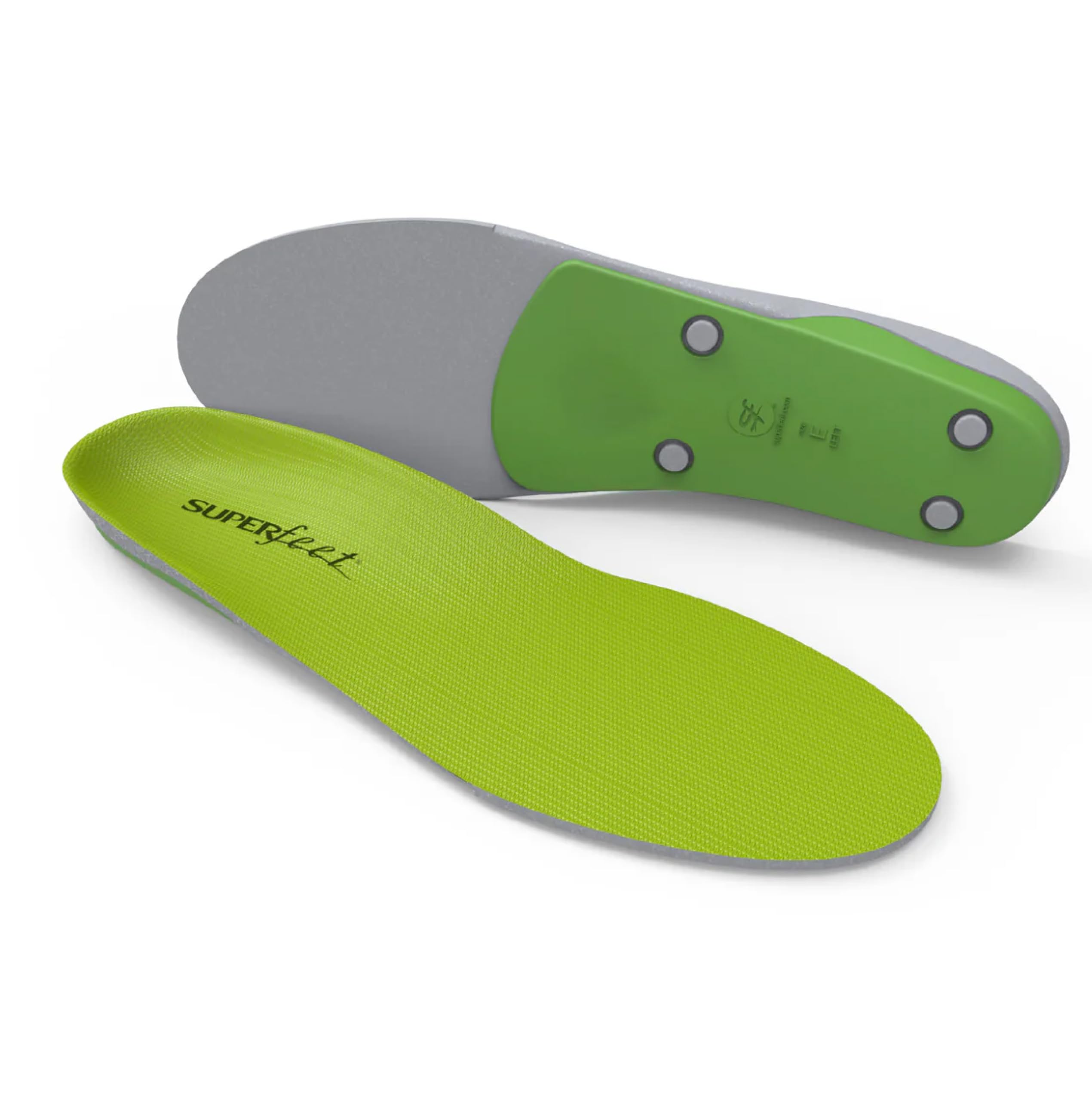
Superfeet Green High Arch
The Superfeet Green delivers consistent, structured arch support that holds up over miles of trail. The firm foam and deep heel cup maintain stability on uneven terrain, reducing strain on feet, knees, and back during long days of hiking.
This insole suits hikers with high arches or plantar fasciitis who prioritize support over softness. The lack of plush cushioning means a noticeable break-in period, and those with wider feet may find the fit snug — best tried in boots before committing.
Pros
- Relieves arch and heel pain during extended hikes
- Outlasts many shoes, reducing replacement frequency
- Firm support stabilizes foot on uneven ground
Cons
- Firm cushioning can feel uncomfortable during initial wear for those used to soft insoles
- Narrow fit may cause discomfort for hikers with wider feet
A premium-priced insole best for hikers who need high arch support and are willing to endure a break-in period for long-term foot health.
Best for High Arch Support
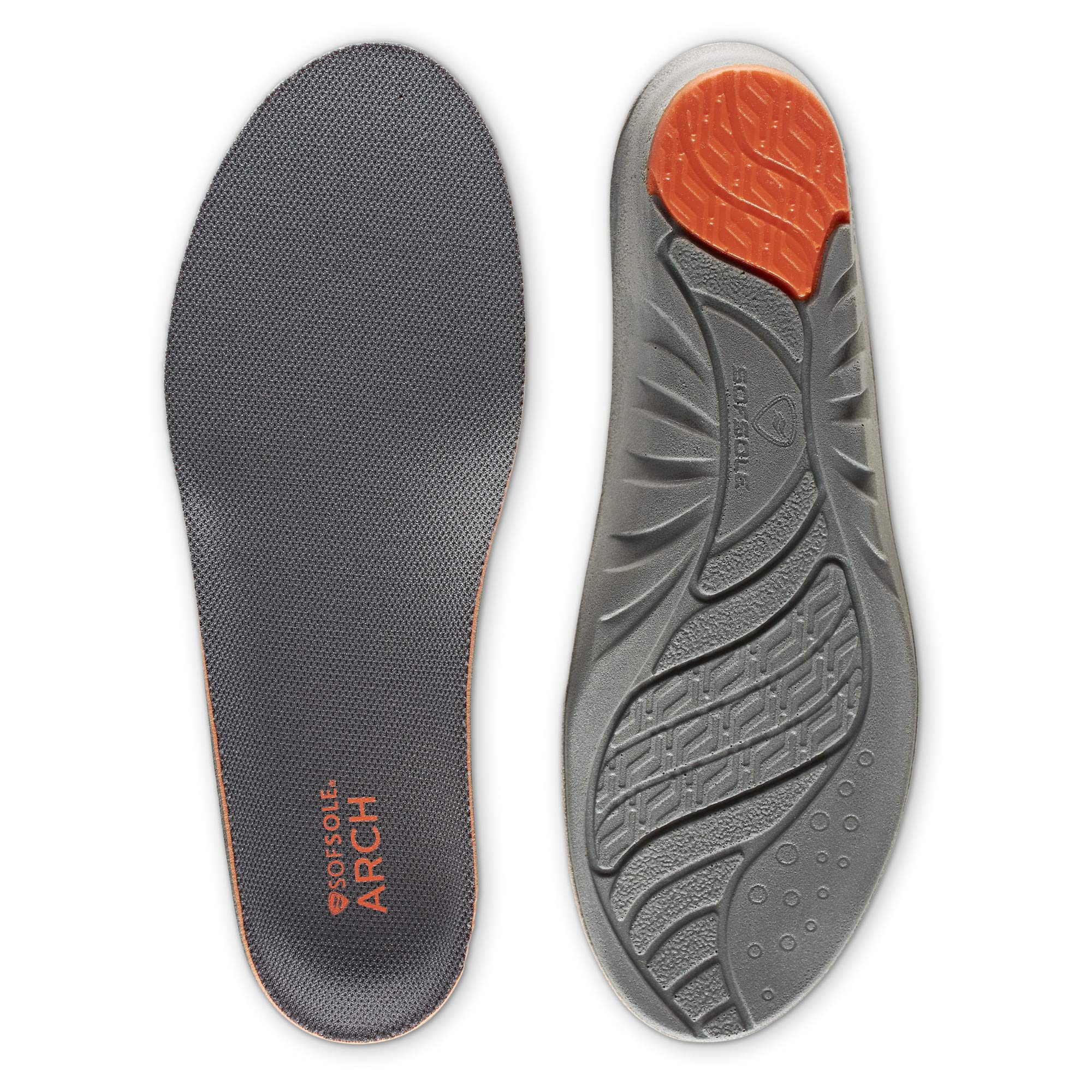
Sof Sole High Arch
For hikers with high arches, this Sof Sole insole delivers targeted firm support that stands up to long miles on the trail. It’s noticeably firmer and more structured than the brand’s gel model, making it a better match for backcountry use where stability matters more than plushness.
Best suited for backpackers and day hikers who need arch support and don’t mind a thick, firm insole. The foam’s height can crowd low-volume boots or dress shoes, so check your footwear’s internal volume before committing.
Pros
- Targeted arch support reduces foot fatigue on extended hikes.
- Full-length foam construction provides durable cushioning mile after mile.
- Cost-effective alternative to premium hiking insoles.
Cons
- Thick profile may not fit in low-volume hiking boots or dress shoes.
- Firm cushioning lacks plushness for those who prefer a softer step.
A strong value for hikers with high arches who can accommodate the thickness — not for low-volume footwear.
Best for Day Hikes
Dr. Scholl’s Walk Longer
This insole delivers notable foot fatigue reduction on day hikes thanks to its thick plush foam. The cushioning is noticeably soft underfoot, which many walkers appreciate. However, the built-in arch support is modest and may not suit those with high arches or flat feet. It works best for hikers who want a comfortable, cushioned experience on short to moderate trails and don’t require firm arch correction.
Pros
- Soft plush foam reduces foot fatigue on long walks
- Effective at relieving everyday foot pain for many users
Cons
- Arch support is limited and may not provide enough lift for high arches or flat feet
A cost-effective pick for hikers who want pillow-like cushioning rather than structural support, but choose a higher-arch insole if you need significant foot correction.
Best for Overpronation
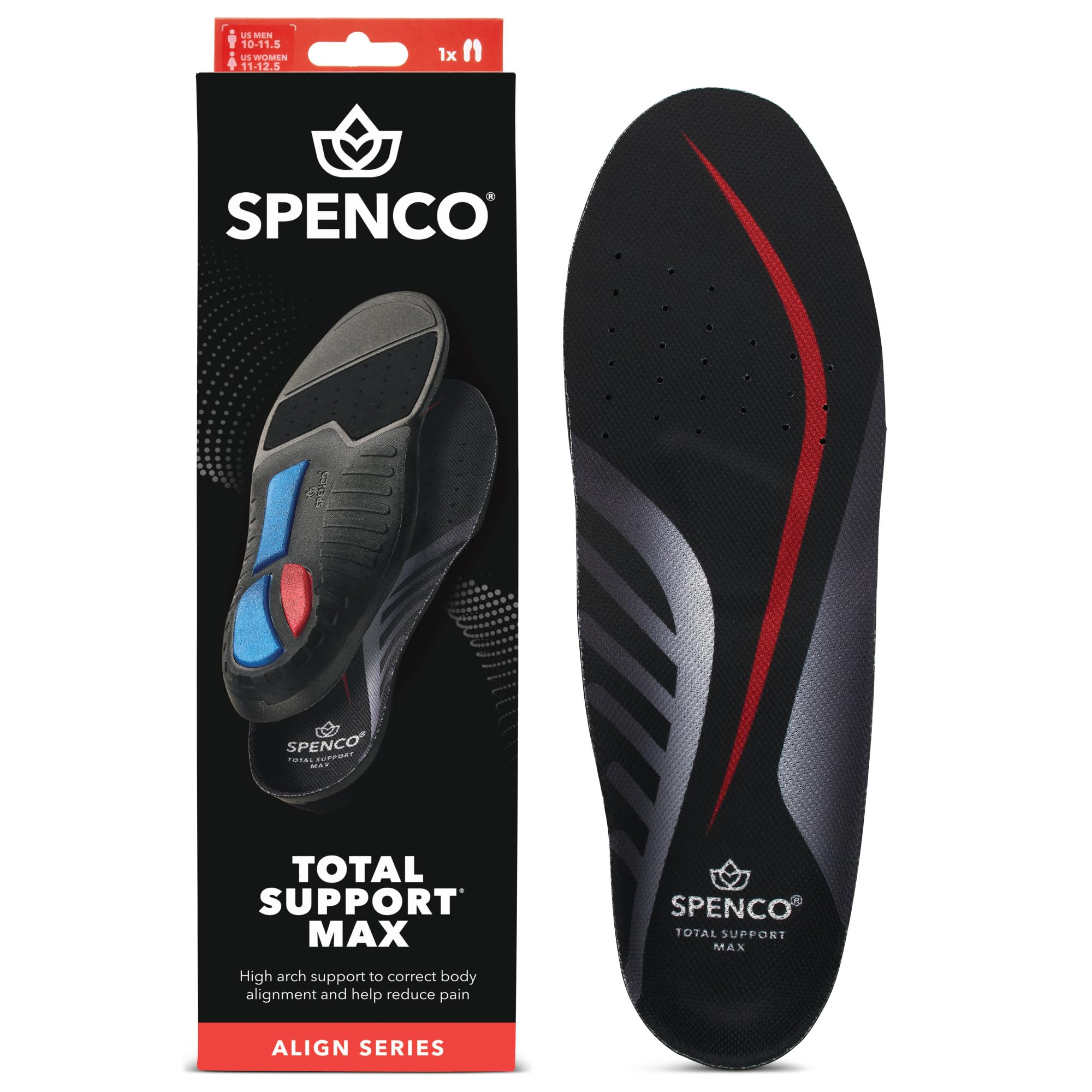
Spenco Total Support Max
Spenco Total Support Max delivers strong overpronation control and a deep heel cup that lock the foot in place on rocky trails. The rigid support and wider fit suit hikers with flat feet or plantar fasciitis, though the added bulk can feel crowded in narrow boots.
Best for hikers who need firm correction and maximum stability when carrying heavy packs. The firmness and volume are a tradeoff for those seeking plush cushioning, but for the right foot type, this premium insole reduces pain and overpronation effectively.
Pros
- Strong arch support and overpronation control for uneven terrain
- Durable construction holds up on long multi-day hikes
- Effective relief for plantar fasciitis and arch fatigue
Cons
- Fit may be too wide for narrow boots, causing toe crowding
- Firm feel may not suit hikers used to thick, plush insoles
For hikers with overpronation who prioritize stability over softness, the Spenco offers durable orthotic-level support worth the premium price.
Best for Women’s High Arches
Superfeet Berry Women’s
Women-specific shaping and Superfeet’s structural arch support create a stable platform for hiking on uneven terrain. The firm cushioning and high price point mean this insole suits hikers who prioritize support over plushness and plan to use it regularly. It’s best for female hikers with high arches or flat feet who want a durable, long-lasting insole and don’t mind a break-in period.
Pros
- Women-specific contour provides a snug fit that unisex insoles often lack.
- High arch support helps reduce foot fatigue on multi-mile hikes.
Cons
- Firm cushioning can feel too hard for hikers who prefer soft padding underfoot, especially on long days.
- Premium price point may be hard to justify for occasional trail use.
For female hikers who need high arch support and don’t mind a firmer ride, this insole delivers a precise fit that unisex options often miss.
Best for Cushioned Walking
Sof Sole ATHLETE

The Sof Sole ATHLETE combines soft heel-to-toe cushioning with a moisture-wicking top cover, making it comfortable for day hikes where plushness is preferred over rigid support. However, some units may delaminate after a few months, and the arch support is too mild for flat feet or heavy packs. This insole is more at home on pavement or trails, which keeps it from being a top hiking pick.
Pros
- Very comfortable, reduces heel and foot pain
- Good cushioning with a nice balance of softness and support
Cons
- Some units may delaminate after a few months of use
A decent fit for casual day hikers who prioritize soft cushioning and don’t need aggressive arch support, but not a reliable choice for multi-day treks or heavy loads.
Best for Casual Walking
4D Cloud Insoles

These insoles deliver plush cushioning that feels like walking on air, making them a cost-effective choice for everyday shoes. The memory foam and gel heel absorb shock well during short walks, but the arch support is too minimal for hiking or uneven terrain — better suited for flat, casual use where comfort matters more than stability.
Pros
- Very soft cushioning provides a cloud-like feel underfoot.
- Budget-friendly price with solid build quality for the cost.
Cons
- Limited arch support — not suitable for hiking or anyone needing firm structural support.
A good pick for casual walking and tight budgets, but leave these at home if you’re hitting the trails.
Best for Women’s Light Hikes
Dr. Scholl’s Prevent Pain Women

Provides noticeable foot and knee pain relief with flexible arch support and shock-absorbing heel. Fits well in most boots and can be trimmed. However, the support can degrade within months of regular hiking – better suited for occasional day hikes than frequent treks.
Pros
- Comfortable padding that reduces foot and back pain
- Arch support fits boots and can be trimmed to size
Cons
- Support may lose its structure after a few months of regular hiking use
A budget-friendly option for women who hike occasionally and prioritize immediate comfort over long-term durability.
Best for Short Walks
Dr. Scholl’s Float-On-Air

These insoles deliver plush, cloud-like cushioning that reduces foot fatigue during short walks or daily errands, but the foam compresses with regular use and the minimal arch support lacks stability for hiking trails.
Pros
- Soft foam cushioning reduces foot fatigue on short walks.
- Budget-friendly price for immediate comfort.
Cons
- Arch support may be insufficient for hiking or extended walking.
A reasonable choice if your walks never leave pavement and you prioritize initial softness over long-term support.
How to Choose
The softest insoles often pack down fastest, leaving you with little support on rocky trails.
Arch Support Type
Arch support is the backbone of any hiking insole. Low arches suit flat feet by providing a gentle contour, while high arches lift the foot to reduce strain on the plantar fascia.
The hidden trade-off: too much arch for a flat foot can create pressure points, and too little for a high arch leaves the foot unsupported on uneven ground. Match your arch type exactly, or use a medium-profile insole if you are between sizes.
Cushioning Firmness vs. Softness
Soft foam feels great in the store but compresses after a few miles on rocky terrain, transferring shock to your joints. Firm insoles maintain their shape over hundreds of miles but require a break-in period of short walks to avoid hotspots.
The trade-off is between immediate comfort and long-term support. Day hikers on well-groomed trails may prefer plush cushioning, while backpackers carrying heavy loads benefit from firm, energy-returning materials.
Trim-to-Fit vs. Pre-Sized
Trim-to-fit insoles let you adjust length, but cutting too much can remove crucial arch support. Pre-sized insoles offer a precise fit but may not match your shoe length exactly.
If you go with a trim-to-fit model, trace your existing insole as a guide and cut in small increments. Mark the heel cup position first to maintain alignment.
Moisture Management and Odor Control
Moisture-wicking top sheets pull sweat away from the foot, reducing blister risk on long hikes. Odor-control treatments slow bacterial growth but lose effectiveness after repeated washings.
The hidden trade-off: antimicrobial coatings can wear off after a few cycles in the wash, and some wicking fabrics are less durable than plain foam. Look for removable insoles that air dry quickly.
Fit Compatibility with Boot Volume
Insoles add thickness inside your boot. A thick insole in a low-volume boot will crowd toes and cause pressure points, while a thin insole in a roomy boot leaves the foot sliding.
Before buying, check your boot’s removable insole depth. Leave at least a finger’s width of space above your toes after inserting the new insole.
FAQ
How long do soft foam hiking insoles last before they flatten?
Most soft foam insoles lose their cushioning after 50-100 miles of hiking on rocky terrain. Higher-density foams can last 200-300 miles. If you notice heel pain or increased foot fatigue, it is time to replace them.
Can I use running insoles for hiking, or do I need a specific hiking insole?
Running insoles are tuned for forward motion and softer surfaces, not for lateral stability and heavy packs. A hiking-specific insole has a deeper heel cup and more rigid arch support to handle uneven terrain and load bearing.
Why do my insoles keep sliding forward inside my hiking boots?
Sliding usually happens when the insole is too small or lacks a sticky backing. Choose a full-length insole with adhesive, or apply double-sided tape. If the insole is trimmed too short, it will not anchor properly in the heel cup.
Do rigid insoles require a break-in period?
Yes. Firm insoles can cause discomfort or blisters if worn immediately on a long hike. Walk short distances for a few days to let your feet adjust, and wear them with good socks to reduce friction.