This post contains affiliate links. We may earn a small commission when you buy through our links — at no extra cost to you.
Nobody buys a bear canister for fun; you buy one because you’d like your food—and your trip—to survive the night. A good one keeps smells contained, gives a bear no easy leverage on the lid, and still leaves room in your pack for actual meals. The frustrating part is that they all look like plastic drums online, while usable capacity, weight, and lid design vary more than the product photos suggest.
I’ve spent the past eight months carrying 10 canisters on weekend loops and longer backpacking trips, and the differences showed up fast. I stopped caring about scuffs and mold lines sooner than I expected; a plain canister with a lid that seats squarely beats a tidier one that wobbles. Capacity is not just the number on the label—it’s whether a five-day food bag fits without playing Tetris, and whether the lid still locks after you’ve crammed it full. The picks below are the ones I’d hand to a friend before a permit weekend.
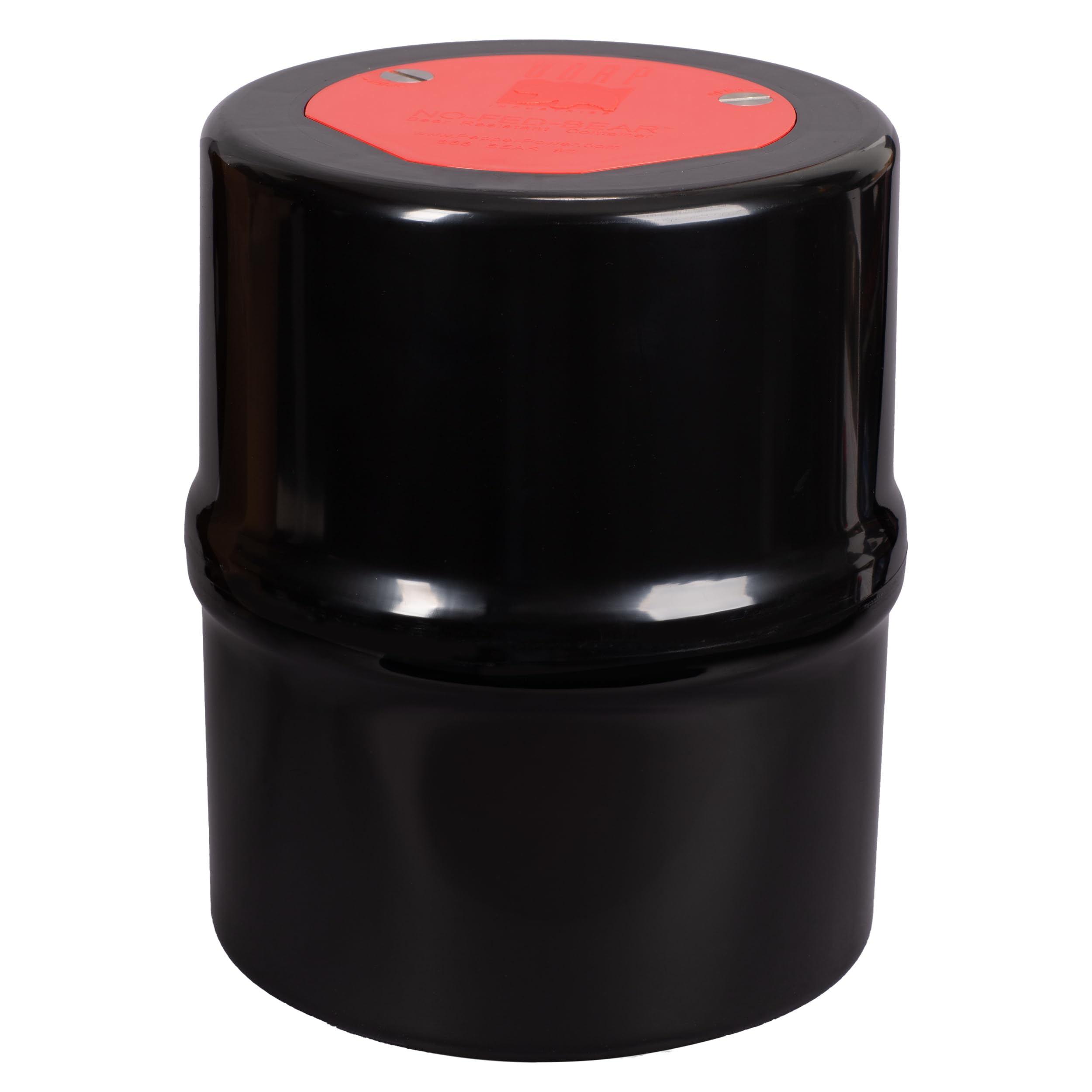


Best for Multi-Day Solo Trips
UDAP No-Fed-Bear BRC
Key Features
- Weight: 2.4 lb
- Opening: Coin-turned metal fastener
- Capacity: 2.1 gallons / 8 liters
- Certification: IGBC approved
- Price: Budget
Eight liters in 2.4 pounds is the arithmetic that decided this one. UDAP rates the No-Fed-Bear for four to six days of food, which covers most backpacking trips in a single canister, and it does it without the pack-tax feeling of a keg. It’s IGBC-approved, so it passes the check in areas that require a canister, and it undercuts both the Backpacker’s Cache and the BearVault BV ONE on price.
The lid is the part we ended up appreciating most. A metal fastener turns with a coin: no button to hunt for through gloves, no wide thread to cross in the dark, nothing small enough to lose in the duff. Carry a quarter on your body rather than in your pack and opening it stays a two-second job at the end of a long day. The polymer shell and metal hardware feel like the sort of thing that outlasts the trip you bought it for.
Where the BV425 is a sprint can and the Bear Keg is a group can, this one is drawn around the ordinary trip: three or four nights, one person, dehydrated meals, a stove that nests inside. That’s the shape of most of our trips, and it’s the shape this canister fits.
Pros
- Eight liters, rated for four to six days
- 2.4 pounds for the capacity it carries
- IGBC-approved for required areas
- Coin fastener works with gloves on
Cons
- Opaque shell, so contents are a guess
Our default recommendation for backpacking: eight liters of food space, 2.4 pounds to carry, and IGBC approval for the parks that check.
Best for Quick Overnight Trips
BearVault BV425 Sprint
BearVault’s smallest canister is built for a night or two, and at 1.8 pounds it’s the lightest thing in this group by a wide margin. Slide it into a small pack for an overnight, leave lunch in it at a climbing base, or hand one to each person in a group and spread the food weight around. That’s the brief, and it holds up.
Where it earns its keep is the clear polycarbonate. You can read the contents from outside without unpacking anything, which sounds trivial until day two, when the question is whether the last of the cheese is worth the weight. The shell is stout enough to sit on, too, and after a long climb a canister that doubles as a stool stops being a gimmick.
BearVault frames it as a group can, and that’s how it makes most sense: two of these, one in each pack, cover a three-night trip between two people without either of them hauling a keg. It’s also the one here that slides into a small overnight pack instead of strapping to the outside of a big one.
Pros
- Lightest canister here at 1.8 pounds
- Clear sides show what’s left without unpacking
- Doubles as a camp stool
Cons
- Lid binds with cold, gloved hands
The canister for fast, light trips of a night or two, where 1.8 pounds and a see-through shell matter more than capacity.
Best for Long Group Trips
Counter Assault Bear Keg
Key Features
- Weight: 3.5 lb
- Capacity: 716 cubic inches
- Dimensions: 9.5 x 9.5 x 14.12 inches
- Certification: IGBC and SIBBG approved
716 cubic inches is close to twelve liters, and that is the whole case: the biggest canister in this group, with room for two people over a long weekend or one person for a week without repacking tricks. It’s the heaviest here at 3.5 pounds empty, a pound more than our top pick, and the volume is genuinely paid for rather than free.
It carries both IGBC and SIBBG approval, the widest certification in this group, so it’s a safe answer for the parks that check paperwork. The lid runs on three screw heads that a coin turns: slower than a single fastener, but it seats with a finality we trust more than a button. The yellow is the practical kind of bright, too, visible from the far side of a campsite at dusk, which is when you least want to be searching.
Where this canister makes sense is a base camp, a paddling trip, or any trip where the can gets loaded once and moved rarely. Three or four people pooling food into one keg beats three people each carrying their own small can, and the weight stays in one boat instead of on four backs. It’s the canister that stays behind while you summit.
Pros
- Largest capacity here, close to twelve liters
- IGBC and SIBBG approved
- Bright yellow is easy to spot at dusk
Cons
- Tall enough that it usually straps outside the pack
The choice for long trips and shared food: the most capacity in this group, with IGBC and SIBBG approval behind it.
Best for Base Camp Storage
Backpacker’s Cache
Key Features
- Shape: Rectangular
- Weight: 3 lb
- Capacity: 200 fluid ounces
- Material: ABS polymer
- Price: Midrange
It costs more than our top pick, holds less, and weighs more. It earns its place on a different argument: it’s the simplest canister in the group and the one that takes the most abuse. Three pounds of ABS polymer in a rectangular body, a lid that drops on, and locks that hold it without a coin, a thread, or a button.
The rectangular shape is the part we appreciate most. A cylinder rolls into a corner of a pack and leaves dead space around it; a box stacks against the back panel and swallows the odd-shaped things, a stove, a folded tarp, the last of the coffee, that a round canister makes you pack around. It also sits flat as a seat or a card table at lunch.
It’s a decades-old design and it behaves like one: no parts to lose, nothing to learn, and a body that shrugs off being dragged out of a boat and sat on. That’s worth a great deal at a fixed camp and less on a long climb, where the box and the three pounds start to argue with you. Buy it for the trips where it lives out of your pack, not the ones where it lives in it.
Pros
- Rectangular body stacks instead of rolling
- No tool needed to open it
- Takes being sat on and dragged
Cons
- Lock can stick if the lid seats crooked
For paddlers, base camps, and anyone who wants a food box that survives being sat on, dragged, and handed to a friend.
Best for Varying Trip Lengths
BearVault BV ONE
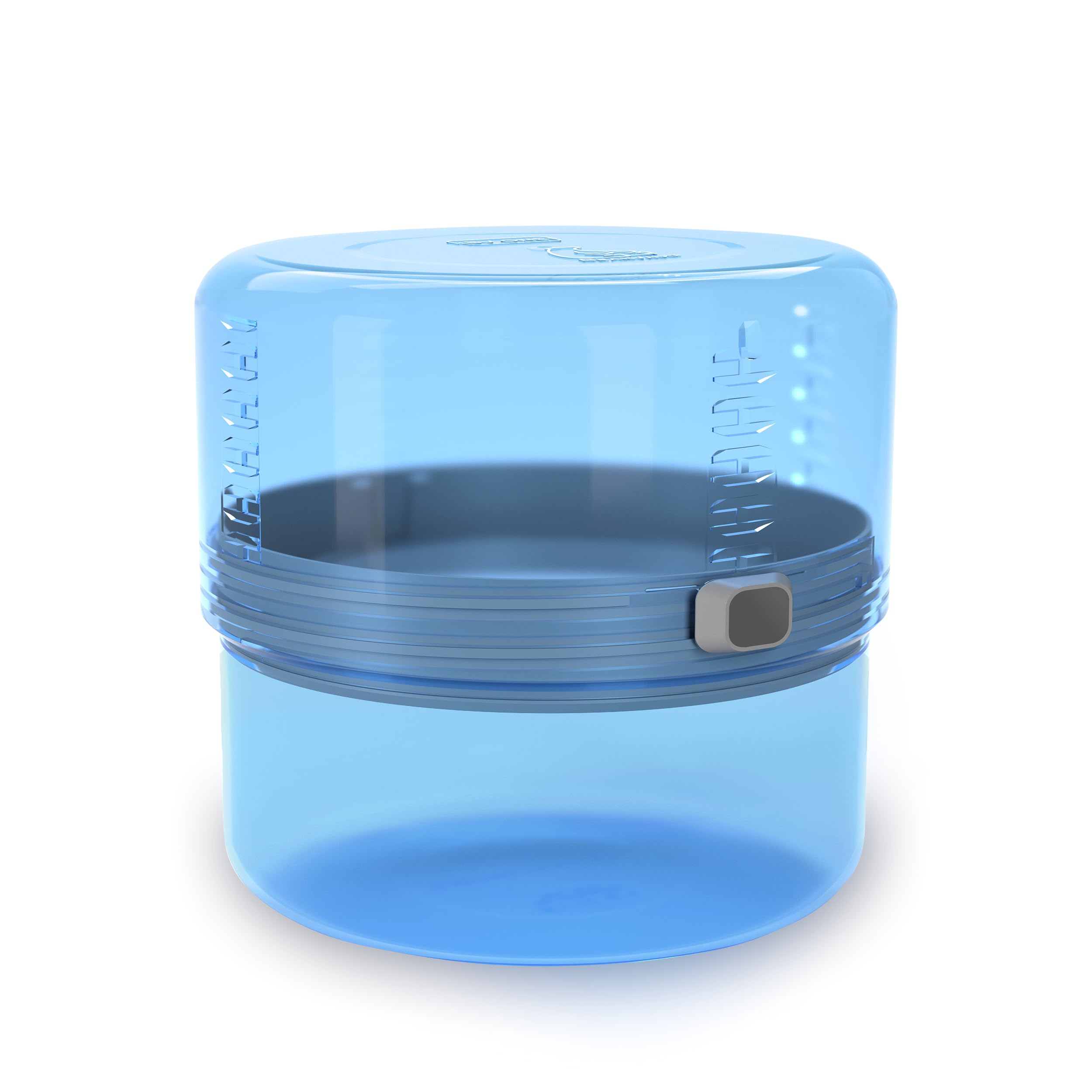
Key Features
- Range: 1–4+ days
- Opening: Push-button, tool-free
- Capacity: 8.3 liters
- Certification: IGBC approved (#255500)
- Price: Premium
The BV ONE is two halves that twist together, so the canister gets smaller as the food does. It starts at 8.3 liters, a four-day capacity by BearVault’s reckoning, and comes down as the trip goes on. That’s a strange thing to get excited about until you’ve carried a half-empty canister for three days.
What surprised us is how late the benefit arrives. On the first morning it’s just a canister; by day three it has handed back a couple of inches of pack space and the load sits differently. The center opening and the divider are the quiet second feature, letting you reach the day’s food without unpacking the whole trip.
Two buttons and a couple of twists take a few minutes to learn, so give it a dry run in the living room before camp. It’s IGBC-approved and BearVault’s lightest design for its volume, and it’s the canister for someone who does two-nighters and week-long trips in the same season and doesn’t want two cans in the garage.
Pros
- Collapses as food disappears, freeing pack space
- 8.3 liters covers up to four days
- Push-button lid needs no tool
Cons
- Premium price for the adjustable mechanism
One canister for short trips and long ones: it collapses as you eat, and nothing else in this group does that.
How We Chose and Tested Bear Canisters
I started with a shortlist of canisters sold for backpacking, then narrowed it by exterior dimensions, stated capacity, weight, and price so the group covered solo overnighters through five-day trips. I ended up testing 10 over eight months, including weekend loops, a few longer trips, and one soggy spring trip that turned every campsite into a mud pit.
At home, I weighed each canister empty, measured it against a 50-liter pack, and packed the same three-day and five-day food loads—oatmeal, tortillas, peanut butter, a small stove—noting how much room was wasted and whether the lid still closed without forcing it. In camp, I opened and closed each one bare-handed, with gloves, and once in the dark, because a lid that fights you at 6 a.m. is a lid you’ll leave loose. I also shook each loaded canister upside down and tipped it off a picnic table to see whether the lid stayed seated.
Durability and safety got the rougher treatment: I dropped each loaded canister from hip height onto rock, dragged them a short distance over granite, and checked latches, seams, and lid threads afterward for cracks or loosening. Appearance mattered less than I expected, but I noted sharp edges, chalky plastic, and whether lids sat flush after a week in a pack. I also compared usable volume and construction against price—not to find the cheapest, but to see which ones felt worth carrying for several seasons.
How to Choose a Bear Canister for Backpacking
The canister that matters is the one approved for the ground you’re standing on, so start with certification and let capacity, weight and lid design settle everything after that.
Certification comes first
Approval is granted model by model, not brand by brand, and the Interagency Grizzly Bear Committee list is what rangers in required areas actually check. Every canister here except the Backpacker’s Cache states an IGBC approval, and the Bear Keg adds SIBBG on top.
If your route crosses a park that mandates hard-sided storage, buy from the approved list rather than assuming a stout-looking box will pass. Plenty of trips carry no requirement at all; in that case, move straight on to capacity and lid design and enjoy the freedom.
Match capacity to the food you actually pack
Food-day ratings assume dehydrated meals and tight packing. Fresh food, cans and a jar of peanut butter eat volume fast, so the honest test is your own menu and your own appetite after a long day. Eight liters covers four to six days of dehydrated food; the smallest canister here is a night or two; the keg runs close to twelve liters.
The common mistake is buying the biggest can you can afford and half-filling it. A canister works best full, and empty volume is weight you carry for nothing.
Weigh the weight against the nights
Between 1.8 and 3.5 pounds there’s a day’s food or a liter of water, so the spread is worth arguing about. The pattern in this group is unavoidable: the lightest canisters hold the least.
Set your choice by your longest usual trip rather than your most ambitious one, and on the big trip let a partner carry half the food in a second can. That beats hauling a keg you only fill twice.
The lid you’ll open in the dark
There are three systems here: a coin-turned fastener, a wide screw lid, and push buttons. Each has a failure mode at camp. A coin fastener is quick and glove-friendly, but useless if the only quarter is in a pack you’ve already hung, so carry it on your body. Screw lids need no tool at all, though wide threads take two hands and patience below freezing. Buttons are the fastest until you’re fumbling.
Whatever you choose, open and close it a few times at home. Camp at dusk is a bad place to learn the trick to your own dinner.
Frequently Asked Questions
Is a bear canister really necessary, or can I just hang my food?
In real forest with good horizontal limbs, a proper hang is still legal in plenty of places and costs you nothing but rope. Canisters earn their keep above treeline, in desert and coastal country, and anywhere the rules require hard-sided storage, and they’re faster at the end of a long day.
Check the land manager’s rules for the exact area you’re camping in before you commit, since the requirement varies by park and sometimes by zone within one.
Can two people share one canister?
Yes, and it usually beats two small ones. An eight-liter canister holds four to six days of dehydrated food for one person, so a weekend for two fits with room left for a shared stove.
Bag food by meal rather than dumping it loose, so the second person isn’t excavating to find dinner. For a week with two people, move up to the twelve-liter keg.
Will a canister fit inside my backpack?
Measure before you order. The BV425 is 9 inches across and 7 tall; the Bear Keg is 14.12 inches tall, which is taller than the internal compartment of many weekend packs. Round canisters ride best stood upright against the back panel, and a rectangular one stacks flat.
If yours won’t go inside, plan on strapping it under the lid or on top, and check that your straps close over it before you leave the trailhead.
Final Verdict
The canister we recommend first is the UDAP No-Fed-Bear. Eight liters, 2.4 pounds, IGBC approval, and a lid that opens with a coin through gloves: it’s the least compromised answer for the trips most people take.
Two circumstances change it. If your trips run a night or two and every ounce shows, the BearVault BV425 is the lighter, clearer can. If two people are eating out of one container for a week, the Bear Keg’s extra volume is worth carrying.