This post contains affiliate links. We may earn a small commission when you buy through our links — at no extra cost to you.
Many sports watches market themselves as outdoor-ready, but the gap between claims and trail performance can be wide. A watch that tracks a city run perfectly may lose GPS signal under tree cover or run out of battery halfway through a day hike.
The key is matching the hardware to the activity. Multi-band GPS, realistic battery life in GPS mode, and a water resistance rating that matches your environment matter far more than a bright AMOLED screen or a long list of health metrics.
This guide focuses on watches that actually keep up on trails and runs — models with reliable satellite lock, battery that lasts your outing, and features that don’t get in the way when you’re moving.


Best for Runners & Hikers
Garmin Forerunner 255
Key Features
- GPS Accuracy & Satellite: Multi-band GNSS
- Battery Life GPS: 30 hours
- Heart Rate: Wrist HRV
- Water Resistance: 5 ATM
- Price: $$$
The Forerunner 255 delivers multi-band GNSS that locks quickly and holds position accurately even under tree cover, paired with wrist-based HRV status and a suite of training metrics typically reserved for Garmin’s higher-end models. Battery life in smartwatch mode runs 10–12 days with regular use, and the 30-hour GPS mode covers multi-day trail runs or hikes without recharging.
In daily use, the button-only interface requires a brief adjustment period for those used to touchscreens, but once learned, navigation during workouts becomes second nature. The barometer may show inconsistent altitude readings in some units over time, but GPS-based elevation remains a dependable alternative for most hikers.
This watch suits runners and triathletes who want daily suggested workouts, recovery insights, and training status. Hikers who need long GPS battery and reliable tracking will get solid performance, though the lack of built-in topographic maps means planning requires loading breadcrumb routes before a trip. The non-touchscreen interface works well for gloved hands or wet conditions, but if you prefer a touchscreen smartwatch with onboard music, this isn’t the right fit.
Pros
- Battery lasts 10–12 days in smartwatch mode and 30 hours in GPS mode
- Advanced training metrics include daily suggested workouts, recovery time, and training status
- Accurate GPS and heart rate tracking with strong satellite lock and wrist-based HRV
Cons
- For hikers relying on barometric altitude for precision, the sensor can drift over months of use — GPS elevation offers a fallback
- Non-touchscreen interface may feel unintuitive to new users and requires a brief learning period for deeper settings
The Forerunner 255 is the pick for runners and hikers who prioritize GPS accuracy, battery endurance, and training analytics without paying for features like maps or music they won’t use.
Best for Extreme Adventures
Garmin Fenix 7X Pro Solar
Key Features
- GPS Accuracy & Satellite: Multi-band SatIQ
- Battery Life GPS: 122 hours
- Heart Rate: Wrist
- Water Resistance: 10 ATM
- Price: $$$$
The Fenix 7X Pro Solar delivers battery life that stretches into weeks with solar charging, preloaded TopoActive maps for backcountry navigation, and a built-in LED flashlight, all wrapped in a titanium bezel with 100m water resistance. Where the top pick Forerunner 255 balances GPS accuracy and training metrics for daily use, this model prioritizes extreme battery and map storage for multi-day trips without a power source.
This watch fits serious hikers, mountaineers, and ultrarunners who spend days off-grid and need offline maps plus solar top-ups. However, its 96g weight and 51mm case make it bulky for casual wear or smaller wrists, wrist-based heart rate can be erratic during intense exercise, and occasional sensor glitches have been noted.
Pros
- Battery lasts 20+ days without solar, and solar charging extends it to weeks between charges.
- Titanium bezel, 100m water resistance, and a built-in LED flashlight add durability and utility.
- Preloaded TopoActive maps provide turn-by-turn navigation for remote trails and backcountry routes.
Cons
- At 96g and 51mm case size, the watch feels heavy and may not sit comfortably on smaller wrists.
- Heart rate readings can be inconsistent during high-intensity efforts or interval training.
If off-grid endurance and full mapping are non-negotiable, the Fenix 7X Pro Solar delivers – but the lighter Forerunner 255 suits most athletes who want a watch they can wear daily without compromise.
Best for Iphone Users
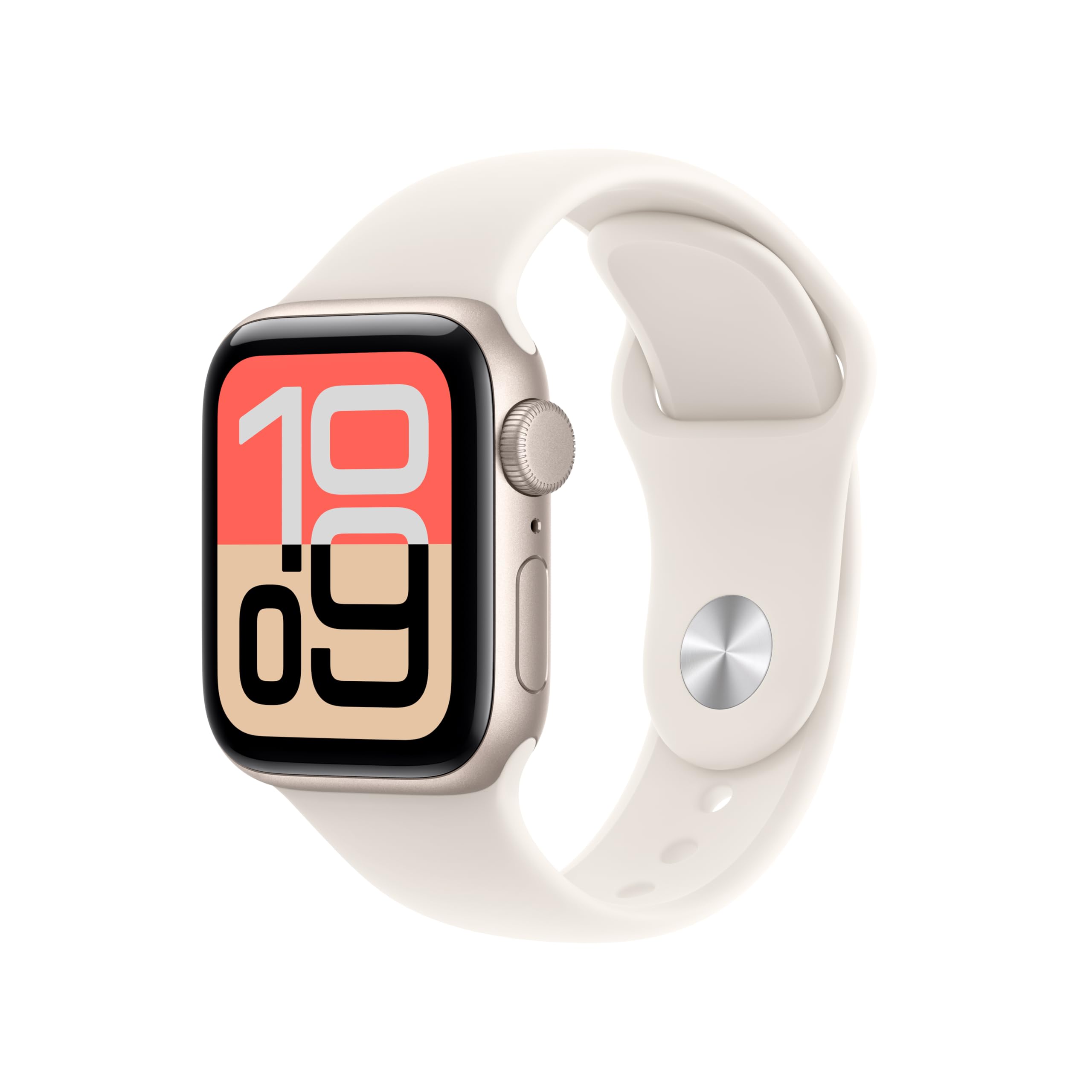
Apple Watch SE 3
Key Features
- GPS Accuracy & Satellite: Built-in GPS
- Heart Rate: Wrist
- Water Resistance: 5 ATM
- Price: $$
The Apple Watch SE 3 pairs effortless iPhone integration with fall detection, car crash detection, and a bright always-on display, making it a strong daily fitness companion. It tracks runs, gym sessions, and swims via built-in GPS and heart rate monitoring, and its 50m water resistance handles pool laps. Where it diverges from the top pick is battery strategy: this is a smartwatch first, designed for overnight charging rather than multi-day autonomy.
This watch suits iPhone users who want a well-rounded smartwatch for everyday health tracking and occasional workouts. It delivers comprehensive safety features and a customizable display, but Android users are locked out entirely. For those whose athletic needs rarely extend beyond a single-day run or gym session, the tradeoffs are manageable; for all-day trail hikes or backcountry navigation, the top pick’s longer battery and mapping capability are more appropriate.
Pros
- Seamless iPhone integration for messages, calls, and app sync.
- Comprehensive safety features including fall detection and crash detection.
- Bright always-on display with extensive watch face customization.
Cons
- No built-in topographic maps or trail navigation for off-road hiking or backpacking.
- 18-hour battery requires nightly charging – insufficient for all-day hikes or multi-day outings.
For iPhone users who need a daily fitness smartwatch with strong safety features, this is a capable choice. If your weekends involve all-day trail runs or backcountry navigation, the top pick provides the battery and maps you’ll need.
Casio G-Shock Dw5600
Casio G-Shock DW5600

This Casio G-Shock DW5600 is built to survive drops, bumps, and submersion to 200 meters, making it a tough companion for manual labor or outdoor work. Its stopwatch, timer, and alarm are simple to operate without a manual. However, it has no GPS, heart rate monitoring, or any data logging — only suitable if you need a basic timepiece, not performance tracking for running, cycling, or hiking.
Pros
- Withstands years of daily abuse and impacts without failure.
- Low price for a watch that delivers long-term ruggedness.
Cons
- In low light, the small display and dim electroluminescent backlight can be hard to read.
Best for those who need a tough, no-frills watch and don’t rely on GPS or heart rate for their activities.
Timex Ironman Classic 30
Timex Ironman Classic 30

The Timex Ironman Classic 30 is a straightforward digital stopwatch watch built for pool swimmers and track coaches who need only lap memory and a clear Indiglo backlight. It omits GPS, heart rate monitoring, and any form of smart connectivity, so it cannot track distance or pace. At roughly $45, it offers a water-resistant case and simple operation, making it a practical choice for timed intervals in a controlled environment. However, it is not a modern sports watch and cannot meet athletic tracking needs that require GPS or heart rate data.
Pros
- Indiglo backlight is bright and easy to read in low-light conditions like pools or early track sessions.
- 30-lap memory handles typical swim sets or interval workouts without needing a reset.
Cons
- No GPS, heart rate, or smartphone connectivity – limited to manual lap timing only.
- Strap buckle may show wear over time, with some owners noting it becomes less durable than the watch case.
Buy this only if you need a simple, affordable lap timer for pool or track and have no requirement for GPS, heart rate, or smart features.
How to Choose
The best sports watch for outdoor use depends less on price and more on how its GPS handles tree cover and how long the battery lasts when you’re away from a charger.
GPS Accuracy and Satellite Support
Watches with single-band GPS often lose lock in dense forests or deep canyons, reporting incorrect distances and routes. Multi-band GNSS (using multiple satellite constellations like GPS, GLONASS, and Galileo) provides more stable positioning by triangulating from stronger signals.
For trail runners and hikers who spend time under canopy, multi-band support isn’t a luxury — it prevents the frustration of a watch that thinks you ran a mile when you actually did two. The difference can be 10-20% distance error in wooded terrain.
Battery Life in GPS Mode
Smartwatch battery claims (e.g., ’14 days’) refer to standby time with occasional notifications. What matters for outdoor use is GPS-on endurance — how many hours the watch lasts while actively tracking a run or hike. A watch that dies after 8 hours of GPS is useless for a full day on the trail.
Battery chemistry and display type play a role: MIP displays consume far less power than AMOLED when the screen is always on. The trade-off is visibility in low light, but for extended outings, MIP often wins.
Heart Rate Monitoring
Wrist-based optical heart rate sensors are convenient, but they struggle with accuracy during high-intensity intervals or when sweat and motion create artifacts. The green LEDs get washed out by bright sunlight, and tight bands can restrict blood flow, producing false lows.
For casual fitness tracking, wrist HR is fine. For training with precise heart rate zones, pairing a chest strap (or using a watch that supports external sensors) eliminates the guesswork.
Water Resistance
Water resistance ratings are depth-under-pressure numbers, not swimming endurance. A 5 ATM rating (50 meters) covers swimming and splashes, but 10 ATM (100 meters) adds margin for high-velocity water sports or submersion with button presses.
Rubber gaskets degrade over time; watches used frequently in saltwater or chlorine should be rinsed fresh after each session. Cracks in the case or a loose crown can compromise any rating.
FAQ
Can I use a Garmin Forerunner 255 for hiking without loading maps?
Yes. The Forerunner 255 tracks your route via GPS breadcrumb trail, so you can see where you’ve been and follow the track back. It lacks full topographic maps, but for day hikes on marked trails, the breadcrumb navigation is sufficient. For off-trail navigation, you’d want a model with built-in maps like the Fenix.
Why does my sports watch lose GPS signal in dense forest when my phone works?
Phones use assisted GPS (A-GPS) that combines satellite signals with cell tower and Wi-Fi location data, which improves lock in challenging environments. Most sports watches rely solely on satellite signals and lack that assistance. Multi-band watches improve lock stability but still won’t match a phone in deep canopy.
How often should I charge a GPS watch on a multi-day backpacking trip?
It depends on the watch and how many hours you track per day. A watch with 30-hour GPS battery (like the Forerunner 255) can last 3-4 days of moderate tracking. The Fenix 7X Pro Solar can go a week or more with solar. Always bring a small power bank and charging cable for trips longer than the rated GPS endurance.
Is a Fenix 7X overkill for a casual hiker who only tracks weekend trails?
Yes, unless you value having a flashlight and the longest possible battery. The Fenix 7X is heavy (96g) and expensive. A Forerunner 255 or Apple Watch SE will track weekend hikes just as effectively with far less bulk and cost. Reserve the Fenix for multi-day expeditions or off-trail navigation.