This post contains affiliate links. We may earn a small commission when you buy through our links — at no extra cost to you.
Many snow boots claim to be waterproof, but the real test comes when you step into slush or wet snow. A boot with a sealed seam membrane can keep you dry in light powder, but once water pressure hits, it’s the rubber shell that matters.
The gap between marketing claims and on-feet performance is a recurring frustration — especially for anyone who spends time outdoors in snow. The right boot for your needs depends on how you’ll use it: standing in deep snow, walking on icy sidewalks, or hiking through variable terrain.
This guide cuts through the confusion by focusing on what actually keeps feet warm and dry — from insulation type and boot height to the material that separates a budget boot from a dependable one. No single boot fits every scenario, but the picks here are chosen for their real-world waterproofing and warmth where it counts.



Best for Outdoor Work, Hunting
TIDEWE Neoprene Boots
The TIDEWE’s CR Flex-Foam rubber shell is the real deal for wet snow — unlike many budget snow boots that rely on sealed-seam uppers, this one keeps slush and puddles out. The 6mm neoprene insulation holds up well in freezing temperatures, making it a solid choice for outdoor work, hunting, or shoveling the driveway.
The slip-on design and cushioned footbed make all-day wear comfortable, and the mid-calf height keeps snow from sneaking in. Sizing can be inconsistent — if you’re between sizes, order up. And while a minority of boots may show sole separation or rubber cracking with daily heavy use, the tradeoff is acceptable for someone who needs a dependable winter boot without spending a premium.
Pros
- Comfortable for long days in the field or on your feet
- Keeps feet warm in freezing temperatures without overheating indoors
- Great value for a boot with genuine rubber-shell waterproofing
Cons
- With heavy daily use, the boot may show signs of wear within a year — less of a concern for occasional winter wear
- If you are between sizes, the fit can be off — ordering up is recommended
A practical, warm, and waterproof option for anyone who works or plays in moderate snow and doesn’t want to overpay — just size up and it’s ready to go.
Best for Daily Winter Wear
Columbia Ice Maiden II
Key Features
- Warmth Rating: 200g insulation + faux fur
- Waterproofing: Seam-sealed membrane
- Traction: Rubber outsole, moderate lugs
- Boot Height: Mid-calf
- Fit Consistency: True to size
- Price: Mid-Range
The Columbia Ice Maiden II uses 200g insulation and faux fur lining to keep feet warm in moderate cold, with a comfortable fit that resembles a sneaker. The outsole handles snow and ice well but can slip on pure ice, and the sealed-seam waterproofing may let in slush for some users. This boot suits women who want a cushioned, stylish everyday winter boot and are willing to accept those tradeoffs over the more protective rubber-shell alternative.
Pros
- Effective warmth for cold winters
- Comfortable sneaker-like feel for all-day wear
- True-to-size fit with room for thick socks
Cons
- Traction on pure ice can be insufficient
- Waterproofing may not hold in slush
This boot fits women who want a warm, comfortable daily winter boot and are willing to trade occasional slush seepage and reduced ice grip for a more affordable, stylish option.
Best for Extreme Cold, Deep Snow
Kamik Greenbay 4
Key Features
- Warmth Rating: Thermal guard liner, -40°C
- Waterproofing: Rubber shell, sealed seams
- Traction: Deep rubber lugs
- Boot Height: Mid-calf
- Fit Consistency: Runs small, order up
- Price: Mid-Range
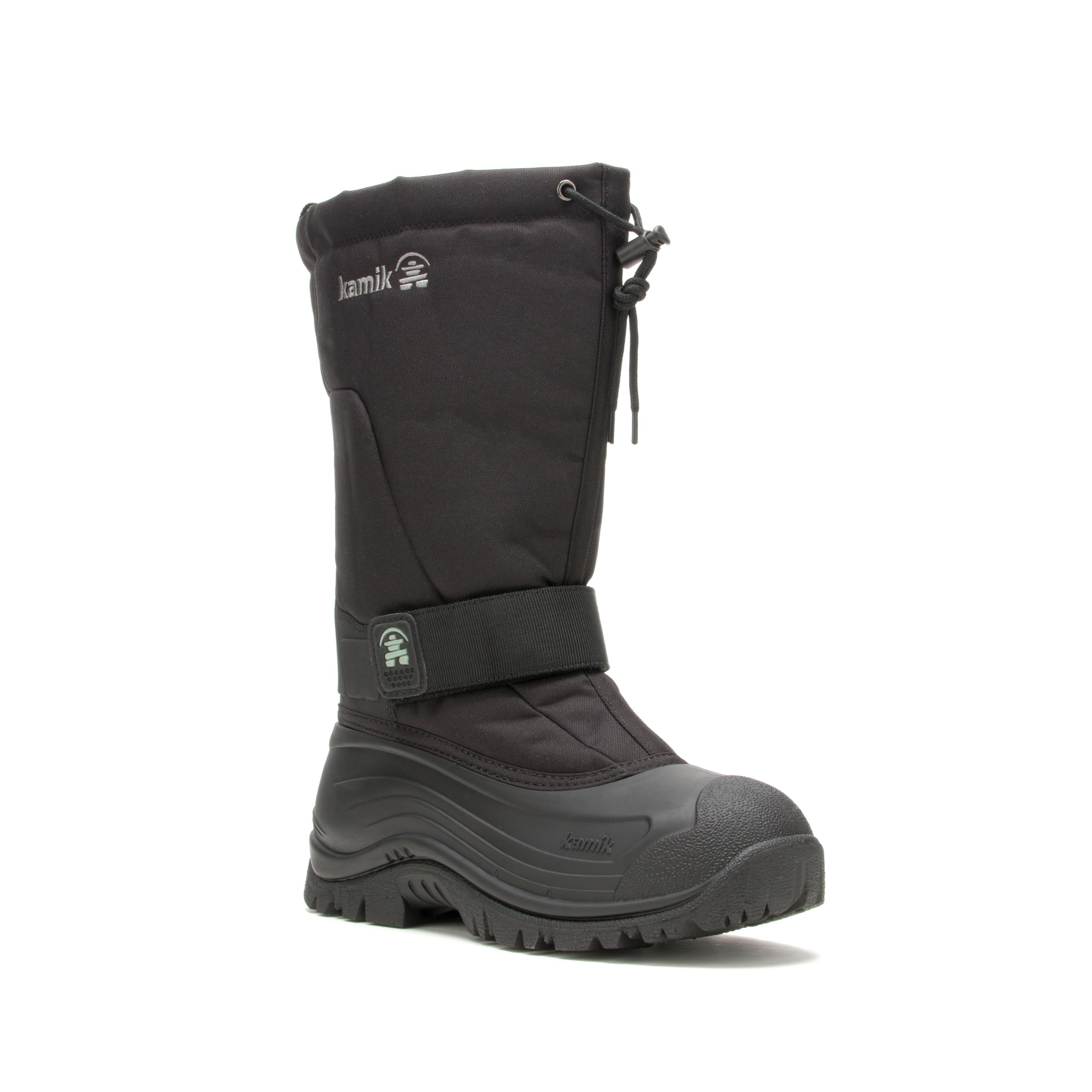
While the top pick handles moderate snow with versatility, the Kamik Greenbay 4 is specialised for extreme cold and deep snow, using a thermal guard liner and rubber shell with sealed seams to deliver -40°C protection. It suits men who regularly face harsh winter conditions and want a boot that prioritises warmth over weight—expect a heavier feel. Sizing runs small and narrow, so order at least one full size up, and the liner may disintegrate after extensive use, making this a better pick for seasonal heavy use than daily long-term wear.
Pros
- Exceptional warmth for extreme cold conditions
- High-quality materials and rugged construction
- Easy to put on with lace-up and Velcro closure
Cons
If you need a boot for the coldest and deepest snow and can manage the sizing quirks, the Greenbay 4 delivers serious warmth at a mid-range price—but the TIDEWE remains the better all-rounder for moderate conditions.
Best for Everyday Winter Use
HOBIBEAR Winter Boots
Key Features
- Warmth Rating: Faux fur lining
- Waterproofing: Seam-sealed membrane
- Traction: Rubber outsole, moderate lugs
- Boot Height: Mid-calf
- Fit Consistency: True to size
- Price: Budget
This boot delivers strong warmth and waterproofing through a seam-sealed membrane and faux fur lining, all in a lightweight package that fits true to size. Unlike the neoprene top pick, it lacks the insulation for subzero temperatures, so it’s better suited for moderate cold and daily errands. Women seeking an affordable, comfortable boot for everyday winter use in moderate climates will appreciate the solid traction and warmth. The fit runs true to size, though those with wider feet may find it slightly snug.
Pros
- Strong warmth for daily winter wear
- Comfortable, true-to-size fit
- Good traction on snow and ice
Cons
- May feel narrow for wider feet
A lightweight budget boot that balances warmth and comfort for moderate winter, but not for extreme cold. Best for daily commutes and errands in snow.
Best for Ice Fishing, Shoveling
Sorel Caribou Boot
Key Features
- Warmth Rating: Removable felt liner, -40°F
- Waterproofing: Rubber shell + leather upper
- Traction: Rubber outsole, moderate lugs
- Boot Height: Mid-calf
- Fit Consistency: Runs large, size down
- Price: Premium
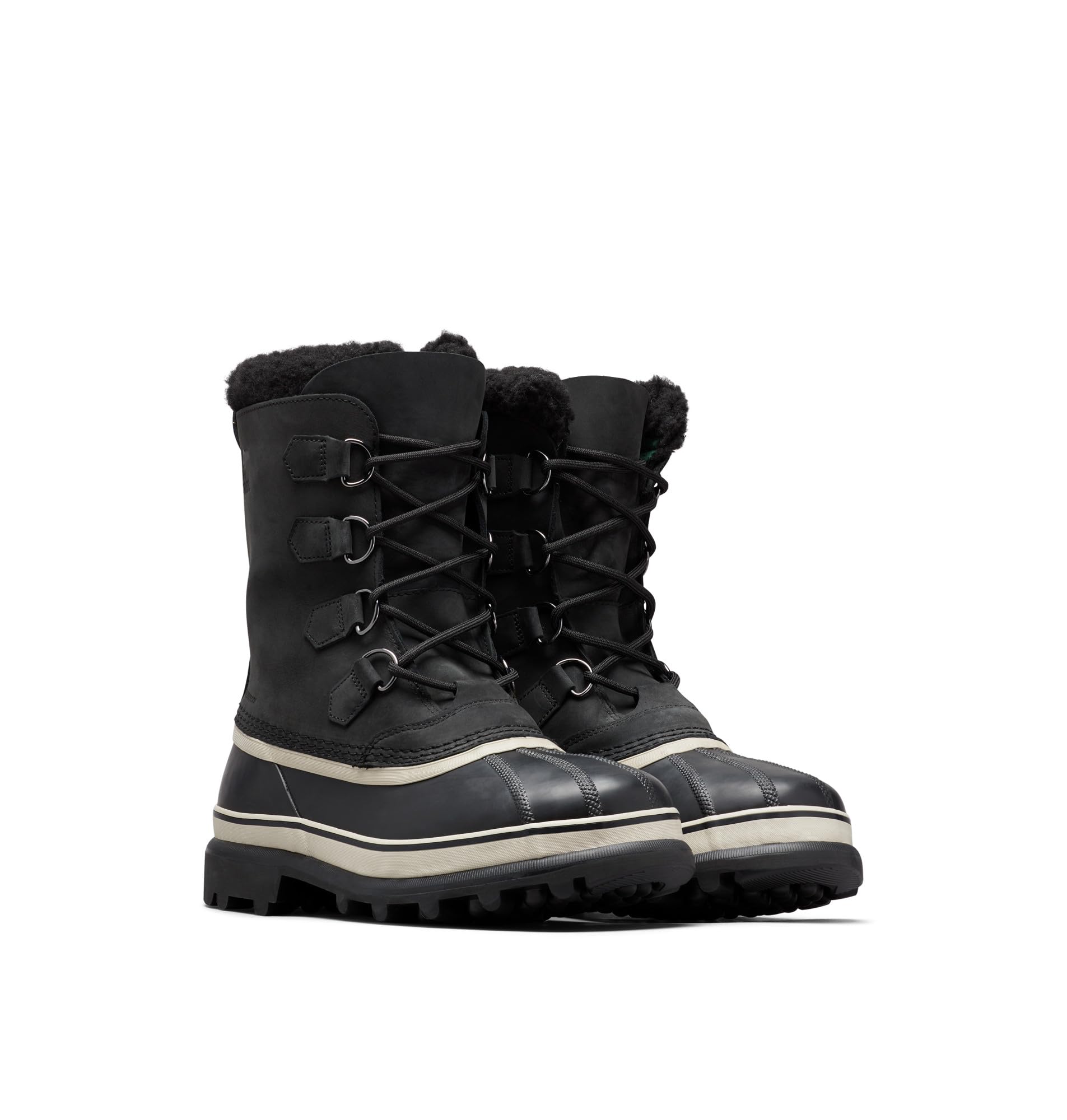
The Sorel Caribou’s removable felt liner provides dependable warmth to -40°F, making it a go-to for ice fishing and shoveling. The rubber-and-leather shell and classic styling have held up for decades. However, the rubber at flex points may crack after extended use, and sizing runs large — expect to size down for proper fit. This boot prioritizes warmth over agility, so it suits stationary cold exposure, not hiking or active wear.
Pros
- Exceptional warmth for extreme cold
- Top-quality materials and timeless design
- Comfortable with thick socks
Cons
If you need uncompromised warmth for stationary winter work and can accommodate the sizing and potential rubber wear, the Caribou remains an iconic choice.
Best for Deep Wet Snow, Farm
MUCK Arctic Sport II
Key Features
- Warmth Rating: Neoprene + fleece, extreme cold
- Waterproofing: 100% rubber shell
- Traction: Rubber outsole, aggressive lugs
- Boot Height: Tall (below knee)
- Fit Consistency: Boxy fit; loose for narrow calves
- Price: Premium
The MUCK Arctic Sport II uses a 100% rubber shell that reaches below the knee, keeping feet dry in deep slush and puddles, while aggressive lugs provide solid grip on snow and ice. Compared to the top pick’s lighter, more versatile design, this boot is heavier and more utilitarian — ideal for outdoor chores and deep snow conditions rather than casual commutes. It suits women who need tall, warm boot for farm work or serious snow shoveling, but buyers should be aware that seam splitting has been noted in some boots after months of use.
Pros
- Keeps feet warm in extreme cold thanks to neoprene and fleece lining.
- Aggressive tread provides sure footing on snow and ice.
- Calf-friendly fit accommodates a range of leg sizes comfortably.
Cons
- Fit can feel boxy; some users find the calf area too loose.
- Seam splitting may occur in some boots after several months of heavy use.
The right choice if you need a tall, waterproof boot for deep snow and farm work — just check for early signs of seam wear and consider whether the heavier weight is acceptable for your use.
Best for Dry Snow, Errands
NORTIV 8 Insulated Snow
Key Features
- Warmth Rating: Faux fur lining
- Waterproofing: Sealed seams
- Traction: Rubber outsole
- Boot Height: Mid-calf
- Fit Consistency: Runs small, order up
- Price: Budget
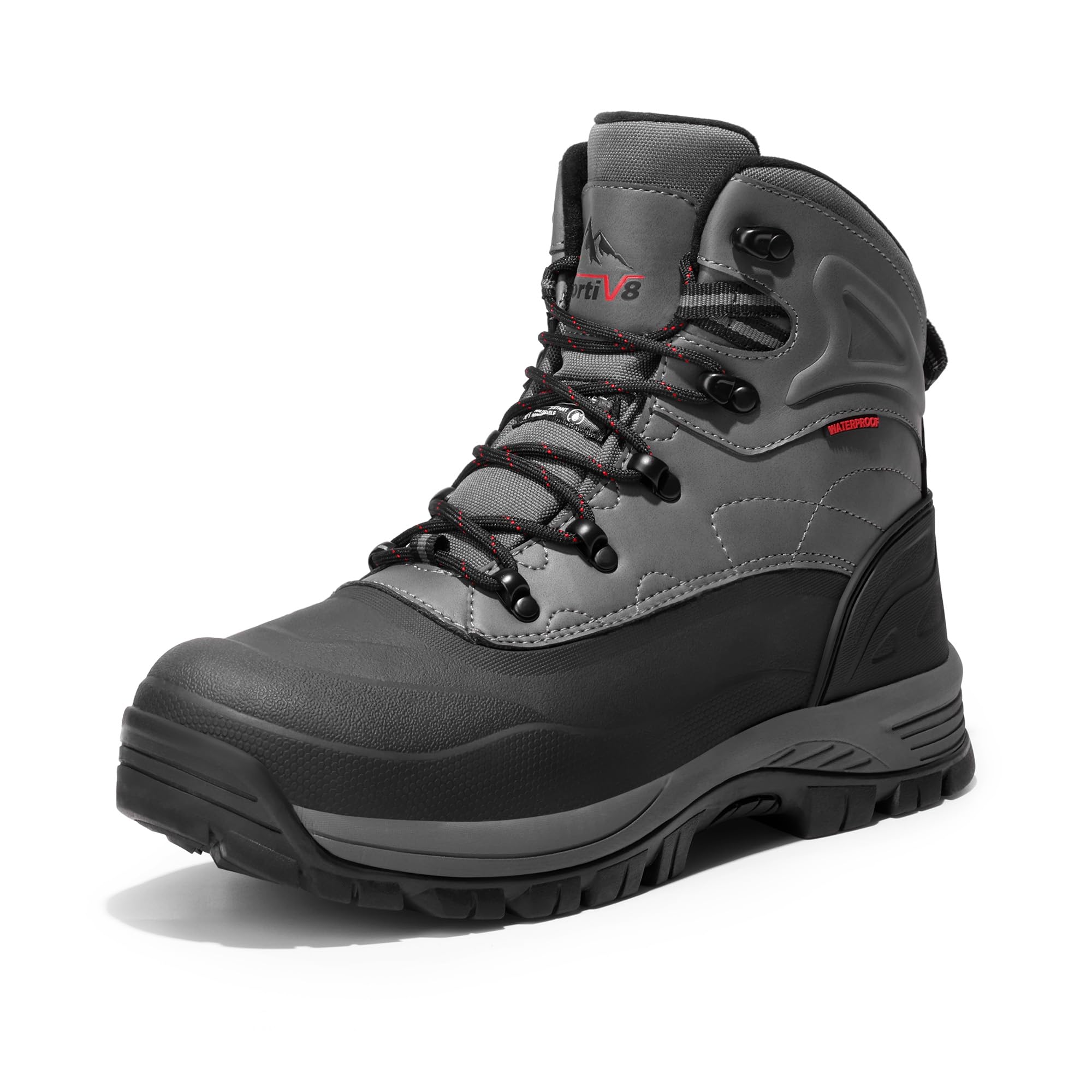
This boot offers good arch support and a warm faux fur lining at a budget price for dry snow and casual errands. However, soles and stitching can deteriorate within months, and water resistance is limited to light snow — not suitable for slush or heavy winter use.
Pros
- Comfortable feel with good arch support
- Keeps feet warm in dry snow
Cons
- Soles and stitching may deteriorate within months of regular use
Best for occasional dry snow outings where budget is the top priority, not long-term durability.
Best for Active Wear, Light Snow
Columbia Minx Shorty III

Key Features
- Warmth Rating: 200g insulation + faux fur
- Waterproofing: Omni-Tech membrane
- Traction: Rubber outsole
- Boot Height: Mid-calf
- Fit Consistency: Runs small, size up
- Price: Premium
This boot delivers exceptional lightweight warmth for active winter use, making it ideal for hiking and walks. However, the narrow fit may require sizing up for comfort, and some units have shown inconsistent waterproofing in slushy conditions. It suits moderate snow but not deep slush or extreme cold.
Pros
- Lightweight yet warm for active winter wear
- Comfortable and stylish design
Cons
- Narrow fit can be restrictive for wider feet; ordering a half size up helps
Best for women who prioritize lightweight agility over deep-snow capability and don’t mind a narrow fit.
Best for Icy Sidewalks, Moderate Snow
EARLDE Snow Boots

Key Features
- Warmth Rating: Faux fur, 3M Thinsulate
- Waterproofing: Seam-sealed membrane
- Traction: Rubber outsole, good grip
- Boot Height: Mid-calf
- Fit Consistency: Runs small, order up
- Price: Budget
The EARLDE snow boots deliver good warmth and impressive grip on icy sidewalks at an entry-level price. 3M Thinsulate and faux fur lining keep feet comfortable in moderate cold. However, the seam-sealed membrane may let moisture through in slush or puddles, so these are best for dry snow and packed paths rather than wet conditions. Sizing runs small, so ordering a half size up for thick socks is recommended.
Pros
- Cozy interior with faux fur and Thinsulate keeps feet warm in cold weather
- Outsole provides solid traction on ice and slippery surfaces
Cons
- Waterproofing may fail in slush or puddles, leading to wet feet
Choose these for dry, icy winter conditions where traction and warmth matter more than wet-weather protection.
Best for City Commutes, Dry Snow
DREAM PAIRS Zaylee

Key Features
- Warmth Rating: Faux fur lining
- Waterproofing: Synthetic upper
- Traction: Rubber outsole
- Boot Height: Ankle
- Fit Consistency: True to size
- Price: Budget
The Zaylee delivers a cozy, stylish ankle boot for dry winter errands, with a plush faux fur lining and easy side zipper. However, its water resistance is limited to light snow; wet slush or puddles can soak through. It lacks ankle support for hiking or uneven terrain. Best reserved for casual city use in cold, dry conditions.
Pros
- Plush faux fur interior provides exceptional warmth and softness.
- Stylish ankle boot design that complements winter outfits.
Cons
- Water can seep through in wet snow or slushy conditions.
The Zaylee works well for dry cold commutes and city errands, but it’s not the boot for wet winter conditions or active use.
Best for Occasional Dry Use
ALEADER Insulated Snow

Key Features
- Warmth Rating: Faux fur lining
- Waterproofing: Sealed seams
- Traction: Rubber outsole
- Boot Height: Mid-calf
- Fit Consistency: Runs small, narrow
- Price: Budget
The ALEADER offers good warmth and comfort at a very low price, making it suitable for occasional use in dry snow. However, the fit runs narrow and small, and the boot lacks reliable waterproofing for slush or wet conditions, with some reports of stitching or sole separation over time.
Pros
- Keeps feet warm in cold weather during light snow activities.
- Good value for the price in a budget winter boot.
Cons
- The fit can be narrow, particularly for wider feet, often requiring a size up.
A suitable choice for men who need a low-cost boot for occasional dry snow errands and are willing to size up for a proper fit.
Best for Dry Cold, Short Trips
SHIBEVER Winter Boots
Key Features
- Warmth Rating: Faux fur lining
- Waterproofing: Synthetic upper, zipper
- Traction: Rubber outsole
- Boot Height: Ankle
- Fit Consistency: Inconsistent fit
- Price: Budget
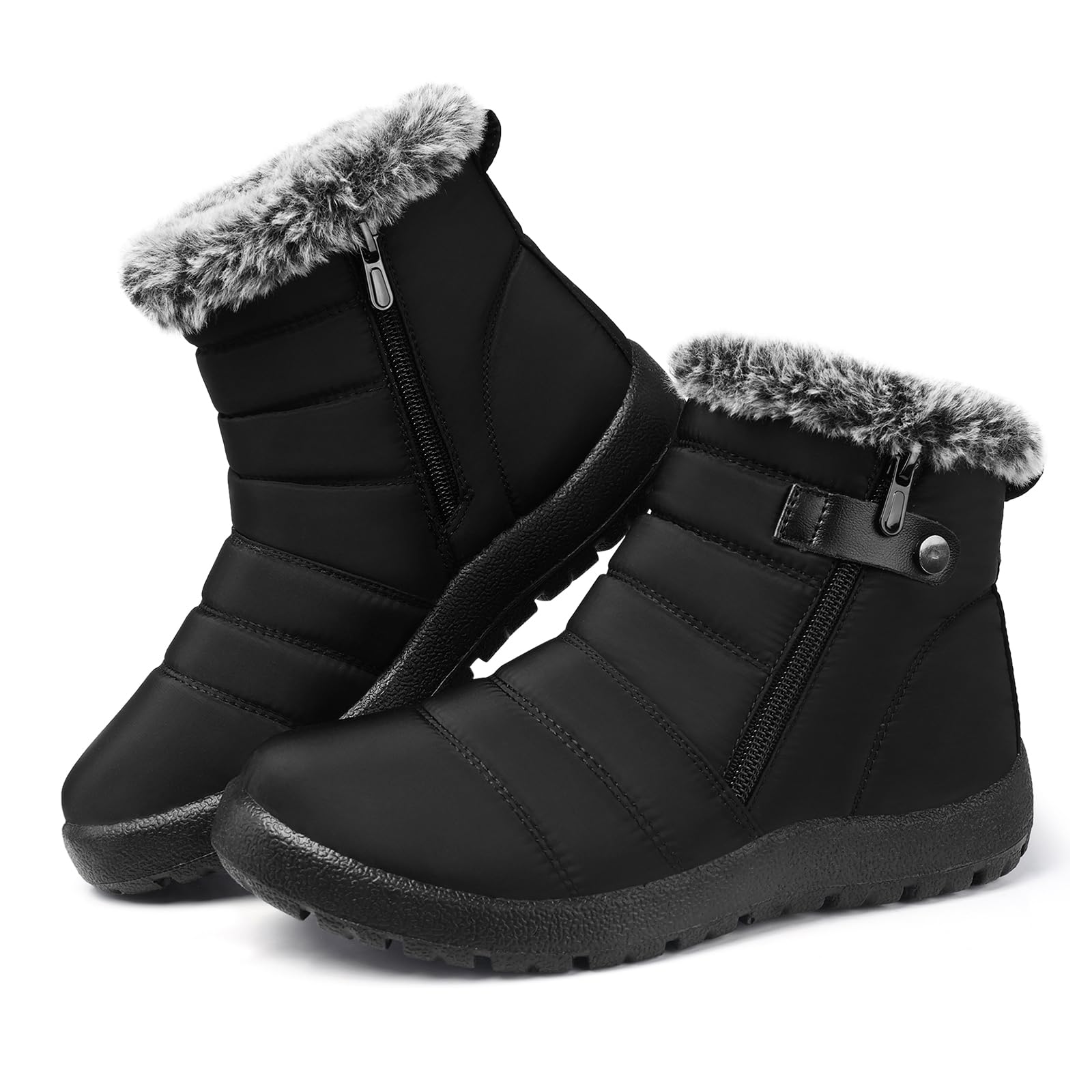
A warm, comfortable boot with a soft faux fur lining and an attractive design at a budget-friendly price. Best for dry snow errands, but the side zipper and seams allow water to seep in during slush or wet conditions, limiting its use to dry cold climates only.
Pros
- Soft faux fur lining keeps feet warm and comfortable in dry cold.
- Budget-friendly price with a stylish look for casual winter errands.
Cons
- Water can seep through the side zipper and seams when stepping in slush or wet snow.
Pick these for short errands in dry snow and cold temperatures, but skip them if you expect slush or puddles.
Best for Fashion, Light Snow
AUSLAND Twin Peaks

Key Features
- Warmth Rating: Faux fur lining
- Waterproofing: Synthetic upper
- Traction: Rubber outsole
- Boot Height: Mid-calf
- Fit Consistency: Inconsistent fit
- Price: Mid-Range
The AUSLAND Twin Peaks boots deliver an attractive design with a faux fur cuff and mid-calf height at a mid-range price, making them a solid pick for light snow and short errands where appearance matters more than ruggedness. However, sizing varies between pairs, and some units have shown sole separation or seam splitting within months, so this boot is best reserved for occasional, dry-weather use rather than wet snow or daily winter wear.
Pros
- Attractive design with fur cuff and mid-calf height for casual style
- Warm and comfortable for moderate cold and short outings
Cons
- Fit can vary between pairs — some sizes run large or small
Best for style-focused outings in light, dry snow where performance expectations are low and appearance is the priority.
Best for Dry Snow, Errands
Hsyooes Fur Lined

Key Features
- Warmth Rating: Faux fur lining
- Waterproofing: Synthetic upper, seam-sealed
- Traction: Rubber outsole
- Boot Height: Ankle
- Fit Consistency: Runs large, wide
- Price: Budget
This ankle boot delivers a cozy, warm feel with its soft faux fur lining and slip-on convenience at a budget price. However, for buyers prioritizing waterproofing, the side zipper and seams can let in water during wet snow or slush — better suited to dry climates and short trips. The fit runs large and wide, which may work for some but is a drawback for narrow feet. Better budget options exist if wet conditions are a concern.
Pros
- Soft faux fur lining keeps feet comfortable and warm.
- Easy to slip on and off for quick errands.
Cons
- Water can seep through the side zipper and seams in wet snow or slush.
For dry snow and quick errands, the comfort and warmth at this price are hard to beat, but look elsewhere if you need reliable waterproofing.
How to Choose
The most overlooked factor in snow boot performance is the waterproofing method — a rubber shell will keep you dry far longer than a sealed-membrane upper when you’re standing in slush.
Warmth Rating
Boot warmth comes from insulation thickness and the type of liner. Removable felt liners (like Sorel’s) trap more dead air than synthetic fleece, making them warmer for stationary activities like ice fishing. But they add weight and bulk — less ideal for hiking.
For active use, 200g of synthetic insulation or 6mm neoprene provides enough warmth for most winter conditions down to around -10°F. Below that, you need a boot rated for extreme cold, usually with a multi-layer construction and a temperature rating stamped on the box.
Waterproofing
The single biggest differentiator in wet-snow performance is a rubber lower or full rubber shell. Boots that rely only on seam-sealed membranes or spray-on coatings let water seep through when you step in puddles or sit in slush for extended periods.
A full rubber shell (like on MUCK or Kamik) is the gold standard for wet conditions. Mid-range boots often use a rubber ‘toe cap’ and seal the rest — adequate for light snow but not for standing in wet snowbanks.
Traction
Traction on ice and packed snow depends on lug depth, rubber compound, and whether the sole has siping (micro-grooves that channel water). Deeper, more aggressive lugs bite into soft snow but can be stiff on pavement.
For icy sidewalks, look for boots with soft rubber compounds and multi-directional lugs. Some users add microspikes for pure ice, regardless of the boot’s outsole.
Boot Height
Ankle-height boots are fine for quick errands in dry snow, but once snow depth exceeds a few inches, you risk snow entering over the top. Mid-calf boots (10-13 inches) are the sweet spot for general winter wear, keeping out slush and light drifts.
Tall boots (16+ inches) are necessary for deep snow or wet conditions where snow can pile up. The trade-off is weight and reduced ankle mobility, which can be tiring for long walks.
Fit Consistency
Sizing varies wildly between brands. Many boots are designed for thin socks only, so you need to order a half size up if you plan to wear thick wool socks. Some brands (like Kamik and Sorel) run narrow or large respectively, requiring a full size adjustment.
The best way to check fit is to try on with the socks you’ll actually wear. A boot that feels snug at the store with thin socks will be unwearable with thick winter socks.
FAQ
Why are my snow boots leaking after only a few wears?
Most leaks occur at seams, zippers, or where the upper meets the sole. Boots that rely solely on sealed membranes (without a rubber lower) are prone to failure when pressure is applied — like stepping into deep slush. Look for boots with a continuous rubber shell up to at least mid-calf for reliable wet-snow performance.
Should I size up for thick socks in snow boots?
Yes, by at least half a size if you plan to wear thick wool socks. Many boots are cut for thin socks and will be too snug otherwise. Check the manufacturer’s sizing notes — brands like Kamik and NORTIV 8 run small and often require a full size up. For Sorel, the opposite is true: size down.
What temperature rating do I need for winter hiking in snow?
For active hiking, you generate warmth from movement, so a boot rated to around -10°F with 200g insulation or 6mm neoprene is typically sufficient down to 0°F. For stationary activities like ice fishing or standing in deep cold, choose a boot rated to -40°F with a removable felt liner. Always factor in wind chill and your own circulation.
Are cheap snow boots actually waterproof?
Rarely in wet conditions. Budget boots (under $60) typically use sealed seams and a synthetic upper that works for dry powder but fails in slush or puddles. For reliable waterproofing at a low price, look for boots with a rubber lower or a full rubber shell in the budget tier — such as the TIDEWE or HOBIBEAR, which use a rubber base at a mid-range price.