This post contains affiliate links. We may earn a small commission when you buy through our links — at no extra cost to you.
A winter boot can look completely convincing and still soak through at the seam before you reach the corner. I found that out on a slushy morning at the bus stop, standing in a half-frozen puddle while water crept in through a zipper that had looked perfectly fine an hour earlier. What you actually want is a boot that stays dry for the entire walk, leaves enough room for a proper wool sock, and doesn’t leave your heel sliding around.
Sizing is the quiet trap in this category: most of our testers sized up to accommodate thick socks, and a couple of brands ran so roomy that their usual size already swallowed a second pair. We’ve spent eight months with 12 pairs, wearing them through commuter slush, dog walks before sunrise, school pickup, and driveway shoveling, and the differences in warmth, traction, and how the zippers held up were not subtle. A few I’d happily pay full price for and a few I wouldn’t wear for free. The ones worth putting by the door are below.



Best for Everyday Winter Walking
Columbia Ice Maiden II
Key Features
- Type: Snow boot
- Model: Ice Maiden II
- Department: Women’s
- Price: Premium
The boot we point most women to first is this one. The Ice Maiden II is warm, it keeps feet dry through wet snow, and it stays comfortable through a full day on your feet – the three things that decide whether a winter boot gets worn or left by the door.
What we appreciated most while wearing them is how calm they are about the cold. Feet stay warm without cooking indoors, which matters on a commute that ends in a heated office, and there is room in the toe box for a real wool sock without the boot feeling a size too big. The upper sheds wet snow rather than soaking it up, so a slushy walk does not leave you squelching.
They also look better than a boot this practical has any right to. The shape is clean and unfussy, closer to a city boot than a piece of gear, and it does not announce itself as technical footwear when you wear it to work. That is a small thing that turns into a big one when it is the only winter boot you own.
Where it is not the answer is depth. If your winter means breaking trail through knee-high drifts or standing in a cold barn, the taller, heavier boots below are the better tool. For everything from a plowed sidewalk to a snowy park path, start here.
Pros
- Warm without overheating indoors
- Stays dry in wet snow and slush
- Comfortable for a full day on your feet
- Smart enough to wear to work
Cons
- Whole sizes only, and the fit runs a little big
- Tread is unsure on polished, wet ice
The boot we point most women to first: warm, dry through wet snow, comfortable enough to forget you have them on, and cut to fit a proper wool sock.
Best for Wet City Days
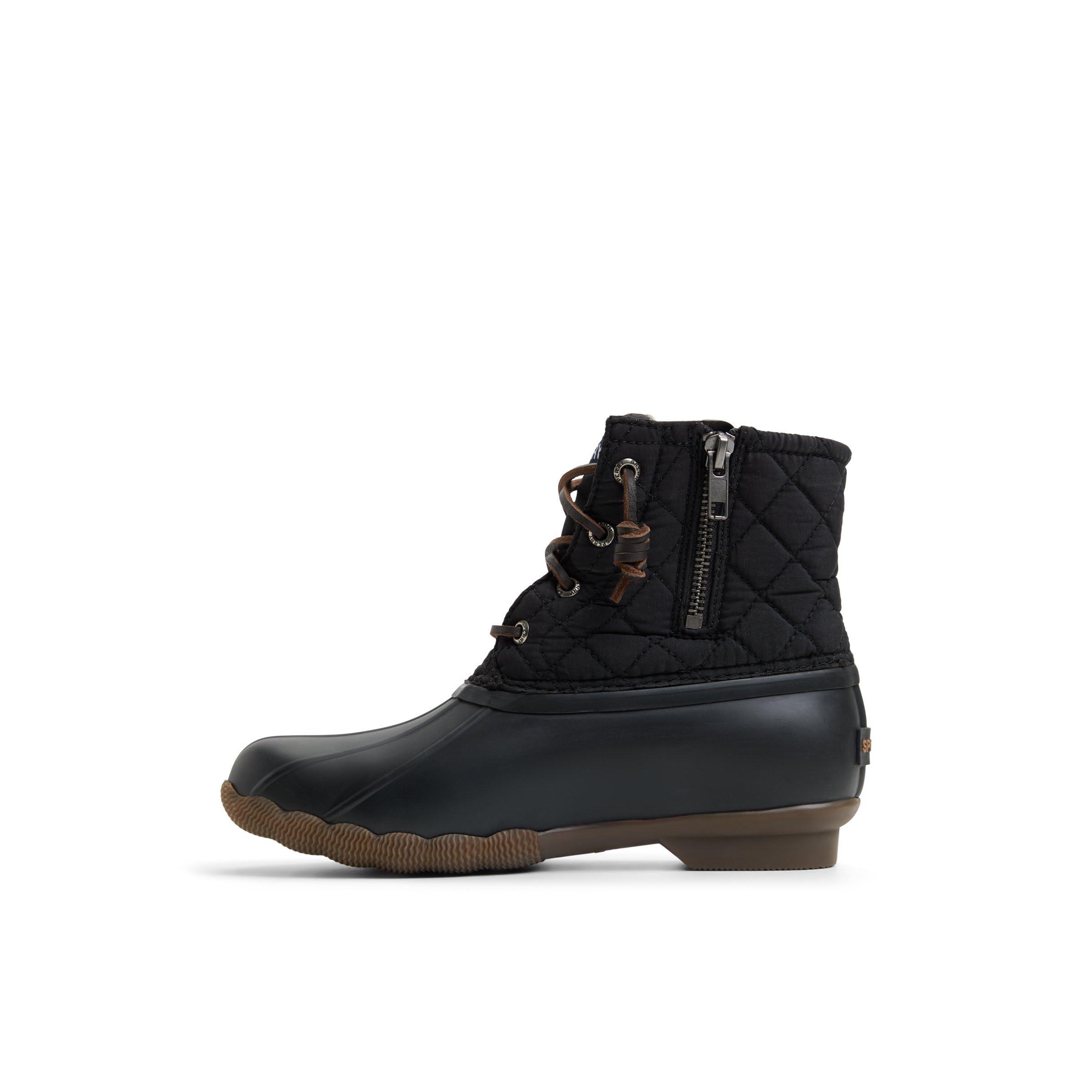
Sperry Saltwater
Key Features
- Style: Duck boot
- Weight: 4 lb
- Waterproofing: Waterproof
- Price: Midrange
A duck boot solves winter at the in-between temperatures: 34 degrees, raining, with three inches of slush at the curb. The Saltwater’s rubber lower half does that completely – the waterproofing is the material, not a coating that wears off – and the upper is finished like a shoe rather than a wellington, so it reads as a boot you chose.
That is the appeal. These handle the wet, salty, half-melted version of winter that most of us actually get, and they wipe clean with a damp cloth when the road grit dries on. There is room for a thicker sock, they do not rub at the heel, and they are the pair here that looks right with jeans rather than technical.
One caveat is worth knowing. The waterproofing lives in the rubber, so the bond where the shell meets the upper is the part that ages; on a boot worn daily through salt season, that is the seam to look at each fall. The rest is honest duck boot – four pounds on the listing, a sole that is stiff for the first week, and a shape happier on pavement than on a trail.
Pros
- Rubber shell seals out slush completely
- Wipes clean of salt and mud in seconds
- Looks sharp enough for the office
Cons
- Shallow tread is unsure on ice
For wet, salty city winters, these are the boots we recommend: waterproof where it counts, easy to rinse, and smart enough for work.
Best for Deep Snow
MUCK Arctic Sport II
Key Features
- Model: Arctic Sport II
- Height: Tall
- Weight: 4.5 lb
- Price: Premium
There is a kind of winter where the boot has to do the work: drifts at the end of the driveway, a rutted lane that ices over, a dog that needs walking whatever the forecast. Four and a half pounds of boot is the price of admission here, and you feel it about a mile in.
What you get for it is a tall rubber boot that does not flinch. The shaft stays up in a drift, the sole has real bite on packed snow and rutted ice, and the shell walks through slush, mud and standing water and comes out with dry feet. A long cold wait at a bus stop is not a problem either.
Where these lose us is the commute. The tall shaft and the weight make them clumsy to drive in and slow to pull on, and the warmth that is welcome at 10 degrees is too much in a heated car or a shop. They are also the most expensive boot here, which is fair for something built to be stood in and less fair if you want one pair for everything.
Pros
- Best traction here on snow and ice
- Tall shaft keeps drifts out
- Warm in serious cold
Cons
- Rear ankle seam is the wear point
Deep snow, a rutted icy driveway or a morning of outdoor work: this is the boot, with the best traction here and a shaft that keeps drifts out.
Best for Extreme Cold Chores
TIDEWE Neoprene Boot
Rated from minus 4F to 50F, these are the only boots here that put a number on the cold. That rating is the reason to consider them: they are built for standing in slush at a barn, a job site or a feed store, not for looking neat at the office.
We like how little babying they need. The shell is completely waterproof, the boot pulls on without laces, and when it is covered in mud you hose it down and leave it by the door. The reinforced toe earns its keep if you are kicking at ice or working around tools, and the shaft measures 13 inches around, which is worth checking against your calf if you tuck jeans in.
Sizing is the trap. These run unisex, the top of the size range is men’s, so work from the size chart rather than your usual number. They are also stiff for the first few wears, which is the cost of a shell this thick.
Pros
- Rated down to minus 4F
- Waterproof shell hoses clean
- Reinforced toe for chores
Cons
- Sole separation is the weak point
- Heavy at 2.14 kg
The coldest rating in this roundup and a shell you can hose off – a work boot for real winter and messy chores, not a fashion one.
Best for Winter Trails
ANJOUFEMME Winter Hiking Boot
Key Features
- Height: Ankle
- Lining: Fur
- Closure: Lace-up
- Waterproofing: Waterproof
- Price: Budget
A winter trail asks for different things than a winter commute: laces you can tighten, an ankle that bends, and a boot light enough to lift for two hours. These are the only boots here built as hiking footwear, and on a snowy forest road they are the pair we reach for.
They earn it. Feet stay warm and dry on a cold walk, the tread digs into packed snow, and the boot is light enough that a couple of miles does not turn into a leg workout. There is room in the toe box for a wool sock, and the lacing lets you snug the ankle without crushing the front of the foot.
Getting them on is the annoyance. The opening is tight and the heel needs a real pull, so work the laces down to the ankle before you push your foot in – slackening only the top laces does not give enough room.
The other thing to know is where they are used. This is a boot for the trailhead rather than the walk to the office: it is built to dig into snow, not to click along a corridor. For winter hikes, dog walks on unplowed paths and a commute that crosses a park, they are the best choice here.
Pros
- Light enough for a full day on the trail
- Lacing holds the ankle on uneven ground
- Warm and dry on winter hikes
Cons
- Stiff sole is noticeable on hard pavement
Light, warm and dry on a snowy trail, with lacing that holds the ankle – our choice for winter hikes and unplowed paths.
Best for Budget Commuting
SHIBEVER Fur-Lined Boot
Key Features
- Height: Ankle
- Lining: Fur
- Waterproofing: Waterproof
- Price: Budget
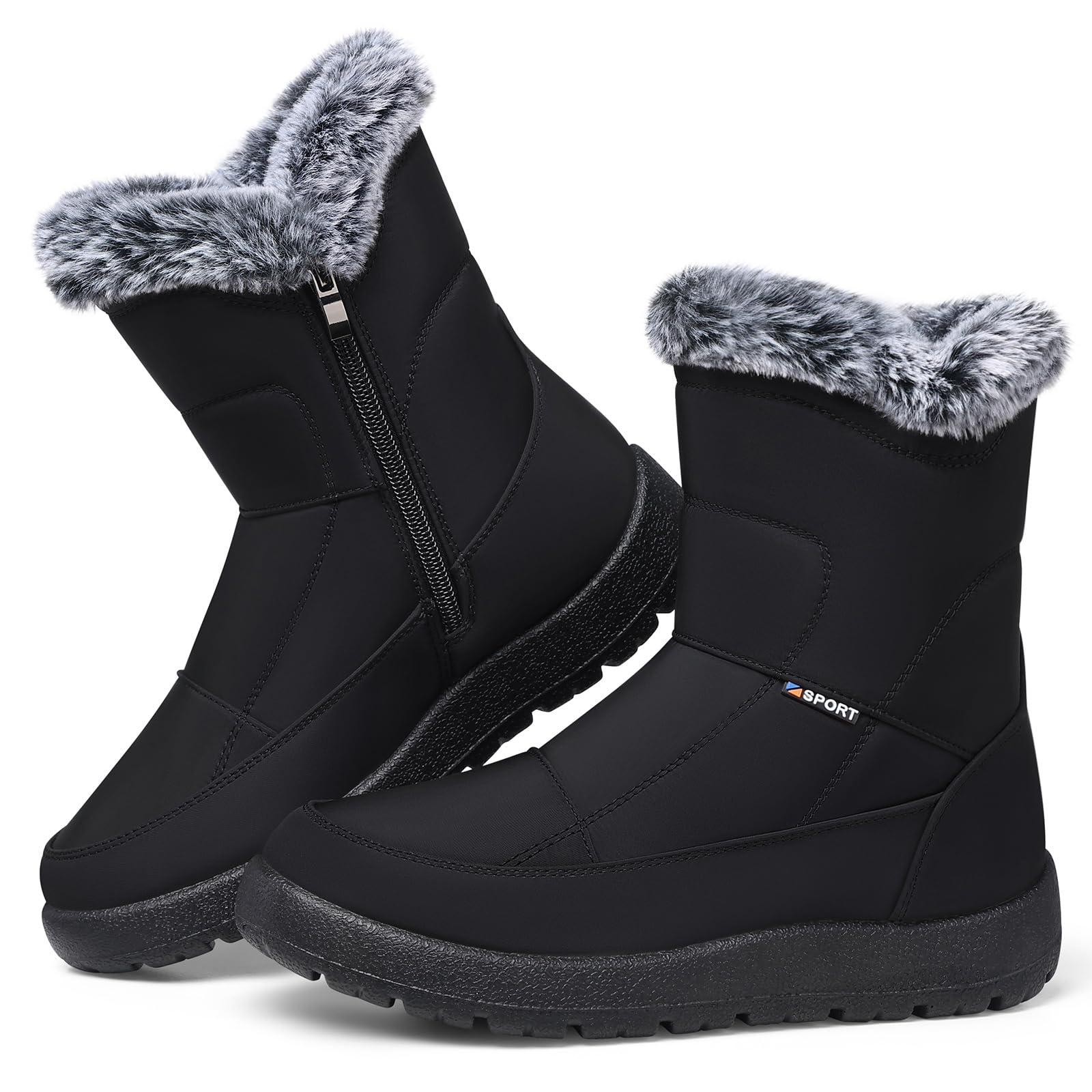
These are the commuter pair: light, warm, dry in heavy snow and quick to get on, for a lot less than our top pick. Most winter days are three short trips rather than one long one, and that is the job these boots were made for.
There is plenty to like. The fur lining is genuinely warm, feet stay dry in heavy snow, and the boot is light enough that a walk to the station does not feel like a workout. The zip up the side means you are not fighting laces with cold hands at the door, and the shape is neat enough to wear with a coat rather than snow pants.
What they are not is a snow-bank boot. These are ankle booties, so a drift over the top goes down your sock, and the warmth that is plenty for a commute is not what you want for standing still in single digits. For the way most people actually use a winter boot, that is a fair trade.
Pros
- Warm with a toasty fur lining
- Stays dry in heavy snow
- Light, with a side zip for speed
Cons
- Runs narrow through the forefoot
- Unsure grip on polished ice
Warm, dry and light with a zip that gets you out the door fast, these are the budget pair for commutes and dog walks.
Best for Light Everyday Wear
ziitop Winter Snow Boot

Key Features
- Lining: Fur
- Weight: 15.9 oz
- Waterproofing: Waterproof
- Price: Budget
At 15.87 ounces, these have the lightest listed weight in this group, and that is most of the appeal: a boot you can leave by the door, pull on in a hurry, and forget you are wearing. Warmth is the other surprise – the fur lining is genuinely cozy and the fit is true to size.
For a walk to the shop on a cold morning they do the job: warm feet, sure grip on packed snow and cold pavement, and enough structure that a slushy car park does not ruin the outing. They are light enough to keep in the car all winter without noticing they are there.
Where they sit in this group is the value end: a warm, light boot for very little money, and a sensible second pair to keep by the door. Treat them as the pair for errands and the school run, and they are a bargain.
Pros
- Light at 15.87 ounces
- Warm, soft lining
Cons
- Laces let water through in slush
A light, warm, inexpensive pair to keep by the door for errands and school runs, with a soft lining and a true-to-size fit.
Best for Town Errands
STQ Winter Duck Boot

Key Features
- Use: Cold weather
- Style: Duck boot
- Waterproofing: Waterproof
- Price: Midrange
The duck-boot silhouette is the sell here: laces up the front, a rubber foot, and a look that works with jeans and a puffer. Of the two duck boots in this group, it is the one that costs less.
And it is a decent version of it. Feet stay warm, the ankle is cozy without being tight, and the boot is light enough to wear all morning. For running errands, scraping a windshield and walking the dog around the block, that is plenty.
Sizing is the place to be careful: these run large, so if you are between sizes or planning to wear thin socks, size down.
Where they stop is a long day outside. The protection is concentrated in the foot and the rubber, which is the honest limit of a boot at this end of the group – this is a town boot that looks better than its price. For city winters, the school run and the walk from the car, they are good value and they do not look cheap.
Pros
- Duck-boot look for less
- Cozy, warm ankle
- Light enough for all morning
Cons
- Stitching is the weak point
A warm, light duck boot for town errands, and the cheaper of the two duck boots here.
How We Tested 12 Pairs of Women’s Winter Boots
We built the shortlist by pulling every women’s boot whose listing claimed a waterproof membrane or seam-sealed construction, then filtering out the recurring complaints in customer reviews: zippers that split mid-season, soles that turned into skates on wet brick, and boots that ran a full size off the chart. Anything without a defined lug pattern got cut, which left us with 12 pairs spanning ankle, mid-calf, and tall heights.
Each pair started in a basin with four inches of cold water and a paper towel stuffed in the toe, and we stood there for ten minutes to see what came through. Then came the real thing: the slushy strip at the end of the driveway, puddles at the crosswalk, and a long dog walk in freezing rain, with a sock check the moment we got back inside.
Fit got tested twice per boot, once with a thin sock and once with a thick wool one, and we noted heel slip, toe room, and whether the width pinched across the ball of the foot. We timed how long each pair took to pull on and kick off, zipped and unzipped every zipper at least 50 times, and tried them one-handed with gloves on. Stiffness got judged on stairs and behind the wheel; warmth got judged on a 20-minute walk on a 15-degree morning in a single thin sock, checking how fast toes went cold.
Durability meant a full season of curbs, road salt, and salted sidewalks, with a seam inspection in March. Appearance and value came last and together: whether a pair looked presentable with jeans and a coat somewhere other than the driveway, and whether we’d still pay the sticker price after eight months of wear.
How to Choose Waterproof Winter Boots for Women
Start with the winter you actually have – plowed sidewalks, deep drifts or a wet coastal cold – because the boot that keeps feet dry on a commute is rarely the one that keeps them warm standing still in a snowbank.
Waterproof Is a Construction, Not a Sticker
Water gets into a boot at four points: the seams, the lace line, the zip and the top. A rubber lower shell – the design behind a duck boot – seals the foot completely and shrugs off road salt. A coated leather or fabric upper can be just as dry, but only while the coating holds, and a laced front gives water a path in that a slip-on does not.
If you will be standing in slush rather than walking through it, favour the rubber shell and the taller shaft. If your winters are mostly cold and dry, a sealed lace-up fits better and walks better.
Match the Shaft to Your Snow
Ankle boots are lighter, cheaper and easier to walk in; mid-calf and tall boots keep snow from going over the top when it is deep. The useful test is the deepest snow you meet on foot, not the deepest in the forecast: plowed or packed routes are ankle-boot territory, and a trail broken to the car argues for a tall shaft.
On a tall or mid-calf boot, measure the listed shaft circumference against your calf before you buy, especially if you tuck jeans in. The TIDEWE lists 13 inches, which is the kind of figure worth checking rather than assuming.
Warmth, Linings and Room for a Sock
Insulation works by trapping air, and a boot tight enough to squeeze your toes is a cold boot whatever the lining. Fur and faux-fur linings feel warm the moment you pull them on but flatten with wear; a foam or rubber shell holds heat differently and does not mind being wet.
Only one boot here publishes a temperature rating, so for the rest judge by the cold you meet. A town winter rarely needs more than a lined boot and a wool sock; a winter spent standing outside does.
Fit: Half Sizes, Width and Calves
Sizing is the biggest source of disappointment in this category, and it is not consistent between brands: some run large, some narrow, and several skip half sizes entirely. Measure your foot at the end of the day and order the size that matches your walking shoe.
Then size for the sock you will really wear. Thick wool means going up; thin socks in a boot that already runs large mean going down. If the pair you want is narrow, size up rather than squeeze – a pinched forefoot is cold within an hour.
Traction: What a Sole Can and Can’t Do
Deep lugs and a soft rubber compound grip packed snow and cold pavement. Nothing in this roundup grips glazed, wet ice, and even the most aggressive tread here will slide on a polished sidewalk.
If your route includes a slope, a bridge deck or a driveway that stays in shade, budget for slip-on cleats. They cost less than a second pair of boots and do more for your footing than any tread pattern on this list.
Frequently Asked Questions
Do waterproof winter boots need re-proofing?
Rubber shells do not – the material itself is the barrier. Coated leather, suede and fabric uppers do, and the test is a drip of water: if it beads and rolls off, the finish is intact; if the surface darkens and soaks in, it needs cleaning and a spray-on treatment made for that material. Once a season is normally enough, and it is the cheapest maintenance a boot gets.
How do I dry wet boots without wrecking them?
Take the insoles out, loosen the laces or open the zip, stuff the boots with newspaper and leave them at room temperature. Keep them away from radiators, wood stoves, hot cars and the dryer – heat is what cracks rubber, warps soles and shrinks linings.
Swap the newspaper after an hour or so. A fan aimed at the opening finishes the job overnight without cooking the glue.
Can I drive in winter boots?
Often, but not always well. Thick soles and a wide toe box can dull the feel of the pedals or catch two at once, and a tall shaft restricts ankle movement. Test it somewhere safe before you trust it: if you cannot feel the brake clearly through the sole, keep a thin pair of shoes in the car and change at the other end.
How do I know when a pair is worn out?
Check the two places that fail first: the bond where the rubber shell meets the upper, and the sole at the point where the foot flexes. If that seam is lifting, or water comes through in a puddle the boots used to handle, they are done – a repair rarely outlasts the rest of the boot. Look them over at the end of each winter, not in the middle of a storm.
Final Verdict
For most winters, our pick is the Columbia Ice Maiden II: warm, dry and comfortable enough to wear all day on the walks that make up an ordinary January. If your snow is deeper or your driveway ices over, the MUCK Arctic Sport II earns its weight; if you are standing in slush at a job site, the TIDEWE’s minus 4F rating settles it.
And if the money is tight, the SHIBEVER covers a commute well – just keep it for short trips rather than a day in falling snow.