This post contains affiliate links. We may earn a small commission when you buy through our links — at no extra cost to you.
You buy a pair of wool hiking socks expecting warmth and comfort for seasons to come. Instead, the heel develops a hole after a few trips, and you’re back shopping for replacements. This pattern is so common that most hikers have a drawer full of half-worn socks that didn’t make it through a single season.
The disconnect is simple: many budget-friendly multi-packs feel soft and warm out of the package, but the merino blend and construction can’t handle repeated friction against a boot heel. Premium options like those with lifetime warranties cost more upfront but stop the cycle of buying cheap, replacing often, and paying more per wear in the long run.
This guide cuts through the noise by focusing on what actually matters—wool content, cushion placement, and the warranty that signals a company trusts its own stitching. Whether you’re a weekender or a thru-hiker, you’ll find the pair that matches your use case and your budget.


Best for Year-Round Hiking
Darn Tough Hiker Midweight Micro Crew
Key Features
- Wool Content: 66% merino
- Cushion: Midweight sole/heel
- Height: Micro Crew
- Price: Premium
This sock balances cushion, warmth, and breathability for long days on the trail. The 66% merino wool blend manages moisture across seasons — warm enough for winter without overheating in summer. Customers consistently report years of use without holes, which explains why so many repeat buyers come back for more pairs.
The snug fit around the ankle and toe box works well for narrow to medium feet, providing a secure feel inside boots. Those with wider feet or larger calves may find the tightness uncomfortable — that’s the main limitation. For hikers who fit, the lifetime unconditional warranty removes any risk: if they wear out, Darn Tough replaces them free.
Pros
- Exceptional durability — customers report years of use without holes
- Comfortable merino wool blend with no itch, suitable for all-day hikes
- Lifetime warranty turns the high upfront cost into long-term value
Cons
- Fit can be too tight around the ankles for wearers with wide feet or sensitive calves
- Premium pricing may feel steep for a single pair if you are not planning years of use
For frequent hikers who want one pair to last years and don’t mind paying upfront, the Darn Tough Hiker is a buy-it-for-life choice that delivers on durability, comfort, and warranty.
Best for Maximum Cushion
Darn Tough Boot Full Cushion
Key Features
- Wool Content: 66% merino
- Cushion: Full cushion
- Height: Boot sock
- Price: Premium
The Darn Tough Vermont Merino Wool Boot Socks Full Cushion pack serious thickness into every step, turning rocky trail into forgiving ground. The full cushion runs from toe to calf, so boots feel plush rather than harsh. That extra bulk, however, can make already snug boots feel tighter, and the warmth is more than most hikers need in summer. This sock suits those who prioritize cushion above all else and don’t mind sizing up their boots or sticking to cooler conditions.
Pros
- Plush cushion eliminates hot spots and blisters even on long hikes.
- Constructed to last years with an unconditional lifetime warranty.
- Merino wool blend keeps feet warm in cold and breathable in moderate temps.
Cons
- Premium-priced at $30 per pair, the upfront cost is higher than multi-pack options.
- Calf band may feel tight for those with larger calves or wide feet.
If you need maximum cushion and a lifetime warranty, this sock delivers — but be ready to size up boots and skip hot-weather hikes.
Best for Classic Hiker
Darn Tough Hiker Boot Midweight
Key Features
- Wool Content: 64% merino
- Cushion: Midweight foot
- Height: Boot height
- Price: Premium
This boot-height midweight sock uses 64% merino wool and a generous cushion underfoot that holds up across seasons. The taller cut and snug fit through the calf suit hiker boots and work boots, but the length may ride up under low-cut shoes or trail runners. For day hikers and backpackers who want a dependable wool sock with unconditional coverage, this is the straightforward choice — especially for those replacing a worn-out Smartwool pair.
Pros
- Wears well over multiple seasons with daily use; few socks last this long.
- Cushioning provides support on rocky terrain and works well in work boots.
- Moisture-wicking merino blend regulates temperature across hot and cold weather.
Cons
- Premium price per pair adds up for hikers who only go out a few times a year.
- Fit may feel too snug around the calf for those with larger legs.
This is the sock for hikers who prefer a traditional boot-height cut and want the peace of mind of a lifetime replacement — occasional users or low-cut shoe wearers should look at the micro crew sibling instead.
Best for Warm-Weather Women
Darn Tough Bear Town Light Cushion
Key Features
- Wool Content: 43% merino
- Cushion: Lightweight foot
- Height: Micro Crew
- Price: Premium
This lightweight micro crew is purpose-built for warm-weather hiking, offering breathable performance that keeps feet cool on summer trails. Its slim fit and minimal cushion pair well with trail runners, and the fun patterns add personality without sacrificing the durable construction Darn Tough is known for. Women who primarily hike in hot conditions and prefer a snug, sock-that-stays-put feel will appreciate the design. However, this is not a cold-weather sock – the lower wool content (43%) means less insulation, and the ankle band can feel tight on wider calves.
Pros
- Lightweight and breathable construction keeps feet cool on hot summer hikes.
- Durable build with fun, non-slip patterns that last for years.
- Snug fit that stays put inside boots and shoes without bunching.
Cons
- The premium price may feel high given the lightweight cushion and lower wool content.
For summer day hikers who want a slim-fitting, breathable sock with a lifetime guarantee, this Bear Town model delivers – just don’t expect it to double as a winter sock.
Best for Extreme Cold
Darn Tough Mountaineering OTC
Key Features
- Wool Content: Merino blend
- Cushion: Extra cushion
- Height: Over-the-calf
- Price: Premium
The Mountaineering OTC Extra Cushion Sock prioritizes maximum warmth and durability for sub-zero conditions, with an over-the-calf height that stays in place inside tall boots. Unlike the top pick’s midweight all-rounder design, this sock targets mountaineers and winter backpackers who need to prevent numb toes in single-digit temperatures. Backed by Darn Tough’s unconditional lifetime warranty, these socks are built to last through years of heavy use. The thick extra cushioning requires boots with generous volume—it’s not for snug-fitting footwear or moderate conditions.
Pros
- Exceptional warmth prevents numb toes in single-digit temperatures.
- Durable enough to survive multi-season wildland firefighting without failure.
Cons
- Premium price may give even serious winter hikers pause.
For mountaineers and winter backpackers who need maximum warmth and durability, this sock justifies its cost with performance that the top pick’s midweight can’t match in extreme cold.
Best for Budget Hiker
COZIA Merino 3-Pack
Key Features
- Wool Content: >50% merino
- Cushion: Medium cushion
- Height: Crew
- Price: Budget
The COZIA Merino 3-Pack delivers noticeable warmth and softness at a price that undercuts most single-pair wool socks. For heavier hiking, the heel area may develop holes after a few months; this is best suited for weekend trips and everyday cold-weather wear rather than daily trail use. Sizing can feel snug around larger calves, so consider ordering up if you prefer a looser fit.
Pros
- Very warm for cold weather, keeping feet toasty during winter outings
- Soft and non-itchy with padding in heel and toe, comfortable for sensitive feet
- Good value for the price in a three-pack
Cons
- Heel area can develop holes after a few months of regular hiking use
- Fit may be tight for those with larger calves or wide feet
A solid budget buy for casual hikers and daily winter wear who prioritize warmth and softness over long-term durability.
Best for Fun Designs
Darn Tough Number 2 Midweight

Key Features
- Wool Content: 63% merino
- Cushion: Midweight sole
- Height: Micro Crew
- Price: Premium
Standard Darn Tough midweight construction with a playful outhouse print. The same moisture-wicking merino blend and cushioning found on the top pick, but sizing has been noted to run small or tight in some cases — ordering one pair first is the smart approach.
Pros
- High-quality construction with fun novelty designs
- Comfortable and durable for daily hiking and work
Cons
- Sizing can be inconsistent; some pairs run small or tight
Best for Darn Tough fans who want a lighter pattern selection and are willing to check fit on the first pair.
Best for Premium Alternative
Smartwool Hiking Crew Cushion

Key Features
- Wool Content: ~70% merino
- Cushion: Cushion sole
- Height: Crew
- Price: Premium
Smartwool’s Hiking Crew Cushion provides consistent moisture management and durable comfort across long hikes. Its merino wool blend regulates temperature well in varying conditions. However, at this premium price point, it offers only a one-year defect warranty instead of the lifetime replacement found on the top pick, making it a better fit for those who don’t prioritize unconditional coverage.
Pros
- Cushion sole reduces blister risk on long hikes.
- Regulates temperature across a wide range of conditions.
Cons
- Premium-priced pair lacks the unconditional lifetime warranty of competitors.
Best for hikers who prefer Smartwool’s fit and don’t need a lifetime replacement guarantee.
Best for Casual Multi-Pack
Danish Endurance Merino 3/5-Pack
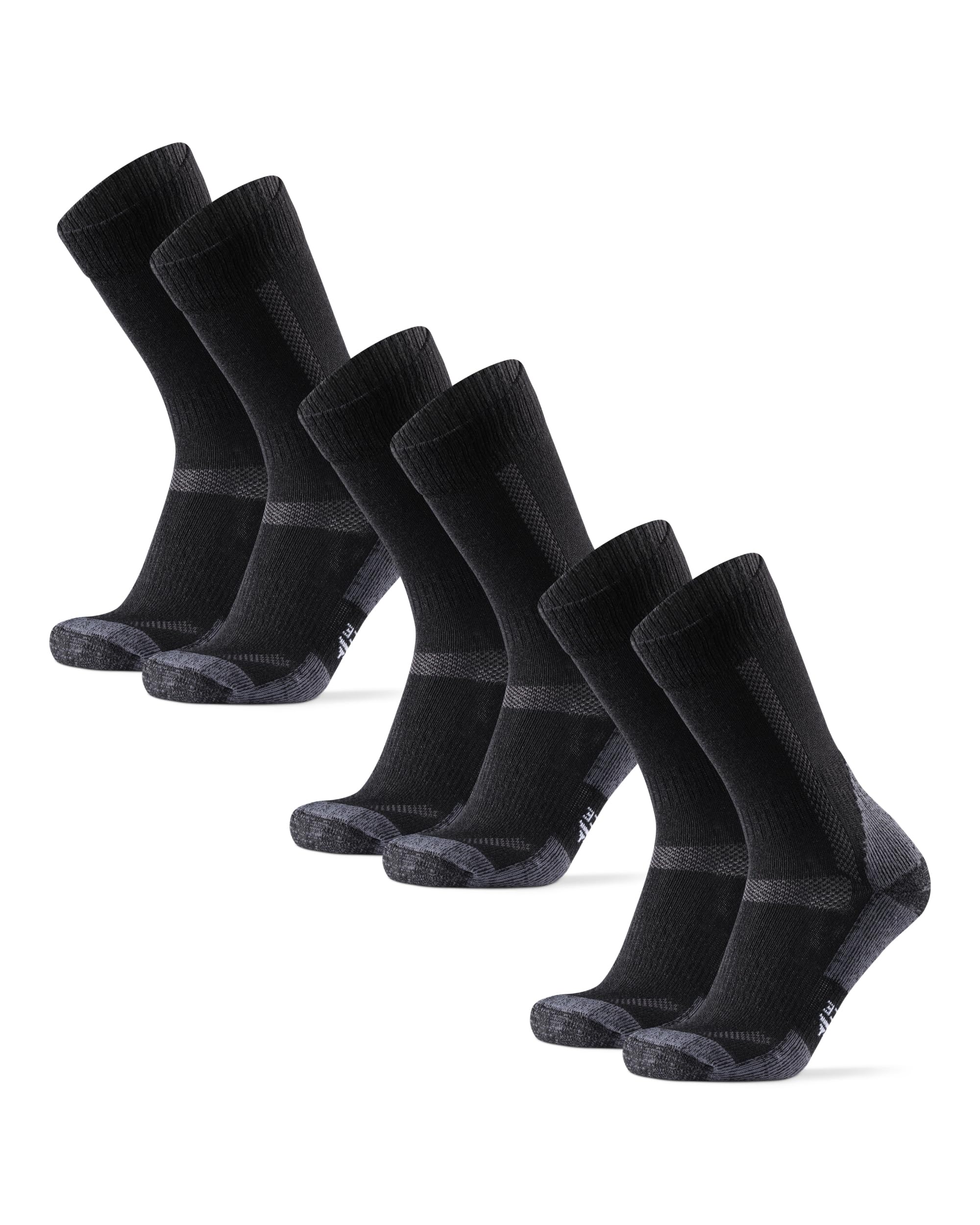
Key Features
- Wool Content: 30-40% merino
- Cushion: Medium cushion
- Height: Crew
- Price: Mid-Range
These socks deliver comfortable warmth and softness for casual day hikes, with a multi-pack value that undercuts premium brands. However, the fit can feel tight around the calves, and durability under repeated heavy use is not on par with single-pair options like Darn Tough — better suited for light use than thru-hiking.
Pros
- Very high comfort and non-itchy merino feel for all-day wear
- Good warmth for winter hiking without being bulky
Cons
- The calf band can feel constricting for those with wider calves
Ideal for casual hikers who prioritize softness and multi-pack value over long-term durability and exact fit.
Best for Budget Warmth
Alvada Merino 3-Pack

These socks provide noticeable warmth and comfort at a budget-friendly price, with a soft merino blend that suits sensitive skin. The main tradeoff is inconsistent durability: some pairs may develop heel holes after limited use, making them better suited for casual winter walks or as spare socks rather than daily hiking.
Pros
- Keeps feet warm in freezing conditions without irritation.
- Soft merino blend that feels comfortable even for sensitive skin.
Cons
- Some pairs may develop heel holes after limited use, affecting longevity.
Best as a budget-friendly backup for cold-weather walks or short hikes, not for regular trekking or long-term use.
Best for 80% Merino
NinetoFiveLife Merino 4-Pack Women

Key Features
- Wool Content: 80% merino
- Cushion: Cushion sole
- Height: Crew
- Price: Budget
This 4-pack delivers genuine warmth and softness from high merino content, making it a strong value buy. While early feedback is positive, the long-term durability hasn’t been thoroughly assessed — best suited for short day hikes or as an affordable backup set.
Pros
- Soft, warm wool that doesn’t itch
- High 80% merino content for effective insulation
Cons
An affordable way to get high merino wool socks for occasional winter use or as a spare pair.
Best for High Wool Single
Buttons & Pleats Merino Crew

Key Features
- Wool Content: 80% merino
- Cushion: Cushion sole
- Height: Crew
- Price: Budget
This single sock offers high merino wool content for warmth and cushion at a low price — ideal for occasional cold-weather use or as a backup. However, durability varies, and some pairs may develop holes after limited wear, making it a poor choice for regular hiking.
Pros
- Very warm and comfortable, keeping feet toasty in cold weather.
- Soft, thick cushioning with high merino content at a low single-pair price.
Cons
- Durability can be inconsistent, with holes possible after limited use.
Best as a budget warm sock for light, occasional use or as a backup pair on cold trips.
Best for Ultra-Budget
Time May Tell Merino 2/4-Pack

Key Features
- Wool Content: ~80% merino
- Cushion: Cushion sole
- Height: Crew
- Price: Budget
This multi-pack delivers warmth in cold weather at a budget-friendly price. The merino blend feels soft and cushioned underfoot. However, durability is limited; heel holes can appear after short use. These socks work best as backup for casual winter wear or short walks, not for regular hiking.
Pros
- Warmth for cold weather without breaking the bank
- Soft, cushioned footbed for comfortable wear
Cons
- Heel holes can develop after limited wear, reducing lifespan
For light winter errands or a spare pair in the car, these socks are hard to beat on price. Not the choice for regular trail use.
Best for Women’s Budget
Anlisim Merino 5-Pack

This 5-pack delivers great warmth and softness for the price, making it a cozy option for lounging or as a backup in cold weather. Long-term durability is a known gamble: holes can develop after a few uses, so treat these as disposable winter socks rather than hiking gear.
Pros
- Delivers great warmth and comfort in cold weather at a budget-friendly price.
- Very soft, non-itchy merino blend feels like a blanket on feet.
Cons
- Durability can be inconsistent; holes may appear after a few wears.
Best for light indoor use or emergency warmth on casual trips, but not a reliable choice for regular hiking.
Best for Limited Data
EnerWear Merino 4-Pack Women

This set delivers a solid value for a four-pack of merino wool crew socks that feel warm and comfortable on moderate hikes. Long-term durability for heavy use or rugged terrain is not well established, making this a practical option for light to occasional trail days rather than a go-to for frequent backpacking.
Pros
- Good value for a 4-pack of merino hiking socks
- Comfortable and warm for hiking
Cons
For women who want a budget-friendly multi-pack for occasional day hikes, this set delivers warmth and comfort without a premium price.
How to Choose
The biggest factor in hiking sock longevity is not the brand but the wool content and care routine.
Wool Content Percentage
A higher merino wool percentage (60-80%) gives better temperature regulation and moisture wicking. Pure wool lacks durability, so nylon is added for strength—most premium socks use a 60-70% merino blend. Socks under 50% wool feel less breathable and can trap sweat during long hikes.
Budget packs often list ‘merino wool blend’ without disclosing the percentage. If the number isn’t on the label, assume it’s below 40%. Those socks feel warm initially but lose their shape and develop holes faster because the nylon content is too low to protect the wool fibers.
Cushion Type and Placement
Cushion is not just about plushness—it determines how the sock absorbs shock and fills your boot. Lightweight cushion (thin throughout) works best for trail runners and hot weather, where you want minimal bulk. Midweight cushion adds padding under the heel and ball of the foot, ideal for most day hikes and backpacking.
Full cushion runs the entire length of the sock and is designed for heavy boots and rocky terrain. The trade-off: it takes up boot volume. If your boots are already snug, full cushion can compress your toes and cause blisters. Measure your boot’s internal space before choosing.
Sock Height
Crew height sits just above the ankle and works with low-cut shoes and trail runners. Micro crew rises slightly higher, just above the boot collar, and prevents debris from entering. Boot height reaches mid-calf and is the standard for traditional hiking boots—it protects against chafing from the boot top.
Over-the-calf socks are rare but essential for deep snow or gaiters. The extra height also prevents the sock from sliding down inside tall boots. However, they can feel restrictive around the calf if you have larger legs. Choose height based on your primary footwear, not fashion.
Warranty and Durability
A lifetime unconditional warranty (like Darn Tough’s) is the strongest signal that a manufacturer trusts its stitching. If a sock develops a hole for any reason, you send it back and receive a new pair. That guarantee turns a $25 single sock into a long-term investment—the per-wear cost drops to pennies over years.
Standard warranties (1-year defect) cover only manufacturing flaws, not normal wear and tear. Most budget socks have no explicit warranty. Heel holes after a few months are common because the friction against the boot heel breaks down thin merino blends. Air-drying instead of machine drying can extend life by 50% regardless of warranty.
FAQ
Why do my merino wool hiking socks get holes in the heel after just a few months?
Heel holes are almost always caused by friction between the sock and the inside of your boot, combined with low wool content. Merino is soft but not strong; if the blend has less than 50% nylon, the fibers wear through quickly. Machine drying also degrades the elastic and wool, accelerating failure. Choosing a higher merino percentage (60%+) and air-drying extends heel life significantly.
Can I put Darn Tough socks in the dryer and still get the lifetime warranty?
Yes, the Darn Tough lifetime warranty covers any failure, including damage from machine drying. That said, heat breaks down the elastic over time, so the sock may lose shape even if the warranty gets you a replacement. Air-drying is recommended to keep them fitting well, but the warranty still applies regardless of care method.
Are cheap wool hiking socks from Amazon worth it compared to Darn Tough or Smartwool?
For occasional use (a few hikes per season), budget 3- or 5-packs can be a good value—they provide warmth and comfort at a low upfront cost. But if you hike regularly, the per-wear cost of cheap socks is actually higher because they develop holes within weeks or months. Darn Tough’s lifetime warranty means you replace them for free, making them cheaper over the long run for frequent users.
What’s the difference between lightweight cushion and midweight cushion for hiking socks?
Lightweight cushion has thin padding throughout the sock and is designed for trail runners or warm-weather hiking where ventilation and low bulk are priorities. Midweight cushion adds thicker padding under the heel and ball of the foot, absorbing shock from boots and reducing blister risk on longer hikes. Full cushion extends padding to the entire sock, best for heavy packs or rocky terrain but may make boots feel tight.