This post contains affiliate links. We may earn a small commission when you buy through our links — at no extra cost to you.
Many winter boots claim to be waterproof and insulated, but few provide a certified temperature rating. Without that number, you are guessing whether your feet will stay warm in -30°F conditions.
The central trade-off in extreme cold boots is weight versus warmth. Thick insulation and heavy rubber shells excel when standing still but tire out hikers quickly. Lighter boots offer mobility but may not hold up in the deepest cold.
This guide focuses on boots with verified ratings down to -40°F, explains how insulation type and waterproof construction affect real-world performance, and helps you match the boot to your activity—whether you are hiking snowy trails, shoveling the driveway, or sitting on an ice fishing shack.



Best for Extreme Cold Work
MUCK Arctic Pro-u
Key Features
- Temperature Rating: -40°F
- Insulation Type: 8mm neoprene with fleece
- Waterproof Construction: Rubber shell
- Shaft Height: Tall (15 in)
- Price: $$$
The Muck Arctic Pro-u uses 8mm neoprene and fleece lining to deliver consistent warmth in temperatures well below -30°F. Rated to -40°F, its rubber shell is fully waterproof, and the tall shaft keeps snow out during deep wading or heavy snowfalls.
Suits hunters, outdoor workers, and anyone needing dependable cold protection without a steel toe. The rubber-to-neoprene bond can fail over time – an accepted tradeoff in this boot category that doesn’t diminish its cold-weather performance.
Pros
- Warmth holds up in extreme cold with just one pair of socks.
- Durable build quality that withstands demanding outdoor work.
- Comfortable out of the box, no break-in needed.
Cons
- Sole may separate from the boot after extended heavy use in some cases.
For those who prioritize warmth and waterproofing in subzero work, the Arctic Pro-u delivers. Just be aware that sole separation remains a possibility over the long term.
Best for Extreme Cold Stationary
Sorel Caribou Men
Key Features
- Temperature Rating: -40°F
- Insulation Type: Removable felt liner (9mm)
- Waterproof Construction: Rubber shell w/ leather
- Shaft Height: Tall (13 in)
- Price: $$$
The Sorel Caribou uses a removable 9mm felt liner and rubber-leather shell to deliver lasting warmth in extreme cold. This construction makes it one of the heavier options available, best suited for ice fishing, snow blowing, and other stationary tasks. Note that the boot runs large; sizing down by at least half a size is needed for a proper fit.
Pros
- Exceptional warmth for stationary extreme cold
- Build quality that holds up over years of winter use
- Reliable grip on snow and ice
Cons
- Runs large – plan to size down at least half a size
- Heavy build can fatigue the legs during extended walking
For ice fishing and stationary cold-weather chores, the Caribou’s warmth and longevity are hard to beat – just account for its weight and sizing.
Best for Women’s Daily Winter
Columbia Ice Maiden II
Key Features
- Temperature Rating: -25°F
- Insulation Type: Omni-Heat reflective
- Waterproof Construction: Seam-sealed
- Shaft Height: Mid-calf (8.5 in)
- Price: $$
Columbia’s Omni-Heat reflective lining provides warmth down to -25°F without the bulk of heavy felt liners, making these boots comfortable for all-day wear. The cushioned midsole and sneaker-like feel are appreciated by those who walk frequently in urban snow or light trails. However, the outsole tread is not aggressive enough for pure ice — buyers facing icy sidewalks should add traction aids. This boot is best for daily winter use in moderate extreme cold, not for deep snow wading or temperatures below -25°F.
Pros
- Warmth without bulk from Omni-Heat reflective lining holds up to -25°F.
- Comfortable, sneaker-like feel lets you wear them for hours without fatigue.
- Seam-sealed construction keeps feet dry in snow and slush.
Cons
- Traction on pure ice can be insufficient; additional grip aids may be needed for icy sidewalks.
A comfortable, lightweight boot for daily winter wear down to -25°F, but lacks ice traction for confident walking on slick surfaces.
Best for Extreme Cold Hiking
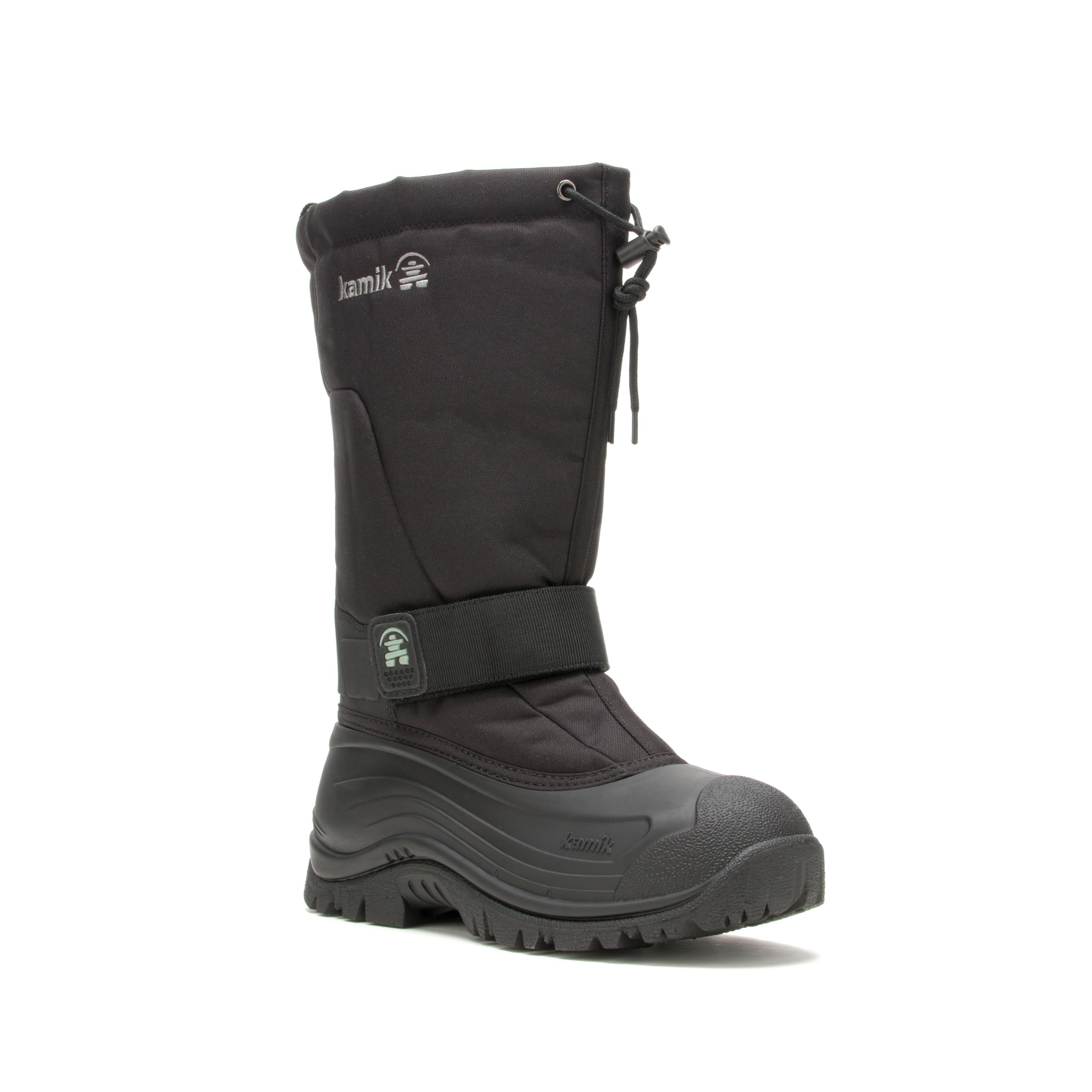
Kamik Greenbay 4
Key Features
- Temperature Rating: -40°F
- Insulation Type: Removable Thermal Guard
- Waterproof Construction: Rubber shell w/ leather
- Shaft Height: Mid-calf (9 in)
- Price: $$
The Kamik Greenbay 4 provides impressive warmth and traction for extreme cold hiking without the heft of felt-lined boots. Its rubber shell and leather upper seal out snow, and the easy on/off design suits quick transitions. This boot fits narrow and small — buyers typically need to go up half to a full size for proper comfort. It is best suited for backcountry snowshoeing and shoveling where mobility is key.
Pros
- Removable Thermal Guard liner maintains warmth in subzero conditions.
- Easy on/off with a wide opening and quick-lace system.
- Rubber shell and leather upper keep snow out during deep drifts.
Cons
- Liner material may degrade after a season of frequent use, reducing insulation.
For active outdoor use in extreme cold, the Greenbay 4 offers the best balance of warmth, traction, and light weight — provided you size up.
Best for Extreme Cold Work
MUCK Steel Toe Arctic
Key Features
- Temperature Rating: -40°F
- Insulation Type: 8mm neoprene
- Waterproof Construction: Rubber shell
- Shaft Height: Tall
- Price: $$$
The Muck Arctic Sport Steel Toe combines -40°F insulation with steel toe protection — a rare pairing for cold-weather jobsites. The 8mm neoprene and waterproof rubber shell keep feet warm and dry through long shifts in snow and subzero temperatures. Unlike the non-steel-toe version, this adds critical safety without compromising warmth.
This boot targets construction, outdoor labour, and winter jobsites where toe protection is mandatory. The rubber can tear at flex points under heavy use, so it suits buyers who prioritize safety and warmth over indefinite durability. Comfort is solid for all-day wear.
Pros
- Proven warmth to -40°F keeps feet comfortable during long shifts in extreme cold.
- Comfortable for all-day wear on job sites, even in cold conditions.
- Waterproof rubber shell keeps feet dry in snow and slush.
Cons
- Rubber can tear at flex points under heavy use, reducing boot lifespan in abrasive conditions.
If you need a steel toe for subzero job sites, this is the boot that delivers warmth and safety — just expect the rubber to show wear at flex points over time.
Best for Budget Casual Use
NORTIV 8 Insulated Snow

Key Features
- Insulation Type: Not specified
- Waterproof Construction: Claimed
- Shaft Height: Mid-calf (8 in)
- Price: $
The NORTIV 8 delivers comfort and warmth for the price, making it a reasonable choice for casual winter walks and light snow. It lacks a certified temperature rating, and long-term durability is uncertain — sole separation or water resistance decline can appear over time. This boot suits budget-conscious buyers who need occasional cold-weather footwear, not those facing extreme cold or daily heavy use.
Pros
- High comfort for a budget boot
- Cost-effective for occasional winter use
Cons
- Durability concerns may arise after months of wear
Best for buyers who need an affordable occasional winter boot and can accept that it may not hold up to heavy use or extreme cold.
Best for Women’s Extreme Cold
MUCK Arctic Sport Mid

Key Features
- Temperature Rating: -40°F
- Insulation Type: 8mm neoprene
- Waterproof Construction: Rubber shell
- Shaft Height: Mid-calf (10 in)
- Price: $$$
Great for women who want extreme cold protection with more ankle mobility. The 8mm neoprene and rubber shell keep feet warm down to -40°F, while the 10-inch shaft allows easier movement than full-height boots. Some users have experienced sole separation after extended use, so this boot suits those who prioritize flexibility over long-term ruggedness and don’t plan to wade through deep snow over 10 inches.
Pros
- Eight millimeters of neoprene insulation handles extreme cold comfortably.
- Mid-calf height provides good warmth with better ankle motion than taller boots.
Cons
- Sole separation can occur after periods of heavy use — less of a concern for occasional winter walks.
Best for women who need -40°F warmth in a more mobile boot and can accept a minor durability tradeoff for a mid-height fit.
Best for Women’s Extreme Cold
Sorel Caribou Women

Key Features
- Temperature Rating: -40°F
- Insulation Type: Removable felt liner (9mm)
- Waterproof Construction: Rubber shell
- Shaft Height: Tall (12 in)
- Price: $$$
The Sorel Caribou Women uses a removable 9mm felt liner and rubber-leather shell to keep feet warm to -40°F. It suits stationary snow tasks where the heavy weight is fine. The boot runs large and heavy; size down at least half a size, and narrow feet may feel loose. For daily winter wear, the Columbia boot offers better mobility.
Pros
- Rated to -40°F with a thick removable felt liner for extreme cold.
- Rubber and leather construction holds up over years of use.
Cons
- Heavy build and oversized fit may feel cumbersome for walking or daily use.
Best reserved for standing in extreme cold tasks like shoveling or ice fishing. For moving around all day, lighter alternatives are worth considering.
Best for Mild Winter Hunting
TIDEWE Neoprene Boots
These boots offer good comfort and warmth for mild below-freezing days, making them a budget-friendly option for light winter use. However, the -4°F temperature rating falls short of extreme cold conditions. Durability concerns with heavy use also limit long-term value. Best suited for occasional wear in mild winter, not for subzero temperatures.
Pros
- Very comfortable out of the box
- Good value for the price
Cons
- Temperature rating of -4°F is insufficient for extreme cold below -10°F
A comfortable, budget-friendly boot for mild winter conditions above -4°F, but not suitable for extreme cold or heavy use.
How to Choose
The most critical factor is a verified temperature rating – without it, you are gambling on whether your boots will protect your feet.
Temperature Rating
Look for a specific temperature rating such as -20°F or -40°F. A rating means the boot has been tested or designed to keep feet safe at that temperature with normal sock layering. Boots without a rating often use vague terms like ‘insulated’ and may fail in extreme cold.
A -40°F rated boot uses thick neoprene or a removable felt liner to trap heat. The trade-off is weight: these boots are heavier. For activities like ice fishing where you stand still, the added warmth is worth the bulk. For active use like snowshoeing, a -25°F rating may be sufficient and more comfortable.
Insulation Type and Thickness
Neoprene (6mm to 8mm) is the most common material for extreme cold boots. It insulates even when wet and flexes with movement. Felt liners provide excellent warmth and are removable for faster drying, but add bulk and can compress over time, reducing insulation.
Reflective linings like Omni-Heat use a metallic layer to bounce heat back to your foot. They work well in active use where your own body heat is generated, but may not keep up in truly static extreme cold without thick socks. The key is matching the insulation mechanism to your typical activity level.
Waterproof Construction
Rubber shells are the gold standard for waterproofing. They form a continuous barrier that does not degrade over time. Treated fabric uppers (often labeled ‘waterproof’) rely on a coating that wears off with use, leading to wet feet after several months.
Neoprene itself is water-resistant but not fully waterproof unless covered by a rubber layer. Seam-sealed construction helps but is less reliable than a full rubber bootie when you are standing in slush or deep snow for hours.
Shaft Height
Tall shafts (12-15 inches) keep snow from entering the top of the boot when wading through deep drifts. They also trap more warm air around the calf. Mid-calf boots (8-10 inches) offer better ankle mobility and are lighter, but risk snow ingress in powder conditions.
If you frequently posthole or walk in snow deeper than the boot height, choose a tall shaft. For hiking on packed trails, a mid-calf height saves weight and allows easier movement.
Weight and Flexibility
Weight is often the deciding factor for buyers who plan to walk more than stand. A pair of extreme cold boots can weigh 3 to 5 pounds. Heavier boots provide more insulation and durability but cause fatigue on long treks.
Flexibility matters for hiking: a rigid boot may hinder natural gait, while a more flexible neoprene boot allows easier stride. The trade-off is that highly flexible boots often have less supportive soles, which can be an issue on uneven terrain. Match the boot’s stiffness to the surface you will cover most.
FAQ
Can NORTIV 8 snow boots handle -20°F temperatures?
No, NORTIV 8 boots lack a certified temperature rating, and user reports show they are not adequate for -20°F without thick socks. They perform best in mild to moderate cold above -10°F. For extreme cold, choose a boot with a verified -40°F rating.
Why do Muck boots lose their waterproofing over time?
Muck boots use a rubber shell that is waterproof initially, but the rubber can crack or peel at flex points, especially with exposure to road salt or extreme cold. The neoprene upper remains waterproof, but sole separation can breach the seal. Regular cleaning and avoiding prolonged contact with salt helps extend the boot’s life.
Are Sorel Caribou boots too heavy for hiking?
Yes, Sorel Caribou boots weigh over 4 pounds per pair, making them better suited for stationary activities like ice fishing or snow blowing. Their weight causes fatigue on hikes longer than a mile. For hiking, look at lighter options like the Kamik Greenbay 4 or Columbia Ice Maiden II.
How often should I replace the liner in Kamik Greenbay 4 boots?
The removable Thermal Guard liner typically lasts one to two seasons with regular use. Replace it when the liner compresses and no longer provides its original thickness, or when you notice cold spots at the heel. A worn liner reduces insulation significantly.