This post contains affiliate links. We may earn a small commission when you buy through our links — at no extra cost to you.
Many jackets labeled ‘ultralight’ come in well over 300g, making the search for a genuinely light layer frustrating. Thin shells, questionable fill, and missing weight specs add to the confusion.
This guide cut through the marketing by focusing on verified weights, real-world warmth, and the trade-offs between durability and packability. Every pick here delivers the weight savings you expect from an ultralight jacket.
The right jacket balances enough insulation for cool trail mornings with a weight that disappears in your pack. That balance is harder to find than listings suggest.


Best for Hikers, Backpackers
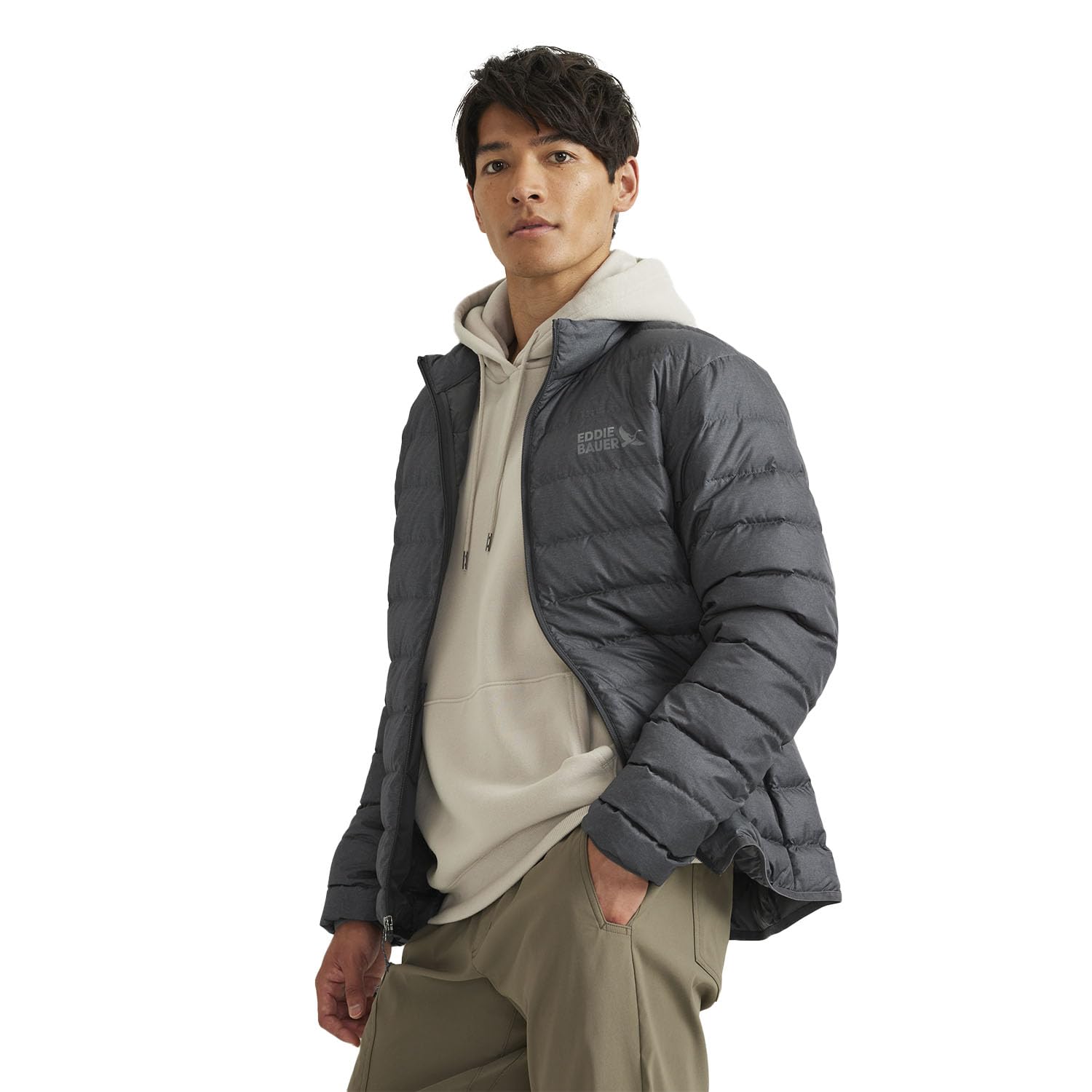
Eddie Bauer CirrusLite Down
Key Features
- Weight: 7.83 oz (222g)
- Packable: Packs into pocket
- Fill: Down
- Hood: No
- Price: $
Weighing just 7.83 ounces, this jacket compresses into its own pocket, making it a top choice for weight-conscious hikers and backpackers. The 650-fill down provides reliable warmth for cool fall days and moderate mountain conditions without adding bulk.
It suits hikers who prioritize weight savings over rugged durability. The thin shell fabric is vulnerable to tears from branches or rocky brush, so this jacket is best reserved for well-maintained trails and everyday urban or travel use rather than bushwhacking.
Pros
- Ultralight build and pocket-stow packability save space and weight in any pack.
- Comfortable warmth for fall hikes and camp chores without overheating.
- Budget-friendly price for a genuine down jacket that performs well.
Cons
- Thin outer fabric may snag on branches or rough terrain, causing down leakage over time.
For backpackers and hikers who value ounces over durability, this jacket offers an unmatched weight-to-warmth ratio at a low cost.
Best for Travel, Mild Weather
Eddie Bauer Women’s CirrusLite
The Eddie Bauer Women’s CirrusLite Down Jacket delivers a women’s-specific cut and color options in an ultralight package under 230 grams. While the men’s version (our top pick) matches this weight and warmth at a lower price, this jacket prioritizes a tailored silhouette for a more flattering fit. It works well for women who need a compressible down layer for mild-weather hikes and travel, where weight and packability are key. The tradeoff: the cut can feel snug around the hips on curvier body types, so careful sizing is necessary.
Pros
- Ultralight and compressible for easy packing into a backpack
- Provides reliable warmth for cool spring and fall conditions
Cons
- Women with curvier hips may find the cut restrictive around the midsection
A lightweight, packable down jacket for women who want a tailored fit for travel and mild-weather hikes — just plan to test the sizing.
Best for Budget Hikers
32 Degrees Ultra-Light Down
While the top pick offers a longer track record, the 32 Degrees jacket matches its weight and packability at a significantly lower price. The down fill and water-repellent finish provide real insulation for mild conditions, though the thin outer fabric is better suited for occasional day hikes and travel than rugged backcountry use.
Pros
- Packs into its own pocket for easy transport or storage
- Provides noticeable warmth for its minimal weight
Cons
If budget is your top priority and you need a lightweight down jacket for mild-weather trips, this is the most cost-effective choice.
Best for Climbers and Hikers
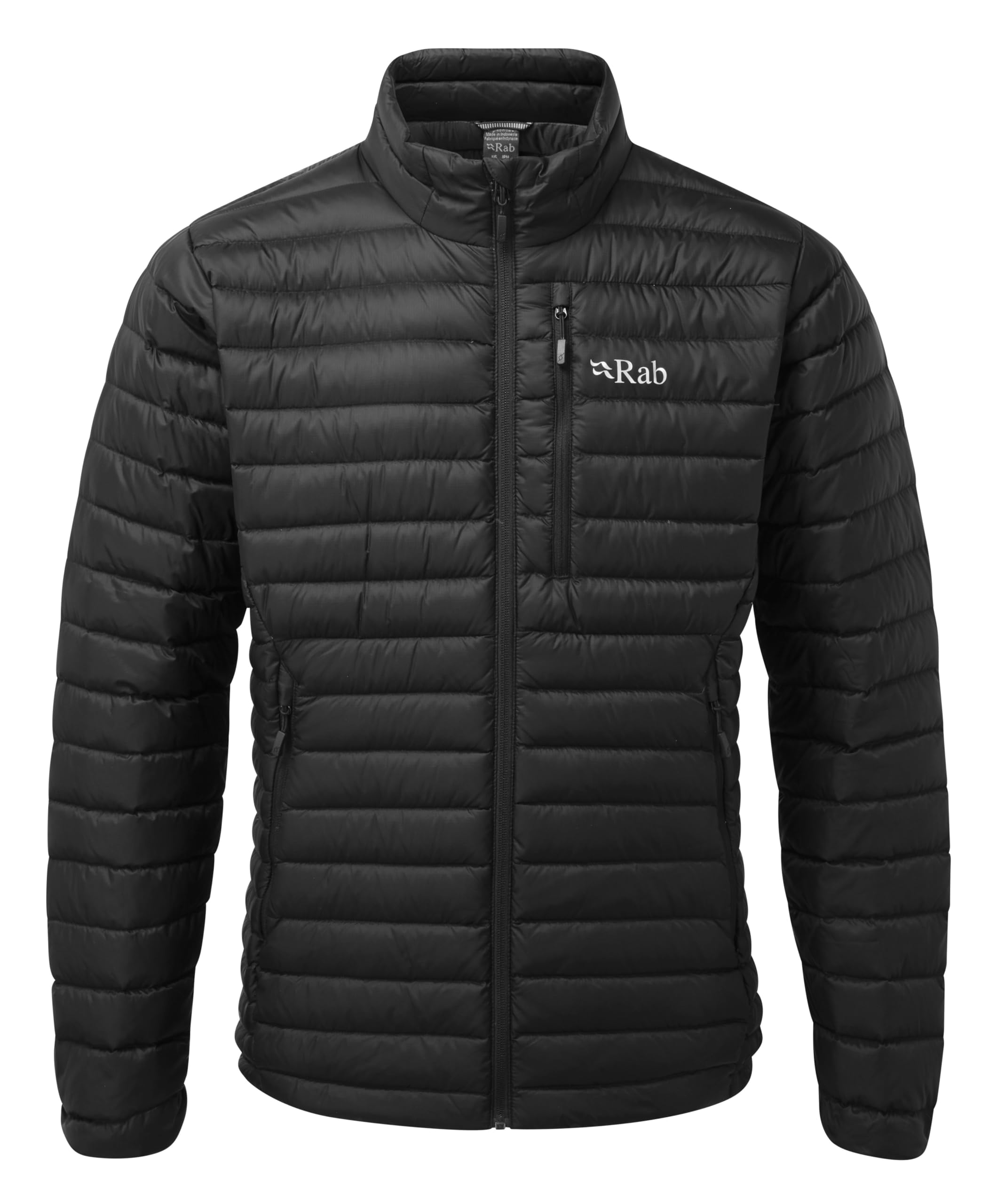
Rab Men’s Microlight Jacket
Key Features
- Weight: 14 oz (397g)
- Packable: Stuffs into sack
- Fill: 700-fill down
- Hood: Yes
- Price: $$$
The Rab Microlight Jacket delivers genuine 700-fill down insulation paired with a robust outer fabric that stands up to brush and rocky terrain, a clear departure from the ultralight pick’s thin shell. This is the jacket for climbers and hikers who prioritize warmth and durability over grams, especially when layering under a hard shell in winter. At 397g, it’s not a weight-weenie piece; the extra fabric and down translate to better protection in harsh conditions.
Pros
- Excellent warmth for cold conditions
- High quality construction and materials
- Good fit for layering under shells
Cons
- Down feathers may leak through the fabric over extended use, especially in high-wear areas
- Sizing may run large for some, requiring a size down for a snug fit under layers
For cold-weather mountaineering and day hikes where weight isn’t the top priority, the Rab Microlight delivers reliable warmth and build quality that justifies its premium price.
Best for Skiing, Hiking
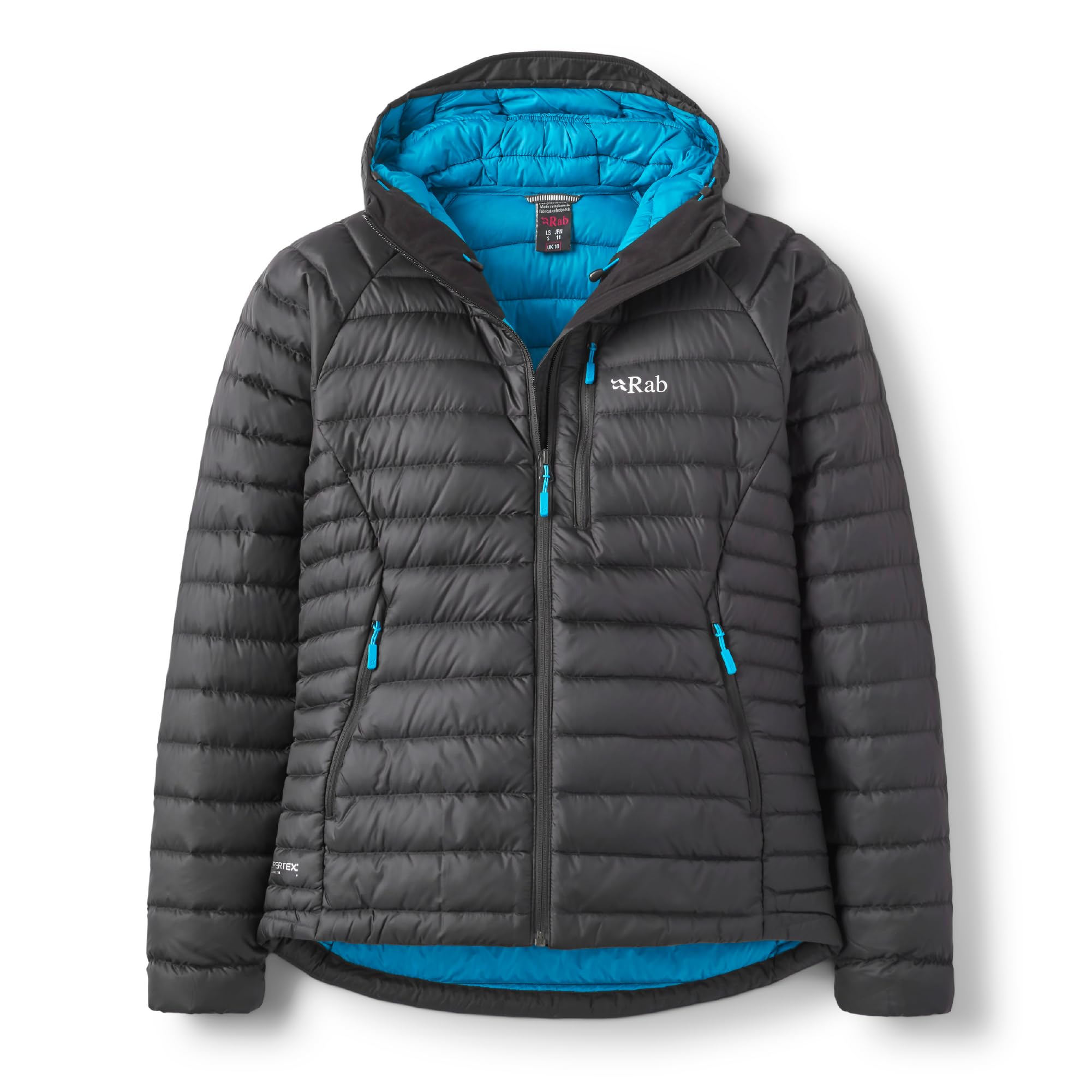
Rab Women’s Microlight Alpine
Key Features
- Weight: 14.59 oz (414g)
- Packable: Stuffs into sack
- Fill: 700-fill down
- Hood: Yes
- Price: $$$
This Rab jacket stands out for its tailored women’s fit and a wider color range than the men’s version, pairing consistent 700-fill down warmth with a polished finish. It’s a solid choice for cold-weather activities where insulation matters more than shaving grams.
Best suited for alpine skiing, hiking in sustained cold, or as a midlayer under a shell in extreme conditions — not for lightweight backpackers chasing sub-300g packs. Note that the sizing runs small, so ordering one size up is advised if layering or if between sizes.
Pros
- Delivers consistent warmth for cold weather outings
- Flattering women’s fit with attractive color options
- High quality finish and durable construction
Cons
- 414g weight places it above the ultralight threshold for backpacking
- Sizing may run small for some body types, especially when layering
Right for women who prioritize alpine warmth and a tailored look over pack weight, but verify your size before buying.
Best for Hikers Layering
Eddie Bauer CirrusLite Hooded

Adds a hood to the lightweight down formula without adding much weight. It provides warmth in cool conditions and packs down small, making it a practical layer for mild-weather hikes. However, the same thin outer fabric that keeps weight low is prone to tearing and down leakage when used against abrasive surfaces, so it’s best as a midlayer under a shell.
Pros
- Hood adds coverage for head and neck without extra weight.
- Budget-friendly price for a down jacket with a hood.
Cons
- The thin shell can tear or leak down when used against rough terrain or brush.
Best for hikers who want a hood at a low price and will use it under a shell or on gentle trails.
Best for Budget Packable
Wantdo Women’s Packable Puffer

Key Features
- Weight: 1 lb (454g)
- Packable: Stuffs into pouch
- Fill: Down
- Hood: No
- Price: $
The Wantdo Women’s Packable Puffer offers solid warmth and a lightweight feel for its low cost, suited for casual travel. At 454g it exceeds ultralight weight limits, and the zipper may not hold up under heavy use. This jacket fits budget travelers, not backpackers needing sub-300g weight.
Pros
- Delivers good warmth for the price
- Lightweight feel compared to heavier insulated jackets
Cons
- Size consistency can vary between production batches, making fit unpredictable
This jacket fits the budget traveler who wants a warm, packable layer without the ultralight premium, but active hikers should look elsewhere.
Best for Travel, Casual
Valennia Women’s Short Down Coat

This packable down coat delivers impressive lightness and warmth for the price, making it a practical grab-and-go layer for mild-weather travel or daily errands. The included pouch keeps it compact in a daypack. However, fit varies between sizes, the zipper may feel flimsy, and some units shed down at seams after short use. These issues limit its suitability for active hiking or rough conditions where consistent performance matters more than the low cost.
Pros
- Extremely lightweight and packable for travel
- Good warmth relative to the low price
Cons
- Fit can be inconsistent across sizes and sleeve lengths
Best for budget-conscious travelers who want a hooded down jacket for occasional use in mild weather, provided they are willing to order multiple sizes and accept possible zipper or seam quirks.
How to Choose
The most overlooked factor when choosing an ultralight down jacket is verifying the actual weight against the product specs, as many listings exaggerate lightness.
Actual Weight
A jacket’s listed weight often omits the stuff sack or uses a size medium that you don’t wear. Always check the spec at the size you need and compare to the 300g threshold for true ultralight status.
A 50g difference may not sound like much, but on a multi-day hike every ounce compounds. A jacket that claims ‘ultralight’ but weighs over 350g will shift your pack balance noticeably.
Packability
Packability isn’t just about stuffing into a pocket. The compression volume determines whether the jacket fits in a corner of your pack or requires its own space.
Jackets that pack into their own pocket are convenient for quick stowage midday, but stuff-sack models usually compress smaller for overnight trips.
Fill Power and Down Quality
Fill power measures loft per ounce. 700-fill down traps more air per gram than lower fills, meaning you get more warmth for the same weight. But total warmth also depends on the amount of down used.
A 400g jacket with 600-fill can be warmer than a 200g jacket with 800-fill. Don’t chase fill power alone; look at the jacket’s total insulation weight.
Shell Fabric Durability
Ultralight shells use thin fabrics to save grams. That 10-denier face fabric may tear on a branch or seam abrade against a pack strap over time.
Down leakage follows when the shell wears. For rocky trails or frequent brush contact, a 20-denier or reinforced shell adds an ounce of weight but saves the jacket from early retirement.
Hood Availability
A hood adds about 1-2 ounces and blocks wind on cold summits. Without one, you need a separate hat and buff.
But hoods add bulk when packed and can feel restrictive under a hard shell. For moderate conditions, a collar and beanie may suffice; for exposed ridges, a helmet-compatible hood is worth the weight.
FAQ
How can I tell if an ultralight down jacket is actually under 300g when the listing doesn’t mention weight?
Check the ‘Product Details’ section on the retailer page; often the weight is hidden under ‘Item Weight’ or ‘Shipping Weight’ but subtract the packaging. When that fails, look for user reviews that mention weighing the jacket, or contact the brand directly. If no weight is available, assume it’s not truly ultralight.
Will an ultralight down jacket keep me warm in 30°F weather while hiking?
Yes, for active hiking. While moving, a 200-300g down jacket with a wind-resistant shell handles 30°F. But stop for a break or if the wind picks up, you’ll need an extra layer or shell. For extended stationary use at 30°F, choose a heavier jacket.
Is down leakage a sign of poor quality in an ultralight jacket?
Not always. Some leakage of loose feathers is normal in even high-end down jackets during first use. But persistent leakage through the seams or fabric indicates a weak shell or poor baffle construction. If feathers keep coming out after a few wears, the jacket’s durability is compromised.
Can I use an ultralight down jacket as a standalone winter coat?
No, not for deep winter. Ultralight jackets are designed for layering in cool to moderately cold conditions (30°F and above with activity). As a standalone winter coat in sub-freezing temperatures without movement, they lack the insulation and wind resistance required. Pair with a shell or use a heavier parka.