This post contains affiliate links. We may earn a small commission when you buy through our links — at no extra cost to you.
Thermal tops often promise more than they deliver. A ‘midweight’ label can mean anything from a thin layer to a thick fleece, and sizing is so inconsistent that most buyers need to exchange for a different size. The result: either overheating on the trail or shivering because the base layer didn’t perform as expected.
The real fork in the road is material choice. Synthetic fleece-lined thermals pack excellent warmth at a low price but hold sweat odor and breathe less under exertion. Merino wool stays warm when wet, resists odors, and feels soft — but costs more and requires delicate care. Neither is inherently better; the right fit depends on your activity and budget.
This guide cuts through the marketing to help you pick the best thermal for your routine, whether that’s a budget bundle for daily wear or a premium merino for backpacking. One rule applies to almost every pick: order up one size to avoid a too-tight fit.


Best for Everyday Cold Wear
DEVOPS Men’s 2-Pack Thermal
Key Features
- Material: Polyester/Spandex, fleece lined
- Weight: Midweight
- Fit: Compression
- Pack Qty: 2
- Fleece Lining: Yes
- Price: Budget
The DEVOPS 2-pack thermal shirts combine a soft fleece lining with a snug compression fit, making them an effective barrier against cold when worn under a jacket or by themselves around the house. Over 23,000 customer ratings support the warmth and durability claims, with the fabric holding up well to repeated washing.
These shirts are best for casual cold-weather wear and budget-conscious hikers who want a reliable base layer. The fleece lining can trap too much heat during aerobic activity, so they work better for static or light-exertion situations. Sizing is the main consideration: the cut runs small, especially for broader shoulders or chests, so ordering one to two sizes up is necessary for a comfortable fit.
Pros
- Fleece lining feels soft against skin without itchiness
- Construction holds up well to repeated washing
- Two shirts for under $30 — strong value compared to premium brands
Cons
- Cut is snug; sizing up one to two sizes is needed for a relaxed fit
- Fleece lining can cause overheating during high-exertion activities
If you need a warm, durable base layer for everyday cold without spending on merino wool, this 2-pack delivers where it counts.
Best for Serious Hikers
MERIWOOL Men’s Merino Midweight
Key Features
- Material: 100% Merino wool
- Weight: Midweight
- Fit: Slim
- Pack Qty: 1
- Fleece Lining: No
- Price: Premium
The MERIWOOL midweight stands out for its warmth-to-weight ratio: it retains insulation even when damp, a trait that matters on multi-day hikes where sweat or rain is inevitable. The 100% merino fabric feels soft against skin, with no scratchiness typical of traditional wool, and the construction holds up well after repeated wears and washes.
This is a premium-priced piece best suited for serious outdoor enthusiasts who need odor resistance and moisture management in variable weather. Tall sizes mean longer arms and torso length are available, a rarity in base layers. However, the higher cost compared to synthetic packs like the DEVOPS 2-pack is a real consideration, and some wearers with sensitive skin may find the forearms slightly itchy during extended use.
Pros
- Keeps you warm even when wet, outperforming most synthetics in damp conditions
- Soft, non-scratchy merino with a slim fit that layers well under outer shells
- Tall sizes are genuinely long enough for people with above-average torso or arm length
Cons
- Premium price point is noticeably higher than comparable synthetic base layers
- Forearm area can feel slightly itchy for those with sensitive skin
For hikers and cold-weather athletes who value natural fiber performance over cost savings, this merino shirt delivers on its promise — just be prepared to pay for it.
Best for Budget Women
DEVOPS Women’s 2-Pack Thermal
Key Features
- Material: Polyester/Spandex, fleece lined
- Weight: Midweight
- Fit: Compression
- Pack Qty: 2
- Fleece Lining: Yes
- Price: Budget
Soft fleece lining and an affordable two-pack price make this set a warm and comfortable base layer for cold weather. The compression fit works well under sweaters or jackets, but sizing runs small — order up one size for a comfortable fit. Some buyers have noted pilling after several washes, though the overall warmth and softness hold up well for the price.
Pros
- Delivers noticeable warmth for the cost, especially when layered.
- Soft fleece interior feels gentle against skin.
- Two shirts for under $20 — strong value for budget buyers.
Cons
- Sizing runs smaller than expected — ordering up one size is advisable.
- Fabric pilling may appear after repeated washing.
A budget-friendly thermal set that prioritizes warmth and comfort — best suited for everyday layering where some pilling is acceptable.
Best for Budget Men’s Rotation
TELALEO Men’s 4/5-Pack Thermal
Key Features
- Material: Polyester/Spandex, fleece lined
- Weight: Midweight
- Fit: Compression
- Pack Qty: 4-5
- Fleece Lining: Yes
- Price: Budget
This four- or five-pack of fleece-lined compression shirts offers exceptional per-shirt value for buyers who need a rotation of warm base layers. The soft interior and snug fit trap heat effectively under work clothes or for light outdoor activity in moderate cold. Sizing runs small, so ordering one size up is key, and the sleeves may be short for taller builds – worth checking before purchasing.
Pros
- Exceptional value with 4-5 tops under $40
- Effective warmth for cold weather layering
- Soft fleece interior feels comfortable against skin
Cons
- Sizing runs small; ordering up is needed for a relaxed fit
- Sleeve length can be insufficient for taller individuals
For buyers who want a budget-friendly rotation of warm base layers, this pack gets the job done.
Best for Multi-Day Hiking
Merino.tech Women’s Merino Base
Key Features
- Material: 100% Merino wool
- Weight: Lite, Mid, Heavy
- Fit: Slim
- Pack Qty: 1
- Fleece Lining: No
- Price: Premium
The Merino.tech women’s base layer uses 100% merino wool to wick moisture and resist odor across multiple days on the trail. Sizing can run large or small depending on body type, so checking the size chart is worth the effort. The fabric feels soft against skin and keeps warmth without bulk. It requires gentle washing to avoid shrinkage – a tradeoff for those used to tossing synthetics in the dryer. This shirt suits women who prioritize natural fiber performance over cost, especially for hiking or backpacking where staying fresh matters. For a more consistent fit with similar warmth, the men’s merino option from a competitor offers a slimmer cut.
Pros
- Moisture-wicking and odor-resistant for multi-day wear
- Soft merino wool that feels comfortable against skin
- Flattering slim fit with long sleeves
Cons
- Sizing varies by body type – some find it runs large, others small
- Merino wool can shrink if machine dried; requires delicate care
For women who value natural fiber performance on multi-day trips, the premium price is justified, but budget-conscious buyers can get similar warmth from synthetics.
Best for Max Warmth Static
Access Men’s Heavyweight Thermal
Key Features
- Material: Cotton/polyester waffle knit
- Weight: Heavyweight
- Fit: Relaxed
- Pack Qty: 1
- Fleece Lining: No
- Price: Budget
Heavyweight waffle weave traps maximum air for insulation, making this top a solid choice for static cold scenarios like hunting or working outdoors. The cotton/polyester blend holds up through repeated washes without losing shape, and the extra length keeps the shirt tucked in during movement. However, the fabric can feel rough against skin, and the relaxed cut runs large – most wearers will want a thin undershirt or size down for a trimmer fit.
Pros
- Heavyweight warmth without excessive bulk for static cold conditions.
- Durable construction holds up through repeated washing.
- Long torso length keeps the shirt tucked in during activity.
Cons
- Sizing runs large – baggy fit may require sizing down for a closer cut.
- Fabric can feel rough against skin, often needing a thin undershirt.
This thermal is for men who need maximum warmth on a budget and don’t mind compromising on softness or fit – an undershirt and sizing down solve both.
Best for Layering Outdoors
TELALEO Women’s 4-Pack Thermal

Key Features
- Material: Polyester/Spandex, fleece lined
- Weight: Midweight
- Fit: Compression
- Pack Qty: 4
- Fleece Lining: Yes
- Price: Budget
Soft fleece lining traps warmth without itching, making these tops comfortable as a base layer or standalone piece during chilly outdoor activities. The four-pack delivers budget-friendly per-shirt value, though the compression fit runs snug — sizing up is advisable for a relaxed feel. Sleeve length may be generous on shorter frames, but the overall warmth and softness hold up well. Compared to the women’s two-pack alternative, this set offers more shirts at a slightly higher total cost, with similar sizing quirks.
Pros
- Soft fleece lining provides warmth without itchiness.
- Four-pack offers budget-friendly per-shirt cost for a full rotation.
Cons
- Sizing runs small — those wanting a looser fit may need to size up.
A good value for those who want a full rotation of compression-fit thermals, provided you size up and don’t mind possible extra sleeve length on shorter frames.
Best for Mild Cold Layering
32 Degrees Women’s Lightweight Baselayer

Key Features
- Material: Polyester/Spandex
- Weight: Lightweight
- Fit: Slim
- Pack Qty: 1
- Fleece Lining: No
- Price: Budget
This baselayer delivers impressive softness and a snug scoop-neck fit that disappears under sweaters or blouses. The lightweight fabric provides comfortable warmth for mild to moderate cold when layered, but lighter colors may be sheer and the top is not sufficient for freezing temperatures on its own.
Pros
- Ultra-soft fabric feels comfortable against skin
- Scoop neck and slim fit layer invisibly under clothing
Cons
- Light-colored versions may be sheer, and the fabric is not warm enough for standalone use in freezing weather
A smart pick for mild-cool weather layering under office attire or casual sweaters, not for harsh winter days.
Best for Active Layering
32 Degrees Men’s Lightweight Baselayer

Key Features
- Material: Polyester/Elastane
- Weight: Lightweight
- Fit: Form-fitting
- Pack Qty: 1
- Fleece Lining: No
- Price: Budget
This top fits snugly without restricting movement, making it a solid choice under dress shirts or uniforms for light activity in cool weather. The thin fabric limits warmth – it works best as a mid-layer for temperatures above freezing, not as a standalone thermal for cold hiking.
Pros
- Provides comfortable warmth for mild days without adding bulk.
- Soft, stretchy material moves with the body during activity.
Cons
- Thin material may be see-through and insufficient as a standalone layer in freezing temps.
Ideal as a lightweight mid-layer for mild winter days or under uniforms, but not built for serious cold.
Best for Everyday Fall/winter
ANRABESS Women’s Fleece Thermal

Key Features
- Material: Polyester blend, fleece lined
- Weight: Medium
- Fit: Fitted
- Pack Qty: 1
- Fleece Lining: Yes
- Price: Budget
This fleece-lined thermal delivers soft warmth for everyday wear at a budget price. However, inconsistent sizing (some may need to size up) and a tendency to attract lint limit its appeal to casual indoor use or light layering under flannels. It lacks the durability and fit consistency for active outdoor activities.
Pros
- Soft fleece interior that feels plush
- Good warmth for the price
Cons
- Sizing can be inconsistent, running large for some buyers
Best for budget-conscious shoppers seeking a soft, warm layer for casual indoor use or light layering, where minor fit variance and static are acceptable trade-offs.
Best for Large Rotation
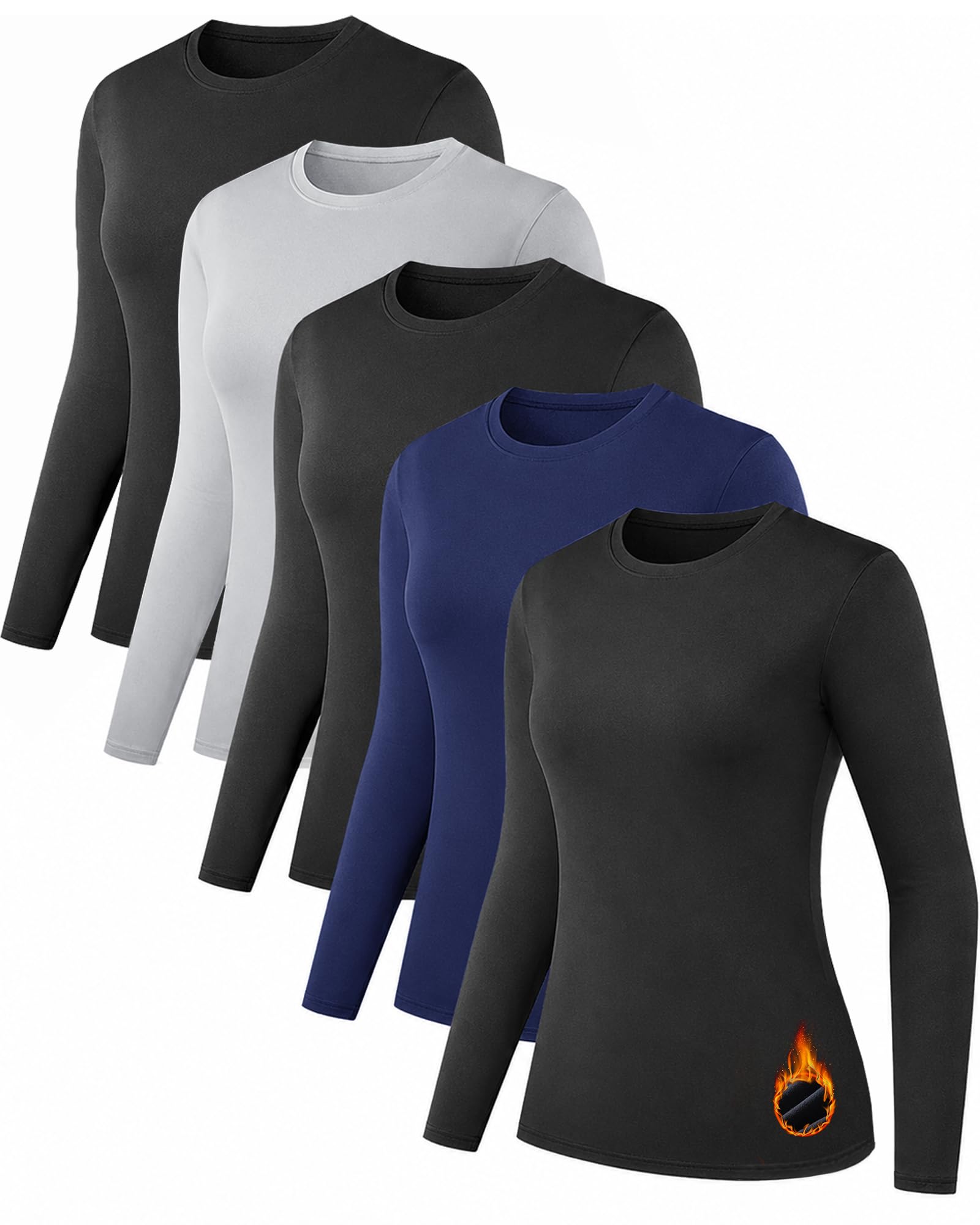
NebuKinex Women’s 5-Pack Thermal
Key Features
- Material: Polyester/Spandex, fleece lined
- Weight: Midweight
- Fit: Slim
- Pack Qty: 5
- Fleece Lining: Yes
- Price: Budget
This 5-pack offers an ultra-soft fleece interior and good warmth for moderate cold, making it a cost-effective base layer rotation. The fabric can be thinner than some expect, and sizing tends to run small — best for those who want a snug fit and don’t need heavyweight insulation.
Pros
- Ultra-soft fleece interior provides comfortable next-to-skin feel.
- Affordable 5-pack offers great per-shirt value for a full rotation wardrobe.
Cons
- Sizing runs small – may need to order one size up for a comfortable fit.
Best for women who want a bulk set of soft base layers for moderate cold and don’t mind a snug fit or slightly lighter fabric.
Best for Light Activity
MAGCOMSEN Men’s Fleece Thermal

Key Features
- Material: Polyester, fleece lined
- Weight: Midweight
- Fit: Regular
- Pack Qty: 1
- Fleece Lining: Yes
- Price: Budget
This fleece-lined top provides warmth without making you sweat during brisk walks or gym sessions, thanks to its midweight polyester build. The fleece feels soft against the skin, but the fit can be inconsistent — some find it oversized — and the material is thinner than many expect from a thermal. That makes it better suited for moderate cold and casual use rather than harsh winter conditions.
Pros
- Warm without overheating during active use
- Soft fleece lining adds comfort
Cons
- Fit can be inconsistent – some may find it oversized
Works well for casual layering or light activity in cool weather, but size-sensitive buyers should order with a flexible return policy.
Best for Fashion Layering
Ekouaer Women’s 3-Pack Ribbed Thermal

Key Features
- Material: Polyester/Spandex ribbed knit
- Weight: Lightweight
- Fit: Fitted
- Pack Qty: 3
- Fleece Lining: No
- Price: Budget
The Ekouaer pack delivers a soft, stretchy, form-fitting fit that works well under sweaters or blouses, making it a decent option for mild winter days or as a mid-layer. The ribbed knit feels smooth against skin and moves with you, but the lightweight material isn’t designed for standalone warmth in freezing temperatures — treat it as a fashion base layer, not a serious thermal. If you need a warmer alternative at a similar price, the 32 Degrees women’s lightweight shirts offer comparable thinness but slightly less softness.
Pros
- Soft, butter-like fabric that feels comfortable directly against skin.
- Stretchy, snug fit that stays flat under other layers.
Cons
- In freezing conditions, the thin material may not provide enough warmth as a standalone top.
Works best as a lightweight layering piece under dressy or casual clothing for mild cold — not a standalone thermal for winter.
How to Choose
The most important thing to know: a thermal top’s warmth comes from its ability to trap air, not just fabric thickness — which is why a well-fitting midweight can outperform a baggy heavyweight.
Material
Synthetic fabrics like polyester and spandex are the most common and affordable. They wick moisture away from the skin and dry quickly, but they trap body odor after repeated wears. Merino wool, by contrast, naturally resists odors and continues to insulate even when damp. The trade-off: merino is pricier and needs gentle washing to avoid shrinkage.
Weight and Thickness
Thermal tops are categorized as lightweight, midweight, or heavyweight, but these labels aren’t standardized. A lightweight top from one brand may be as warm as a midweight from another. Lightweight layers are best for mild cold or high activity where you generate heat. Midweight is the most versatile for hiking in typical winter conditions. Heavyweight tops are for static cold — think hunting, ice fishing, or working outdoors in frigid temps.
Fit
Fit is the most overlooked factor in thermal performance. A snug, compression-style fit traps warm air against your skin and wicks moisture effectively. Too loose, and cold air circulates between layers, reducing insulation. Too tight, and it restricts movement and blood flow, making you colder. Most thermal tops run small, so sizing up is the safest move unless you’re after a second-skin feel.
Number of Pieces
Multi-packs offer the best per-shirt value, especially for budget buyers who need a rotation of base layers. Two-packs are ideal for weekend trips or daily wear, while four- or five-packs suit those who want to stock up for a whole season. Single shirts make sense if you’re investing in a premium material like merino and only need one high-performance layer.
Fleece Lining
Fleece-lined thermals add a soft, fluffy interior that feels warm against the skin and traps extra still air for insulation. They’re typically warmer per dollar than unlined synthetics or wool, but they don’t breathe as well during high-exertion activities. If you run hot or plan to hike at a demanding pace, an unlined midweight or merino top may be more comfortable.
FAQ
Can I wear a fleece-lined thermal top as a standalone shirt for hiking?
Yes, but only for mild conditions or low-output hiking. Fleece-lined thermals trap heat well but lack the breathability of merino or unlined synthetics during high exertion. For active hiking in freezing temps, use it as a base layer under a shell or mid-layer, not as an outer shirt.
How much warmer is a heavyweight thermal compared to a midweight for winter camping?
A heavyweight thermal can feel 10-15°F warmer than a midweight when you’re stationary. The added thickness traps more still air, but it also adds bulk and reduces mobility. For camping where you’re sitting or sleeping, heavyweight is a clear upgrade; for hiking into camp, midweight with a puffy layer over it is more versatile.
Why do my thermal tops pill after washing?
Pilling is common with fleece-lined synthetics because the brushed fibers break off during friction with other clothes or the washing machine drum. To minimize pilling, wash thermals inside out on a gentle cycle and air dry. Avoid fabric softeners, which break down the fleece’s structure.
Is merino wool worth the extra money for backpacking?
For multi-day trips, yes. Merino resists odors far longer than synthetics, so you can wear it several days without washing. It also insulates when wet, a critical advantage if you get caught in rain or sweat heavily. The trade-off: merino is fragile and costs 2-3x more than synthetic equivalents. For day hikes or casual use, a quality synthetic pack offers better value.