This post contains affiliate links. We may earn a small commission when you buy through our links — at no extra cost to you.
A base layer has exactly one job: move sweat off your skin before the wind gets to it. Warmth, softness, and fit all matter, but they sit on top of that job — which is why the cheapest shirt in your drawer and a carefully made one can feel miles apart on the same trail. Get it wrong and you’ll overheat on the climb and then shiver at the summit in damp, clinging fabric that won’t let go.
I’ve worn everything from cotton T-shirts to wool that cost more than my boots, and over the past seven months my team and I have put 12 base layers through day hikes, overnights, and a few grim 35-degree starts. The thing first-time buyers miss is that thickness and warmth aren’t the same thing: a thin, well-made layer can beat a bulky one, and a heavy knit that holds moisture is worse than wearing nothing. The picks below are the ones we kept reaching for, sorted by what they’re actually good at.


Best for Active Three-Season Hikes
Merino.tech Merino Long Johns
Key Features
- Style: Long johns
- Fabric: 100% merino wool
- Department: Men’s
- Package weight: 4.8 oz
- Price: Premium
The 100% merino wool is why this is our top pick for hiking. Merino does the two jobs we care about most: it moves sweat away from skin and keeps warming when the pace drops, so you are less likely to swing from clammy on the climb to cold at the break. The long johns are thin enough to sit under hiking pants without bunching, and the wool feels soft rather than scratchy. If you run hot and then cool down fast, this is the layer that gives you more room before you overheat.
The fit is close but not restrictive, which is what we want next to skin. The sizing runs a little big for some builds, so check the chart if you are between sizes; a loose base layer bunches under a pack and hiking pants. The close fit also keeps the fabric from twisting when you pull on a shell.
Durability is the real trade-off. Merino is softer and more breathable than the fleece-lined synthetics here, but it is less abrasion-resistant, so it needs gentler care. We treat these as dedicated hiking long johns: wash cold, skip the dryer, and save them for the trail rather than rough work. The care is a small trade for the comfort on a long climb.
Pros
- 100% merino regulates temperature and odor
- Thin enough to layer under hiking pants
- Soft, non-scratchy feel against skin
- Warm without heavy bulk
Cons
- Can develop holes with rough washing
Buy this first if you want one hiking layer that manages sweat, odor, and temperature swings, and you accept gentler care.
Best for Cold-Weather Layering
DEVOPS Thermal Compression Shirts
Key Features
- Fit: Compression
- Fabric: Fleece-lined
- Pieces: 2 shirts
- Sleeve: Long sleeve
- Price: Budget
The fleece lining is the first thing we noticed. It makes these compression shirts feel warmer than a plain synthetic tee, and the snug fit keeps the fabric close without bulk under a shell. The long sleeves and cuffs stay put under a jacket, which is the sort of detail that matters when you are pulling a pack on and off.
Two shirts in one pack is the value story here. We sized up for a close fit rather than a painted-on one, and that is the right move if you want to wear them over a thin merino layer or under a midlayer. It feels soft against skin and has not felt itchy on long days. The compression fit is snug through the chest and arms, and the shirts work well under a fleece or puffy when the temperature drops.
We reach for these on cold-weather hikes and winter workouts, not fast summer climbs; the fleece is more warmth than we want once the pace gets hard. For the money, they are a practical synthetic top for cold days, as long as you check the size chart first. They are not as breathable as merino, but they dry fast and pack small.
Pros
- Two shirts per pack
- Fleece lining adds warmth
- Soft, non-itchy against skin
- Good under a shell or midlayer
Cons
- Runs small; check the chart
These are the synthetic tops we reach for on cold hikes and winter workouts, provided you size up for a close rather than painted-on fit.
Best for Cold-Weather Hiking
TELALEO 2-Set Thermal Underwear
Key Features
- Style: Long johns
- Fabric: Fleece-lined
- Pieces: 2 sets
- Department: Men’s
- Price: Midrange
The two-set bundle is the reason this one stands out. You get a clean set for the car and a dry set for the hut, which matters on a wet weekend when one layer is always damp. The fabric is soft and warm, and the fit does not hug too tightly, so it layers under hiking pants without a fight.
We like the smooth outer face because it slides under a midlayer instead of grabbing it. The fleece lining is soft against skin, and the set feels more substantial than the budget price suggests. For cold-weather hiking, that combination is useful: warm next to skin, easy to layer over. The set washes well and keeps its soft feel, which matters when it is the layer you wear most.
The fleece makes this a cold-weather pick rather than a fast-moving summer layer. On a long climb it holds more heat than merino, but on a cold start that is exactly the warmth we want. A size up gives a close fit; the two-set value is the main reason to choose it over a single premium layer.
Pros
- Two full sets for cold trips
- Soft fleece-lined warmth
- Smooth outer face layers easily
- Good value for cold weather
Cons
- Runs small; size up
Choose this for cold-weather hiking when you want two warm, soft sets and do not need merino-level breathability.
Best for Women’s Winter Hikes
PISIQI Women’s Thermal Set
Key Features
- Fabric: Fleece-lined
- Pieces: Top and bottom set
- Department: Women’s
- Package dimensions: 11.02 x 1.97 x 7.87 inches
- Price: Budget
The women’s cut shows up in the details: the top is long enough to stay tucked, and the fabric is thin enough to disappear under leggings or hiking pants. It is a budget set, but the silky feel is a step above what we expected, and the fleece lining adds warmth without much bulk.
The pants run large through the hip and thigh, so we size down for a closer hiking fit. The set is warm for cold-weather walks and snow hikes, but it is not the breathable merino option for a hard climb. For a simple, low-cost women’s layer, it does the job, especially if you want a soft next-to-skin set for moderate days.
Stretch is good enough to move with you, and the top layers under a light sweater or shell. We skip it for a fast, sweaty ascent, but for winter walks and ski trips it is an easy set to pack. The waistband sits flat under pants, and the legs are thin enough to wear under jeans.
Pros
- Thin under leggings and pants
- Soft, warm fleece lining
- Women’s cut with longer top
- Budget-friendly set for moderate days
Cons
- Pants run large through hips
This is the women’s budget set we suggest for thin, soft warmth under leggings, as long as you size down for the loose pants.
Best for Cold Starts
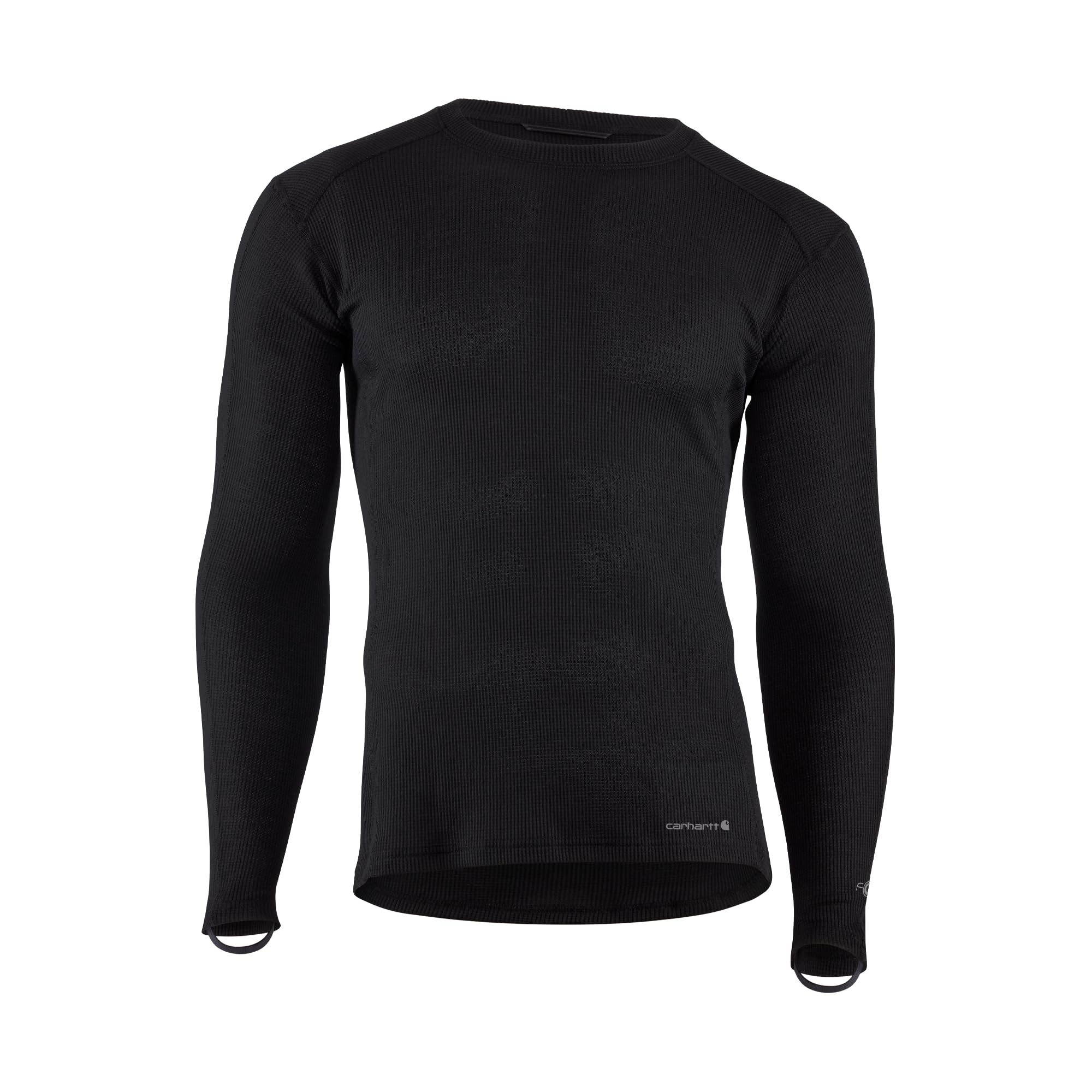
Carhartt Force Waffle Crewneck
Key Features
- Fit: Midweight
- Style: Crewneck top
- Fabric: Waffle knit
- Department: Men’s
- Price: Premium
The waffle knit is what makes this one feel different. It traps warm air without the slick, fleece-lined feel of the synthetic sets here, and the crewneck sits neatly under a flannel or shell. The texture is the point: it gives you a little more warmth than a plain base layer without turning into a bulky thermal.
We like it as a midweight top for cold days, especially when the hike starts below freezing and the pace stays moderate. The fit is snug through the body and long in the sleeve, which keeps it from riding up under a pack. It is a midweight layer, not a deep-winter one on its own.
The thumb holes are a nice detail for pulling sleeves under gloves, and the shirt washes well. For hikers who want a workwear-style top rather than a full set, this is a solid choice, as long as you pair it with a warmer midlayer when the temperature drops. The waffle texture also feels less clammy than a smooth synthetic when you stop moving.
Pros
- Waffle knit traps warmth
- Snug, long fit under layers
- Thumb holes keep sleeves down
Cons
- Thin for its price
This is the midweight waffle top we choose for cold starts, with the caveat that it needs a warmer midlayer for deep winter.
Best for Late-Season Hikes
romision Thermal Long Johns

Key Features
- Style: Hunting base layer
- Fabric: Fleece-lined
- Pieces: Top and bottom set
- Department: Men’s
- Price: Budget
The hunting-gear label made us hesitate, but the romision set is really a cold-weather active layer: warm, close-fitting, and cut to move. The fabric has a smooth face that slides under a shell, and the set includes both top and bottom. The tall collar is a useful detail when the wind picks up.
On a cold hike, the warmth is the point. It is heavier than merino and less breathable on a hard climb, so we see it as a late-season layer rather than a year-round one. The close fit works under hiking pants, and the top does not bunch when you put a pack on. The pants have enough stretch to step over logs and rocks.
A size up gives a close fit rather than a restrictive one, and that is the right move if you want room for a midlayer. For cold-weather hiking and hunting-style use, it is a good value set; for fast summer miles, it is too much layer. The smooth, sturdy fabric also washes without losing shape so far.
Pros
- Warm top and bottom set
- Smooth face layers easily
- Tall collar adds wind protection
- Good value for cold weather
Cons
- Shirt runs small; size up
A good cold-weather set for late-season hikes and hunting-style use, though fast summer climbers should look lighter.
Best for Daily Synthetic Rotation
Dalavch 5-Pack Compression Shirts

Key Features
- Fabric: Fleece-lined compression
- Pieces: 5 shirts
- Sleeve: Long sleeve
- Package weight: 3.53 oz
- Price: Midrange
Five shirts in one pack is the draw here. If you hike several times a week, the rotation means there is always a clean synthetic top in the drawer, and the fleece lining adds warmth without much bulk.
The compression fit is snug and stretchy, and it does not restrict range of motion under a pack. The fabric feels soft and smooth, and the shirts wash and hang dry quickly. That makes them easy to keep in rotation rather than saved for a single trip.
The compression is the point, but it is not the relaxed fit some hikers prefer. The five-pack is best for someone who sweats hard and wants a simple synthetic rotation, not for a multi-day trip where merino’s odor resistance matters more. The shirts layer well under a jersey or a light fleece.
For the price of one premium merino layer, you get a week of synthetic tops. We recommend it for hikers who want a clean, warm base layer for cold-weather workouts and short hikes. It is a practical rotation, not a do-everything mountain layer.
Pros
- Five shirts per pack
- Fleece-lined warmth without bulk
- Stretchy compression fit
- Washes and dries quickly
Cons
- Runs small; check the chart
- Tight neck on some builds
A practical synthetic rotation for hikers who sweat hard and want five warm tops, with a snug neck to check first.
How We Tested the Best Base Layers for Hiking
We started by pulling every hiking base layer we could find that was sold in a real size range — including extended sizes — and filtered out anything with a heavy cotton blend, since cotton is the one fiber that reliably fails on a climb. We also read through the sizing complaints on the ones that survived, because a base layer that’s cut too short or too tight stops working no matter how good the fabric is. That left us with 12 layers in merino, synthetic, and blends, from featherweight to midweight.
Each one went on at least four hikes over seven months: a steady climb where we could feel how the fabric handled sweat on the way up, a windy ridge where we pulled a shell over the top, and a cold morning start where we stood around in the trailhead parking lot before moving. Two of us slept in a layer on an overnight to see how it felt wrinkled, damp, and cold at 6 a.m. We also ordered half the samples a size up and half true to size, then noted where cuffs, hems, and shoulders actually landed on different body types.
Thickness got its own check — we held each layer up to a window side by side and then compared that to how warm it felt on the trail, which is how we found that the thinnest shirt in the group was nowhere near the coldest. After every third wash we turned each one inside out and looked for pilling, stretched seams, and thinning at the shoulder blades. By month four, one of the least expensive layers still looked new while a pricier merino had gone thin across the back.
How to Choose a Hiking Base Layer
The best hiking base layer keeps you dry while you climb and warm when you stop, so match the fabric and weight to your pace before you worry about the label.
Start With the Fabric, Not the Word Thermal
Merino wool is the most forgiving next-to-skin fabric for hiking: it moves moisture, resists odor, and stays comfortable across a wider temperature range. Synthetic layers dry fast and cost less, but fleece-lined versions trap more heat and can feel clammy on a hard climb. Cotton is the one to leave at home because it holds sweat and chills you when the pace drops.
Choose merino for multi-day trips and changeable weather, a plain synthetic for hot, sweaty hikes, and a fleece-lined set for cold-weather trips where warmth matters more than breathability. The label matters less than how the fabric behaves when you sweat.
Match the Weight to Your Effort
Lightweight layers suit fast hikes and mild weather; midweight waffle or fleece-lined layers are for cold starts and slow paces. The trap is buying the warmest layer for winter and then overheating on the first climb. Instead, size your base layer for the temperature you will be active in, and carry a shell or midlayer for the stops.
The Carhartt waffle crew is a good example of a midweight top that works under a shell, but it is not a deep-winter layer on its own. If you run hot, a lighter synthetic top with a warm midlayer gives you more control than one heavy base layer.
Fit Matters More Than the Size Tag
Next-to-skin does not mean painted on. You want close contact without restriction, especially through the shoulders and hips, so the fabric can move sweat away and not bunch under a pack. Many thermal sets in this guide run small or inconsistent, so measure your chest and waist and use the size chart rather than ordering your street size.
If you are between sizes, size for the layer you will wear underneath: a snug base layer is easier to add a midlayer over than a loose one is to fix. Check the pants separately on a full set, because the top and bottom often fit differently.
Decide Between a Top, a Set, and a Bottom
Buy the piece that fits your layering system. A top is the most useful first purchase for most hikers because it sits under a shell and regulates the core. A full set makes sense for cold-weather trips and hut-to-hut hikes, but the pants fit is often the weak point, so check the rise and leg length.
Bottoms are worth buying separately when your top is already dialed and you only need warmer legs. If you hike in mixed conditions, a top plus a separate bottom gives you more flexibility than a matched set, even if the set costs less.
Plan for Care and Durability
Merino is softer and more breathable, but it is less abrasion-resistant than synthetic, so wash cold, skip fabric softener, and air dry. Fleece-lined synthetics are tougher but can pill or hold odor. The practical move is to buy two layers if you hike often: one to wear, one to dry.
That matters more than a marginal difference in warmth. A base layer that is clean and dry will keep you more comfortable than a warmer one that is damp or ripe.
Frequently Asked Questions
What is the difference between a base layer and thermal underwear?
They are often the same garment, but the words point to different jobs. Thermal underwear usually means a warm layer for cold weather, while a hiking base layer should also manage sweat and regulate temperature. For hiking, check the fabric and fit first; a warm cotton thermal is still a poor choice if it holds moisture.
How many hiking base layers do I need for a weekend?
Two tops is the practical minimum for a sweaty weekend: one to wear and one dry for the next day. One bottom is usually enough for a cold-weather trip, though a second pair is useful if you hike in wet conditions or stay out for several days. Merino can stretch to a second wear if you air it out; synthetic is better washed after heavy sweat.
Can I wear a regular moisture-wicking T-shirt as a hiking base layer?
In mild, dry weather, a synthetic tee can do the job, especially if it fits close and dries fast. The difference shows up when you add a shell or a pack: a dedicated base layer has a smoother face, longer sleeves, and more warmth for the weight. For cold or multi-day hikes, choose a purpose-made layer.
Final Verdict
Merino.tech is the base layer we recommend first for hiking because it handles sweat and temperature swings better than the fleece-lined sets here. It costs more and needs gentler care, but for active days it is the layer that keeps you comfortable from the climb to the summit break. If you want a complete cold-weather set for less, TELALEO is the practical alternative; if you need a synthetic top for hard workouts, DEVOPS is the one we reach for.