This post contains affiliate links. We may earn a small commission when you buy through our links — at no extra cost to you.
Many compression sacks for sleeping bags arrive with high ratings, but a closer look at user feedback reveals a pattern: buckles snap and straps tear under the strain of compressing a bulky synthetic bag. The real test isn’t just how well it squeezes air out, but whether the hardware holds up trip after trip.
This guide focuses on durability and sizing accuracy. A sack that breaks mid-trip leaves you stuffing your sleeping bag loose into your pack, wasting space and time. The picks here balance compression efficiency with hardware that actually survives repeated use, so you can pack with confidence.
Whether you need a featherweight option for a down bag or a roomy sack for a double-wide, the right choice comes down to matching construction to your gear’s weight and how often you hit the trail.



Best for Backpacking & Military
M-Tac Military Compression Sack
Reinforced bar-tacked stitching and heavy-duty ladder-lock buckles allow this sack to handle repeated cinching without loosening or tearing – the kind of hardware most budget sacks skimp on. The dual compression straps (horizontal and vertical) let you squeeze air out evenly, turning a puffy synthetic bag into a dense cylinder that fits neatly inside a pack.
The 100% nylon fabric resists light moisture and abrasion during normal camp use, though it is not a dry bag for submersion. Compression is effective enough to save noticeable space in a 40L backpack, and the straps stay put once tightened – no need to re-adjust mid-trip.
This sack is ideal for backpackers, military sleep system users, and frequent campers who want a compression sack that will outlast multiple seasons. It is not for ultralight gram-counters (190g M size) or anyone who needs to stuff an oversized 0° bag into the Medium – those bulky bags may require sizing up to Large or XL.
Pros
- Straps and stitching hold up under tension – no loosening after repeated use.
- Compression reduces bulk in both directions, fitting more gear into your pack.
- Designed to work with military-style sleep systems and standard rectangular bags.
Cons
- Medium size may be too tight for oversized 0° sleeping bags; consider sizing up to Large if your bag is bulky.
For backpackers who prioritize longevity over ounces, M-Tac delivers the most dependable compression of any mid-tier sack on the market.
Best for Budget Car Camping
Frelaxy Compression Sack
Key Features
- Capacity: 11-52L multiple sizes
- Compression Straps: Dual straps with buckles
- Water Resistance: Water-resistant coating
- Material: Coated fabric
- Price: Budget
Frelaxy offers multiple sizes from 11L to 52L at a budget-friendly price, making it easy to find a match for everything from a summer bag to a bulky synthetic mummy. The compression effectively reduces volume, and the lightweight fabric adds little to your pack weight.
This sack suits budget-conscious campers who car-camp occasionally or need a simple solution for a kid’s sleeping bag. The plastic buckles and straps can deform under heavy tension when compressing dense bags, so it works best for lighter loads and less frequent use.
Pros
- Effectively reduces sleeping bag volume for easier packing and transport.
- Offers strong value compared to other compression sacks across its size range.
- Lightweight design adds minimal weight to your gear.
Cons
- When compressing a bulky synthetic bag, the plastic buckles and straps can deform or snap under heavy tension – less of a concern for lightweight down bags or occasional use.
- Some units may run small, potentially leaving oversized sleeping bags difficult to fit.
This compression sack works well for occasional car camping or kids’ gear, provided you accept the possibility of hardware wear under repeated tension.
Best for Ultralight Down Bags
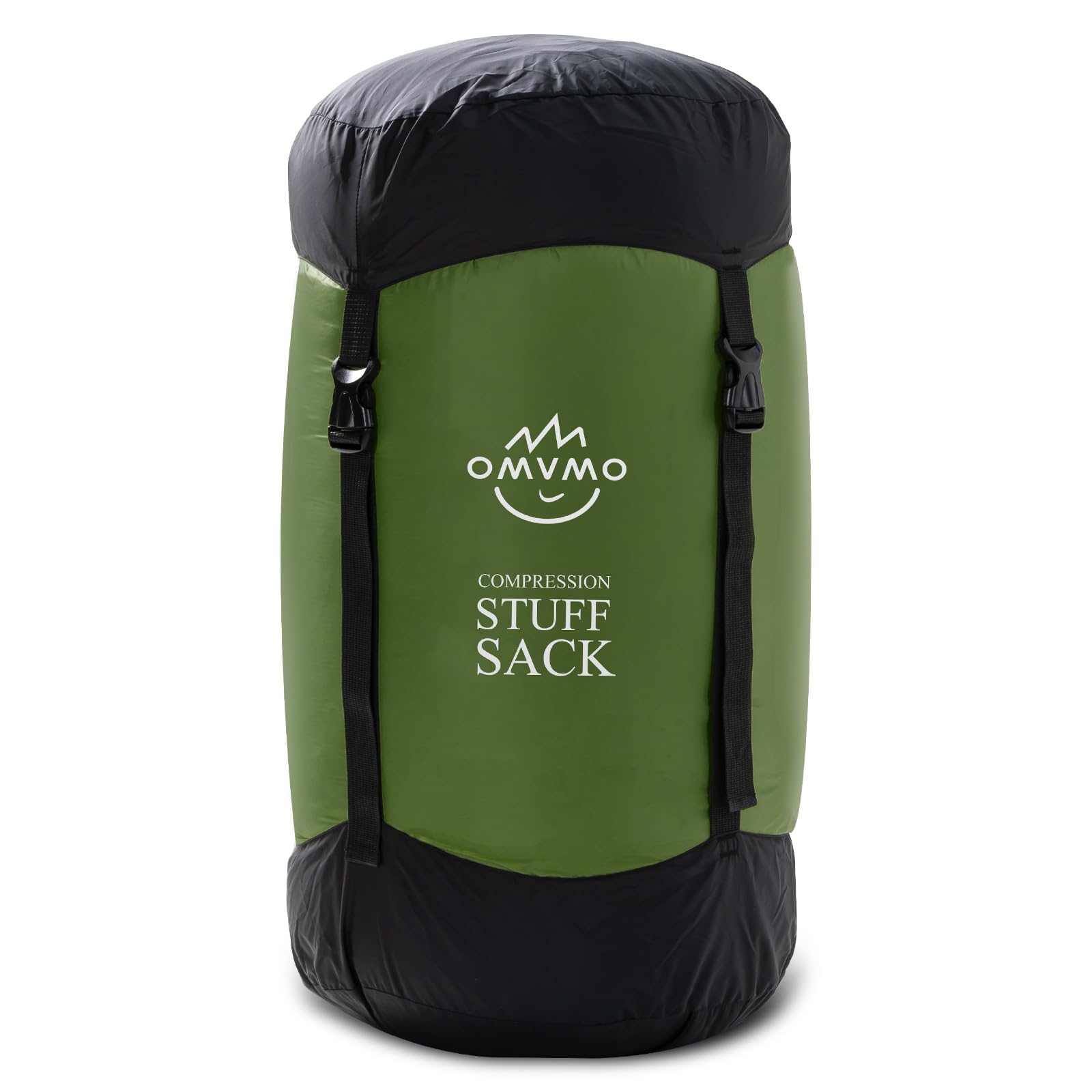
OMVMO Ultralight Compression Sack
Key Features
- Capacity: 12-53L multiple sizes
- Compression Straps: 4 straps, quick-release + ladderlock
- Water Resistance: Water-resistant 40D
- Material: 20D/40D nylon
- Price: Budget
At 90g for the 12L version, this sack shaves grams off your base weight without sacrificing compression ability. The 400T 20D nylon body and reinforced seams keep the weight down while handling down sleeping bags and moderate loads well.
This is the right choice for weight-conscious hikers packing a down bag that doesn’t need extreme cinching. The buckle hardware can struggle under heavy tension, so it’s best suited for moderately light loads rather than aggressive compression of bulky synthetic bags. Check the listed dimensions before ordering, as the stated capacity can run smaller than expected.
Pros
- Among the lightest compression sacks available, saving ounces for ultralight kits
- Effective compression performance across five size options from 12L to 53L
- Thoughtful construction details like double-stitched seams and a bottom carry handle
Cons
- Buckles can break under high compression loads, especially when over-tightened
- Sized smaller than expected in some cases; verify dimensions for your bag
If your priority is shaving every gram while carrying a down bag at moderate compression, this sack delivers. For heavier synthetic bags or frequent high-tension cinching, the top pick offers more durable hardware.
Best for Double Bag Family
Borogo 46L Compression Sack
Key Features
- Capacity: 46L (2-pack)
- Compression Straps: 4 adjustable straps
- Water Resistance: Water-resistant
- Material: Nylon
- Price: Mid-Range
The Borogo 46L compression sack stands apart from the top pick by offering two sacks in one pack, each with enough room to handle double sleeping bags and oversized camping quilts. The four adjustable straps do a good job reducing bulk, and the water-resistant nylon keeps dampness out during car camping trips.
This is the right choice for family campers who need multiple large stuff sacks and don’t mind occasional trimming of cord ends. The stitching can give way under heavy load, so it suits moderate compression tasks rather than repeated cranking on oversized bags. Buyers with extra-large 0-degree bags should measure first — the fit can be snug.
Pros
- Spacious 46L chambers easily hold double sleeping bags or bulky synthetic gear.
- Four compression straps effectively squeeze down volume without excessive force.
- Two-pack pricing delivers strong value for households needing more than one sack.
Cons
- Stitching at stress points can tear when the sack is overstuffed or cinched too tight.
- Fit can be tight for extra-large 0-degree sleeping bags; verify dimensions beforehand.
If you need multiple large compression sacks for family car camping and value capacity over long-term heavy-duty use, this two-pack fits the bill.
Best for Wet Conditions Backpack
OneTigris 25L Compression Sack
Key Features
- Capacity: 25L
- Compression Straps: Side straps, UTX buckles
- Water Resistance: 3000mm PU coating
- Material: 210T Dacron PU
- Price: Mid-Range
With a 3000mm PU coating and reinforced handle, the OneTigris compression sack delivers water resistance that holds up well in wet weather — a clear step above most options at this price. Its side compression straps and UTX buckles provide solid compression for a one-person sleep system, though hardware may show some strain under extreme force. Compared to lighter-duty budget sacks, the OneTigris gives you genuine peace of mind in rain.
This sack suits backpackers who want dependable water resistance without overspending and who use a single sleeping bag. The straps can shift during tightening, which some find inconvenient — a minor design tradeoff. For those needing maximum compression or frequent handling of heavy synthetic bags, a more rugged option may be a better fit.
Pros
- Above-average water resistance (3000mm coating) for wet conditions.
- Effective compression for one-person sleeping bags.
- Reinforced handle and sturdy buckles add durability.
Cons
- Stitching or buckles can give way under heavy tension.
- Straps can shift during tightening, making them fiddly to use.
A capable mid-tier sack for wet-weather backpacking, provided you don’t push its compression limits too hard.
Best for Occasional Car Camping
Hikenture Compression Sack
Key Features
- Capacity: 10-30L multiple sizes
- Compression Straps: 2 buckles + 2 straps
- Water Resistance: Water-resistant
- Material: 40D nylon
- Price: Budget
The Hikenture Compression Sack delivers good volume reduction for its weight and price, with multiple size options from 10L to 30L that work for sleeping bags, clothes, or other gear. The 40D nylon material sheds light moisture, and the two side-release buckles with adjustable straps provide straightforward compression. When loaded, the straps pull the sack into a dense bundle that fits well in a backpack. The fabric handles light rain, and the sack can shrink a sleeping bag to about half its original bulk.
This sack is best suited for occasional car camping, youth sleeping bags, or budget ultralight experiments where packing space matters more than long-term durability. Down bags compress more easily than synthetic ones, but both fit within the 30L capacity if packed carefully. The hardware has shown variable quality, with some units experiencing buckle detachment under normal compression. Sizing also runs small for certain sleeping bags that should fit the labeled capacity, so it’s worth checking dimensions before purchasing. It is not intended for multi-day backpacking trips where a broken buckle could leave gear unsecured.
Pros
- Compresses sleeping bags noticeably, reducing packed volume for easier transport
- Lightweight build and low price make it a cost-effective option for casual use
- Works well for packing clothes and other gear beyond just sleeping bags
Cons
- Sizing may be smaller than stated; some sleeping bags that should fit the 30L version do not
- Buckles and straps can detach or snap under normal compression, especially if over-tightened
A decent compression sack for light, occasional use — consider the top pick if you need consistent hardware for regular trips.
Best for Very Occasional Use
REDCAMP Compression Sack

Key Features
- Capacity: 10-40L multiple sizes
- Compression Straps: 4 straps, buckle & slide
- Water Resistance: Water-resistant
- Material: Nylon
- Price: Budget
The REDCAMP compression sack effectively reduces sleeping bag bulk and is lightweight, offering good value for the price. However, the hardware – particularly the buckles and straps – can break when compressing a sleeping bag under tension, and the seam stitching may tear under heavy loads. This makes it a better fit for light gear or as a backup sack rather than a primary backpacking tool. Consider it if you need a size not covered by more durable alternatives like the Frelaxy or Hikenture.
Pros
- Effectively compresses sleeping bags to a smaller volume
- Budget-friendly price for the available capacity options
Cons
- Buckles and straps can break under tension during compression
- Seam stitching may tear when packed with heavy gear
A viable option if you need a specific size not offered by more durable compression sacks and you pack only light synthetic bags for occasional camping trips.
Best for Light Spare Use
MOPHOEXII Compression Sack

Key Features
- Capacity: 8L, 24L, 45L
- Compression Straps: 4 adjustable straps
- Water Resistance: Water-resistant
- Material: 210T polyester
- Price: Budget
The MOPHOEXII Compression Sack shows good stitching and material quality for the price, delivering functional compression that works for moderate use. The 210T tear-resistant polyester and four adjustable straps handle a sleeping bag without issue on casual trips. However, this model has a shorter track record than the more widely-reviewed budget options, so long-term durability under repeated heavy compression is untested. Water resistance is adequate for light drizzle but may not hold up in sustained downpours. Best suited for occasional campers who need a specific size not covered by top picks and can accept some uncertainty in longevity.
Pros
- Good quality for the price – stitching and material appear solid
- Functional compression for moderate use
Cons
- Water resistance may not hold up in sustained heavy rain
A reasonable buy if you need a specific capacity (8L, 24L, 45L) at a budget price and accept that this sack is best reserved for light, occasional trips rather than long-term backcountry use.
Best for Kayaking Dry Bags
Sea to Summit Ultra-Sil 20L

Key Features
- Capacity: 20L
- Compression Straps: Roll-top, no straps
- Water Resistance: Waterproof, submersible
- Material: 30D Cordura nylon
- Price: Premium
This dry bag weighs just 59g and seals completely watertight, making it a solid choice for keeping gear dry during kayaking or as a pack liner. But it lacks compression straps and the thin 30D fabric can tear on sharp objects, so it is not designed to transport a sleeping bag on its own. Use it inside a backpack that already compresses your load.
Pros
- Extremely lightweight at 59g – ideal for gram-counting trips.
- Genuinely waterproof for full submersion – roll-top seal holds water out.
Cons
- Thin 30D fabric can tear on branches or sharp objects – treat as a liner, not a standalone sack.
- No compression straps – this bag does not reduce volume, only keeps contents dry.
Best for ultralight hikers or paddlers who need a waterproof liner inside a compression system, not for transporting a sleeping bag alone.
Best for Home Storage
OMVMO Mesh Storage Sack 68L

Key Features
- Capacity: 68L (2-pack)
- Compression Straps: Drawstring, no compression
- Water Resistance: Not waterproof
- Material: Mesh polyester + Oxford
- Price: Budget
This two-pack of large mesh sacks with a reinforced Oxford bottom is built for breathable storage of bulky gear like down sleeping bags. The 68-liter capacity easily accommodates oversized items, and the mesh paneling prevents loft loss during long-term storage. However, it is not a compression sack – it does not reduce volume for packing, and the mesh is not waterproof. Overloading can stress the material, so this is best suited for garage or closet organization rather than trail use.
Pros
- Breathable mesh preserves down loft during storage
- Large 68L capacity fits bulky sleeping bags and gear
Cons
- Not a compression sack – does not reduce volume for transport
- Mesh is not waterproof and can tear under heavy loads
A practical home storage solution for down bags when kept uncompressed, but skip it if you need a packable stuff sack for hiking or camping.
How to Choose
The biggest mistake buyers make is trusting high overall ratings without checking the durability of the compression straps and buckles.
Capacity (Liters)
Capacity determines which sleeping bags will fit. A 12-liter sack works for a summer mummy bag, but a 0-degree synthetic bag often needs 20–30 liters of space before compression. Underestimating capacity leads to overstuffing, which puts higher stress on seams and hardware.
A good rule: choose a sack with at least 5–10 liters more than your sleeping bag’s uncompressed volume. That extra room allows the straps to compress effectively without straining the material.
Compression Straps
Straps and buckles are the first points of failure. Budget models often use thin plastic buckles that crack under tension, especially when compressing a dense synthetic bag. Look for side-release or ladderlock buckles made from reinforced nylon or metal, and straps that are sewn rather than glued.
A dual-strap design (horizontal and vertical) distributes force more evenly than a single strap, reducing pressure points that cause tearing. Frequent backpackers should prioritize straps that don’t slip during tightening.
Water Resistance
Water resistance in compression sacks is usually a DWR coating or PU layer, not a waterproof membrane. This sheds light rain and ground moisture but won’t survive submersion. For trips with heavy rain, a dry bag liner inside the compression sack is more reliable than relying on the sack’s coating.
The rating (e.g., 3000mm) indicates how much water pressure the fabric can handle before leaking. Above 2000mm is adequate for backpacking rain; below that, the sack will wet out quickly in sustained downpours.
Material & Weight
Material weight directly affects pack weight and tear resistance. 20-denier nylon is featherlight but prone to punctures from sharp gear. 40-denier or thicker nylon offers a better strength-to-weight ratio for most backpacking trips. Cordura or ripstop weave adds durability without much extra weight.
Ultralight sacks save grams but demand careful packing. If you frequently bushwhack or carry a heavy sleeping bag, a slightly heavier 70–100 denier sack will last longer and reduce the chance of a trailside tear.
Fit for Sleeping Bags
Manufacturer size charts often assume a perfectly cylindrical bag, but real sleeping bags vary in shape and loft. A medium compression sack may not fit a 0-degree bag with a mummy hood or extra foot box room. Always measure your sleeping bag’s uncompressed diameter and length before choosing a sack size.
When in doubt, size up. A slightly larger sack compresses just as tightly with proper strap tension, and it avoids the risk of damaging the bag’s fill from over-compression.
FAQ
Why do compression sack straps break so easily on budget models?
Budget compression sacks often use thin, low-grade plastic for buckles and poorly stitched straps. When you apply the tension needed to compress a bulky synthetic bag, the plastic buckles crack and the strap threads shear. Higher-priced models use reinforced nylon or metal hardware and double-stitched webbing, which handle the strain reliably.
Can I use a dry bag instead of a compression sack for my sleeping bag?
A dry bag keeps water out but does not reduce the sleeping bag’s volume because it lacks compression straps. If pack space is tight, you’ll end up with a loose, bulky load. Use a dry bag as a waterproof liner inside a compression sack, or choose a dedicated compression dry bag that combines both features (like the Sea to Summit eVac, though it’s too small for most sleeping bags).
How much should I compress a down sleeping bag without damaging it?
Down can be compressed to about 60-70% of its uncompressed volume without permanent loft loss, but storing it compressed for weeks or months crushes the clusters. For a trip, compress as much as needed to fit your pack. For at-home storage, use a breathable mesh sack to allow the down to fluff back to full loft. Avoid compressing synthetic bags below their natural ‘unstuffed’ volume, as the fibers can permanently pack out.
What size compression sack do I need for a 0-degree sleeping bag?
A 0-degree bag, especially synthetic, typically requires 25–30 liters of uncompressed volume. Look for a compression sack in the 20–30 liter range (e.g., a ‘large’ size). For down 0-degree bags, 15–20 liters often works. Always check the bag’s packed size spec and add 5-10 liters to be safe, because overstuffing stresses the hardware.