This post contains affiliate links. We may earn a small commission when you buy through our links — at no extra cost to you.
Hiking sneakers are a compromise: lightweight comfort vs. durability, water resistance vs. breathability, roomy toe boxes vs. secure heel hold. Many shoes look good on the shelf but reveal their trade-offs after a few miles on rocky terrain.
The real difference lies in outsole material, cushioning density, and toe box shape – not marketing labels like ‘waterproof’ or ‘trail-ready.’ A shoe that feels great in the store may cause hot spots on a steep descent.
The right pair depends on whether you value plush cushioning for long days, aggressive tread for loose surfaces, or a wide toe box for natural foot movement. Get those three right, and the rest follows.


Best for Day Hikers
Merrell Moab 3
Key Features
- Outsole Traction: Vibram TC5+
- Toe Box Width: Standard (snug for 4E)
- Waterproofing: None (mesh)
- Weight: 3.06 lbs
- Price: $$
The Moab 3 delivers immediate comfort from the first wear, with no break-in period required. The padded collar and plush insole provide all-day support, while the Vibram TC5+ outsole offers dependable grip on dry terrain. Strong arch and heel support add stability on uneven ground.
On moderate trails, the Moab 3 handles well, with the mesh upper keeping feet cool in warm weather. The trade-off is that the mesh offers no water resistance – it saturates quickly in rain or stream crossings. Some units have shown sole separation at the toe after extended use, so its worth checking for wear after heavy mileage.
This shoe is best suited for day hikers and weekend walkers who prioritize comfort and longevity over waterproofing. It performs well on dry, well-maintained trails and doubles as a casual sneaker for town. Hikers in consistently wet climates or those needing water protection should choose a waterproof variant instead.
Pros
- Wearable straight out of the box – no break-in needed.
- Long-lasting build that withstands regular hiking and daily wear.
- Supportive arch and heel help reduce fatigue on longer hikes.
- Good value for a shoe that combines comfort with a respected outsole.
Cons
- Some units may develop sole separation at the toe after moderate use.
- Mesh upper soaks through in rain and stream crossings – not suitable for wet conditions.
For dry-weather hikers who want immediate comfort and a durable shoe without a premium price, the Moab 3 is a solid choice.
Best for Budget Trail Runners
Saucony Excursion Tr14
Key Features
- Outsole Traction: Rubber with aggressive lugs
- Toe Box Width: Wide options available
- Waterproofing: None (mesh)
- Price: $
The Saucony Excursion Tr14 offers aggressive tread and wide-fit options at a budget-friendly price, setting it apart from more expensive trail shoes like the Merrell Moab 3. Its rubber outsole with deep lugs provides solid grip on loose dirt and rocky sections, while the mesh upper keeps feet cool on warm days. The shoe is comfortable straight out of the box, especially welcome for those with wide feet. For long-distance hiking, the cushioning is less plush than the top pick, making this a better fit for shorter trail runs and day hikes.
This shoe suits budget-conscious hikers and trail runners who need a capable shoe at a budget-friendly price and have wide feet. It is not waterproof — the mesh upper lets water in during rain or stream crossings. Additionally, the heel lining may wear through earlier than on pricier models, a tradeoff acceptable given the low price. This shoe is best for those who prioritize fit and grip over waterproofing and maximum cushioning.
Pros
- Low price with performance that handles most trail conditions.
- Comfortable fit for wide feet, no break-in required.
- Durable construction that lasts through repeated use.
Cons
- Sizing can vary between pairs, so ordering multiple sizes may be needed for the right fit.
- Heel lining may wear through with frequent use, causing irritation on longer hikes.
The Saucony Excursion Tr14 is a smart budget choice for trail runners and hikers who prioritize fit and grip over long-distance cushioning and waterproofing.
Best for Trail Runners
Salomon XA PRO 3D
Key Features
- Outsole Traction: Contagrip rubber
- Toe Box Width: Narrow
- Waterproofing: None (mesh)
- Weight: ~1.5 lbs
- Price: $$$
The XA PRO 3D’s stability and Quicklace system give it an edge on technical terrain. The 3D chassis keeps your foot planted during side-hilling, and the single-pull closure eliminates loose laces mid-run. Few shoes in this category offer that level of security without added weight.
This shoe is built for narrow-footed trail runners and fast-packers who prioritize precise fit over toe splay. The synthetic mesh upper and Contagrip outsole handle rocky, uneven ground well. However, the toe box is tight for anyone with medium to wide feet, and the included insole is thin — many users swap it for a cushioned insert to maintain comfort on longer outings.
Pros
- Stable platform and lateral support for off-camber trails.
- Durable construction that withstands abrasive surfaces.
- Quicklace system provides a secure, hassle-free fit.
Cons
- Thin insole may require replacement for all-day cushioning.
- Narrow fit does not accommodate wide feet or a roomy toe box.
Best for narrow-footed runners who need a stable, technical shoe and are willing to swap the insole for longer days.
Best for Women Day Hikers
Merrell Moab 3 W
Key Features
- Outsole Traction: Vibram TC5+
- Toe Box Width: Wide toe box
- Waterproofing: None (mesh)
- Weight: 2.6 lbs
- Price: $$
The women’s Moab 3 uses a last shaped for female feet, providing a roomier toe box that accommodates thicker socks without pinching and strong arch support that reduces fatigue on rocky trails. Unlike the men’s version, the fit is tuned for a narrower heel and wider forefoot, making it a better match for many women.
This shoe suits women who want a hiking sneaker with minimal break-in and solid support on uneven terrain, especially those with medium to wide feet. The mesh upper breathes well for warm-weather hikes but is not waterproof — it soaks through in rain, so plan for dry conditions. Sizing runs small; going half a size up often resolves the fit issue.
Pros
- Ample toe room allows thicker socks without compression.
- Strong arch support helps stability on uneven ground.
- Sturdy construction holds up to frequent use.
Cons
- Mesh upper is not waterproof; moisture seeps through in rain.
- Sizing runs small; some wearers need to go half a size up.
The women’s Moab 3 delivers the comfort and support that made the men’s version a benchmark, but with a fit tailored for female feet. Just account for the half-size difference and keep it on dry trails.
Best for Day Hikers
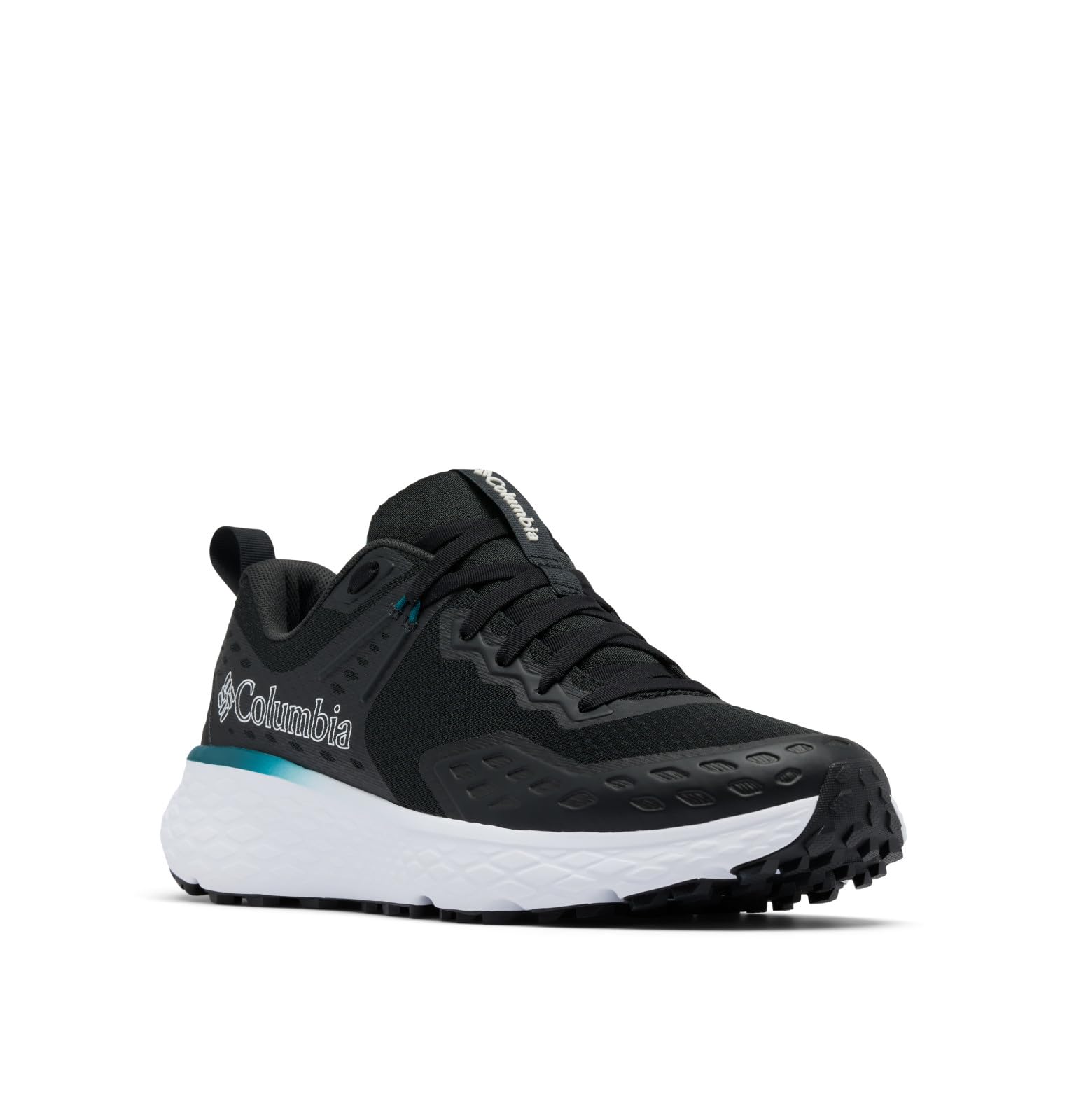
Columbia Konos TRS
Key Features
- Outsole Traction: Omni-Grip rubber
- Toe Box Width: Standard
- Waterproofing: Water-resistant
- Price: $$
The Konos TRS stands out for its plush cushioning and water-resistant upper, making it a comfortable hybrid for light trails and pavement. The midsole provides support without bulk, and the fit runs true to size with enough width for average feet.
On well-graded paths and sidewalks, the shoe feels light and responsive, handling light rain without soaking through. For longer wet hikes, the water resistance is not sufficient for deep puddles or heavy rain — but that’s not its intended use.
This shoe suits day hikers and urban walkers who spend most of their time on maintained trails or concrete. The outsole lacks the aggressive lugs needed for steep, muddy terrain, and sole separation has been noted in a small number of units after extended use. For moderate, dry-day use, the Konos TRS delivers a comfortable ride.
Pros
- Supportive cushioning that doesn’t feel bulky.
- Fit runs true to size with adequate width.
- Water-resistant upper handles light rain well.
Cons
The Konos TRS is a comfortable, water-resistant hybrid best suited for light trails and city walking. It’s not the choice for off-road adventures, but it excels where comfort and style meet moderate use.
Best for Trail Runners
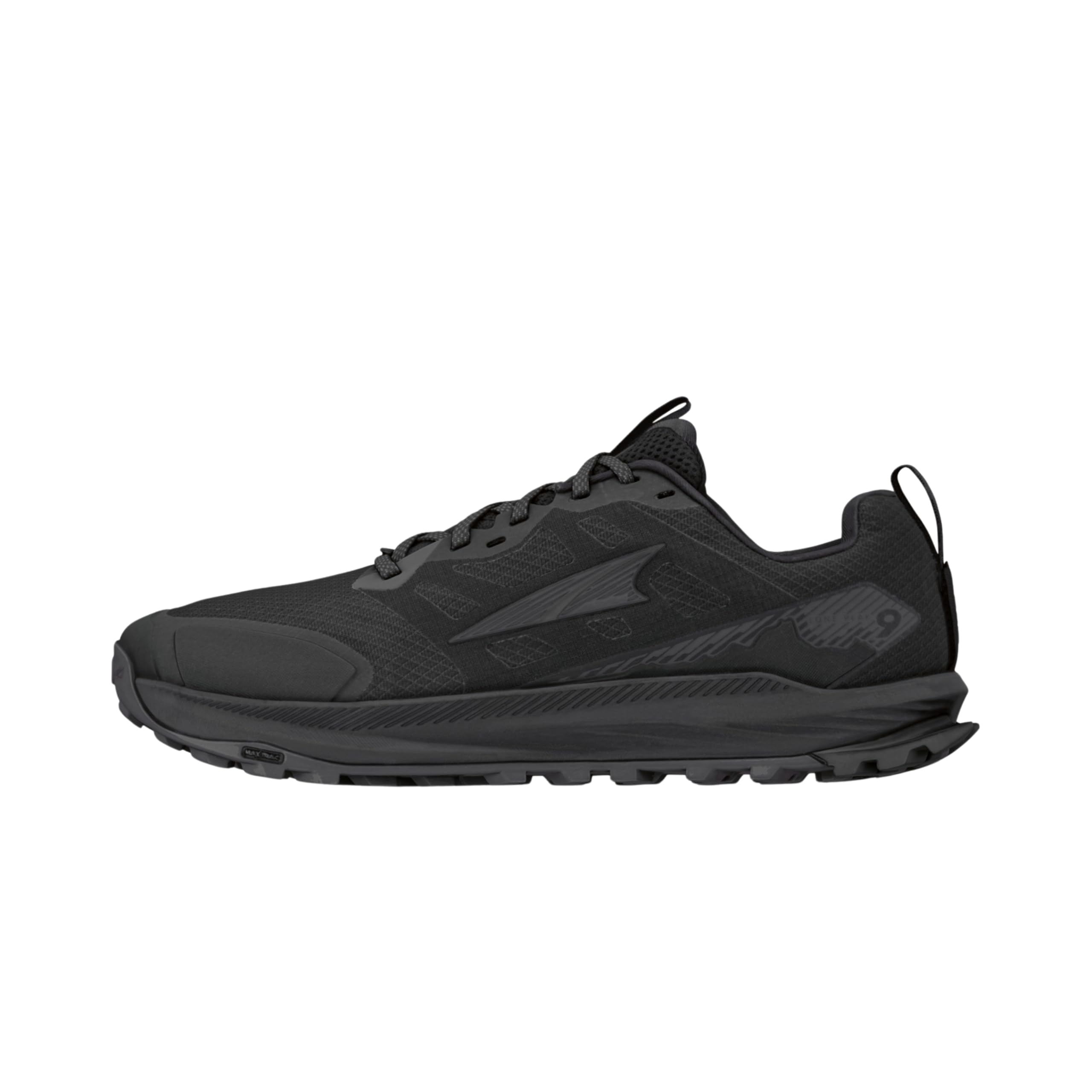
ALTRA Lone Peak 9
Key Features
- Outsole Traction: MaxTrac rubber
- Toe Box Width: Foot-shaped, wide
- Waterproofing: None (mesh)
- Weight: 1.54 lbs
- Price: $$$
The ALTRA Lone Peak 9 delivers a spacious toe box that allows toes to splay naturally, paired with a zero-drop platform for a low-to-ground feel. Its lightweight build (1.54 lbs per pair) and MaxTrac outsole provide strong traction on wet and dry terrain, making it a nimble option for trail runs and fast hikes. Where the Moab 3 leans on all-around comfort, this shoe focuses on minimalist ground connection.
This shoe suits trail runners who prioritize a wide toe box and near‑barefoot sensation, as well as hikers with wide feet who find conventional shoes cramped. The minimal cushioning feels firm on rocky stretches, and the outsole can wear faster on abrasive surfaces – a tradeoff acceptable for those who value toe freedom and low weight over plushness or long outsole life.
Pros
- Foot‑shaped toe box lets toes spread naturally, reducing pinch on descents.
- Very lightweight for a trail shoe – easy to move in on long runs or fast hikes.
- Traction grips well on both wet rock and dry dirt.
Cons
- Outsole wear can accelerate on sharp gravel or rocky trails compared to competitors like the Moab 3.
- Minimal cushioning feels firm underfoot; not ideal for all‑day hiking on hard, rocky terrain.
For runners and hikers who want a zero-drop, wide toe box and a direct ground feel, the Lone Peak 9 delivers – just factor in faster outsole wear on abrasive surfaces.
Best for Casual Trails
adidas Terrex Anylander
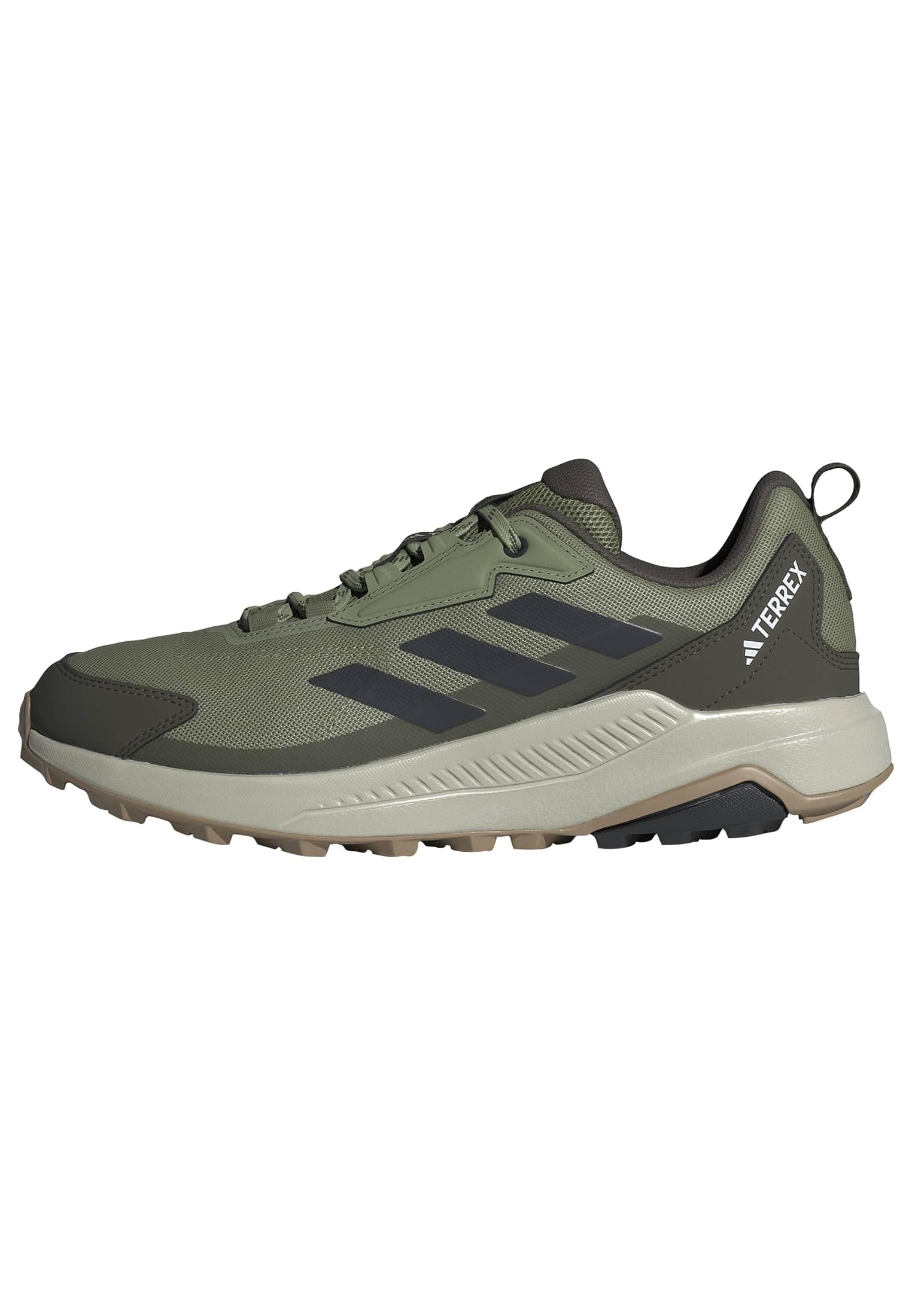
Key Features
- Outsole Traction: Rubber multi-directional lugs
- Toe Box Width: Narrow
- Weight: 2.43 lbs
- Price: $
The adidas Terrex Anylander hits a low price point for a recognizable brand, with decent comfort for casual walking and light trail use. Its narrow fit suits leaner feet but limits wider footers. Durability concerns — sole wear and potential upper separation after moderate use — mean this is best for occasional, dry-condition trips rather than regular hiking. It delivers basic function without the longevity of more expensive models.
Pros
- Very affordable price for a recognizable brand.
- Comfortable for walking and light hiking.
Cons
- Sole wear and upper separation may occur after moderate use on technical terrain.
This is a budget-friendly option for narrow-footed walkers who need an occasional shoe for dry, easy trails. For regular hiking or wider feet, consider other options.
Best for Light Rain Use
adidas Terrex Mid Rain.Rdy

Key Features
- Outsole Traction: Rubber
- Toe Box Width: Standard
- Waterproofing: Rain.Rdy membrane
- Weight: 2.43 lbs
- Price: $$
The Rain.Rdy membrane sheds light showers and puddles effectively, and the mid-top adds welcome ankle stability on uneven trails without the heft of a boot. Comfort holds up for day hikes. The tradeoff: in heavy, prolonged rain the membrane saturates, and the outsole shows wear sooner than similarly priced options like the Merrell Moab. This works best for occasional light rain rather than wet-weather commitment.
Pros
- Rain.Rdy membrane handles light rain and puddles effectively.
- All-day comfort with ankle support for uneven terrain.
Cons
- Rain.Rdy membrane is not fully waterproof – in heavy, sustained rain it may wet through.
- Outsole tread can show accelerated wear on rocky trails, and the heel lining may fray with regular use.
A capable mid-top for day hikes in light rain, but those needing all-weather waterproofing or heavy-duty durability should look to the Gore-Tex option or Merrell Moab.
Best for Casual Dry Hikes
Merrell Accentor 3
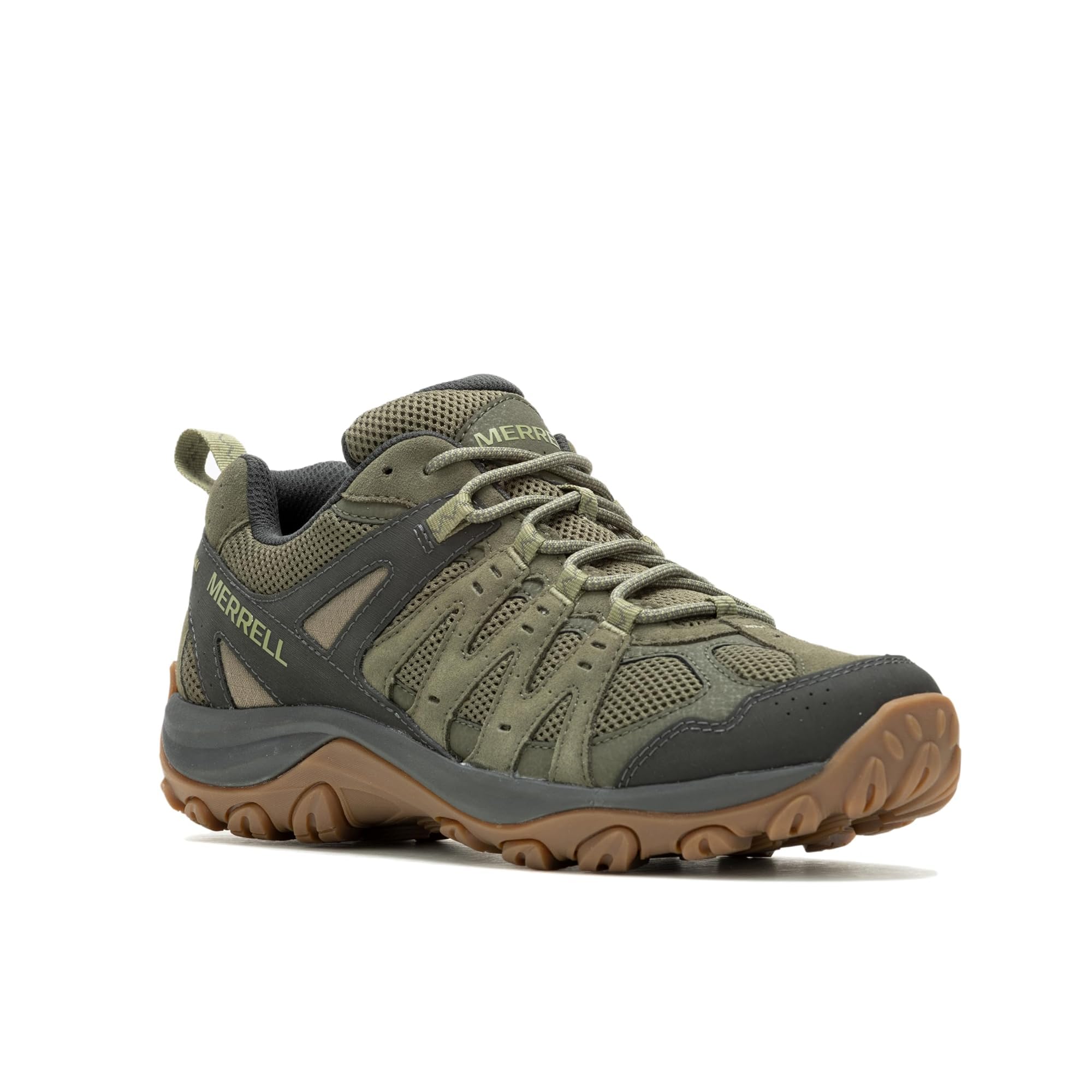
Key Features
- Outsole Traction: Non-Vibram rubber
- Toe Box Width: Standard
- Price: $$
The Merrell Accentor 3 is a budget-friendly alternative for casual hikers who stick to dry, non-technical terrain. Its mesh-and-synthetic upper provides good toe room and a comfortable fit right out of the box, making it suitable for short walks and everyday wear. However, the non-Vibram rubber outsole wears faster on abrasive surfaces and offers less grip than the Moab line, and the shoe lacks meaningful water resistance despite some marketing cues. This is a clear step down from the Moab 3 in both durability and wet-weather capability, but for someone who only hikes in good weather on maintained paths, the cost savings are reasonable.
Pros
- Comfortable fit with ample toe room straight from the box.
- Suitable for both hiking and daily casual wear.
- Budget-friendly price for a Merrell hiking shoe.
Cons
- Water resistance is minimal; the shoe wets through in rain or damp grass.
- Outsole grip may wear faster than Vibram counterparts on rocky or abrasive trails.
A decent pick for dry-climate casual hikers who want a Merrell under $100 and can accept a less durable sole and no waterproofing.
Best for Fast Day Hikes
Merrell Speed Strike 2
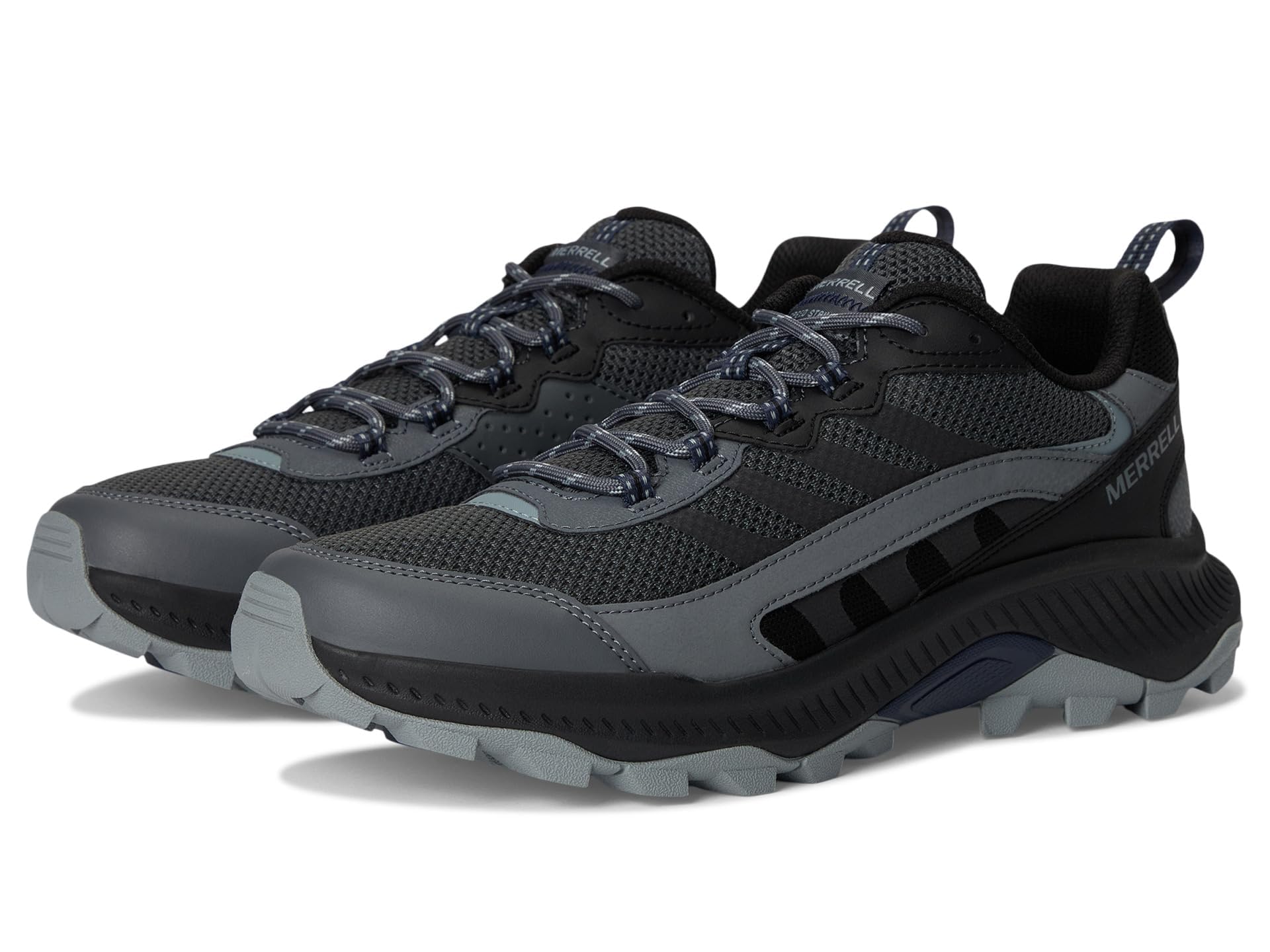
Key Features
- Outsole Traction: Rubber
- Toe Box Width: Standard
- Weight: 1.5 lbs
- Price: $
The Speed Strike 2 hits a featherweight 1.5 lbs per pair — ideal for moving quick on dry, well-groomed trails. The mesh-and-synthetic upper keeps feet comfortable for hours, and the price undercuts most Merrell models. The catch: that lightweight construction comes with a short shelf life. Owners have noted the upper material can crack or rip after a few months, and the insoles are thin enough that many swap them out immediately. This makes the Speed Strike 2 a reasonable pick only for hikers who prioritize speed over longevity and plan to treat the shoe as a one-season option.
Pros
- Featherlight build at 1.5 lbs per pair suits fast hikes and trail runs.
- Budget-friendly price for a Merrell sneaker.
Cons
- Upper material may crack or rip after a few months of use.
- Stock insoles are thin; many buyers replace them for better support.
Works well for weight-conscious hikers who accept that this shoe is built for a single season of fast day hikes on dry terrain.
Best for Plush Comfort
Brooks Caldera 8
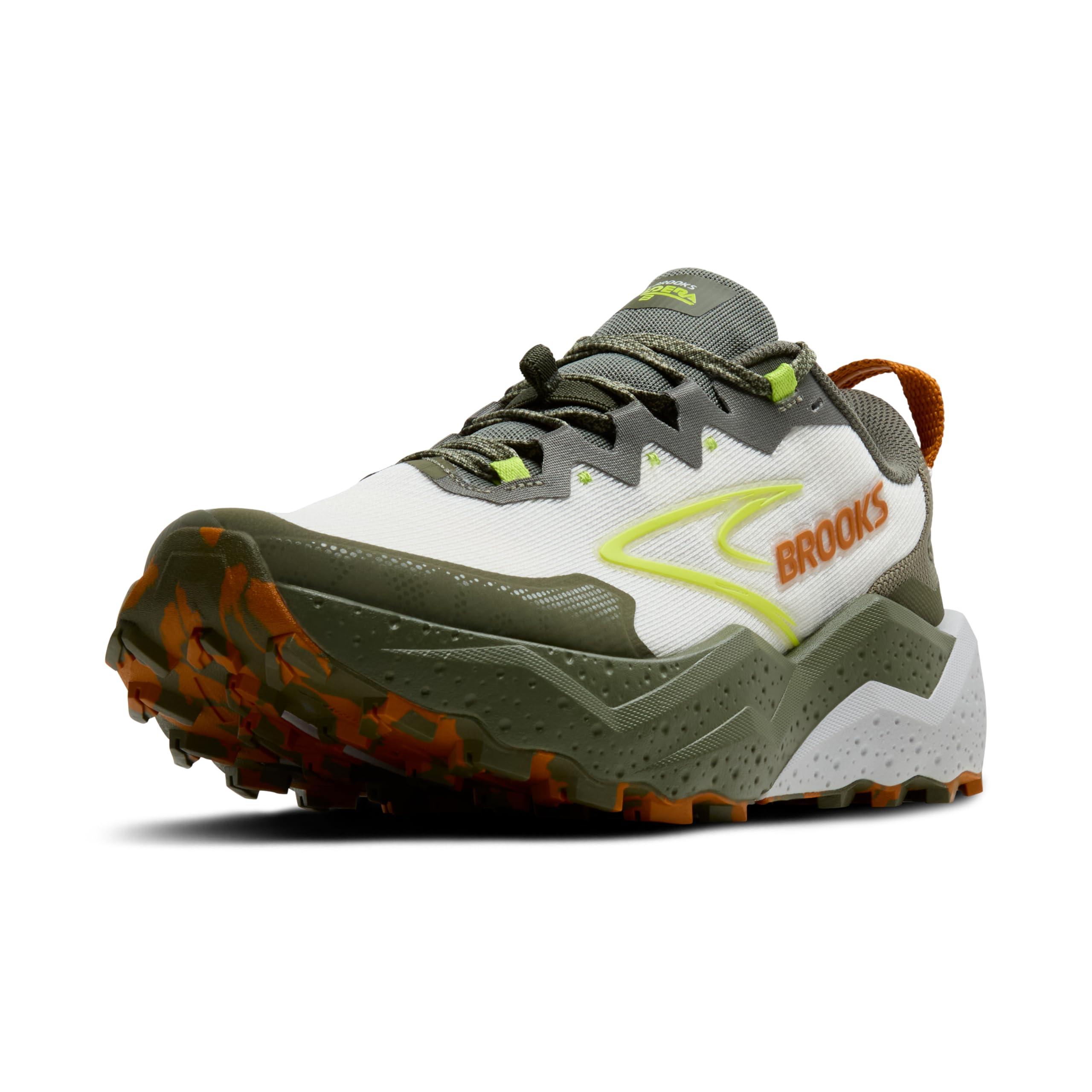
Key Features
- Outsole Traction: TrailTack rubber
- Toe Box Width: Wide toe box
- Weight: ~10.5 oz
- Price: $$
The Brooks Caldera 8 delivers a soft, bouncy ride that feels great on long trail runs and hikes, with lightweight responsiveness for faster movement. However, sizing can run small, often requiring a half size up or a wide fit, and long-term durability has been noted as below average with occasional sole wear or upper tearing. This makes it a strong option for those prioritizing immediate comfort and cushioning over longevity, especially if they are willing to adjust sizing and not expecting years of heavy use.
Pros
- Plush cushioning for comfortable long days on trail.
- Lightweight and responsive feel for faster movement.
Cons
- Sizing may run small, requiring a half size up or wide option.
- Durability may be below average, with possible sole wear or upper tearing.
Ideal for runners and hikers who want a plush trail shoe and can accommodate sizing quirks, but not for those needing rugged longevity.
Best for Narrow Feet
NB Fresh Foam 410 V9
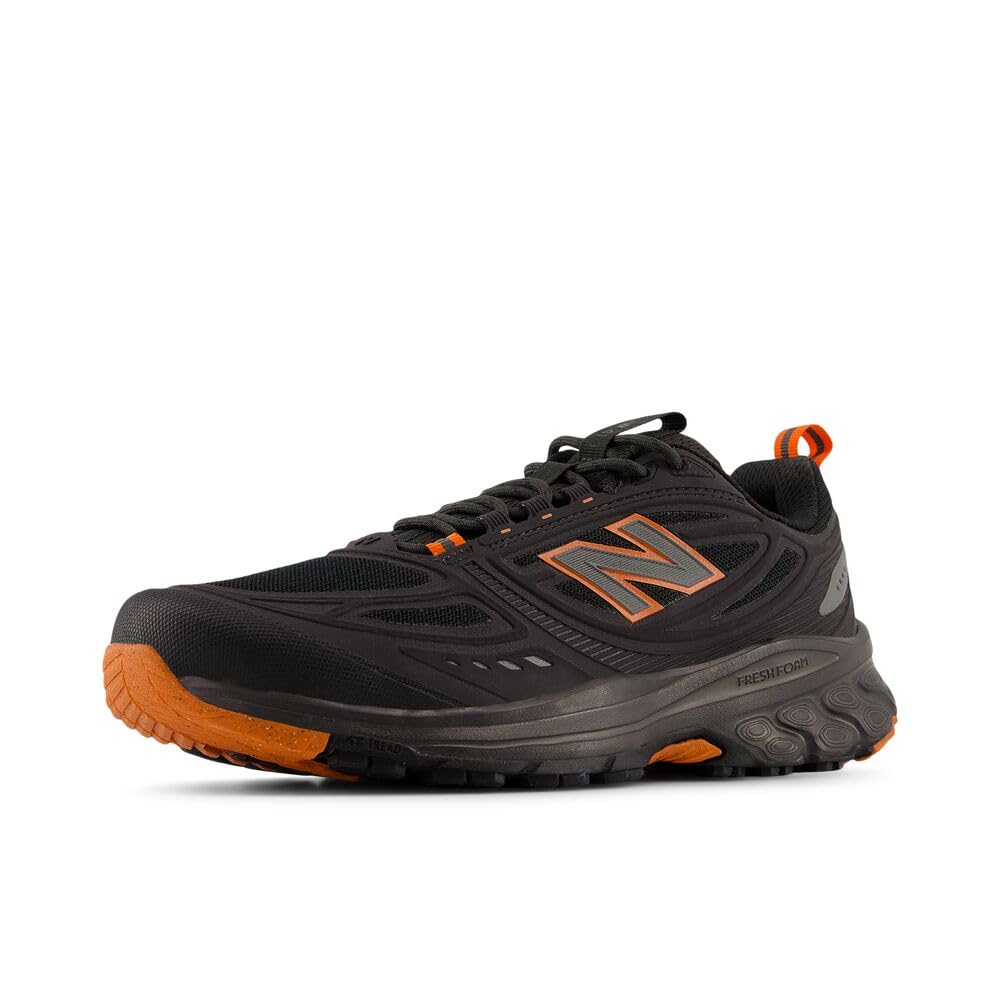
Key Features
- Outsole Traction: AT Tread rubber
- Toe Box Width: Narrow
- Price: $
The NB Fresh Foam 410 V9 delivers plush, soft cushioning that feels comfortable on pavement and light dirt paths, all at a price that undercuts most trail shoes. However, the fit runs narrow, especially through the toe box, which makes this a poor match for anyone with wider feet or those who need room for toe splay. Long-term durability under frequent, heavy use is also unconfirmed; the shoe is best reserved for casual walks and occasional excursions rather than as a daily workhorse.
Pros
- Budget-friendly price for a cushioned trail shoe.
- Soft Fresh Foam midsole provides plush comfort on light trails.
Cons
- Narrow toe box can feel restrictive for wider feet or during descents.
- Longevity under frequent, rocky-terrain use may be limited.
Best for narrow-footed walkers on maintained paths who value soft cushioning over long-term durability.
Best for Narrow Wet Hikes
adidas Terrex AX5 GTX
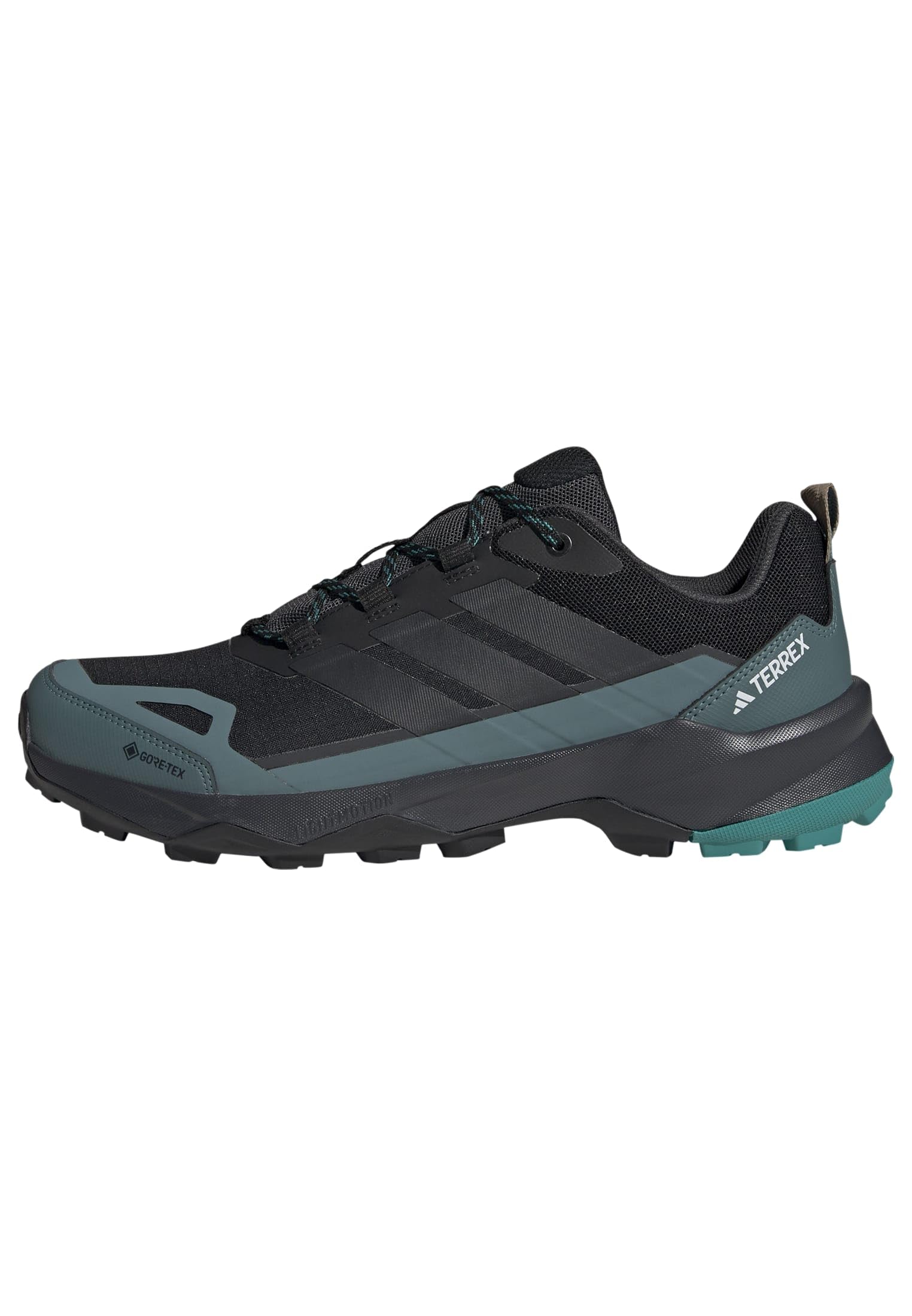
Key Features
- Outsole Traction: Continental rubber
- Toe Box Width: Very narrow
- Waterproofing: Gore-Tex
- Price: $
The adidas Terrex AX5 GTX delivers reliable Gore-Tex waterproofing and solid Continental outsole grip at a budget-friendly price, making it a sensible choice for narrow-footed hikers who prioritize staying dry on occasional wet trails. However, sizing runs very small and narrow — even sizing up may not accommodate average or wide feet. Durability is also a concern, with heel pad wear and sole delamination possible over time, so this shoe suits lighter, less frequent use rather than regular or rugged hiking.
Pros
- Reliable Gore-Tex waterproofing keeps feet dry in rain.
- Sturdy Continental outsole provides good grip on varied terrain.
Cons
- Runs very narrow and small — even sizing up may not fit average feet.
- Heel pad wear and sole delamination can occur with regular use.
Best for hikers with narrow feet who need a low-cost waterproof shoe for light, occasional use and are willing to accept shorter lifespan.
Best for Occasional Hikes
Columbia Fairbanks Low

Key Features
- Outsole Traction: Omni-Grip rubber
- Toe Box Width: Roomy toe box
- Weight: ~2.0-2.5 lbs
- Price: $
The Columbia Fairbanks Low’s Omni-Grip outsole provides solid traction on wet, dry, and gravel surfaces, and the lightweight build keeps it comfortable for all-day wear. The roomy toe box accommodates wider feet well. The tradeoff is durability: sole separation or upper tearing can appear after a few months, so this budget-priced shoe is best for occasional flat-trail hikes rather than frequent use.
Pros
- Reliable traction on wet, dry, and gravel surfaces.
- Lightweight and comfortable for all-day wear.
Cons
- Sole separation or upper tearing may occur after a few months of use.
- Strong rubber odor can linger for weeks out of the box.
This shoe works for the occasional hiker on flat trails who values grip and comfort over long-term durability.
Best for Style Budget
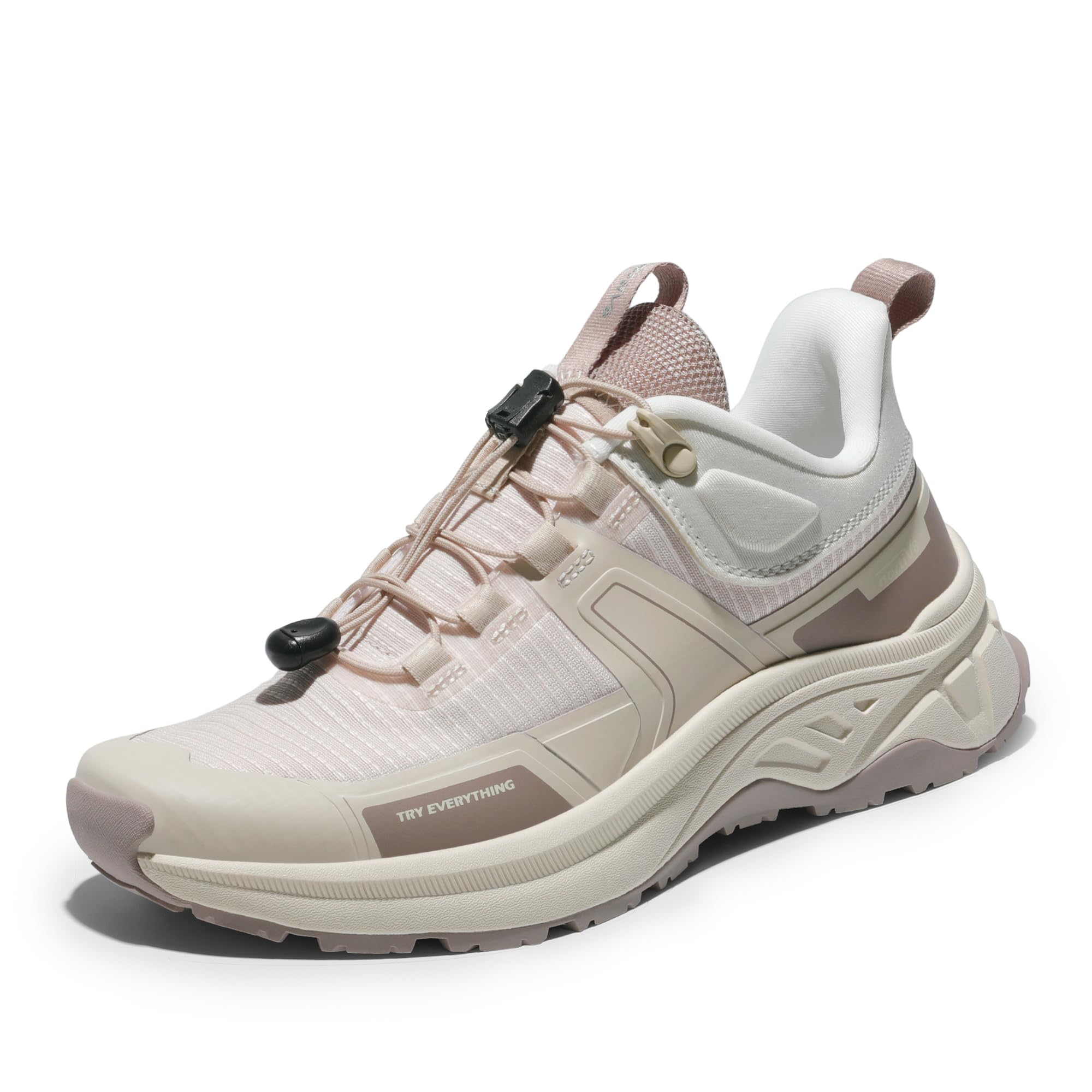
NORTIV 8 Gladiator
Key Features
- Outsole Traction: Rubber
- Toe Box Width: Standard
- Waterproofing: None (claimed not)
- Price: $
This NORTIV 8 Gladiator delivers a stylish low-cut sneaker look and a budget-friendly price that’s hard to beat. The outsole offers decent grip on hard-packed trails. However, the construction can lead to sole separation within weeks, and sizing is inconsistent — consider ordering a half size down. The water resistance is minimal despite claims, so keep it for fair-weather walks. These limitations make it a practical choice only if you need a cheap shoe for occasional use, not a regular hiking companion.
Pros
- Budget-friendly price point makes it accessible for one-time use.
- Sleek sneaker design that looks stylish on and off the trail.
Cons
- Sole separation or upper failure can occur within weeks of use.
- Sizing runs large and inconsistent, making fit a gamble.
Only consider this if your hiking is rare and you value style over longevity — for any regular trail use, invest in a more durable option.
How to Choose
The most important decision is matching the outsole compound and toe box shape to the terrain and your foot width – everything else follows.
Outsole Traction and Material
The outsole determines grip and durability. Vibram and Contagrip rubbers are proven for longevity on rock and gravel, while proprietary rubbers like Omni-Grip or MaxTrac are adequate for moderate trails but wear faster on abrasive surfaces. A lug pattern with deeper, multi-directional channels handles loose dirt and mud better than shallow flat treads.
If you hike primarily on packed dirt or groomed trails, a standard rubber outsole suffices. For technical terrain with loose rock or wet slabs, invest in a branded compound like Vibram TC5+ or Contagrip – the extra grip reduces foot fatigue from slipping.
Cushioning Density and Comfort
Cushioning is a trade-off: plush midsoles (like Brooks Caldera) absorb shock for long days but reduce ground feel and stability on uneven ground. Firmer, responsive cushioning (like ALTRA Lone Peak) offers better trail feedback and energy return but can feel harsh on rocky descents over several miles.
Consider your typical distance and surface. Day hikers on smooth trails benefit from plush cushioning; runners and fast-packers on technical terrain should prioritize responsiveness to maintain footing.
Toe Box Width and Forefoot Room
A roomy toe box allows your toes to splay naturally under load, preventing blisters and black toenails on downhills. Shoes with a narrow toe box (like Salomon XA PRO or adidas Anylander) may feel secure at first but cause hot spots after a few miles for anyone with medium or wide feet.
For wide feet or bunions, a foot-shaped toe box (ALTRA) or models with wide options (Saucony Excursion Tr14) are essential. If you wear thick socks, factor in half a size up even for standard-width shoes.
Waterproofing and Breathability
Waterproof membranes like Gore-Tex keep feet dry in rain and wet grass but reduce breathability, leading to sweaty feet on warm days. Non-waterproof mesh shoes dry faster and breathe better for dry climates or stream crossings where you expect to get wet.
Many brands market ‘water-resistant’ or ‘Rain.Rdy’ membranes that handle light drizzle but saturate in sustained rain. Look for a branded membrane (Gore-Tex, OutDry) if you need reliable wet-weather performance. For occasional moisture, a temporary waterproof spray on a mesh upper can extend utility.
Weight and Mobility
A lighter shoe (under 12 oz per shoe) reduces fatigue on long days and feels more agile for running or fast hiking. Heavier shoes (14–16 oz) offer more protection and durability but slow you down. The trade-off is that light shoes often have thinner uppers and outsoles that wear faster.
For day hikes with a light pack, a lightweight trail runner (like ALTRA Lone Peak or Saucony Excursion) is ideal. For multi-day trips with a heavier load, a mid-weight shoe (Merrell Moab 3) provides a better balance of support and longevity.
FAQ
Why do my new hiking sneakers smell like rubber even after weeks?
This is common with budget shoes that use cheaper rubber compounds containing volatile organic compounds (VOCs). The smell usually fades after a few weeks of airing out. Leave the shoes in a well-ventilated area, stuff them with newspaper to absorb moisture, and avoid storing them in a closed closet. If the odor persists beyond a month, it may indicate a manufacturing defect.
Can trail running shoes be used for day hikes?
Yes, trail running shoes like the Saucony Excursion Tr14 or ALTRA Lone Peak work well for day hikes on moderate terrain. They are lighter and more responsive than hiking sneakers, but they offer less ankle support and the outsoles wear faster on abrasive rock. For rough, rocky trails with a heavy pack, a dedicated hiking sneaker like the Merrell Moab 3 provides more stability and durability.
How do I know if a hiking sneaker is truly waterproof vs. just water-resistant?
Look for a branded membrane – Gore-Tex, eVent, or Columbia’s OutDry – in the product specifications. Terms like ‘Rain.Rdy’ or ‘water-resistant’ indicate limited protection from light rain or puddles, not sustained wet conditions. A true waterproof shoe will have a sealed membrane and usually a higher price point. If the description doesn’t specify a membrane, assume it is only water-resistant.
What should I look for in a hiking sneaker for wide feet?
Prioritize shoes with a dedicated wide size option or a naturally roomy toe box. The ALTRA Lone Peak has a foot-shaped toe box that accommodates wide feet, and the Saucony Excursion Tr14 offers wide widths. Avoid models like the Salomon XA PRO or adidas Terrex, which run narrow. Also check if the shoe has a removable insole – swapping for a thinner one can add width if needed.