This post contains affiliate links. We may earn a small commission when you buy through our links — at no extra cost to you.
Many runners discover too late that their ‘water-resistant’ belt soaks a phone during a storm, or the zipper jams after a few runs. The gap between marketing and real-world performance is wide in this category.
This guide cuts through the claims to focus on what actually holds up—belts that stay put, sleeves that relieve pain, and headwear that absorbs sweat rather than just wicking it away. No hype, just the gear that works for everyday runs.
Whether you’re a new jogger or a marathoner, the right pick depends on matching specs to your routine. We’ve sorted through the options to highlight the trade-offs that matter most.



Best for Daily Training Runs
Fitgriff Running Belt
Key Features
- Fit & Adjust: Elastic strap 27-42in
- Stability: No bounce
- Water Resistance: Water repellent
- Pocket Layout: 2 pockets (zip+slip)
- Price: Budget
The Fitgriff Running Belt stays in place during runs, holding a phone and keys without shifting. The elastic band fits waists 27-42 inches, and the main zippered pocket accommodates most smartphones with cases. Reflective strips add visibility in low light.
This belt is designed for everyday runners who train in dry conditions or light drizzle. The water-repellent fabric handles sweat and brief rain, but heavy downpours can soak through the seams. For those who run in sustained wet weather, a waterproof pouch is worth considering. It also will not carry full-size water bottles – stick with a handheld or hydration vest for that.
Pros
- Stays in place with no bounce during runs
- Comfortable to wear under clothing for long distances
- Holds a phone and keys without feeling bulky
Cons
- Pockets are sized for phones and keys, not larger items like water bottles
- Water resistance is limited to sweat and light rain – heavy downpours may soak contents
Best for runners who want a no-fuss, no-bounce belt for daily training and are willing to carry a waterproof pouch for wet days.
Best for Night Safety
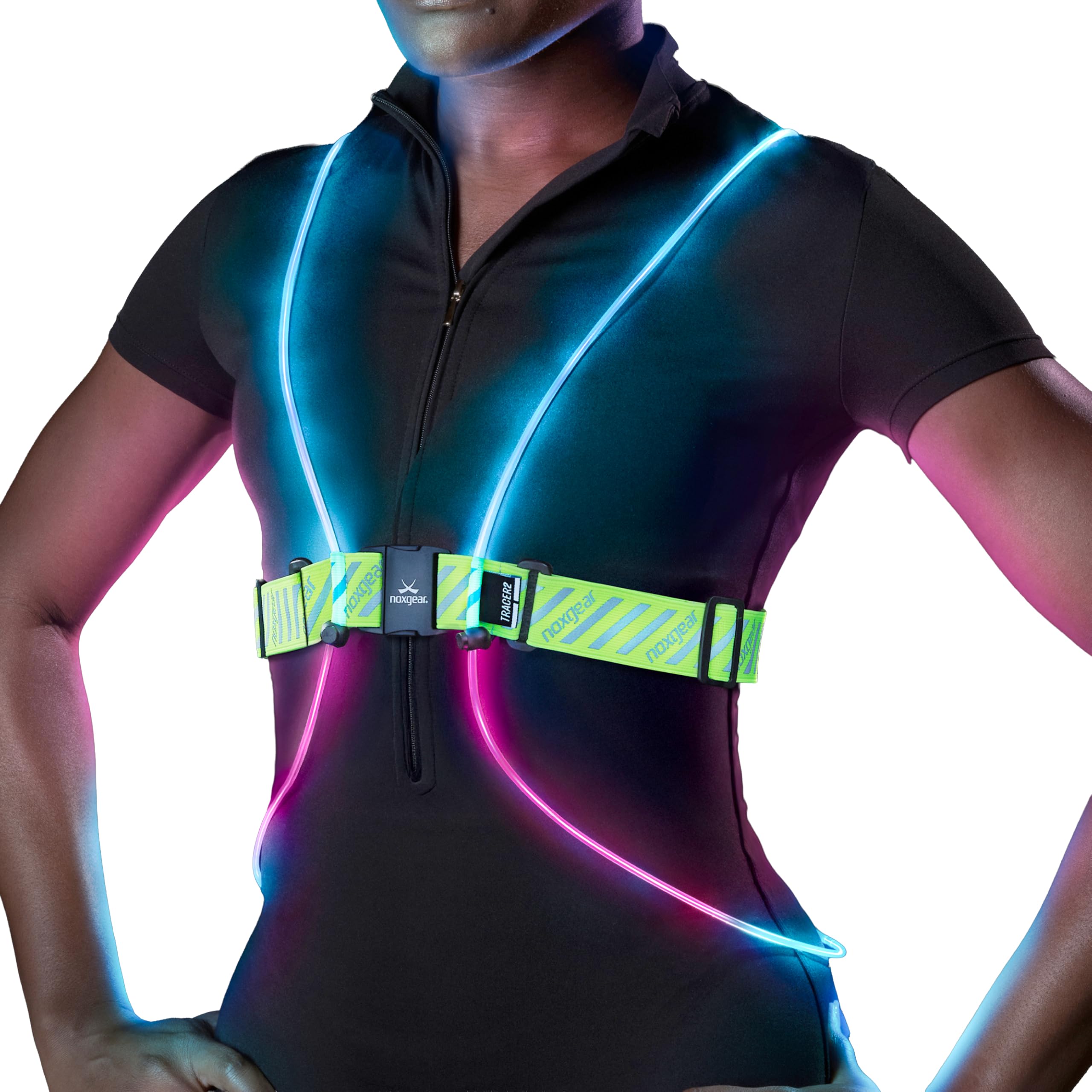
noxgear Tracer2 Vest
Key Features
- Fit & Adjust: Fits over layers
- Stability: Zero bounce
- Water Resistance: Splash resistant
- Breathability: Breathable mesh
- Price: Premium
The noxgear Tracer2 stands apart from passive reflective gear with its rechargeable LED lights visible from a quarter mile away. Sixteen color and flash modes let you customize visibility and add a bit of fun. At 6.5 ounces, it is lightweight and comfortable with no bounce or chafing during runs. This vest suits night runners and early-morning joggers who face traffic and want to be seen from all angles. The premium price is higher than basic reflective vests, and battery life on solid mode runs under 6 hours — something to factor for marathon-length efforts.
Pros
- 360-degree visibility up to a quarter mile ensures drivers spot you from a distance.
- Lightweight design (6.5 oz) won’t bounce or chafe during runs.
Cons
- Premium price compared to simple reflective straps.
- Solid-mode battery life under 6 hours may not cover ultra-long runs.
If you run in low-light conditions and want the best active visibility, the Tracer2 is worth the investment — just plan around the battery run time for long distances.
Best for Long Distance Runs
FlipBelt Zipper
Key Features
- Fit & Adjust: Pull-on waist fit
- Stability: Zero bounce
- Water Resistance: Waterproof main pocket
- Pocket Layout: 4 pockets (1 zip, 3 slip)
- Breathability: Breathable fabric
- Price: Premium
The FlipBelt Zipper uses a stretchy tube design that keeps a phone and keys flat against the hip without any bounce. For runners who want a waterproof main pocket and multiple slots, this belt offers a more refined zero-bounce experience than the budget-friendly Fitgriff. It suits serious runners and long-distance runners who prioritize stability and need to carry several items securely. However, the zipper can be short for large phones, and occasional breakage has been noted – a tradeoff for the premium build.
Pros
- Stays flat on hips without bouncing or chafing.
- Low profile and comfortable under clothes, easy to forget while running.
- Holds a large phone, keys, and gels securely with multiple slots.
Cons
- Premium price compared to many alternatives.
- Zipper can be short for large phones and occasional breakage is possible.
Serious runners who want a no-bounce belt with a waterproof pocket and are willing to pay extra will find this meets their needs – just confirm your phone fits the zipper opening.
Best for Shin Splint Relief
Rymora Calf Sleeves
Shin splint and calf fatigue relief is the core strength of these sleeves, with consistent reports of reduced discomfort during and after runs. The footless design and breathable graduated compression keep legs comfortable for hours, whether running or standing all day. Sizing requires careful calf measurement — the sleeves fit snugly and can feel constrictive if not measured correctly, making them a poor fit for calves over 19 inches or runners who prefer light compression. For active users dealing with shin splints, this is a practical option that stays in place during movement.
Pros
- Provides noticeable relief from shin splint and calf cramp discomfort.
- Breathable fabric remains comfortable during extended wear.
- Grips well to stay in place during runs without slipping down.
Cons
- Can feel uncomfortably tight if calf circumference is not measured accurately.
A solid choice for runners who need shin splint support and are willing to measure their calves precisely for the right fit.
Best for Training Socks
DANISH ENDURANCE Socks
Key Features
- Fit & Adjust: Snug quarter height
- Stability: Stay-put fit
- Water Resistance: Moisture-wicking
- Breathability: Breathable blend
- Price: Mid-Range
These socks deliver a snug, stay-put fit with targeted heel and toe cushioning that absorbs impact without feeling bulky – a solid option for 3- to 5-mile daily runs. The moisture-wicking blend helps keep feet dry, but durability can be hit-or-miss: some pairs develop holes at the toes after moderate use. They also aren’t blister-proof for everyone, so runners with sensitive feet may want to test them on shorter runs first.
Pros
- Snug, stay-put fit that resists bunching during runs
- Targeted cushioning at heel and toe without adding bulk
- Quality construction that outlasts cheap bulk socks
Cons
- Some pairs may develop holes at the toes after moderate use
- May not prevent blisters for all runners despite marketing claims
A comfortable, snug-fitting sock for runners who prioritize feel over extreme longevity, but be aware of possible early wear at the toes.
Best for Cold Weather Runs
Carhartt 2-in-1 Beanie
Key Features
- Fit & Adjust: One size stretchy
- Stability: Snug fit
- Price: Mid-Range
Carhartt’s fleece 2-in-1 headwear offers rugged warmth suitable for freezing winter conditions, with a stowable face mask that is easy to pull up when wind picks up. This combination makes it a strong option for runners and hikers who need reliable face protection in harsh cold. However, the face mask can fog glasses, a limitation inherent to fabric coverings – not ideal for those who wear glasses and cannot tolerate fogging. The build quality is tough, holding up season after season for heavy use.
Pros
- Provides substantial warmth for freezing conditions – keeps head and face protected.
- Stowable face mask deploys quickly when conditions worsen.
- Built to last with Carhartt’s rugged construction – holds up over years of use.
Cons
- Initial fit may be tight on larger heads, though it tends to stretch over time.
For runners and outdoor workers who face severe cold and need integrated face protection, the Carhartt 2-in-1 is a durable choice – just be aware of glasses fogging.
Best for Warm Weather Runs
NELEUS 3-Pack Tank

Key Features
- Fit & Adjust: Sizing runs small
- Water Resistance: Moisture-wicking
- Breathability: Mesh material
- Price: Budget
This three-pack delivers solid value with breathable mesh that keeps you cool during light activity. Sizing runs small, so order one size up for a comfortable fit. The thin fabric may cause nipple chafing on longer runs, making it a better match for gym sessions or quick jogs than marathon training.
Pros
- Three shirts at a budget-friendly price
- Lightweight and breathable for warm-weather activity
Cons
- Sizing runs small; ordering one size up is recommended
Best for gym workouts and short-distance runs where budget matters and chafing from mesh is less of a concern.
Best for Casual Training
G Gradual Joggers

Key Features
- Fit & Adjust: Tapered fit
- Stability: Stretchy
- Water Resistance: Moisture-wicking
- Pocket Layout: Zippered side and back
- Breathability: Lightweight
- Price: Budget
The tapered cut and zippered pockets make these joggers suitable for both gym sessions and everyday wear. However, the lightweight fabric is not ideal for cold-weather outdoor runs, and some waist seam loosening has been noted after repeated washing.
Pros
- Comfortable and flexible for training and lounging.
- Great value — comparable to pricier joggers at a budget price.
Cons
- Lightweight fabric may not provide enough warmth for cold-weather runs.
A good option for warmer-weather training and casual errands, but not suitable for winter outdoor use.
Best for Women Runners
CS CELERSPORT Ankle Socks

Key Features
- Fit & Adjust: Ankle length
- Stability: Stay in place
- Water Resistance: Moisture-wicking
- Breathability: Cotton blend
- Price: Budget
These socks deliver on comfort with a seamless toe and targeted heel/toe cushioning, making them a strong option for daily training and walking. Arch support is limited — fine for casual runners but not those needing firm support.
Pros
- Seam-free design eliminates toe irritation for blister-free comfort.
- Snug ankle fit keeps socks in place without slipping down.
Cons
- Cushioning may be too thick for warm-weather runs.
A budget-friendly six-pack for women runners in moderate climates who prioritize comfort over maximum ventilation.
Best for Recovery & Travel
Physix Gear Compression Socks

Key Features
- Fit & Adjust: Calf-high 20-30 mmHg
- Stability: Graduated compression
- Breathability: Breathable
- Price: Mid-Range
These socks deliver medical-grade graduated compression that reduces swelling and leg fatigue during long flights or standing shifts. The soft fabric stays comfortable through all-day wear, and the price undercuts many pharmacy brands. However, the high compression makes them difficult to put on and remove, and sizing must be precise to avoid a too-tight top band. For runners who only need light compression or have limited hand strength, a simpler sleeve may be a better fit.
Pros
- Alleviates leg fatigue and swelling during prolonged sitting or standing.
- Comfortable for all-day wear with soft, supportive fabric.
Cons
- High compression makes putting on and removing difficult.
Best for those who need medical-grade compression for travel or recovery and are willing to handle the donning challenge.
Best for Light Sweating
Pilamor 5-Pack Headbands

Key Features
- Fit & Adjust: Stretchy one size
- Stability: Stays in place
- Water Resistance: Moisture-wicking
- Breathability: Thin material
- Price: Budget
This five-pack delivers budget-friendly sweat absorption for short gym sessions and easy jogs. The stretchy nylon/spandex blend fits comfortably for most head sizes. But the polyester material is thin: it can saturate quickly under heavy perspiration, making it a poor fit for intense runs or hot conditions. Fit also varies – some find it loose on smaller heads or snug on larger ones. It works fine for light activity, not for high-output training.
Pros
- Affordable five-pack allows rotation without frequent washing.
- Stretchy fabric stays comfortable during moderate exercise.
Cons
- Thin material can saturate quickly under heavy sweating or intense runs.
Best for light to moderate workouts on a budget, not for long-distance runs in heat.
Best for Cool Weather Runs
Tough Headwear Skull Cap

Key Features
- Fit & Adjust: 4-way stretch 22-24in
- Stability: Snug fit
- Breathability: Fleece lined
- Price: Budget
This skull cap offers good warmth without bulk, making it suitable for running and cycling under a helmet in cool weather. However, the fit runs small – those with head sizes over 23 inches may find it too tight, and the thin material is not enough for temperatures below 20°F without layering.
Pros
- Warmth without bulk – perfect under helmets
- Budget-friendly price for a quality beanie
Cons
- Runs small – may be too snug for heads over 23 inches
Best for runners and cyclists with smaller head sizes who run in moderate cold (30-50°F) and want a low-profile beanie under a helmet.
Best for Casual Jogging
U·LANARO Running Belt

Key Features
- Fit & Adjust: Elastic 27-46in
- Stability: Stays in place
- Water Resistance: Water resistant TPU
- Pocket Layout: 1 expandable pocket
- Price: Budget
The U·LANARO belt offers a functional design at the lowest price point – lightweight, comfortable, and adjustable for most waists. Its elastic band may stretch over extended use, and the zipper pull can break, so it works best as a backup or for casual, infrequent running rather than a daily training belt.
Pros
- Elastic band fits waists 27-46 inches and stays in place during light activity.
- Soft, lightweight material that can be worn for hours without irritation.
Cons
- Elastic can stretch out over time, reducing the belt’s grip.
This belt is a decent choice for casual joggers or as a travel backup who want to spend the bare minimum, but for regular use, consider spending a bit more for better reliability.
How to Choose
The most overlooked spec in running gear is fit—a belt that bounces or sleeves that slip will ruin any run, no matter how advanced the fabric.
Fit and Adjustability
A running belt or compression sleeve that doesn’t fit your body won’t stay in place. Elastic waistbands and one-size-fits-most designs work only if your measurements fall within a narrow range. Guessing leads to returns and discomfort.
Measure your waist, calf, or head before buying—many products provide exact size charts, but 25% of buyers ignore them and end up with a belt that rides up or sleeves that cut off circulation.
Bounce and Stability
Bounce is the top killer of running belt satisfaction. A belt that shifts with each stride distracts and can even cause chafing. The physical mechanism is simple: stretchy materials without a secure closure or tube design allow the phone to move independently of your body.
Look for snug, low-profile designs that hug the hips—tube-style belts like the FlipBelt excel here, while thinner elastic bands with clips tend to slip over time, especially when loaded with a heavy phone.
Water and Sweat Resistance
Many belts claim ‘waterproof’ but only resist light rain or sweat. The hidden trade-off: true waterproofing requires a sealed zipper or TPU lining, which adds cost and bulk. For most runners, sweat resistance is enough, but if you run in downpours, look for a belt with a dedicated waterproof pocket.
A silicone-sealed zipper or roll-top closure provides real protection. Fabric coatings alone degrade after a few wash cycles.
Pocket Capacity and Organization
More pockets aren’t always better—each zipper or slip pocket adds weight and potential failure points. Runners carrying only a phone and key need one secure pocket. Those fueling for long runs want multiple compartments for gels, cash, and a card.
The trade-off: deeper pockets make it easier to access items but can cause the belt to sag. A balance between capacity and a flat profile is key.
Material Breathability
Breathable mesh fabrics keep you cool but may be too thin for heavy sweaters, saturating quickly and clinging uncomfortably. Fleece-lined items trap heat but are essential in cold weather. The trick is matching the material to your typical running climate.
For warm-weather runs, prioritize moisture-wicking blends with ventilation panels. For winter, fleece or brushed interiors provide warmth without bulk.
FAQ
Why does my running belt zipper keep breaking?
Budget belts often use plastic zippers with thin teeth that jam under load or when sweat creates friction. A few extra dollars for a YKK or metal zipper dramatically improves reliability. If your belt’s zipper fails, consider it a sign that the rest of the hardware may follow.
How tight should calf compression sleeves be?
They should feel snug but not painful—you should be able to slide two fingers between the sleeve and your calf. If you have to struggle to put them on or feel numbness, they are too tight. Always measure your calf circumference at the widest point and compare to the size chart; guessing leads to discomfort.
Can I wash compression socks in the washing machine?
Yes, most compression socks are machine-washable on a gentle cycle in cold water, then air-dried. Avoid fabric softener and high heat, which break down elastic fibers and reduce compression effectiveness over time. Hand washing is gentler but not necessary for regular use.
Is a reflective running vest worth it for early morning runs?
Yes, especially if you run on roads or shared paths. A vest with active LED lights like the noxgear Tracer2 provides 360-degree visibility from over a quarter mile, making you visible around curves and in low light. Static reflective strips rely on driver headlights, while active lights work even in rain or fog.