This post contains affiliate links. We may earn a small commission when you buy through our links — at no extra cost to you.
Walk into any outdoor store and you’ll see rain jackets plastered with promises of total waterproofness. Pull one off the rack for $30, and an hour in a spring downpour leaves you soaked. The gap between marketing copy and lived experience is real. Most budget shells simply can’t handle sustained rain, no matter what the tag says.
That doesn’t mean you need to spend a fortune. The sweet spot for reliable waterproofing without overpaying sits between $50 and $100. Jackets in that range use sealed seams, a proper membrane, and DWR treatment that actually sheds water. They also tend to include features like adjustable hoods and pit zips that make the difference between staying dry on a hike and sweating through your shirt.
This guide focuses on jackets that deliver on their claims. Whether you need an everyday shell for commutes, a packable emergency layer, or a breathable option for active hiking, we break down what each jacket does well and where its limits are. No hype. Just the specs that matter and the trade-offs you’ll actually notice.




Best for Everyday Rain
Columbia Watertight II
Key Features
- Waterproofing: Omni-Tech, seam-sealed
- Weight: Lightweight, packable
- Breathability: Limited mesh lining
- Hood: Adjustable brimmed storm
- Fit: Runs large
- Price: $$
The Columbia Watertight II uses a fully taped Omni-Tech membrane to keep rain out without the stiff, crinkly feel of many budget shells. It holds up well in light to moderate downpours during commutes or trail walks, and the adjustable brimmed hood stays put in wind.
At under a pound, it stuffs into its own hand pocket and disappears into a daypack or glove compartment. That packability, combined with solid coverage from the drop hem and adjustable cuffs, makes it a practical grab-and-go layer for travel or errands.
This jacket suits anyone who needs a no-fuss rain shell for daily use and light outdoor activity. The cut is generous rather than slim, so if you prefer a closer fit, order one size down — especially if you plan to wear it without a thick midlayer underneath.
Pros
- Keeps dry in rain with fully sealed seams
- Lightweight and packs into its own pocket
- Mid-range price with lasting performance
Cons
- Jacket fits generously; ordering one size down yields a closer fit
For everyday rain protection without breaking the bank, this jacket delivers what it promises — just check the sizing.
Best for Running, Cycling
baleaf Rain Jacket
Key Features
- Waterproofing: Claimed waterproof
- Weight: Lightweight, packable
- Breathability: Mesh vents
- Hood: Adjustable
- Fit: Runs small
- Price: $
Reflective panels and a trim cut keep this jacket from flapping in the wind during high-output activities like running or cycling. The nylon shell sheds light rain and packs into its own pocket for easy stowage. Sizing runs small — order one size up if you plan to layer over a base layer or light fleece.
Pros
- Designed for motion — trim fit avoids excess fabric while running or cycling.
- Reflective details improve visibility in low-light conditions.
- Budget-friendly price for an active rain shell.
Cons
- Sizing runs small — order up for a comfortable fit, especially with layers underneath.
Best for runners and cyclists who want an affordable, packable shell with reflective detailing — just size up.
Best for Hiking, Backpacking
Marmot Precip Eco
Key Features
- Waterproofing: NanoPro, PFC-free DWR
- Weight: Lightweight, packable
- Breathability: Pit zips
- Hood: Adjustable
- Fit: Hood large, arms snug
- Price: $$
The Precip Eco uses recycled nylon ripstop and adds pit zips for ventilation, so it breathes better than many budget shells while keeping its eco-credentials intact. Compared to the premium DryVent option in this roundup, it trades some long-term water resistance for a lower price and lighter weight. This jacket suits hikers and backpackers who stay active in warm rain and don’t need full waterproofing for heavy downpours. Water resistance can fade over time, so periodic DWR reapplication is part of owning it.
Pros
- Made from recycled materials for a lower environmental impact.
- Underarm pit zips provide good ventilation during activity.
- Lightweight and packs into its own pocket for easy travel.
Cons
- Fit can be inconsistent: the hood may feel large while arms run snug.
- Water resistance may decline over time and needs periodic DWR reapplication.
A solid mid-range shell for eco-conscious hikers who prioritize breathability and packability over heavy-duty waterproofing.
Best for Serious Hikers
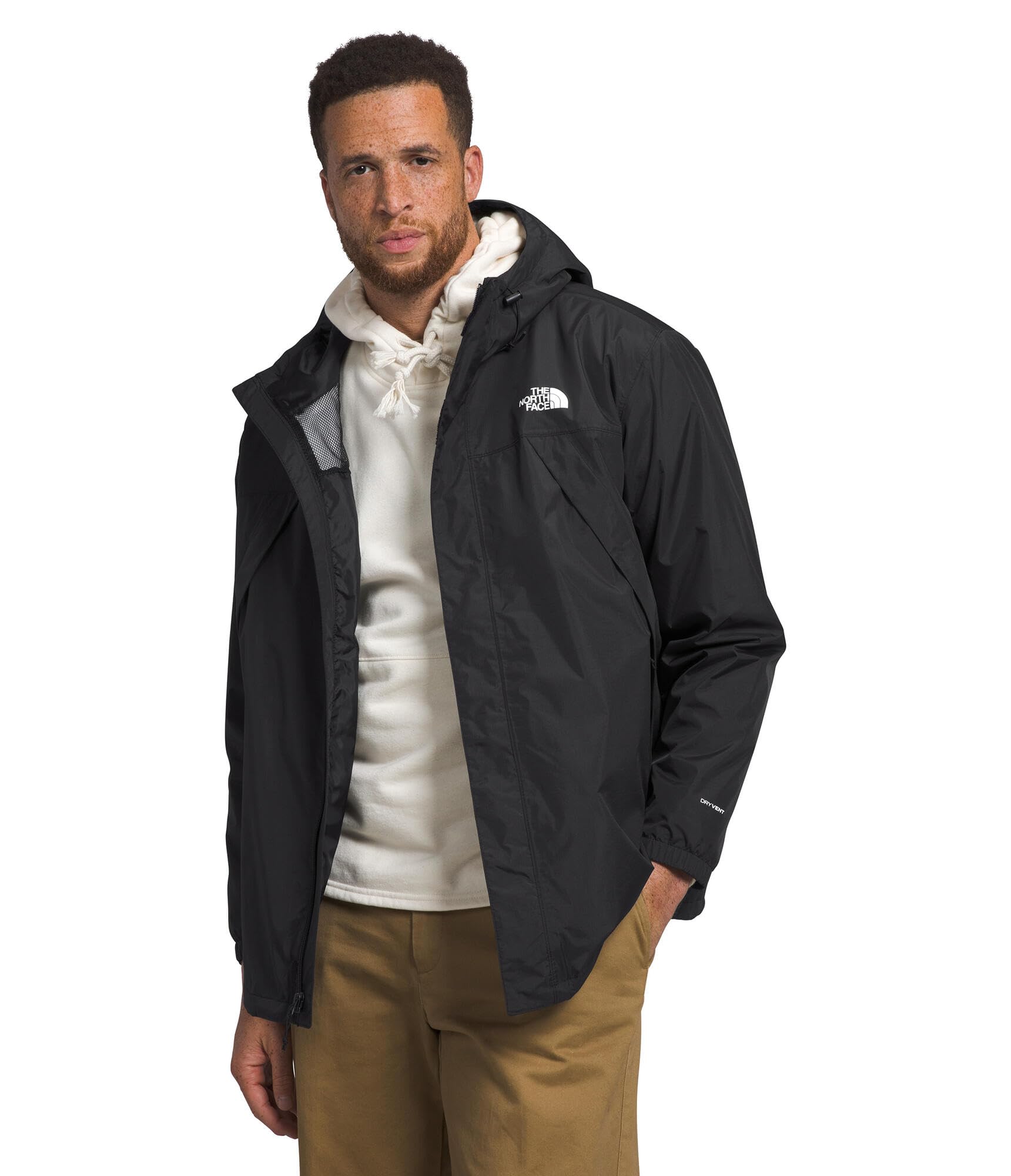
North Face Antora
Key Features
- Waterproofing: DryVent, sealed seams
- Weight: Mid-weight
- Breathability: Limited mesh
- Hood: Adjustable
- Fit: Inconsistent sizing
- Price: $$$
The Antora’s DryVent shell with fully sealed seams keeps you dry in sustained rain, outperforming budget options that rely on basic DWR. Its premium construction and clean design suit both trail and casual wear. For those who want the highest level of waterproofing confidence, this jacket surpasses the top pick in its category in wet-weather performance.
This jacket fits buyers who prioritize guaranteed waterproofing and are willing to pay a premium for the North Face brand and build quality. Sizing can be inconsistent across batches — check recent reviews for your size before ordering. It’s a pure shell, so layer up if you need warmth.
Pros
- DryVent membrane with fully sealed seams keeps you dry in prolonged downpours.
- Premium materials and construction provide lasting durability and a polished look.
Cons
For serious hikers and those who need absolute wet-weather protection, the Antora is a dependable choice — size carefully.
Best for Big & Tall
Columbia Glennaker Lake
Key Features
- Waterproofing: Hydroplus, seam-sealed
- Weight: Lightweight, packable
- Breathability: Limited
- Hood: Stow-away
- Fit: Runs large
- Price: $
Columbia’s big & tall sizing delivers a genuinely roomy cut that standard jacket lines skip. While the top pick emphasizes sealed-seam waterproofing, this jacket focuses on generous proportions and packability. The lightweight nylon shell stows into its own chest pocket, making it a convenient everyday layer. Best for larger builds who need a casual shell for light rain and daily errands. Water resistance may not hold up in sustained downpours — this jacket handles brief showers and drizzle, not all-day rain.
Pros
- Durable build with good construction for everyday use.
- Lightweight design — easy to carry or stow in its chest pocket.
- Good value for the price, especially in big & tall sizes.
Cons
A cost-effective choice for big & tall men who need a roomy, lightweight shell for occasional light rain.
Best for Work Sites
Carhartt Rain Defender
Key Features
- Waterproofing: Rain Defender DWR
- Weight: Lightweight
- Breathability: Limited
- Hood: Small
- Fit: Relaxed
- Price: $$
Carhartt’s Rain Defender jacket brings the brand’s durable construction to light-weather protection. The relaxed cut leaves room for layering or bending on a work site, while the Rain Defender DWR coating beads off drizzle and gusty wind. It’s not designed for downpours — the water resistance can saturate with prolonged exposure, and the hood offers limited coverage. This jacket suits casual commutes, outdoor chores, and spring/fall wear where short bursts of light rain are the norm.
Pros
- Sturdy build holds up to daily abuse on work sites
- Roomy fit allows easy movement and layering
- Lightweight shell packs easily over a hoodie or flannel
Cons
- In sustained rain, the DWR coating can saturate; best for drizzle and short exposure
- Hood coverage is limited and may not fit over a hard hat or larger head
If you need a tough, everyday jacket for light rain and active work, the Carhartt Rain Defender delivers where it counts — just don’t expect it to double as a rain shell for wet commutes.
Best for Athletic Builds
Helly Hansen Seven J
Key Features
- Waterproofing: Waterproof shell
- Weight: Lightweight
- Breathability: Limited
- Hood: Adjustable
- Fit: Runs small
- Price: $$
The Helly Hansen Seven J delivers effective water resistance in a lightweight, packable shell with a high-quality build. Its athletic cut is ideal for active use like bike commuting, but the sizing runs very small — order at least one size up if you plan to layer. Best suited for lean builds and cool-weather activities, not for heavy layering or relaxed fits.
Pros
- High-quality build with sturdy materials and precise construction
- Effective water resistance keeps you dry in rain and snow
- Lightweight and packable for easy storage
Cons
- Runs noticeably small — sizing up is necessary for layering
A capable rain shell for active use, but only if you match the slim fit to your build and size up for layering.
Best for Budget Hikers
OTU Lightweight Rain Jacket

Key Features
- Waterproofing: Claimed waterproof
- Weight: Lightweight
- Breathability: Limited
- Hood: Adjustable
- Fit: True to size
- Price: $
For the price, this jacket offers decent breathability and a packable design ideal for travel backup. But the water resistance is inconsistent – it can wet through in moderate rain – so think of it as a casual summer shower cover, not your go-to for rainy days.
Pros
- Good build quality for the low price
- Lightweight and comfortable in mild conditions
Cons
- Water resistance can give out in moderate rain, limiting it to light drizzle
Great for stashing in a pack for unexpected summer showers or as an emergency backup, but don’t plan on it for a rainy hike.
Best for Travelers
33,000ft Rain Jacket

Key Features
- Waterproofing: Claimed waterproof
- Weight: Ultra-light, packable
- Breathability: Limited
- Hood: Adjustable
- Fit: True to size
- Price: $
This jacket packs down to a palm-sized pouch, making it a convenient emergency backup for travel or unexpected light showers. Seams may separate after a few uses, and water resistance is limited to light drizzle — it’s a tradeoff for the low price and portability.
Pros
- Lightweight and packs into included storage pouch
- Good fit for many builds – comfortable and true to size
Cons
- Water resistance is not reliable in moderate rain; best for light drizzle only
Ideal as a packable emergency layer for travelers and commuters who need a compact shell for unexpected light rain, but not a jacket for daily use in wet climates.
Best for Emergency Shell
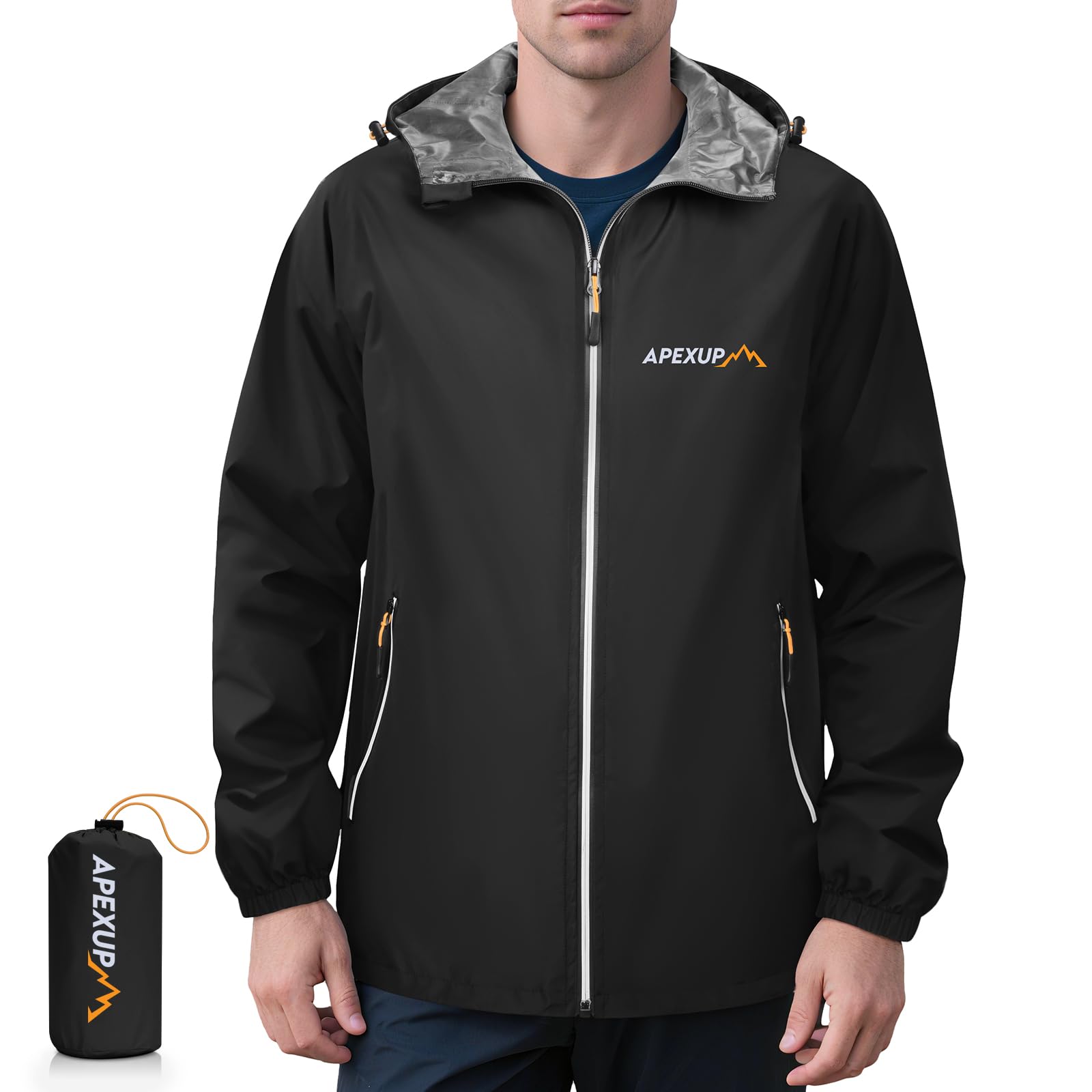
APEXUP Rain Jacket
Key Features
- Waterproofing: Claimed waterproof
- Weight: Ultra-light, packable
- Breathability: Poor
- Hood: Yes
- Fit: True to size
- Price: $
This jacket is impressively light and stows into a palm-sized pouch, making it a convenient backup for travel or the car. The reflective zipper adds visibility in low light. However, in steady rain the shell can wet through, and breathability is virtually nonexistent——it traps heat and moisture quickly. This is a jacket for emergency dashes, not all-day downpours.
Pros
- Great value for a packable shell under $20
- Lightweight and packs into included pouch
Cons
- In sustained rain the jacket can wet through
Best kept as a car or travel backup for unexpected showers, not for planned hikes in the rain.
Best for Golfers
Outdoor Ventures Rain Jacket

Key Features
- Waterproofing: Claimed waterproof
- Weight: Lightweight, packable
- Breathability: Limited
- Hood: Adjustable
- Fit: Runs small
- Price: $
Lightweight packable shell with adjustable hood suits casual outdoor use. Sizing runs small – order up if layering. Handles light rain but wets through in sustained downpours, so it fits best as a backup for golfers or short hikes in drizzle rather than all-day wet weather.
Pros
- Good quality for the budget price
- Lightweight and packs into included pouch
Cons
- Not fully waterproof – wets through in sustained rain
A suitable backup for short trips in light drizzle, but not for prolonged wet conditions or daily commutes in rain.
Best for Urban Commuters
Helly Hansen Dubliner

Key Features
- Waterproofing: Waterproof, windproof
- Weight: Mid-weight
- Breathability: Limited
- Hood: Fixed
- Fit: Runs very small
- Price: $$$
For the city commuter who prioritizes a fitted silhouette, this coat delivers sharp looks and solid weather protection with quality zippers and fabrics. The slim fit is extreme though — sizing up significantly is necessary for any comfort, which limits its appeal to a narrow body type.
Pros
- Premium materials and zippers give a durable feel
- Streamlined urban design looks polished on the street
Cons
- Cut runs very small; sizing up is required even for a trim fit
Best for slim-built commuters who want a refined rain shell and are willing to order a size or two up.
How to Choose
The most important decision you’ll make is not how much you spend, but whether the jacket’s waterproofing can handle more than a light drizzle.
Waterproofing Technology
Look for jackets with a waterproof membrane (like Omni-Tech, DryVent, or NanoPro) and fully sealed seams. These prevent water from seeping through stitch holes. Jackets that only rely on a DWR coating will wet out after 20 minutes of steady rain.
Membrane-based jackets keep water out longer, but they also reduce breathability. If you plan to hike or cycle, you’ll need ventilation features to offset that trade-off.
Weight and Packability
A 12-ounce packable shell is ideal for travel or emergency backup, but lighter fabrics often sacrifice durability and tear resistance. Frequent hikers should accept a few extra ounces for a thicker nylon ripstop shell that won’t snag on branches.
If you rarely carry a jacket except ‘just in case,’ an ultra-light packable is fine. For daily carry on trails, prioritize toughness over ounce-shaving.
Breathability
Pit zips are the single most effective breathability feature. Without them, even a breathable membrane traps heat and moisture during exertion, turning your jacket into a sauna. Jackets without pit zips are fine for casual city use but frustrating on climbs.
Mesh linings help wick sweat, but they add weight and bulk. For active use, choose a jacket with pit zips over one with a fancy membrane alone.
Hood Design
An adjustable brimmed hood that cinches down is essential for keeping rain off your face in wind. Fixed hoods without drawcords allow water to drip onto your forehead. Stow-away hoods are convenient for city use but often lack adjustability.
If you wear a helmet (biking or climbing), look for a hood that fits over it. Most budget jackets don’t accommodate helmets, which is fine for casual wear but a dealbreaker for technical use.
Fit and Sizing
Sizing is wildly inconsistent across brands. Helly Hansen and baleaf run small; Columbia and Carhartt run large. Always check recent reviews for your specific jacket before ordering. If you plan to layer a fleece underneath, size up unless the jacket already has a generous cut.
A rain jacket should allow full arm movement without riding up. If the shoulders feel tight when you reach forward, the jacket is too small. If you can pinch more than 4 inches of fabric at the waist, it’s too large.
FAQ
Why does my rain jacket wet through after an hour in the rain?
It likely lacks a waterproof membrane and relies only on a DWR coating. DWR wears off over time and after a few washes. Once the coating fails, water soaks into the outer fabric. Jackets with fully sealed seams and a membrane (like Omni-Tech or DryVent) will hold up much longer. If yours wets through, reapply DWR or upgrade to a membrane shell.
How should a rain jacket fit for layering under a shell?
If you plan to wear a mid-layer (fleece or light puffer) underneath, you need room in the chest and arms without the jacket pulling tight. For slim-fit brands like Helly Hansen, order at least one size up. For relaxed fits like Columbia, your normal size usually works. Test by raising your arms overhead while zipped — if the hem rides up above your waist, it’s too small.
Can a $30 rain jacket actually keep you dry in heavy rain?
Generally no. Jackets under $30 typically use a thin nylon shell with a basic DWR spray that fails quickly. They are fine for light drizzle or as an emergency backup in a car. For sustained heavy rain, you need a jacket with sealed seams and a membrane — that starts around $50-100. The Columbia Watertight II is the cheapest reliable option.
What’s the difference between water resistant and waterproof in rain jackets?
Water resistant means the fabric is treated to bead water for a short time. It works in light rain but soaks through in steady precipitation. Waterproof jackets have a laminated membrane (like Gore-Tex or proprietary versions) and sealed seams that block water entirely. If you’ll be out in rain for more than 15 minutes, choose waterproof over water resistant.