This post contains affiliate links. We may earn a small commission when you buy through our links — at no extra cost to you.
Many rain jackets promise waterproofing but leave you soaked in sweat or leaking after a few months. The difference often comes down to the membrane technology and seam taping.
Budget jackets with PU coatings can work for light use, but they lose repellency faster than jackets with taped membranes. Ventilation like pit zips makes a real difference on the trail.
The real choice for hikers is whether to pay more for pit zips and breathable membranes or save money with a solid shell that lacks venting. This guide focuses on jackets that balance rain protection with breathability for hiking and daily use.



Best for Hiking & Backpacking
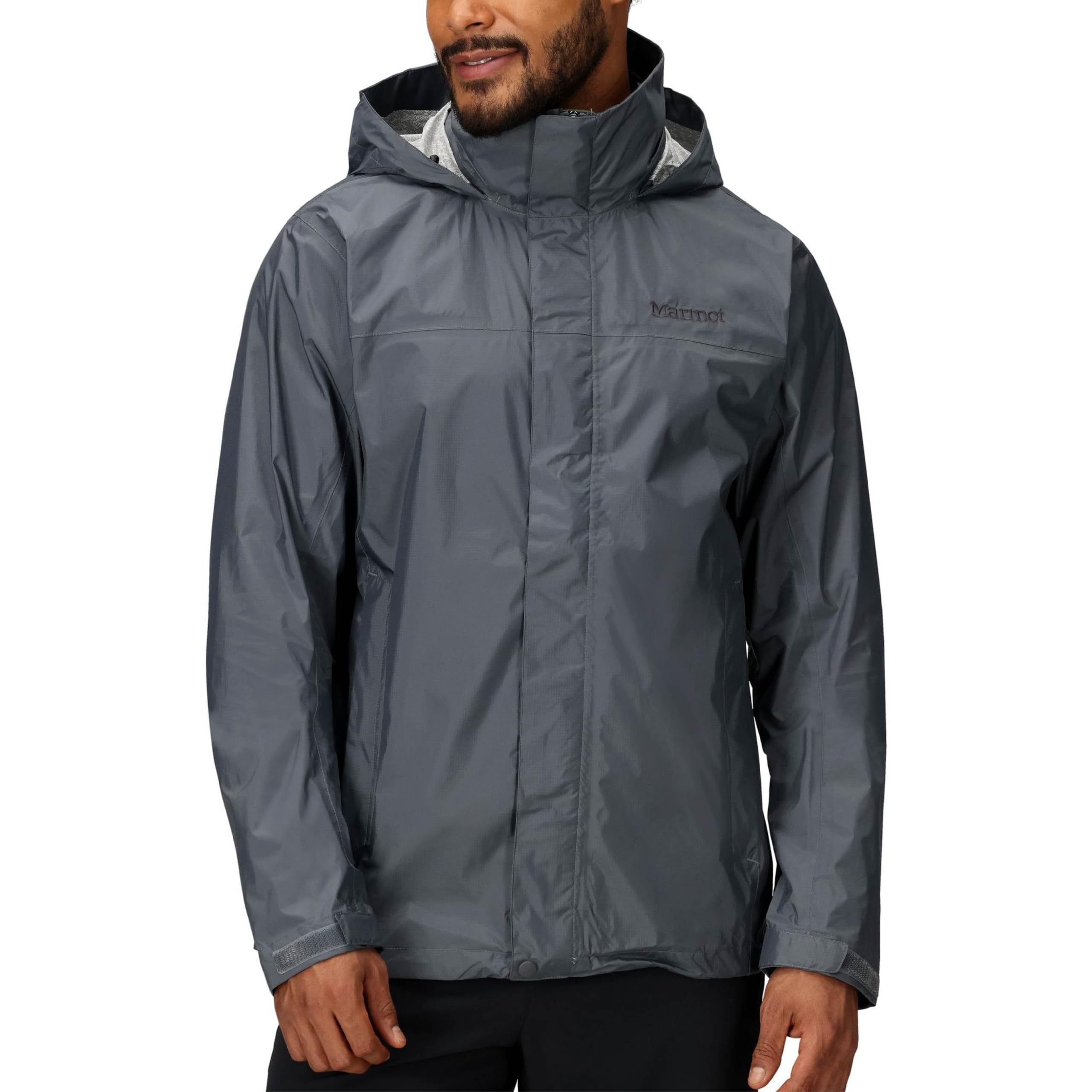
Marmot Precip Eco
Key Features
- Waterproof Membrane: Marmot NanoPro
- Breathability: Pit zips
- Weight & Packability: 11.68 oz, packable
- Hood Adjustability: Adjustable
- Price: Premium
The Marmot Precip Eco cuts weight with a 100% recycled nylon face fabric and a NanoPro membrane that handles sustained rain without wetting out. Pit zips let you dump heat during climbs, making this one of the few ultralight shells that feels airy when working hard.
The jacket packs into its own pocket and weighs just over 11 ounces, so it disappears into a daypack. The cut is relaxed enough for a fleece underneath, but the hood can be oversized and floppy in gusts. This is a technical shell for hikers, not a casual commuter coat – active use is where its strengths shine.
Pros
- Pit zips allow venting without compromising weather protection.
- Lightweight build (11.68 oz) stuffs into its own pocket for easy carry.
- Recycled nylon construction reduces environmental impact.
Cons
- Hood can feel oversized and may not stay put in strong wind even when adjusted.
- DWR coating requires periodic reapplication to maintain water beading.
For hikers who need breathability and packability, the Precip Eco delivers where budget shells fall short – the pit zips alone are worth the extra expense.
Best for Day Hiking, Commute
Columbia Watertight II
Key Features
- Waterproof Membrane: Omni-Tech
- Weight & Packability: Lightweight, pocket
- Hood Adjustability: Adjustable
- Price: Mid-Range
The Watertight II keeps you dry in moderate rain and stows small, but it lacks pit zips found on the top pick. That omission limits breathability during high-output hikes — a tradeoff that suits casual use and commuting better than aerobic trail work. The baggy cut and oversized hood can be noticeable in wind, but the value is clear for buyers who want reliable rain protection without the premium price tag.
Pros
- Dependable waterproofing for moderate rain
- Lightweight and packs into its own pocket
- Good value for mid-range price
Cons
- Sizing runs large; hood can be oversized
A practical, affordable shell for those who spend most of their time in light to moderate rain and don’t need ventilation for vigorous activity.
Best for All-Season Hiking
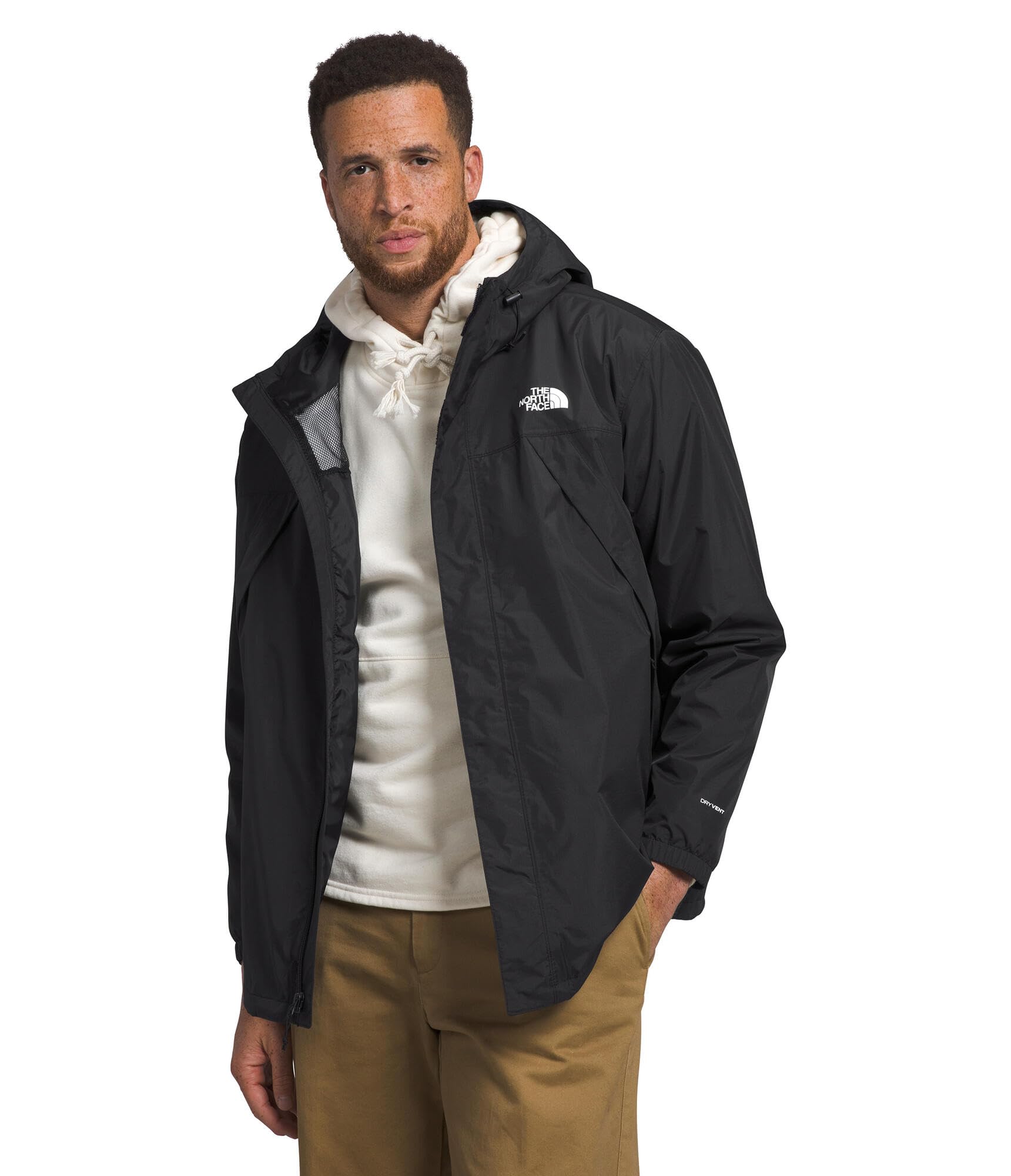
North Face Antora Jacket
Key Features
- Waterproof Membrane: DryVent 2-layer
- Weight & Packability: Lightweight
- Hood Adjustability: Adjustable, helmet
- Price: Premium
The North Face Antora uses a DryVent membrane and fully sealed seams to keep heavy rain out. Unlike the Marmot Precip Eco, it lacks pit zips for active ventilation, so breathability is more dependent on layering choices. The generous cut easily fits a mid-layer underneath, making it a solid option for hikers and backpackers who want a roomy shell for all-season use. This is a rain shell only — you’ll need to add insulation layers for cold weather.
Pros
- Effective waterproofing in heavy rain
- Roomy fit accommodates layers without restriction
- Sturdy build with fully taped seams
Cons
- Sleeves may run long for shorter arms, especially without layers
This shell suits hikers who prioritize waterproofing and a roomy fit over packability and built-in ventilation. For those needing pit zips and a lighter carry, the Marmot Precip Eco is the better buy.
Best for Outdoor Work
Carhartt Rain Defender
Key Features
- Waterproof Membrane: Rain Defender DWR
- Weight & Packability: Not packable
- Hood Adjustability: Adjustable
- Price: Mid-Range
Carhartt’s Rain Defender delivers the brand’s signature toughness with a relaxed fit that allows easy layering and freedom of movement for demanding jobs. Unlike lighter hiking shells, this jacket prioritizes durability over packability or breathability. It’s best for outdoor workers or anyone in rainy climates who needs a water-resistant shell that can take daily abuse — but the limited breathability means you’ll sweat during exertion, and the small hood won’t fit over a helmet.
Pros
- Durable construction stands up to rough work environments
- Reliable water resistance handles rain and snow
- Relaxed fit allows easy layering and unrestricted movement
Cons
- Limited breathability can cause overheating during active work
- Hood is small and lacks adjustment for helmet use
For tradespeople or casual wear in wet conditions, the Rain Defender is a solid mid-range choice — but active hikers should look to the lighter, more breathable top pick.
Best for Budget Backup
OTU Lightweight Rain Jacket
Key Features
- Waterproof Membrane: Polyester PU coating
- Weight & Packability: Lightweight
- Price: Budget
Compared to the top pick’s technical shell, the OTU is a budget-friendly alternative that handles light rain and casual travel well. The lightweight build layers easily and offers solid water resistance for short walks or errands.
For budget-conscious shoppers needing a backup for occasional showers, the OTU delivers strong value with a comfortable fit and adequate rain protection for light weather. Waterproofing can fail in sustained downpour, and breathability is limited during active use — making it best suited for travel and casual errands rather than serious hiking.
Pros
- Strong value for money
- Lightweight and comfortable fit
- Good water resistance for light rain
Cons
A cost-effective choice for a backup rain jacket when traveling or running errands.
Best for Moderate Hiking
HH Seven J Jacket
Key Features
- Waterproof Membrane: Helly Tech membrane
- Weight & Packability: ~2 lbs, packable
- Hood Adjustability: Adjustable
- Price: Mid-Range
The Helly Hansen Seven J uses the brand’s Helly Tech membrane to deliver consistent waterproofing in rain and snow. Weighing about two pounds and packing down small, it’s easy to stash in a daypack or carry as a daily shell. The fully taped seams and adjustable hood add to its weather protection without bulk.
This jacket suits hikers facing moderate rain and casual commuters who need a dependable shell. Sizing runs small, so order up if you plan to layer over an insulating mid-layer. Those looking for breathability during high-output activities should consider a shell with pit zips instead.
Pros
- Keeps dry in sustained rain and snow
- Lightweight and easy to pack for travel or day hikes
- Build quality and materials hold up well over time
Cons
A solid mid-range option for hikers and commuters who need reliable waterproofing without the weight of a heavy-duty coat.
Best for Travel, Packable
33,000ft Packable Jacket

Key Features
- Waterproof Membrane: Nylon waterproof coating
- Weight & Packability: 10.86 oz, pouch
- Price: Budget
This jacket keeps weight and bulk to a minimum, shedding light to moderate rain well for its price range. That packability makes it a natural travel companion, but the construction uses sealed seams that may separate over time, so it works best as a backup shell rather than a daily driver. For hikers or commuters needing something they can toss in a bag and forget until a surprise shower, this fills the gap without much investment.
Pros
- Extremely lightweight and packable — ideal for stashing in a bag or suitcase
- Good water resistance for light to moderate rain at this price
Cons
- Seams may separate after limited use, limiting long-term durability
Best as a packable backup for travel or commuting where rain is unpredictable but not prolonged.
Best for Packable Travel
Columbia Glennaker II

Key Features
- Waterproof Membrane: Omni-Shield repellency
- Weight & Packability: Very lightweight, pocket
- Hood Adjustability: Stowable
- Price: Budget
This lightweight jacket stuffs into its own pocket for easy travel. Columbia’s Omni-Shield coating handles light rain, but it’s not a serious rain shell — best as a packable windbreaker for commuters or dry climates.
Pros
- Packs into its own pocket for easy carry.
- Budget-friendly price from a known brand.
Cons
- DWR coating may need reapplication after limited use.
Ideal as a backup jacket in your bag for unexpected light showers, but not for planned outdoor rain exposure.
Best for Cycling, Running
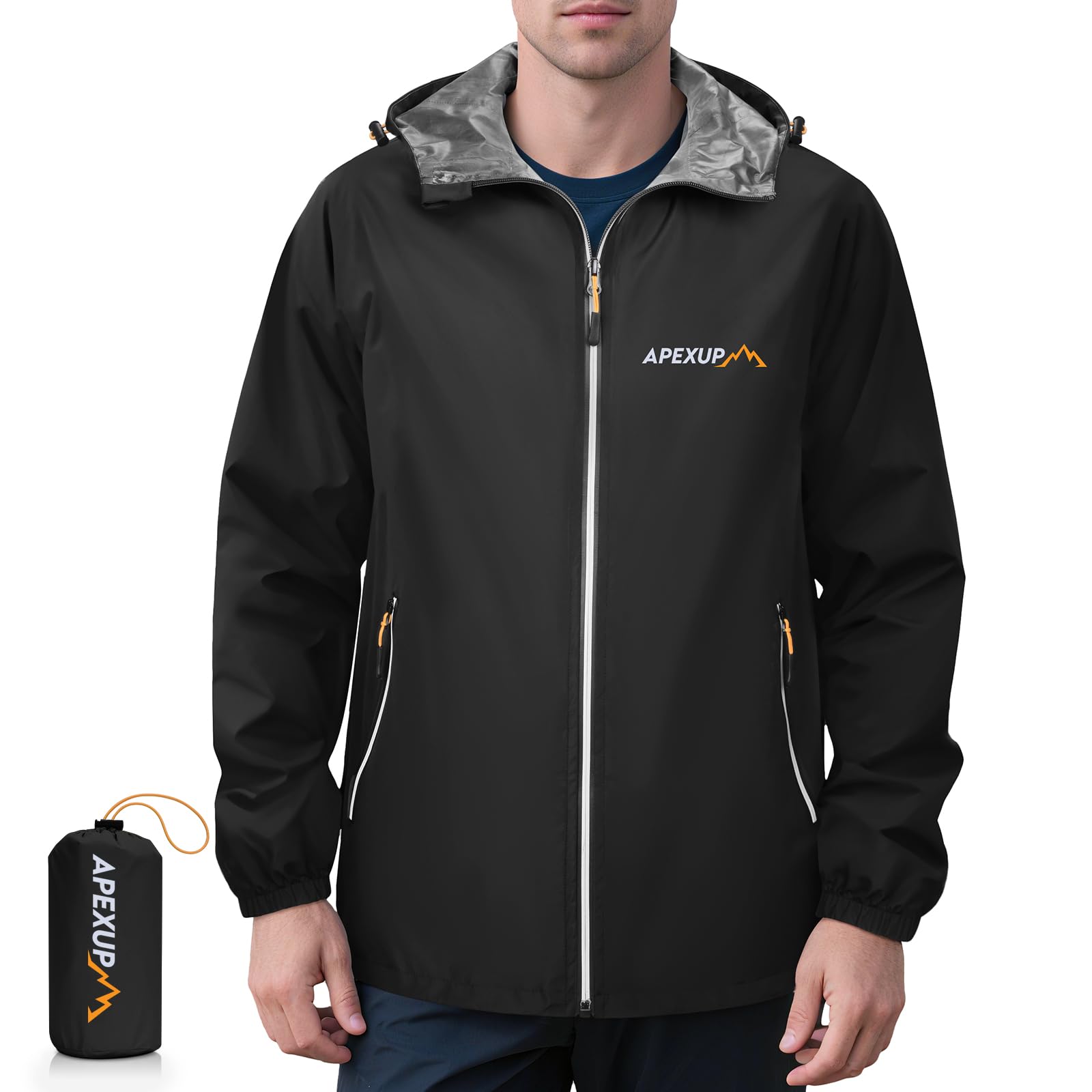
APEXUP Reflective Jacket
Key Features
- Waterproof Membrane: Nylon waterproof coating
- Weight & Packability: 8.82 oz, pouch
- Price: Budget
This jacket is lightweight, packable, and includes reflective details that improve visibility in low light. Water resistance works well in light to moderate rain. Breathability is limited, so it’s not suited for aerobic hiking – and the sizing runs small, so order up if layering.
Pros
- Very lightweight and compact – fits in a daypack
- Reflective details enhance safety in low light
Cons
- Limited breathability can make the jacket feel stuffy during high-output activities
Best for cyclists and commuters who want a reflective emergency shell for light rain, not for active hiking or extended exertion.
Best for Golf, Light Hiking
Outdoor Ventures Shell

Key Features
- Waterproof Membrane: Nylon waterproof coating
- Weight & Packability: Lightweight, pocket
- Hood Adjustability: Stowable
- Price: Budget
Keeps dry in moderate rain, packs into its own pocket, and fits comfortably over a light layer. However, durability is mixed — ripping has been noted after limited use — and breathability is poor, making it unsuitable for strenuous activities.
Pros
- Stays dry in moderate rain conditions.
- Packs into its own pocket for easy storage and travel.
Cons
- Breathability is poor, leading to sweat buildup during activity.
Best as a backup jacket in the car or for short golf rounds where weight and packability matter more than long-term durability.
Best for City Commuting
HH Dubliner Coat

Key Features
- Waterproof Membrane: Helly Tech membrane
- Weight & Packability: Lightweight
- Hood Adjustability: Adjustable
- Price: Premium
The Dubliner delivers dependable waterproofing and a polished look for city commutes, with fully taped seams and robust hardware. However, it runs very small (order up) and lacks breathability for active use—better suited for short walks and transit stops than hiking or aerobic activity.
Pros
- Keeps you dry in heavy rain and strong wind.
- Robust zippers and reinforced seams handle daily commuting wear.
Cons
- Sizing runs small; order at least one size up for a comfortable fit.
Best for commuters who prioritize style and waterproofing over packability and active use – size up.
Best for Emergency Use
COOFANDY Packable Jacket

Key Features
- Waterproof Membrane: Polyester waterproof coating
- Weight & Packability: Very lightweight, pouch
- Price: Budget
At under $20, this jacket packs into a pouch and works for unexpected light rain. But in anything beyond a brief sprinkle, water seeps through, the fit runs tight, and there’s no airflow, so you’ll sweat. It’s a last-resort shell, not a jacket for planned outdoor activity.
Pros
- Costs less than most rain shells, making it an easy impulse buy for emergencies.
- Weighs almost nothing and stuffs into a small pouch, so it’s always easy to carry as a backup.
Cons
- Waterproofing can’t handle more than a brief shower; plan for drizzle only.
Keep this in your car or bag for unexpected mist, but don’t count on it for a hike in the rain.
How to Choose
The best rain jacket for hiking balances waterproofing, breathability, and weight.
Waterproof Membrane Type
Most budget jackets use a PU coating that beads water initially but degrades after a season of use. Mid-to-premium jackets rely on a taped membrane like Omni-Tech, DryVent, or NanoPro, which maintain waterproofing longer because the barrier is a physical layer, not a surface treatment.
If you plan to use the jacket in heavy rain or for multiple seasons, invest in a jacket with a fully taped membrane. For occasional light use, a coated jacket can suffice.
Breathability and Venting
Breathability is the ability to let sweat vapor escape. Without pit zips or a highly breathable membrane, moisture builds up inside during activity, leaving you damp from the inside. Pit zips are the most effective venting mechanism because they dump heat directly from the armpits.
For hiking or aerobic activities, a jacket with pit zips (like the Marmot Precip Eco) is worth the extra cost. For casual use or low-output commutes, a sealed shell without vents still works.
Weight and Packability
A jacket’s weight determines how easily it fits in a daypack. Ultralight shells under 12 ounces pack into a pocket and are ideal for travel or emergency carry. Heavier jackets (over 1 pound) offer more durability but take up space.
Consider whether you’ll be carrying it most of the time or wearing it all day. For backpacking, a packable sub-12-ounce jacket is a clear advantage.
Seam Taping and Zipper Quality
Fully taped seams prevent water from seeping through stitch holes in heavy rain. Critically taped jackets only seal high-exposure seams, which works for moderate rain but can leak under sustained downpour. Zippers with waterproof flaps add another layer of protection.
Inspect the zipper quality: plastic zippers can jam or break after limited use, while metal or coil zippers with durable pulls last longer.
Hood Adjustability
A hood that doesn’t stay in place or blocks peripheral vision is a constant annoyance. Look for a brim, rear cinch cord, and volume adjuster. Helmet-compatible hoods are roomier and fit over a climbing or bike helmet.
Test the hood’s fit: if it’s too large or floppy even when tightened, it may flap in wind or obstruct your view.
FAQ
Can I use a budget rain jacket like COOFANDY for serious hiking in heavy rain?
No. Budget jackets rely on a PU coating that wets through quickly in sustained rain. They also lack breathability, causing sweat buildup during exertion. For serious hiking, choose a jacket with a taped membrane like NanoPro or Omni-Tech and pit zips.
How often should I reapply DWR coating on a men’s rain jacket?
Reapply DWR after every 3-5 washes, or when water stops beading on the fabric surface. Use a wash-in or spray-on DWR treatment. This maintains the outer layer’s water repellency and prevents the membrane from getting saturated.
What’s the difference between a rain jacket and a waterproof shell for hiking?
In practice, the terms are interchangeable. A waterproof shell is a rain jacket designed for high-activity use, typically lighter and more breathable. The key features to look for are a sealed membrane, pit zips, and packability. A basic rain jacket may lack these, making it better for casual wear.
Do pit zips really make a rain jacket more breathable?
Yes. Pit zips allow hot, moist air to escape directly from the armpits where sweat accumulates. Without them, moisture stays trapped inside, making you feel clammy during exercise. For hiking and backpacking, pit zips are a significant advantage over sealed shells.