This post contains affiliate links. We may earn a small commission when you buy through our links — at no extra cost to you.
Finding ski mittens that keep your hands warm without turning into bulky oven mitts is tougher than it sounds. Too often, a mitten that promises sub-zero warmth ends up with a thumb that feels two sizes too small or a wrist that lets in snow. The real challenge isn’t just warmth, it’s fit and waterproofing that work together on the mountain.
Some mittens lean on removable liners for quick drying and versatility, while others use premium leather that molds to your hand over time. One gives you flexibility, the other longevity. Neither is wrong, but each suits a different kind of skier.
The best mitten for you is the one that matches your hand shape and how often you hit the slopes, not just the one with the highest insulation number.



Best for Serious Skiers
Hestra Heli Ski Female
The Heli Ski Female uses full-grain leather with a warm lining that holds heat even during chairlift breaks and exposed ridgeline descents. The wrist strap and D-ring clamp keep snow out, and the cut is designed to follow a woman’s hand without excess material shifting inside the glove. Fit feedback consistently notes that the cuff covers the wrist fully without restricting movement, a detail that matters when layering under a jacket sleeve.
This mitten is built for women who have struggled with baggy cuffs or sloppy finger space in unisex designs. The sizing runs true to smaller hand dimensions, so the palm and fingers contact the leather directly for better grip on poles and edges. Owners should be aware that the high price places it outside a budget buy, and skiers in areas where temperatures drop below -15°F will likely want a thin liner or hand warmer for full protection. No touchscreen support means gloves-off for phone use.
Pros
- Holds heat through a full day of skiing without being bulky.
- Premium materials and stitching that hold up season after season.
- Wrist coverage that stays put without gaping or bunching.
Cons
- May need a liner or hand warmer in extreme sub-zero temps for full warmth.
- Premium pricing puts it out of reach for budget-focused skiers.
If you spend full days on the mountain and want a mitten that stays warm and holds up across multiple seasons, the Heli Ski Female delivers without guesswork.
Best for Reliable Warmth
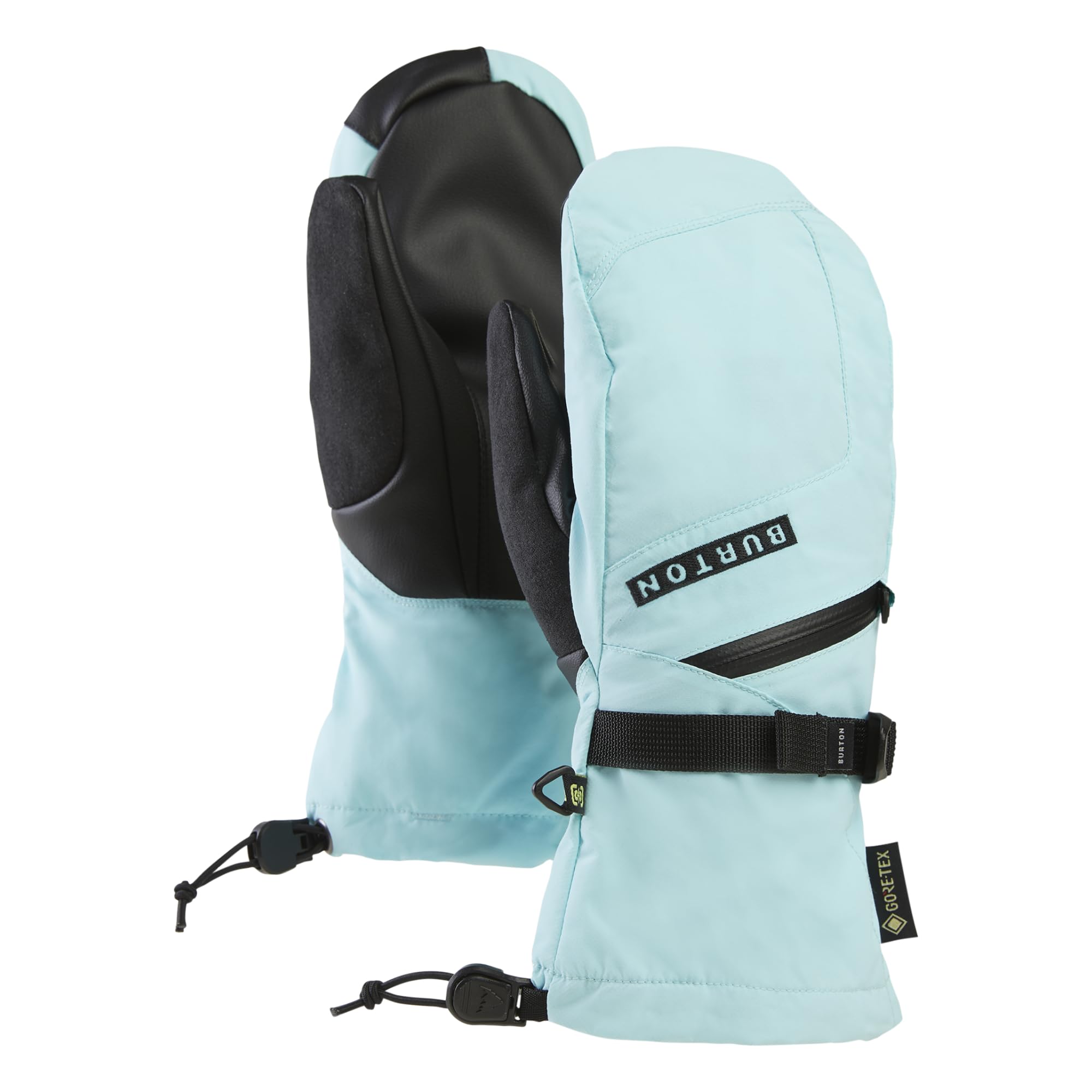
Burton Gore-TEX Mittens
What sets the Burton apart is its Gore-Tex membrane and zip-out liner — a combination that keeps hands dry and lets you dry the liner quickly between runs. This makes it a solid match for skiers who prioritize waterproof breathability and flexibility over the long-term durability of leather. However, the thumb fit runs tight for some, and seam integrity may not match leather gloves under repeated heavy use. Those with wider thumbs or who need a glove for many seasons of aggressive riding may find the standard fit limiting.
Pros
- Consistent warmth in sub-zero conditions.
- Solid build quality for the price point.
- Removable liner speeds drying and adds versatility.
Cons
- Thumb area can feel tight; sizing up changes fit but reduces dexterity.
- Stitching may show wear earlier than premium alternatives.
For skiers who want Gore-Tex waterproofing and the convenience of a removable liner without paying premium leather prices, the Burton is a strong mid-range pick.
Best for Budget Skiers
Tough Outdoors Mittens
The Tough Outdoors mittens provide impressive warmth and waterproof performance for under $15. Sizing runs small, so ordering up is a good idea, and the stitching and elastic straps may show wear after repeated use. These are best for occasional skiers or anyone who needs reliable cold-weather protection without the premium price tag.
Pros
- Keeps hands warm in cold conditions.
- Surprisingly solid build quality for the low price.
- Soft, comfortable lining that feels cozy during use.
Cons
- Sizing tends to run small; ordering a size up is advisable.
- Stitching and elastic straps may not hold up to frequent heavy use.
A strong choice for budget-conscious skiers who value warmth and waterproofing over long-term durability.
Best for Everyday Wear
OR Flurry Mitts
The OR Flurry Mitts pack noticeable warmth into a trim profile, making them comfortable for driving and walking — unlike lightweight touchscreen options that prioritize convenience over insulation. However, the wool lining lacks enough warmth for sub-zero temperatures or high-output skiing. The internal seams may also irritate sensitive skin during extended wear. These work best for casual outdoor use in mild to moderate cold, where their rubber palm grip and tailored fit add real value.
Pros
- Provides genuine warmth in a slim, non-bulky design
- Tailored fit with high build quality
- Comfortable for driving, walking, and light hiking
Cons
A practical everyday mitten for mild winter conditions — not a cold-weather ski glove.
Best for Gauntlet Skiers
Gordini Gore-Tex Gauntlet
The Gordini Gauntlet delivers reliable Gore-Tex waterproofing and a generous cuff that seals out snow during chairlift rides and deep powder days. It offers the core protection of pricier mittens without the premium cost, though it lacks a removable liner for quick drying between runs.
This mitten suits skiers who want solid weather protection on a budget and don’t need the versatility of a two-layer system. The fixed insulation stays warm enough for most resort days, but durability over multiple seasons of heavy use may be less certain compared to leather alternatives.
Pros
- Gore-Tex membrane keeps hands dry in wet snow and slush.
- Long gauntlet cuff extends well past the jacket sleeve for secure snow seal.
- Mid-range price brings Gore-Tex performance below typical premium options.
Cons
- Fixed liner can’t be removed for faster drying between days on the mountain.
- Gauntlet cuff may feel bulky under slim-fitting ski jacket wrists.
A cost-effective Gore-Tex mitten for skiers who prioritize waterproofing and snow protection over liner flexibility or long-term ruggedness.
Best for Leather Fans
Swany X-Cell 2.1
The Swany X-Cell 2.1 brings moisture-wicking, quick-drying leather to the ski mitten category, focusing on keeping hands dry during active runs. While the top pick offers more extensive user feedback, this mitten targets those who trust Swany’s reputation and are comfortable with limited validation. New buyers should confirm sizing carefully due to sparse fit reports.
Pros
- Moisture-wicking lining reduces sweat buildup during high-output skiing.
- Leather shell provides durability and natural dexterity.
Cons
- Price comparison with similar leather mittens is difficult without transparent pricing.
A moisture-focused leather mitten for those who prioritize hand dryness and brand trust over widespread feedback.
Best for Cross-Country
Hestra Moon Light

The windproof shell blocks chill during active pursuits, keeping hands warm in moderate temps without overheating. Thumbs may dampen during high exertion, and the elastic wrist closure lacks adjustability. That limits its use for cold resort days or those needing a snug seal. The premium price feels high given those gaps.
Pros
- Keeps hands warm during cross-country and snowshoeing in moderate cold.
- Windproof shell blocks chilly air during active winter sports.
Cons
- Thumb dampness can occur during high exertion; wrist closure lacks adjustability.
A good option for cross-country skiers and snowshoers who prioritize breathability over waterproofing and don’t need an adjustable wrist cuff.
Best for Classic Leather
Hestra Leather Box Mitt

This leather mitten delivers solid warmth and durable construction for moderate cold days. The wrist area can be snug, potentially interfering with ski pole straps, and the unisex fit may not suit narrower women’s hands. It’s a capable alternative if the Heli Ski is out of budget, but expect to try before committing.
Pros
- Warmth holds up in moderate cold conditions
- Leather shell resists wear and water well
Cons
- Wrist area can be tight and may interfere with ski pole straps
A solid mid-range leather mitten if you can test the fit first and don’t require a women-specific cut.
Best for Casual Use
Burton Profile Mitten

The Burton Profile Mitten pairs touchscreen capability with a budget-friendly price for casual winter wear. It keeps hands comfortable in cool weather around town or during light snow activities. However, the thin insulation means this mitten is not warm enough for skiing or very cold conditions — a tradeoff for the low cost and dexterity.
Pros
- Touchscreen-compatible for phone use without removing mittens.
- Keeps hands warm in mild winter conditions.
Cons
- Thin insulation limits warmth for skiing or very cold days.
A decent budget option for casual winter errands and light snow play, but not a mitten for skiing.
Best for Budget Style
Spyder Quilted Mitten

The quilted design and low price make this an affordable option for occasional snow days. Warmth and durability are unconfirmed due to limited feedback, so it is best reserved for light winter activities rather than serious skiing.
Pros
- Quilted design provides a stylish look for casual winter outings.
- Budget-friendly price for light snow play and daily errands.
Cons
- May not provide enough warmth for sub-freezing ski conditions.
Best for casual snow play where budget is the main concern, rather than performance skiing.
Best for 3M Insulation
UMEWARM 3M C100

These unisex mittens use 3M C100 insulation and a double waterproof layer (nylon + TPU) to keep hands warm in moderate cold. The zippered hand warmer pocket adds convenience. However, limited feedback on fit and long-term durability makes them better suited for mild winter conditions than heavy resort use.
Pros
- 3M C100 insulation delivers efficient warmth in moderate cold conditions.
- Double waterproof layers (nylon + TPU) keep snow and moisture out during light precipitation.
Cons
- Fit can vary and durability under frequent use is unclear; best for occasional wear.
A cost-effective choice for skiers on a budget who ski mainly in mild conditions and want 3M insulation without the premium price.
Best for Low Price
Tofern Ski Mittens

Key Features
- Insulation Type: Comformax 180G
- Material: Polyester/PU
- Price: $
This mitten packs many features at a low price: a TPU waterproof membrane, 180g insulation, and an internal five-finger layout. The reviews, however, provide little concrete detail on how warm it stays in cold conditions or how the materials hold up over time. It works best for casual winter use where deep cold performance isn’t the priority.
Pros
- TPU membrane provides waterproofing for snow and light rain.
- Internal five-finger design allows better dexterity than standard mittens.
Cons
- Warmth and durability claims are not substantiated by detailed user feedback.
Best suited for budget buyers who want feature-packed mittens for mild winter activities and don’t require verified sub-zero warmth.
How to Choose
The single most important factor in ski mittens is fit: a mitten that’s too loose lets cold air in, while one too tight restricts circulation and leads to cold fingers.
Waterproof Membrane
Gore-Tex membranes breathe better and last longer than proprietary TPU films, but they add $20-$40 to the price. TPU works fine for dry snow and short days, but under wet conditions or heavy sweating, moisture can get trapped inside, making your mittens clammy.
If you ski in wet snow or resort slush, the extra cost for Gore-Tex is worth it. For dry, cold climates or occasional use, a good TPU membrane is sufficient.
Insulation Type
Synthetic fills like 3M Thinsulate or Comformax offer consistent warmth even when damp, but they pack down over time and lose loft. Wool liners (like in the OR Flurry) manage moisture naturally but are less insulating for the same thickness.
The trade-off is simple: synthetic is better for wet conditions, wool is better for breathability during active sports. Choose based on your typical activity and weather.
Removable Liner
A removable liner allows you to dry the mittens overnight and swap in a thin glove for mild days. But the extra zipper or button adds weight and a potential failure point. Mittens with fixed liners are simpler and often more durable.
If you ski multiple days in a row or tend to sweat heavily, removable liners save a lot of frustration. Otherwise, a fixed liner is fine.
Material
Leather mittens (like Hestra) mold to your hand over time and resist abrasion from ski poles and bindings, but they require periodic waterproofing and dry slower. Synthetic mittens are lighter, cheaper, and dry quickly, but they wear out faster and can feel slippery on wet poles.
For resort skiing with lots of chairlift time, leather’s durability pays off. For backcountry or cross-country where weight matters, synthetic is the better call.
Fit and Sizing
Ski mittens should fit snugly without crushing your fingers. A common mistake is buying a larger size for warmth, which actually causes cold hands because air circulates inside. The thumb shape matters most: many mittens have a thumb that’s too short or angled wrong, leading to pressure points.
If you’re between sizes, always size up only if the thumb shape is generous. Read reviews specifically about thumb and wrist fit, not just overall hand size.
FAQ
Are Hestra mittens worth the high price for skiing?
Yes, for skiers who spend 20+ days a season on the mountain. Hestra uses premium leather and consistent construction that outlasts most synthetics by several years. The warmth and fit are consistently rated among the best in the category. For occasional skiers, a mid-range mitten like the Burton Gore-TEX offers better value.
Why do my ski mittens get wet inside after a few hours?
That’s usually sweat buildup, not external leakage. Many budget mittens use non-breathable TPU membranes, trapping moisture inside. Gore-Tex or other breathable membranes let sweat escape. Also, if you take mittens off and on, snow can get inside the cuff. Use a gauntlet-style or cinch the wrist strap tightly.
How tight should ski mittens fit to stay warm?
Snug but not crushing. You should be able to wiggle your fingers slightly, but there should be no air gap at the tips. If you can pinch fabric at the fingertips, they’re too loose. The thumb should lie naturally without pressure on the nail. Test by holding a ski pole grip to ensure you can grip comfortably.
Can you use hand warmers with ski mittens safely?
Yes, but only in mittens that have a designated hand warmer pocket or enough room without compressing the insulation. Never place a hand warmer directly against skin; it can cause burns at high heat. Mittens with removable liners are ideal because you can tuck the warmer between the liner and shell.