This post contains affiliate links. We may earn a small commission when you buy through our links — at no extra cost to you.
Every hiker knows the frustration: you toss your water bottle in your pack, and an hour later your gear is wet from a leaking straw lid. Or the bottle dents on its first fall. Or the water is warm by noon. The problem isn’t that good hiking bottles don’t exist – it’s that the marketing claims don’t always match real-world use.
Choosing between a lightweight plastic bottle and an insulated stainless steel one is the obvious fork. But the real deciding factor is often the lid design: a straw lid is convenient for sipping but can leak when tipped, while a screw-top spout is more reliable but slower to drink from.
That trade-off defines this guide. We’ve sorted through the options to find bottles that actually deliver on leakproofness, temperature retention, and durability for the type of hiking you do – whether that’s ultralight backpacking or a day-long ridge walk.


Best for Day Hikes
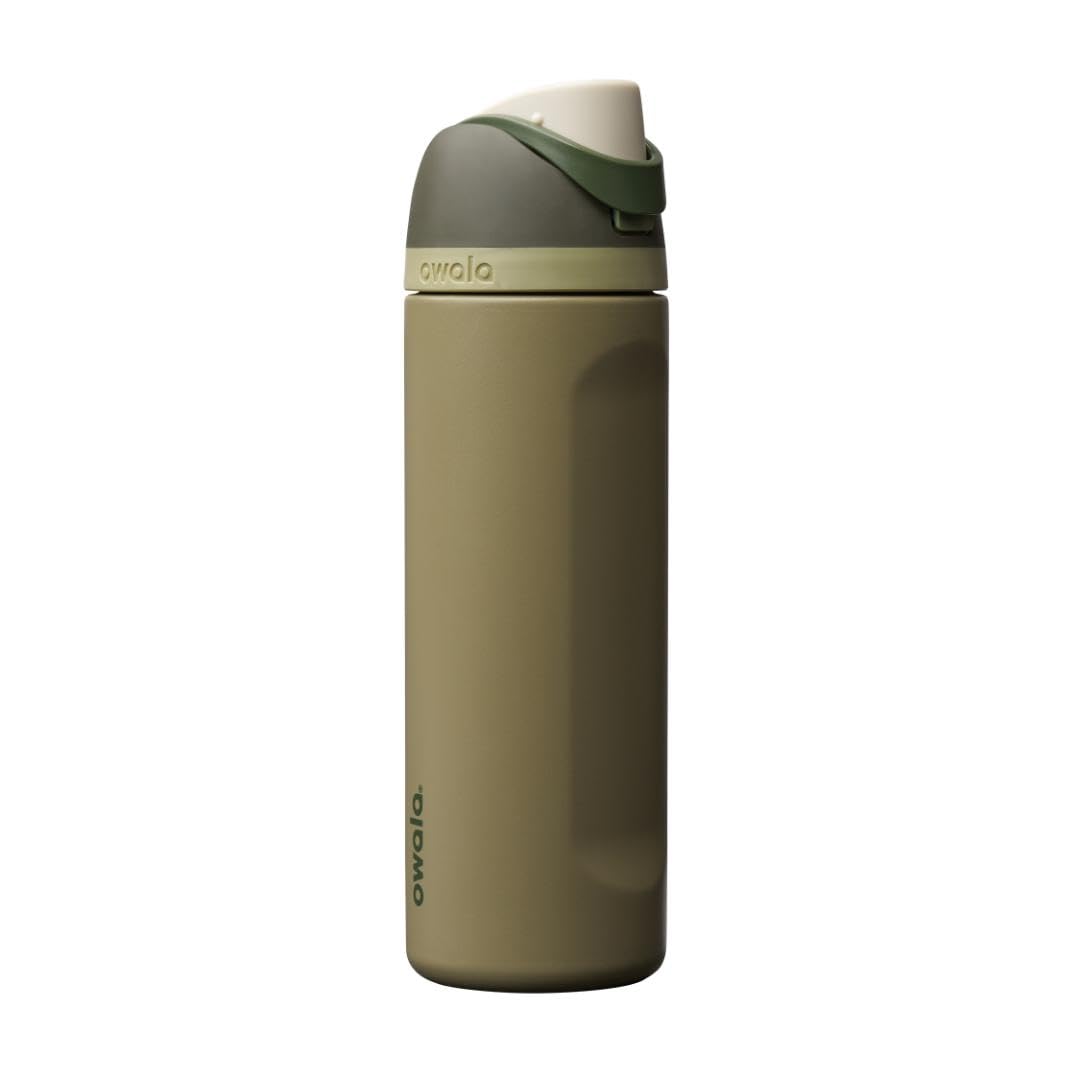
Owala FreeSip 24 oz
Key Features
- Material: Stainless Steel
- Insulation: Double wall, 24h cold
- Lid Type: FreeSip spout with lock
- Capacity: 24 oz
- Weight: 0.84 lbs
- Price: Mid-Range
The Owala FreeSip stands out for its dual-mode drinking: sip through the built-in straw or flip the lock and tilt for a wide-mouth chug. The push-button lock secures the spout when not in use, making it dependable in a backpack.
Temperature retention keeps water cold for a full day – ice cubes still present after 24 hours. The stainless steel construction feels solid, though the exterior paint may show scratches with regular use against rocks or in a bag.
Best suited for day hikers who want a single bottle for sipping on the trail and quick chugs at rest stops. The 24 oz capacity is enough for short outings but will require refills on all-day hikes. The lid mechanism and paint can show wear from drops, so this is a better choice for those who handle their gear with reasonable care.
Pros
- FreeSip spout offers straw sipping and tilt chugging in one intuitive design – no swapping lids.
- Push-button lock keeps the spout closed when engaged – no leaks when tossed in a pack.
- Double-wall insulation keeps water cold for 24 hours – ice survives overnight.
Cons
- Paint may scratch and lid mechanism can feel less robust after drops – best for careful daily use rather than rugged abuse.
- 24 oz capacity may require refills on long hikes – sized for day trips, not all-day outings.
For day hikers who prioritize a leakproof, easy-drinking design over maximum durability or capacity, the Owala FreeSip delivers a thoughtful solution that works well in practice.
Best for Versatile Use
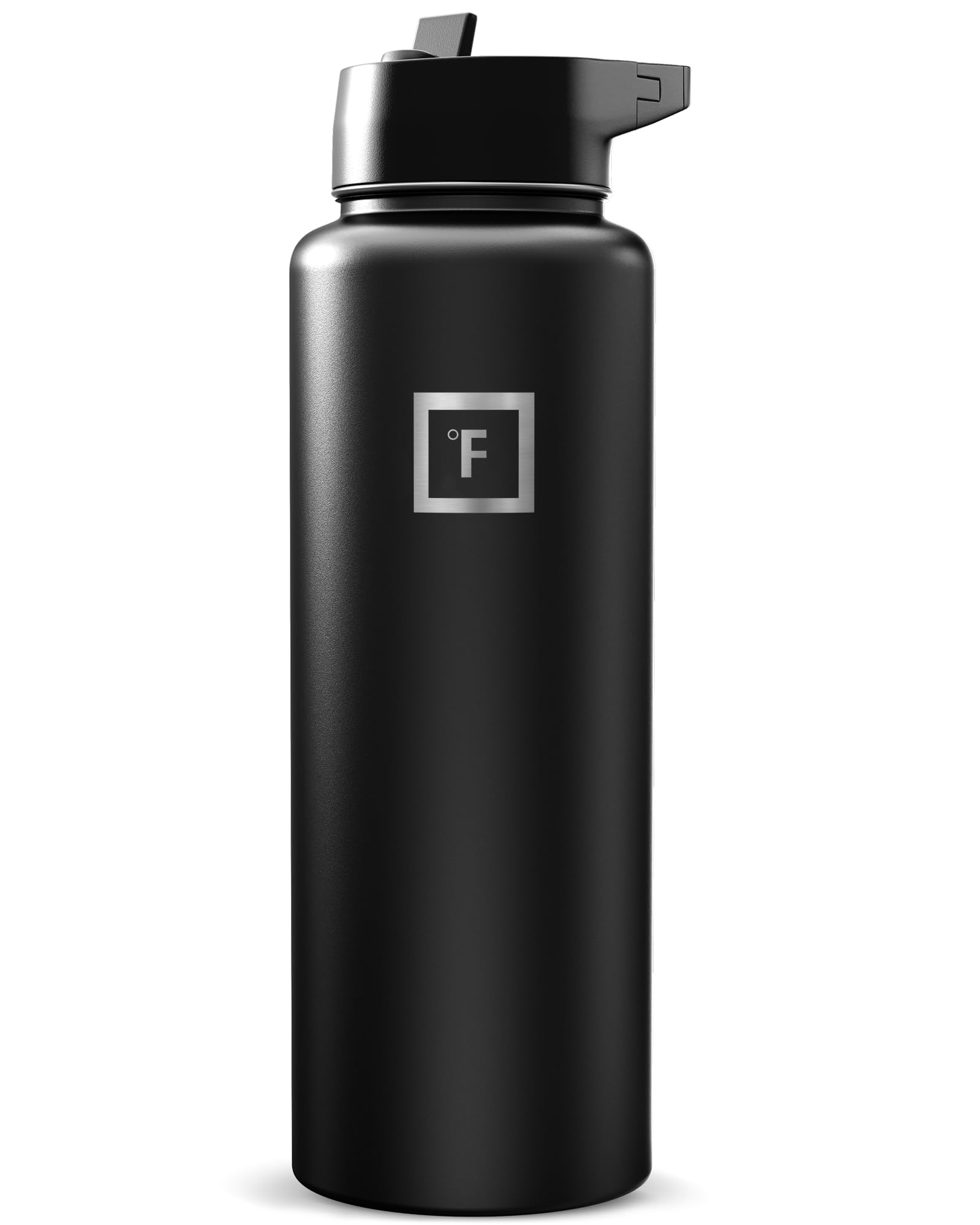
Iron Flask 40 oz
Key Features
- Material: Stainless Steel
- Insulation: Double wall, 24h cold
- Lid Type: Straw + spout cap
- Capacity: 40 oz
- Weight: 0.98 lbs
- Price: Budget
The Iron Flask differentiates itself by including three lid types (straw, spout, and flex cap) with its 40 oz insulated bottle at a budget-friendly price. Its double-wall stainless steel construction keeps water ice cold for a full day, matching the performance of bottles that cost twice as much. The powder-coated finish adds scratch resistance for trail use.
This bottle works well for hikers who value lid flexibility and cold retention over absolute leakproof consistency. The straw lid can leak if not fully tightened or if the gasket shifts, and the plastic lid components may crack after a hard drop — tradeoffs that are manageable for those who handle their gear with care. For budget-conscious outdoor enthusiasts, the Iron Flask is a compelling alternative to pricier options.
Pros
- Keeps ice water cold for a full day in warm conditions.
- Includes three lid types (straw, spout, flex cap) for different drinking preferences.
- Powder-coated exterior resists scratches and minor impacts.
Cons
- Straw lid may leak if not fully tightened or if the gasket shifts.
- Plastic lid components can crack after a drop onto hard surfaces.
For hikers who want an affordable insulated bottle with multiple drinking options and can accept the straw lid’s occasional leak, the Iron Flask delivers strong value.
Best for Rugged Use
Takeya Actives 32 oz
Key Features
- Material: Stainless Steel
- Insulation: Double wall, 24h cold
- Lid Type: Spout lid with lock
- Capacity: 32 oz
- Weight: 0.88 lbs
- Price: Mid-Range
The Takeya Actives 32 oz stands out for its dent-resistant build — it handles drops that would ding a premium competitor’s bottle. Its double-wall vacuum insulation keeps drinks cold for a full day, and the leakproof spout lid operates smoothly with one hand.
This bottle suits hikers who prioritize ruggedness over lid innovation. The spout lid requires disassembly for thorough cleaning to prevent mold in crevices, and some units may have a metallic taste initially that fades after several washes. If you need a bottle that can take abuse and don’t mind a bit of maintenance, this is a solid performer at a fair mid-range price.
Pros
- Keeps ice cold all day, even in hot cars and direct sun.
- Survives drops onto rocks and concrete without dents or damage.
- Leakproof spout lid seals consistently, preventing spills in packs.
Cons
For hikers who need a bottle that can take a beating and keep water cold all day, the Takeya Actives delivers without the premium price tag.
Best for Ultralight
Nalgene Wide 32 oz
Key Features
- Material: Tritan plastic
- Insulation: Not insulated
- Lid Type: Screw cap
- Capacity: 32 oz
- Weight: 0.4 lbs
- Price: Budget
Weighing just 6.4 ounces and built from impact-resistant Tritan plastic, the Nalgene Wide Mouth avoids the weight penalty of stainless steel bottles while matching their ruggedness. The wide opening makes cleaning simple, accepts ice cubes, and fits most water filters directly – a practical design that’s remained a trail staple for years.
This is the go-to bottle for ultralight backpackers and hikers who routinely drop gear on rocks – the tradeoff is no insulation, so water warms up in direct sun and condensation can wet pack contents. The simple screw cap is easy to maintain, but occasional leaks can occur if the cap isn’t tightened fully before laying the bottle on its side.
Pros
- Extremely lightweight – a clear advantage over metal bottles for carrying long distances.
- Nearly indestructible design survives drops, falls, and rough trail handling without cracking.
- Wide mouth allows easy cleaning, adding ice, and direct attachment to water filters.
Cons
- In direct sun, water warms up faster than insulated bottles – a limitation for hot-weather hikes.
- Screw cap may leak if not fully tightened, especially when the bottle is laid on its side.
For ultralight backpackers who count every gram and break everything else, the Nalgene Wide Mouth is the rational choice – no insulation, no fuss, just a bottle that lasts.
Best for Base Camp
RAYMYLO 40 oz
Key Features
- Material: Stainless Steel
- Insulation: Triple wall, 36h cold
- Lid Type: Straw + spout
- Capacity: 40 oz
- Weight: 2.5 lbs
- Price: Mid-Range
The RAYMYLO 40 oz bottle delivers exceptional ice retention thanks to triple-wall vacuum insulation — cold drinks stay cold past two days. It comes with a carrying pouch, two lids (straw and spout), a straw brush, and a paracord handle, all at a mid-range price that undercuts many comparable insulated bottles.
This weight is the tradeoff: at 2.5 lbs empty, plus water, it’s not something you want to carry on a hike. The straw lid and handle can also develop cracks or wear with rough handling, so careful use is advised. For base campers or car campers who don’t need to pack it far, and for anyone who prioritizes long ice retention over portability, this bottle delivers good value.
Pros
- Stays cold for over 36 hours with triple-wall vacuum insulation.
- Includes pouch, two lids, straw brush, and paracord handle – strong value bundle.
- 18/8 stainless steel resists corrosion and keeps water tasting clean.
Cons
- Empty weight of 2.5 lbs makes it impractical for any hike longer than a short carry to camp.
- Straw lid and paracord handle may show wear or cracking after repeated use.
Best for base camp and car use where weight isn’t a factor and you want long ice retention without spending premium.
Best for Ultralight
Nalgene Narrow 32 oz

Key Features
- Material: Tritan plastic
- Insulation: Not insulated
- Lid Type: Screw cap
- Capacity: 32 oz
- Weight: 0.35 lbs
- Price: Budget
For ultralight hikers who want a leakproof bottle with minimal weight, the Nalgene Narrow Mouth 32 oz shaves a few grams off the wide-mouth version. The narrower opening makes sipping on the move less splashy. However, the tradeoff is cleaning: the narrow neck requires a brush, and the wide-mouth version is equally light and offers easier cleaning and versatility. If you prioritize weight and drinkability over easy maintenance, this fits; otherwise, the standard Nalgene is a better all-rounder.
Pros
- Weighs slightly less than the standard wide-mouth Nalgene, useful when every gram counts.
- Narrower opening limits splashing and makes sipping more controlled during hiking.
Cons
- Can be more difficult to clean than wide-mouth versions, requiring a bottle brush for thorough drying.
- Water temperature rises quickly in sun, typical for non-insulated plastic bottles.
Best for hikers who prioritize ultra-light weight and controlled drinking over easy cleaning and insulation.
Best for Budget Insulated
Takeya Originals 32

Key Features
- Material: Stainless Steel
- Insulation: Double wall, 24h cold
- Lid Type: Spout lid with lock
- Capacity: 32 oz
- Weight: 0.93 lbs
- Price: Mid-Range
The Takeya Originals 32 delivers the same double-wall vacuum insulation that keeps water cold for 24 hours as its more expensive sibling, but at a lower cost. The spout lid stays leakproof during hikes and locks securely. However, the thinner stainless steel dents more easily from drops, and the spout can develop a rubbery taste if not cleaned regularly. This is a solid value for hikers who want insulated hydration without paying a premium, as long as they handle it with care.
Pros
- Insulation performance comparable to premium brands, at a lower price.
- Leakproof spout with hinge lock stays secure during hikes.
Cons
- On rocky trails, the thin stainless steel can dent from drops – fine for well-groomed paths.
- The spout lid can retain rubbery odors if not rinsed after use.
A solid choice for cost-conscious day hikers who prioritize cold water over rugged durability and are willing to clean the lid after each trip.
Best for Premium Brand
Hydro Flask 32 oz

Key Features
- Material: Stainless Steel
- Insulation: Double wall, 24h cold
- Lid Type: Flex straw cap
- Capacity: 32 oz
- Weight: 1.1 lbs
- Price: Premium
The Hydro Flask 32 oz keeps ice cold overnight and the 18/8 stainless steel imparts no metallic taste – a clear advantage for hikers who notice off-flavors. The powder coat finish comes in attractive colors that resist scratching. However, the bottle dents noticeably from minor drops, and the Flex Straw Cap requires careful closure to prevent leaks. At a premium price with these durability and usability concerns, it trails behind more rugged options like the Takeya Actives for hiking.
Pros
- Ice remains solid for 24+ hours even in warm conditions
- No metallic flavor transfer – water tastes pure from start to finish
Cons
- When dropped on rocky trails, the bottle may dent – a tradeoff for hikers who handle gear carefully
- The Flex Straw Cap can leak if not perfectly aligned – worth checking before stowing in a pack
Best for brand loyalists who prioritize taste and insulation over impact resistance, and who will handle the bottle with care on day hikes where drops are unlikely.
Best for Short Walks
HydroJug Traveler 32

Key Features
- Material: Stainless Steel
- Insulation: Triple wall (not spec)
- Lid Type: Flip straw
- Capacity: 32 oz
- Weight: 1.08 lbs
- Price: Mid-Range
The HydroJug Traveler combines a leakproof flip straw with a wide range of attractive colors, making it a visually appealing water bottle for short excursions. However, the handle may detach after months of use, and the tumbler shape — with exterior condensation — doesn’t fit in backpack side pockets, so it is better reserved for car or desk hydration than hiking. It serves well for trips from the car to the campsite or around the office, but for active outdoor carry, the design limits practicality.
Pros
- Flip straw locks down to prevent spills when not in use.
- Available in multiple colors with a sleek, modern appearance.
Cons
- If you regularly carry the bottle by its handle, it may separate from the body over time.
- On hikes, the tumbler shape won’t fit in backpack side pockets and condensation makes the exterior slippery.
Best suited for a car cup holder or desk, where the handle isn’t stressed and condensation isn’t a concern.
Best for Car Camping
Stanley IceFlow 30 oz

Key Features
- Material: Stainless Steel
- Insulation: Double wall, iced 2 days
- Lid Type: Flip straw
- Capacity: 30 oz
- Weight: 1.32 lbs
- Price: Premium
The Stanley IceFlow keeps ice for two days and withstands drops better than many competitors. However, at 1.32 lbs and with a tumbler shape that doesn’t fit backpack pockets, it’s not suited for hiking. The flip straw lid requires careful alignment to prevent leaks, and the premium price reflects brand reputation rather than hiking-specific design.
Pros
- Ice stays cold for up to 48 hours even in warm conditions.
- Stainless steel construction withstands drops and rough handling.
Cons
- In a backpack or side pocket, the 30 oz tumbler’s width and weight make it impractical – better for car cup holders.
- The twist-on lid can leak if not threaded perfectly; alignment matters more than with screw-top bottles.
Best for car camping or road trips where you want access to ice-cold water without carrying the bottle on your back.
Best for One-Hand Use
Coleman Autoseal 24

Key Features
- Material: Stainless Steel
- Insulation: Double wall, 31h cold
- Lid Type: Push-button spout
- Capacity: 24 oz
- Weight: 0.89 lbs
- Price: Premium
The Autoseal technology works as promised — press the button to drink, release to seal, no spills. Insulation keeps cold drinks cold for a full day. The trade-off: the lid assembly has crevices that require diligent cleaning to prevent mold, and the button mechanism can wear over time. At 24 oz and a premium price, this bottle suits hikers who value convenience over capacity and budget, but the smaller size and maintenance demands make it a niche pick.
Pros
- Autoseal push-button prevents spills when not in use – one-hand operation.
- Double-wall insulation keeps water cold for 31 hours.
Cons
- Lid design has hard-to-reach crevices that can develop mold if not cleaned regularly.
- Button mechanism may fail after extended use – lid replacement can be needed.
This bottle works best for hikers who prioritize spill-proof one-hand drinking and are willing to put in regular lid cleaning, accepting the premium price for 24 oz.
Best for Hydration Tracking
Hydracy 32 oz

Key Features
- Material: Tritan Plastic
- Insulation: Not insulated
- Lid Type: Flip spout + infuser
- Capacity: 32 oz
- Weight: 0.66 lbs
- Price: Mid-Range
The time markers make it easy to track your water intake, and the included fruit infuser adds flavor. The wide mouth and simple lid simplify cleaning. However, the plastic isn’t insulated, so water warms up quickly in the sun even with the included sleeve. Additionally, the lid lock mechanism can become unreliable after a few months of use. This bottle suits short day hikes in mild weather but isn’t suited for all-day heat or rough backpacking.
Pros
- Time markers encourage consistent water intake throughout the day.
- Wide mouth and simple lid make cleaning easy.
Cons
- Water warms up quickly in sun; neoprene sleeve doesn’t keep cold long.
- Lid lock mechanism can become unreliable after a few months of use.
A smart choice for short hikes where you want to track hydration and enjoy infused water, but not for hot conditions or long trips.
Best for Cup Holder Fit
Owala Sway 30 oz

Key Features
- Material: Stainless Steel
- Insulation: Triple layer, 24h cold
- Lid Type: FreeSip spout + handle
- Capacity: 30 oz
- Weight: 1.2 lbs
- Price: Premium
The Owala FreeSip Sway 30 oz is a solid choice for hikers who value cup-holder compatibility and a leakproof lock. However, the handle may break under regular use, and the paint can scratch over time. At a premium price, it is not as durable as the Takeya Actives, and its design is better suited for trail-to-car transitions than extended backpacking where clipping gear is needed.
Pros
- Fits most car cup holders – a rare feature for an insulated bottle.
- Leakproof when the lid is locked – no spills during transport.
Cons
- Handle may break under regular use – a durability concern.
- Paint can scratch over time – cosmetic damage is possible.
Best for hikers who drive between trails and want a cup-holder-friendly bottle, but not for those needing a durable handle for clipping gear.
Best for Car Camping
BUZIO 64 oz
Key Features
- Material: Stainless Steel
- Insulation: Triple wall, 48h cold
- Lid Type: Straw + spout
- Capacity: 64 oz
- Weight: 0.9 lbs
- Price: Mid-Range
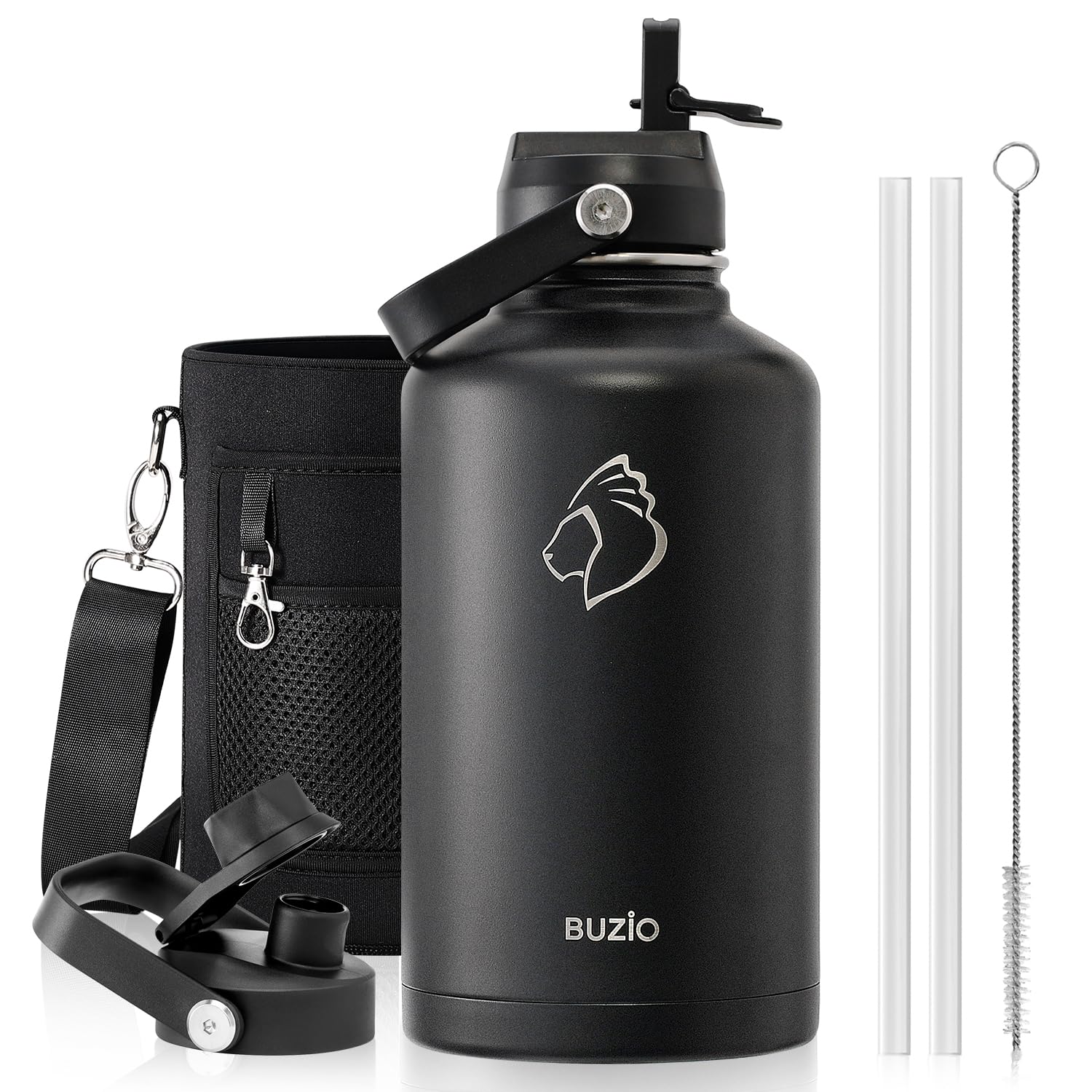
The BUZIO 64 oz delivers on its promise of massive capacity and ice that lasts two days in hot conditions, making it a practical hydration hub for car camping or a long work shift where refills aren’t an option. However, its 4+ pound weight when full and inconsistent seal on the straw lid mean it isn’t suited for hiking or any situation where you need to carry water on your back. The stainless steel build and included two lids are functional for stationary use, but buyers should check the lid seal regularly for leaks.
Pros
- Holds 64 oz for full-day hydration without refills.
- Keeps ice for up to two days in warm conditions.
Cons
- Straw lid may leak if not perfectly sealed – worth checking before tilt.
- Weighs over 4 lbs when full – impractical for carrying any distance.
Best left in the car or at camp for group water supply; look elsewhere for a hike-friendly bottle.
How to Choose
The most important decision when choosing a hiking water bottle is the lid design – it determines whether you’ll have a leak-free pack or a damp sleeping bag.
Material: Plastic vs Stainless Steel
Plastic bottles like Nalgene are ultralight and nearly indestructible, but they offer no insulation – your water warms up fast in the sun and condensation dampens your pack. Stainless steel is heavier but keeps water cold for hours, though it dents when dropped.
Your choice hinges on hike length and climate: for multi-day ultralight trips where every ounce counts, plastic wins. For day hikes in hot weather where cold water is a priority, insulated stainless steel is worth the extra weight.
Insulation Performance
Double-wall vacuum insulation is the standard for keeping water cold 24 hours. Triple-wall claims of 36-48 hours rely on a full load of ice – plain cold water warms up faster than those numbers suggest. If you regularly add ice, triple-wall bottles like the RAYMYLO deliver. If you only use cold tap water, double-wall is sufficient.
The real-world test is whether ice lasts overnight. Most double-wall bottles struggle past 12 hours with ice, while triple-wall can hold it into the next day. For a full day hike without ice, any insulated bottle works.
Lid Design: Straw vs Spout vs Screw
Straw lids are the most convenient for sipping without tilting your head, but they are the most likely to leak when the bottle is on its side – the gasket can shift or the lid may not seal perfectly. Spout lids (like Takeya’s) are more leakproof and easier to clean, but require you to tilt the bottle. Screw caps are simplest and most reliable but need two hands.
For throwing a bottle into a backpack without worry, choose a spout lid or a screw cap. If you prioritize easy drinking on the move, a straw lid with a lock (like Owala’s) is workable but check the seal regularly.
Capacity: How Much Water to Carry
A liter of water weighs about 2.2 pounds. A 24 oz bottle holds 0.7 liters, enough for a short day hike. A 32 oz bottle holds nearly a liter and is the standard for most day trips. For long, water-scarce trails, 40 oz or more is useful, but the full bottle weight (over 3 lbs) becomes a burden.
Match capacity to your route’s water sources. On well-watered trails, a smaller bottle plus a filter is lighter. In dry conditions, a larger bottle saves stops but adds noticeable pack weight.
Weight and Portability
Every ounce matters on a multi-day hike. A Nalgene weighs 6.4 oz empty; a similar-sized stainless steel bottle is three times heavier. For backpackers, the weight penalty of insulation often outweighs the benefit of cold water. Day hikers carrying the bottle in a car or side pocket can handle the extra pound.
Also consider shape: wide-mouth bottles are easier to clean and add ice, but they are bulkier in pack side pockets. Narrow-mouth bottles fit better in some holders but are harder to clean.
FAQ
Why does my insulated water bottle leak from the straw even when closed?
The most common cause is a misaligned or shifted gasket inside the straw lid. If the bottle is dropped or the lid is screwed on too tightly, the rubber seal can deform. Disassemble the lid, reseat the gasket, and test with water before hiking. If the issue persists, the lid may need replacement.
Can I put hot drinks in a vacuum insulated water bottle meant for cold?
Yes, most double-wall stainless steel bottles can hold hot liquids, but the lid design matters. Straw lids are not designed for hot liquids and may leak or get damaged. Spout or screw caps work better. The bottle will keep hot drinks hot for about 12 hours, but always check the manufacturer’s temperature limits.
Which water bottle is best for hiking – plastic or stainless steel?
It depends on your priorities. For ultralight backpacking where weight and durability are critical, a plastic Nalgene is unbeatable. For day hikes where cold water is a priority and you don’t mind the extra half-pound, an insulated stainless steel bottle is better. Avoid stainless if you frequently drop gear – it dents easily.
How do I clean a water bottle with a built-in straw to prevent mold?
Disassemble the lid completely after each use – remove the straw, gasket, and any removable parts. Wash with warm soapy water using a bottle brush and a straw brush. Soak in a vinegar solution (1:1 white vinegar and water) monthly. Dry all parts separately before reassembling. Mold grows in hidden crevices, so thorough disassembly is essential.