This post contains affiliate links. We may earn a small commission when you buy through our links — at no extra cost to you.
Many anglers find that the fishing line they buy doesn’t perform as expected—braids fade after a few trips, monofilament coils up on spinning reels, and fluorocarbon can snap under moderate pressure. The root cause isn’t bad luck but mismatched line type for the application.
This guide cuts through the marketing to show you exactly which lines hold up in real conditions—whether you’re casting lures for bass, soaking bait for catfish, or running leaders in saltwater. The key is understanding how material properties (stretch, memory, abrasion resistance) translate to on-the-water performance.
We’ve organized picks by use-case so you can match the line to your fishing style, not the other way around. The result: less frustration and more time with a tight line.


Best for All-Purpose Heavy Duty
Berkley Big Game Mono
Key Features
- Line Type: Monofilament
- Breaking Strength: 15 lb
- Length: 900 yd
- Diameter: 0.015 in
- Price: $
Berkley Big Game mono delivers toughness that cuts through heavy cover, rocks, and toothy fish without breaking. It handles both fresh and saltwater environments across all reel types, and the price per yard is hard to beat. For anglers who need a main line that won’t quit under pressure, this one holds up.
Where this line falls short is on spinning reels — the memory can create coiling and tangles, especially in finer diameters. Knot strength also varies, so a reliable knot like the Palomar is worth extra attention. These limitations matter less for heavy-duty applications like catfishing, surf fishing, or trolling, where abrasion resistance and raw strength are the priority. This is not a line for finesse or ultralight setups where limpness and thin diameter matter.
Pros
- Extremely durable and tough, handles big fish without breaking.
- Excellent value for the performance, budget-friendly.
- Works well with all reel types and in both fresh and saltwater.
Cons
- Line memory can cause coiling and tangles on spinning reels.
- Knot strength can be inconsistent; some anglers find it difficult to tie reliable knots.
For anglers who prioritize abrasion resistance and brute strength over limpness and finesse, this is the go-to budget mono.
Best for Budget Braid Casting
KastKing SuperPower Braid
Key Features
- Line Type: Braided
- Breaking Strength: 20 lb
- Length: 327 yd
- Price: $$
For anglers who value casting distance and feel over abrasion resistance, this braid delivers smooth, low-memory performance at a cost that undercuts many alternatives. The tradeoff comes in lighter test weights, where the line’s breaking strength can vary between spools, and the dye may transfer onto hands and reels. This combination makes it a sensible pick for occasional freshwater trips where a cut line won’t ruin the day, rather than heavy cover or saltwater environments.
Pros
- Smooth casting with low memory for long-distance throws.
- Good sensitivity for detecting bottom structure and light bites.
- Budget-friendly price for the length on the spool.
Cons
- Color can fade and bleed onto hands and reels during use.
- In lighter test weights, breaking strength can be lower than expected.
A strong value for budget-focused anglers who fish open water and want maximum casting distance, provided line failure isn’t a deal-breaker.
Best for Saltwater Leader
Seaguar Blue Label Fluoro
Key Features
- Line Type: Fluorocarbon
- Breaking Strength: 30 lb
- Length: 25 yd
- Price: $$
Seaguar Blue Label delivers high abrasion resistance and near invisibility in saltwater, outperforming most fluorocarbons against toothy fish and structure. Its knot strength holds well under pressure, making it a consistent choice for braid-to-leader connections.
This leader material suits saltwater anglers targeting wary gamefish like redfish and snook, where line shyness and abrasion are top concerns. It comes at a premium price per yard, and occasional brittleness can cause breakage below rated strength — expect to inspect sections before use.
Pros
- High abrasion resistance and near invisibility in water.
- Good knot strength that ties easily and holds under pressure.
- Durable in saltwater, resists fraying better than many alternatives.
Cons
- Premium price per yard limits its value for bulk leader use.
- Can be brittle in some cases, leading to breakage below rated strength.
Seaguar Blue Label is the right choice when invisibility and toughness matter more than cost — best for critical saltwater presentations.
Best for Heavy Cover
Berkley Trilene XT
Key Features
- Line Type: Monofilament
- Breaking Strength: 6 lb
- Length: 330 yd
- Diameter: 0.010 in
- Price: $
Trilene XT leans into extreme toughness where the more versatile top pick balances all-around use. Its thick, stiff monofilament resists abrasion from rocks and timber better than most budget options, and the stretch absorbs shock on hooksets. The tradeoff: notable memory that can cause tangles on spinning reels, especially in lighter test strengths like 6 lb. This line suits baitcaster users or those fishing heavy cover who don’t mind the extra stiffness.
Pros
- Exceptional abrasion resistance for fishing heavy cover without breaking the bank.
- Budget-friendly price for a monofilament that feels tougher than its cost.
Cons
- Memory is noticeable enough to cause tangles on spinning reels, especially in lighter test strengths.
Best for anglers who prioritize durability over casting smoothness, especially when using baitcasters or fishing heavy cover.
Best for Heavy Leader
KastKing DuraBlend Mono
Key Features
- Line Type: Monofilament
- Breaking Strength: 80 lb
- Length: 120 yd
- Price: $
The KastKing DuraBlend Mono stands out as a low-cost heavy leader that holds knots well and handles the pull of large, toothy fish. Its clear monofilament design provides the stretch needed for shock absorption during hard runs. This leader is best suited for saltwater anglers targeting big game where mono’s give is an advantage, but it won’t replace fluorocarbon for finesse or low-visibility situations. A key tradeoff: the line can weaken if it gets twisted or kinked, so it demands careful handling around structure.
Pros
- Strong and durable for a heavy mono leader, handling high-stress saltwater fights.
- Affordable compared to fluorocarbon leaders, offering solid performance per yard.
- Easy to tie and holds knots securely under pressure.
Cons
- In heavy saltwater applications, the breaking strength can drop if the line gets twisted or kinked during a fight.
If you need a heavy mono leader for big saltwater game on a budget, this is a strong performer — just avoid finesse use and keep line twists in check.
Best for Finesse Baitcasting
Seaguar InvizX Fluoro
Key Features
- Line Type: Fluorocarbon
- Breaking Strength: 12 lb
- Length: 600 yd
- Price: $$$
Seaguar InvizX stands out for its exceptionally soft, low-memory fluorocarbon that casts smoothly on baitcasters and transmits bites clearly. This supple feel makes it a top choice for finesse presentations, but the tradeoff is reduced durability: fraying and occasional breakage under heavy cover are realistic concerns. It suits serious bass anglers who prioritize castability and sensitivity over long-term toughness and are willing to replace line more often — especially given the premium price per spool.
Pros
- Soft, low-memory fluorocarbon that casts beautifully on baitcasters.
- High sensitivity for detecting subtle bites and structure changes.
Cons
- Fraying and occasional breakage can occur under heavy cover or with abrasive structure.
- Knot strength can be inconsistent; some knots slip or snap under load.
Reach for InvizX when finesse casting and bite sensitivity matter more than durability — just plan on swapping spools more often than with a tougher all-purpose line.
Best for Smooth-Casting Budget
SpiderWire Stealth Braid

Key Features
- Line Type: Braided
- Breaking Strength: 10 lb
- Length: 125 yd
- Price: $
This braid casts smoothly and reduces wind knots, making it a strong option for freshwater bass anglers on a budget. The green coating can fade after a few outings, and knot strength may vary — so it suits anglers who prioritize casting distance and sensitivity over long-term color retention or absolute knot security.
Pros
- Smooth, low-memory casting that minimizes wind knots on spinning gear.
- Solid strength and quality for its budget price point.
Cons
- Green coating can fade after a few fishing trips, reducing its camouflage effect in clear water.
Best for freshwater bass anglers who value smooth, long casts and can accept that the color may fade and knot consistency requires careful tying.
Best for Low-Cost Braid
Reaction Tackle Braid

Key Features
- Line Type: Braided
- Breaking Strength: 10 lb
- Length: 150 yd
- Price: $
This budget braid casts smoothly and feels sensitive, ideal for light freshwater fishing. Fraying, color fade, and variable knot strength can occur after a few trips. Like other budget braids, these weaknesses limit its durability compared to premium lines for heavy cover or frequent use.
Pros
- Smooth casting with low memory on spinning reels
- Good knot holding ability for a braid at this price
Cons
- Fraying or snapping can occur after snagging, so avoid heavy cover or rocky bottoms
Best for freshwater anglers who prioritize casting smoothness and low cost over long-term durability.
Best for Affordable Fluoro Main
Seaguar Red Label Fluoro

Key Features
- Line Type: Fluorocarbon
- Breaking Strength: 12 lb
- Length: 200 yd
- Price: $$
Seaguar Red Label offers decent abrasion resistance at a mid-range price point. Its high line memory makes it better suited for baitcasting reels where spool tension can manage coiling, and occasional knot failures mean it’s less dependable for critical hooksets.
Pros
- Abrasion resistance holds up well in freshwater conditions.
- Mid-range price makes it a budget-friendly option for main line use.
Cons
- Line memory can cause coiling on spinning reels, limiting it to baitcasting setups.
This line works well for anglers using baitcasting reels who want an affordable fluorocarbon main line and are willing to manage memory with proper spool tension.
Best for Budget Fluoro Leader
Berkley Vanish Fluoro

Key Features
- Line Type: Fluorocarbon
- Breaking Strength: 4 lb
- Length: 110 yd
- Price: $
This fluorocarbon leader is nearly invisible in clear water, making it a budget-friendly choice for trout or panfish. However, the material can be brittle, with snaps occurring below its rated strength, and knot performance is inconsistent. This makes it unsuitable for heavy or critical fishing where losing a fish is frustrating. Specifically for light leader applications, it offers good value.
Pros
- Nearly invisible in clear water, reducing spooking in clear conditions.
- Effective as a short leader for trout and panfish due to low visibility.
Cons
- Brittle material can snap below its labeled breaking strength under moderate pressure.
Best suited for light-line trout or panfish fishing in clear water where invisibility matters and line stress is low. Not for heavy or critical applications.
Best for Bulk Mono Value
Zebco Cajun Line

Key Features
- Line Type: Monofilament
- Breaking Strength: 10 lb
- Length: 1450 yd
- Price: $
This Zebco spool delivers an enormous amount of line for the cost, making it a practical choice for topping off multiple reels or for panfish trips where knot loads are minimal. The line is tough enough for freshwater use, but its knot holding is noticeably weaker than other monofilaments – a factor to consider if you are targeting larger fish or fishing in heavy cover.
Pros
- Huge 1450-yard spool at a budget-friendly price.
- Durable enough to hold up in typical freshwater conditions.
Cons
- Knots can slip or come undone under heavier strain – this line suits light duty best.
This line fits best when cost per yard is the priority and the fishing target is panfish or other light freshwater species where knot strength is less critical.
Best for Ultra-Budget Mono
Zebco Outcast Mono

Key Features
- Line Type: Monofilament
- Breaking Strength: 25 lb
- Length: 190 yd
- Price: $
At a budget-friendly price, the Zebco Outcast Mono offers solid tensile strength suitable for heavy freshwater species like catfish and carp. However, the line’s high memory and coiling can cause tangles and bird’s nests, especially on spinning reels — a frustration that makes it unsuitable for any serious angling or setups where casting reliability matters.
Pros
- Extremely affordable with good tensile strength for the price.
- Strong enough for heavy freshwater fishing, works well for catfish and carp.
Cons
- High memory and coiling can cause frequent tangles and bird’s nests on spinning reels.
A reasonable pick for kids’ fishing rods or emergency spools where low cost takes priority over tangle-free casting.
Best for Trusted Braid Brand
Power Pro Braid
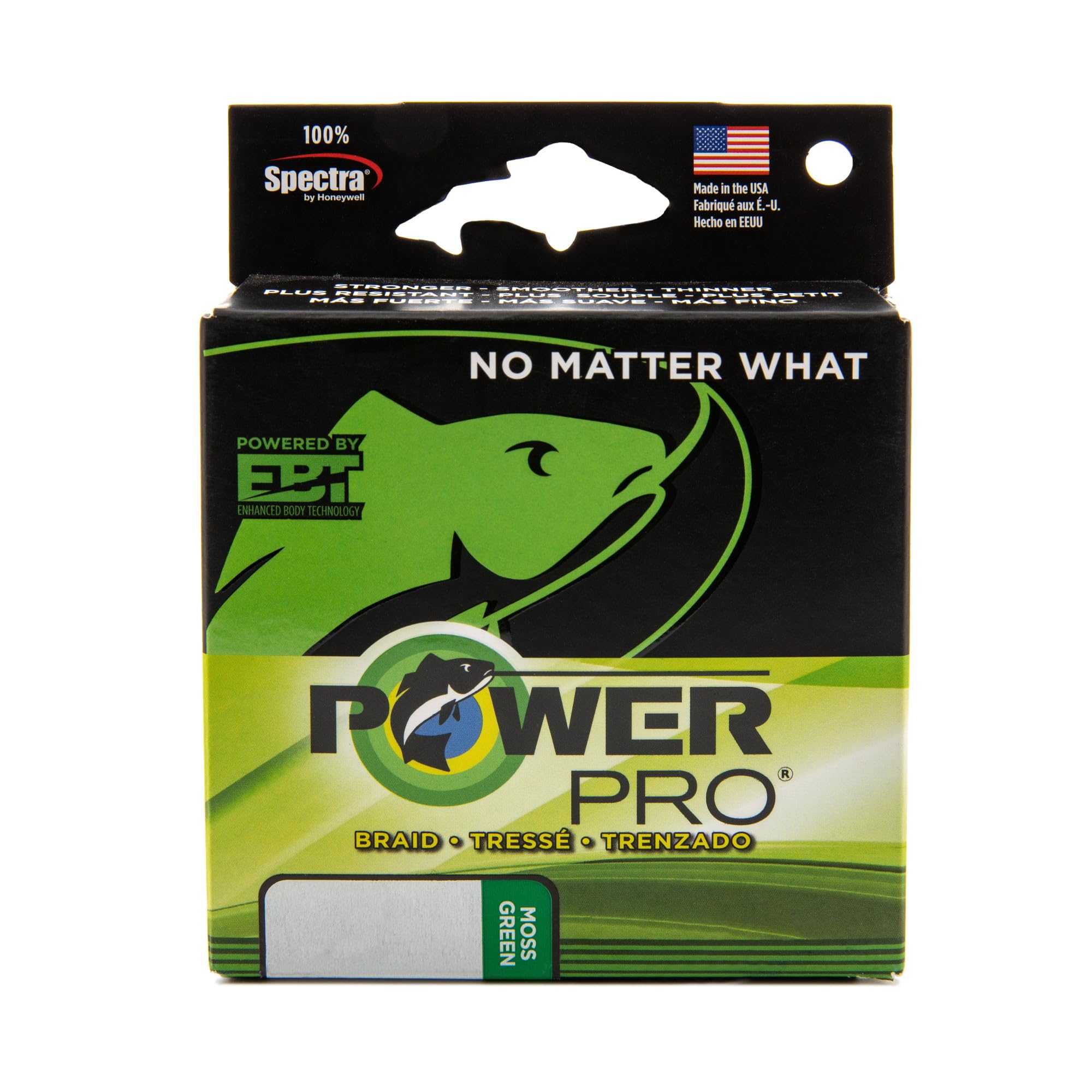
Key Features
- Line Type: Braided
- Breaking Strength: 15 lb
- Length: 300 yd
- Price: $$
Power Pro’s Spectra Fiber braided line offers the sensitivity, strength, and low stretch the brand is known for. The moss green 15lb, 300-yard spool fits freshwater general fishing. Without buyer feedback on this listing, you are buying on brand name alone – fine if you already rely on Power Pro.
Pros
- Spectra fiber construction gives high sensitivity and minimal stretch for better bite detection.
- 300-yard spool provides good value for re-spooling multiple reels.
Cons
- Lack of buyer feedback on this listing leaves real-world performance unconfirmed.
Best for anglers who already know Power Pro’s braid and want to stick with what they have used before, without needing third-party confirmation.
Best for Ultra-Light Budget
Berkley Trilene XL

Key Features
- Line Type: Monofilament
- Breaking Strength: 8 lb
- Length: 330 yd
- Diameter: 0.010 in
- Price: $
Berkley Trilene XL offers the lowest entry price for a basic monofilament line suitable for light freshwater rigs. However, because no customer reviews are available, its casting smoothness, knot holding, and memory characteristics remain unverified. This makes it a gamble for anyone who needs consistent behavior on the water, limiting its appeal to emergency backups or temporary setups where performance expectations are minimal.
Pros
- Lowest price point among mono lines — ideal for tight budgets.
- Clear 8 lb test in a 330 yd spool covers basic panfish and trout needs.
Cons
- Without review data, spool memory, knot strength, and abrasion resistance are unknowns — a risk for consistent fishing.
Only consider this if you need an ultra-cheap mono for a kids’ pole or a spare reel that sees occasional use — otherwise, spend a few dollars more for a verified option.
How to Choose
The most important thing to know about fishing line is that no single type excels at everything—matching the line’s trade-offs to your fishing conditions matters more than brand or price.
Line Type: Mono, Fluoro, or Braid
Monofilament stretches under load, absorbing shock from hooksets and fish runs, but its high memory causes coiling on spinning reels. Fluorocarbon is nearly invisible underwater and sinks quickly, making it ideal for leaders or clear water, but it’s stiffer and more brittle than mono.
Braided line has zero stretch, giving maximum sensitivity and casting distance, but it’s highly visible and can fray against rocks. The right choice depends on visibility needs, abrasion risk, and reel type—spinning reels favor mono or braid, baitcasters handle fluoro better.
Breaking Strength: Pound Test vs. Reality
Stated breaking strength is measured under ideal laboratory conditions; in the real world, knots, nicks, and UV exposure can reduce it by 30-50%. A 10 lb test braid may break at 6 lb after a few uses, especially if the line has been scraped or the knot poorly tied.
For heavy cover or large fish, choose a test 5-10 lb above the fish’s weight. For leaders, match the main line’s strength or go slightly lighter (to sacrifice the leader instead of the whole rig). Always wet knots and test them before fishing.
Length: How Much Line Do You Need?
Most spinning reels hold 100-200 yards of line, but heavy braid takes up more space per yard than thin mono. A 300-yard spool of braid may fill two reels, while the same length of 30 lb mono might barely fill one.
For leaders, 25-50 yards is plenty for a season—you’ll replace them more often than main line. Bulk spools (1000+ yards) save money if you spool multiple reels, but for a single setup, a standard 330-yard mono spool is cost-effective.
Diameter: Thinner Isn’t Always Better
Thinner line casts farther and cuts through wind, but it has lower abrasion resistance and less shock absorption. A 0.010-inch diameter mono is great for finesse panfish, but it will snap quickly on a rocky bottom or around toothy fish.
For heavy cover, thicker line (0.015 inch and up) resists nicks and holds knots better. Match diameter to the fish’s mouth: smallmouth bass and trout need thin lines for natural presentation, while catfish and pike can handle thick mono that won’t wear through.
Abrasion Resistance and Memory
Lines with high abrasion resistance (like stiff fluorocarbon or thick mono) tend to have more memory, meaning they hold coils from the spool and tangle easily. Soft lines (supple braid or premium mono) cast smoothly but fray faster against rocks or shell beds.
For structure fishing around rocks, timber, or docks, prioritize abrasion resistance even if it means dealing with memory. For open-water casting where distance and tangle-free operation matter, a softer line with less memory will save you frustration. Line conditioners can help with memory, but they wear off quickly.
FAQ
Why does my braided fishing line keep breaking with only moderate pressure?
Braided lines often have inconsistent QC; the stated breaking strength is an average, not a guarantee. Additionally, knots can weaken braid significantly—use a Palomar knot and wet it before cinching to reduce slippage. If breakage persists, switch to a heavier test or a different brand known for tighter tolerances.
Does fluorocarbon fishing line have memory problems on spinning reels?
Yes, fluorocarbon is stiffer than monofilament and retains coil memory, which worsens on spinning reels where the line comes off in loops. To minimize tangles, spool fluoro with tension, use a line conditioner, or reserve it for baitcasters where line lay is straighter. For spinning reels, consider a softer fluoro like InvizX or stick to mono.
Is colored braided line worth buying if it fades quickly?
Color fade is cosmetic; the line’s strength and casting performance remain unaffected. If you fish clear water where visibility matters, consider using a fluorocarbon leader instead of relying on braid color. For most fishing, fading is a minor annoyance, not a functional issue—prioritize smooth casting and abrasion resistance over color retention.
What pound test monofilament should I use for catfishing?
For general catfish in rivers and lakes, 15-20 lb test is a good starting point. Channel cats rarely exceed 10 lb, but flatheads and blue cats can hit 30+ lb. Use 20 lb for versatility—it handles big fish and snags. For heavy cover or large fish in strong current, step up to 25-30 lb. Avoid going too light because catfish have rough mouths that can abrade thinner lines.