This post contains affiliate links. We may earn a small commission when you buy through our links — at no extra cost to you.
Advertised range and top speed numbers on many e-bikes look impressive, but real-world results often fall short by 30-40%. Throttle-heavy riding, hills, and rider weight drain batteries faster than the optimistic lab tests suggest.
The key is matching a bike’s specs to your actual riding conditions. A 20-mile commute on flat pavement is very different from a weekend trail with elevation gain. This guide focuses on e-bikes that deliver consistent, usable performance rather than just bold claims.
Whether you need a folding commuter for mixed transit or a fat-tire cruiser for long, comfortable rides, the right e-bike is the one whose real-world capability aligns with your routine.

Best for Commuting & Off-Road
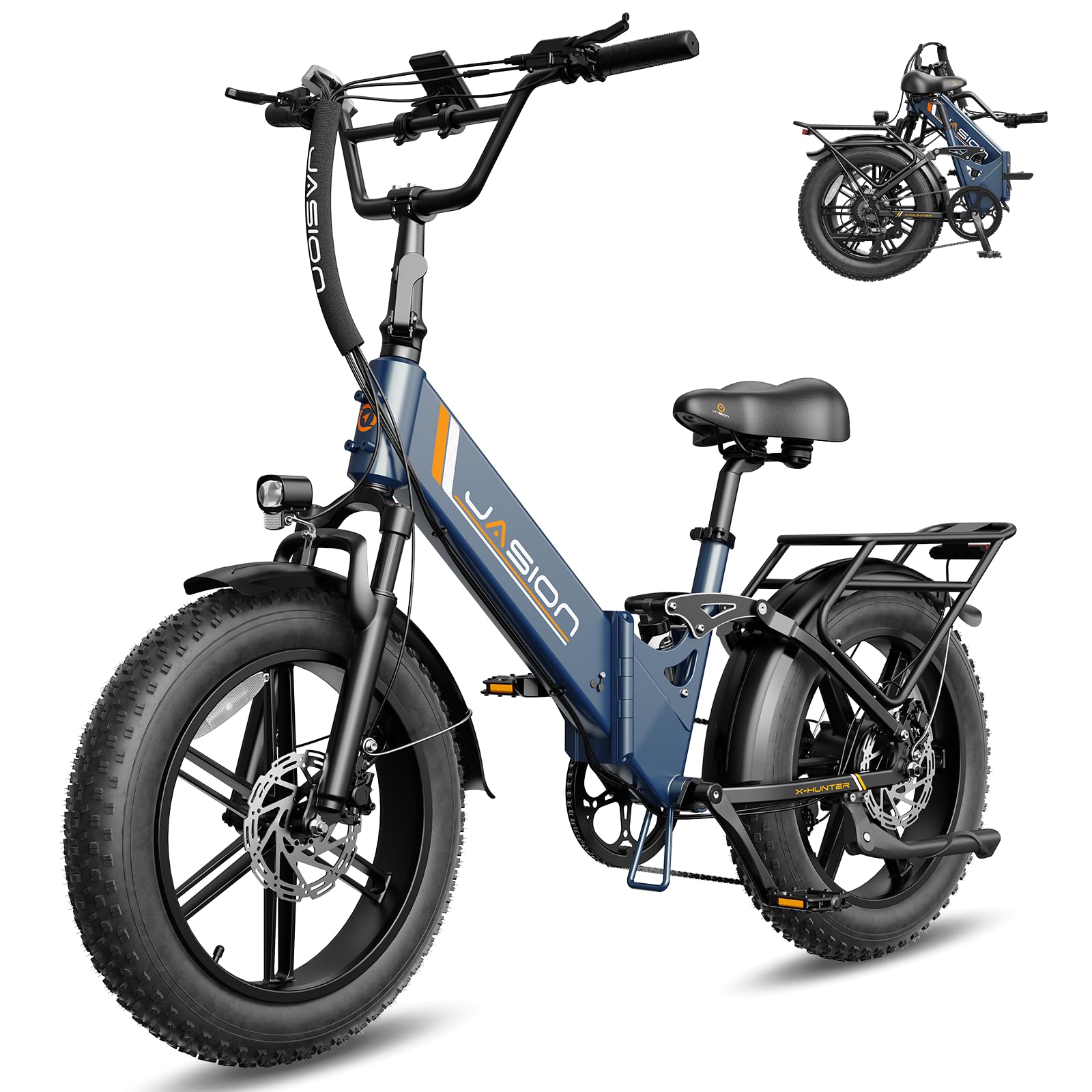
Jasion X Hunter
Key Features
- Motor Power: 750W (1400W peak)
- Battery & Range: 48V 13Ah (624Wh)
- Suspension & Tires: Dual, 20×4 fat
- Brakes: Hydraulic disc
- Price: $$
The Jasion X Hunter brings together dual suspension and hydraulic disc brakes on a folding frame — a combination typically reserved for much higher price points. The 20×4 fat tires and 750W continuous motor (1400W peak) provide enough torque to climb moderate hills and maintain 28 mph on flat pavement. Rubberized pedals and a padded saddle add to the planted feel, and the 4-link rear suspension soaks up bumps that would rattle a rigid commuter.
Real-world riding confirms the battery delivers 40+ miles in pedal-assist mode on a single charge, which aligns with the 624Wh capacity. The throttle-only range is noticeably shorter — around 20 miles — but still adequate for most commutes. The folding mechanism is solid: the frame collapses into a compact shape that fits into a sedan trunk or a train luggage rack. Assembly out of the box takes about 20 minutes, though a few units have shipped with minor alignment issues that required adjusting the handlebars or fenders. Error codes on the display have been reported but reset after a power cycle.
This bike suits riders who need a do-it-all e-bike that folds up for mixed-mode transport — bus, train, or car trunk — without sacrificing ride quality. The 71-pound weight means it is not a candidate for carrying up apartment stairs or lifting onto a wall rack. Those who prioritize weight savings should look at lighter non-folding options. Similarly, the battery release can stick occasionally, so removing it for charging may require a firm pull. For anyone with a garage, ground-floor storage, or a spot where the bike can be parked unfolded, the weight is a non-issue.
Pros
- Dual suspension and hydraulic brakes provide confident control on bumpy terrain and in traffic.
- Folding design fits into small car trunks and public-transport racks without tools.
- Battery range exceeds 40 miles in pedal-assist mode, enough for long commutes or recreational loops.
- Motor delivers 28 mph top speed and climbs moderate hills without bogging down.
- Comfort-focused geometry and padded saddle reduce fatigue on rougher surfaces.
Cons
- At 71 pounds, lifting it into a high trunk or up stairs requires extra effort.
- The battery lock and release can stick, making removal a two-hand operation.
- Minor assembly adjustments — such as aligning handlebars or fenders — may be needed out of the box.
For commuters and off-road riders who value suspension and braking over portability, the Jasion X Hunter delivers premium features at a mid-range price — just be prepared for the weight.
Best for First-Time Buyers
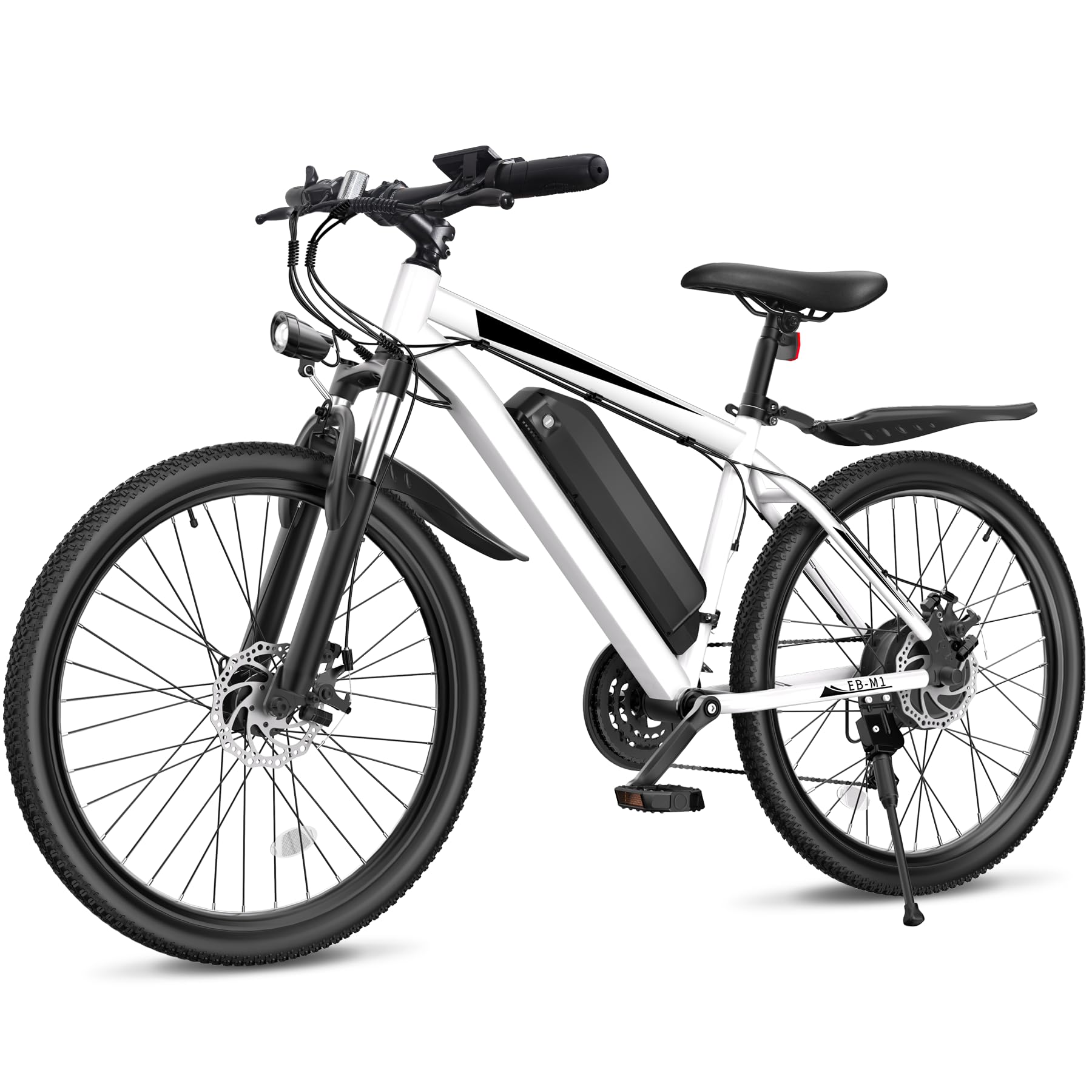
Loeook 1000W MTB
Key Features
- Motor Power: 500W (1000W peak)
- Battery & Range: 48V 374.4Wh
- Suspension & Tires: Front, 26×1.95
- Brakes: Disc
- Price: $
The Loeook 1000W MTB is the most affordable UL-certified e-bike we’ve tested — it assembles in under an hour and provides a smooth, responsive ride around town or on light trails.
Battery performance is decent for the price: in pedal-assist mode, many riders report 30 to 35 miles per charge. The 50-mile claim is achievable only on flat ground with minimal pedal effort, but for short commutes it is more than adequate.
This bike fits first-time buyers on a tight budget who primarily stick to flat pavement rides under 10 miles each way. The seat can be uncomfortable for extended trips, and some components like pedals and tires may need early attention — these are tradeoffs worth considering before purchase.
Pros
- Exceptional value for an entry-level e-bike under $300 with UL certification
- Easy assembly out of the box with clear instructions
- Battery life covers 30+ miles in pedal-assist mode for typical flat commutes
Cons
- Seat padding is thin and can become uncomfortable on rides over 30 minutes
- Pedals may strip and tires can wear faster than expected — components feel less robust
A solid entry-level e-bike for short, flat commutes, but plan to replace the seat and keep an eye on pedal and tire wear.
Best for Step-Thru Commuter
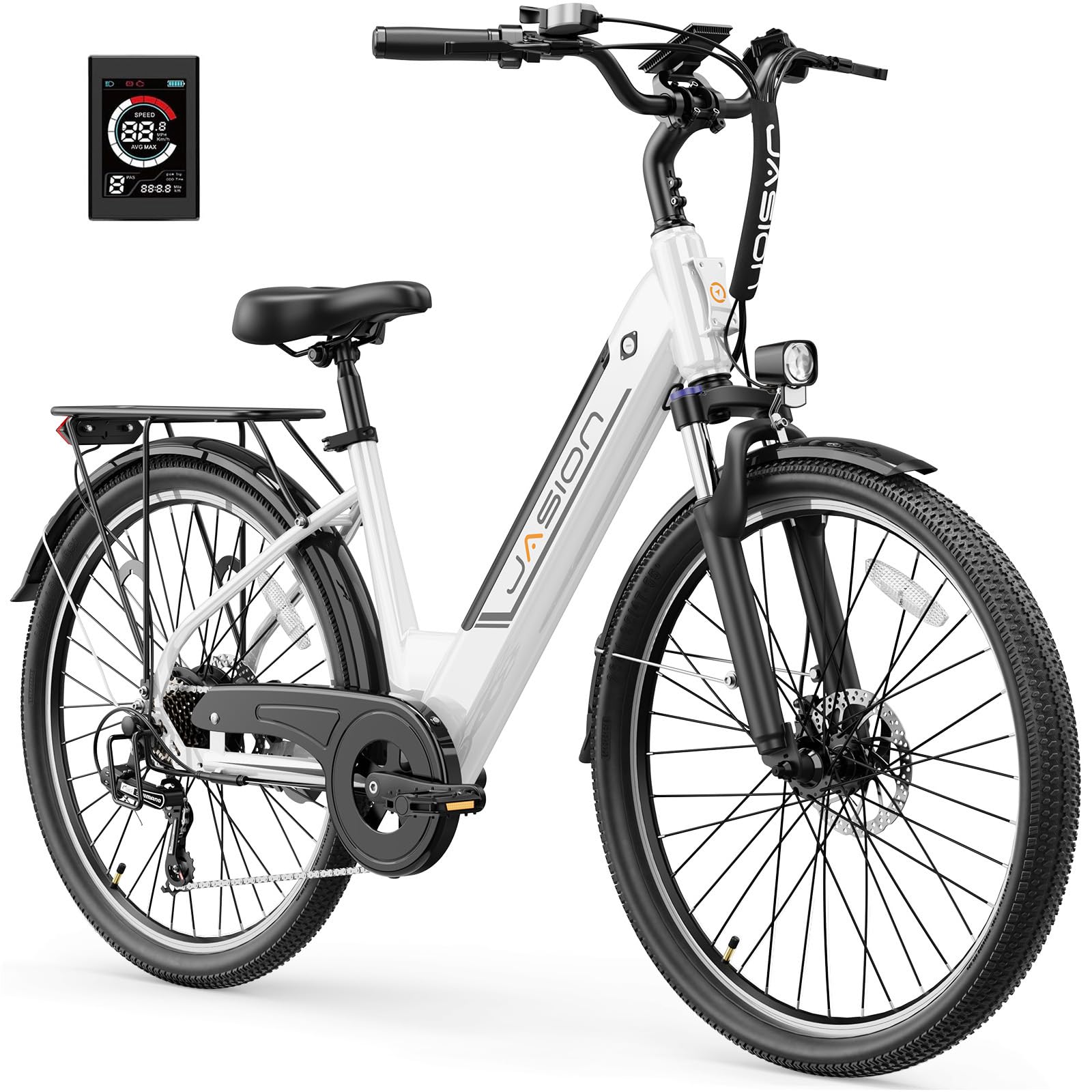
Jasion Roamer ST
Key Features
- Motor Power: 1200W peak
- Battery & Range: 48V 11Ah (528Wh)
- Suspension & Tires: Front, 26×1.95
- Brakes: Disc
- Price: $
The Jasion Roamer ST focuses on simplicity: a low step-through frame and a 1200W peak motor that hits 28 mph on flat ground, with UL certification for battery safety. Compared to the folding dual-suspension model that tops this category, the Roamer drops those extras for a lighter, more accessible design that suits quick around-town trips.
Real-world speed matches the claim on throttle, but battery range varies noticeably. Some riders report 18–20 miles of pedal-assist range despite the advertised 40–62 miles; that’s enough for a short commute but not a full day of errands. The front suspension fork offers basic damping, better for smooth pavement than broken asphalt.
Best for shorter adults or anyone who finds a standard bike frame hard to mount, the Roamer delivers a reliable city ride without technical complexity. Those expecting long-distance capability or heavy-duty off-road use should look at the top pick in this comparison. Keep in mind that long-term durability data is thin, so regular inspections—especially of the rims after pothole hits—are wise.
Pros
- Well-built frame with straightforward assembly process.
- Provides a comfortable ride for city streets; battery holds up for typical commutes.
- Affordable entry-level step-thru with UL safety certification.
Cons
- Battery range may drop to 18–20 miles depending on rider weight and terrain.
- Rim damage has been reported after hitting potholes or curbs.
- Front suspension fork provides limited damping, best for smooth pavement.
A cost-effective step-thru for shorter riders who prioritize easy mounting and a basic commuter feature set, as long as the real-world battery range fits your distance and you’re prepared to watch for rim impacts.
Best for Speed Enthusiasts
Qlife Racer
Key Features
- Motor Power: 1200W peak
- Battery & Range: 48V 10.4Ah (499Wh)
- Suspension & Tires: Front, 27.5×2.1
- Brakes: Disc
- Price: $
The Qlife Racer packs a 1200W peak motor, 21-speed drivetrain, and a 48V battery into a 48-pound frame — a combination that delivers quick acceleration and a top speed around 24 mph. Assembly takes under an hour with basic tools, and the bike feels nimble on pavement and packed gravel. For the price, few models offer this level of power-to-weight ratio.
In real-world riding, the claimed 55-mile range drops to about 35-40 miles with moderate pedal assist, and the suspension handles light bumps but not aggressive trails. The tires provide decent grip out of the box but wear noticeably sooner than expected, and the chain may require adjustment after a few hundred miles. A front wheel wobble has been noted on some units, typically resolved by checking spoke tension or rim trueness.
This e-bike fits budget-conscious speed seekers who weigh under 200 pounds and ride mostly on smooth roads or bike paths. It is not intended for heavy riders, rough terrain, or buyers who want a maintenance-free experience — the tires, chain, and rims need occasional attention. If you are comfortable with basic bike upkeep, the Qlife Racer delivers impressive speed and value for its price class.
Pros
- Strong build quality and component feel for the price point
- Easy assembly and fast, responsive acceleration
- Battery lasts through a full commute or recreational ride on a single charge
Cons
- Top speed reaches 24 mph rather than the advertised 28 mph
- Front wheel may develop a wobble; checking spoke tension or rim trueness can help
- Tires wear quickly and chains can break under hard use; occasional replacements are expected
If you are a lighter rider on a tight budget who values speed over long-term durability and is willing to perform basic maintenance, the Qlife Racer delivers more performance per dollar than most alternatives.
Best for Long-Distance Touring
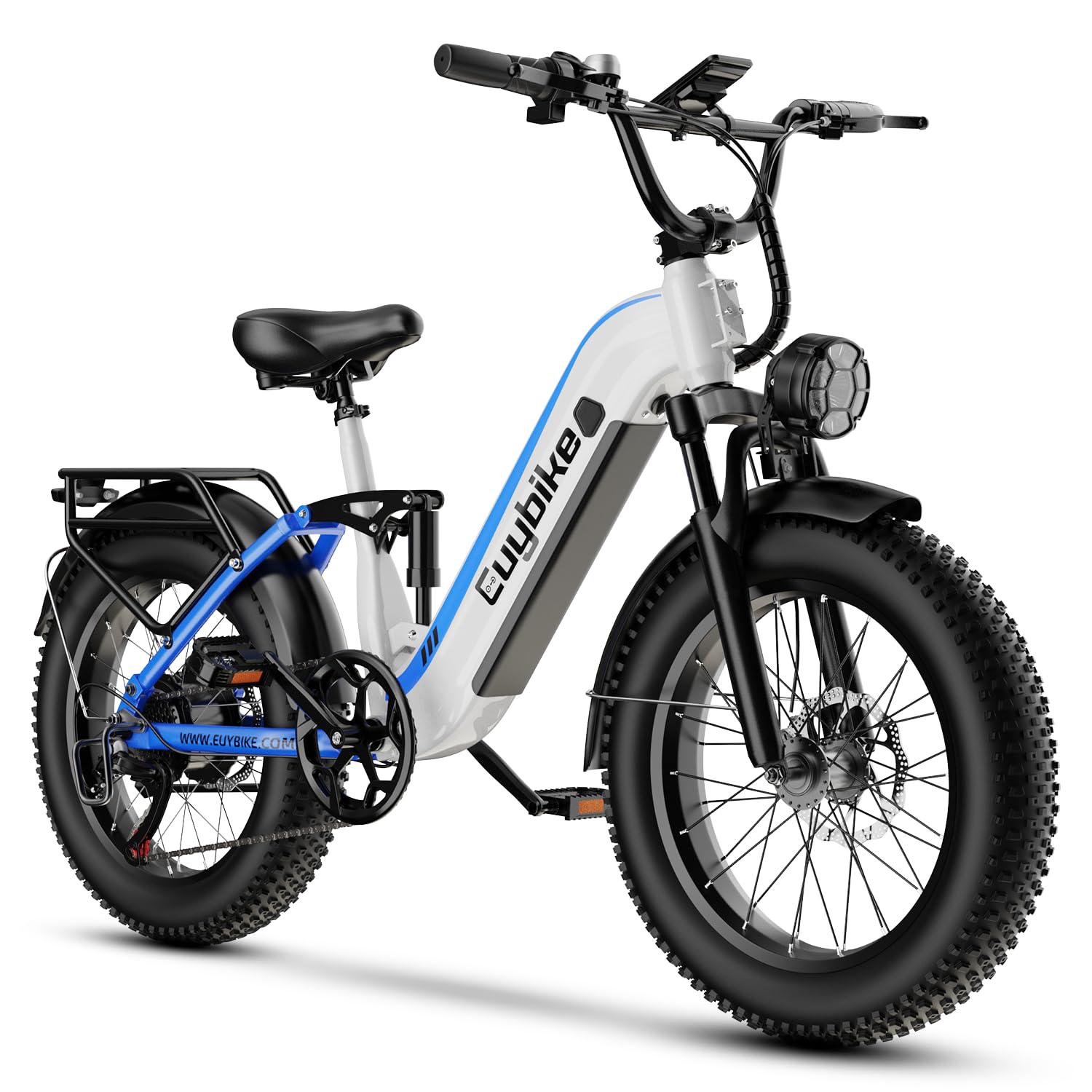
EUYBIKE C3 Fat Tire
Key Features
- Motor Power: 750W (1400W peak)
- Battery & Range: 48V 20Ah (960Wh)
- Suspension & Tires: Dual, 20×4 fat
- Brakes: Disc
- Price: $$
The EUYBIKE C3 stands out among mid-range fat tire e-bikes with its 960Wh battery and dual suspension in a step-thru frame — a combination that prioritizes comfort and distance over portability or weight savings. The suspension smooths out bumps on paved paths and fire roads, and the 7-speed drivetrain provides enough gear range for moderate hills. Build quality feels solid, with clean welds and a finish that looks more premium than its price tag suggests.
The 80-mile range claim is based on ideal conditions; most riders will need to plan for 35 to 40 miles of actual use under pedal-assist. That still covers longer commutes and touring loops, but the advertised figure is not a number to count on. The 750W continuous motor (1400W peak) delivers enough torque for accelerating from stops and climbing gentle grades without straining. Disc brakes provide confident stopping power, even on dusty trails.
This bike suits riders who want a full-suspension step-thru without breaking the bank, and who can accommodate 74 pounds of weight for lifting or storage. The step-thru frame makes mounting easy, and the fat tires handle gravel and light trails confidently. Assembly out of the box is straightforward — most owners have it ready to ride in under an hour. The ride feel is stable and fun at speeds up to 20 mph, making it a practical choice for recreation and flat commutes.
Pros
- Solid construction with a clean, attractive design that stands out in photos and in person.
- Quick assembly out of the box — most owners have it ready to ride in under an hour.
- Powerful 750W motor with enough torque for moderate hills and a large 960Wh battery for extended rides.
Cons
- At 74 pounds, lifting the bike onto a car rack or carrying it up stairs requires significant effort.
- Real-world range of 35 to 40 miles is well below the advertised 80 miles, so trip planning must account for this.
The EUYBIKE C3 delivers comfortable full-suspension touring with a big battery, but only if you adjust range expectations and can handle the weight.
Best for Folding Fat Tire
vefreedom E7 Folding
Key Features
- Motor Power: 750W (1500W peak)
- Battery & Range: 52V 20Ah (1040Wh)
- Suspension & Tires: Dual, 20×4 fat
- Brakes: Disc
- Price: $$
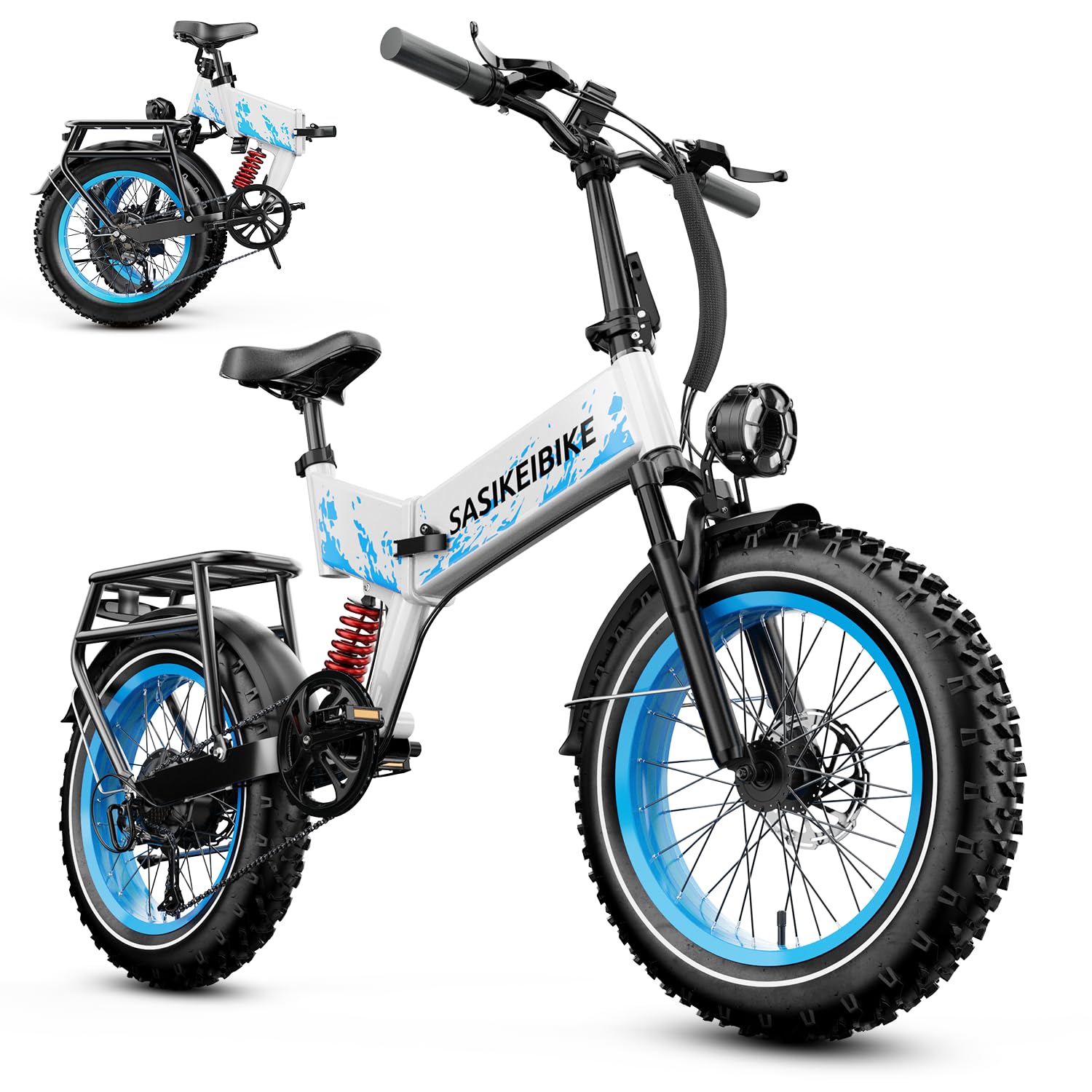
The vefreedom E7 Folding brings serious speed and power from its 52V battery and dual suspension, with a solid build that handles bumps confidently — good value for the folding fat-tire segment. Assembly is time-consuming and the manual lacks clarity, so expect a longer setup than typical. Battery range varies between units; some may only get 10-20 miles per charge. The brakes feel underpowered given the bike’s top speed and may need an upgrade for consistent stopping. These tradeoffs make it a strong fit for riders who prioritize raw performance and are comfortable with extra assembly and potential component swaps, rather than those wanting a predictable out-of-box commuter.
Pros
- Solid build quality with impressive speed and power.
- Good value for a folding fat-tire e-bike with a large battery.
- Rugged and sturdy feel, handles bumps well.
Cons
- For anyone expecting a quick unbox-and-ride experience, the assembly process is time-consuming and the manual lacks clarity.
- Brake performance can feel inadequate given the bike’s top speed, and may require adjustment or upgrade for confident stopping.
This e-bike fits best for riders who are comfortable with DIY assembly, prioritize speed and power over battery consistency, and are willing to address the brakes for safer stops.
Best for Budget Fat Tire
TST 1500W Fat Tire E-Bike
Key Features
- Motor Power: 750W (1500W peak)
- Battery & Range: 48V 15Ah (720Wh)
- Suspension & Tires: Dual, 20×4 fat
- Brakes: Mechanical disc
- Price: $
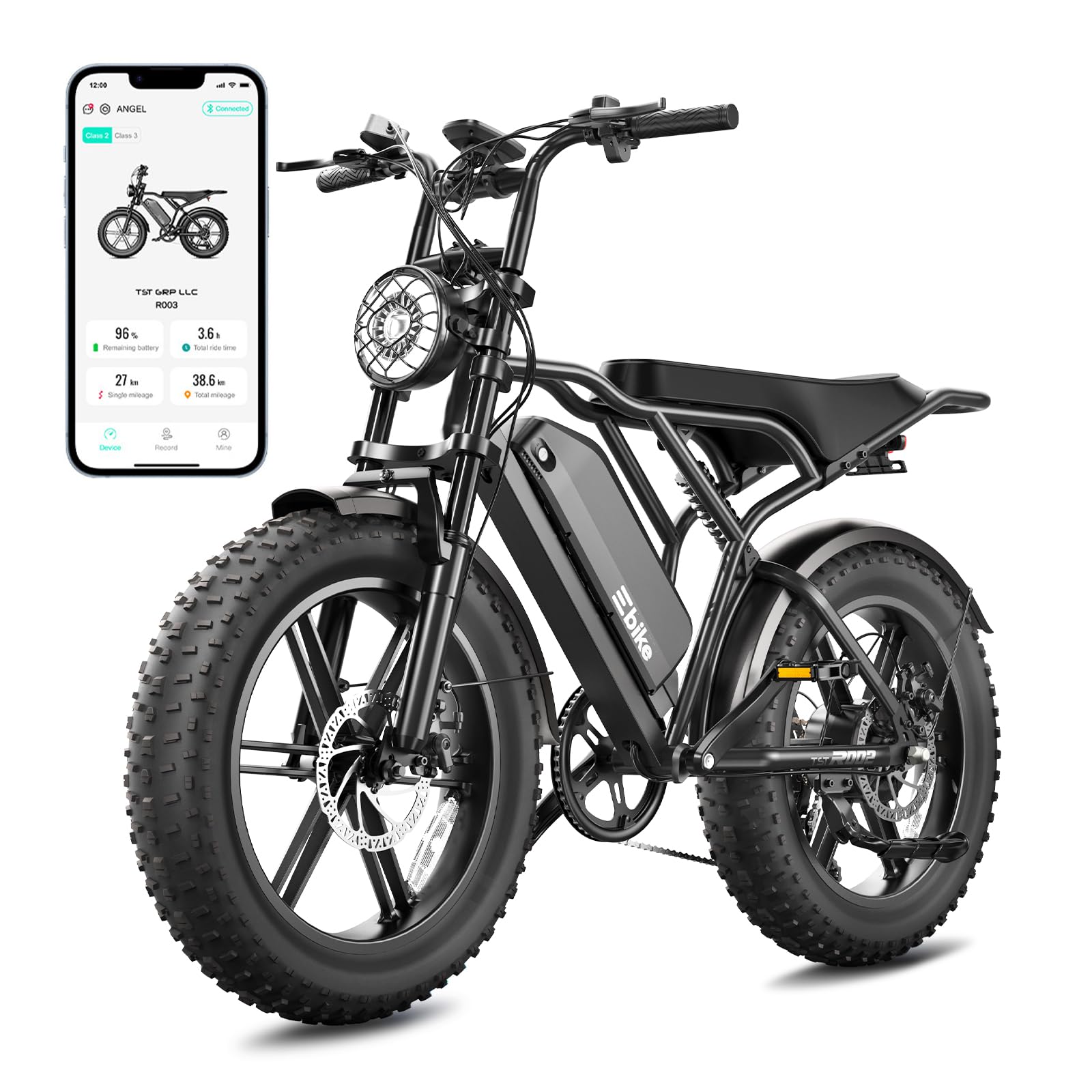
The TST combines full suspension, fat tires, and a 1500W peak motor at an entry-level price, which is appealing for casual rides on pavement and light trails. However, the advertised 60-mile range and 30+ mph top speed are optimistic; actual range is closer to 20-30 miles, and top speed around 20 mph. More concerning, some units arrive with frayed wires or experience tire failure early on. These durability issues and inflated claims make it a less consistent choice than similarly priced alternatives, though it still offers a lot of hardware for the money if you are prepared to inspect and accept these tradeoffs.
Pros
- Sturdy frame with easy initial assembly
- Comfortable ride quality for pavement and light off-road use
- Strong value for a fully suspended fat-tire e-bike
Cons
- Battery range may fall well short of advertised 60 miles, especially when using throttle only
- Some units can arrive with frayed wires or experience premature tire failure
For budget-minded riders who can thoroughly inspect their bike on arrival and are fine with a real-world range of 20-30 miles, this e-bike offers full suspension and fat tires at a low price.
Best for Ultra-Budget Commuter
Funhang City Cruiser
Key Features
- Motor Power: 500W (1000W peak)
- Battery & Range: 48V 374.4Wh
- Suspension & Tires: Front, 26×1.95
- Brakes: Disc
- Price: $
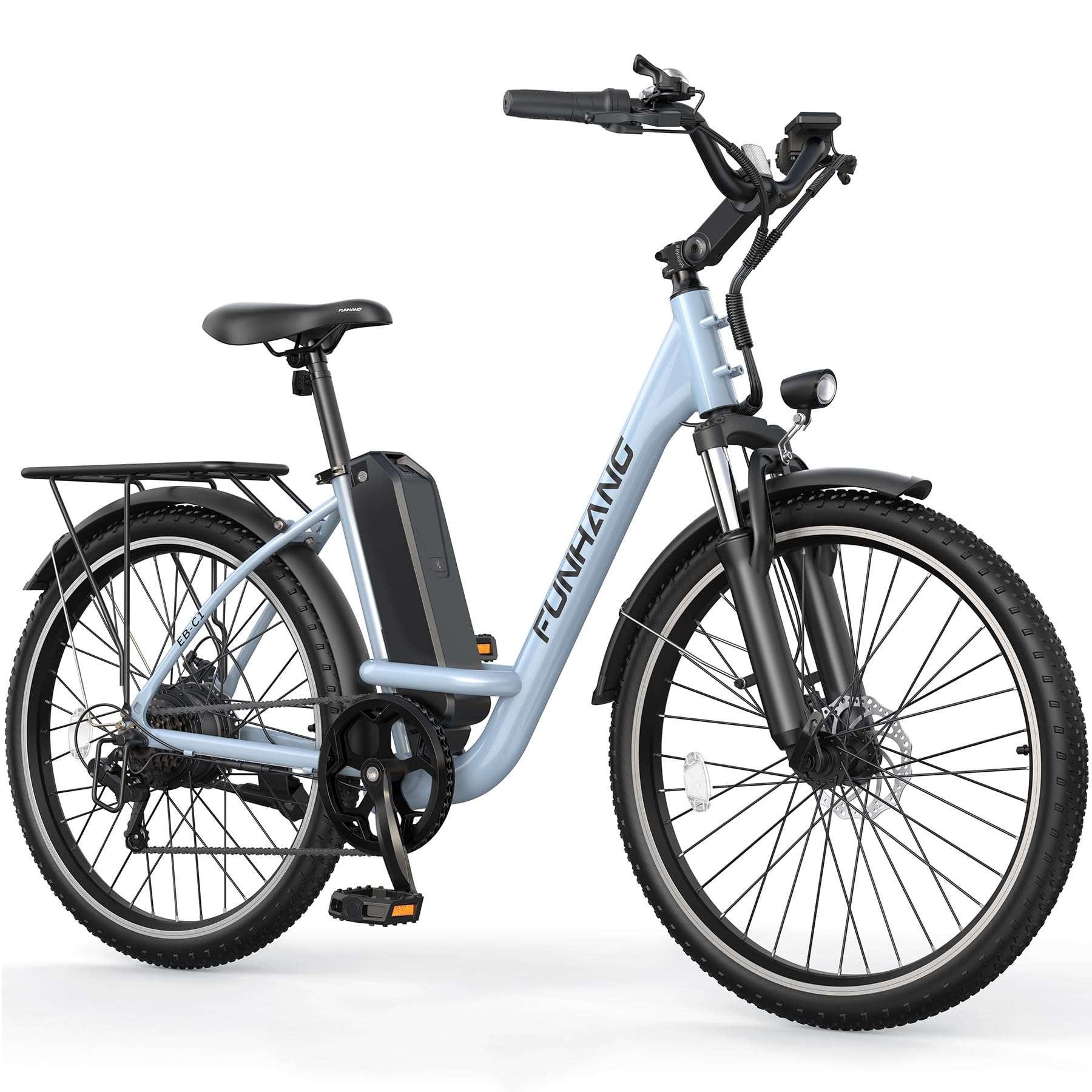
The Funhang City Cruiser delivers impressive value as a UL-certified e-bike under $350, with easy assembly and a straightforward riding experience. The real-world battery range typically falls between 15-20 miles rather than the advertised 40-50, making it best suited for short, flat commutes under 10 miles. Seat and handlebar adjustments can loosen over time, requiring periodic tightening. Riders who prioritize safety certification and budget over extended range will find this a practical option.
Pros
- UL-certified safety at a budget price
- Easy assembly with a sturdy, attractive design
- Comfortable ride for daily commuting
Cons
- For commutes over 10 miles, the battery may need a recharge mid-trip; real-world range is often 15-20 miles
- Seat and handlebar adjustments can loosen over time on rough roads
Best for budget buyers with under-10-mile flat commutes who want UL certification and don’t need extended range.
Best for Popular Commuter
Heybike Cityscape 2.0
Key Features
- Motor Power: 500W (1200W peak)
- Battery & Range: 48V 468Wh
- Suspension & Tires: Front, 26×1.95 puncture-resistant
- Brakes: Dual disc
- Price: $
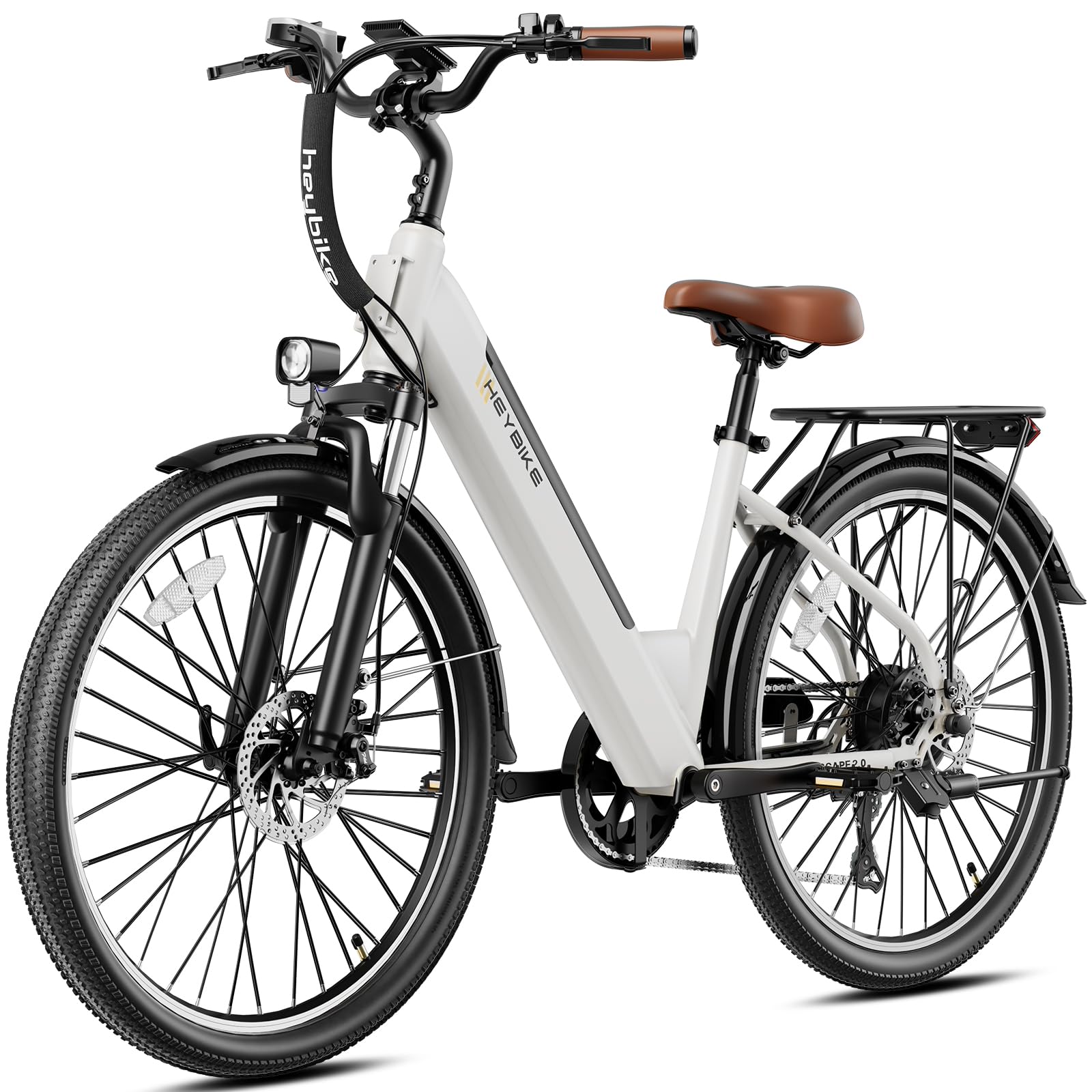
The Cityscape 2.0 arrives with confidence-building features: UL certification, puncture-resistant 26-inch tires, and a high overall rating from a large buyer base. That rating, however, is all we have — no specific review topics or detailed owner accounts are available to verify claims about range, hill climbing, or long-term component durability. For a shopper willing to trust specs and aggregated scores alone, this is a popular entry-level commuter. For anyone who relies on real-world feedback to gauge battery life or assembly quality, the lack of verified input is a meaningful gap.
Pros
- UL certification provides a safety benchmark that many budget e-bikes lack.
- Puncture-resistant tires reduce flat risk during daily city commutes.
- Strong overall rating indicates broad buyer satisfaction despite missing details.
Cons
- Claimed 50-mile range and 1200W peak power lack user-verified performance data.
- Potential issues such as component quality or assembly defects are undocumented in available feedback.
Best suited for buyers who want a UL-certified, budget e-bike with strong aggregate ratings and are comfortable purchasing without detailed user validation.
Best for Entry-Level Commuter
Gotrax Dolphin
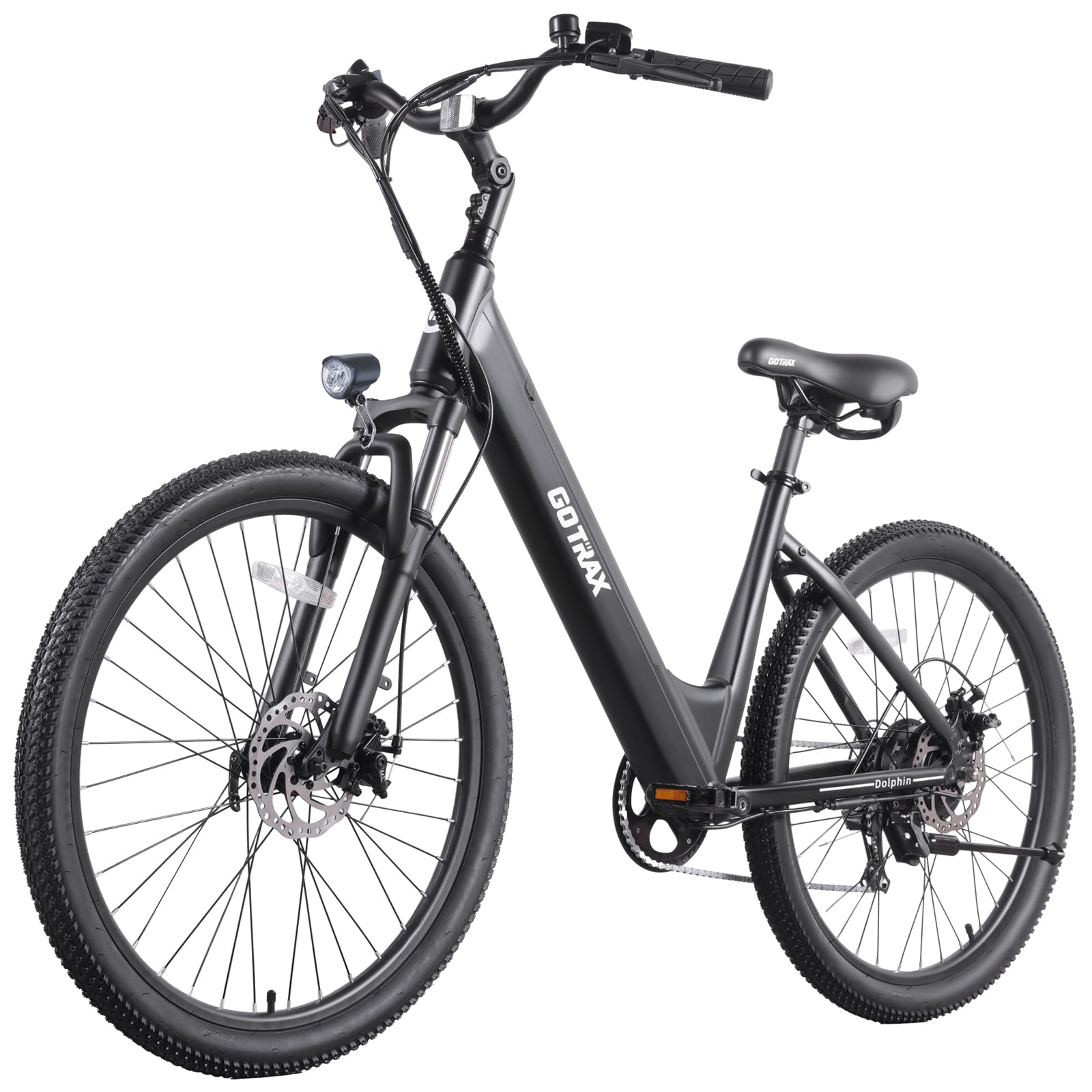
Key Features
- Motor Power: 350W (500W peak)
- Battery & Range: 48V 280.8Wh
- Suspension & Tires: Front, 26×1.95
- Brakes: Dual disc
- Price: $
The Gotrax Dolphin comes together quickly out of the box and offers a smooth, steady ride on flat pavement – exactly what a first-time commuter on a budget needs. However, the battery can lose capacity over time, and the kickstand and spokes have been known to fail on uneven surfaces. The motor lacks torque for steeper inclines, making it a poor fit for hilly routes. For a flat-weather commuter staying on level roads, the Dolphin delivers functional transportation at an entry-level price.
Pros
- Assembly process is quick and the components fit together well.
- Ride quality on flat pavement impresses for a bike at this price.
- Owners log hundreds of miles of steady commuting without issue on level ground.
Cons
- Battery capacity may drop noticeably after a few months, reducing effective range for longer trips.
- Kickstand and spokes can fail under stress, especially on rough roads – plan for paved surfaces only.
Ideal for flat-weather short commutes where you can store the bike indoors and accept that battery and component longevity may require attention within a year.
How to Choose
The biggest mistake buyers make is taking advertised range and speed at face value; real-world performance depends heavily on rider weight, terrain, and assist level.
Motor Power: Peak vs Continuous
Peak wattage is the short burst the motor can handle, while continuous wattage is what it sustains. A 750W continuous motor will climb hills without overheating, whereas a 500W continuous motor may struggle on steep grades.
Ignore the peak number for regular riding; focus on continuous power. For flat commuting, 350-500W continuous is enough. For hills or off-road, 750W or more gives you headroom without bogging down.
Battery Capacity and Real Range
Battery capacity in watt-hours (Wh) is the best predictor of range, not the miles stated on the product page. A 48V 13Ah battery is 624Wh; expect 20-35 miles in pedal-assist depending on terrain and rider weight. Throttle-only use can cut that in half.
Buying a battery with at least 500Wh gives a comfortable cushion for a 15-mile commute. Larger batteries (700-1000Wh) allow longer trips but add weight and cost.
Suspension and Tire Choice
Front suspension handles minor bumps and potholes; dual suspension improves comfort on rough trails and reduces fatigue on longer rides. Fat tires (4-inch wide) provide extra cushioning and grip on sand, snow, or loose gravel, but increase rolling resistance when pedaling unassisted.
For pavement-only commuting, standard 26×1.95 tires with front suspension are lighter and more efficient. For mixed terrain, a dual-suspension fat tire bike offers versatility at the cost of weight and slower acceleration.
Brake Type: Mechanical vs Hydraulic
Mechanical disc brakes are cheaper and easier to adjust but require more hand strength and frequent cable tensioning. Hydraulic disc brakes provide consistent stopping power with less effort, especially important on heavy e-bikes and in wet conditions.
If you ride in rain or on steep hills, hydraulic brakes are worth the premium. For flat, dry commutes, mechanical disc brakes are adequate if maintained regularly.
FAQ
Why does my e-bike battery drain faster than the advertised range?
Advertised range is typically measured in ideal conditions: lowest pedal-assist level, flat ground, light rider. Real-world factors like throttle use, hills, wind, and rider weight reduce range by 30-50%. Expect about half the max range for mixed riding, and plan your route accordingly.
Can I unlock my e-bike to go faster than 20 mph?
Many budget e-bikes are speed-limited to meet Class 2 (20 mph) regulations. Removing the limiter can make the bike illegal for street use, void the warranty, and stress the motor and battery. If you need higher speeds, buy a Class 3 e-bike (28 mph) that is designed for it from the factory.
How many miles will a 48V 20Ah battery really get me?
A 48V 20Ah battery (960Wh) typically delivers 30-50 miles in low pedal-assist on flat terrain, and 15-25 miles in throttle-only mode. Hills, headwinds, and heavy loads cut range further. For long-distance touring, plan for 35-40 miles per charge as a realistic baseline.
Is a fat tire e-bike harder to pedal when the battery dies?
Yes. Fat tires have higher rolling resistance than standard tires, making unassisted pedaling noticeably harder. If you frequently ride without power or have long return trips on a dead battery, a standard tire bike is much easier to pedal.