This post contains affiliate links. We may earn a small commission when you buy through our links — at no extra cost to you.
Budget e-MTBs promise 60+ miles and 40 mph, but real-world range often falls short and climbing power fades on steep grades. Many riders discover this after the return window closes.
This guide cuts through those marketing claims by focusing on what actually matters for off-road riding: motor torque that handles climbs, battery capacity that matches actual use, and brakes that stop reliably on descents. We break down the trade-offs between price and genuine trail capability.
Whether you need a full-suspension bike for rocky singletrack or a reliable commuter for fire roads, the right choice comes down to matching specs to the terrain you ride most.


Best for Serious Off-Road
FREESKY BAFANG 3500W
Key Features
- Motor: 3500W Bafang 140Nm
- Battery: 48V 35Ah 1440Wh
- Suspension: Dual
- Brakes: 4-piston hydraulic
- Tires: 26×4 fat
- Price: $$$
The 3500W Bafang motor delivers 140 Nm of torque, enough to pull steep climbs and hold 38+ mph on flat fire roads. The 48V 35Ah battery with Samsung/LG cells provides real 100+ mile range on moderate assist — far beyond what most e-MTBs in this set claim. Hydraulic 4-piston disc brakes offer confident stopping power on descents.
Full suspension (double crown fork and rear shock) paired with 26×4-inch CST fat tires absorbs rocks and roots without chatter. The ride remains composed at speed on loose terrain — no flex or sway under hard cornering. Charging time is notably fast for a pack this size: about 4 hours from empty.
This bike is built for serious trail riders and long-distance adventurers who need sustained power and range. The premium price and heavier frame (around 75 lbs) are tradeoffs that make sense if you plan on all-day rides or aggressive singletrack. Some early units needed minor front-wheel alignment adjustments, and the manual’s assembly instructions can be cryptic — a local shop setup is worth the cost.
Pros
- 3500W Bafang motor with 140 Nm torque for steep climbs and high speed
- 1440Wh battery with Samsung/LG cells delivers real 100+ mile range
- Dual suspension and fat tires provide a smooth, stable ride over rough terrain
- Build quality with premium components like hydraulic disc brakes and CST tires
Cons
- Premium price limits accessibility for budget-conscious buyers
- Front wheel alignment may need adjustment out of the box; manual is sparse
For riders who prioritize raw performance and don’t mind paying for it, this is the set’s best e-MTB — no other model matches its motor, battery, and suspension combination.
Best for Budget Speed Seekers
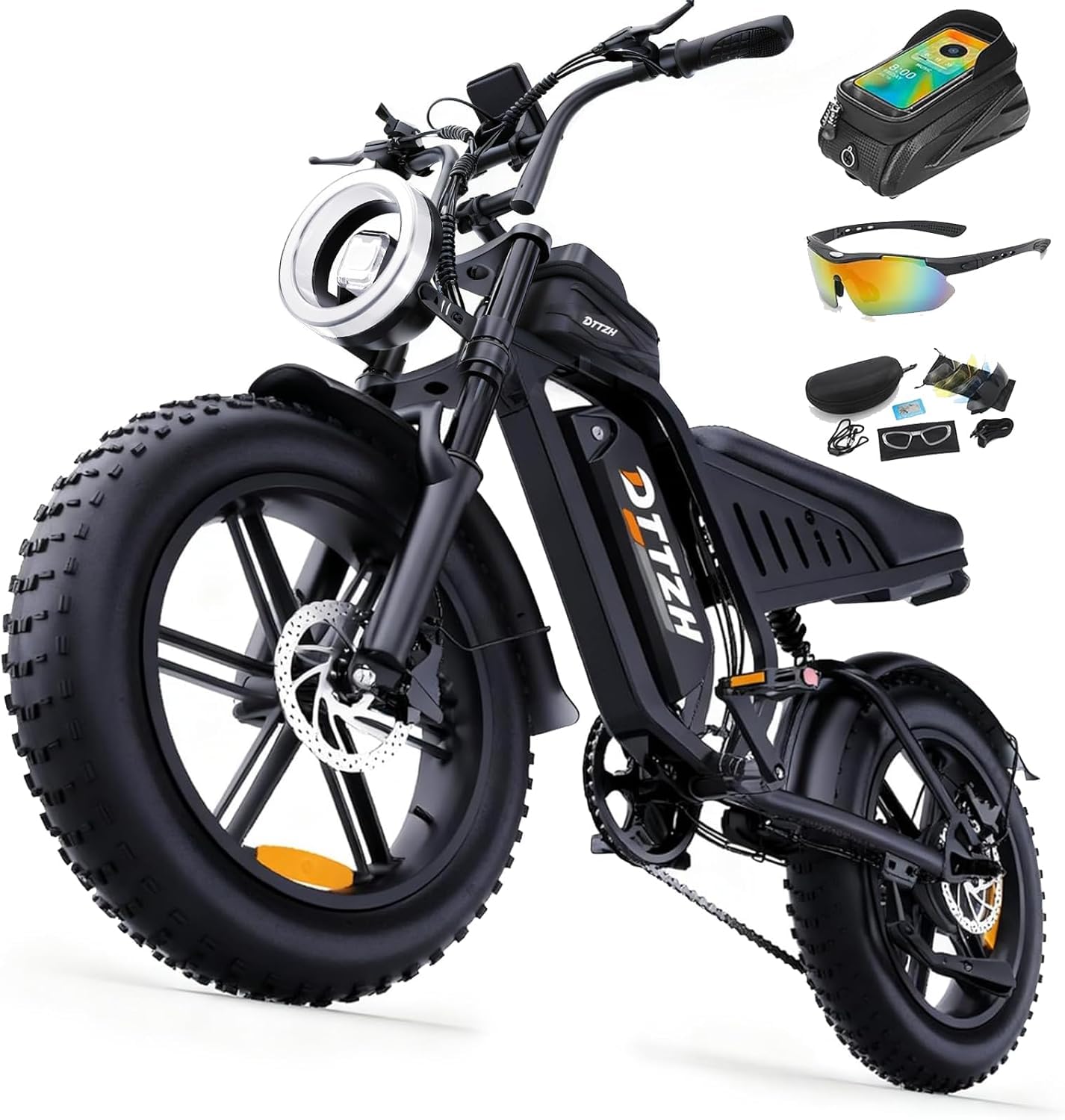
DTTZH F6 1500W Full Susp.
Key Features
- Motor: 1500W peak
- Battery: 48V 15.6Ah 720Wh
- Suspension: Dual
- Brakes: Disc
- Tires: 20×4 fat
- Price: $
The DTTZH F6 packs a 1500W peak motor and full front-and-rear suspension into a frame that costs half as much as the top pick FREESKY. On dirt climbs and paved sprints alike, this bike pulls with authority, and multiple riders confirm speeds above 30 mph straight from the box. The 20×4 fat tires and disc brakes give enough traction and stopping power for moderate trails and backroads.
Where the F6 cuts corners is in consistency. Battery range can be a surprise — some owners report 20-30 miles of real-world riding, far below the advertised 60 miles, especially when using higher power levels. The kickstand and charger have shown early failures in a minority of units, so a bit of DIY readiness helps. Riders who want a thrilling, low-cost trail machine and don’t mind occasional tinkering will find this bike a rewarding value.
Pros
- Very fast acceleration and hill-climbing for the price point
- Full suspension absorbs bumps on rough terrain reasonably well
- Assembly takes under an hour with basic tools
Cons
- Battery range may drop significantly on steep climbs or at full throttle
- Kickstand and charger can fail after a few rides in some cases
- Top speed under 40 mph for some units, contrary to marketing claims
If raw speed and a low entry price matter more than guaranteed range and plug-and-play durability, the DTTZH F6 is a fun, capable trail companion.
Best for Mid-Range Trail
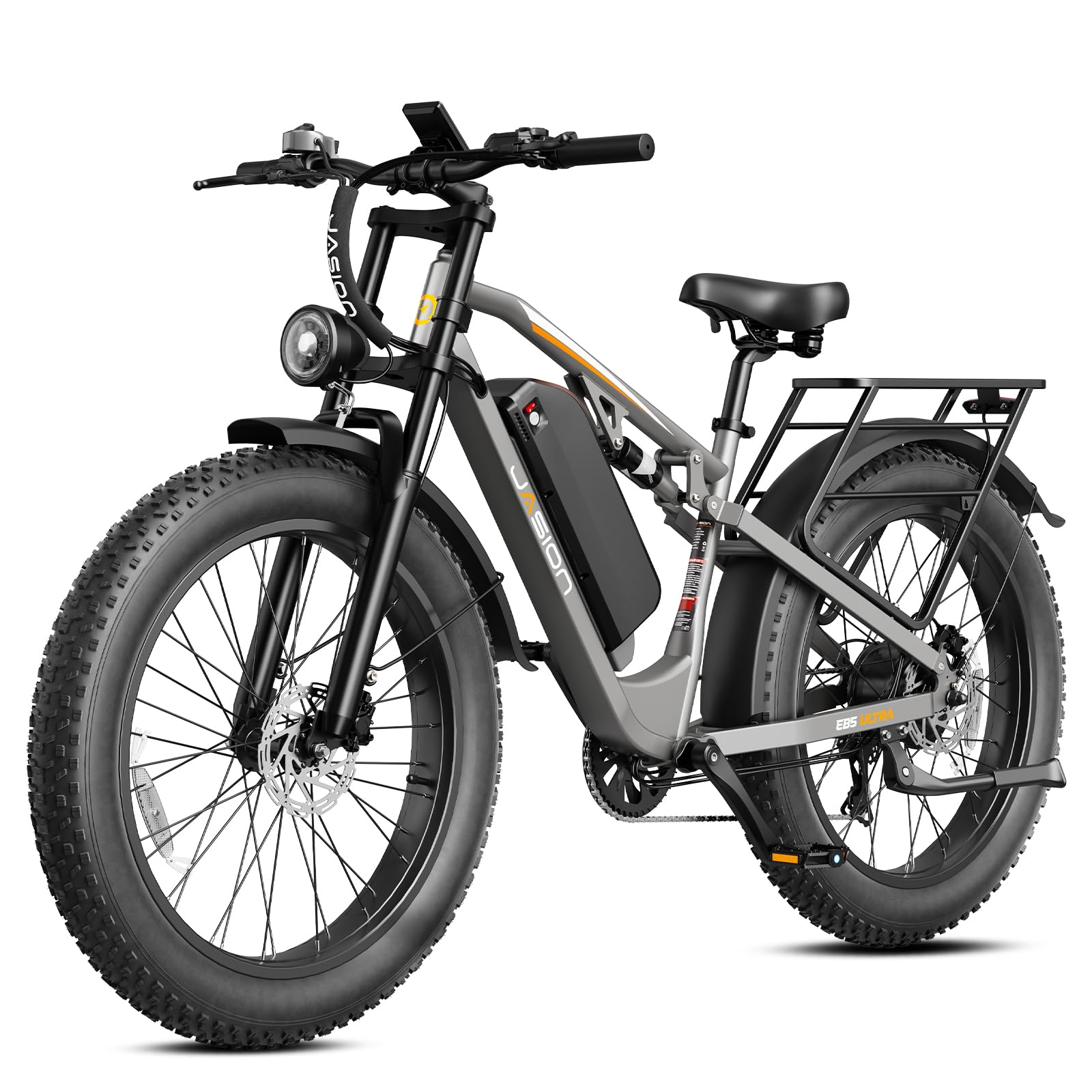
Jasion EB5 Ultra 2500W
Key Features
- Motor: 2500W peak
- Battery: 52V 20Ah 1040Wh
- Suspension: Dual
- Brakes: Hydraulic disc
- Tires: 26×4 fat
- Price: $$
The Jasion EB5 Ultra stands out in this set for its combination of a 2500W peak motor and hydraulic disc brakes at a mid-range price point. Where the top pick leans into long-range endurance and top-tier components, this bike focuses on raw climbing torque and stopping power for aggressive off-road segments. Riders who want to tackle steep, punchy climbs and need brakes that inspire confidence on descents will find a strong match here.
That motor delivers real acceleration and hill-climbing muscle — exactly what you want for loose climbs or short technical trails. The dual suspension and 26×4 fat tires help smooth out rough terrain, and the hydraulic brakes provide consistent modulation when things get steep. However, the battery range is the tradeoff: under high power use, the 52V 20Ah pack may deliver significantly less than the advertised 70 miles. For riders who do short, hard rides (under 20 miles) this is manageable, but anyone expecting all-day range on high assist will need to plan carefully.
The build quality and assembly experience have been well received — the bike looks aggressive and goes together without frustration. A small number of units have exhibited chain breakage or unexpected shutdowns, so checking hardware and keeping an eye on early rides is prudent. Overall, this is a bike that rewards riders who value punchy power and braking over battery endurance.
Pros
- Strong acceleration and climbing ability from the 2500W peak motor
- Hydraulic disc brakes provide reliable stopping power on descents
- Good build appearance and straightforward assembly process
- Competitive value for a mid-range model with dual suspension and fat tires
Cons
- Battery range can fall short of claimed 70 miles, especially under high power usage
- Occasional mechanical issues such as chain breakage or shutdowns have been noted
If your riding consists of steep, short trails where power and braking matter more than endurance, the Jasion EB5 Ultra delivers those strengths without the premium price tag.
Best for Reliable Commute
Hoverfly 750W UL Certified
Key Features
- Motor: 750W peak
- Battery: 48V 374Wh
- Suspension: Front only
- Brakes: Mechanical disc
- Tires: 26×1.95 standard
- Price: $
UL 2849 certification is a standout at this price — it confirms the battery and electrical system meet safety standards, giving commuters peace of mind. The 48V battery consistently delivers the advertised 28–40 mile range in real-world riding, a rare honesty among budget e-bikes.
This bike suits daily commuters, weekend leisure riders, and first-time e-bike owners who stick to paved roads, bike paths, or well-graded gravel. The front suspension handles potholes and packed dirt, but the hardtail frame and 1.95-inch standard tires don’t absorb rocky singletrack or soft terrain — those wanting technical trail capability should look at full-suspension fat-tire models instead.
Assembly takes under an hour with printed instructions, and the 750W peak motor provides enough assist for moderate hills at speeds up to 20 mph. The weight and handling feel stable on pavement, and the removable battery simplifies charging at home or office. For what it costs, the build quality inspires more confidence than many cheaper alternatives.
Pros
- UL 2849 certification for electrical safety at a budget price point
- Battery range matches manufacturer claims in mixed commuting use
- Well-documented assembly process; most owners complete it in under an hour
- Removable battery simplifies charging in apartments or offices
Cons
- Front suspension only — rough trails transmit more vibration to the rider
- Standard 1.95-inch tires lack the grip and float needed for soft, loose, or rocky terrain
A budget-friendly e-bike for paved commutes and light gravel paths, backed by independent safety certification that many rivals skip at this price.
Best for Entry-Level Trail
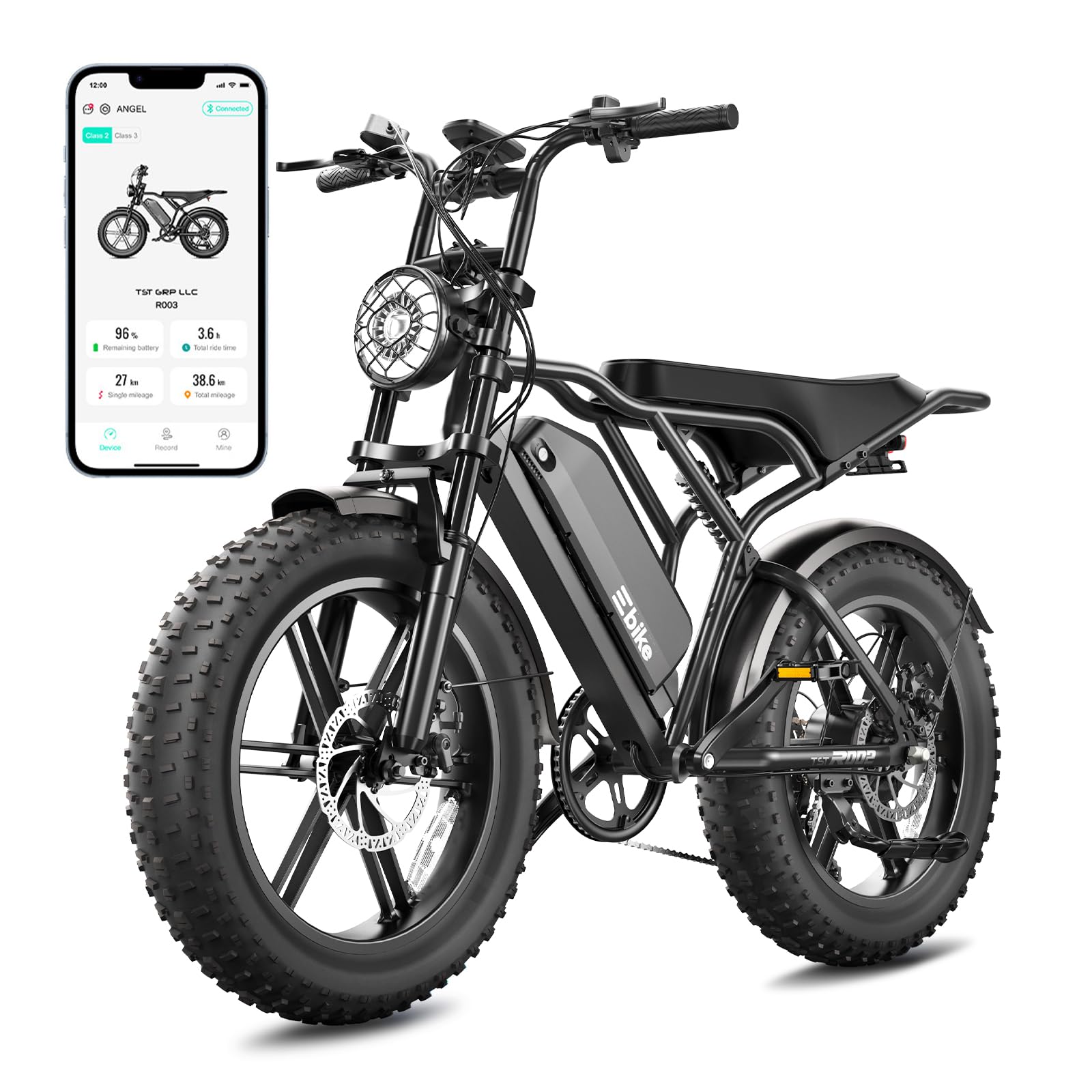
TST 1500W Full Suspension
Key Features
- Motor: 1500W peak
- Battery: 48V 15Ah 720Wh
- Suspension: Dual
- Brakes: Mechanical disc
- Tires: 20×4 fat
- Price: $
Full suspension and fat tires at under $600 make this e-bike stand out in a segment where those features usually cost considerably more. The build quality feels solid for the price, and the ride is smooth and fun right out of the box — assembly is straightforward enough for someone new to e-bikes.
This bike suits budget-conscious trail riders who want the fundamentals of an e-MTB without the premium cost. Teens or adults new to e-bikes will appreciate the easy handling and dual suspension on light off-road trails. Real-world range runs closer to 20–30 miles than the advertised 60, especially with higher assist levels, and some units may need a quick check of wiring and tire seating before the first ride.
For the price, the TST delivers genuine trail capability — the fat tires provide grip on loose gravel and soft dirt, and the suspension absorbs bumps well enough for casual off-road loops. The tradeoff is predictability: battery life varies between units, and occasional component issues like frayed wires or tire blowouts have been noted. Riders willing to inspect their bike and accept a shorter range will find a capable entry point into electric trail riding.
Pros
- Full suspension and fat tires at a price that opens trail riding to budget-conscious buyers.
- Smooth, fun ride with easy assembly out of the box.
- Build quality feels premium for an entry-level price point.
Cons
- On some units, wiring or tire quality may require inspection before regular use.
- In real-world trail riding, range can drop to 20–30 miles, especially with higher assist.
If your trail ambitions are modest and your budget is tight, the TST delivers the essential features of an e-MTB without the premium price tag.
Best for Budget Trail
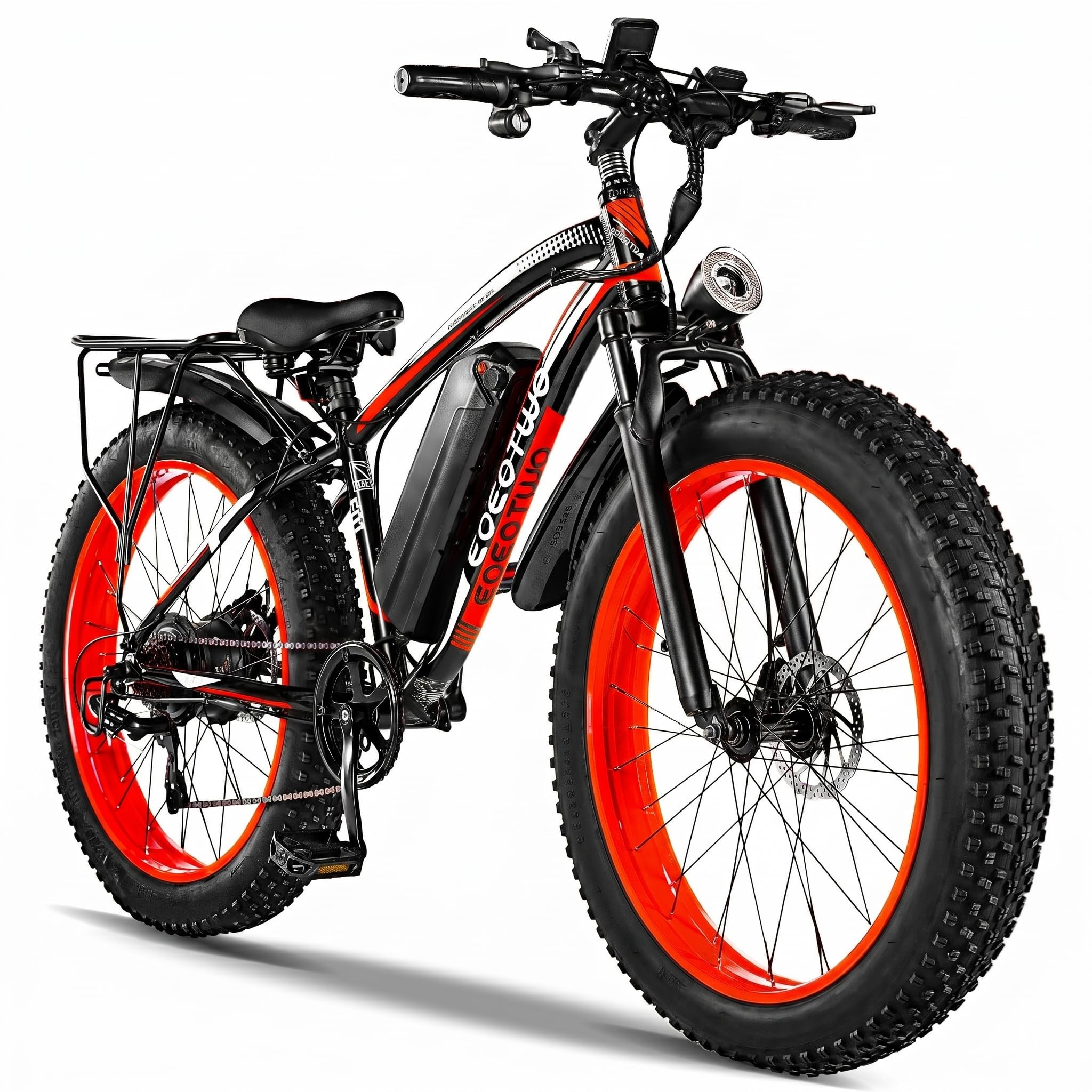
EOEOTWO 1500W Fat Tire
Key Features
- Motor: 1500W peak
- Battery: 48V 15Ah 720Wh
- Suspension: Front only
- Brakes: Mechanical disc
- Tires: 26×4 fat
- Price: $
The EOEOTWO delivers a 1500W peak motor and 26-inch fat tires at a price that undercuts many competitors, and assembly is notably simple out of the box. This gives it genuine capability on mild climbs and loose surfaces right away.
Battery life can vary significantly from the advertised 60 miles – some users have seen far less in real-world riding. A small number of units have also experienced electrical issues early on, which makes this bike better suited for casual weekend trail riders than for anyone relying on consistent daily performance.
When kept within its limits, the ride is smooth and predictable on packed dirt and gravel paths, with the front suspension absorbing light bumps. The fat tires add stability at moderate speeds, making short recreational loops enjoyable.
Pros
- Powerful acceleration and climbing ability on mild trails.
- Tool-free assembly with clear instructions, ready in under an hour.
- Good value for a fat-tire e-MTB with front suspension at this price point.
- Smooth handling on packed dirt and gravel at moderate speeds.
Cons
- Real-world battery range may fall well short of the claimed 60 miles.
- A small number of bikes may develop electrical issues like power cutoff within weeks of use.
This bike is a reasonable entry point for short recreational trail use, but its inconsistent battery life and potential reliability issues make it a choice best suited for low-stakes weekend rides rather than daily commuting.
Best for Ultra-Budget Paved
Loeook 1000W UL Cert.

Key Features
- Motor: 1000W peak
- Battery: 48V 374.4Wh
- Suspension: Front only
- Brakes: Mechanical disc
- Tires: 26×1.95 standard
- Price: $
Offering the lowest price among UL-certified e-bikes in this comparison, the Loeook provides a smooth, enjoyable ride on pavement and a tool-free assembly process. Its 26-inch standard-width tires and front suspension handle paved roads and hard-packed gravel, but they lack the traction needed for sand, mud, or snow. Early wear on pedals and tires can occur with regular use, making this a bike for paved commuting rather than trail riding.
Pros
- Lowest price among UL-certified e-bikes in this set.
- Smooth and fun ride quality for casual paved use.
- Easy assembly with clear instructions and tools.
Cons
- Seat comfort is poor for some riders; replacement may be needed.
- Pedals may strip and handlebars can loosen under regular use.
The Loeook fits only paved commuters on a strict budget; it should not be considered for off-road or trail use.
How to Choose
Real-world e-MTB range is typically half the advertised PAS figure, so prioritize battery capacity over claimed miles.
Motor Power
Motor peak wattage tells you the maximum burst of power for steep climbs, but sustained wattage is what keeps you moving on long ascents. A 1500W peak motor might only deliver 750W continuously — enough for moderate hills but not for extended rocky climbs.
For technical trail riding, look for at least 750W sustained output and torque above 80 Nm. Higher torque means less pedal effort on loose terrain, but it also drains the battery faster under full throttle.
Battery Capacity
Battery capacity measured in watt-hours (Wh) is more reliable than amp-hours (Ah) because it accounts for voltage. A 48V 15Ah pack is roughly 720Wh, which in real trail conditions with assist level medium typically delivers 20–30 miles, not the 60 miles listed in PAS mode.
For serious off-road rides exceeding 25 miles, aim for 900Wh or more. The extra weight of a larger battery (3–4 lbs) is worth the confidence of not running out of power on the return leg.
Suspension Type
Front suspension alone (hardtail) is lighter and cheaper, but on rocky singletrack the rear wheel will bounce and reduce traction. Full suspension adds 5–8 lbs and requires occasional pivot maintenance, but it keeps the rear tire planted over roots and drops.
If you ride mostly smooth fire roads or gravel paths, a hardtail with 80–100mm fork travel is sufficient. For aggressive trail riding with jumps or tech sections, dual suspension becomes a safety and comfort necessity.
Brake Type
Hydraulic disc brakes use fluid pressure to deliver consistent, modulated stopping power with less hand fatigue — critical on long descents. Mechanical disc brakes rely on cable tension, which can stretch over time and require more lever effort.
For e-MTBs weighing 55–70 lbs, hydraulic brakes with 4-piston calipers provide the stopping force needed to control speed on steep, loose terrain. Mechanical discs are acceptable for flat terrain and speeds under 20 mph.
Tire Width
Fat tires (4-inch or wider) float over sand, snow, and mud, offering stability on loose surfaces. However, they add rolling resistance on pavement and hardpack, reducing range by 5–10% compared to standard tires.
Standard mountain bike tires (2.25–2.6 inch) are lighter and faster on hardpack and gravel, but they sink in soft conditions. Choose fat tires if your trails include sand, deep mud, or loose rock; otherwise standard widths offer better efficiency and handling.
FAQ
How many miles can a 48V 15Ah ebike actually go on a trail?
Expect 20–30 miles on moderate singletrack with medium pedal assist. The advertised 60-mile PAS range is measured on flat pavement at lowest assist. Cold weather, steep climbs, and higher assist levels cut range by 40–60%.
Is UL 2849 certification important for an electric mountain bike?
Yes. UL 2849 certifies the battery and electrical system meet safety standards for thermal runaway and overcharge protection. Budget e-MTBs without this certification are more likely to have electrical failures or fire risks. It’s a worthwhile safety marker even on a tight budget.
Why does my budget e-bike shut off after a few miles?
The battery management system may be cutting power due to voltage sag under load — common with low-quality cells on steep climbs. This is a usability trade-off of cheap packs: they can’t sustain high current. A battery with Samsung or LG cells (like the FREESKY) avoids this issue.
What is a good top speed for a trail e-bike that’s still legal?
In the US, Class 2 e-bikes are limited to 20 mph and Class 3 to 28 mph. For trail riding, 20–25 mph is plenty — you’ll rarely sustain higher speeds on rough singletrack. Bikes claiming 35+ mph are often misclassified and may not be street-legal.