This post contains affiliate links. We may earn a small commission when you buy through our links — at no extra cost to you.
Every winter, thousands of women discover that their new down jacket’s zipper sticks, the sizing is off, or feathers start poking through within weeks. It’s the most consistent complaint across budget and mid-range jackets alike.
The truth is, down jackets are simple insulation tools – but the devil is in the details. Fill power determines warmth-to-weight ratio, fabric quality dictates durability, and zipper hardware separates a reliable coat from a frustrating one.
This guide cuts through the marketing to focus on what actually holds up on the trail and in the city. Whether you need a full-length parka for sub-zero hikes or a lightweight layer for mild-day adventures, the right jacket depends on understanding these trade-offs.


Best for Hiking & Outdoors
Marmot Ithaca Jacket
Key Features
- Water Resistance: DWR
- Hood Type: Detachable fur hood
- Length: Mid-thigh
- Price: $$$
The Ithaca delivers consistent warmth with its 700-fill down treated with Down Defender for moisture resistance, and a detachable hood adds flexibility in changing weather. Its water-resistant fabric and DWR coating handle light snow and drizzle without needing an extra shell.
For typical winter conditions, the jacket provides standalone warmth without heavy layering, and the relaxed fit accommodates a mid-layer if needed. The four pockets (two zip handwarmer, two interior) offer practical storage for essentials.
This premium-priced jacket suits hikers and outdoor enthusiasts who value technical features over cost savings. The mid-thigh length and slightly heavier build (compared to ultralight jackets) are tradeoffs for durability and warmth. Budget-conscious buyers or those wanting a longer parka should consider other options.
Pros
- Warm enough for winter wear without extra layers.
- High-quality materials and stitching hold up to regular use.
- Lightweight feel and comfortable fit for active movement.
Cons
- Slightly heavier than ultralight down jackets – less ideal for minimalist packers.
- Mid-thigh length leaves more skin exposed than a longer parka in bitter cold.
A winter jacket for hikers and daily commuters who need technical warmth without sacrificing mobility.
Best for Mild Weather Hikes
TDYPCI Lightweight Puffer
Key Features
- Water Resistance: Waterproof
- Hood Type: Fixed hood
- Length: Hip-length
- Price: $
The TDYPCI winter coat combines a waterproof shell with down insulation at a budget price, offering weather resistance that ultra-packable jackets often skip. Build quality is good for the price, with a true-to-size flattering fit. It packs down easily, layers well under a heavier coat, and handles light snow. The breathable insulation keeps you comfortable during active use without overheating. The quilted design adds a stylish touch, and the zip closure works smoothly. Best for temperatures above 20°F, this jacket won’t manage deep cold – that’s the tradeoff for its lightweight, affordable design.
Pros
- Warm and breathable for not-so-cold days
- Good quality for the price
- True-to-size flattering fit
Cons
- Best used above 20°F – not built for extreme cold snaps
A budget-friendly waterproof down jacket that handles mild winters and travel well, as long as you stay above 20°F.
Best for Eco-Friendly Layering
North Face Aconcagua 3
Key Features
- Water Resistance: WindWall + DWR
- Hood Type: No hood
- Length: Hip-length
- Price: $$$
The Aconcagua 3 prioritizes sustainability with 100% recycled body fabric and 600-fill recycled down, while WindWall fabric offers wind resistance and DWR water repellency. Unlike the top pick Marmot Ithaca, this jacket lacks a hood — a deliberate choice for those who prefer to add their own shell or hat. The slim cut runs small; sizing up is advisable if layering over a mid-layer. This jacket suits eco-conscious buyers who plan to use it as an insulating mid-layer under a waterproof shell, avoiding extremes below 10°F without additional layers.
Pros
- Warmth without bulk makes layering easy.
- Lightweight build allows free movement during active use.
- Clean design looks good worn alone or under a shell.
Cons
- Sizing may run snug in the shoulders; ordering a size up is recommended for layering.
- No hood included, which some buyers may miss in windy or wet conditions.
For eco-conscious shoppers seeking a lightweight mid-layer that pairs with a hooded shell, this is a well-constructed option that respects the planet.
Best for Extreme Cold
Fitouch Waukee Parka
The Fitouch Waukee Parka delivers serious heat retention with 750+ fill down and full knee-length coverage, handling single-digit temperatures without complaint. Its construction feels solid, and the long silhouette offers a sleek urban look.
This parka suits taller women who prioritize maximum warmth and don’t need a lot of arm mobility—the cut runs narrow through the shoulders and sleeves may be short for broad frames. Some units also show down leaking through the fabric, so inspect carefully on arrival.
Pros
- Keeps you warm well below freezing with high fill power down.
- Sturdy build that holds up to regular wear in harsh conditions.
- Long cut and clean lines that look good in urban winter settings.
Cons
- Zipper can stick or jam, requiring extra care when closing.
- Tight across shoulders and arms; sleeves may be too short for longer reaches.
If you need extreme warmth for a tall frame and can accept a finicky zipper, this parka delivers. Check the fit and down loss on arrival — those who need easy mobility or a reliable closure should look elsewhere.
Best for Everyday Winter
Orolay Thickened Down Jacket
The Orolay Thickened Down Jacket delivers dependable warmth and a flattering silhouette that suits daily winter commutes and errands. Its thick down fill traps heat effectively, while the array of pockets keeps phone, keys, and wallet within easy reach. The outer shell and stitching hold up well through regular wear. However, the fit runs snug in the arms and shoulders — sizing up resolves this for most builds. The main zipper can occasionally catch or feel less smooth, but this rarely affects overall function. This jacket is best for budget-conscious shoppers who prioritize comfort, style, and pocket utility over packability or technical hiking features.
Pros
- Exceptional warmth retention for cold climates
- Durable construction that holds up to daily use
- Plenty of functional pockets for daily essentials
Cons
- Fit runs tight in arms and shoulders; sizing up is recommended
- Zipper can catch or feel sticky on occasion
A practical everyday jacket for those who value warmth and pockets over packability — just be ready to size up.
Best for Casual Winter
MOERDENG Fur Hood Parka
Key Features
- Water Resistance: Waterproof
- Hood Type: Detachable faux fur
- Length: Mid-thigh
- Price: $
The MOERDENG Fur Hood Parka delivers fleece-lined warmth, a detachable faux fur hood, and secure zip-and-snap pockets at a budget-friendly price. It is less technical than premium hiking jackets but offers more style and coverage for casual winter wear. The main tradeoff is the zipper, which can be sticky or occasionally cause trouble — a compromise worth accepting given the cost. This parka suits casual users in cold climates who want warmth and features without overspending. Buyers should order one size up for proper fit.
Pros
- Fleece lining traps heat for lasting warmth
- Detachable faux fur hood adds versatility and a premium look
- Multiple secure pockets (zip and snap) keep essentials safe
Cons
- Sizing runs small; ordering up is needed for a comfortable fit
- Zipper can be sticky or cause trouble in some cases
A cozy, feature-rich parka that delivers impressive warmth for the price — just size up and be ready for occasional zipper quirks.
Best for Lightweight Travel
Eddie Bauer Cirruslite

Ultralight and packable, this jacket excels on the trail or in a suitcase. Warmth for its weight is solid for active use. Down feathers may escape through the fabric over time, and the cut runs narrow in the hips — size up if layering.
Pros
- Weighs under a pound and stuffs into its own pocket for easy travel.
- Delivers good warmth for its weight during active outdoor use.
Cons
- Down feathers can poke through the shell over time.
Best for backpackers who value weight savings and accept occasional feather leakage as a fair trade-off.
Best for Ultra-Packable Budget
Wantdo Packable Down
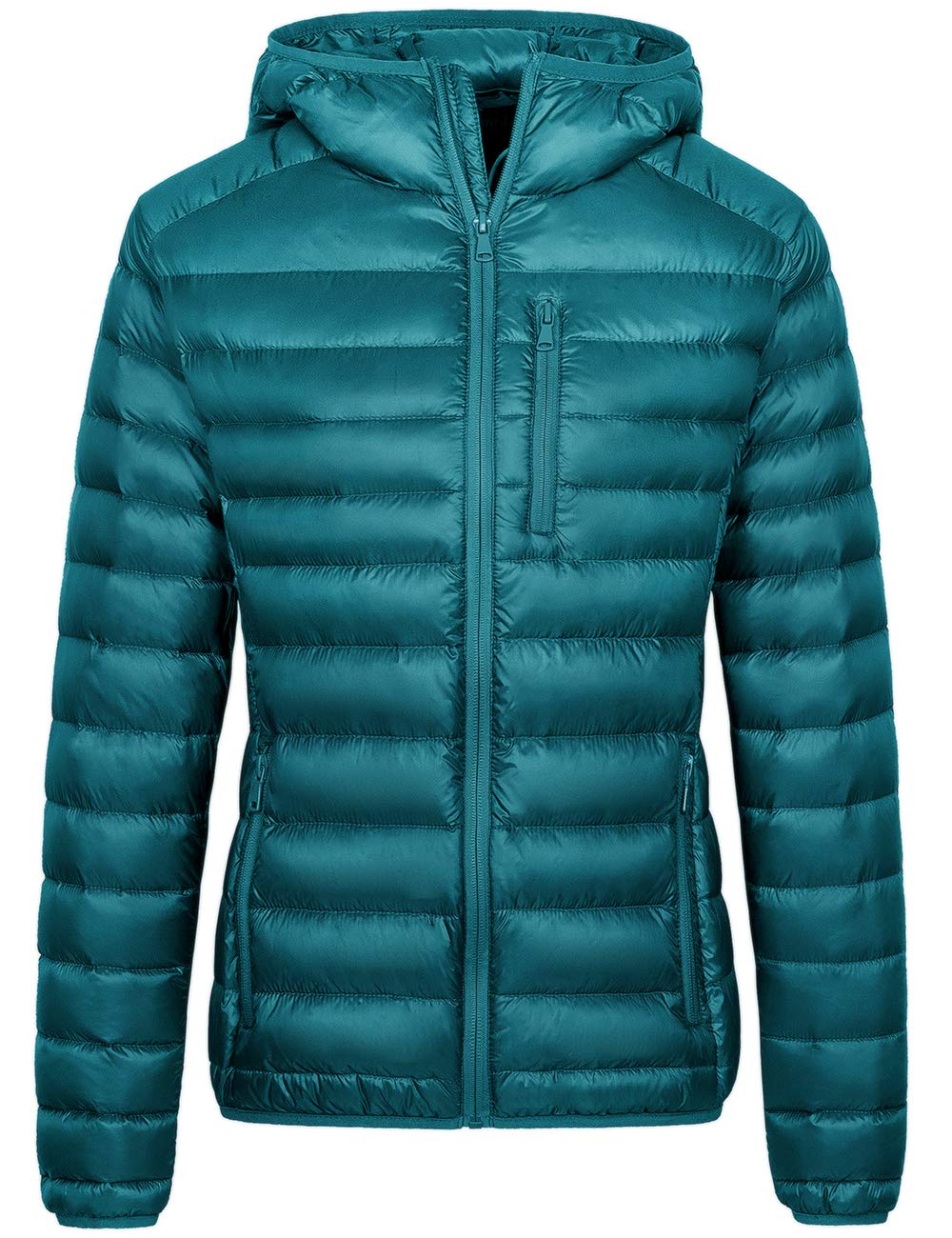
This jacket folds into a compact pouch, ideal for stashing in a daypack or carry-on. It provides decent warmth for its weight without feeling bulky. The thin shell, however, is prone to tearing under abrasion, and feathers can work through the fabric over time. The fit varies between sizes, so check measurements carefully. For light travel or cool-weather errands it works well, but rough hikes or consistent cold are outside its range.
Pros
- Warmth-to-weight ratio makes it suitable for layering in cool weather.
- Compresses into an attached pouch for easy packing on trips.
Cons
- Thin outer fabric can tear with regular wear against rough surfaces.
A budget-friendly packable down jacket for occasional use in mild weather, but not built for rugged outdoor activity or consistent cold.
Best for Slim Style
SLOW DOWN Puffer

This jacket prioritizes looks without sacrificing warmth. The tailored cut and faux-fur hood give an expensive appearance, while snug cuffs and a high collar seal in heat. Sizing varies between units, so careful measurement or in-person fitting is needed.
Pros
- Warmth is well-sealed with snug cuffs and a high collar.
- Faux-fur hood and tailored cut give a polished, expensive look.
Cons
- Sizing varies between units; buying in person or careful measuring is advised.
Best for style-focused city wear, but only if you can try on or commit to size adjustments.
Best for Brand Budget
Reebok Heavyweight Puffer

This Reebok puffer delivers good warmth and a cozy feel at a budget-friendly price, with an attractive faux fur hood. The design suits casual winter wear but not technical outdoor activities. Sizing runs small, so ordering up is recommended. Nice color options and build add to its appeal.
Pros
- Very warm and comfortable for everyday winter conditions.
- Attractive design with multiple color choices and a cozy faux fur hood.
Cons
- Sizing runs small; order up one size for a proper fit.
Best for budget-conscious buyers who want casual winter warmth from a known brand, but only if you size up.
Best for Warm Budget Puffer
MOERDENG Hooded Puffer

Key Features
- Water Resistance: Waterproof
- Hood Type: Fixed hood
- Length: Hip-length
- Price: $
This jacket keeps you warm without adding bulk, and the tailored fit with removable hood flatters most body types. Zipper quality can be inconsistent between units, so consider that tradeoff if you plan to wear it daily.
Pros
- Warmth without bulk — ideal for layering or standalone wear in cold weather.
- Flattering fit and removable hood make it a stylish option for urban settings.
Cons
- Zipper may stick or fail over time, especially with frequent use.
Works best for budget-conscious shoppers who want a warm, stylish coat for short city walks and can accept occasional zipper quirks.
Best for Ultra-Budget Long
MOERDENG Long Parka

This coat delivers impressive warmth and a flattering fit for under $30, making it a standout for budget-conscious buyers seeking full-length coverage. However, zipper quality and occasional durability issues mean it’s best suited for casual winter use rather than long-term or heavy-duty reliance.
Pros
- Incredible warmth for the price, keeping you comfortable in cold conditions
- Stylish design that looks more expensive than the price tag suggests
Cons
- Zipper can be difficult to zip or may wear out over time
Best for budget shoppers who need full-length winter coverage and are willing to accept that zipper and long-term durability may vary between units.
How to Choose
Down jacket warmth is determined by fill power and construction, but the most common point of failure is the zipper – a few extra dollars can save frustration.
Fill Power
Fill power measures the loft and insulating efficiency of down. Higher numbers (700+) trap more air per ounce, meaning you get more warmth with less weight. The trade-off: high-fill down is more expensive and requires careful washing to maintain loft.
For most hikers, 600-700 fill offers a strong balance of warmth and cost. Below 600, you need more bulk to achieve the same warmth, which adds weight and reduces packability.
Water Resistance
A water-resistant coating (DWR) is essential for light snow and drizzle. Without it, down clumps and loses insulation when wet. The catch: DWR wears off after several washes and needs reapplication with a spray-on treatment.
Budget jackets often skip DWR or use weak coatings that fail quickly. If you plan to hike in wet conditions, prioritize a jacket with a durable DWR finish or plan to pair it with a waterproof shell.
Weight and Packability
Lightweight jackets use thinner shells and less down, making them ideal for layering or packing for travel. But thin fabrics tear more easily on branches or backpack straps. Heavier jackets with thicker shells are more durable but take up more space and add weight to your pack.
Consider your primary activity: for backpacking, every ounce counts, so a packable jacket is key. For day hikes or urban use, a slightly heavier jacket that resists abrasion may be a better long-term investment.
Hood Type
A hood adds significant warmth, especially when windy. Detachable hoods offer versatility – wear it when needed, stow it when not. Fixed hoods save weight but can be annoying if you prefer hats or a shell with its own hood.
Faux fur trims are stylish but collect snow and ice during wet hikes. For technical use, a simple hood with elastic binding or a helmet-compatible design is more practical.
Length
Hip-length jackets allow full freedom of movement for hiking and bending. Mid-thigh offers a compromise between coverage and mobility. Full-length parkas provide maximum warmth for static use but can restrict leg movement on steep trails and add weight.
If you spend most of your time moving (hiking, scrambling), a hip-length jacket is usually enough. For cold camp sits or extreme climates, a longer cut helps retain core heat.
Zipper Quality and Pocket Layout
Zippers are the most stressed component on a down jacket. Budget jackets often use plastic zippers that jam, stick, or break after a few uses. Look for metal zippers from YKK or similar for reliability.
Pockets: handwarmer pockets are essential, and interior security pockets help keep valuables safe. More pockets add weight but increase convenience. A single chest pocket can replace an extra layer’s storage.
FAQ
How do I wash a down jacket without ruining the loft?
Use a front-loading washer with a down-specific detergent like Nikwax Down Wash. Wash on a gentle cycle with cold water, then dry on low heat with clean tennis balls to break up clumps. Never use fabric softener or bleach. If you skip the fluff-drying, the down will lose its loft permanently.
Is 600 fill down warm enough for hiking in 20°F weather?
Yes, if you layer properly. A 600-fill down jacket paired with a base layer and a windproof shell will keep you warm down to about 20°F during active hiking. For stationary breaks, you may need an extra layer or a higher fill power jacket.
Why does my down jacket shed feathers after a few wears?
Feather leakage is common with budget jackets that use lower-quality down or insufficient shell fabric. The down quills poke through the weave. To minimize it, avoid over-stuffing the jacket and consider a jacket with a tighter-woven shell or a liner. Some shedding is normal but excessive leakage indicates poor construction.
Can I wear a down jacket in light rain or snow?
Only if the jacket has a DWR coating. In light snow, a DWR-treated down jacket will repel moisture initially. In rain, the down will quickly absorb water and lose insulation. Always check the water resistance rating and treat the jacket with a DWR spray before wet conditions.
What size should I order for a down jacket?
Most down jackets run small, especially in the shoulders and arms. Many women report needing to size up from their usual size. Always check recent reviews for sizing guidance and consider ordering two sizes to compare if you are between sizes.