This post contains affiliate links. We may earn a small commission when you buy through our links — at no extra cost to you.
Cooler marketing promises ice retention of up to five days, but in real-world summer use, that number often drops to one or two. The lid that refuses to stay open is another persistent annoyance, especially on budget hard coolers.
This guide cuts through the hype to find coolers that deliver consistent performance for hiking, camping, and worksite use. The right choice depends on whether you need a seat, a lightweight carry, or rugged durability.
We matched each cooler to a specific use case so you know exactly what you’re getting — no inflated claims, just honest capability.


Best for Tradespeople
Klein Tools 17qt
Key Features
- Capacity: 17 qt
- Ice Retention: 1-2 days
- Durability: Robust
- Portability: Strap (short)
- Leak-Proof: Yes
- Price: Mid-Range
The Klein Tools 55600 is a 17-quart cooler that pulls double duty as a seat rated for 300 pounds. Its thick insulation keeps contents cold for a full day of work or a day trip, and the body withstands drops that would crack a typical plastic cooler.
This cooler is best suited for construction workers, tradespeople, or anyone who needs a portable seat at a job site. The shoulder strap is too short for comfortable over-the-shoulder carry, so it is better placed in a truck bed or on the ground. At 17 quarts, it holds enough for a shift plus drinks, but may be bulky for someone looking for a light lunch bag.
Pros
- Extremely durable construction, survives drops
- Keeps food cold all day (up to 30 hours claimed)
- Doubles as a sturdy seat
Cons
- Shoulder strap length makes carrying awkward when the cooler is fully packed
- Size is larger than a typical lunch box, less suited for daily desk carry
For anyone who needs a cooler that can take abuse and serve as a seat on site, this Klein Tools model delivers rugged performance without the premium price of rotomolded coolers.
Best for Overlanders
YETI Tundra Haul
Key Features
- Capacity: 45 qt
- Ice Retention: 3-5 days
- Durability: Premium
- Portability: Wheels & handle
- Leak-Proof: Yes
- Price: Luxury
The NeverFlat wheels and reinforced handle make this cooler easy to pull over rocky trails and sandy beaches. Ice stays cold for days thanks to the thick rotomolded walls, and the shell shrugs off drops and bumps that would crack cheaper coolers.
This is a cooler for serious overlanders who need a wheeled option for remote campsites and don’t mind the 37-lb empty weight. Lifting it into a truck bed or SUV takes two people or a ramp, and the near-$450 price puts it out of reach for occasional campers. For weekend picnics or tailgating, a lighter, cheaper cooler like the top pick makes more sense.
Pros
- NeverFlat wheels roll over rough terrain without going flat
- Ice retention lasts multiple days, even in warm conditions
- Rotomolded shell is tough enough for heavy use and impacts
Cons
- At 37 lbs empty, lifting into a vehicle can be a struggle
- Premium pricing limits this to dedicated adventurers
If your trips take you off the beaten path and you’re willing to pay for durability, the Tundra Haul delivers. For most buyers, the weight and cost are real barriers.
Best for Everyday Campers
Igloo BMX 25qt
Key Features
- Capacity: 25 qt
- Ice Retention: 2-3 days
- Durability: Hinge weak
- Portability: Handle
- Leak-Proof: Yes
- Price: Mid-Range
The Igloo BMX 25qt stands out for its blow-molded shell and reinforced base, providing the kind of ruggedness typically seen in high-end coolers. It keeps contents cold reliably for day trips, with insulation that holds up in moderate conditions. The rubberized latches add a secure feel, and the size is practical for short camping trips or tailgates.
This cooler suits anyone who wants premium-grade durability without spending Yeti money. In hot weather, ice retention may fall short of the claimed 4-5 days — plan for 2-3 days in summer. The hinge assembly is a known weak point under heavy use; it’s fine for regular outings but worth noting for those who load and unload frequently. Avoid if you need week-long ice performance or an ultralight carry.
Pros
- Cooling performance holds up well for day trips and weekend use
- Build quality with reinforced base and UV inhibitors outlasts budget options
- Costs significantly less than premium rotomolded coolers with similar insulation
Cons
- In hot conditions, ice may only last 2-3 days rather than the advertised 4-5
- Hinge durability can degrade under frequent heavy loading
A smart pick for those who want rugged cooling at a reasonable price, as long as you accept the ice retention limits in peak summer.
Best for Large Groups
Coleman Xtreme 50qt
Key Features
- Capacity: 50 qt
- Ice Retention: 1-2 days
- Durability: Wheels fragile
- Portability: Wheels & handle
- Leak-Proof: Yes
- Price: Mid-Range
For group trips where space and price matter most, the Coleman Xtreme holds 84 cans and rolls smoothly on paved paths. Its wheels can detach under heavy loads or rough terrain — this cooler suits casual beach days and tailgates rather than rugged off-road use.
Pros
- Budget-friendly for a wheeled cooler with large capacity
- Good temperature retention keeps contents cold through a day outing
- Lid doubles as a stable seat for up to 250 lbs
Cons
- Ice retention can fall short of the 5-day claim in hot weather
- Wheels may detach when the cooler is heavily loaded or rolled over uneven ground
Best for budget-conscious groups needing a large cooler for short trips on flat ground — not for extended off-grid use.
Best for Hikers and Bikers
SPARTER Backpack
Key Features
- Capacity: 33 cans
- Ice Retention: several hours
- Durability: Zipper leaks
- Portability: Backpack straps
- Leak-Proof: No
- Price: Budget
The SPARTER Backpack Cooler lets you carry 33 cans hands-free, with comfortable straps and double insulation that keeps drinks cold for hours. Unlike the top pick’s rugged work-focused design, this is built for mobility — but the zipper isn’t fully leak-proof, so water may escape if the bag tips over. Keeping it upright avoids the issue.
This works well for short beach days, picnics, or biking trips where the bag stays upright. The straps and handle can show wear under frequent heavy loads, so consider it a friendly companion for moderate use rather than daily hauling. For all-day water activities or long-term heavy duty, other options fit better.
Pros
- Comfortable backpack straps keep your hands free for hiking or biking.
- Double-insulated compartments keep drinks cold for hours.
- Multiple pockets organize snacks, keys, and phone easily.
Cons
- Zipper can leak when the bag is tipped over — best kept upright.
- Straps and handle may show wear under frequent heavy loads.
A budget-friendly hands-free option for short outdoor trips — just keep it upright and avoid overloading.
Best for Workers
Carhartt Lunch Box
Key Features
- Capacity: 8 L
- Ice Retention: 8 hours
- Durability: Durable
- Portability: Shoulder strap
- Leak-Proof: Yes
- Price: Budget
The Carhartt Lunch Box delivers durable construction and well-organized compartments that set it apart from typical lunch bags. Its thermal insulation holds food cold for a standard work shift, ideal for daily commutes, school, or short day trips. The 8-liter interior fits lunches for one person but can feel tight with a full meal plus a drink. For extended camping or hot climates without a freezer pack, a larger cooler is more suitable. Compared to ultra-budget options, the Carhartt’s sturdier build and better organization justify the modest price difference.
Pros
- Excellent build quality and durability
- Spacious design with multiple compartments
- Keeps food cold for a work shift
Cons
- For larger lunches with a drink, the interior can feel tight.
A practical, durable lunch bag for daily use – well worth the investment if you prioritize build quality over maximum capacity.
Best for Day Trips
Titan Arctic Zone Cooler
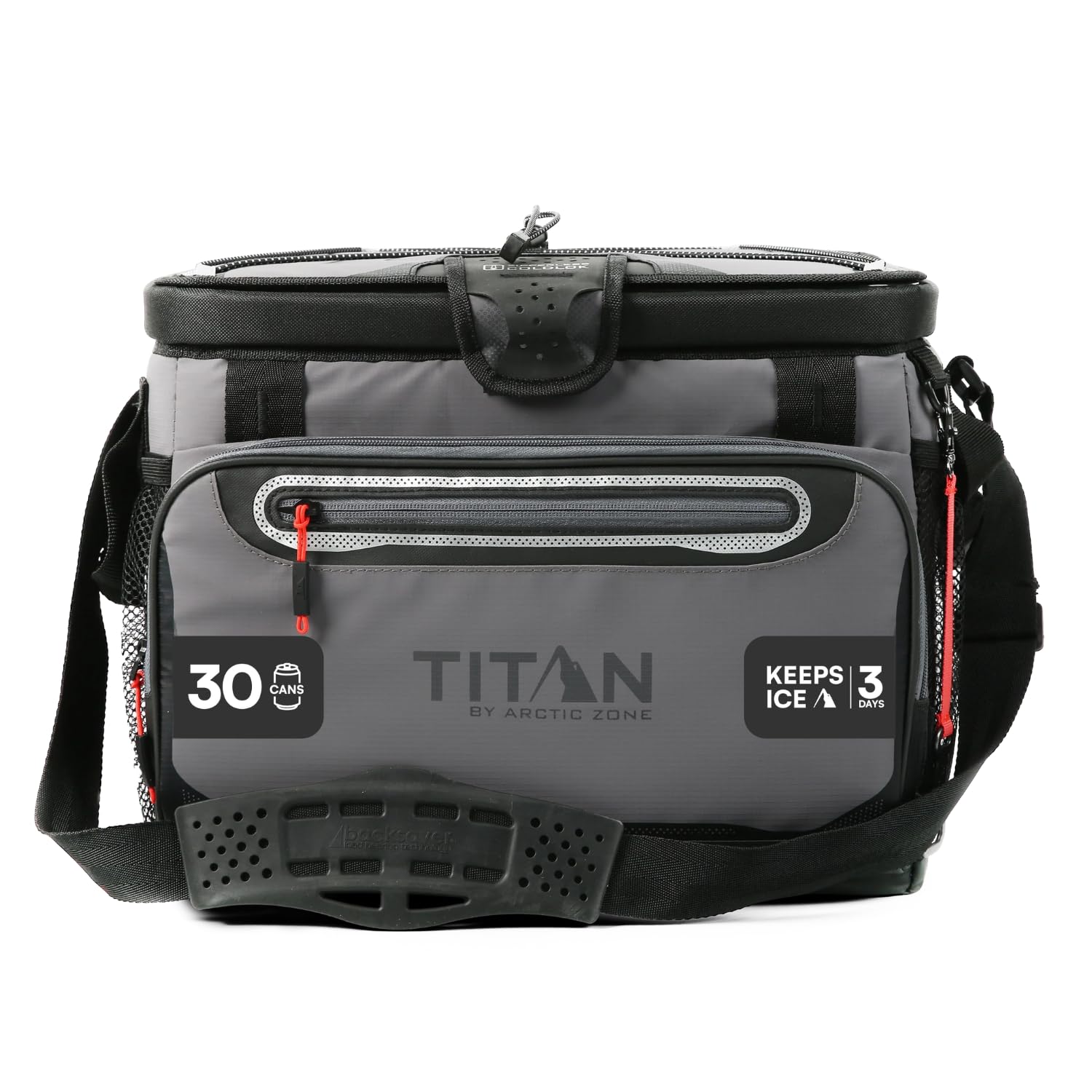
Key Features
- Capacity: 30 cans
- Ice Retention: 1 day
- Durability: Good
- Portability: Strap
- Leak-Proof: Yes
- Price: Mid-Range
The zipperless lid allows quick, one-handed access with a durable seal. At 3.55 lbs with a padded strap, it is easy to carry for day trips or work lunches. Ice retention can fall short of 2 days in warm conditions, and the narrow interior will not fit square containers. Best for short outings where quick access matters more than ice longevity.
Pros
- Zipperless lid provides quick access and a durable seal.
- Lightweight and easy to carry with padded strap.
Cons
- In hot weather, ice retention can fall short of the advertised 2 days — closer to 24 hours.
A good pick for day trips, tailgates, or work lunches where quick access to drinks is the priority and ice longevity is secondary.
Best for Budget Campers
Coleman Chiller 30qt

Key Features
- Capacity: 30 qt
- Ice Retention: 2 days
- Durability: Hinge weak
- Portability: Handle
- Leak-Proof: Yes
- Price: Budget
The Coleman Chiller holds up well for day trips and keeps 25 cans cold for a weekend, but the lid won’t stay open, making loading inconvenient, and the hinge may not endure heavy use.
Pros
- Very good price for the size
- Good ice retention for weekend trips
Cons
- Lid does not stay open when loading
Best for budget-conscious campers on short outings where you set up once and access the cooler infrequently.
Best for Serious Campers
YETI Tundra 45

Key Features
- Capacity: 45 qt
- Ice Retention: 3-5 days
- Durability: Robust
- Portability: Carry handle
- Leak-Proof: Yes
- Price: Luxury
The YETI Tundra 45 holds ice for several days and its rotomolded shell shrugs off drops and bumps. At 23 lbs empty, it is heavy to carry any distance, and the premium cost is hard to justify for casual outings. This cooler is built for serious expeditions where ice longevity is non-negotiable, not for everyday picnics or tailgates.
Pros
- Keeps ice for multiple days even in hot weather.
- Nearly indestructible with bear-resistant, rotomolded construction.
Cons
- Very heavy when empty (23 lbs) – a chore to carry any distance.
Best suited for multi-day off-grid trips where ice longevity is critical – not for day-to-day use or tight budgets.
Best for Medium Groups
Igloo Profile 30qt

Key Features
- Capacity: 30 qt
- Ice Retention: 2-3 days
- Durability: Good
- Portability: Handle
- Leak-Proof: Partial
- Price: Mid-Range
This Igloo cooler maintains ice for a weekend trip and its 30-quart capacity suits small groups. The front flap may wear and fail to close over time, and the cooler can leak if tipped — making it best for stationary use. Its mid-range price and simpler features place it behind more advanced options for heavy-duty needs.
Pros
- Sturdy construction for daily handling
- Ice retention lasts 2-3 days for weekend trips
Cons
- May leak if tipped, so place on level surfaces
Best for occasional use where the cooler stays upright, such as picnics or daily lunches, rather than rugged adventures.
Best for Budget Workers
HOTOR Lunch Box

Key Features
- Capacity: 9 L
- Ice Retention: few hours
- Durability: Flimsy
- Portability: Strap
- Leak-Proof: No
- Price: Budget
The HOTOR Lunch Box offers decent insulation for its budget price, making it a lightweight option for work lunches or school meals. However, its soft bottom provides little support for heavier items, and the zipper may drip if liquids are packed inside — better suited for dry snacks and short trips than serious outdoor use.
Pros
- Extremely affordable with decent insulation for a lunch bag
- Lightweight design with shoulder strap makes it easy to carry
Cons
- Zipper may drip if liquids are packed — best for dry items
Works well as a cheap backup lunch bag for dry food, but not for packed liquids or long days out.
How to Choose
Ice retention claims are measured in ideal lab conditions; expect half the advertised time in summer use.
Capacity
Capacity is listed in quarts or can count, but the real usable space depends on the ice-to-food ratio. A 30-quart cooler holds about 25 cans with ice, but packing square meal prep containers reduces that volume.
For a family camping trip, aim for 50 quarts or more. For solo day hikes, a 20-liter soft cooler is enough.
Ice Retention
Ice retention is the most marketed spec, but it varies wildly with ambient temperature, how often the lid is opened, and the ice-to-contents ratio. Rotomolded coolers like YETI trap cold longer than budget plastic models.
In 90°F weather, even a premium hard cooler rarely holds ice past three days. Plan for half the manufacturer’s claim when buying for hot climates.
Durability
Hinges and latches are the first failure point on budget coolers. Plastic hinge pins wear out after repeated use, causing the lid to detach. Metal or reinforced composite hinges last longer.
If you plan to sit on your cooler or drag it across rocky ground, choose a model with a load-rated lid and thick-walled construction. Soft coolers with zippers are prone to seam failure under heavy loads.
Portability
Wheels and handles make a huge difference on large coolers, but cheap plastic wheels break on uneven terrain. Look for oversized, puncture-resistant wheels and a telescoping handle.
Backpack coolers free your hands for hiking, but the straps must be padded and the cooler’s weight distribution balanced. A 33-can backpack cooler loaded with drinks and ice weighs over 20 pounds.
Leak-Proof
Soft coolers with zippers are never fully leak-proof. Once tipped, water seeps through the zipper teeth. Zipperless hard coolers with gaskets are the only reliable option for keeping melted ice contained.
If you’re transporting the cooler in a car or boat, a leak-proof seal is essential. Budget soft lunch bags are fine for short commutes but will wet a backpack if they fall over.
FAQ
Why does my cooler lid not stay open?
Many budget hard coolers lack a lid support mechanism. The hinge design allows the lid to flop closed, making loading and unloading frustrating. This is a common issue with Coleman and Igloo models. If you frequently access the cooler, look for a cooler with a stay-open hinge or a removable lid.
How long does ice really last in a Yeti cooler?
In controlled lab tests, Yeti coolers can hold ice for 5-7 days. In real-world summer conditions — 90°F, frequent opening, and a mix of food and drinks — expect 2-4 days. The rotomolded construction and thick insulation still outperform most competitors, but no cooler defies physics.
Is a soft cooler or hard cooler better for hiking?
Soft coolers are lighter and easier to carry, making them ideal for day hikes. Hard coolers retain ice longer and are more durable, but they add significant weight. For short trips where portability matters, a backpack soft cooler like the SPARTER works well. For multi-day expeditions, a hard cooler is necessary.
Can I sit on a Coleman cooler?
Many Coleman hard coolers are rated to support up to 250-300 pounds, making them usable as a seat. However, the lid on budget models may warp over time or fail if the hinge is weak. Always check the weight rating and avoid leaning fully on the lid if it doesn’t have a reinforced hinge.