This post contains affiliate links. We may earn a small commission when you buy through our links — at no extra cost to you.
A collapsible cooler should keep your drinks cold and fold flat when empty. But many fall short the moment ice starts melting—water leaks through zippers and seams, soaking your gear. The culprit isn’t the cooler; it’s using loose ice instead of ice packs or bagged ice. Nearly all soft coolers are designed for solid or contained ice, not free-flowing water.
Once you make that switch, the category opens up. This guide focuses on collapsible coolers that deliver on insulation and portability for hiking, camping, and day trips—without the leak drama. We’ve organized picks by use case: from budget-friendly lunch bags to rugged backpacks for the trail, each chosen for build quality and cold retention.


Best for Family Picnics
Creative Green Life Jumbo Cooler
The Creative Green Life Jumbo Cooler holds 30 cans and keeps ice frozen for hours thanks to its thick thermal foam lining. The sturdy construction holds up well, and the bag is machine washable – a practical bonus for inevitable spills.
This bag collapses flat for storage, making it easy to stash in a car trunk or closet. The tradeoff is the short handles: they work fine for hand-carrying short distances but aren’t comfortable for shoulder carry. That makes it best for family picnics, grocery runs, and day trips where you’re not hiking far. If you need a hands-free cooler for longer walks, a backpack-style cooler would be a better fit.
Pros
- Sturdy construction holds up to frequent use.
- Thick insulation keeps ice frozen for hours.
- Roomy 30-can capacity fits family-size meals.
Cons
- Handles are designed for hand-carry only; can’t be worn over the shoulder comfortably.
A spacious, well-insulated cooler that suits family picnics, grocery runs, and day trips – just plan to carry it by hand.
Best for Work Lunches
opux Soft Cooler 18 Can
The OPUX Soft Cooler Bag delivers capable insulation and a heat-sealed PEVA liner at a budget-friendly price, offering a practical alternative to larger coolers for daily use. Its collapsible design and shoulder strap make it easy to carry to work, the beach, or on short trips.
This bag suits individual lunches, short picnics, and light grocery runs. The liner may tear with sharp or heavy items, so it is best for sandwiches, fruit, and drinks rather than bulk ice or heavy cans.
Pros
- Well-built for the price with sturdy materials.
- Spacious enough for a meal and a few drinks.
- Keeps contents cold for short durations.
Cons
- If you pack sharp-edged utensils or heavy cans, the interior liner may tear over time.
A cost-effective lunch cooler for solo use — keep loads light and use ice packs for best results.
Best for Day Hikes
MIYCOO Cooler Backpack 40
The MIYCOO Cooler Backpack delivers hands-free portability with separate leakproof compartments for drinks and food, making it easy to stay organized on the trail. The zipper can allow water to seep through once ice melts, so using ice packs or bagged ice keeps the interior dry. This design suits day hikes, picnics, and beach walks where you don’t need loose ice or extended ice retention.
Pros
- Sturdy build quality for a budget backpack cooler
- Spacious enough for drinks and snacks with dedicated compartments
- Keeps contents cold for several hours
Cons
- Liner may tear after a few uses with sharp or heavy items
A practical choice for active day trips if you stick with ice packs and treat the liner gently.
Best for Camping
SMIRLY 48-Can Cooler Bag
The SMIRLY cooler bag keeps drinks cold for hours using multi-layer insulation and EVA/Oxford cloth construction that withstands rough handling. It suits families heading to the beach or large picnics where collapsible storage matters. The flexible bottom can sag under heavy loads – a rigid liner insert helps maintain shape.
Pros
- Large 37-liter capacity fits 48 cans or gallon-sized grocery bags.
- Durable EVA and Oxford cloth stand up to repeated use.
- Collapsible design stores flat when not in use.
Cons
- Bottom may sag under heavy loads without a rigid insert.
- Seam stitches can separate with extended heavy use.
A solid mid-range soft cooler for those who prioritize capacity and leak resistance over a rigid bottom.
Best for Serious Campers
RTIC Soft Cooler 20 Can
This soft cooler keeps ice frozen for over 24 hours thanks to 1.5-inch closed-cell foam and a leak-proof zipper. The heavy-duty nylon shell and floating capability make it a strong companion for days on the water or long campsites — outperforming many similarly priced options on pure insulation.
It suits buyers who need dependable cold performance for day trips and don’t mind occasional maintenance: the zipper is stiff and prone to breakage, requiring regular lubricant and careful handling. Seam durability may also show wear under heavy use over time, so this cooler is best for those who prioritize ice retention over fuss-free operation.
Pros
- Consistent 24-hour ice retention for reliable cold storage
- Floating design and heavy-duty nylon build suited for water and campsite use
Cons
- Seams may show wear under heavy use over time
A strong performer for those who need ice to last more than a day on the water, but the zipper demands regular attention.
Best for Car Camping
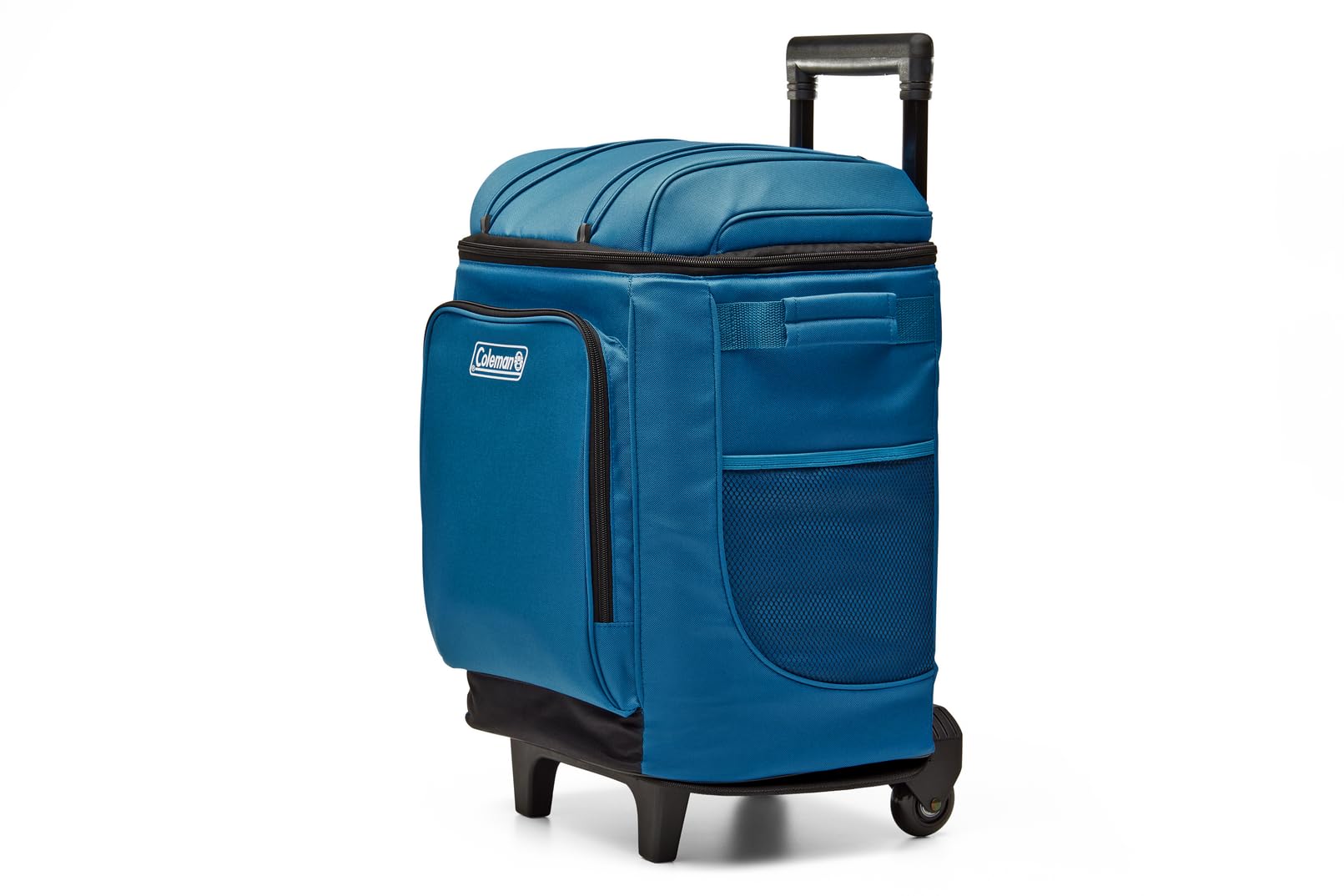
Coleman 42-Can Rolling Cooler
The Coleman 42-Can Rolling Cooler makes transporting drinks and food effortless with its telescoping handle and wheels, ideal for car camping and tailgating. However, this cooler does not collapse, so it takes up fixed storage space — a consideration if you need a packable design. Handle and wheel durability can be inconsistent; best kept to paved areas rather than rough terrain.
Pros
- Smooth rolling over pavement and grass with easy maneuvering.
- Sturdy construction that holds up to regular car-camping loads.
- Large 42-can capacity fits behind most car seats.
Cons
- Handle or wheels may loosen after moderate use on uneven ground.
- Ice retention drops to around 6-8 hours in hot weather.
A practical wheeled cooler for car trips and grocery runs if you don’t need collapsible storage.
Best for Tailgating
CleverMade Pacifica 50 Can
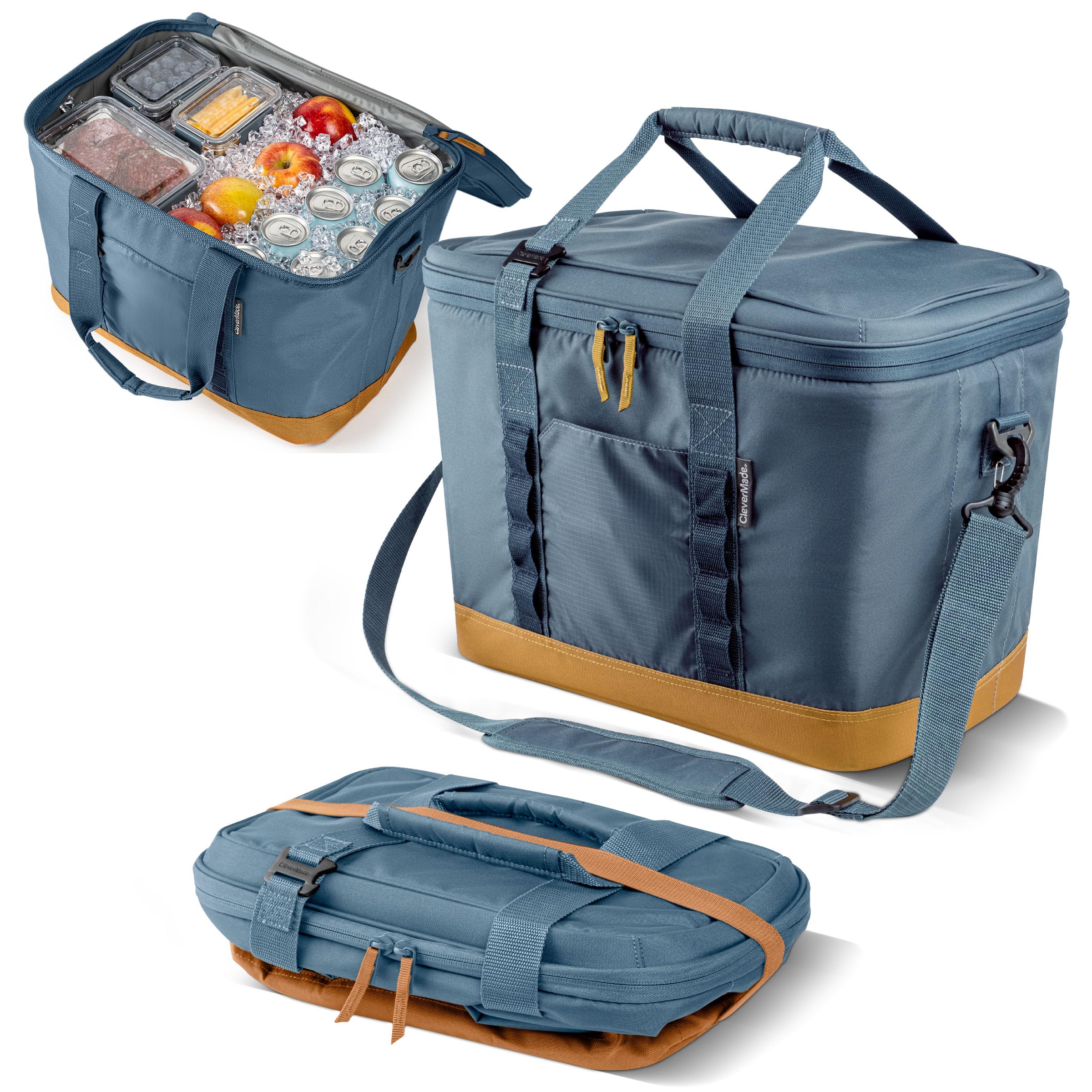
The Pacifica packs 50 cans and folds flat, ideal for large gatherings. Recycled polyester construction and built-in bottle opener add value. Leakage through the zipper when ice melts and potential liner tears mean it works best with ice packs or dry snacks.
Pros
- Folds flat for compact storage in luggage or closet.
- Large capacity holds up to 50 cans for group outings.
Cons
- Zipper can leak when ice melts and liner may tear after repeated use.
Best for tailgating or picnics where you use bagged ice or ice packs and don’t rely on loose ice.
Best for Travel
TOURIT 48-Can Cooler Bag

The TOURIT 48-can cooler fits overhead bins and includes a front pocket and attached bottle opener for convenience. It keeps drinks cold during road trips and collapses flat when not in use. Like many soft coolers, it can leak through the zipper once ice melts – best used with ice packs rather than loose ice.
Pros
- Collapses flat for compact storage when not in use.
- Keeps drinks cold for hours during travel.
Cons
- Can leak through the zipper area once ice melts.
A good travel cooler for those who pack ice packs and need overhead-bin compatibility.
Best for Occasional Use
Iknoe Large Cooler 24 Can

This budget-friendly cooler holds multiple meal containers and keeps items cold for a few hours, making it fine for office lunches or short picnics. The collapsible design stores easily when not in use. However, the PEVA liner and seams can tear after limited use, and it may leak with loose ice rather than ice packs — best reserved for light, occasional trips where you can baby the bag.
Pros
- Folds flat for storage when not in use
- Lightweight and easy to carry with a shoulder strap
Cons
- Seams and liner can tear under heavier loads or frequent use
Suits someone who needs a cheap cooler for occasional office lunches or a short beach trip, but only if you use ice packs and handle it gently.
Best for Short Trips
Vankor Cooler Backpack 30 Can

The Vankor backpack cooler offers generous 30-can capacity and comfortable portability at a very low price. However, severe leakage through the bottom and zipper occurs when loose ice is used, and the liner may tear after a few trips. This is a serviceable option for short outings where you bring pre-chilled drinks and ice packs, but not for any scenario involving melting ice.
Pros
- Good quality build for the price
- Spacious 30-can capacity holds drinks for a group
Cons
- Leaks through bottom and zipper when used with loose ice
Worth considering only if you plan to use ice packs exclusively and accept the risk of liner tearing over time.
Best for Day Trips
Hulongo 48-Can Cooler Backpack

This backpack cooler holds plenty for a day out, with pockets that help keep snacks and drinks organized. The 8mm foam insulation does a solid job retaining cold when used with ice packs. But leaks can occur once ice melts, and strap durability may be an issue over time — so it works best for casual day trips where you control the melt factor.
Pros
- Many compartments keep food, drinks, and gear organized
- 8mm foam insulation holds cold well for day trips
Cons
- Loose ice can leak from the bottom as it melts
Best for short outings where you can rely on ice packs rather than loose ice, or for those willing to pack a separate dry bag for leakage.
Best for Short Trips
Lifewit 50-Can Cooler Bag

This Lifewit bag offers a roomy 30-liter interior that holds a case of drinks and folds flat for storage. The 600D Oxford fabric and PEVA liner feel well-constructed for the price. However, melting ice can seep through the bottom seam, and the bag lacks a rigid base, making it floppy under heavy loads.
Pros
- Spacious 50-can capacity for the price
- Folds flat for easy storage
Cons
- Bottom seam can leak when ice melts, and the bag sags without a rigid insert
This bag works well for short car camping trips or picnics when using ice packs instead of loose ice. For longer outings or heavy loads, look for a cooler with a sealed base and rigid bottom.
Best for Grocery Shopping
musbus 2-Pack Grocery Bags

This 2-pack of triple-layer insulated totes holds about 24 bottles each and folds flat for easy storage. The spacious shape fits frozen and refrigerated items well during transport from store to home. However, the inner foil lining can tear when loaded with sharp-edged containers or after repeated folding, which limits its lifespan for frequent or heavy-duty hauling.
Pros
- Two bags for a budget-friendly price with solid temperature retention for short trips.
- Spacious design holds frozen and refrigerated items easily during grocery runs.
Cons
- Inner foil lining may tear when bag is loaded with sharp items or used frequently.
A practical choice for occasional grocery runs where you want two insulated bags without spending much, but not built for heavy or long-term use.
Best for Enthusiasts
YETI Hopper Flip 18

The Hopper Flip 18 offers top-tier insulation and a waterproof shell that keeps contents cold for extended outings. However, its stiff zipper can be hard to close and may require regular lubricant to keep it functional, and the premium price for a 16-can capacity limits value. It also does not collapse flat, which is a drawback for buyers seeking compact storage.
Pros
- Keeps ice frozen for days in moderate conditions.
- Rugged DryHide construction withstands rough handling.
Cons
- Zipper is stiff and may require regular lubricant to operate smoothly.
Best for brand loyalists who prioritize cold retention over collapsibility and are willing to manage the zipper’s quirks.
How to Choose
Most collapsible coolers work best with ice packs or bagged ice, not loose ice—choosing the right ice type prevents leaks and extends cold retention.
Capacity
Capacity is measured in cans or liters, but the real trade-off is weight. A 50-can cooler weighs over 20 pounds when fully loaded—too heavy to carry by hand for any distance. Match capacity to your typical load: a 30-can bag works for a family day out, while a 20-can backpack suits solo hikes.
Larger bags also become harder to pack into tight car trunks or overhead bins. If you mostly drive to the trailhead, a larger wheeled model may be more practical than a giant tote.
Insulation Performance
Closed-cell foam (typically 5–8mm thick) is the standard in soft coolers. Thicker foam retains cold longer but adds bulk. Zipper closures leak more heat than roll-top or clamping designs, though roll-tops are less convenient for quick access.
Ice retention claims range from 6 to 24 hours depending on foam density and sealed seams. In practice, expect 6–12 hours in hot weather with ice packs, less with loose ice. For multi-day trips, a rotomolded hard cooler is more reliable.
Leakproofness
No soft cooler is truly leakproof with loose ice. Water always finds a way through zippers and seams because melted ice forms a liquid that seeps through any gap. That’s why manufacturers’ ‘leakproof’ claims typically refer to ice packs, not free water.
Look for coolers with heat-sealed liners (PEVA or TPU) rather than stitched seams, and a zipper with a rubber gasket. But even then, the safest approach is to use ice packs or double-bag your ice.
Portability Features
Collapsibility is the main reason to buy soft coolers—they fold flat for storage. But that flexibility comes at the cost of structural support. Larger bags without rigid bottoms sag and become floppy when loaded, making them awkward to carry.
Backpack straps free your hands but add weight and can make the cooler ride awkwardly if not balanced. Wheeled models are great for car camping or grocery runs but struggle on sand or rocky trails. Choose based on how far you’ll carry the cooler.
Durability of Liner and Seams
The liner is the first part to fail. PEVA (polyethylene vinyl acetate) is common at budget prices but can tear if sharp items press against it. TPU (thermoplastic polyurethane) is more puncture-resistant and often used in premium coolers.
Seam construction matters: hot-pressed or heat-sealed seams are stronger than stitched seams, which can leak over time. Outer fabric weight (denier) also indicates durability: 600D is standard, 900D is heavier-duty. Expect liner failures after 1–2 years of regular use with PEVA bags.
FAQ
Why does my soft cooler leak after ice melts?
Most soft coolers rely on zippers and seams that are not watertight against free-flowing water. When ice melts, the water seeps through the zipper teeth and seam stitching. Using ice packs or bagged ice instead of loose ice prevents this because the meltwater is contained within the pack or bag. For longer trips, consider a cooler with a rubber gasket or a roll-top closure.
Can you put loose ice in a collapsible cooler bag?
You can, but you will likely experience leaks once the ice starts melting. Most collapsible cooler bags are not designed to contain liquid water—they are intended for ice packs or pre-chilled items. If you must use loose ice, double-bag it in a sealed plastic bag to prevent the water from escaping. Even then, expect some moisture to collect inside.
How long does ice last in an insulated collapsible cooler?
With quality insulation (thick closed-cell foam) and ice packs, you can expect 6–12 hours of cold retention in moderate outdoor temperatures. In hot weather (above 85°F), that drops to 4–6 hours. Premium models like RTIC or YETI with thicker foam can reach 24 hours under ideal conditions. Loose ice reduces these times significantly.
Are backpack coolers better for hiking than traditional coolers?
Backpack coolers are better for hands-free carrying on trails, especially for day hikes or short walks. They distribute weight evenly and leave your hands free for trekking poles or holding a map. However, they have less capacity per dollar than tote-style coolers and can be harder to access without taking them off. For seated picnics or car camping, a traditional tote or rolling cooler is more practical.