This post contains affiliate links. We may earn a small commission when you buy through our links — at no extra cost to you.
It used to be that a sharp, low-light binocular cost north of $400. That line has blurred. Today, mid-range models pack ED glass and dielectric coatings that rival premium optics from a few years ago.
The result? You no longer have to choose between image quality and a reasonable price. The sweet spot for serious wildlife viewing now sits in the $150–$300 range, where these features become accessible.
This guide focuses on binoculars that actually deliver on that promise — clear, bright views at dawn and dusk, without asking you to finance a second mortgage.


Best for Wildlife & Hiking
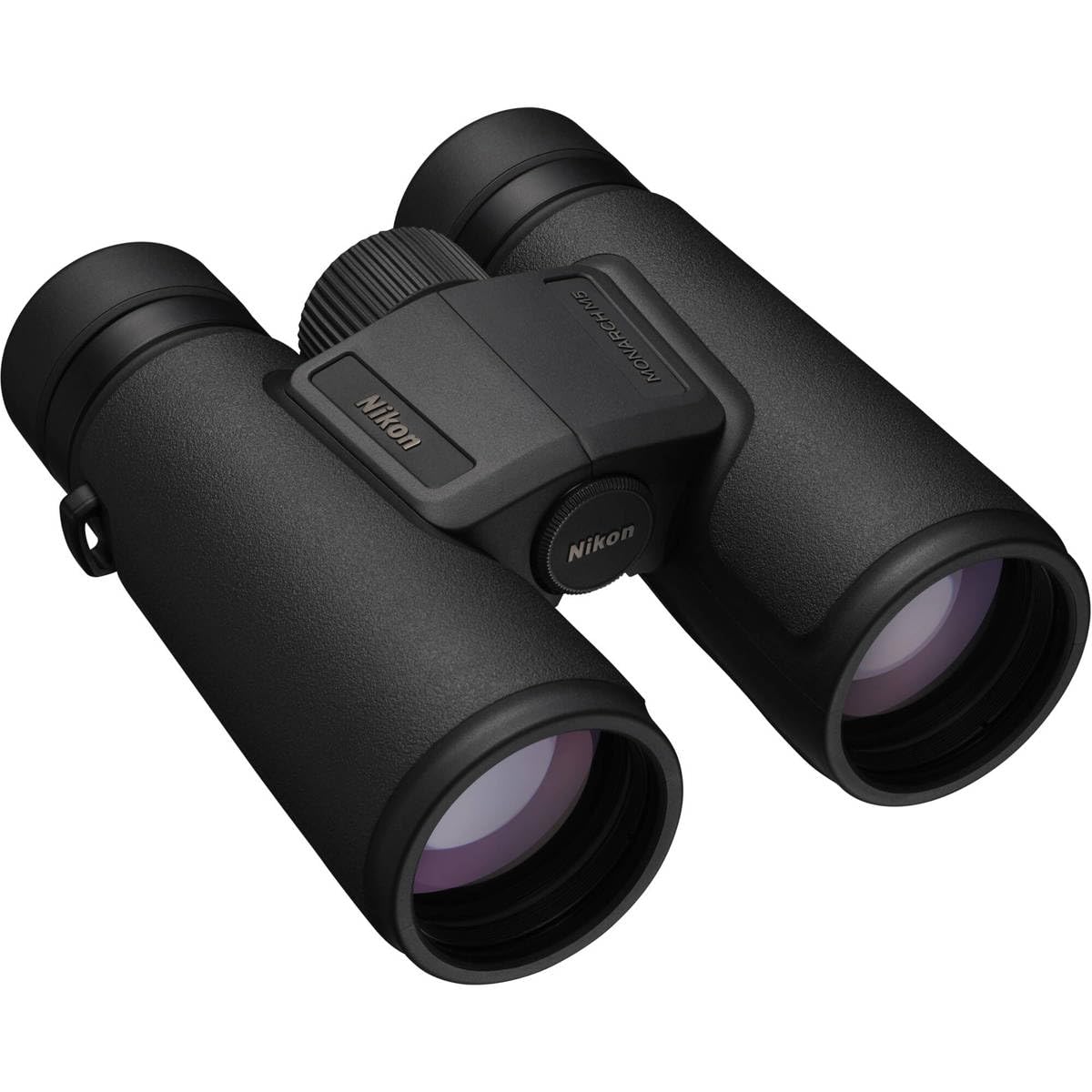
Nikon Monarch M5 8×42
Key Features
- Optical Coatings: ED glass, dielectric
- Eye Relief: 19.5mm
- Field of View: 335 ft
- Weight: 22.2 oz
- Waterproof: Yes
- Price: Mid-Range
The Monarch M5’s ED glass and dielectric prism coatings produce bright, high-contrast images that hold up at dawn and dusk, making it a strong tool for birders who start early or stay late. The 8x magnification and 42mm objective balance light gathering with a wide enough field to track fast-moving warblers through dense foliage.
The focus knob is smooth and precise, and the 19.5mm eye relief offers generous space for eyeglass wearers. Color fidelity is natural, and the image stays sharp across the 335-foot field of view at 1000 yards. The rubber armoring provides a secure grip even in wet weather, and the nitrogen purge keeps fog at bay during temperature shifts.
This pair is built for hikers and birdwatchers who need reliable all-weather optics. The 22.2-ounce weight is moderate – it won’t weigh down a day pack but won’t disappear either. The main tradeoff: the objective lens covers can pop off during rough handling or storage jostling. It’s a minor inconvenience that doesn’t affect the view, but it’s worth noting for those who prefer everything tethered.
At its price tier, the Monarch M5 brings glass quality that used to cost a hundred dollars more. It avoids the long-term durability questions of budget alternatives while staying far below flagship pricing. For anyone stepping up from entry-level binoculars, the jump in clarity and color saturation is immediately obvious.
Pros
- ED glass eliminates chromatic aberration for a clean, sharp image in low light
- Dielectric prism coatings boost brightness and color fidelity
- Long 19.5mm eye relief works well for glasses wearers
- Waterproof and fogproof construction handles rain, humidity, and temperature shifts
- Smooth, precise focus mechanism allows fast adjustments
Cons
- Objective lens covers can detach during rough handling or when stored in a pack
For birders and hikers who want ED-glass clarity without paying a premium, the Monarch M5 is the practical upgrade to make.
Best for Budget Birding
Celestron Nature DX 8×42
Key Features
- Optical Coatings: FMC, phase-coated
- Eye Relief: 17.5mm
- Field of View: 388 ft
- Weight: 28.8 oz
- Waterproof: Yes
- Price: Budget
The Celestron Nature DX 8×42 delivers an uncommon balance of optical quality and affordability. Its 7.4-degree field of view makes tracking moving birds feel easy, and the fully multi-coated BaK-4 prisms produce bright, sharp images that punch well above the price point. This is a clear step up from ultra-budget models that often compromise on clarity and eye relief.
Ideal for beginner birdwatchers and casual hikers who want a dependable optic for weekend outings without spending much. The lightweight build (1.8 lb) reduces fatigue during long carries. That said, long-term durability under regular use is a known vulnerability — lens ring detachment or seal wear has been noted in some cases. If your binoculars will see daily fieldwork or rough handling, the top pick offers more robust construction.
At this price, the image quality and wide view are hard to beat. The Nature DX makes the most sense for someone who values optical performance over absolute durability and plans to use it for moderate, non-abusive conditions.
Pros
- Delivers sharp, wide-field views at a price that undercuts most competitors.
- Crisp image clarity with good contrast and color fidelity.
- Wide 7.4-degree field of view makes tracking moving subjects easy.
- Light enough at 1.8 lb for extended carry without shoulder strain.
Cons
- Lens ring detachment or seal wear can develop in some units over extended use.
For the budget-conscious birder who prioritizes optical clarity and wide-angle views, the Nature DX is a smart buy — just keep expectations realistic about long-term build consistency.
Best for Glasses Wearers
Nikon PROSTAFF P3 8×42
Key Features
- Optical Coatings: Multilayer
- Eye Relief: 20.2mm
- Field of View: 377 ft
- Weight: 20.3 oz
- Waterproof: Yes
- Price: Mid-Range
With 20.2mm eye relief and a 20.3 oz weight, the Nikon PROSTAFF P3 8×42 stands out as the most glasses-friendly and lightest full-size 8×42 binocular in this price bracket. The Monarch M5 offers ED glass for brighter low-light views, but the P3 matches it in weight while providing more generous eye relief for those who wear glasses.
This binocular is ideal for eyeglass wearers and day hikers who prioritize comfort and weight over extreme low-light capability. The absence of ED glass means the P3 delivers adequate brightness in twilight but won’t match the top pick’s contrast in deep shade. Its 377 ft field of view at 1000 yards is typical for an 8×42 and works well for focused wildlife observation, though it’s not expansive for scanning wide meadows.
The rubber-armored body feels solid and provides a secure grip in damp conditions. Waterproof and fogproof construction handles rain and humidity without issue. Multilayer-coated optics produce crisp, clear images with good color accuracy for daytime use, making this a practical choice for general nature watching and birding.
Pros
- High build quality with a great feel
- Crisp, clear optics for sharp daytime views
- Exceptional value for the price
- Lightweight and compact design at 20.3 oz
Cons
- Field of view at 377 ft is moderate for an 8×42, not ideal for scanning wide-open landscapes
- Low-light performance is adequate but not class-leading due to lack of ED glass
The PROSTAFF P3 is the right choice for eyeglass wearers and lightweight hikers who don’t need premium twilight performance. For those who do, the Monarch M5 adds ED glass at a slightly higher cost.
Best for 10X Affordability
Nikon PROSTAFF P7 10×42
Key Features
- Optical Coatings: Dielectric, multicoated
- Eye Relief: 15.7mm
- Field of View: 367 ft
- Weight: 21.2 oz
- Waterproof: Yes
- Price: Mid-Range
Bright, sharp 10x views under $200 with dielectric coating make the PROSTAFF P7 a cost-effective option for budget-conscious birders. It lacks the ED glass found in the more expensive Monarch M5 10×42, but the multicoated lenses still deliver good contrast and color for daytime wildlife observation.
This binocular suits hikers and birders who want a lightweight 10×42 (21.2 oz) without stretching their budget. The short 15.7mm eye relief is the main tradeoff — it works best for those who don’t wear glasses, as eyeglass wearers may lose the full field and find extended use uncomfortable. The 7-degree field of view is typical for a 10×42, not ideal for scanning vast landscapes but fine for focused birding.
Pros
- Bright, crisp optics with dielectric coating enhance light transmission and contrast.
- Sharp image from edge to edge reduces distortion across the field.
- Competitive pricing for a 10×42 with dielectric coating and Nikon build quality.
Cons
- 7-degree field of view feels narrow for scanning open landscapes or tracking fast-moving birds in flight.
For those who prioritize 10x magnification and a tight budget, the PROSTAFF P7 delivers bright, sharp optics at a fair price — just confirm you can work with the eye relief before buying.
Best for Premium Optics
Athlon Midas UHD 8×42
Key Features
- Optical Coatings: ED glass, dielectric
- Eye Relief: 17.2mm
- Field of View: 425 ft
- Weight: 25.6 oz
- Waterproof: Yes (argon)
- Price: Premium
The Midas UHD’s extra-low dispersion glass eliminates chromatic aberration while dielectric and fully multi-coated prisms maximize light transmission, delivering bright, neutral-color images from dawn to dusk. Its argon-purged magnesium body provides water and fog resistance comparable to high-end European models, adding long-term durability without the triple-digit price tag of alpha glass.
In low-light conditions at dawn or dusk, the 8×42 maintains brightness and detail, thanks to its dielectric coatings and 17.2mm eye relief. The wide 8.1-degree field of view makes tracking moving birds or game easier than many 8x42s.
This binocular suits birders, hunters, and nature enthusiasts who prioritize optical quality over portability or budget. The premium pricing (typically over $350) and 25.6-ounce weight mean it’s not ideal for casual observers or ultralight backpackers. For anyone willing to invest in a tool that performs across years of field use, the Midas UHD is a solid choice.
Pros
- Extra-low dispersion glass delivers sharp, color-correct views even against bright backdrops.
- Dielectric and fully multi-coated prisms provide bright, high-contrast images in low light.
- Argon purging and magnesium body ensure weatherproofing for use in rain or humidity.
- Wide 8.1-degree field of view helps track fast-moving subjects.
Cons
- Premium pricing (typically $350+) puts it beyond casual observers’ budgets.
- At 25.6 ounces, the weight may cause fatigue during all-day hikes compared to lighter 8×42 options.
For serious enthusiasts who want near-flagship optical performance without the alpha price, the Athlon Midas UHD 8×42 is a strong candidate. Just be prepared for the higher cost and moderate weight.
Best for Wet Conditions
Bushnell H2O Xtreme 10×42
Key Features
- Optical Coatings: Fully multi-coated
- Eye Relief: 17mm
- Field of View: 357 ft
- Weight: 25 oz
- Waterproof: IPX7
- Price: Budget
The Bushnell H2O Xtreme carries an IPX7 rating, meaning it can survive submersion up to 1 meter for 30 minutes. This waterproofing is backed by nitrogen purging to prevent internal fogging, giving you confidence in rain, salt spray, or sudden splashes. Its fully multi-coated lenses and BaK-4 prisms deliver sharp, contrast-rich images even in overcast conditions.
This binocular suits boaters, kayakers, and hunters who prioritize waterproof dependability over weight savings. The 25 oz body is heavier than many 10×42 rivals, so long hikes may cause fatigue, but for short excursions or use from a stationary position, the weight is manageable. The 17mm eye relief is short for eyeglass wearers, so non-glasses users will get the most from it.
The 10x magnification produces stable, detailed views of distant wildlife, and the center-focus knob adjusts smoothly with enough dampening to prevent overshoot. The field of view at 6.8 degrees is typical for this magnification, offering enough width for scanning lakeside or treeline without excessive panning.
Pros
- Sturdy construction holds up to rain and accidental drops.
- Clear, bright views with good color fidelity.
- Cost-effective for IPX7-rated optics.
Cons
- 17mm eye relief may be uncomfortable for eyeglass wearers.
For anyone who faces wet conditions regularly and values fog-free views over packing light, the H2O Xtreme delivers where many rain-rated binoculars fall short.
Best for Hunting Bundle
Bushnell Trophy XLT 10×42

Key Features
- Optical Coatings: Fully multi-coated
- Eye Relief: 15.2mm
- Field of View: 289 ft
- Weight: 25 oz
- Waterproof: Yes
- Price: Budget
The Bushnell Trophy XLT 10×42 offers solid build quality and clear, bright views for the price, and the included harness adds genuine utility for short-duration hunts. However, the combination of a short 15.2mm eye relief and moderate weight distribution means this bundle is less suited for long wildlife observation sessions or anyone who wears glasses. At a similar budget, the H2O Xtreme provides better weather sealing, making this a better fit as a backup or occasional-use binocular rather than a primary hiking tool.
Pros
- Rugged construction with a solid feel at a budget-friendly price
- Included binocular harness improves carry convenience and adds value
- Crisp, bright image with good performance in low light
Cons
- Weight distribution and harness strap comfort can cause fatigue on longer outings
- 15.2mm eye relief may not provide a full field of view for eyeglass wearers
Fits best as a budget-friendly hunting binocular for short trips where glasses aren’t required, or as a spare pair that won’t break the bank.
Best for Ultra-Budget
Celestron Outland X 8×42

Key Features
- Optical Coatings: Multi-coated
- Eye Relief: 17.8mm
- Field of View: 367 ft
- Weight: 28.8 oz
- Waterproof: Yes
- Price: Budget
The Celestron Outland X 8×42 delivers decent build quality and clear images at a price that undercuts most full-size binoculars. Its value is strong for the money, and the wide field of view suits distance viewing.
However, the eyecups can shift out of position during use, and the optical quality is a step behind what you’d get from mid-range models. This makes it a fit for extreme budget buyers, occasional backyard birding, or as a starter pair for kids — not for anyone needing precise adjustments or consistent eye relief for glasses.
Pros
- Solid build quality at a budget-friendly price.
- Strong value for the price point.
- Clear, sharp views for entry-level optics.
Cons
- Eye relief is marginal for eyeglass wearers at 17.8mm.
- Optical clarity is adequate but lags behind mid-range alternatives.
A decent option for strict budgets or as a spare pair for casual use, but those who wear glasses or want sharper optics should look higher.
Best for 10X Premium
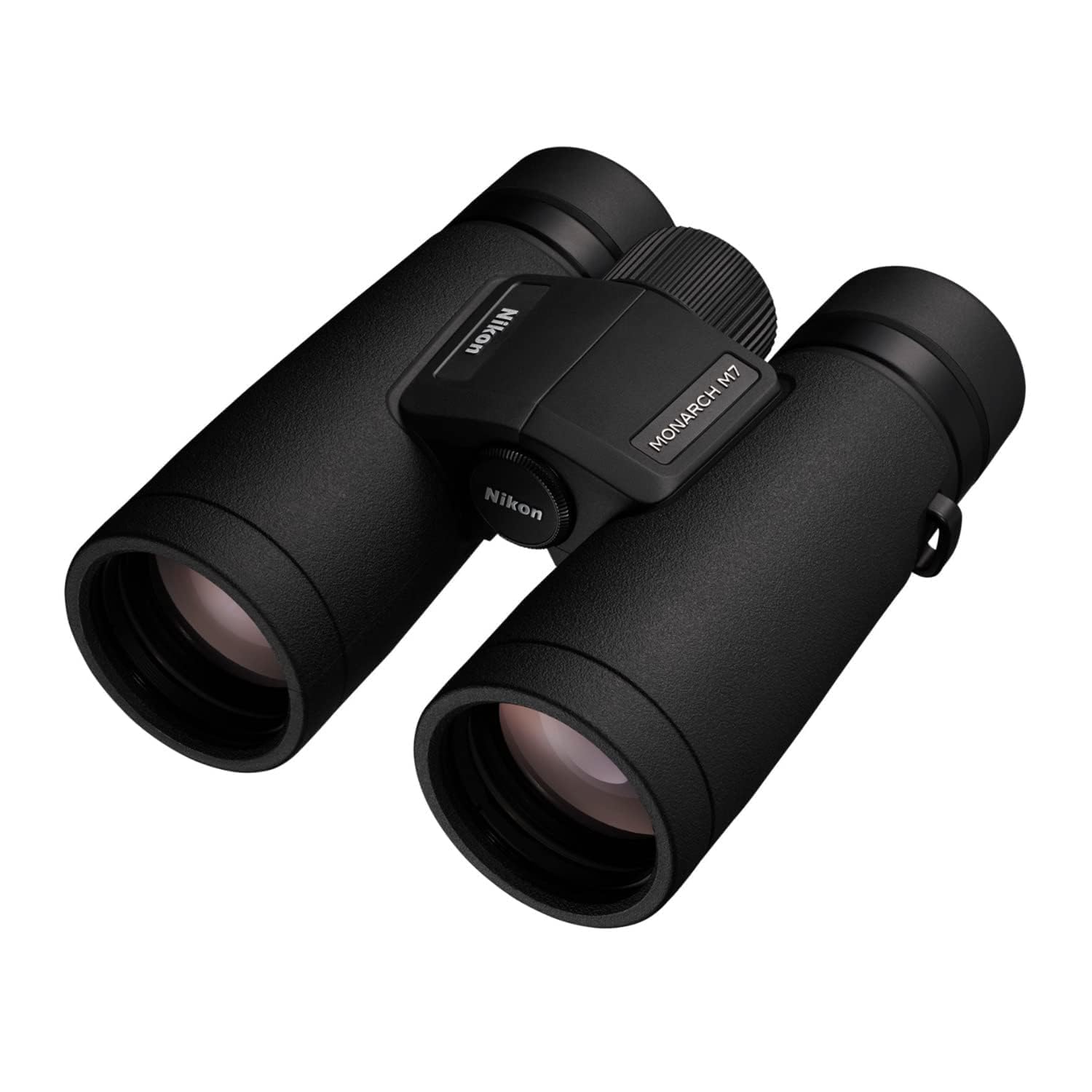
Nikon Monarch M7 10×42
Key Features
- Optical Coatings: ED glass, dielectric, FMC
- Eye Relief: 16.5mm
- Field of View: 362 ft
- Weight: 24 oz
- Waterproof: Yes
- Price: Premium
The Nikon Monarch M7 10×42 delivers a notably wide and sharp field of view for a 10x glass, backed by ED glass and dielectric coatings that bring out fine detail in distant wildlife. Its locking diopter is a practical touch for users who dial in a precise focus and want it to stay. The build quality matches its price, with a rubber-armored body that feels solid in hand. However, the higher price and shorter 16.5mm eye relief compared to alternatives like the PROSTAFF P7 make it a niche choice: it suits buyers who prioritize 10x magnification and optical refinement over value or glasses compatibility.
Pros
- Wide, sharp field of view reveals fine details in distant wildlife.
- Waterproof, fogproof, and rubber-armored body offers reliable field durability.
- Locking diopter keeps focus adjustment from shifting accidentally.
Cons
- Premium pricing compared to other Nikon models with similar optics.
- At 16.5mm, eye relief may cause strain for eyeglass wearers during extended use.
Best for glasses-free buyers who want a top-tier 10x binocular and are willing to pay a premium for the wide field and locking diopter.
How to Choose
The single most important buying insight for wildlife binoculars is that ED glass and dielectric prism coatings are what separate a sharp, color-accurate view from a muddy one, especially in low light.
Optical Quality: ED Glass and Coatings
Extra-low dispersion (ED) glass reduces chromatic aberration — the purple fringing you see around branches against a bright sky. Dielectric prism coatings boost light transmission, which means brighter images at dawn and dusk. Without these, a binocular may look fine in a store but disappoint in the field.
If you frequently watch wildlife in shaded forests or early morning, prioritize ED glass. Budget bins often use only multi-coatings, which are adequate for midday use but lose clarity as light fades.
Eye Relief: Critical for Glasses Wearers
Eye relief is the distance from the eyepiece to your eye where the full field of view is visible. If you wear glasses, aim for at least 18mm. Shorter relief forces you to press your glasses into the eyecups, reducing the visible area and causing eye strain.
For non-glasses wearers, eye relief is less critical, but still affects comfort during long sessions. Models with adjustable eyecups (twist-up or fold-down) let you customize the distance.
Field of View: Tracking Moving Wildlife
Field of view (FOV) is measured in feet at 1,000 yards. A wider FOV (over 370 ft) makes it easier to follow a flying bird or a running animal. Narrower FOV (under 340 ft) can feel like looking through a straw.
The trade-off: a wider FOV often comes with slightly softer edges in the periphery. For most wildlife viewing, a moderate 350–400 ft strikes the best balance between immersion and clarity.
Weight and Balance: Comfort on the Trail
A heavy binocular (over 28 oz) can become a burden on a 10-mile hike, especially if it’s front-heavy. Weight distribution matters more than the number alone — a well-balanced 25 oz bin can feel lighter than a bulbous 22 oz one.
For long days, look for models under 24 oz. If you prioritize optical quality and can tolerate a bit more weight, 25-26 oz is acceptable as long as the harness or strap helps distribute the load.
Waterproof and Fogproof Sealing
Most modern binoculars are sealed with O-rings and purged with nitrogen or argon to prevent internal fogging when moving between temperature extremes. This is essential for any outdoor use in rain, humidity, or near water.
IPX7 rating means the binocular can withstand submersion in 1 meter of water for 30 minutes — useful for kayakers or rainy hunts. Even if you don’t plan to dunk them, waterproofing protects against accidental splashes and dew.
FAQ
Why does my new binocular have blurry edges even after focusing?
Blurry edges are often due to optical design, not a defect. Budget bins with simpler lens elements may show softness in the outer 20% of the field. ED glass and phase-corrected prisms improve edge-to-edge sharpness. If the blur is only at the very edge, it’s normal for the price point.
Is ED glass really worth the extra money for birdwatching?
Yes, if you often watch birds in backlit conditions or at dawn/dusk. ED glass eliminates color fringing, making details like feather patterns crisp. For midday use in open fields, standard glass is sufficient.
How do I know if a binocular has enough eye relief for my glasses?
Look for an eye relief spec of 18mm or more. If you can’t find the spec, assume it’s 15mm or less. Try the binocular before buying if possible — if you see black rings around the image, the relief is too short.
Why do some waterproof binoculars fog up inside despite being ‘fogproof’?
Fogproof means the interior is purged with dry gas (nitrogen or argon) and sealed. If the seal degrades over time, moisture can seep in. Budget models sometimes use lower-quality seals or skip purge altogether. For frequent use in wet conditions, invest in a model with proven seal durability, like IPX7-rated options.