This post contains affiliate links. We may earn a small commission when you buy through our links — at no extra cost to you.
Approach shoes promise sticky rubber and precision lacing, but many buyers end up with toes jammed against the end or a loose heel after a few miles. The real challenge isn’t just performance—it’s finding a pair that actually fits your foot shape.
This guide cuts through the sizing confusion. The key is knowing which brands run narrow, which run short, and where to size up. The right approach shoe should feel snug but not painful, with enough room to keep your toes comfortable on long descents.
Whether you’re bouldering or hiking technical terrain, a properly fitted shoe makes the difference between a confident scramble and a miserable afternoon.


Best for Scrambling & Hiking
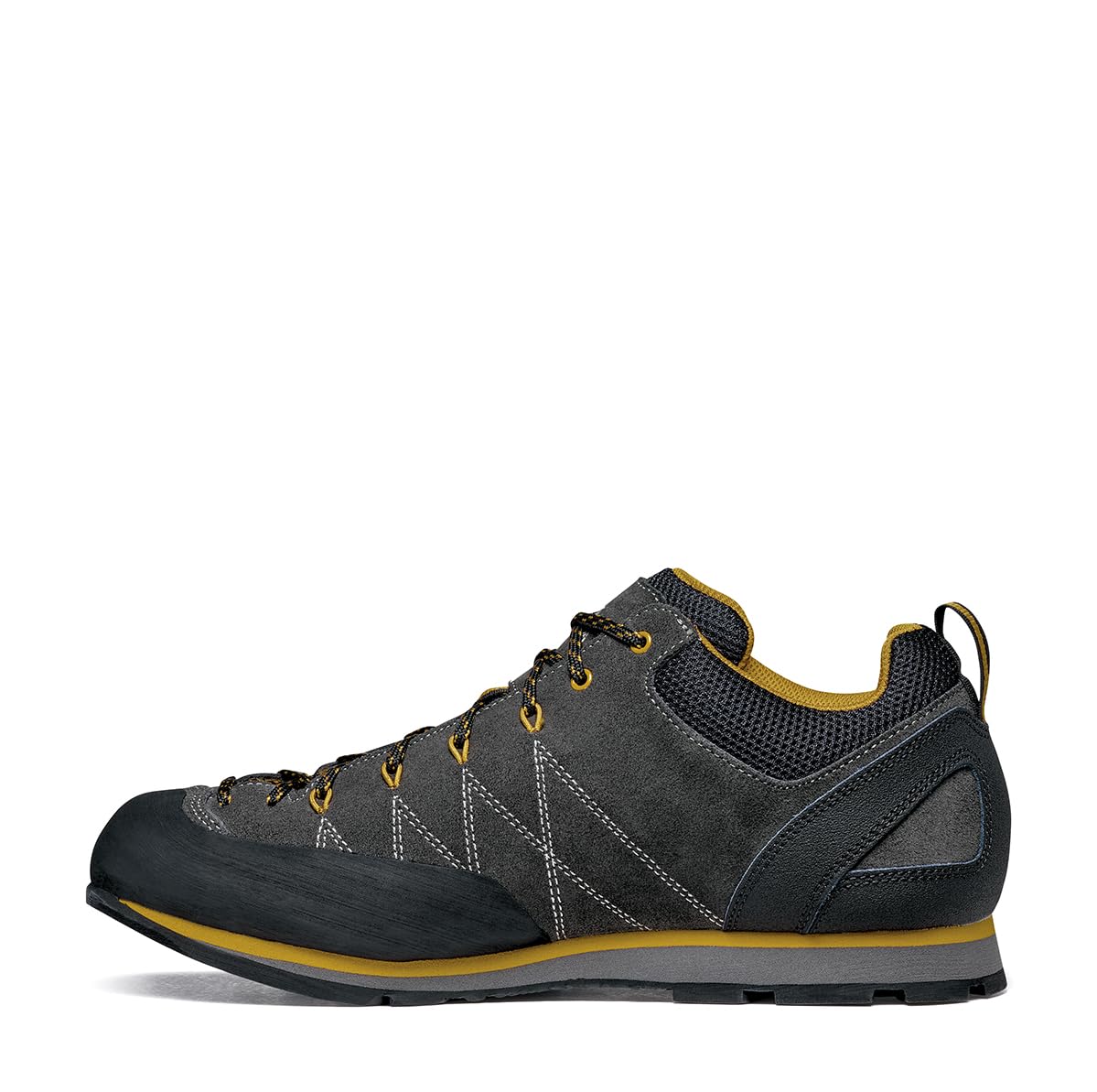
SCARPA Crux Approach
The Crux approach shoe comes in at 15 ounces with a suede upper, Vibram sole, and rubber rand that wraps the toe and heel. That combination delivers sticky grip on rock and enough structure for edging on steep terrain, while keeping weight low for long days on mixed trails.
The suede upper breaks in quickly and holds its shape over repeated use. The sole provides reliable traction on dry rock and dirt, though on wet or polished surfaces the grip can feel less aggressive than stiffer models designed for technical climbing.
Best suited for climbers with medium to narrow feet who want a dedicated approach shoe that handles scrambling, light bouldering, and trail hiking without the weight of a full boot. The fit is narrow, especially in the toe box, which may not work for wide-footed hikers, and the tongue can shift sideways during active use. These are design tradeoffs typical of technical approach shoes rather than casual footwear.
Pros
- Comfortable for all-day wear on mixed terrain.
- Durable construction holds up to repeated scrambling.
- Performs well on bouldering, scrambling, and hiking routes.
Cons
- Narrow toe box may not accommodate wide feet – typical for technical approach shoes.
- Tongue can slip to the side during active scrambling.
For climbers with medium to narrow feet who prioritize low weight and sticky rubber, the Crux offers a balanced package that handles technical approaches without the bulk of a stiffer shoe.
Best for Technical Climbing
La Sportiva TX4 EVO
The La Sportiva TX4 EVO uses a stiff Vibram sole and full-grain leather upper to deliver precise edging on steep, technical approaches. That focus on precision means the trade-off is immediate: less forgiving cushioning and a narrower fit than the top pick, which balances comfort with climbing ability. The sole’s rigidity shines when smearing on small footholds, but the shoe demands deliberate sizing—most buyers will need to go up half a size from their usual.
This shoe suits climbers who tackle steep rock and want every edge to feel locked in. Sizing runs small and narrow, so trying on with approach socks is essential before committing. Early sole separation has been noted in some units, making this a better fit for those who rotate gear and accept occasional maintenance. If your priority is all-day walking on mixed trails, the top pick is the more forgiving option.
Pros
- Exceptional grip on technical terrain
- High-quality leather and build construction
- Stiff sole enables precise edging on small footholds
Cons
- Sizing runs small and narrow – plan to go up half to a full size
- Sole separation may occur in some cases after moderate use
A dedicated approach shoe for climbers who want technical precision on rock, not all-day comfort or worry-free durability.
Best for Budget Climbing
XPETI Basin
The XPETI Basin’s thick cushioned insole and true-to-size fit deliver immediate comfort rare at this price. While the top pick (Scarpa Crux) demands break-in and a larger budget, the Basin is ready for the trail from the first step. The trade-off appears in long-term durability — stitching may come undone after several months of use, making this a better fit for moderate rather than heavy use.
The grippy rubber sole provides solid traction on wet and rocky terrain, matching shoes costing twice as much. This shoe is best for casual approach hikes and budget-conscious climbers who don’t need daily robustness. The narrow toe box means wider feet should look elsewhere or consider a half-size up. For anyone who wants technical performance without the premium price, the Basin delivers where it counts.
Pros
- Plush cushioning supports comfort on long rocky approaches.
- Strong value for money — approach shoe performance at a budget price.
- Secure grip on wet and uneven surfaces.
Cons
- Narrow toe box may not accommodate wider feet.
- Stitching can come undone within months of moderate use.
A smart pick for casual climbers who value comfort over longevity, the XPETI Basin balances cost and performance well.
Best for Casual Hiking
SCARPA Mojito
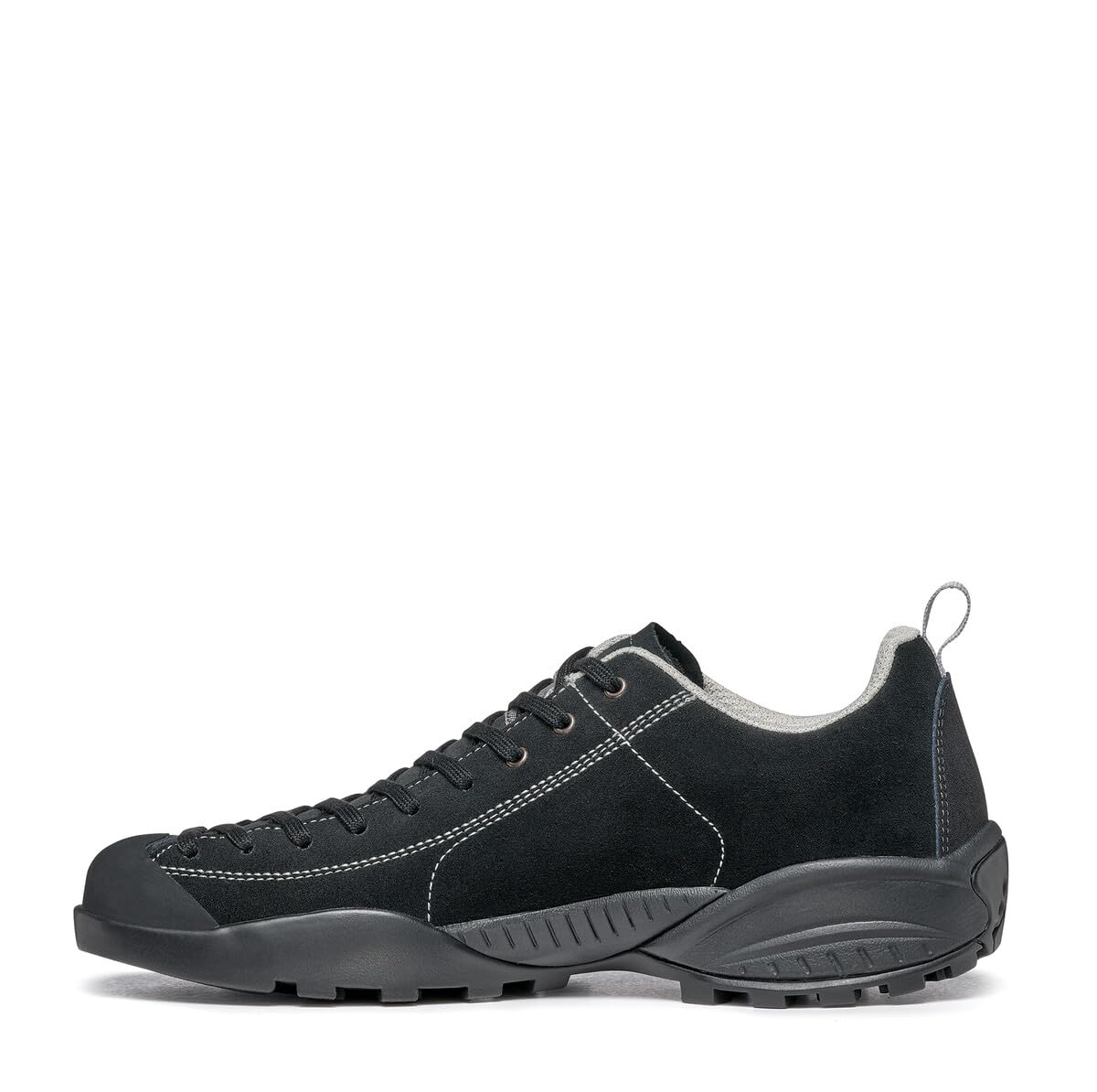
The Mojito’s durable leather and classic style make it a solid choice for light trails and everyday wear, but it’s not built for technical approaches — sticky rubber and climbing-specific features are absent. Cushioning is limited for those needing support, though the comfortable lace-to-toe fit and premium build still deliver for casual hiking.
Pros
- Durable leather construction that holds up to daily and trail use.
- Classic, understated style that works from coffee shop to trailhead.
Cons
- Not designed for technical rock approaches — lacks sticky rubber and precision climbing features.
Best for those who want a durable, casual hiker with style — not for technical climbing or long days requiring robust support.
Best for Women Wide Feet
La Sportiva TX3 W
The La Sportiva TX3 W prioritizes fit over technical edge. Its roomy toe box and pliable construction make it comfortable straight out of the box, unlike the stiffer, slimmer alternatives that demand break-in. This tradeoff means less precise edging on steep terrain, but for light scrambling and approach hiking, the all-day comfort is a clear gain.
Best suited for women with wide or sensitive feet who find most approach shoes too narrow – the TX3’s generous fit is a genuine relief. However, the Vibram outsole can lose grip on wet or polished rock, and the laces are thin enough that replacements may be needed. If your routes include slick slabs, consider carrying backup laces or choosing a stickier alternative.
Pros
- Roomy toe box provides pressure-free fit for wide feet or bunions.
- Out-of-box comfort suitable for all-day wear without break-in period.
- Reliable grip on dry rock and dirt for light scrambling and hiking.
Cons
- Traction can be inconsistent on wet or polished rock – worth checking conditions.
- Laces are thin and may need replacement over time.
A comfortable, wide-friendly approach shoe that trades technical edge for all-day fit – best on dry terrain with laces swapped.
How to Choose
The biggest mistake is ignoring sizing—most La Sportiva models run small, and even Scarpa runs narrow, so order half a size up or more.
Weight
Lighter shoes (under 16 oz) reduce fatigue on long approaches but often have thinner rubber and less cushioning. Heavier shoes offer more protection and durability but can feel sluggish on steep terrain.
A 2-ounce difference may not sound like much, but over a mile of scrambling, it translates to noticeable leg drag. Choose weight based on how far you typically hike before the climbing starts.
Sole Material
Sticky rubber compounds like Vibram Idro-Grip or Megagrip provide excellent friction on polished rock, but they wear faster than harder rubber. A softer sole (40-50 Shore A) grips better but may need resoling after a season of heavy use.
Harder rubber lasts longer but sacrifices grip on wet or smooth surfaces. If you mostly climb on abrasive granite, a harder compound is fine; for slick sandstone or alpine, go sticky.
Fit
Approach shoes should fit snugly around the heel and midfoot to prevent slippage during edging, but leave a thumb’s width of space at the toes. A too-short shoe causes black toenails on descents; a too-wide shoe loses precision on small holds.
Leather uppers stretch over time, especially when wet. Synthetic materials hold their shape better. Factor in that break-in when deciding whether to size up.
Lacing System
Lace-to-toe systems allow micro-adjustment across the entire foot, locking the heel in place and relieving pressure on the toes. Standard lacing often leaves a loose forefoot that shifts during steep scrambling.
Quick-lace systems are convenient but can loosen under dynamic loads. If you value precision, traditional eyelets or lace-to-toe give the most control.
Durability
Stitching quality and rand coverage determine how long the shoe lasts. A full rubber rand protects against abrasion from rock contact, while partial rands leave exposed leather that wears through faster.
Sole lifespan averages 300-500 miles on approach shoes. Resoling is possible on high-end models with Vibram outsoles, but budget shoes often have molded soles that cannot be replaced.
FAQ
Do approach shoes run small? Should I size up?
Yes, most approach shoes run small, especially La Sportiva models—order at least half a size up, sometimes a full size. Scarpa runs closer to true size but still narrow. Always try them on with the socks you plan to wear for climbing.
How long do approach shoe soles last before needing resoling?
Expect 300-500 miles of mixed use before the sticky rubber wears smooth. If you primarily climb on abrasive rock, the lifespan drops to 200-300 miles. High-end Vibram soles can be resoled; budget glued soles cannot.
Can I use approach shoes for bouldering or just hiking?
Approach shoes work well for easy bouldering and low-angle climbing, but they lack the precision and sensitivity of climbing shoes. Use them for approaches, scrambles, and light bouldering; for steep or hard bouldering, switch to proper climbing shoes.
What is the difference between approach shoes and trail runners?
Approach shoes have stickier rubber, stiffer soles, and more precise lacing for edging on rock. Trail runners are lighter and more cushioned for running but lack the grip and stability needed for technical scrambling.