This post contains affiliate links. We may earn a small commission when you buy through our links — at no extra cost to you.
An ankle twist on a rocky descent can end a hike in seconds. Yet many products marketed for ankle support are compression socks that address swelling, not stability. That mismatch leads hikers to rely on the wrong gear when it counts.
The real divide is between sleeves that soothe tired feet and lace-up braces that physically lock the ankle joint. Knowing which camp you fall into saves money and prevents injury.
This guide matches each support type to specific trail conditions and injury history. The right choice depends on whether you are preventing a first sprain or managing chronic instability.
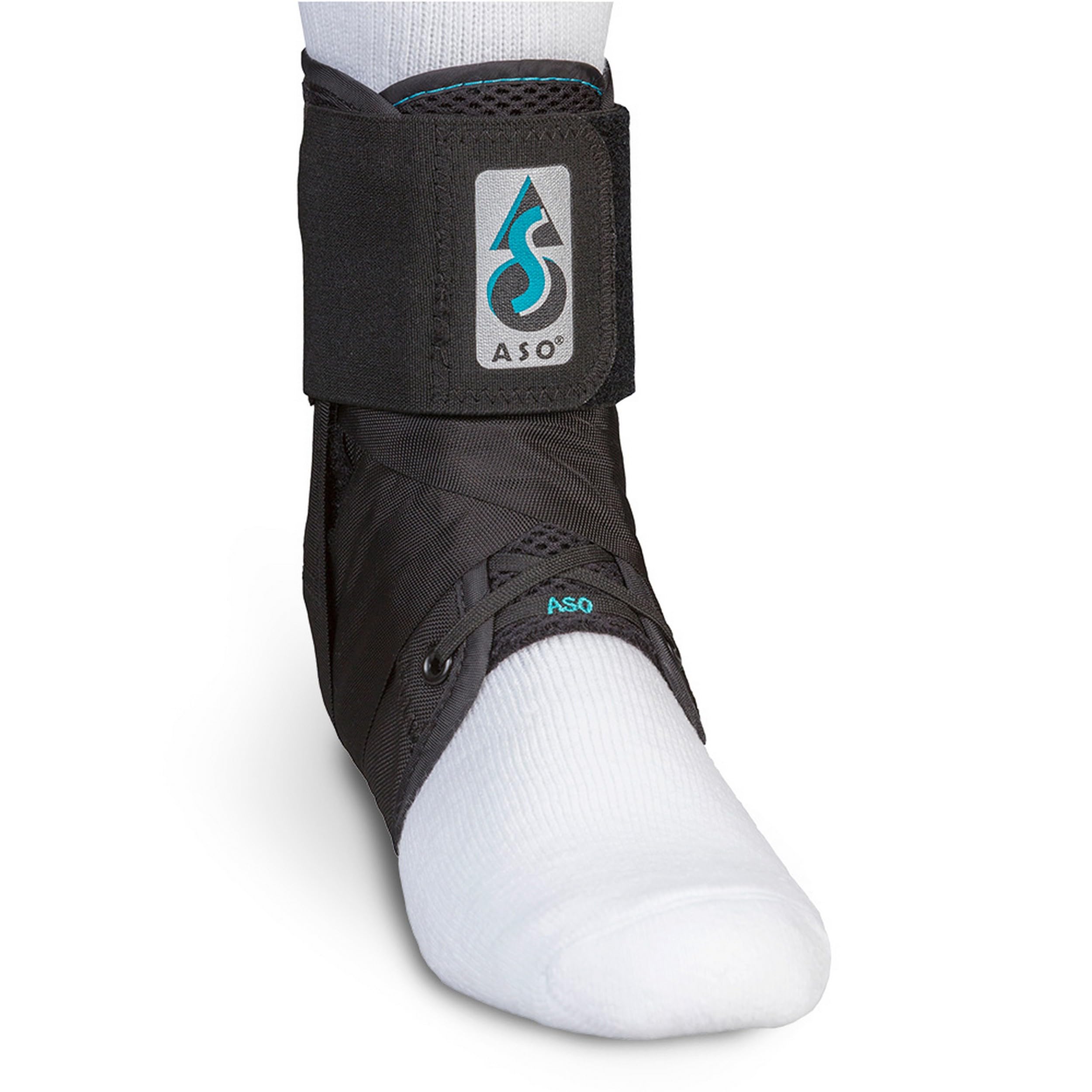


Best for Chronic Instability
Med Spec ASO Ankle Stabilizer
Key Features
- Brace Type: Lace-up with figure-8 straps
- Support Level: Maximum
- Fit Adjustability: Lace and strap adjustable
- Price: $$$
The ASO’s lace-up figure-8 design resists ankle rolling on uneven terrain more effectively than compression sleeves or simple wraps, which is why athletic trainers have relied on it for decades of post-injury recovery. The nylon and CoolFlex construction holds up through rugged use, and the bilateral fit accommodates either foot without loosening over time.
On long backpacking trips, the brace keeps its shape and support level, though the stiff heel padding can cause discomfort after several hours of continuous wear. The lace-up and dual-strap system lets you dial in compression, but getting the fit right takes a few minutes of adjustment.
This brace suits hikers with a history of ankle sprains who are willing to trade quick on/off convenience for maximum stabilization. The setup takes time and some users note heel irritation on multi-day trips, but for those who need to prevent rolls on technical terrain, these tradeoffs are acceptable.
Pros
- Lace-up figure-8 design stops the ankle from rolling outwards on uneven ground.
- Nylon and CoolFlex padding hold up to repeated use on rocky terrain.
- Adopted by athletic trainers for sports recovery, indicating consistent support over time.
- Customizable tightness through lace-up and dual straps for a personalized fit.
Cons
- Putting it on and adjusting the straps is time-consuming, especially if dexterity is limited.
- Heel and Achilles area can become uncomfortable during long hiking days.
For hikers who need reliable ankle roll prevention on technical trails and are willing to spend a few minutes putting it on, the ASO delivers where simpler braces fall short.
Best for Short-Term Recovery
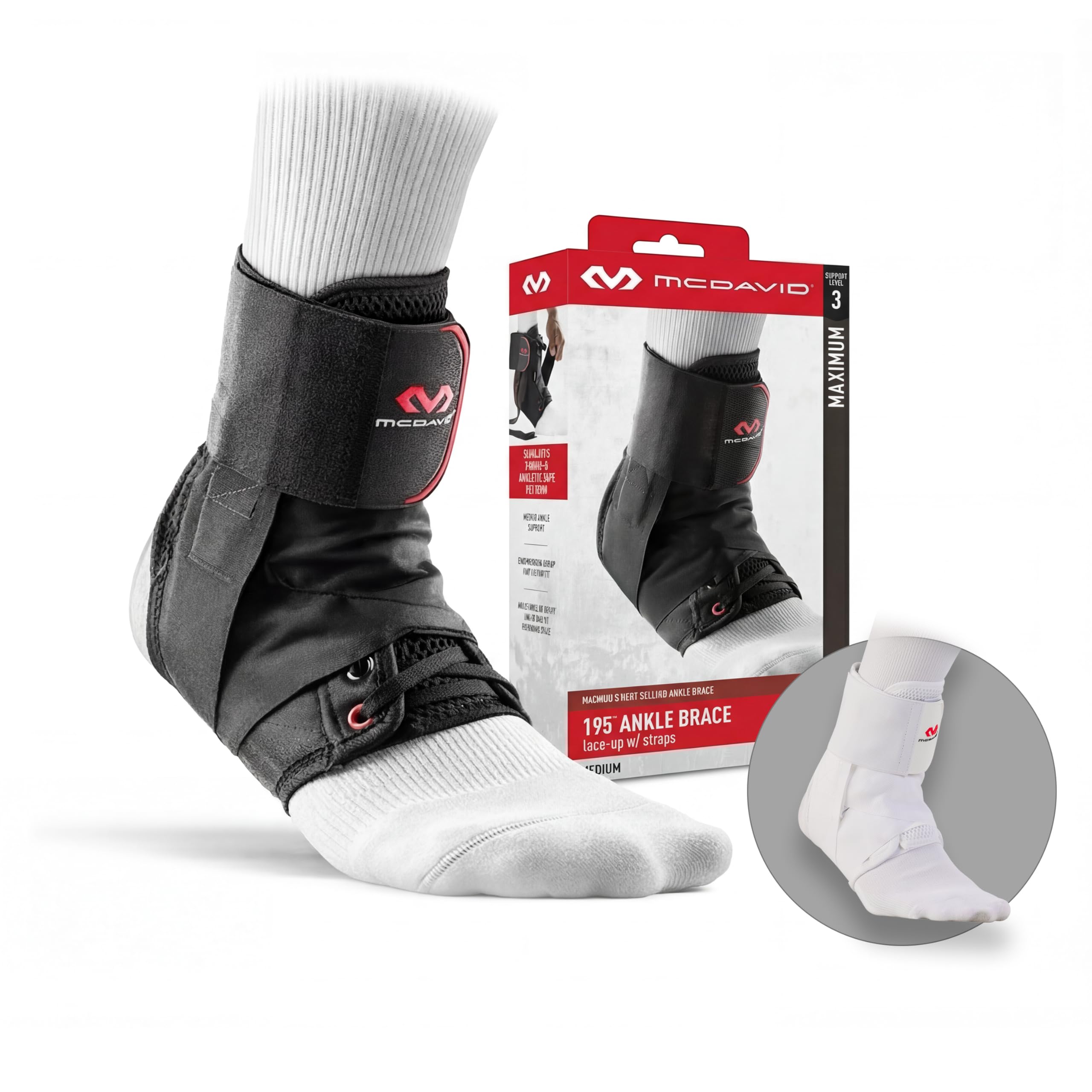
McDavid Ankle Brace Ultralight
Key Features
- Brace Type: Lace-up with figure-6 straps
- Support Level: Maximum
- Fit Adjustability: Lace and strap adjustable
- Price: $$$
This lace-up brace delivers the high-grade support needed for a recent ankle sprain, a level of stabilization that works well for high-impact sports like basketball and soccer. For hikers, that same protection helps prevent re-injury on uneven terrain, but the design prioritizes security over all-day comfort – the figure-6 straps lock the joint tightly, which some find restrictive after a few hours.
This brace suits hikers recovering from a sprain who need maximum stability for short day trips or moderate trails. It is not ideal for multi-day hikes where comfort matters over extended periods, and those with wide feet or high arches may find the fit problematic. The cross straps can show fraying after a few months of regular use, and the lace-up process is harder when the ankle is already swollen or painful.
Pros
- High-quality construction with materials that hold up to regular wear
- Excellent support and stability for sprained ankles, reducing fear of rolling
- Works well for high-impact activities, including basketball and soccer
Cons
- Comfort may become an issue during extended wear, with some buyers noting blisters or pressure points
- Cross straps and rear strap can fray or break after a few months of regular use
The McDavid delivers the support needed for recovering from a sprain on short hikes, but the durability and comfort tradeoffs make it less suited for regular, extended use on the trail.
Best for Post-Injury Recovery
Z ATHLETICS Lace-Up Brace
Key Features
- Brace Type: Lace-up with side stabilizers
- Support Level: High
- Fit Adjustability: Lace and strap adjustable
- Price: $$$
The Z ATHLETICS brace uses a lace-up design with rigid side stabilizers that limit ankle rolling effectively, similar to the ASO brace that athletic trainers recommend. The figure-8 lacing allows you to dial in the tension precisely, and the breathable neoprene material works well during active hiking.
This brace suits hikers who want robust support during recovery from a sprain or for short day hikes on moderate terrain. However, the fit across the instep can be tight and may require ordering up a size; those with wide feet or high arches may find it uncomfortable. Pressure points can develop after a few hours of wear, making it less ideal for extended multi-day trips.
Pros
- Lace-up closure with side stabilizers provides high support to prevent ankle rolls.
- Durable construction with quality stitching and materials.
- Effective for post-injury recovery and active sports use.
Cons
- The fit across the instep may be too tight, especially for those with high arches or wider feet.
- Pressure points can develop during longer hikes, reducing comfort over time.
Ideal for hikers who need strong support on short outings and are willing to experiment with sizing, but less suited for multi-day trips where comfort is critical.
Best for Moderate Day Hikes
ACE Deluxe Ankle Stabilizer
Key Features
- Brace Type: Adjustable wrap with side stabilizers
- Support Level: Moderate to high
- Fit Adjustability: Velcro strap adjustable
- Price: $$
The ACE Deluxe Ankle Stabilizer delivers dependable support for uneven trails without the hassle of laces. The adjustable Velcro straps and reinforced side stabilizers provide good stability for day hikes, while the breathable material keeps feet comfortable over long hours.
This brace suits hikers who want straightforward ankle support for moderate terrain and value convenience over maximum lockdown. The Velcro can lose grip after extended use, and the fit may not accommodate very small or large ankles – those with extreme sizes or planning technical hikes should consider a lace-up alternative like the top pick.
Pros
- Easy on/off Velcro closure allows quick adjustments on the trail.
- Lightweight and breathable for all-day wear during day hikes.
- Side stabilizers offer moderate support that helps prevent rolling on uneven ground.
Cons
- Fit may be too large for small feet or too small for large feet – sizing is not universal.
- Velcro straps can lose adhesion over time, which may require replacement.
For hikers who want a simple, budget-friendly ankle stabilizer for moderate day hikes and are comfortable with potential Velcro replacement, this ACE brace delivers practical support at a lower cost.
Best for Light Trail Hiking
INDEEMAX Copper Ankle Brace
Key Features
- Brace Type: Compression sleeve with strap
- Support Level: Moderate
- Fit Adjustability: Adjustable strap
- Price: $
For hikers on a budget who need more than a bare compression sock, the INDEEMAX Copper Ankle Brace provides a secure fit with its adjustable strap at a price that’s hard to match. The two-pack offers immediate backup or shared use, and the copper-infused nylon material holds up well on regular walks. Many find the sleeve comfortable enough to wear under socks and shoes without adding bulk, making it a practical option for day hikes.
This brace is designed for light trail walking and day hikes where you want moderate support for general ankle discomfort, plantar fasciitis, or Achilles tendonitis. It won’t prevent sprains on uneven terrain – for that stability, a lace-up brace is necessary.
Users consistently report noticeable relief from plantar fasciitis and Achilles pain, and the low-profile design fits under most hiking boots without slipping.
Pros
- Strong support for the price, especially with the adjustable strap
- Effective for plantar fasciitis, Achilles tendonitis, and general ankle pain
- Good quality and durable materials
Cons
- Tight fit possible for larger ankles despite the adjustable strap
For budget-conscious hikers who stick to well-groomed trails, this two-pack offers dependable compression support without breaking the bank.
Best for Swelling Reduction
IRAMY Women’s Compression Socks

Key Features
- Brace Type: Compression socks
- Support Level: Mild
- Fit Adjustability: Fixed size
- Price: $
These socks deliver noticeable swelling relief and arch support thanks to a well-cushioned, moisture-wicking design that keeps feet fresh on well-groomed paths. The soft fabric and light compression reduce foot fatigue over hours of walking. However, they are compression socks — not a brace. They offer no lateral stabilization to prevent ankle rolls, and sizing can run small, with some finding the toe area snug. For hikers on flat, maintained trails looking to minimize foot fatigue, they work well; for technical terrain or anyone with a history of sprains, they are not a substitute for a proper ankle brace.
Pros
- Soft cushioning and arch support reduce foot fatigue on long walks.
- Effective light compression helps prevent swelling during all-day wear.
Cons
- Fit can be snug around the toes, and sizing may require going up a size.
A solid option for reducing foot swelling on easy, paved trails or daily wear, but not a solution for ankle stability on uneven ground.
Best for Plantar Fasciitis
TechWare Pro Compression Sleeve

Key Features
- Brace Type: Compression sleeve (toeless)
- Support Level: Strong
- Fit Adjustability: Fixed size
- Price: $$
The TechWare Pro delivers strong compression (20-30mmHg) that eases plantar fasciitis and Achilles discomfort. However, fit can be inconsistent – the sleeve may feel too loose above the ankle or overly tight in other areas. For hikers needing ankle roll prevention on technical trails, the lack of rigid side supports makes it less suitable than a lace-up brace. This sleeve works best for short-term recovery or casual walks where pain relief is the priority.
Pros
- Strong compression reduces plantar fasciitis and Achilles pain.
- Durable construction that holds up to regular use.
Cons
- Fit can be inconsistent – the sleeve may feel too loose above the ankle or overly tight.
- Sizing chart is not always accurate; ordering the correct size may require trial and error.
Worth considering if you prioritize plantar fasciitis relief over ankle stability and are willing to experiment with sizing.
Best for Foot Fatigue
PAPLUS Compression Socks

Key Features
- Brace Type: Compression socks
- Support Level: Mild
- Fit Adjustability: Fixed size
- Price: $
These compression socks offer good arch support and reduce foot fatigue at an unbeatable price. The soft fabric makes them comfortable for all-day wear, and they can ease plantar fasciitis discomfort. However, sizing is inconsistent between pairs, and the mild compression does nothing to prevent ankle rolls on uneven terrain. Hikers needing ankle stability should look at lace-up braces instead.
Pros
- Soft, comfortable fabric suitable for extended wear
- Great value for a multi-pack with effective arch support
Cons
- Sizing can be inconsistent, with some pairs fitting too small or too large
For casual walkers or those needing mild arch support on flat terrain at a low cost, these socks deliver – but hikers needing ankle stability should choose a proper brace.
Best for Casual Walks
IRAMY Multi-Pack Compression Socks

Key Features
- Brace Type: Compression socks
- Support Level: Mild
- Fit Adjustability: Fixed size
- Price: $
The IRAMY compression socks deliver noticeable foot comfort and mild compression that helps with everyday soreness, making them a solid budget choice for casual walks and travel. However, the support level is too light to prevent ankle rolling on hiking trails — these are compression socks, not braces. The toe area may also feel tight for some wearers, so try one pair before committing to the multi-pack.
Pros
- Soft fabric provides a gentle, comfortable feel against the skin.
- Mild compression helps reduce foot and ankle soreness after walking.
Cons
- Toe area may feel too tight during extended wear.
- Only offers mild support — not designed to prevent ankle rolls on uneven terrain.
Best used as an everyday walking sock for foot comfort and mild swelling relief, but not for hikers needing ankle stability.
Best for Mild Support
LISEPWU Copper Ankle Sleeve

Key Features
- Brace Type: Compression sleeve
- Support Level: Moderate
- Fit Adjustability: Fixed size
- Price: $
This copper-infused sleeve offers moderate compression that helps with plantar fasciitis and general soreness on easy walks, and the two-pack keeps the per-unit cost low. However, the sleeve lacks an adjustable strap, and fit can be tight in the calf or run small — sizing up may be necessary. Without a stabilizing design, it’s not suited for preventing ankle rolls on uneven terrain, making it a budget option for light use rather than serious hiking.
Pros
- Noticeable pain relief for plantar fasciitis and ankle soreness during easy hikes.
- Comfortable enough for all-day and overnight wear without irritation.
Cons
- Calf area may feel overly tight, especially for those with larger legs.
- Sizing runs small; many need to order a size up from the chart.
Worth considering only if you need a budget two-pack for mild support on flat, easy trails and are willing to gamble on the fit.
Best for Plantar Fasciitis
Sleeve Stars Ankle Brace

Key Features
- Brace Type: Compression sleeve with strap
- Support Level: Mild to moderate
- Fit Adjustability: Adjustable strap
- Price: $$
This compression sleeve with an adjustable strap soothes plantar fasciitis and Achilles pain well enough for light walking, but its mild support does not prevent ankle rolls on uneven terrain. The fit can be inconsistent — some may find the sleeve too tight or too short — making it a gamble for those with non-average ankle shapes. It works best as a recovery aid or for casual strolls, not as a hiking brace for sprain prevention.
Pros
- Eases plantar fasciitis and Achilles tendonitis pain during activity
- Slips on and off easily with no complicated straps
Cons
- Fit may be inconsistent — can feel too tight or too short depending on ankle shape
- Does not provide enough stability to prevent ankle rolls on uneven trails
Best suited for hikers dealing with plantar fasciitis who need a lightweight sleeve that won’t crowd their shoes, but not for preventing ankle sprains.
Best for Moderate Support
Bodyprox Ankle Wrap

Key Features
- Brace Type: Adjustable wrap brace
- Support Level: Moderate
- Fit Adjustability: Adjustable wrap
- Price: $
This neoprene wrap is inexpensive and adjustable, making it a tempting choice for budget-conscious shoppers. However, without widespread user feedback, it’s unclear how well it holds up on technical hiking trails or provides enough lateral stability to prevent sprains. For moderate day hikes on well-groomed paths it may suffice, but those with a history of ankle injuries should look to a brace with known performance.
Pros
- Adjustable wrap lets you customize compression for comfort.
- Breathable neoprene design reduces overheating on long walks.
Cons
- Neoprene wrap lacks side stabilizers needed to prevent ankle rolls on uneven terrain.
This wrap works for casual walks and mild support, but hikers needing reliable ankle protection should choose a lace-up brace with side stabilizers.
Best for Foot Swelling
PhysFlex Compression Socks

Key Features
- Brace Type: Compression socks (20-30mmHg)
- Support Level: Mild to moderate
- Fit Adjustability: Fixed size
- Price: $
The PhysFlex Compression Socks deliver 20-30mmHg compression that eases foot swelling and arch pain, and they stay comfortable through a full day of wear. For hiking, they offer only mild support — they are not a brace and won’t prevent ankle rolls on uneven terrain. Fit can be tight around the toes for some, and the sizing chart may not match actual fit, which can result in returns.
Pros
- Reduces foot swelling and arch pain with consistent compression
- Comfortable for all-day wear, even during work or light activity
Cons
- Fit may be too tight around the toes for some foot shapes
- Sizing chart can be inaccurate, leading to possible returns
A budget-friendly pick for hikers who need swelling relief on easy, well-groomed trails, but not a solution for ankle stability.
Best for Achilles Pain
BLITZU Compression Socks

Key Features
- Brace Type: Compression sleeve/sock
- Support Level: Mild to moderate
- Fit Adjustability: Fixed size
- Price: $
This kinesiology taping-style sleeve targets Achilles and plantar fasciitis pain effectively, with soft, durable fabric that feels comfortable against the skin. At a budget-friendly price, it delivers the pain relief it promises for short day hikes where mild support is enough. However, the sizing can be hit-or-miss — some find it too tight around the calf — and it does not prevent ankle rolling or provide the stabilization needed for technical terrain. It’s a solid option for plantar fasciitis sufferers on easy trails, not for hikers needing sprain prevention.
Pros
- Provides noticeable pain relief for plantar fasciitis and Achilles tendinitis.
- Comfortable, soft fabric with durable construction.
Cons
- Sizing can be inconsistent — some users find it too small, others too large.
- Calf section may feel too tight for those with larger legs.
Choose this if your main concern is Achilles or plantar fasciitis pain on short, easy hikes and you’re willing to gamble on sizing — skip it if you need ankle stabilization or have a larger calf.
How to Choose
The single most important decision is whether you need a rigid brace that locks the ankle or a compression sleeve that manages swelling – choosing wrong can leave you vulnerable on the trail.
Brace Type
Lace-up braces with figure-8 straps wrap the ankle in a network of tension that physically prevents the subtalar joint from rolling inward. This is the only design that stops acute sprains on uneven terrain.
Compression sleeves apply even pressure to reduce fluid buildup and provide proprioceptive feedback, but they do not mechanically block inversion. Use sleeves for recovery or easy trails, not for loose rocks or off-camber slopes.
Support Level
Rigid stabilizers (plastic or metal stays sewn into the brace) add a hard stop against sideways motion. They are overkill for flat trails but essential for backpacking with a heavy pack on technical ground.
Mild compression does little to prevent injury. The difference between a 20-30mmHg sleeve and a lace-up brace is the difference between a seatbelt and a padded vest – one changes the outcome of a crash, the other cushions the ride.
Fit Adjustability
Lace-up systems allow you to dial tension from the forefoot to the calf, accommodating swelling changes over a long hike. But they require practice to apply evenly – a loose heel or overtightened instep can cause hot spots.
Fixed-size sleeves and socks rely entirely on the manufacturer’s sizing chart, which is the most common source of buyer dissatisfaction. If you are between sizes, always size up and use a thin liner sock to take up slack.
Bulkiness Inside Boots
Lace-up braces add material around the Achilles and heel, which can cause pressure points in boots that lack a deep heel pocket. A brace that fits well in a running shoe may feel restrictive inside a mid-cut hiking boot.
Compression sleeves are thin enough to slide into most footwear, but if the sleeve bunches behind the ankle, it can cause blisters. The trade-off for low bulk is low stability – you cannot have both in the same product.
Durability of Straps and Laces
Velcro closures degrade over time as lint and dirt clog the hooks. A brace that starts firm may begin to slip after 50 miles of dusty trail. Replace Velcro straps when they no longer hold securely.
Laces are more durable than hook-and-loop, but the friction point where laces pass through eyelets can fray. Braided nylon laces outlast standard cotton, but they also take longer to cinch tight.
FAQ
Can I wear a compression sleeve instead of a lace-up ankle brace for hiking on uneven trails?
No – compression sleeves provide no mechanical barrier to ankle inversion. They help with swelling and proprioception, but on loose rocks or off-camber ground, a lace-up brace with rigid side stabilizers is the only design that can stop a roll. Use a sleeve only on well-groomed paths.
Why does my ankle brace feel too tight across the top of my foot and cause pain?
Many lace-up braces run narrow across the instep, especially when laced tightly. This is a common fit issue – if the brace has a separate instep strap, loosen it first. For persistent pain, try sizing up or switching to a brace with adjustable tension zones. Compression sleeves with fixed sizing often pinch the same area.
How do I stop my ankle brace from slipping down inside my hiking boot?
Slipping usually means the brace is too large or the boot heel pocket is too shallow. Measure your ankle circumference against the size chart and consider a brace with a top strap that cinches above the ankle bone. Wearing a thin liner sock underneath can also help grip the brace.
Will copper-infused ankle sleeves actually help with plantar fasciitis or is it just marketing?
The compression from the sleeve, not the copper, provides the pain relief. Copper-infused fabric has not been shown to reduce inflammation in controlled studies. Choose a sleeve based on its fit and compression level – the copper is a marketing feature that does not affect performance.