This post contains affiliate links. We may earn a small commission when you buy through our links — at no extra cost to you.
A good pair of mountain bike shorts has to do two opposite things: feel like ordinary shorts at the trailhead, then disappear once the trail turns steep and chattery. I’ve worn pairs that looked right and twisted at the waist, and pairs with a chamois so bulky I felt like I was sitting on a folded towel. The right pair fixes the small miseries that add up over a ride—a waistband that stays put, a liner that disappears under you, pockets that hold a phone without slapping your thigh, and fabric that survives saddle rub and repeated washes.
Over the past six months, my team and I have ridden a dozen pairs on regular trail rides, bike-park laps, and sweaty post-ride errands. We checked fit across sizes, whether the padding helped or just felt bulky, and whether pockets, zippers, and belt loops held up to real use. Value matters too: a flattering cut is not worth much if a seam fails in month two. The picks below are the ones we kept reaching for.


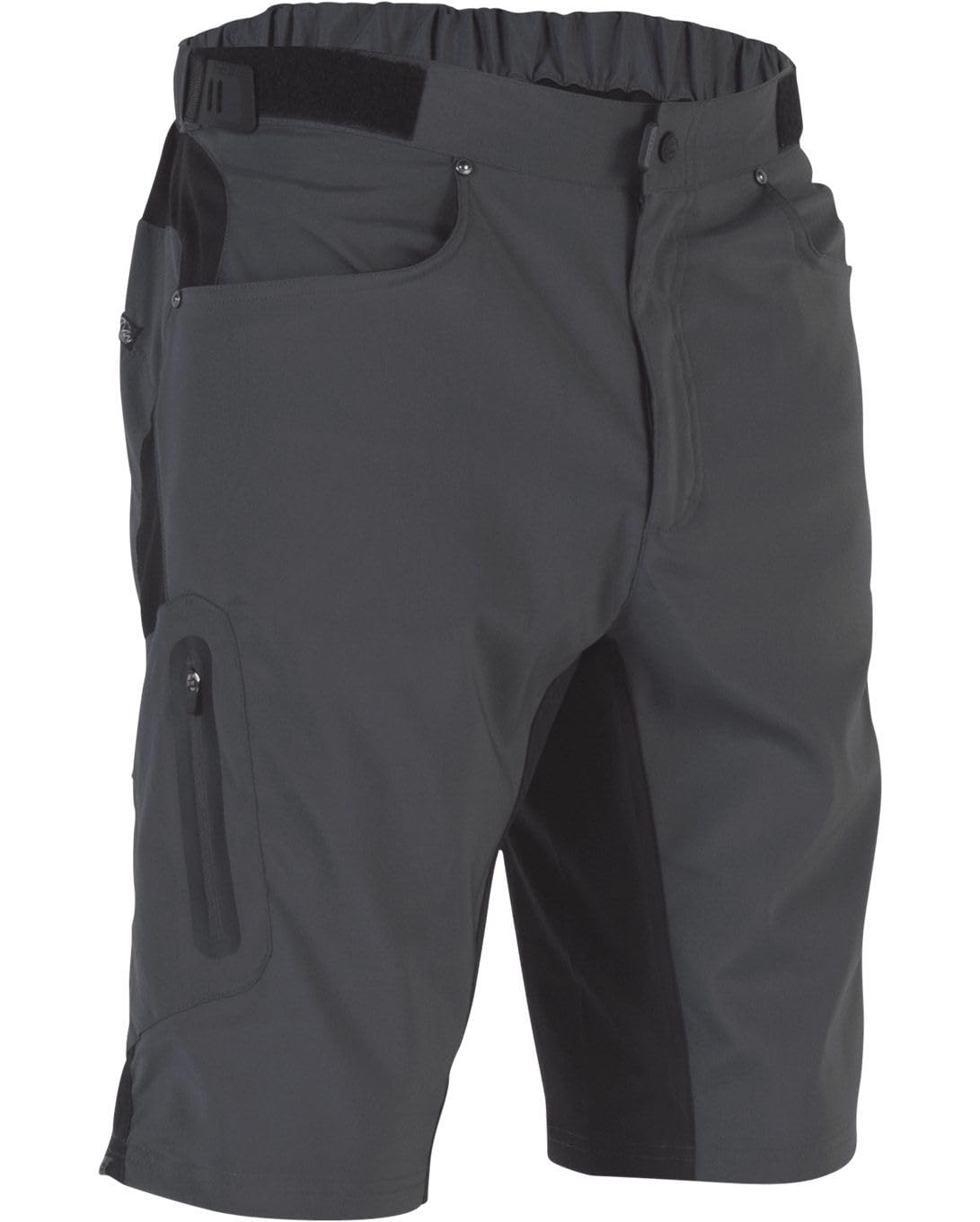

Best for Everyday Trail Riding
Cycorld Baggy Shell MTB Shorts
Key Features
- Style: Baggy shell
- Waist: Elastic adjusters, belt loops
- Fabric: High-stretch, lightweight
- Pockets: Multiple zippered
- Price: Midrange
Cycorld sells these as a shell, so you wear them over whatever padded undershort you already own. If you have a chamois you like, that is the ideal arrangement: the outer layer takes the branches, the mud and the saddle scuffs, while the pad that is already broken in to your own seat stays in the rotation.
Of everything in this group, these felt most like ordinary shorts on the bike, and we mean that as praise. The fabric is stretchy enough to disappear when you move around on the saddle, light enough that a summer climb does not cook you, and cut so it sits cleanly over knee pads instead of catching on the top of them. The pockets are the other reason we keep coming back: several of them zip, a phone stays put in them, and nothing swings against your thigh on a descent.
The waist is elastic with adjusters and there are belt loops if you prefer a belt for long days. Go by the size chart rather than your jeans label, because the elastic covers small differences but not a whole size. For most riders, this is the short that needs the least thought and gives the fewest reasons to regret the purchase.
Pros
- Stretchy fabric that moves on the bike
- Several zippered pockets that hold a phone
- Belt loops plus an adjustable elastic waist
- Sits cleanly over knee pads
Cons
- Sold as a shell — chamois not included
- Hook-and-loop waist tabs soften with washing
A baggy shell with serious stretch, zippered pockets and a waist you can dial in — our pick for riders who already own a chamois.
Best for Riders Wanting a Liner
Ally 4D Padded MTB Shorts
Key Features
- Fit: Loose-fit
- Padding: 4D padded, separate liner
- Pockets: 6
- Price: Midrange
Most shorts that come with a liner sew it in, which means the day the foam packs out you are shopping for a whole new pair. Ally’s liner is a separate piece, and that is the detail that sold us: wear it under the shell, wash it on its own, replace it when it is done. It is a small design decision with a long life attached to it.
The shell itself is light and stretchy and reads as an ordinary pair of shorts rather than race kit, which matters if your ride ends at a cafe. Six pockets give you somewhere to put everything, including zippered ones, and the side leg pocket takes a phone without bulging. The outer layer has also held its shape through scrapes, which is more than we expected at this price.
Where it gives ground is the padding. The 4D liner is comfortable for a couple of hours of trail riding, but it is on the light side for a long day, and anyone used to a dense chamois will feel the difference by the end of a big ride. If your rides are short and you want one purchase that covers everything, that trade is easy to make.
Pros
- Removable 4D liner washes separately
- Six pockets, including zippered ones
- Looks like ordinary shorts off the bike
- Shell keeps its shape after scrapes
Cons
- Liner is thin for all-day rides
The best way to get a pad included: a separate 4D liner you can wash, swap and replace, under a loose shell with six pockets.
Best for Entry-Level Trail Riding
Sportneer 3D Padded Bike Shorts
Key Features
- Padding: 3D padded
- Pockets: Zippered
- Sun protection: UPF 50+
- Price: Budget
A budget MTB short has one job above all others: keep the pad under you instead of halfway up your back. Sportneer’s 3D padding does that, and the liner stays in place rather than bunching when you stand out of the saddle. For the money, that alone is the argument.
What surprised us is how ordinary they look. No Lycra sheen, no panels, nothing that announces you have ridden there — the fabric is light, the cut is roomy, and UPF 50+ is a real bonus on exposed fire-road climbs. Four pockets, with the leg pair zipped, cover a phone, keys and a gel, and the whole thing dries fast enough to wear again the next morning.
Pros
- 3D pad stays put on the saddle
- Zippered leg pockets hold a phone
- UPF 50+ for exposed climbs
- Least expensive pick in this set
Cons
- Runs small — order a size up
- Two top pockets have no closure
The least expensive way into the group, and a comfortable one: 3D padding that stays where it should and zippered pockets that hold a phone.
Best for Trail to Town
Hiauspor Stretch Cargo Shorts
Key Features
- Waist: Belt loops
- Fabric: Stretch, quick-drying
- Pockets: Zippered cargo pockets
- Weight class: Lightweight
- Price: Midrange
Hiauspor does not market these as bike kit, and the details give it away: cargo pockets, belt loops, a cut that sits closer to a hiking short than to race clothing. That is not a criticism. Plenty of riders want one pair that works on a two-hour trail loop and then looks normal in a pub, and these are the cleanest answer to that in this group.
On the bike, the stretch is the part that matters. The fabric gives enough to pedal without tugging across the thigh, it dries fast, which is what you want after a sweaty climb or a sink wash overnight, and at this weight you barely notice them. The pockets zip, they are deep enough for a phone and a snack, and the belt loops let you keep the waist where you set it.
This is the pair we pack when a trip mixes riding with everything else — a morning on singletrack, an afternoon walking into town. It is not the most technical short here: no chamois, no water-repellent finish, nothing built specifically around the saddle. What it is, is the most versatile, and the price makes a second pair an easy call.
The fit is the one thing to sort out before ordering. Sizing is not consistent across the range — these run large in some sizes and snug in others — so go by your measured waist and let the belt loops handle the rest. That caveat aside, this is the easiest recommendation here for anyone who does not want a drawer full of single-purpose shorts.
Pros
- Quick-drying stretch fabric
- Zippered cargo pockets
- Light enough for long climbs
- Looks right off the bike
Cons
- No liner — pair with your own padded shorts
- Sizing is inconsistent across the range
A cargo short that happens to ride well — light, quick-drying and cheap enough to buy a second pair, for riders who want one short for trailhead and town.
Best for All-Day Trail Riding
ZOIC Ether MTB Short
Key Features
- Care: Hand wash only
- Fabric: 95% Recycled Polyester, 5% Spandex
- Inseam: 12 in shell, 9 in liner
- Sun protection: UPF 50+
- Price: Premium
Twelve inches of inseam is the number that defines these. It is a long short, and it changes what they are for: proper leg coverage on descents, a little protection where your knee meets the top tube, and no creeping up into your liner when you are out of the saddle. Riders coming from shorter shells notice it immediately, mostly in a good way.
The nine-inch Essential Liner is a separate piece, so the shell still works over your own chamois if the included pad does not suit your saddle. The shell is 95 percent recycled polyester with 5 percent spandex, rated UPF 50+, built around a fusion gusset, and finished with an elastic waistband, adjusters and locking zip pockets.
Where the money goes is the fabric and the finish. It holds its colour and its shape, the cut is clean enough that it does not announce itself as bike gear, and the whole thing feels built for more seasons than the budget picks here. It is the pair in this group that looks most like clothing and least like kit.
Two things to weigh before spending premium money. The care label says hand wash only, which is a real commitment for something that comes back covered in mud. And some listings for this short ship without the liner, so confirm it is included before you order, because the pad is half of what you are paying for. Get both of those right and these are the best long-ride shorts in the group.
Pros
- 12-inch inseam for real leg coverage
- Separate 9-inch liner included
- Recycled stretch fabric with UPF 50+
- Keeps its shape and colour
Cons
- Hand wash only
- Pocket zippers can fail within months
The premium pick: a 12-inch inseam, a separate 9-inch liner and recycled stretch fabric — worth it if you ride long and want coverage.
Best for Wet-Weather Riding
ARSUXEO Loose Fit MTB Shorts
Key Features
- Fit: Loose
- Waist: Belt loops, double snap
- Fabric: Water resistant
- Pockets: Zippered
- Price: Budget
Water resistance is why these are here. Splashes bead and run rather than soaking in, mud brushes off instead of staining, and a damp ride does not leave you sitting in wet fabric for the last hour. It is the only short in this group sold that way, and on a wet, rooty trail that is a real difference rather than a marketing line.
The rest is conventional in a good way. They are loose enough to go over a padded liner without looking like a parachute, the fabric is light and stretchy, and belt loops plus a double snap at the front keep the waist where you set it. The zippered pockets take a phone and a set of keys, and the cut does not ride up your legs when you are pedalling hard.
Pros
- Water-resistant fabric sheds mud and splashes
- Loose enough to layer over a liner
- Belt loops and a double snap at the waist
- Zippered pockets sized for a phone
Cons
- Seams and zippers can fail early
- Sizing runs inconsistent across the range
The wet-weather pick: a water-resistant, loose-fitting short with belt loops and zippered pockets, for riders who keep going when trails turn muddy.
Best for Casual Trail Rides
VAYAGER Loose-Fit Padded Shorts

Key Features
- Fit: Loose-fit
- Padding: 3D padded
- Pockets: Zippered and Velcro
- Weight class: Lightweight
- Price: Budget
These read as hiking shorts, which is exactly the point. Nothing about the cut or the colour says bike, they are light enough for a hot afternoon, and the fabric dries fast, so a wet morning does not ruin the rest of the day.
The pockets are the practical part: zippered and Velcro’d in the right places, deep enough for the gear most of us actually carry, and placed so a phone sits off your thigh rather than under it. The waist adjusts, the fabric stretches, and the cut is roomy without turning into a tent.
The attached 3D pad is the compromise. It is firmer and bulkier than the padding on the other picks here, comfortable on the saddle and obvious when you are walking around, and it can shift a little as you ride. Riders who only wear a chamois on the bike will notice the difference; riders who wear the shorts all afternoon will notice it more.
So where does this land? For a casual rider who wants one short for a trail loop and the rest of the day, it is a solid, good-value choice. Riders chasing a technical fit should look at the Ally or the ZOIC instead, and anyone between sizes is better served by the smaller one.
Pros
- Looks like a hiking short
- Zippered and Velcro pockets
- Dries fast
- Good value for a padded short
Cons
- Runs large — order a size down
- Pad is firm and bulky off the bike
A good-looking loose short that works off the bike too, but order by measurement: the fit runs larger than the label and the size chart will not rescue you.
Best for Hot-Weather Riding
BERGRISAR 6-Pocket MTB Shorts

Key Features
- Fit: Loose
- Waist: Elastic with side tabs
- Pockets: 6
- Price: Budget
The fit is the pleasant part. These are roomy through the thigh without becoming a tent, the elastic waist with side tabs snugs up easily, and the fabric is soft enough to wear all day. They have also survived a couple of months of regular riding without obvious wear, though that is not long enough to call longevity.
Six pockets means you can split the load: phone on one side, keys and a tool on the other, so nothing bulky sits against your thigh. The fabric is flexible enough that a liner underneath does not feel like two garments fighting each other, which is more than we can say for some of the tighter shells in this set.
For riders who want a loose, normal-looking short and do not need a chamois, this is a sensible buy at the low end of the group. The Ally gives you a liner and better hardware for more money; BERGRISAR gives you six pockets and a relaxed cut without the premium.
Pros
- Six pockets spread around the short
- Roomy fit without being baggy
- Sharp enough to wear off the bike
- Low price for the fabric quality
Cons
- Front pockets too shallow for a large phone
- Fly and pocket zippers are the weak point
One of the better-looking budget shorts here, with room to layer a liner underneath and six pockets to fill.
How We Tested the Best MTB Shorts
We built the shortlist from rider reviews, spec sheets, and a few in-person try-ons, narrowing to shorts with common inseams, removable or built-in liners, and pocket layouts that could actually hold a phone. We skipped anything with vague sizing or construction details that did not match the price. That left 12 pairs, which we rode for six months.
Each pair went on local singletrack, lift-served bike-park laps, long gravel connectors, and the usual pre-ride coffee and post-ride errands. We wore them with and without a chamois, noted where the waistband dug in or slipped, and checked whether the liner stayed put when we pedaled out of the saddle. Riders of different builds compared tagged sizes against their usual waist measurements, and we measured pocket openings, stuffed a phone and keys into each, and rode rough ground to see if the load bounced. We also opened and closed zippers one-handed with gloves on and tried every belt loop with an actual belt and a hip pack.
After every few rides, each pair went through a normal wash; we checked seams, crotch panels, hems, fading, and pilling. We noted how each pair looked with a plain T-shirt, because shorts that only work on the bike are harder to justify. At the end, we compared how often we reached for each pair against what it cost, how the padding felt on hour-three rides, and whether the pockets and zippers still worked with one hand.
How to Choose Mountain Bike Shorts
The decision that shapes everything else is whether you want a shell that goes over your own chamois or a short with the padding bundled in.
Decide between a shell and a liner first
Every short here does one of two things. A shell is the outer layer only, worn over a padded undershort you already own. That is cheaper to replace, cooler in summer, and it lets you keep a chamois that is already worn in to your saddle. A short with a liner built in or bundled is one purchase and one laundry cycle. The trap is the word liner itself: a title that mentions one does not guarantee one in the bag, so check the variant you are buying. New to the sport with no padded shorts in the drawer? Buy the liner.
Fit is where most of these go wrong
Waist sizing in this category is genuinely inconsistent. The same number means different things between brands, and within this set some shorts run a size large while others run small. Ignore your jeans label and go by your measured waist in inches. A stretchy waistband, side tabs and belt loops buy you an inch of error, not two. Between sizes on a shell, size up: you can tighten a waist, but you cannot add room through the thigh.
Pockets: zips, depth and where they sit
You want at least one pocket that closes and is deep enough for the phone you actually carry. Open hip pockets are fine for a snack and useless for keys. Placement matters as much as size: a pocket low on the leg keeps a phone off your thigh in the saddle, but it swings against the back of your knee when you walk. The test takes ten seconds — drop your phone in and bounce on your heels. If it shifts there, it will shift on a descent.
Inseam, fabric and how hot you run
Longer shorts give coverage and a little protection where your knee meets the top tube; shorter ones are cooler on climbing days and less likely to catch a knee pad. Look for a stretch fabric that returns to shape rather than one that stays stretched out, and treat water resistance and UPF 50+ as genuine extras if you ride in the wet or above the treeline. Neither of them rescues a bad fit.
Frequently Asked Questions
Can I just wear gym shorts for mountain biking?
For a gentle rail-trail spin, probably. Once there are roots and descents, ordinary shorts cause three problems: pockets that empty themselves, fabric that does not stretch through the pedal stroke, and nothing between you and the saddle. Even the budget pick in this guide fixes all three, and you can add a padded liner later if you start riding further.
Do you wear underwear under padded mountain bike shorts?
No. A chamois is built to sit against skin — flat seams, shaped foam, fabric that moves moisture away from you. Underwear puts a seam exactly where you are most likely to chafe and holds damp cotton against you for the length of the ride. Wash the liner after every ride and hang it to dry, and you will not want the underpants back.
Will these shorts fit over knee pads?
The loose shells here sit over most trail and enduro knee pads, and the top pick is roomy enough that the hem does not look odd over a pad. Try the combination on before your first ride: if the hem catches the top of the pad, go up a size rather than hauling the short down over the pad on every climb.
How should I wash mountain bike shorts?
Cold wash, no fabric softener, and skip the dryer. Softener coats technical fabric and blunts water resistance, and heat degrades both elastic and chamois foam. Zip every pocket before the shorts go in so the teeth do not chew the fabric, then hang them to dry. Wash liners separately from anything with hook-and-loop tabs, which snag mesh.
Final Verdict
Start with the Cycorld baggy shell. It is the most comfortable short in the group, the stretch and adjustable waist make the fit easy to live with, and the zippered pockets are the ones you will actually use. Add a padded liner if you do not own one.
If you want the pad in the box, the Ally gives you a removable liner and six pockets for more money. For long days and rough descents, the ZOIC Ether backs up its premium with a 12-inch inseam and a separate liner.