This post contains affiliate links. We may earn a small commission when you buy through our links — at no extra cost to you.
Hiking layers fail in one of two directions: dress for the trailhead at 40 degrees and you sweat through the climb; dress for the summit and you shiver through lunch. The fix is three or four pieces chosen to work together — a baselayer that moves sweat off your skin, a midlayer that packs down to nothing and still traps heat, pants that stretch over a rock step without splitting a seam. Get those right and a forecast that changes its mind halfway up stops running your day.
My own hiking kit was assembled by accident — a decade of race T-shirts and one lucky pair of pants — and the difference a purpose-built layer makes showed up on the first cold morning I actually wore one. Since then my team and I have spent nine months in 14 pieces, and the pattern held: fabric content beats price tag, and the softest fabric in the store can still itch at the collar three hours in. Thickness is a trap too; a heavier midlayer isn’t automatically warmer once you’re moving. What follows are the pieces that survived the season.


Best for Sun-Exposed Summer Trails
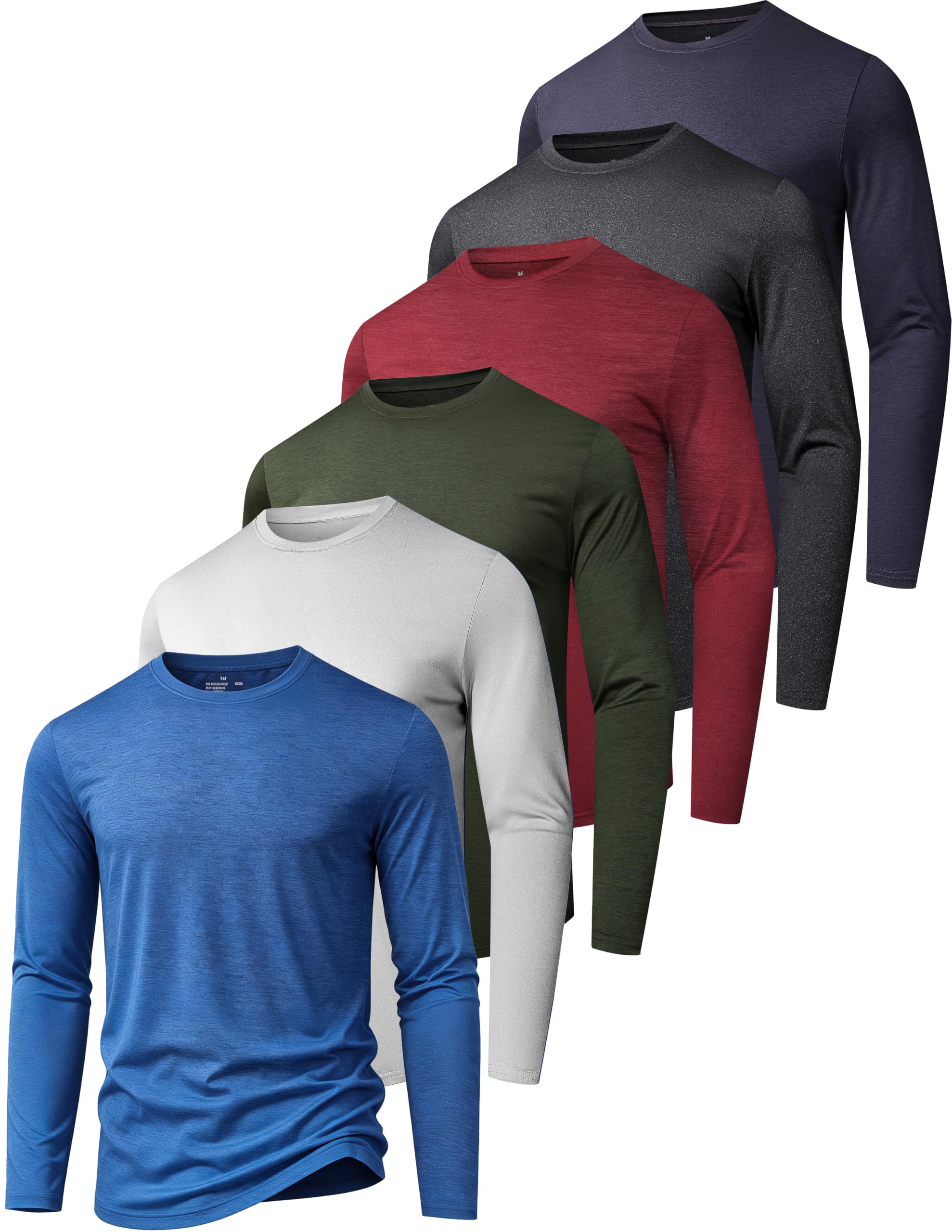
OYGSieg Quick-Dry Sun Shirts
Key Features
- Pack size: 6 or 7 shirts
- Quick dry: Yes
- Sleeve length: Long sleeve
- Sun protection: UPF50+
- Price: Budget
Enough clean shirts for a week’s hiking without a washing machine is the practical case for a multipack, and this is the set we hand to most men heading out on a summer trail. The shirts are quick-dry, rated UPF50+ and light enough that a spare rolled into the pack costs almost nothing in weight: the layer you put on at the trailhead and forget about.
This is our top pick because the fabric is the part that usually goes wrong on inexpensive sun shirts. These are soft and smooth rather than crisp and plasticky, and there’s enough body in them not to go see-through when you sweat. A sun layer you actually want to wear stays on all day, and that is most of the battle on exposed ground.
In use they do the two things a hiking layer has to do: breathe on a climb and dry fast when you stop. The long sleeve gives full forearm coverage without the greenhouse feel of a heavier sun shirt, and the fabric doesn’t cling when you sweat through it. Wear one alone on a hot day or under a fleece in shoulder season — it stays comfortable against the skin either way.
Pros
- Full arm coverage with a UPF50+ rating
- Dries fast after sweat or rain
- Soft, non-itchy fabric against skin
- Multipack covers a multi-day trip
Cons
- Sold only in packs of six or seven
- Color choices skew dark
Our top pick for most men: soft, quick-drying UPF50+ sun shirts with full arm coverage, sold in packs that cover a whole trip.
Best for Hot-Weather Day Hikes
Rdruko Quick-Dry Hiking Shorts
Key Features
- Waist: Elastic
- Pockets: Zippered
- Quick dry: Yes
- Intended use: Hiking, running, gym
- Price: Budget
Zippered hand pockets are the difference between carrying a phone and losing it on a scramble, and this pair has them where it counts. These are the shorts we take on hot, humid trails: thin fabric that dries fast, an elastic waist that moves with you on steep ground, and a cut loose enough to keep chafing off the inner thigh.
The fit is the part to think about. It’s an above-knee active short rather than a tailored hiking short, which is why it works as well at a beach or a gym as on a trail. The waistband sits flat under a pack hipbelt, the pockets swallow a phone and keys, and there’s enough stretch that you stop noticing them on a climb.
Where these give up ground is warmth: there isn’t any. They’re a summer short, and on a cold morning you’ll want a longer leg or a liner underneath. For everything from a humid day hike to a swim, that’s the right call, and a second pair for the gym costs little enough that it’s an easy yes.
Pros
- Zippered pockets secure a phone and keys
- Dries fast after sweat or water
- Elastic waist comfortable under a hipbelt
- Good value for a quick-dry short
Cons
- Cut runs small — size up if between
For hot-weather hikes this is the shorts we take: light, quick-drying and comfortable under a pack belt, with zippered pockets that keep a phone put.
Best for Rain with a Pack
ANYOO Hooded Rain Poncho
Key Features
- Fit: Loose
- Fabric: 210T ripstop polyester
- Weight: 9 oz
- Waterproof rating: PU 8000 mm
- Price: Budget
A rain jacket keeps your torso dry. This keeps your torso, your thighs and the pack on your back dry, and it costs a fraction of a shell. The ANYOO is a loose, sleeveless hooded poncho in 210T ripstop polyester with a PU 8000 mm coating and taped seams, and it’s the rain protection we pack for summer trips where rain is a maybe rather than a certainty.
Coverage is the whole point. Because it hangs loose and long, it goes over a full daypack instead of fighting it, and the side snaps let you open it up on a climb and close it down when the wind picks up. It weighs well under a pound, folds into a corner of the pack, and dries fast enough to shake out and stow still damp.
It isn’t a shell, and we don’t treat it as one. The loose cut flaps on an exposed ridge and it won’t replace a jacket in sustained wind and cold — but in changeable three-season weather that’s a fair trade, because rain cover you don’t mind carrying beats a jacket left in the car. The corner grommets let it double as an emergency tarp if the weather turns worse than forecast.
Pros
- Covers a full daypack as well as you
- PU 8000 mm coating with taped seams
- Packs down to almost nothing
- Grommets let it double as a tarp
Cons
- Hand wash only
- Sleeveless cut leaves forearms exposed
The rain cover we keep in the pack: it shelters you and a full daypack, weighs almost nothing and asks very little of your budget.
Best for Cold-Weather Warmth
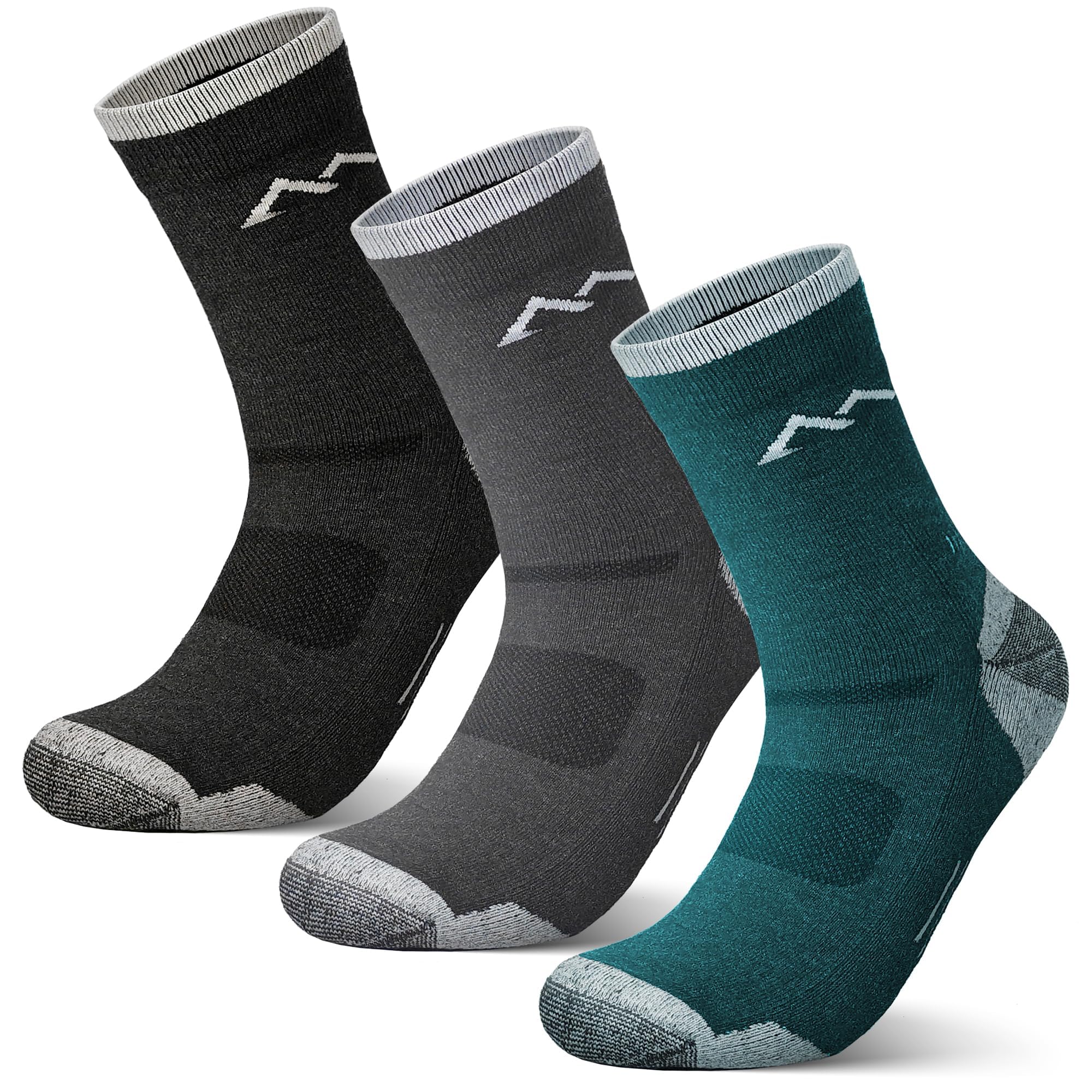
Alvada Merino Wool Crew Socks
Key Features
- Use: Winter, work and hiking
- Style: Crew
- Material: Merino wool
- Pack size: 3 pairs
- Price: Budget
Warmth and thickness are what these socks are for, and they deliver both: a soft merino crew that keeps feet warm on cold walks and stays up on the leg instead of sliding into your boot. Three pairs in one pack makes them the least expensive way into wool socks here, and for winter walking, cold-weather work or a chilly night in a tent, that’s a useful thing to have in the drawer.
Thickness is the design decision worth understanding. These are a proper boot sock, pillowy underfoot and warm enough for winter, which suits a roomier hiking boot or a well-broken-in pair. In a snug trail runner the same padding turns into crowding — we keep these for the boots with room in them and reach for a thinner sock the rest of the time.
The fit is generous and stays put, which is most of what you want from a sock under a pack, and the wool feels soft rather than scratchy on skin. They run warm, so they’re a poor choice for summer hiking; this is a cold-weather sock from the ground up, and we judge it that way.
Pros
- Thick, warm cushioning for cold days
- Stays up on the leg under boots
- Soft merino against the skin
- Three pairs at a budget price
Cons
- Heels and toes wear through with use
For cold-weather hiking and winter wear we buy these by the pack: thick, soft merino warmth at the lowest price of any wool sock here.
Best for Long Days in Boots
innotree Merino Hiking Socks
Key Features
- Use: Hiking
- Material: Merino wool
- Pack size: 3 pairs
- Price: Budget
These are the socks we reach for on long days: a hiking-specific merino crew with cushioning under the foot and a fit that stays put inside a boot. Where the Alvada pair is about warmth, this one is about the walk — padding where a boot presses, wool that moves moisture off the skin, and dry feet at the end of a hot climb.
Merino earns its place here. It wicks, it doesn’t hold odor the way cotton does, and it stays warm when damp, which matters on a trip where the weather turns. Three pairs cover a multi-day trek if you rinse them at night, and the weight sits in the three-season range rather than deep winter.
The trade is longevity. Soft merino is comfortable and odor-resistant and not especially abrasion-proof, and the heel is where a pair usually wears first — the same bargain every wool hiking sock makes. Buy them for the comfort and the dry feet rather than as a sock you’ll still be wearing in five years.
Pros
- Cushioning under the foot for long days
- Wicks moisture to keep feet dry
- Stays in place inside a boot
- Three pairs cover a trek
Cons
- Runs small for wide feet
Our pick for long days in boots: cushioned, wicking merino that stays put, with enough pairs in the pack for a multi-day trip.
Best for Winter Layering
WEERTI Thermal Long Johns Set

Key Features
- Style: Long johns
- Lining: Fleece
- Set includes: Top and bottoms
- Price: Midrange
Order these a size up — that’s the most useful thing we can say about this thermal set. Sizing is the weak point, with a clear run-small pattern and the same nominal size coming up tighter in one color than another. Buy from somewhere with easy returns, or size up and accept a slightly loose fit under your shell.
Get the fit right and it’s a lot of warmth for the money: a fleece-lined long john set that holds heat under a shell without feeling bulky under hiking pants. The inside is soft enough that it doesn’t itch, the outside slides under other layers instead of bunching, and it works as a sleep layer in a cold hut as well as a hiking base layer.
The limit is the season. This is a cold-weather layer — fleece-lined and warm enough that you’ll overheat on a mild day’s climb — so pack it for late-season trips, winter walking and cold mornings rather than as a three-season base layer. Within that window it earns its place.
Pros
- Warm without bulk under a shell
- Soft fleece lining against skin
- Layers under clothes without restriction
- Good value for a full set
Cons
- Inner thigh seams can come apart
The cold-weather layer we pack for winter trips: fleece-lined warmth without bulk, provided you order a size up.
Best for Warm-Weather Trails
AIRIKE Quick-Dry Hiking Pants

Key Features
- Waist: Elastic
- Pockets: Zippered
- Quick dry: Yes
- Water resistance: Water resistant
- Price: Budget
What you want from an inexpensive pair of hiking pants is that they dry fast, don’t restrict your stride, and don’t look like gym wear when you stop for lunch in town. These manage all three: a light, water-resistant fabric, an elastic waist that moves with you, and zippered pockets that keep a phone and keys where you left them.
Comfort is where they punch above the price. The fabric is light and stretchy enough for steep ground, it doesn’t turn into a sauna in heat, and the straight, casual cut sits closer to a walking trouser than a running pant — the pair you can wear on a hike and then into a pub without feeling underdressed.
The inseam is the catch: it comes up short, close to an inch under the listed measurement, and tall hikers find them cropped above the boot rather than breaking over it. Measure against a pair you already own before ordering.
For everyone else they’re the value pick of the guide: a light, quick-drying, comfortable hiking trouser you won’t mind getting muddy. They aren’t a softshell and won’t carry you through a cold, wet day, but as a summer and shoulder-season pant they do the job.
Pros
- Dries fast after rain or sweat
- Light and stretchy for steep ground
- Zippered pockets keep essentials secure
- Comfortable elastic waist
Cons
- Waist sizing runs small
The budget hiking pant we recommend for summer trails: light, fast-drying and comfortable, though you should check the inseam before ordering.
How We Chose and Tested the Best Hiking Clothes for Men
We started by pulling nearly 60 pieces from brands whose hiking gear we’d already put miles on, then cut anything with cotton in the blend, anything carrying a designer markup, and anything that didn’t come in a size range wide enough for our testers, who ran from 5 foot 7 to 6 foot 3 and 150 to 220 pounds. That left 14 pieces: four baselayers, four midlayers, four pairs of pants, and two pairs of shorts.
Every piece went on real hikes, not a treadmill — local day hikes of 3 to 8 miles, one cold, wet weekend that started at 38 degrees and never dried out, and a three-day trip with a 25-pound pack. We counted the unglamorous hours too: the drive home, the brewery after, the washing machine, because that’s where seams and fabric give up.
Warmth got judged by when we shed a layer, not by the tag. If I was unzipping at the first switchback, the piece was too warm for the climb; if I was reaching for a shell at lunch, it wasn’t warm enough for the stop. We wore baselayers against bare skin for full days and noted where they itched, especially at the collar and under pack straps, and checked whether a heavier knit actually felt warmer or just bulkier under a shell. Fit and sizing were graded on shoulders, seat, and whether a hem stayed put; we measured inseam and sleeve length against our testers’ own numbers and flagged every brand that required sizing up.
Durability showed up in the details after a dozen washes: pack-strap abrasion on the shoulders, snags from brush, pilling under the arms. Value wasn’t the number on the page — we divided it by how many trips each piece actually made.
How to Choose Men’s Hiking Clothes
Spend your budget on the layer you’ll wear all day before the one you’ll wear twice a trip.
Start with the layer against your skin
Most men buy rain gear first and then hike in a cotton T-shirt. Reverse it. The piece next to your skin does the most work: it moves sweat, dries, and shades your arms, while a shell sits in the pack for a maybe. A quick-dry long-sleeve shirt is the single most useful purchase for three-season hiking, and it’s the reason the OYGSieg pack sits at the top of this guide.
Work outward from there: a sun and base layer, something warm for cold starts, and rain protection. You don’t need all three on every trip, which is the argument for buying them one at a time rather than one expensive jacket that does none of them well.
Sizing is the biggest risk in this category
Inexpensive hiking clothing has a sizing problem. Two picks here need a deliberate decision before you order: the WEERTI thermal set runs small enough that going up a size is the sensible default, and the AIRIKE pants come up short in the inseam against their own listed measurement.
Buy from a seller with easy returns, take the larger size when you’re between, and check two measurements against a garment you already own: the inseam on pants and the chest on a base layer. Loose is fine on a trail; tight at the shoulder or short in the leg is not.
Poncho or rain jacket?
A shell handles wind, brush and sustained rain better than anything else. A poncho covers more, including your pack, for a fraction of the weight and cost, which makes it the better answer for summer trips where rain arrives in bursts. The ANYOO goes over a full daypack and weighs well under a pound.
The trade is real: a poncho flaps in wind, leaves your forearms uncovered and isn’t something you wear all day. Hike exposed, windy ridges in cold rain and you want a jacket. Hike summer trails and want insurance that actually stays in the pack, and the poncho wins.
Match sock weight to your boots
Merino is the default for hiking socks because it stays warm when damp and resists odor; the trade is abrasion, and the heel is where a pair usually goes. Thicker socks are warmer and more cushioned but need a roomier boot — the padding that feels great in a broken-in leather boot crowds a snug trail runner.
Two weights cover most hikers: a thick crew for cold weather and a midweight hiking sock for long days. Check the heels of last season’s pairs before a big trip rather than after, and size up if your feet are wide.
What quick-dry and UPF50+ actually mean
Quick-dry describes how a fabric spreads moisture and releases it, so sweat and drizzle evaporate instead of sitting against you. It’s the practical difference between a shirt you can wear three days running and one that stays damp in the bottom of a pack. UPF50+ describes how much UV the fabric blocks, but only where it covers.
Neither claim survives a bad fit. A sun shirt that clings or rides up gets taken off, so weight the cut and comfort of a piece above the number on the label.
Frequently Asked Questions
Can I just hike in gym clothes?
For a short, dry walk, yes. The gaps open up when you sweat hard or the weather turns: cotton holds water against your skin, ordinary gym shorts dry slowly, and a short-sleeve tee leaves your arms in the sun all day. A quick-dry long-sleeve layer and a pair of wool socks fix most of it for very little.
How many hiking shirts do I need for a week on the trail?
Three is comfortable if you rinse one each evening; two works if you don’t mind starting a day in a slightly damp shirt. Quick-dry fabric is why the number is that low — a shirt hung on a pack line overnight is usually dry by morning. That’s the case for a multipack like the OYGSieg set.
Is UPF clothing enough without sunscreen?
No. UPF50+ applies only to skin the fabric covers, so long sleeves protect your arms but leave your face, neck, ears and hands exposed, and light reflected off rock and water adds to the dose. Wear the shirt, then put sunscreen on everything it doesn’t cover and reapply at lunch.
Final Verdict
Buy the OYGSieg sun shirts first. They’re the piece most men will wear on every warm-weather hike: soft, quick-drying, full arm coverage, and enough shirts in one pack to cover a trip. Add the ANYOO poncho if you hike where summer rain arrives without warning, the Rdruko shorts if you’re hiking in real heat, and the Alvada socks once the mornings turn cold.
Heading into winter instead? The WEERTI set is the warm layer worth packing, provided you order a size up.