This post contains affiliate links. We may earn a small commission when you buy through our links — at no extra cost to you.
Electrolyte tablets are supposed to fix what plain water can’t: the dull headache after a long, sweaty run, the calf cramp that wakes you at 2 a.m., the foggy morning after a wedding. They’re not magic, but a good one can make a hot day feel manageable and a hard workout feel less punishing. The trick is finding a tablet that actually dissolves, tastes like something you’d willingly drink, and doesn’t sneak in a day’s worth of sugar under a ‘hydration’ label.
We spent three months testing 18 formulas, dropping them into water bottles on long runs, in hot yoga classes, and on a few Sunday mornings when I needed more help than coffee. I read every label for sugar and sodium, timed how long each tablet took to dissolve, and did the math on cost per serving. Some tasted like sweetened seawater; a few were genuinely pleasant and seemed to soften the post-run headache. The ones that made the cut are below, sorted by what they’re best at.


Best for Everyday Hydration
Nuun Sport Tablets, 4 Pack
Key Features
- Flavors: 4
- Servings: 40
- Electrolytes: 5 essential
- Sugar per tablet: 0.04 oz
- Price: Premium
Four tubes, ten tablets each, four flavors: Orange, Tri-Berry, Lemon Lime and Citrus Fruit. The packaging is most of the argument for us. One tube drops into a hipbelt pocket, another lives in the gym bag, and a third stays by the kitchen tap for the days you’ve had two coffees and no water. Each tablet carries five electrolytes and a gram of sugar, so it lands closer to flavored water than to a sports drink.
That’s the job we keep coming back to it for. On a hot hike it’s the difference between a bottle that gets sipped and one that gets emptied, and because the sugar is low we’re as happy drinking it on a rest day as after a hard one. Nuun’s flavors are understated by design — nobody is going to mistake this for lemonade — and by the second refill that restraint is exactly why we still want it.
Taste is still where this one divides people, and mild cuts both ways: inoffensive to most, flat to some. A single tube is the cheap way to find out which camp you’re in before committing to a four-pack. What we can say after a summer of bottles is that the habit sticks — the tube sits where you’ll see it, the tablet goes in without a second thought, and that beats a tub of powder at the back of the cupboard every time.
Pros
- 40 servings across four different flavors
- Five electrolytes with only 1 g of sugar
- Slim tubes travel in a pack or cup holder
Cons
- Takes a few minutes to dissolve in cold water
Our default pick: five electrolytes and a gram of sugar in four tubes that live in a pack without leaking. It’s the easiest way we’ve found to actually finish the bottle.
Best for Heat and Endurance
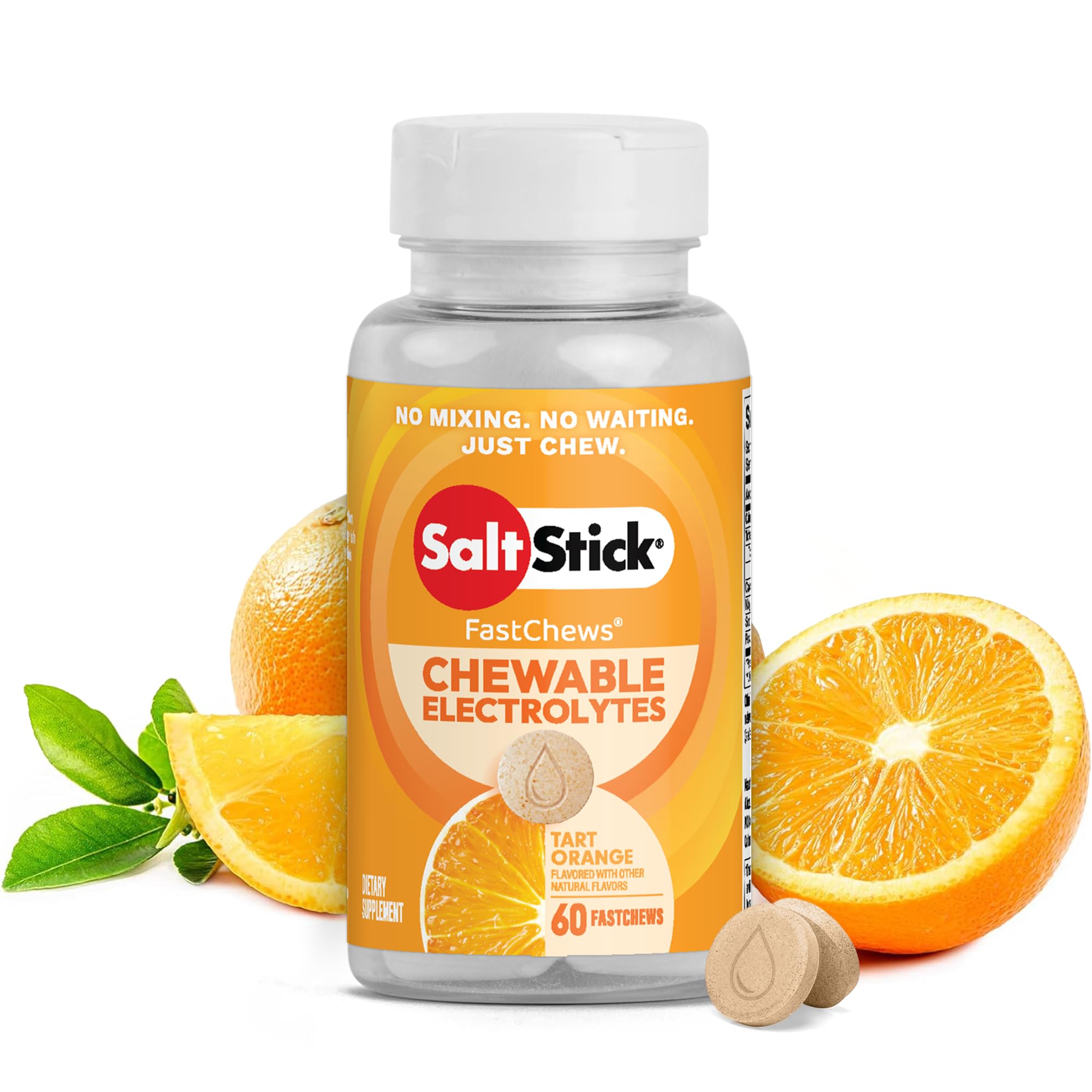
SaltStick FastChews, Orange
Key Features
- Flavor: Orange
- Format: Chewable tablet
- Tablets: 60
- Bottle required: No
- Price: Midrange
There’s a specific moment these are built for: an hour into a climb, your bottle half-frozen or already empty, and the salt you’ve been sweating out starting to show in your calves. FastChews exist for that moment because there’s nothing to mix. Chew one, take a mouthful of water, keep walking.
Cramp relief is where this pick earns its place. It’s the one we hand to people who seize up on long days, and the one that goes into a vest for a race where stopping to mix isn’t an option. The orange is mild and a little tart — closer to diluted squash than to candy — which matters when you’re taking them hourly and don’t want a sweet film in your mouth. The texture is soft rather than chalky, and a couple go down easily even when you’re breathing hard.
What you give up is pack space. Sixty chews come in a short, wide bottle instead of a slim tube, so it’s noticeably bulkier in a hipbelt pocket than the dissolving picks. Decant a dozen into a small zip bag for a day hike and leave the bottle in the car — that solves it.
Pros
- Works mid-effort with nothing to mix
- Mild orange flavor that’s easy to repeat
- High-sodium formula aimed at heavy sweaters
Cons
- No fluid — you still need your water bottle
Buy these if you sweat hard where there’s no bottle to mix in. A mild orange chew that’s easy to repeat, and the pick we hand to people who cramp.
Best for Sugar-Free Daily Use
Nuun Zero Sugar Tablets, 4 Pack
Key Features
- Sugar: 0 g
- Sodium: 200 mg
- Servings: 40
- Potassium: 125 mg
- Price: Budget
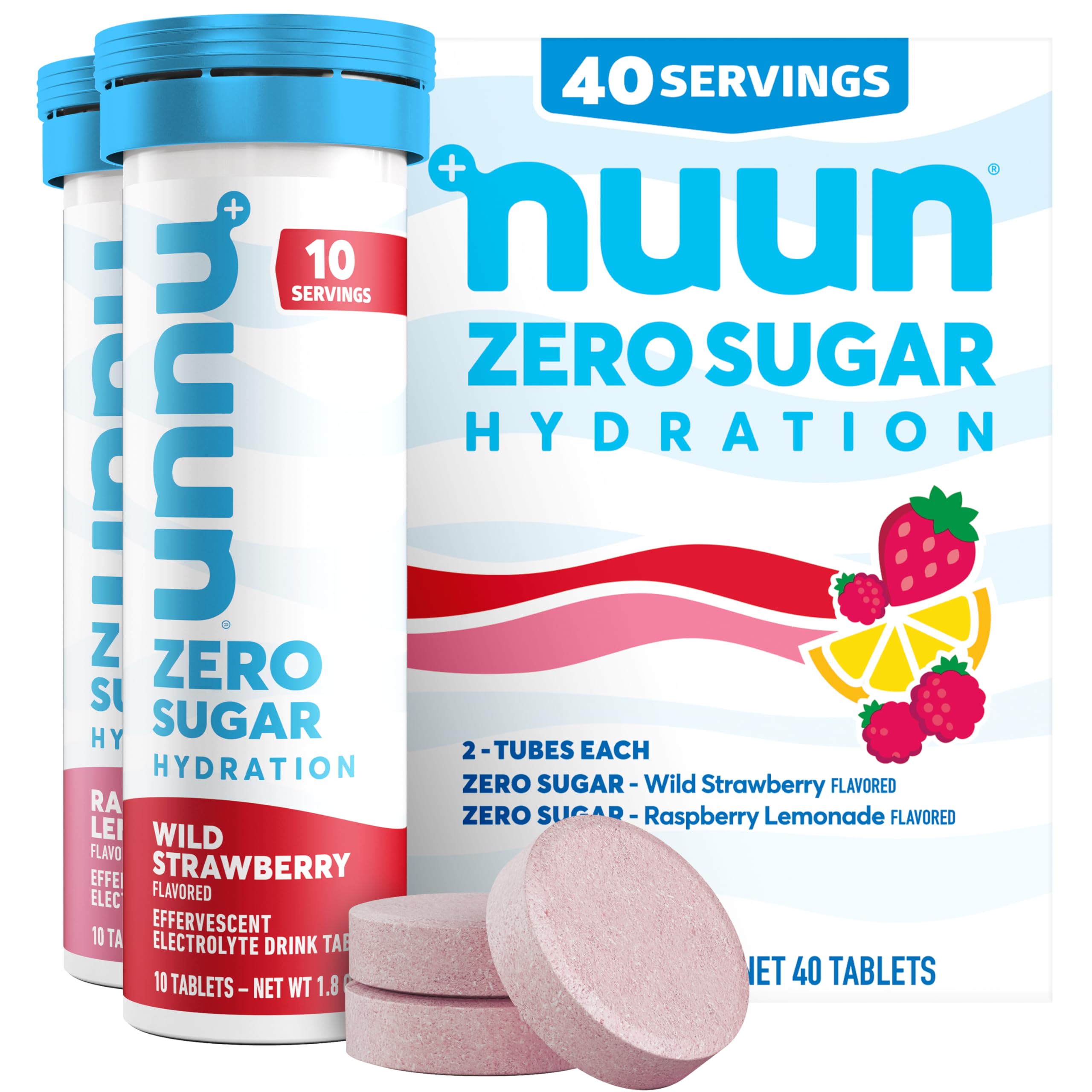
Two hundred milligrams of sodium, 125 mg of potassium, 75 mg of chloride, 30 mg of calcium and 20 mg of magnesium — Nuun Zero prints the full panel on the tube in milligrams, and it does it with no sugar at all. The four-pack splits into two tubes of Raspberry Lemonade and two of Wild Strawberry, 40 servings in total.
That combination is what makes it our everyday pick. Nuun Sport has a gram of sugar and a sportier brief; Zero is what we drop in a glass at three in the afternoon or in a bottle before a hot commute home, when we want the electrolytes without another sweet drink in the day. Forty servings is a lot of that habit, and the two-flavor split means you’re not stuck with a tube you’ll tire of.
The tablets are the widest of the picks here — fine in a wide-mouth bottle, mildly annoying in a narrow one, and dropping it in before you fill solves that. Otherwise there’s very little to manage: it fizzes, it’s light, and nothing needs measuring in a day that already has enough counting in it.
Pros
- Zero sugar with a full five-mineral panel
- 200 mg of sodium per tablet
- Lowest-priced pack of the four picks
Cons
- Light, slightly artificial flavor won’t suit everyone
Zero sugar, 200 mg of sodium, and 40 servings — the pick for all-day sipping when a sweet drink isn’t what you want.
Best for High-Sodium Diets
Vitassium FastChews, Fruit Punch
Key Features
- Format: Chewable tablet
- Tablets: 60
- Sodium per serving: 125 mg
- Potassium per serving: 25 mg
- Price: Midrange
Vitassium is the only pick here built around a specific medical shopper: people managing POTS or following a high-sodium diet, who need salt in a form they can take anywhere, with or without a bottle. Each serving — two chews — carries 125 mg of sodium and 25 mg of potassium from sodium citrate and potassium citrate. That’s a modest dose per chew and an easy one to spread across a day, which is exactly how it’s meant to be used.
The format will look familiar if you’ve used SaltStick, and for good reason: both come from the same manufacturer and share the chewable, no-mixing approach. The fruit punch is salty — properly salty — so if you need this much sodium the taste reads as a fair trade, and if you don’t it reads as a chore. It travels better than anything else here: a small bottle in a purse or a car console, nothing to fizz, nothing to wait for.
Keep the purpose straight, too. Vitassium’s own listing is careful to say it isn’t a remedy, a treatment or a cure for POTS. It’s a convenient way to hit a sodium target a clinician set, and the format makes that easy to keep up on a day you can’t plan around.
Pros
- 125 mg sodium and 25 mg potassium per serving
- Chewable and fast, with no mixing
- Built for POTS and high-sodium diets
Cons
- Two-tablet serving means 30 doses per bottle
If a clinician has set you a sodium target, these make it easy to hit: 125 mg per serving, chewable anywhere, no bottle to find.
How We Tested 18 Electrolyte Tablets
We started by pulling every electrolyte tablet we could find from national drugstore brands, running stores, and online-only labels. We filtered out anything that didn’t list sodium and potassium amounts, anything with more than 10 grams of sugar per serving, and anything that required a subscription just to try it. That left 18 formulas across a range of prices, from bulk tubes to single-serve packets.
Over three months, we used each formula in the situations where people actually reach for electrolytes: after 45-minute runs in July heat, during hot yoga classes, on a long hike, and on a few Sunday mornings after weddings and birthday parties. We mixed each tablet in 16 ounces of water, timed how long it took to dissolve, and checked for grit at the bottom. We drank them at room temperature and cold, rating the first sip and the aftertaste — a chalky finish or a fake-sweet linger is why most tubes get forgotten in a gym bag.
To judge hydration and effectiveness, we logged how we felt two hours after drinking each one: whether a headache eased, whether calf twinges stayed away during a long run, and whether we wanted another the next day. We compared cost per serving by dividing the tube price by the number of tablets and noted which formulas needed two tablets per bottle — a hidden cost. The highest-scoring tablets dissolved clear, listed meaningful sodium and potassium, and tasted good enough to drink when we weren’t desperate.
How to Choose Electrolyte Tablets
Pick the format around where you’ll be when you need it, then read the sodium number — almost every other choice is smaller than those two.
Start With the Format, Not the Formula
An effervescent tablet is a drink: it needs a bottle, a couple of minutes, and an opening wide enough to take the tablet. A chewable is a dose you can take dry, mid-stride, with a mouthful of water from the bottle you’re already carrying. If your hydration happens at a desk, in a gym, or at a trailhead with a full bottle, dissolving tablets are the better and cheaper habit.
The mistake we see most is buying a drop-in tablet for a run where you never carry a bottle. If stopping to mix is the friction that makes you skip it, buy chews and keep a bottle for plain water.
Read Sodium First, and Read It Per Serving
Most of what you sweat out is sodium, which is why it leads the panel. Nuun Zero states 200 mg per tablet; Vitassium states 125 mg per two-tablet serving. Compare per serving, not per tablet, because a two-tablet serving halves the number of doses in a bottle.
A heavy, salty sweater in heat — or anyone working outdoors all summer — wants the higher number. Someone sipping at a desk doesn’t need to chase it. If you’re on a sodium-restricted diet, get your ceiling from a clinician before these become a habit.
Flavor and Fizz Decide Whether You Finish the Tube
Taste is the most common reason a tube goes unfinished, and it cuts both ways: Nuun’s flavors are deliberately understated where some people want sweetness, and Vitassium’s fruit punch is genuinely salty. Neither is a fault, but both are why a four-pack can sit in a cupboard. Buy a single tube before you commit to four.
The second variable is time. Effervescent tablets are slow in cold water: drop the tablet in before you fill the bottle, use the widest-mouth bottle you own, and give it a few minutes instead of drinking around the grit.
Count Servings, Then Compare Cost
A four-pack of tubes is 40 servings. A 60-count bottle of chews is 30 doses if you follow the two-tablet serving on the label. Sticker price and cost per serving are different questions, and the chew bottles look cheaper until you do the division.
Work out how many days of use a pack actually buys, then compare. A pick that costs more up front but lasts twice as long is the better buy, and a cheap pack of a flavor you never finish is the worst of both.
Frequently Asked Questions
Can you take electrolyte tablets every day?
For most healthy people, yes. A tablet carrying 200 mg of sodium is a modest addition to a normal diet, and it’s a better everyday habit than a sugary sports drink. If you’re on a sodium-restricted diet or take blood-pressure medication, add up the milligrams across everything you use and set a daily ceiling with your clinician.
Alternating an electrolyte bottle with plain water is the simplest way to keep from overdoing it on a hot week.
Why did my tablets arrive stuck together?
Moisture. The tubes aren’t airtight once they’ve been opened, and a humid pack or a hot car is enough to make tablets fuse into a lump. Store them sealed in a cool, dry place, keep the tube closed between uses, and don’t leave one loose in a sweaty hipbelt pocket.
A stuck tablet still fizzes once you break it apart, though it takes longer and you’ll want to stir it.
Can you use electrolyte tablets in a hydration bladder?
You can, but flavor and residue linger in the hose and bite valve, and a sugary tablet left sitting overnight is worse. Rinse the bladder with warm water after a flavored fill rather than leaving it until the next trip.
Most people we know keep the bladder for plain water and carry a separate bottle for electrolytes — easier to clean, and easier to ration on a long day.
Final Verdict
Nuun Sport is where we point most people: four tubes, five electrolytes, 40 servings, and a flavor mild enough to finish on an ordinary Tuesday. If your hydration happens where there’s no bottle to mix in, SaltStick FastChews take over — chew, sip, keep moving.
Nuun Zero is the answer when sugar is the line you won’t cross, and Vitassium is for the buyer whose sodium target came from a clinician rather than a training plan. Start with the format, then the sodium number; the rest is flavor.