This post contains affiliate links. We may earn a small commission when you buy through our links — at no extra cost to you.
A daypack has one job, and the margin for error is narrow: carry what the day demands without becoming the reason your shoulders ache by mid-afternoon. Too small, and you’re lashing a rain shell to the outside; too big, and you feel it swing empty behind you for hours. The right one fixes a specific kind of daily friction — the laptop, the water bottle, the layer you peel off at noon — with pockets you can actually reach and zippers that don’t split the moment the bag is full.
I’ve carried daypacks on commutes, day hikes, and flights where the bag had to pass as a personal item, and what separates a good one from a frustrating one rarely shows up in product photos. My team and I spent eight months loading and reloading 12 packs. Here’s what I’d tell a first-time buyer: the liter count on the tag is a rough sketch, not a promise — pocket placement does more for usable space than the headline number does, and zippers tend to fail long before the fabric wears through. The picks below reflect all of it.


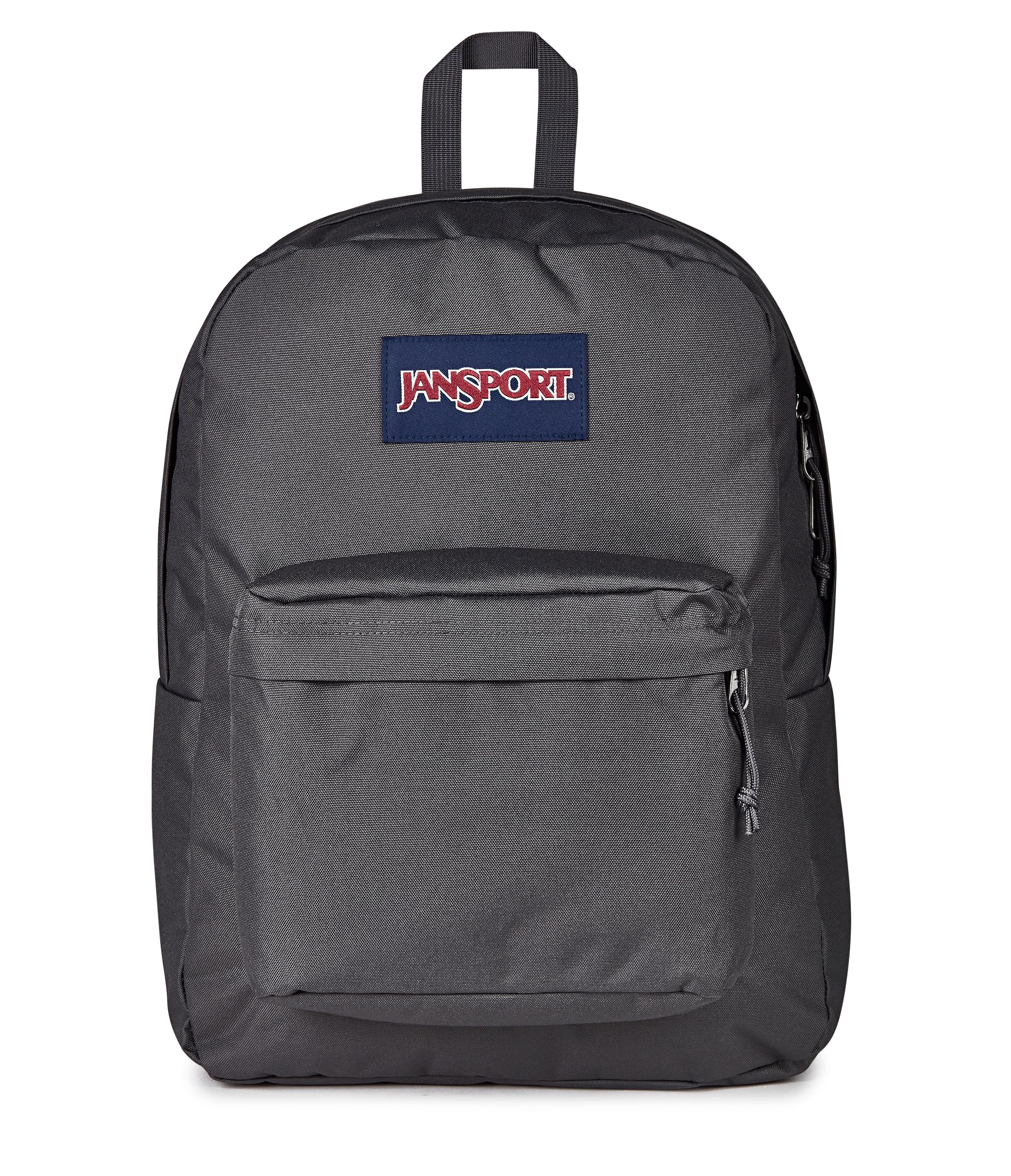

Best for All-Round Day Use
The North Face Recon
Key Features
- Volume: 30 liters
- Weight: 2 lbs 9 oz
- Harness: FlexVent suspension
- Water resistance: Water repellent
- Price: Premium
The first thing we do with any daypack is stuff a wet shell into the outside pocket, and the Recon’s stretch mesh front takes a jacket, a folded midlayer, and a pair of gloves without borrowing a liter from the main compartment. That pocket is a big part of why this is the pack we hand people first. Thirty liters sounds like more than a day needs until you spend one in it: lunch, layers, a camera, a first-aid kit, and still room for the souvenir nobody planned on.
The harness is what the extra weight buys. The FlexVent back panel is rounded rather than flat, the shoulder straps are articulated, and the waist belt comes off completely for a commute. We wore it loaded through a long day of walking and felt the load in our legs, not our shoulders, which is the whole test. The stand-up design matters more than it sounds, because the pack stays upright on a rock while you dig through it instead of flopping into the mud.
Organization runs to eight pockets and five compartments, including a padded laptop sleeve that makes it a commuter pack on Monday and a hill pack on Saturday. Both bottle pockets are external, the fabric is water repellent rather than waterproof, and the daisy chain takes a carabiner or a drying pair of socks. If your days are short and fast, the Daylite is the lighter answer. For everything else, this is the pack that stops you owning two.
Pros
- Stretch front pocket takes wet layers
- FlexVent harness stays comfortable when loaded
- Removable waist belt for town or trail
- Stands upright while you pack it
Cons
- Heaviest pack here at 2 lbs 9 oz
- Premium price for a daypack
If you want one pack for hiking, commuting, and weekends away, buy the Recon: the harness and the stretch front pocket are worth carrying a little more weight for.
Best for Fast, Light Hikes
Osprey Daylite
Key Features
- Volume: 13 liters
- Weight: 1.1 lb
- Bottle pockets: Dual side mesh
- Interior sleeve: Reservoir or 14-inch laptop
- Price: Premium
Thirteen liters is smaller than almost everything else here, and the Daylite is the pack we reach for when the plan is four hours on a trail and nothing else. One panel-loading opening, a multifunction sleeve inside that takes a hydration reservoir or a 14-inch laptop, two mesh bottle pockets, and dual compression straps to keep a half-full pack from sloshing. At 1.1 pounds it barely registers on your back.
We were surprised by how much the small volume actually holds. Water, lunch, a shell, a hat, and a camera went in with the compression straps doing the work, and the back panel holds the pack off your spine enough that a sweaty climb does not soak the whole bag. On a short, fast day it is the pack we take over anything bigger here, and the 13 liters are the point rather than a compromise.
The hip belt is a webbing strap with almost no padding, which is fine on a light load and unpleasant once you add a big camera or two liters of water. Osprey’s attachment system, which clips the Daylite onto several of their travel and backpacking packs, only earns its keep if you already own one of those. Short days, light loads, and a bit of ventilation: that is the trade, and we are happy to make it.
Pros
- 1.1 pounds, barely noticeable on your back
- Reservoir sleeve doubles as a laptop sleeve
- Ventilated back panel keeps your shirt drier
- Dual bottle pockets and compression straps
Cons
- Thirteen liters is limiting on big days
For short, fast hikes and nothing else, the Daylite is our pick: 13 liters and 1.1 pounds that carry better than the numbers suggest.
Best for Budget Hiking Days
SKYSPER 20L Daypack
Key Features
- Volume: 20 liters
- Weight: 1.1 lb
- Max load: 15.4 lb
- Water resistance: Water resistant
- Price: Midrange
Trekking pole loops, ten pockets, an anti-theft zip, a removable strap system, and a chest strap: on paper the SKYSPER 20L reads like a pack from a much more expensive shelf. It weighs 1.1 pounds with all that hardware sewn on, which is the part we noticed first.
On short hikes it carries well. The grooved back panel keeps air moving, the wide shoulder straps spread a light load, and the pockets are useful rather than decorative: bottle pockets you can reach without taking the pack off, a front pocket sized for a map, and a small zip pocket that kept keys and a phone where we could find them. Twenty liters takes a shell, lunch, and two bottles with room to spare.
The weak point is where the straps meet the body. Stitching at those attachment points has come apart on some of these packs, and that is the failure that ends a walk early, so give the seams a look before your first trip and do not be surprised if a hard-used one eventually needs a repair. Twenty liters also run out fast in winter, when a puffy takes half the bag. Treated as a well-equipped short-day pack, it is one of the best-value hiking bags here.
Pros
- Trekking pole loops and chest strap included
- Ten pockets, all reachable while wearing it
- 1.1 pounds with a ventilated back panel
Cons
- Rated to 7 kg, so light loads only
If you hike short days and want the most hiking features for the money here, the SKYSPER is the pack we hand over first, as long as the loads stay light.
Best for Daily Commuting
The North Face Vault
Key Features
- Volume: 27 liters
- Compartments: 3
- Laptop sleeve: 15 inches
- Water resistance: Water repellent
- Price: Premium
The Vault stands up on its own when you set it down, which sounds trivial until you are packing at a wet trailhead with a thermos in one hand. It is a 27-liter commuter-first daypack: water-repellent finish, a padded sleeve for a 15-inch laptop, a tablet sleeve and key hook in the front compartment, two bottle pockets, and a sternum strap. We like it best as the pack that lives by the door, tidy enough for an office and still built on the FlexVent harness for the walk home the long way.
The single main compartment is genuinely roomy, and a 14-inch laptop, a portable monitor, and a binder went in without a fight. The 27 liters do pack smaller than the number suggests, which is fine for a commute and tight for a full day out with winter layers. The water-repellent finish shrugged off drizzle, the zips have pulls you can grab with gloves, and the side pockets take a one-liter bottle. Think of it as a commuter pack that hikes rather than a hiking pack that commutes.
Pros
- Stands up on its own while packing
- Water-repellent finish and glove-friendly zips
- Padded 15-inch laptop and tablet sleeves
- FlexVent harness with sternum strap
Cons
- Front pocket stops short of the bag’s base
For a daily commute that occasionally turns into a hike, the Vault is the pack we point to: tidy, water repellent, and comfortable with a laptop and a jacket.
Best for School and Errands
JanSport Superbreak One
Key Features
- Volume: 26 liters
- Weight: 12.7 oz
- Pockets: 2
- Water resistance: Not water resistant
- Price: Midrange
The Superbreak has been on every school corridor for thirty years, and the current one is the same idea: one main compartment, a front pocket with a built-in organizer, straight-cut padded straps, a web haul handle, and nothing else. It weighs 0.36 kg and takes 26 liters.
We used it as a knockabout bag for gym kit, a laptop, groceries, and a day at the beach, and its appeal is how little there is to think about. The 600-denier recycled polyester has a coated interior, the zips are heavy duty, and the front organizer keeps a pen, keys, and a card where you can find them. It also packs flat enough to live in a suitcase as a spare.
The straps are the part to watch. The webbing where the straps join the bag is where these fail, and a torn attachment or a snapped strap usually follows a school year of being loaded like a mule. Kept to a normal daily load of books, a laptop, and a lunch, ours has been fine. If you want a simple, inexpensive do-everything bag and you are not going to overstuff it, this is the pick.
Pros
- Weighs 0.36 kg and packs flat
- One compartment and an organizer, nothing to break
- Heavy-duty zips on coated 600D polyester
Cons
- No water bottle pocket
- Not water resistant
For school, errands, and a bag you never have to think about, the Superbreak is still the simple answer, as long as you pack it like a daypack and not a moving box.
Best for Travel Backup Bag
4Monster Packable Daypack
Key Features
- Volume: 16 liters
- Pockets: 4
- Packed size: Wallet-sized pouch
- Water resistance: Water resistant
- Price: Budget
Folded, the 4Monster is about the size of a wallet and weighs four ounces. Unfolded, it is a 16-liter pack with a main compartment, a front zip pocket, and two mesh bottle pockets. Ours lives in a suitcase and comes out for the day when we have bought too much to carry.
The 30-denier nylon is water resistant and tougher than it looks, and a full day of sightseeing with two bottles, a jacket, sunscreen, and a camera did not trouble it. There is no padding, no framesheet, and the straps are webbing rather than foam, so anything heavy turns into a bag of edges against your back. Keep it to a light day’s kit and it fades into whatever else you are carrying. As a second bag for travel, a summit push, or an emergency spare, nothing else here comes close.
Pros
- Folds to wallet size at four ounces
- Water-resistant 30D nylon holds a day’s kit
- Mesh bottle pockets on both sides
Cons
- Seams wear with daily use
If you want a real backpack that disappears into a suitcase until you need it, the 4Monster is the one we pack: light, water resistant, and tougher than its weight suggests.
Best for Budget Travel Days
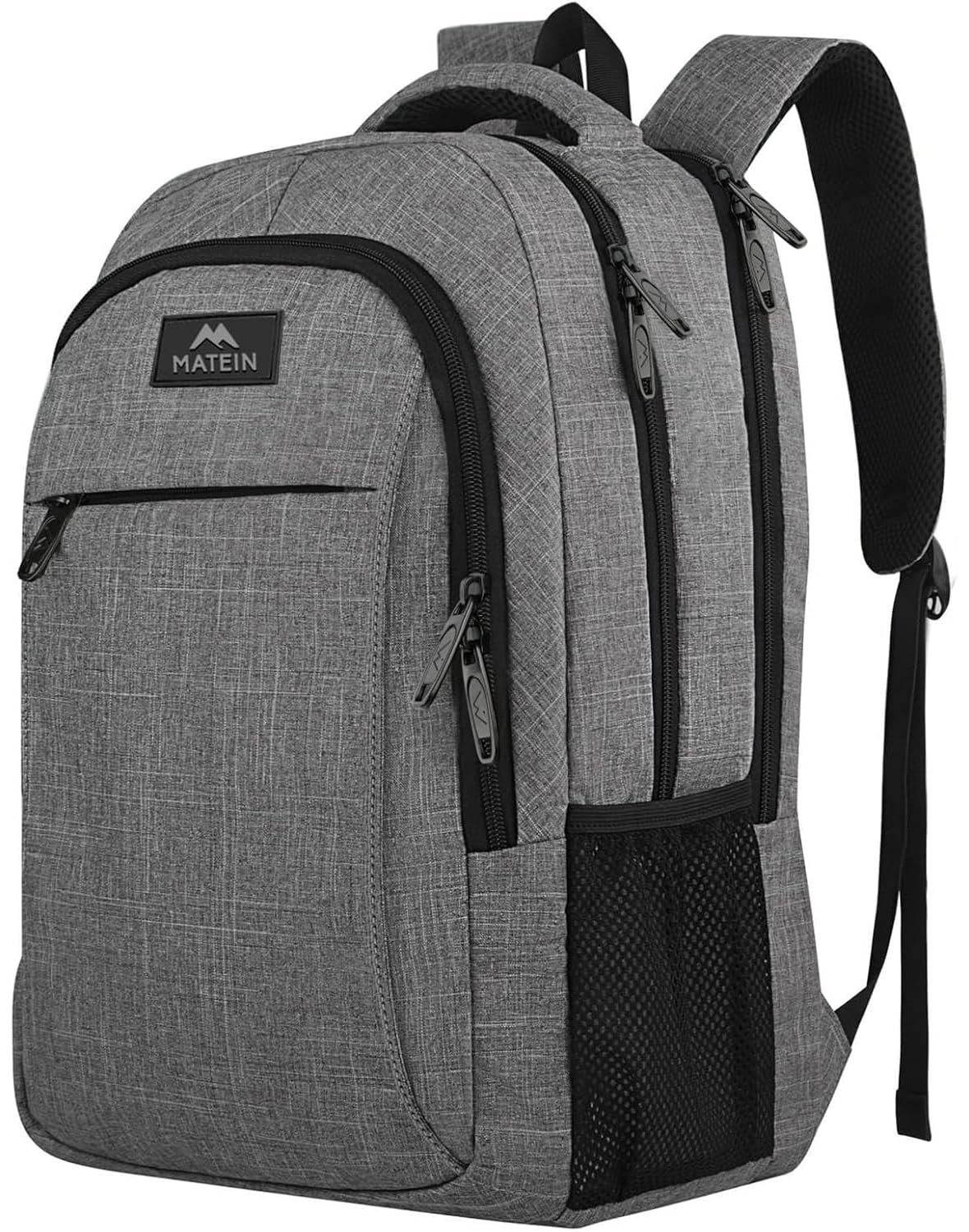
MATEIN 30L Backpack
Key Features
- Volume: 30 liters
- Weight: 1.56 lb
- Water resistance: Water resistant
- Laptop compartment: 15.6 inches
- Price: Budget
There is a hidden pocket against the back panel of the MATEIN, the kind you can reach while wearing the pack, and that detail says who it is for: someone moving through an airport with a laptop, a charger, and a passport.
It is absurdly well equipped for the money. Thirty liters across three compartments and six pockets, a padded 15.6-inch laptop sleeve, a luggage strap that slides over a suitcase handle, a USB pass-through outside with a cable inside, metal zips, and water-resistant polyester. At 708 g it is not heavy, and at 18 by 12 by 7.8 inches it lands in personal-item territory for most carriers.
We used it as a one-bag weekender and a commuter. The organization is the draw, with laptop and tablet in their own sleeve, cables in the front, and clothes in the main compartment, and the ventilated back panel kept it from becoming a sweaty slab on a warm platform. The charging port is a pass-through only: you supply the power bank and the cable, so it saves you feeding a wire out of the bag rather than charging anything by itself.
The straps are where it shows its price. The adjusters creep, so you set the shoulder straps where you want them and they work loose over a day of walking, which means re-tightening once or twice. For daily commuting and air travel that is a fair trade for everything else it does. For a long hike with a load, we point you to a pack with a real harness instead.
Pros
- Hidden anti-theft pocket against your back
- Fits a 15.6-inch laptop plus a tablet
- Luggage strap and USB pass-through
Cons
- Strap adjusters creep through the day
For a budget travel and commute pack that swallows a laptop and a weekend of clothes, the MATEIN is the one we recommend, though you will re-tighten the straps.
Best for Rugged Utility
Wotony Tactical Backpack
Key Features
- Weight: 1.43 lb
- Material: 900D fabric
- Dimensions: 18.5 x 11.5 x 7.5 in
- Water resistance: Waterproof
- Price: Budget
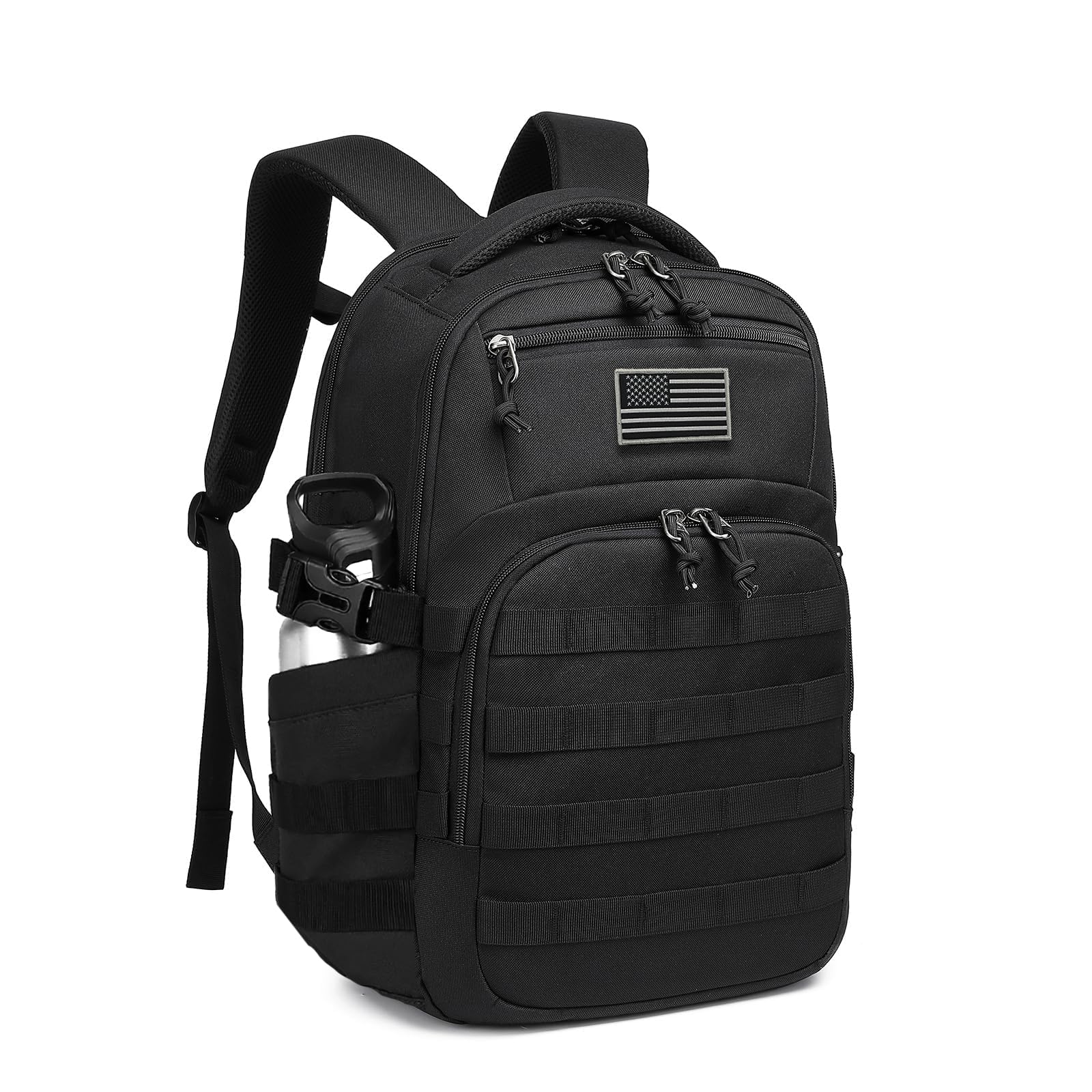
The Wotony is made from 900-denier fabric, the heavy and slightly stiff stuff that military-style packs use, and it is the most overbuilt bag here. It measures 18.5 by 11.5 by 7.5 inches and weighs 0.65 kg, with MOLLE webbing across the front and sides, compression straps, a Velcro panel for a patch, and a waterproof coating.
Seven compartments and six pockets is more organization than a day needs, but the layout is sensible: a main compartment that takes a jacket, lunch, and a laptop, a shallow front pocket for keys and a phone, and side pockets that hold a bottle. We took it commuting and on a muddy walk, and the fabric wiped clean both times.
The MOLLE is the reason to buy it. You can lash a jacket, a tool pouch, or a first-aid kit to the outside and keep the inside for what you actually need, and the thick fabric with the compression straps carries a heavy, awkward load such as tools, a tripod, or camera gear without the bag sagging out of shape.
The zips are the weak point when the pack is overstuffed: force the main compartment shut and the slider can separate, and getting it back together is a fiddly job, so pack it to its size rather than beyond it. As a rugged, inexpensive, go-anywhere pack it earns its place. As a lightweight hiking daypack, it is not trying to be one.
Pros
- 900D fabric shrugs off scrapes and mud
- MOLLE webbing takes extra pouches
- Compression straps hold heavy, awkward loads
Cons
- Stiff fabric does not pack down small
For a rugged, inexpensive pack that takes tools, camera gear, or a patch collection, the Wotony is our pick, provided you keep it to what the seams can close.
How We Tested a Dozen Daypacks
We built the shortlist by pulling together more than 60 packs — brands we’ve had good luck with over the years plus a few newer names with strong review records — then filtering by stated capacity, price, and whether the company stood behind the bag with a real warranty. We kept the field between roughly 18 and 30 liters, since that’s where most day-carry actually lives, and landed on 12 packs across a wide price range.
For eight months, those packs went where daypacks really go: weekday commutes with a 13-inch laptop, lunch, and a 1-liter bottle; Saturday hikes with a rain shell and a spare layer; two weekend flights where each bag had to slide under the seat in front of us; and a lot of grocery runs on foot. We loaded every pack to the same list and noted what got left on the counter, which pockets swallowed a bottle and which ones bulged the whole bag out of shape, and whether we could reach a phone or a wallet without taking the pack off.
Zippers got their own attention. With each bag fully loaded, we opened and closed every main compartment 200 times, then checked for sliders that caught, teeth that split, and pulls that twisted or slipped loose. To test whether the advertised capacity was honest, we filled each pack with packing peanuts, poured them into a measuring bin, and compared the result to the number on the tag. Durability showed up on its own — bags went down on rock and pavement, rode out rain, and got shoved under seats — and we inspected base panels and strap stitching after each outing. The final pass was value: what a pack cost against how much it truly held and how cleanly it was sewn.
How to Choose a Daypack
Three things decide the right daypack: how long you are out, how much you are carrying, and whether the bag has to look presentable at the other end.
Buy volume for your typical day
Volume is the first decision and the easiest to get wrong, because the number on the tag describes the whole bag, not the part you can reach. A 13-liter pack like the Osprey Daylite is right for a fast half-day; a 20- to 30-liter pack like the SKYSPER or the Recon takes layers, lunch, and a camera without a fight. If one pack has to cover both a commute and a hike, buy in the middle and accept a little extra bulk on short days. Think about what you actually carried last time, not what you might carry someday.
The harness matters more than the fabric
An inexpensive pack and a premium one are often made of similar polyester; the difference is what sits against your back. Look for shoulder straps with real foam, a back panel that holds the bag off your spine, and a sternum strap you can reach without taking the pack off. A padded hip belt earns its place once you are carrying more than a light day’s kit; below that, webbing does the job. The Recon weighs 2 lbs 9 oz and the Superbreak 0.36 kg, and the heavier pack is the one you can wear for six hours.
Water resistance lives at the zippers
Water-repellent fabric sheds a shower; it will not keep a down jacket dry in steady rain, and the zippers and seams are where water gets in first. Look at whether the main zip has a flap or a coated finish before you trust the shell. If you carry a laptop, a camera, or insulation, put them in a dry bag inside the pack rather than relying on the fabric. The Vault and the Recon are water repellent, the Superbreak is not, and the 4Monster’s coating is a hedge against a shower, not a downpour.
Count the pockets you can reach
A pack with ten pockets is not better than one with four if half of them are flat against your back. The ones that earn their place: bottle pockets deep enough for a liter and reachable while the pack is on, an outside stretch pocket for a wet shell, and a small quick-access pocket for keys and a phone. Watch for front pockets that stop short of the bag’s base, where everything small slides out of reach. Organization you can reach beats organization you can see.
Frequently Asked Questions
Can a daypack work as an airplane personal item?
Usually, if you stay under your carrier’s published limit and resist overstuffing it. The MATEIN is listed at 18 by 12 by 7.8 inches, which fits most personal-item sizers; the Recon is taller at 19.3 inches and can fail a strict one. Measure the packed bag, not the empty one, and wear your bulkiest layer on board.
Will a hydration bladder fit in any daypack?
Only if the pack has a reservoir sleeve and a hose port. The Osprey Daylite’s interior sleeve is cut for a reservoir and holds a full bladder upright, while a single-compartment pack with no sleeve lets one slump and tug on the hose. Look for a hang loop at the top of the sleeve and a port near the grab handle. Without those, two bottles in the side pockets are simpler.
How do I clean a daypack?
Check the care label first: most packs here are hand wash only, and the MATEIN is the machine-wash exception. Empty every pocket, brush off grit, then wash by hand in cool water with mild soap, working the straps and the base where dirt collects. Rinse well and dry it upside down in the shade, since heat and direct sun soften the coating that makes the fabric water repellent.
Final Verdict
Our default for most people is the North Face Recon: 30 liters, a harness you can wear for six hours, and enough organization for a laptop on Monday and a summit on Saturday. If your days out are short and you count grams, the Osprey Daylite is the better companion. If you want a hiking pack on a tight budget, the SKYSPER covers light loads well.
Buy the Recon unless one of those two describes your weekend.