This post contains affiliate links. We may earn a small commission when you buy through our links — at no extra cost to you.
A road shoe is a compromise you feel in two places: the sole and the top of your foot. Too stiff and the coffee stop becomes a shuffle; too soft and every pedal stroke leaks power through the shoe instead of the drivetrain. What a good pair actually fixes is that trade-off — a sole stiff enough to sprint on, an upper that locks your heel without pinching across the instep, and a closure you can tweak one-handed while rolling.
Here’s what nobody tells a first-time buyer: road shoes don’t really break in. Snug at the kitchen table usually means unbearable three hours in, once your feet swell. I spent six months in a dozen pairs — trainer intervals, a weekly group ride, one hilly century — and the ones that stuck were the ones I stopped thinking about and didn’t mind being seen in at the coffee stop. A handful of those are below.



Best for All-Round Road Riding
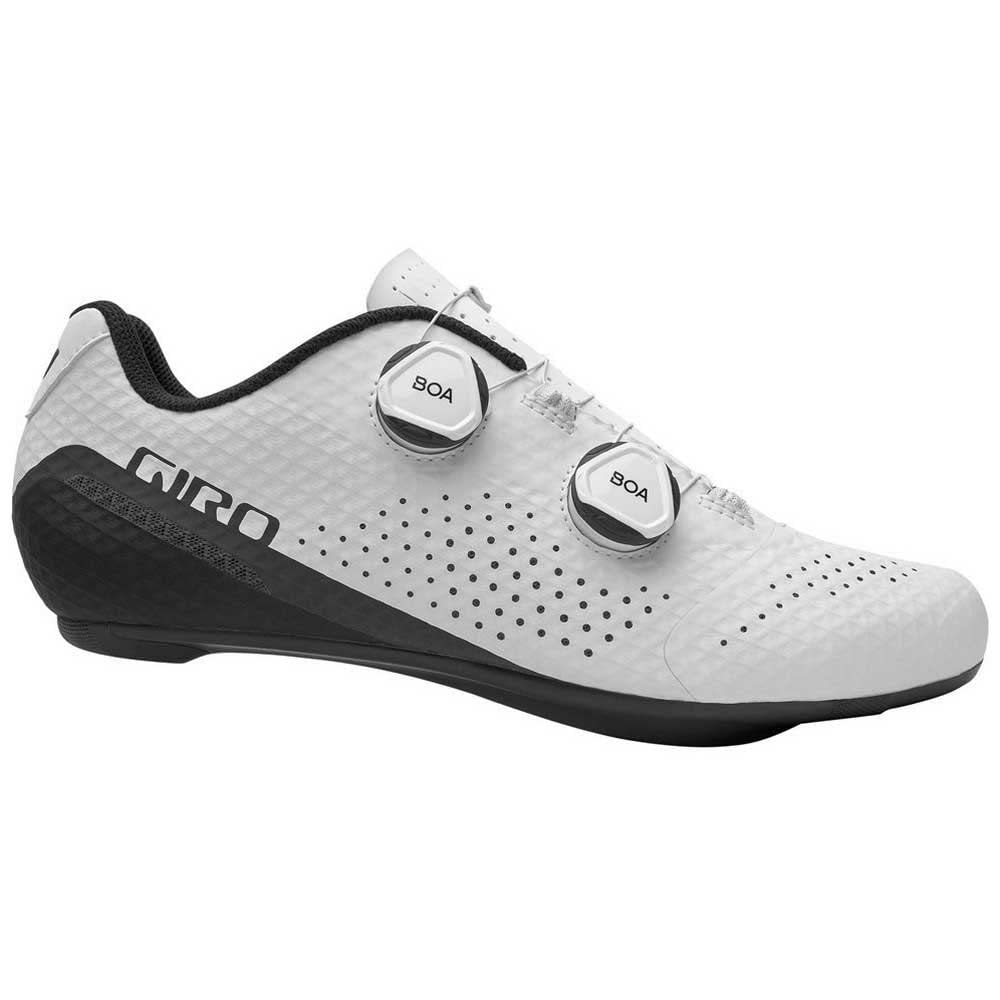
Giro Cadet
Key Features
- Upper: Vented Synchwire
- Closure: BOA L6 dial plus hook-and-loop strap
- Outsole: Carbon composite plate
- Cleat adjustment: 5mm fore-aft
- Price: Midrange
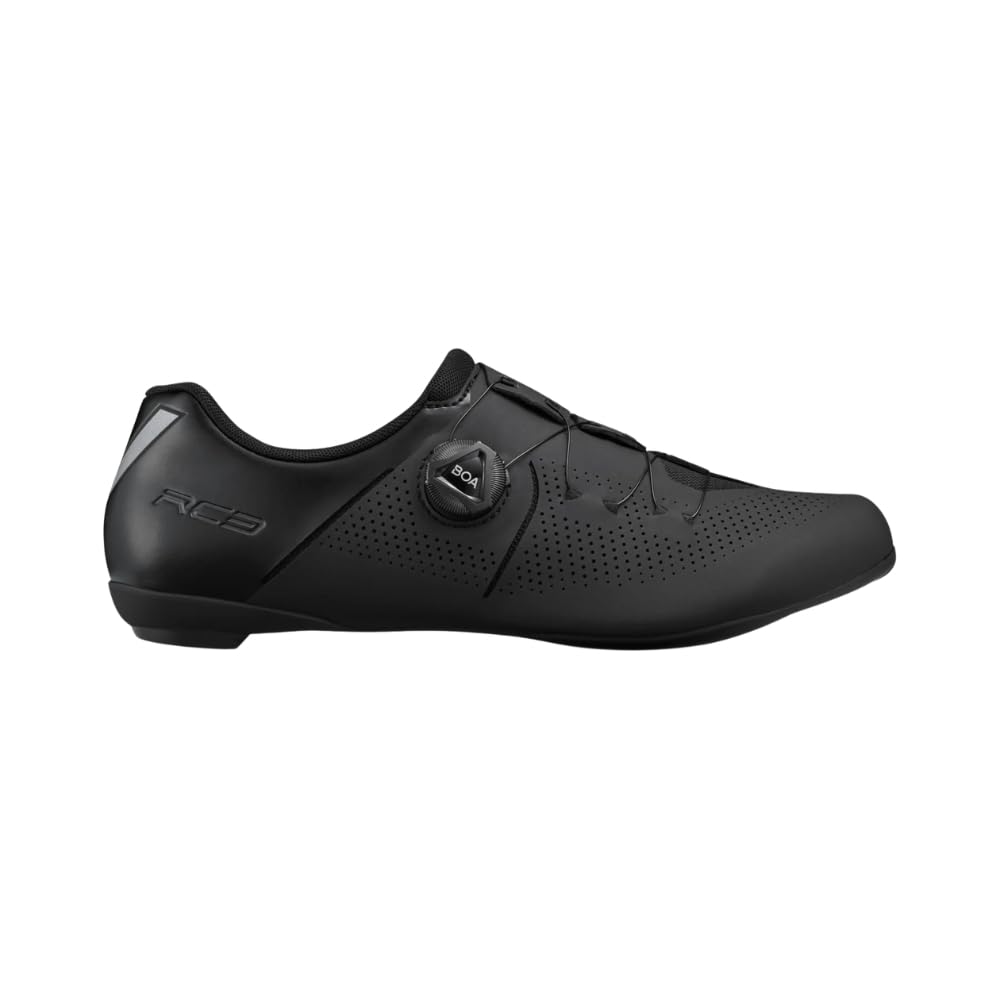
Two details do most of the work here: a BOA L6 dial in place of the usual straps, and a carbon-composite plate built into the outsole. Together they’re why the Cadet is the pair we point most road riders toward. The dial takes up slack a millimeter at a time and releases with a pull, so you can tighten without stopping or unclipping, while the plate keeps the sole stiff under the ball of your foot exactly where the pedal sits. That’s the combination that makes a road shoe feel efficient instead of mushy.
Giro also gives you 5mm of fore-and-aft cleat travel, which sounds like a footnote until you’re chasing a knee that aches thirty miles in — it’s the difference between an almost-right cleat position and the right one. The upper is a single vented piece rather than panels stitched together, so it breathes on climbs, and there are reflective details built in for low-light rides. Neither is why you buy the shoe, but both are why you stop thinking about it.
The last is the caveat. It runs narrow and slightly short, so plan to go up half a size if you’re between sizes, wear thicker socks, or have a wide forefoot. We recommend sizing for width rather than hoping the upper stretches into it. Get that right and the Cadet is the best balance in this group of dial retention, sole stiffness and price.
Pros
- Dial micro-adjusts while you ride
- Carbon-composite plate keeps the sole stiff
- 5mm fore-aft cleat adjustment
- Vented one-piece upper with reflective details
Cons
- Runs narrow and short; size up
Our default road shoe: a dial you can fine-tune one-handed and a carbon-composite plate that puts power into the pedal, at a mid-range price.
Best for Budget Road Miles
Shimano SH-RP101
Key Features
- Fit: Runs narrow
- Closure: Hook-and-loop straps
- Intended use: Road and indoor riding
- Price: Budget
The RP101 is the least expensive road shoe in this group, and it doesn’t feel like the cheap one. The upper is soft enough to wear straight out of the box, the closure is plain hook-and-loop, and the shape suits riders who want to get on with riding rather than fiddle with hardware. If you’re new to clipless pedals and don’t want to spend much before you know whether you’ll stick with it, this is the sensible first pair.
What we like most is how little it asks of you. There’s no break-in period worth mentioning, the shoes go on and off quickly at a coffee stop, and the comfort holds through a longer ride rather than fading after an hour. It’s the pair here you’re least likely to think about mid-ride, which is a compliment. Riders treat these as shoes to wear out, not to nurse.
Sizing is the thing to get right. The last is narrow, and the same length can pinch across the forefoot if you have wide feet or like a thicker sock — go up half a size if you’re on the fence, and if your forefoot is genuinely wide, look at the Fizik Vento Omna Wide in this group instead. The rest of the shoe is honest, unfussy and easy to live with.
Pros
- Comfortable from the very first ride
- Quick to put on and take off
- Lowest-priced road shoe in this group
Cons
- Straps can work loose under hard efforts
If the budget decides, buy the RP101 — the least expensive proper road shoe here, and the one we recommend to anyone buying their first pair.
Best for Regular Road Riding
Shimano SH-RC302
Key Features
- Fit: True to size, roomy toe box
- Closure: Dial cinch with quick release
- Intended use: Road riding
- Price: Midrange
The RC302 is what the RP101 grows into. Instead of straps there’s a cinch you push to tighten and press to release, and the difference shows up on the move: you can add a click at the bottom of a climb and back it off at the top without reaching for a buckle. It’s a small thing that turns into a big one over a long morning.
The shape is the other reason we rate it. There’s real room in the toe box, and the upper doesn’t press hard across the top of the foot where it bends — the spot where a lot of road shoes crease and bite after an hour. Sizing runs true, and the fit is friendlier than most of this group to a normal-to-slightly-wide foot.
Underneath, the sole is firm enough for hard efforts without feeling like a plank, and the shoe stays light enough to forget about on the bike. One maintenance note worth acting on: the cleat plate can drift over time, so check those bolts every few weeks rather than discovering it mid-ride. A loose plate is the difference between a crisp engagement and a wobble you feel in your knee.
For regular road riding — a few rides a week, a fast club run, a sportive at the weekend — this is the shoe we recommend over the RP101 wherever the budget stretches. You’re paying for the closure and the roomier fit rather than for an exotic sole, and those are the two things you notice on every single ride.
Pros
- Dial cinch adjusts on the move
- Roomy toe box and easy instep
- Firm sole without being harsh
Cons
We rate the RC302 as the best step up here: a dial instead of straps and a roomy toe box for riders who log real road miles.
Best for Wide Feet
Fizik Vento Omna Wide
Key Features
- Width: Wide, high-volume last
- Toe box: Roomy
- Arch support: Firm
- Price: Premium
Road shoes are built around a narrow last, and if that sentence sums up every pair you’ve tried, the Omna Wide is the one to look at. This version is shaped around a wider forefoot and a higher-volume upper, so your toes sit flat instead of stacking, and the pressure across the top of the foot eases off. It’s not a shoe with a wide option bolted on — the width is the point.
This is the one we name first when a wide forefoot is the problem. Fit runs true to size, including for high-volume feet, and the comfort holds deep into a ride rather than fading once you’re past an hour — no hot spots around the cleat, no numb toes at the end of a long day. That’s not a small claim for a stiff-soled road shoe; comfort is usually the first casualty of a last that doesn’t match your foot.
The catch is the arch. There’s a pronounced, supportive shape under the instep, and on a flat foot or one used to a neutral insole it will feel like a lot. Try them before you commit, and if you do swap insoles, keep the replacement thin so the volume you paid for doesn’t disappear. Everything else about the Omna Wide is quietly premium, which is what the price tier says too.
Pros
- Genuinely wide, high-volume fit
- True to size with a roomy toe box
- Comfort holds over long rides
Cons
- Firm arch support won’t suit flat feet
Start here if road shoes have always pinched: the Omna Wide is built around a wide, high-volume foot, and it’s the only one in this group that is.
Best for Performance Riding
Giro Regime
Key Features
- Fit: Runs narrow
- Sole: Stiff road sole
- Weight: Light build
- Closure: Dual Boa dials
- Price: Premium
Think of the Regime as the Cadet with a second dial and a lighter build. Two Boa dials let you set the forefoot and the instep separately, so you can lock the front of the foot down for a sprint while leaving the top of the shoe comfortable — one dial can’t do both, and that’s the whole argument for spending more. It’s the most control over tension in this group.
The sole is unapologetically stiff, which is what you want when the road tilts up, and the upper stays thin enough to breathe without turning into a plastic bag on a hot afternoon. There’s a stretchy, give-and-take quality to how it holds the middle of your foot that keeps a firm shoe wearable for four hours instead of one. Nothing about it is soft, and that’s the design brief.
Fit is where it narrows. The last runs slim and doesn’t leave much margin for error, so if you’re between sizes or have a wide forefoot, the Fizik is the safer buy and the Cadet the cheaper one. For a rider with a narrow-to-average foot who wants to adjust tension at both ends of the shoe without stopping, it’s the best version of that idea here.
Pros
- Twin dials for separate forefoot and instep tension
- Stiff sole for hard efforts
- Light build
Cons
- Runs narrow with little margin between sizes
For riders who race or train hard, the Regime’s twin dials, stiff sole and light build justify the top price tier in this group.
Best for First Road Shoes
Pearl Izumi Quest
Key Features
- Fit: True to size
- Intended use: Road riding
- Cleat compatibility: 3-bolt road
- Price: Budget
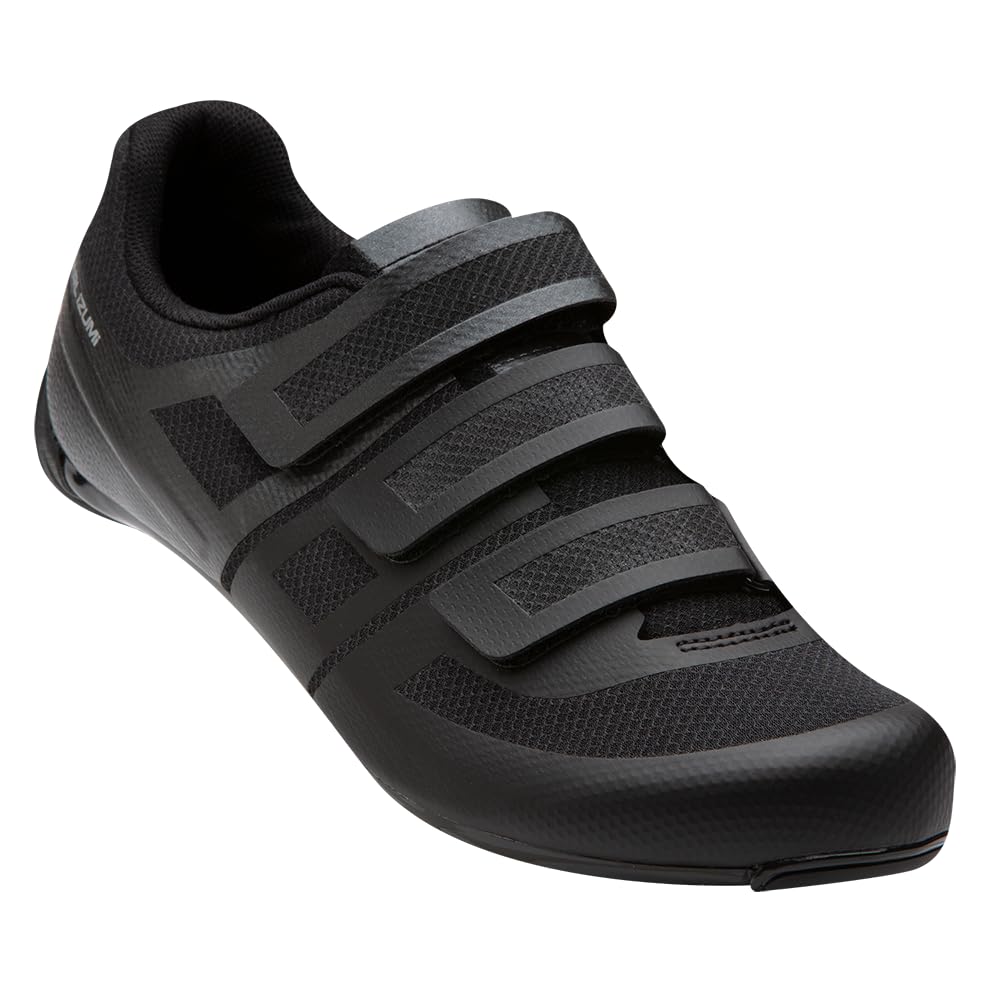
The Quest commits to one thing and does it: a three-bolt road sole at the bottom of this group’s price range. That’s the standard your road pedals expect, so Look Keo, Shimano SPD-SL and their relatives bolt straight on. If you already own road pedals and want the least expensive matching shoe, this is it — and if your pedals are two-bolt SPD instead, this is the wrong shoe entirely, however well it fits.
Around that sole, Pearl Izumi keeps things simple. Sizing runs true, the toe box has room for a normal sock, and the fit is friendly rather than race-tight, which is exactly what makes it work as a first road shoe. It comes in men’s and women’s versions of the same model, so a household buying two pairs doesn’t have to start over.
Our advice is straightforward. If your pedals are three-bolt and your budget is the tightest in this group, the Quest will do the job and the fit won’t fight you. If your pedals are two-bolt, stop here and buy a shoe drilled for them — that compatibility check matters more than any of the small differences between budget picks, and it’s the mistake that sends more first pairs back than anything else.
Pros
- Three-bolt road sole
- True-to-size, friendly fit
- Lowest price tier in this group
Cons
A plain, honest three-bolt road shoe for a first clipless season, as long as your pedals take road cleats and your budget is the tightest here.
Best for Twin-Dial Fans
ROCKBROS NR3

Key Features
- Fit: Snug
- Closure: Dual knob lock
- Ventilation: Well ventilated
- Price: Midrange
Two knobs instead of one, and a vented upper that looks the part: the NR3 stands out in a group of mostly sober black road shoes. The twin-knob layout lets you set tension in two places, and the hold is snug — a locked-in feel with no movement over the pedals and no hot spots once you’re settled. Riders who like their shoes to look like race equipment will find plenty to like.
The dial is also where we slow down. There’s a failure mode worth knowing about: if a knob jams, there’s no manual release to fall back on, so the shoe can’t be loosened or taken off until it frees. Test the release on both dials before your first ride, and if either feels vague or catches, send them back rather than living with it and hoping.
Fit runs snug, and the shoe is happier on a narrow-to-average foot than a wide one — if you’re on the edge, go up rather than assuming the upper will give. For a rider who wants a twin-dial road shoe without paying the top tier and likes the look, it’s a reasonable buy. Do the dial check first, though, because that is the part that decides whether the shoe works for you.
Pros
- Twin knobs for two-zone tension
- Well-ventilated upper
- Distinctive looks
Cons
- Snug fit, little room for wide feet
A distinctive twin-dial road shoe with strong ventilation and a snug, locked-in hold; check the dial release before you ride.
How We Tested (and Re-Tested) a Dozen Pairs of Road Shoes
We built the shortlist from spec sheets first, filtering by last width, sole material and stiffness, and closure type, and we cut anything from a brand that wouldn’t publish a size chart in millimeters or take a shoe back after a driveway ride. That left 12 pairs, from nylon-soled entry models to carbon-soled race shoes, and each one stayed in rotation for six months rather than a single afternoon.
Every pair ran the same schedule: two indoor trainer sessions, a set of hill repeats, a weekly group ride where I could swap between shoes back to back, and at least one ride past 60 miles. I logged where hot spots showed up, whether toes went numb after two hours, and how much the heel lifted during out-of-the-saddle efforts. Comfort got judged at hour four, not at the front door, and performance came down to whether a sprint felt like it went into the pedals or into the upper.
On fit, I measured each shoe’s internal length against the maker’s chart and compared it to my own foot tracing. For ease of use, I timed clipping in and out and counted how many times I had to reach down and re-tension a strap mid-ride — the hook-and-loop pairs got extra scrutiny, since Velcro that grips in month one can be limp by month four. Durability was heel pads, toe scuffs, and strap stretch after wet rides. For appearance and value, I wiped each pair down with a damp cloth and asked the same question: did the extra money buy a lighter sole and a better closure, or just a logo?
How to Choose Road Cycling Shoes
Three things decide a road shoe before you ever clip in: the cleat standard your pedals use, the closure that holds your foot, and a last wide enough for your forefoot.
Match the cleat, then the shoe
Road pedals take a three-bolt cleat — Look Keo, Shimano SPD-SL and their equivalents — while two-bolt systems such as Shimano SPD belong to the mountain-bike and gravel world. A shoe is drilled for one, the other, or occasionally both, and no amount of good fit rescues you from buying the wrong one. Check the pedal already on your bike before anything else.
The Pearl Izumi Quest here is a three-bolt shoe and simply will not take a two-bolt cleat, however well it fits. If you’re buying pedals and shoes together, settle the standard first and let it cut the list down for you.
Closures: what a dial buys you
Straps are cheaper and perfectly serviceable. A dial ratchets down a millimeter at a time and can be worked one-handed while you ride, which matters most on a long climb or in cold weather when your fingers have gone useless. The catch is that a dial is only as good as its release, so test it before your first ride rather than at a junction.
When the budget allows, the dial is the better long-term buy. The gap between the Shimano SH-RP101’s straps and the Giro Cadet’s dial is the clearest illustration of it in this group.
Fit by width first, then length
Most road shoes are built on a narrow last, and sizing up is the wrong fix: it pushes the cleat forward and lets your heel lift on every stroke. Start with width. If the forefoot pinches, look for a wide-specific model like the Fizik Vento Omna Wide instead of going up a size and hoping.
If the length is right but your heel rises, the closure isn’t doing its job — try a half size down or a different retention system before you start adding insoles, which eat volume you may not have to spare.
Stiffness, weight and what wears out
A stiff sole spreads the pedal’s load across your foot and feels more efficient over distance, and a carbon-composite plate gets most of the way there without full-carbon money — which is exactly what the Giro Cadet does. Weight matters less than fit: a light shoe that pinches is slower than a heavier one that doesn’t.
What actually fails first is hardware. Cleat bolts work loose, heel pads wear through, and dials and strap ends give up before the sole does. Check the cleat bolts after your first few rides and again whenever a shoe starts to feel loose.
Frequently Asked Questions
Can you walk in road cycling shoes?
Short distances, and awkwardly. The cleat sits proud of the sole, so you’re walking on a hard plastic wedge — fine across a parking lot or into a café, miserable on a long stretch of tarmac or gravel. Put cleat covers on before you set off if there’s walking in your route.
Don’t treat a road shoe as a walking shoe. If your riding regularly includes a hike, a two-bolt SPD shoe is the better answer.
Why do my feet go numb in cycling shoes?
Usually too much tension in the wrong place. The closure should hold your heel and midfoot, not squeeze across the top of the instep — back the upper strap or dial off a click or two and tighten the lower one instead. A thinner sock helps too.
If numbness persists, check cleat position: a cleat set too far forward puts pressure under the ball of the foot. When neither change helps, the last is probably too narrow for you.
How long do road cycling shoes last?
The sole usually outlasts everything above it. Cleats wear first — replace them when clipping in stops feeling crisp — followed by heel pads, dials and strap ends.
A shoe is finished when the upper has stretched past what the closure can hold, or when the cleat threads strip and refuse to take a bolt. Check those bolts regularly instead of over-tightening them, and you’ll get years rather than seasons.
Final Verdict
The Giro Cadet is our pick: a dial that adjusts on the move, a carbon-composite plate that keeps the sole stiff where it counts, and a fit that suits most riders who don’t need extra width. It isn’t the cheapest here, but it gets the two fundamentals right without charging a premium for them.
When the budget is tight, the Shimano SH-RP101 does most of that job for a lot less and rewards a careful size choice. And if your forefoot has been pinched by every road shoe you’ve tried, start with the Fizik Vento Omna Wide instead — it’s the one here built for your foot.