This post contains affiliate links. We may earn a small commission when you buy through our links — at no extra cost to you.
The ride that teaches you about bike accessories is usually the one where something quits on you — a taillight that fades at dusk, a phone mount that lets go over a pothole, a bottle that launches off the frame on the first good bump. I’ve walked home from all three, and none of them were expensive mistakes, which is what makes them annoying. The right accessory fixes something specific: it makes the bike you already own fit your actual life, whether that’s a dark commute, a long weekend loop, or a grocery run with a lopsided load.
What first-time buyers tend to get wrong is shopping the spec sheet instead of their own handlebars — a bag that rubs the frame, a light that’s bright on paper and dim on the path, insulation that stops working after an hour in the sun. My team has spent the past five months riding with 18 accessories across early commutes, gravel, and errands, and the keepers share a few unglamorous traits: they clamp down and stay put, they go on without a trip to the shop, and they’re priced like the small upgrade they are. Everything below earned its spot the boring way — by not failing.



Best for Roadside Repairs
Crankbrothers Multi-17
Key Features
- Weight: 5.93 oz
- Chain tool: 8- to 12-speed
- Tool count: 17
- Folded size: 3.5 in
- Price: Midrange
A chain tool is what turns a multitool from a nice-to-have into ride insurance, and the Multi-17 builds an 8- to 12-speed breaker into a body that folds to 3.5 inches. Around it sit hex wrenches from 2 to 8 mm, a Torx T25, Phillips and flat drivers, 8 and 10 mm open wrenches and spoke keys in four sizes — 17 tools in chromoly steel.
It’s the accessory we tell people to buy first, and it’s the one that has stayed in our saddle bag since. Coverage is the whole argument: a slipped seatpost, a loose cleat bolt, a chain that lets go two valleys from the car. The side plates give you something to hold with gloves on, and the tools pivot out one at a time rather than fanning open in your hand.
There’s no tire lever in the frame, so if you run tubes, pack a pair alongside — the chain tool won’t help you change a flat. Beyond that, the only thing to think about is where it lives: a saddle bag or hip pack swallows it whole, and the lifetime warranty covers a part you’ll never think about until it’s raining.
Pros
- Chain tool covers 8- to 12-speed chains
- 17 tools handle the common roadside fixes
- Side plates grip well in gloves
- Lifetime warranty on the frame
Cons
- 168 g sits heavy in a jersey pocket
We recommend the Multi-17 before any other accessory here: it fixes the roadside faults that end a ride, and it’s the one tool that never leaves our pack.
Best for Riding in Traffic
Garmin Varia RTL515
Key Features
- Weight: 2.56 oz
- Radar range: 153 yards
- Daylight visibility: Up to 1 mile
- Battery in day flash: 16 hours
- Price: Premium
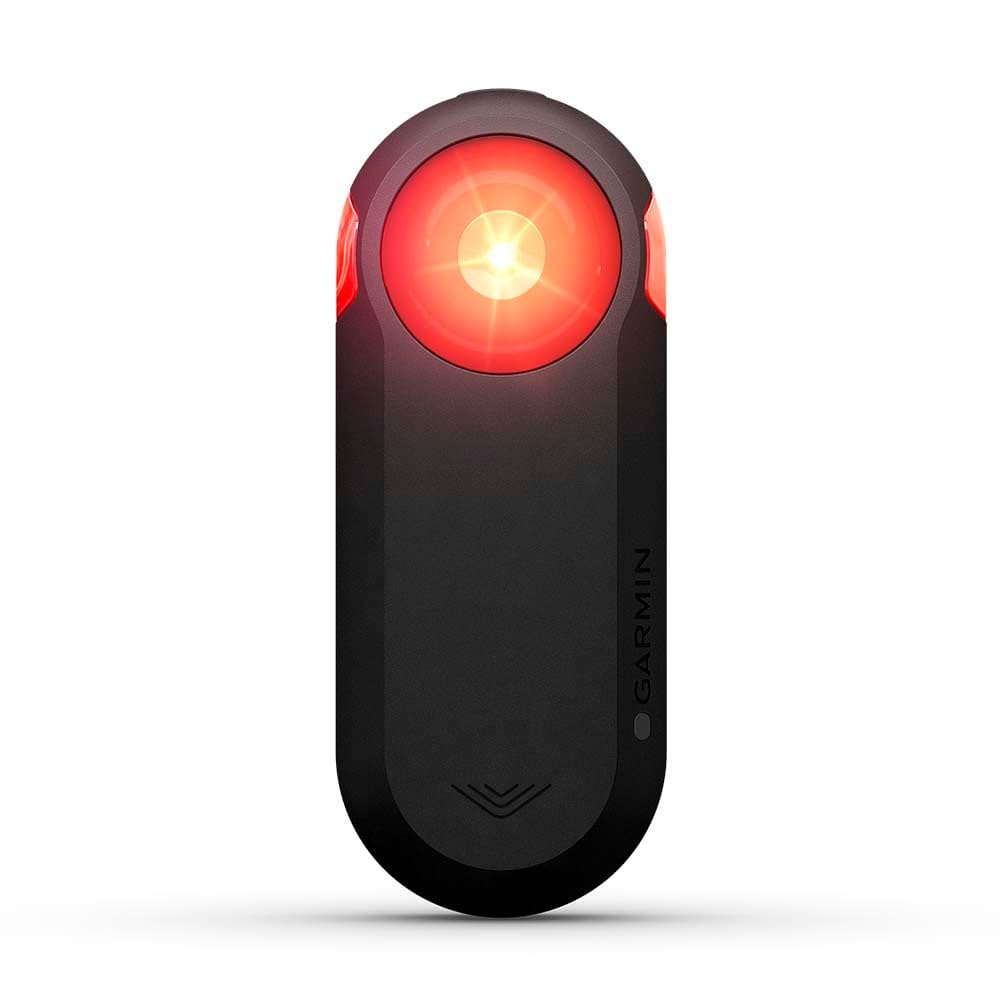
Every other accessory here helps you deal with something that has already happened. The Varia RTL515 tells you it’s about to: a rear-facing radar and tail light that watches the road behind for up to 153 yards and pushes an alert to a Garmin computer, a compatible watch, or your phone. After riding with it, it’s the one thing in this guide we won’t go without.
The light half is not an afterthought. Daylight visibility runs to a mile, and the flash gets more urgent as a vehicle closes — drivers notice it even when they haven’t noticed you. Pairing with an Edge computer is a one-time job, and the phone app supplies the same graphics with a tone and a vibration, which is enough for a bike with no computer on the bars.
Plan the battery around the mode you’ll actually use: six hours solid, eight in peloton, sixteen in day flash, and day flash is the setting that keeps the radar alive from breakfast to dinner. It is comfortably the most expensive thing in this guide, and the case for it is simple — the more traffic you share a road with, the more those warnings are worth.
Pros
- Radar watches traffic up to 153 yards back
- Tail light visible up to a mile in daylight
- Pairs with Garmin computers, watches and phones
- 16 hours of runtime in day flash
Cons
- Needs a compatible computer, watch or phone
Nothing else here changes how a road ride feels like the Varia: it warns you about traffic behind you long before you hear it.
Best for City Locking
Sportneer U-Lock
Key Features
- Weight: 1.64 lb
- Included cable: 5 ft
- Lock dimensions: 7.76 x 5.02 in
- Shackle thickness: 17 mm
- Price: Midrange
The shackle looks small on the page, and it is: 7.76 by 5.02 inches on the outside leaves a modest mouth — fine around a frame and a Sheffield stand, possibly too tight around a fat lamp post. The five-foot cable is the answer. Loop the shackle through the frame and the post, run the cable through both wheels and a helmet, and the small opening stops mattering.
Steel is the argument. A 17 mm shackle and zinc alloy core make this the sort of hardware that sends a thief looking for an easier bike, and the key turns cleanly in the cylinder instead of grinding. Two keys ship in the box, which matters more than it sounds: one on the ring, one in the bag.
Where it lands for us is as a leave-it-on-the-bike lock for errands and commutes rather than a touring lock you carry all day. The bracket holds it against the frame, clear of your legs, and the whole package is the peace of mind you were actually shopping for.
Pros
- 17 mm shackle with zinc alloy core
- Five-foot cable extends what you can lock to
- Two keys and a frame bracket included
Cons
- 1.64 lb is a heavy carry off the bike
If your bike lives outdoors in a city, this is the lock we point to: 17 mm of steel, a five-foot cable, and a bracket that keeps it on the frame.
Best for Budget Navigation
LISEN Bike Phone Holder
Key Features
- Weight: 3.53 oz
- Phone fit: 4.7-6.8 in
- Handlebar fit: 0.6-1.57 in
- Price: Budget
This is the least expensive way here to get a phone onto the bars, and it doesn’t ride like a compromise. A silicone-wrapped cradle tightens onto the handlebar by hand — no tools, no bracket to bolt on — and it takes phones from 4.7 to 6.8 inches on bars from 0.6 to 1.57 inches, which covers most hybrids, road bikes and e-bikes.
Two things stood out in use. The corners wrap around the phone rather than clamping its edges, so a case doesn’t have to come off, and the grip held through broken tarmac and a gravel towpath without the phone creeping round. It also comes off the bars in one pull when you park. For the money, this is the mount we recommend first.
Pros
- Tool-free install in seconds
- Corner grip holds on rough ground
- Fits bars 0.6-1.57 in and phones to 6.8 in
Cons
- Tight squeeze for 6.8-inch phones in thick cases
A tool-free mount that grips like it costs more: this is the phone holder we suggest for anyone who doesn’t want to spend much on one.
Best for Commuting Storage
ROCKBROS Frame Bag
Key Features
- Capacity: 1.6 liters
- Mounting: Three Velcro straps
- Dimensions: 8.15 x 3.74 x 5 in
- Phone window: Under 7 in
- Price: Midrange
The commute is where a frame bag earns its keep: phone on top where the map is, keys and a multitool underneath, a snack in reach and nothing bulging in a jersey pocket. The ROCKBROS holds 1.6 liters in an 8.15 by 3.74 by 5-inch body that straps to the top tube with three Velcro straps and a front loop.
The top window takes phones under seven inches and stays responsive enough for map checks and answering a call at a light; it’s not a surface you’ll want to type on. Underneath, one main compartment swallows a mini pump, a spare tube, a wallet and a bar. Reflective piping and a double zip are the details that make it feel considered rather than cheap.
Fitting takes about five minutes with no tools. Ours shifted a little on washboard gravel in the first week; re-tensioning the straps and using the longer front loop sorted it, and it stayed put after that. Worth doing before you load it up rather than after.
Where it stops being the right bag is a fast road ride — this is a commuter and touring shape, not a race one. For getting to work with a phone you can see, a tube you don’t have to think about and pockets that stay empty, it’s the bag we point people to.
Pros
- 1.6 liters of frame storage
- Touch window fits phones under 7 inches
- Three straps, no tools, minutes to fit
- Reflective piping and sealed double zips
Cons
- Water-resistant only, not waterproof
- Wide body can sit close to your knees
A phone window, a liter and a half of storage and three straps: this is the frame bag we suggest for commuters who want their pockets free.
Best for Night Visibility
Zewdov Bike Light Set
Key Features
- Weight: 0.95 oz
- Charge time: 1-1.5 hours
- Front output: 250 lumens
- Water rating: IP65
- Price: Budget
Twenty-seven grams, 1.7 cm thick, and small enough to sit between a bell and a grip without moving either. The Zewdov set puts a 250-lumen front light and a red rear on elastic straps, charges both from one split USB cable in about 1.5 hours, and at that size we expected a toy. We got a genuinely useful urban set instead.
Light quality is the surprise. Four front modes plus steady and flash at the back cover lit streets, dusk and the grey hour before rain, and IP65 means road spray and a proper downpour are both fine. 250 lumens is a being-seen output rather than a seeing output — on an unlit trail you want a real headlight, and this isn’t one.
A one-year warranty stands behind the pair, which is why it stays an easy recommendation at this level. Charge both before a night ride and treat the rear as your fallback; as a commuter set that lives on the bars, it does the job we want.
Pros
- 250 lumens of front light in a 27 g body
- IP65 shells handle rain and spray
- Both lights charge from one cable in about 1.5 hours
- Elastic straps fit any bar or post
Cons
- Front light can stop charging without warning
The set we put on commuter bars: tiny, bright enough to be seen on lit streets, and cheap enough to keep a spare pair charged.
Best for Hot-Weather Hydration
CamelBak Podium Chill 21oz
Key Features
- Weight: 3.52 oz
- Capacity: 21 fl oz
- Dimensions: 2.87 x 9.37 in
- Insulation: Double wall
- Price: Budget
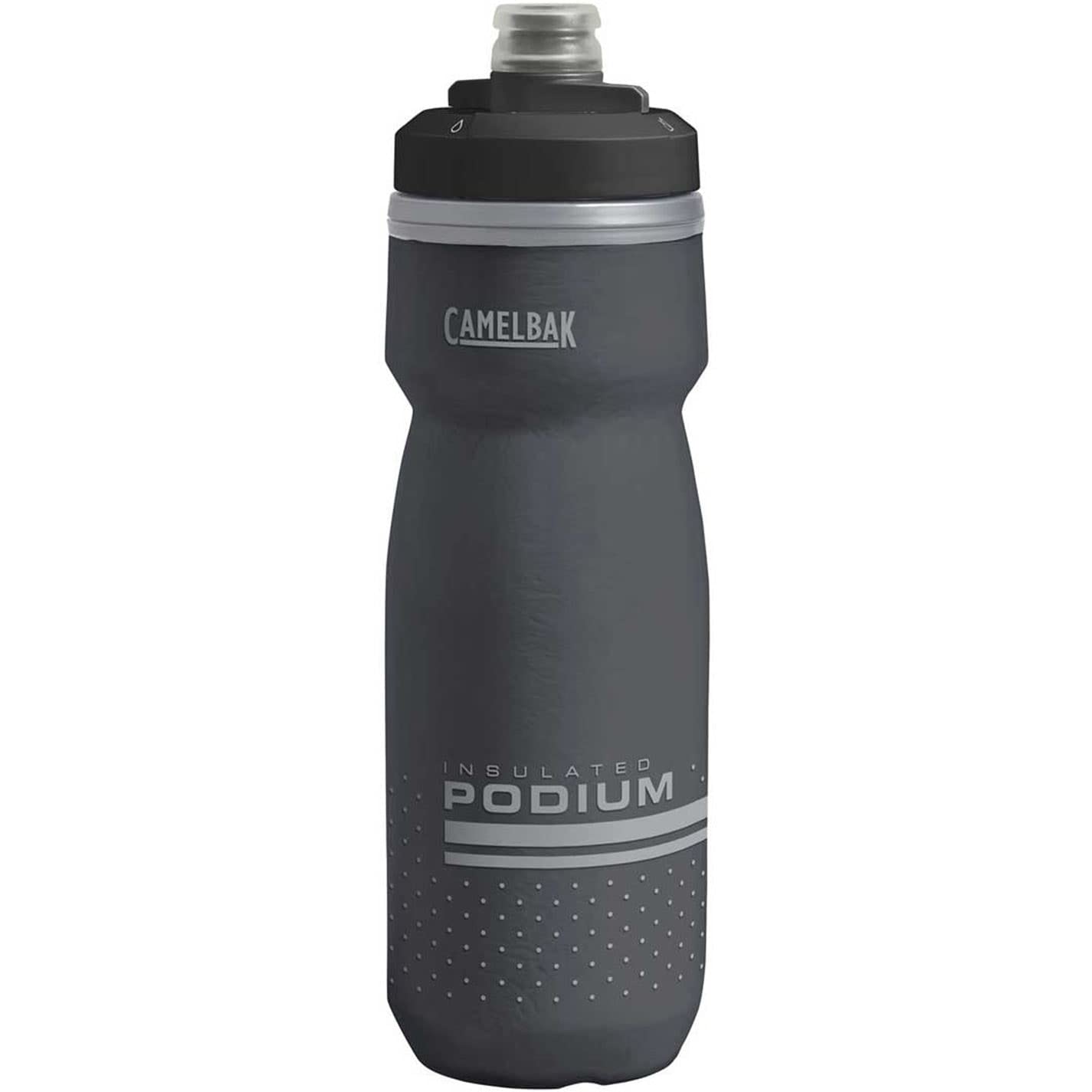
Insulation and squeezability usually fight each other — foam and a double wall keep water cold and turn the bottle rigid. The Podium Chill gets the balance right: a 21-ounce TruTaste body you can still crush one-handed, wrapped in a double wall, with a high-flow cap that seals itself between sips so it doesn’t dribble down your stem.
It drops into a standard cage, including the tight mountain-bike cages that reject fatter bottles, and at 2.87 inches across it doesn’t foul the frame. The wide mouth and a valve that comes apart for cleaning make it easy to look after properly, which is more than you can say for most squeeze bottles.
Where it earns its place is the two-hour ride in warm weather, not a desert expedition. Water stays properly cold for the first hour and pleasantly cool after that, and the squeeze means you drink without breaking rhythm. For everything short of a heatwave century, it’s the bottle we reach for.
Pros
- Double wall that still squeezes easily
- Self-sealing cap doesn’t drip
- Fits standard and tight bottle cages
- Wide mouth and removable valve for cleaning
Cons
- Locking cap can take two hands to open
The bottle we reach for on hot rides: it squeezes like a soft bottle and keeps water colder than a plain one for the first hour.
How We Tested 18 Bike Accessories
We started with roughly 60 accessories — lights, mounts, frame and handlebar bags, bottles and cages — and cut the list on three boring questions: does it fit the handlebar and frame sizes most people actually ride, can you buy replacement parts, and does the price hold up against what it does. Eighteen survived that filter, and we rode with them for five months.
Installation was timed with a stopwatch and a set of hex keys, no shop visit allowed; anything that needed a proprietary tool or 20 minutes of fiddling got marked down. Out of the box we noted build quality in the hand — hardware that threaded cleanly, metal rather than plastic clamps, fabric that didn’t fray at the stitching. Then we went hunting for failures on the same rough rail-trail stretch, through a week of rain, and over a repeated curb drop, checking afterward whether anything had rotated, rattled, swayed, or loosened its grip.
Lights were run at dusk on an unlit path until output visibly dropped, and we noted how far down the road each one still threw usable light. Bottles and insulated bags were filled with ice water on a hot afternoon and opened at the one, three, and five-hour marks to see what the temperature actually did. Bags got loaded past sensible and checked for sway against the frame, with sizes confirmed on the bike rather than on the page — a 5-liter bag that rubs your thigh is worse than a 2-liter one that doesn’t. Touch screens were swiped through their mount windows with wet fingers, since that’s how it happens.
How to Choose Bike Accessories
Buy for the ride you actually do, and check fit before anything else — most accessory disappointments are a diameter, a phone case or a frame width, not a bad product.
Fit comes before features
Three measurements settle more purchases than any spec sheet: your handlebar diameter at the clamp point, your phone’s thickness with the case on, and the free length of your top tube. Bars vary across the common shapes, so a mount that clamps a range is the forgiving choice — the LISEN covers 0.6 to 1.57 inches and takes phones up to 6.8 inches.
For a frame bag, measure the top tube and check the bag’s width against your knee line before ordering. A bag can fit the frame perfectly and still sit where your knee swings.
The attachment is the product
An accessory is only as good as the part holding it to the bike. Metal clamps and bolts are the most secure and the slowest to move between bikes; silicone bands and Velcro go on in seconds and are kinder to paint, but they creep on washboard surfaces and need a re-tension after the first rough ride.
Fit it, then grab the accessory and try to twist it. Movement at the mount is the thing to watch; a strap you can re-tighten is normal, a unit that rotates as a whole is not.
Know what a weather rating covers
IPX4 shrugs off rain and spray from any direction but isn’t built for submersion; IP65 adds dust sealing and a jet of water. Neither rating covers the charging-port flap you forgot to close, which is where most water damage starts.
Metal deserves the same thought. Any steel tool left wet in a saddle bag will spot and stiffen, so dry your lights and tools after a wet ride and keep the lock cylinder lubed.
Spend where a failure ends the ride
Rank accessories by what happens when they fail. A lock that opens, a light that dies at dusk or a tool that can’t break a chain ends the ride or the bike’s day; a bottle that isn’t cold by mile 40 is an inconvenience.
That’s the order we suggest: security and visibility first, then the tools that get you home, then storage and comfort. If you ride open roads with traffic, radar moves to the top of that list; if your rides are short and lit, a bright budget light set does more for you than an expensive one.
Frequently Asked Questions
How do I stop a frame bag from rubbing the paint?
Clean and dry the top tube first — grit under a strap acts like sandpaper. Put a strip of clear protective film under each strap, then fit the bag and tighten only until it stops moving; crushing the straps down harder is what dulls paint fastest.
Check the straps after the first ride and again after a wet one. A bag that has shifted needs re-tensioning, not more force.
How long do rechargeable bike lights last before they need replacing?
Runtime per charge shrinks over a few seasons of regular use, and the first sign is a light that no longer covers your longest ride. Use that as the test: if a full charge won’t last the ride you actually do, replace the set rather than nurse it through.
The runtime on the box describes a fresh battery, so buy with a margin over your typical ride.
Should I take my lights and phone mount off the bike when I park it?
Take the light and the phone with you. Both come off their mounts in seconds, which is exactly why they disappear. The mount itself can usually stay — a bar clamp is more trouble to steal than it’s worth.
Bags are different: unclip one that holds a phone, keys or tools, or run the lock’s cable through its strap before you walk away.
Final Verdict
Buy the Crankbrothers Multi-17 first. Nothing else here turns a ride-ending fault into a ten-minute stop, it disappears into a saddle bag, and it suits every bike in the shed.
The alternative depends on where you ride. Open roads with traffic make the Garmin Varia the better second purchase — it changes how a road ride feels, and the premium is easier to justify the more often you’re out. Short, lit, urban trips don’t need radar; a bright light set and a lock that stays on the frame will do more for you.