This post contains affiliate links. We may earn a small commission when you buy through our links — at no extra cost to you.
A ski helmet has one job you hope never to test—and a dozen small ones you notice every run. The wrong one pinches your forehead, fogs your goggles, or sits heavy enough that you feel it in your neck by lunch. The right one disappears: warm without cooking, secure without squeezing, and easy to adjust with gloves on. This past season, my team and I wore 12 women’s helmets through one full ski season—roughly six months, from icy morning groomers to wet spring slush—to find the ones that earn their place.
What I tell friends: a women’s-specific helmet isn’t just a smaller shell with different trim. It’s often a different interior shape, a lower rear profile for a ponytail, and padding placed where pressure points show up. We noted whether the fit held after a full day, how warm the liner felt on cold lifts, how much weight you noticed by the last run, and whether buckles and vents worked with gloves on. The picks below got quality, comfort, and value right—not just a lift-line photo.
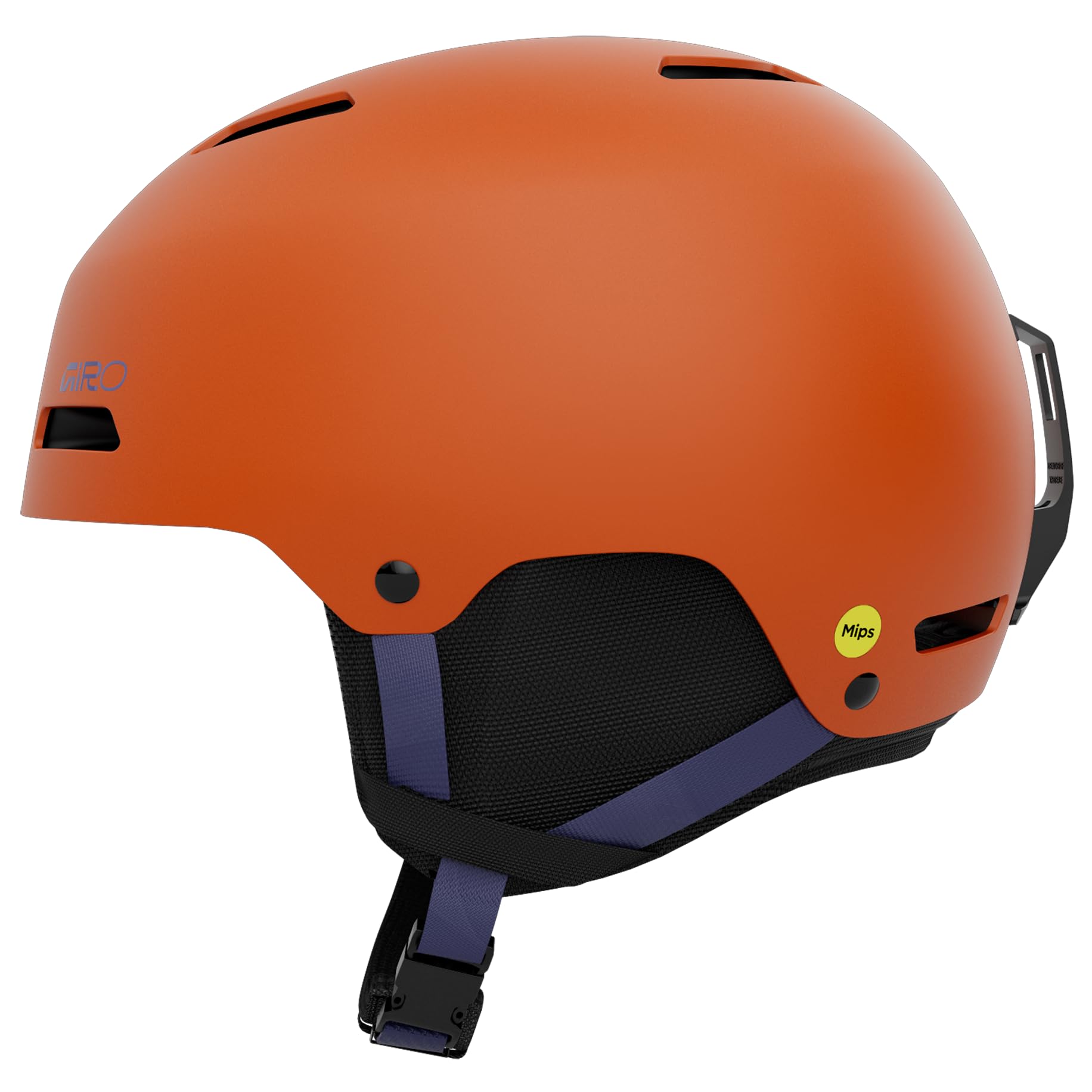


Best for All-Mountain Protection
Giro Ledge MIPS
Key Features
- Ear pads: Removable
- Fit system: Auto Loc 2
- Ventilation: Stack Vent and Super Cool Vents
- Impact protection: MIPS
- Price: Premium
MIPS is the feature that settles the premium for us. The Ledge MIPS puts a low-friction layer between the liner and the shell, adding rotational-impact coverage to a hard-shell helmet that otherwise feels refreshingly simple. The shape is low-profile enough that it does not swallow your head, and the matte finish looks more considered than the rest of this group. That combination is why it is our default for a woman who wants one helmet for groomers, trees and the occasional park lap.
The fit system is the part to try before you commit. Giro’s Auto Loc 2 band is removable, self-adjusting and designed to cradle the back of the head, and it held steady with a thin beanie underneath. It is not a dial, though, so fine-tuning takes a little patience, especially if you are between sizes. Bring your goggles: the Stack Vent and Super Cool Vents line up well, and vertical tuning lets you close the gap that causes cold foreheads and fogged lenses.
Ventilation is strong for a helmet this quiet-looking. On long lift rides we appreciated the front vent channel feeding air over the goggles rather than just dumping cold air on the crown. The removable ear pads and goggle retainer make it easy to strip weight for spring or add a beanie for a deep-winter day. The shell also stayed put when we turned our head quickly, which matters more than a number on a scale.
Pros
- MIPS adds rotational-impact coverage
- Strong venting without a bulky shape
- Removable ear pads adapt to spring or deep cold
Cons
- Listed 2.4 pounds is heavy for this group
MIPS protection, a low-profile shell and steady venting make this the helmet we recommend for a safety-first skier who will trade a dial for the extra protection.
Best for First-Time Buyers
OutdoorMaster Kelvin
Key Features
- Fit: Adjustable dial
- Shell: ABS with EPS
- Vents: 14
- Color options: 22 matte combinations
- Price: Budget
Twenty-two matte color combinations is the first thing you notice about the Kelvin, and on a budget helmet that range is more useful than it sounds: it makes the helmet easier to match to goggles, a jacket, or a kid’s snowsuit. The adjustable dial is easy to work with gloves on, and the fourteen vents, fleece liner and removable ear pads cover the basics without fuss. At 1.3 pounds, it stays out of the way on the lift.
Fit is where this one needs attention. The shell runs small, and a wide head can feel pressure at the temples before the dial has done its work. Our advice is to measure first and size up if you are between sizes; the dial gives you useful range, but it cannot turn a narrow shell into a wide one. Get that right and the Kelvin is the value pick we reach for most often, with warmth that holds up on cold lift rides and ear pads that leave room for earbuds.
The look is deliberately simple, with a matte finish and a clean profile that will not fight a patterned jacket. We liked that the liner and ear pads come out for washing, a small thing that matters after a week on a rental-house drying rack. It is not the helmet we choose for a once-a-season skier who wants the lightest possible shell; it is the one we choose when the budget is finite and the season is long.
Pros
- Twenty-two matte color combinations
- Glove-friendly dial makes fit easy
- Warm fleece liner and 14 vents
Cons
Our value pick for a first-time woman skier, the Kelvin pairs a glove-friendly dial and warm ear pads with a huge color range; size up when between sizes.
Best for Year-Round Riding
Smith Holt
Key Features
- Vents: 14
- Ear pads: Bombshell
- Goggle system: AirEvac
- Certifications: ASTM F2040, CE EN 1077, CPSC, CE EN 1078
- Price: Midrange
The Holt earns its place with paperwork as much as shape. It carries ASTM F2040, CE EN 1077, CPSC and CE EN 1078 certification, which makes it the one helmet here we are comfortable pulling double duty between snow and a skate park. Fourteen vents and Smith’s AirEvac channel move air from the goggles through the shell, and the result is a helmet that feels cooler than its solid coverage suggests. For a woman who rides into spring or mixes lift days with other winter sports, that breadth is the reason to choose it.
Fit is roomy rather than locked-in. The self-adjusting lifestyle band flexes around the head, and the Bombshell ear pads sit close without clamping; the trade-off is that the shell can feel big on a smaller head. If you are between sizes, size down, and try it with the goggles you actually use. The shape leaves enough room for a thin beanie without turning the fit into a headache, which makes it more versatile than its solid coverage implies.
The look is low-profile enough that it does not dominate your head, and the ear pads are a genuine comfort feature rather than an afterthought. We also like that the same shell can handle a beanie without turning the fit into a headache. It is the one here that makes the least fuss about switching from snow to pavement, which is exactly why it stays in the rotation.
Pros
- Certified for snow and skate use
- AirEvac venting helps keep goggles clear
- Bombshell ear pads add close-fitting warmth
Cons
- Fixed vents cannot be closed
Choose the Holt if you want one certified helmet for snow, skating and bike-park laps; its broad protection and AirEvac venting outweigh the roomy fit and fixed vents.
Best for Lightweight Comfort
TurboSke V09
Key Features
- Weight: 15.2 oz
- Fit range: 59-63 cm
- Fit system: Size dial
- Certification: ASTM F2040
- Price: Budget
At 15.2 ounces, the TurboSke is the helmet that disappears on your head. The shell is fused to the EPS liner rather than bolted or glued, which gives it a cleaner profile and one less place for hardware to loosen. The large shell measures 59 to 63 centimeters, so it is a genuine option for a bigger head or a woman who wants to wear a thin beanie. The vents keep air moving, and the ear pads are shaped to accept audio pucks.
The fit dial is the kind you can turn with gloves on, and the range is generous enough to snug the shell without a pressure point at the front. We paid close attention to the ear pads because they are where light helmets often cut corners; these stayed put and left enough room for earbuds, which is a real convenience on a cold lift. The size large is the current shell, so measure rather than assuming your usual letter size will translate.
The TurboSke is the lightest certified helmet in this group, and that is the reason we recommend it over the similarly priced options. It is not as refined as the Giro or as broadly certified as the Smith, but it meets ASTM F2040 and does the core job without extra bulk. For a long day of lifting and turning, the lower weight is not a spec-sheet nicety; it is the difference between finishing the last run tired and finishing it sore.
Pros
- Meets ASTM F2040
- 15.2 ounces is the lightest here
- Audio-ready ear pads
Cons
- One ear flap can work loose
For a woman who wants a certified helmet without the weight, the TurboSke is the lightest pick here, with audio-ready ear pads and a simple dial fit.
Best for Changing Conditions
VANRORA Stomper
Key Features
- Fit: Rear dial
- Vents: Adjustable
- Liners: Removable fleece
- Weight: 16 oz
- Price: Budget
The Stomper’s adjustable top vents are the feature that makes it more than another budget helmet. You can open them wide on a sunny bootpack and close them down on a windy lift, which is the kind of control usually reserved for pricier shells. The rear dial is easy to find with gloves on, and the fleece liner and thick ear pads make the inside feel warmer than the plain matte exterior suggests.
We put the Stomper in the same conversation as the OutdoorMaster and TurboSke because it gets the basics right: the fit is snug without pinching, the shell stays put when you turn your head, and the goggle clip keeps the strap from sliding. The removable liner is a plus for washing, though it takes a firm pull to get the ear pads free the first time. Where it separates itself is vent control; if you ski from cold mornings into warm afternoons, that adjustment matters more than an extra color choice.
The 16-ounce weight lands in the middle of this group, light enough to forget on the lift and substantial enough to feel planted. The glossy white finish is the current look, and it has held up without the chalky scuffs that cheaper matte shells can pick up. We did not expect the vent sliders to be easy to work with gloves, but they are—a small detail that makes the adjustable venting useful rather than theoretical.
Pros
- Adjustable top vents handle changing weather
- Rear dial is easy to turn with gloves
- Removable fleece liner for washing
- 16-ounce weight balances stability and comfort
Cons
Adjustable top vents, a mitten-friendly dial and a warm removable liner give the Stomper more range than its price suggests; it is the pick for freeze-thaw days.
Best for Budget Certification
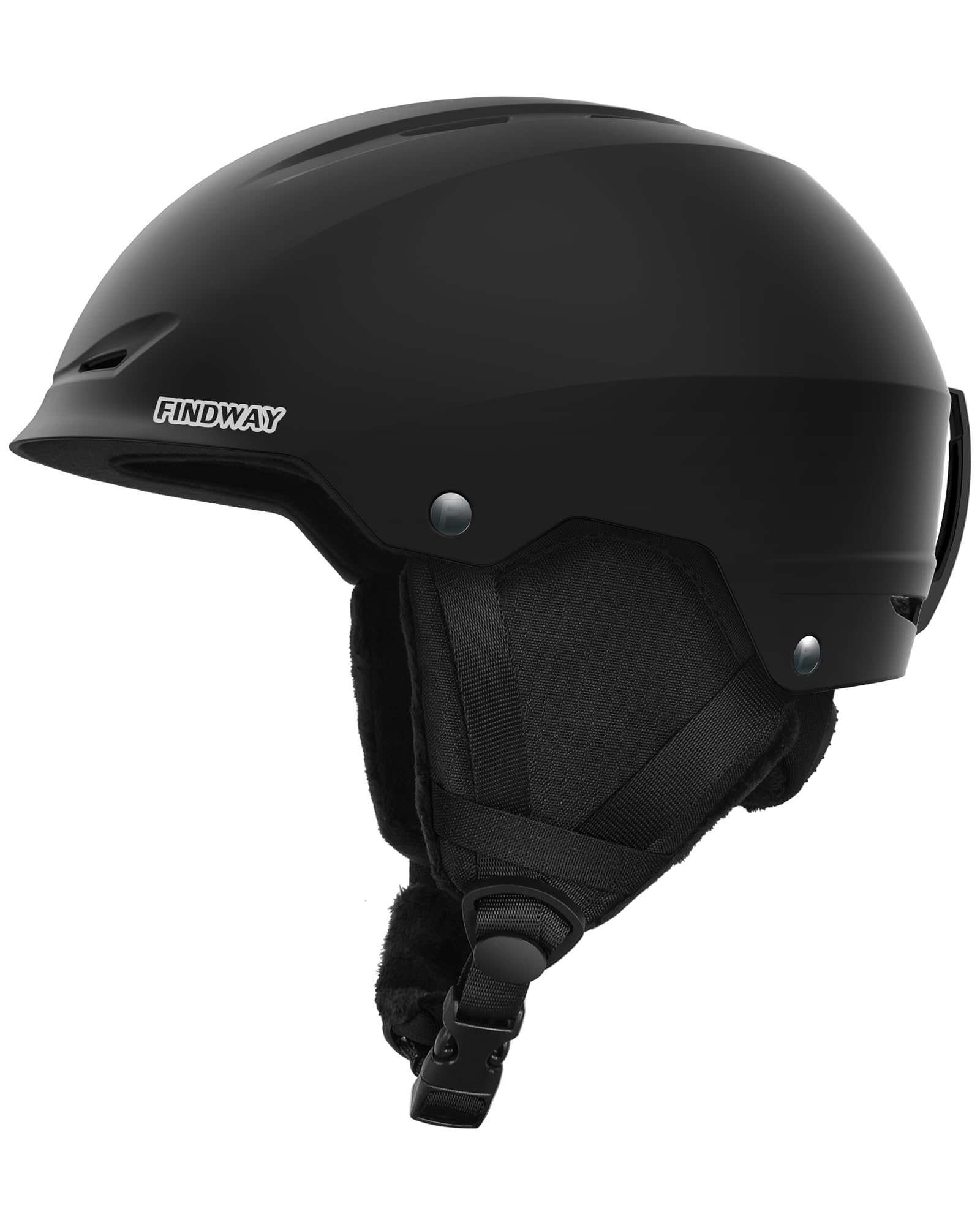
Findway DHX605
Key Features
- Fit: Dial knob
- Vents: 8
- Weight: 1.68 lb
- Certifications: ASTM F2040 and EN1077
- Price: Budget
Two certifications at a budget price is the Findway’s opening argument: it meets ASTM F2040 and EN1077, and the shell uses the same fused ABS-and-EPS construction as helmets costing more. Eight vents are fewer than most of the group, but the channels are placed over the crown and toward the goggles, so the airflow is more useful than the count suggests. The included bag is a small thing, but it keeps the shell from rattling around in a ski bag.
The dial knob is easy to turn and gives the shell a secure, snug feel, and the ear pads and lining come out for washing. We liked the clean black finish and the way the brim shades the top of the goggles without interfering with the strap. The padding is firm rather than plush; if you like a soft, fleecy interior, this one feels more utilitarian against the forehead.
At 0.76 kilograms, the Findway is not the helmet to choose if weight is your first priority. It sits heavier on the head than the TurboSke or the VANRORA, and you notice it more on a long lift ride. The trade-off is a substantial, planted feel and a shell that does not flex when you squeeze the sides; for a casual skier who values that solidity, the weight is easier to accept.
This is the pick we point to when the budget is tight but certification is not negotiable. It is not as refined as the Giro, and the eight vents can feel stuffy on a warm spring day, but it covers the safety basics and includes a dial and a bag that many budget helmets leave out. If you already own goggles and want a straightforward first helmet, it makes sense.
Pros
- Meets ASTM F2040 and EN1077
- Dial fit and removable liner
- Included bag adds practical storage
Cons
The Findway is the certified budget helmet we recommend when you want a dial, a bag and a planted feel, and can accept a little extra weight and firmer padding.
Best for Simple Spare Helmet
RIOROO Ski Helmet

Key Features
- Fit: Size dial
- Liner: Removable, washable
- Vents: 12
- Certifications: ASTM F2040-18
- Price: Budget
The RIOROO is the no-frills version of the dial-fit helmet: a reinforced ABS shell, an EPS liner, twelve vents and a rear size dial. The liner and ear pads are removable and washable, which is more than some budget helmets offer, and the ear pads have a soft fleece face that sits comfortably against the head. It is the kind of helmet that disappears into a gear bag until the next trip.
The fit is straightforward. Turn the dial, fasten the chin strap, and the shell sits level without a hard pressure point at the forehead. The brim is short enough to stay out of the goggles, and the open-face shape leaves room for a balaclava on a cold day. It does not have the deep, plush liner of the more expensive helmets, but the padding that is there stayed comfortable through a full afternoon.
This is a simple helmet for a simple brief: a few weekends a season, a spare for a visiting friend, or a first shell for a teenager who is still growing. It has ASTM F2040-18 certification, twelve vents and a one-year warranty, and it costs less than the premium picks without feeling disposable. We did not test it long enough to make a call on long-term shell life, so we treat it as a value pick rather than a buy-it-for-a-decade helmet.
Pros
- ASTM F2040-18 certification
- Rear dial adjusts fit
- Removable, washable liner
- One-year warranty
Cons
The RIOROO covers the basics for a spare or first helmet: ASTM certification, a rear dial and a washable liner, with no premium extras to pay for.
How We Tested Women’s Ski Helmets
We started by building a shortlist from women’s-specific and unisex helmets in sizes XS through L, filtering for safety certifications, adjustable fit systems, venting, goggle compatibility, and price. We landed on 12 helmets and wore them for one full ski season—roughly six months, from opening day to closing weekend. Each tester skied in her assigned helmet for full days, not just a lap or two, so we could judge how fit, padding, and weight held up by hour six.
Testing happened where helmets actually live: on morning groomers, in lift lines, on windy ridgelines, and through wet spring slush. We adjusted the fit dial and buckled and unbuckled with gloves on, checking whether the strap was easy to find and the vents moved without a struggle. We wore hair loose and in a ponytail to see where padding pressed, and we checked whether goggles sat flush against the shell without leaving a gap.
We weighed each helmet before the season and noted neck fatigue after long days, especially on the heavier models. Warmth got judged on cold lift rides and venting on warmer afternoons; testers reported whether they overheated on a sunny run or needed a balaclava on the chair. We also rated appearance honestly—whether anyone would wear it in a photo—and compared quality against price: did the liner, buckle, and shell feel durable, and did the fit survive months of use?
How to Choose a Women’s Ski Helmet
The best women’s ski helmet is the one that fits your head and goggles with a certified shell, not simply the one labeled for women.
Start With Certification, Then Weigh MIPS
For alpine skiing, look for ASTM F2040 or EN 1077 on the helmet. That mark is the baseline; it tells you the shell and liner were built for snow-sport impacts, not just cold-weather commuting. MIPS is a separate slip layer that adds rotational-impact coverage. It costs more, and we think it is worth paying for on a helmet you will wear for years. The Giro Ledge MIPS is the clear example here; the Smith Holt answers with broader multi-sport certification instead.
Fit Is the Real Women’s-Specific Feature
Most helmets in this roundup are unisex, so the women’s-specific part is the fit you create: measure the circumference just above your ears, then try the shell with your hair the way you wear it on the hill. A rear dial gives the most range, especially with thick hair or a low ponytail; a self-adjusting band is simpler but less precise. If you are between sizes, choose the helmet with the dial and the better return policy. The OutdoorMaster Kelvin’s dial is the forgiving budget example; the Giro’s Auto Loc band is the one to try on rather than order blind.
Match Warmth and Ventilation to Your Season
Ear pads and a fleece liner make a cold day pleasant, but they are the first thing to remove when the sun comes out. Adjustable vents are more useful than a bigger vent count if you ski through freeze-thaw cycles; fixed vents are fine for deep winter but leave you relying on a thin liner in spring. The VANRORA Stomper is the adjustable-vent pick here, while the Smith Holt’s fourteen fixed vents suit cold, dry days.
Weight, Goggles and the Details You Notice Late
A helmet that feels fine in the shop can feel heavy by the last run, especially if you have a long neck or wear a thick balaclava. Weight is not everything—fit and stability matter more—but the difference between the 15-ounce TurboSke and a heavier shell is real over a full day. Bring your goggles when you try a helmet, check the gap at the brow, and look for a goggle clip or vertical tuning if you run different lenses.
Frequently Asked Questions
Can I wear a beanie under a ski helmet?
Yes, if the helmet still fits snugly with it on. Add the beanie, put the helmet on, fasten the chin strap, and check that the shell does not lift away from your forehead or press hard at the temples. A thin synthetic beanie is easier than a thick knit; choose a larger shell only if the size chart puts you there, rather than forcing a loose fit.
When should I replace a ski helmet?
Treat any significant impact as the end of that helmet’s service, even if the shell looks intact. The foam liner is designed to absorb one hard hit, and a cracked shell or loose mount is an immediate replacement. Check the fit and hardware before each season, and follow the maker’s inspection instructions rather than guessing from age alone.
Can I use a ski helmet for biking or skating?
Only when the helmet carries the certification for that activity. A snow helmet built to ASTM F2040 or EN 1077 is not automatically a bike helmet; the Smith Holt is the exception here because it also lists CPSC and EN 1078. For skating or biking, look for those marks on the label and do not assume a snow shell covers both.
Final Verdict
For most women shopping for a dedicated ski helmet, the Giro Ledge MIPS is the one we point to first. It gives you MIPS rotational protection, a low-profile shell that sits cleanly with goggles, and enough venting for a full lift day; measure carefully, because the Auto Loc band is less precise than a dial.
If your budget is tighter, the OutdoorMaster Kelvin brings a glove-friendly dial and warm ear pads. If you skate or ride year-round, the Smith Holt’s broader certification is the reason to choose it instead.