This post contains affiliate links. We may earn a small commission when you buy through our links — at no extra cost to you.
Winter boots have a thankless job: keep your feet dry in slush, warm on a wind-scoured ridge, and light enough that a three-mile climb doesn’t turn into a slog. Most pairs pick a side — the stiff ones protect you and punish your ankles, the light ones feel great until a wet stream crossing soaks straight through. What a good pair actually fixes is simple: you stop thinking about your feet and start enjoying the walk, and you’re not shopping for another pair next November.
I’ve hiked through enough shoulder-season slop in boots I bought in a hurry to be picky about this. Over the past six months, my team and I put 12 pairs through mud, packed snow, and one memorably icy scramble, and the differences came down to things you only notice after a few miles. The big one: fit is a moving target, and a boot that feels roomy with a summer sock turns into a cold, sloppy mess in January, so try them on with the socks you’ll actually wear. The picks below are the pairs we kept reaching for — a couple of them are even handsome enough for the drive home.



Best for Most Winter Trails
Timberland White Ledge Mid
Key Features
- Cut: Mid
- Department: Men’s
- Wide sizes: Available
- Waterproofing: Waterproof
- Price: Premium
A wet, cold day is the whole brief here: trailhead mud, melting snow, the boot-deep puddle you misjudge. The White Ledge Mid is the pair we reach for first, and it’s because of what it leaves out. There’s no insulation and no padding for its own sake, so the boot stays light and flexible and a five-mile winter walk doesn’t feel like dragging blocks around. Break-in is short — the leather gives in the first week rather than the first month, which is the difference between wearing them on a trip and saving them for one.
Fit is where this one rewards a little care. The toe box is roomy enough for a midweight wool sock, and there are wide sizes if you normally hover between two widths; that’s the version to order if you plan to wear thick socks all season. Ankle hold is steady without feeling cast-like, the lacing runs high enough to lock the heel, and on packed snow and cold dirt the lugs hold. For hard ice, carry traction — that’s true of every boot here.
What it isn’t: an insulated snow boot. If your winter means standing around a sledding hill, snowshoeing, or single-digit mornings, warmth becomes the deciding factor and you want the NORTIV 8 Terrex instead. The White Ledge is for moving — cold, wet trail days where the boot’s job is to keep the weather out and stay out of your way. On that brief, it’s the most complete boot here.
Pros
- Stays dry through slush and wet snow
- Light on the foot for a leather hiker
- Short break-in — comfortable inside a week
- Roomy toe box with wide sizes offered
Cons
- Sole adhesive fails under daily hard use
The winter hiker we recommend to most people: light on the foot, dry through slush, and comfortable inside a week, as long as your cold-weather plan is thick socks rather than built-in insulation.
Best for Women’s Winter Hiking
Columbia Newton Ridge Amped
Key Features
- Department: Women’s
- Wide sizes: Available
- Waterproofing: Waterproof
- Price: Midrange
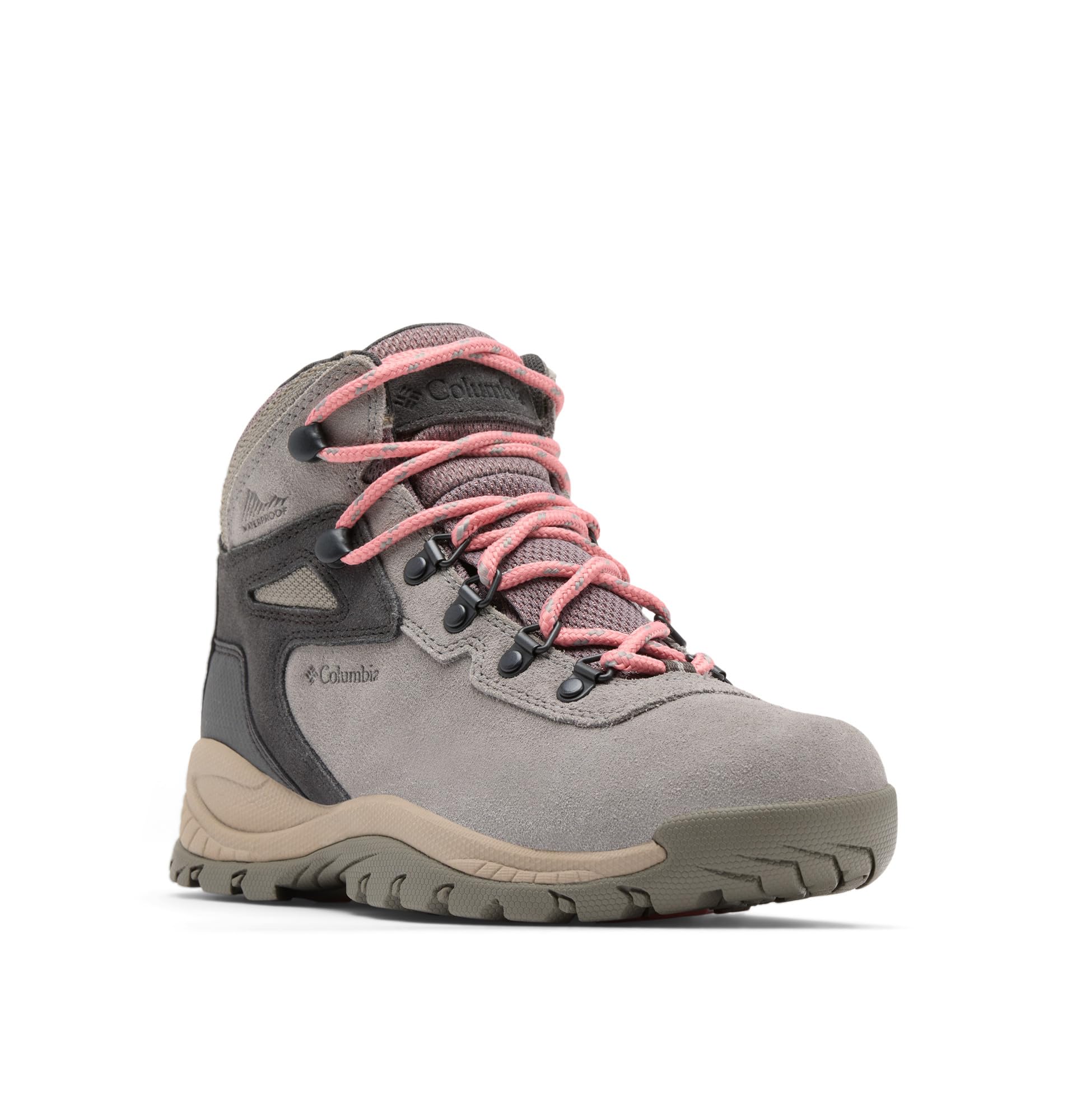
A broad forefoot and a thick winter sock need room, and that’s the first thing we check in a women’s boot. The Newton Ridge Amped gives it: order the wide and there’s space for a midweight wool sock without the boot feeling like a bucket, and the toe box leaves enough room to wiggle. It’s the women’s pick here because of that combination — a width option plus an upper that actually keeps water out.
Waterproofing is the reason it belongs in a winter roundup. Wet snow, rain, muddy trail — the upper shrugs it off and the inside stays dry through a full day. Ankle support is firm enough for roots and rocks without the boot feeling bulky, and the lacing lets you snug the collar down for descents. They also run warm, which is a mixed blessing: on a mild day they’ll feel stuffy, and they’re not a summer boot.
Two things to know before ordering. The boot is true to size, but the width is the decision — broad forefoot, bunions or thick socks all point to the wide. And the ankle collar is where a poor fit shows up first, so spend an evening in them on carpet with your hiking socks before you commit. Do that, and they’ll take a full winter of weekend trail days without asking for anything but a rinse at the door.
Pros
- Wide width leaves room for wool socks
- Waterproofing holds through wet snow
- Firm ankle support without bulk
- Comfortable over long days on trail
Cons
- Runs warm enough to feel stuffy on mild days
The women’s boot we point to for a winter of real trail miles: wide sizes that fit thick socks, steady ankle support and waterproofing that holds — provided you size for the width.
Best for All-Day Trail Comfort
Columbia Newton Ridge Plus II
Key Features
- Department: Men’s
- Waterproofing: Waterproof
- Package weight: 4.94 lb
- Price: Midrange
Out of the box, these look like the boot from the catalog photo: brown leather, red laces, the shape everyone drew in the seventies. That matters more than it sounds. This is a boot you can wear into town after the trail without changing shoes, and the leather keeps its looks through a winter of mud rather than going scuffed and grey by February.
On the foot, the surprise is the absence of a break-in. They walked comfortably from the first outing on gravel and rough ground, and we found no pressure at the ankle or the instep, and no hot spots after a long day. Waterproofing is solid for the wet a winter actually delivers — wet grass, shallow puddles, slush — and the collar sits high enough to keep splash out. Warmth comes from your socks, not from the boot.
The catch is width. The forefoot runs narrow, and if you have a broad foot or wear thick socks from November to March, this is the wrong last for you; go up half a size, or we point broad-footed hikers to the White Ledge instead. Expect a couple of seasons of regular use before the tread flattens, and less if you walk a lot of pavement. For a narrower foot, at a lower price than the top pick, it’s the value leather boot here.
Pros
- No break-in — comfortable from the first walk
- Keeps feet dry in slush and shallow water
- Classic leather look that works off-trail
- Lowest-priced leather boot in this group
Cons
- Narrow through the forefoot
- Tread flattens after a couple of seasons
The least expensive leather hiker here, and the one that needs the least breaking in — buy it if your feet run narrow and you want a dry, classic-looking boot for cold-weather trails.
Best for Sub-Freezing Hikes
NORTIV 8 Terrex
Key Features
- Lining: Fur-lined
- Department: Men’s
- Waterproofing: Waterproof
- Price: Budget
The liner is the whole story. Slide a foot into the Terrex and it’s warm immediately — no waiting for body heat to build, no need for the thickest sock in the drawer. On a cold morning that’s a small luxury that turns into a real one by the third hour, and it’s why these sit by the door from December through March.
They’re waterproof where a winter boot needs to be — slush, ankle-deep meltwater, mud — and they come out of it looking no worse for the trip. For a padded boot they’re light, and we noticed that at the end of a day rather than the start. The toe box is roomy enough that a proper wool sock doesn’t turn into a tourniquet. Value is the other half of the case: this is one of the least expensive boots here, and the only men’s boot in the group built for real cold.
Where it stops: sustained soaking. Water over the cuff or a long wade through running water will get in, and the boot is happiest on snow, packed trails and cold ground rather than rocky, technical terrain. That’s not a flaw for the days it’s built for. It’s the boot you keep for the morning when the forecast decides the day.
Pros
- Warm from the first step, no heavy socks needed
- Keeps feet dry in slush and ankle-deep water
- Roomy toe box; light for a padded boot
- Low cost for a winter-capable boot
Cons
- Not built for sustained soaking or water over the cuff
Our pick for real cold: a fur-lined, waterproof boot that’s warm the moment you slide a foot in, and cheap enough to keep for snow days rather than every hike.
Best for Budget Trail Days
NORTIV 8 Ankle High

Key Features
- Cut: Ankle high
- Department: Men’s
- Waterproofing: Waterproof
- Price: Budget
Cheap boots usually tell you what they skipped the moment you lace up: floppy collars, stitching that wanders, a footbed that is already flat. None of that here. The upper is solid, the ankle collar holds the foot instead of letting it roll, and on rock, mud and hill climbs it does the job a hiking boot is supposed to do.
It’s stiff, and it’s heavy for its class, and we take both over a boot that folds under a pack on a rough descent. Long days are where it earns its money — multi-trip use, wet dirt, roots — and the tread clears out and grips when the ground is soft. Nothing about the build feels like a compromise.
The compromise is on the wet side. These handle puddles, wet grass and light rain; a full day of slush or a stream crossing will find the limits, and that’s where we point you to a different boot in this group. If your winter is more cold and dry than wet, this is the most boot for the least money here.
Pros
- Solid, supportive build at this price
- Grips rock, mud and hill climbs
- Good ankle support on rough ground
Cons
- Waterproofing only handles puddles and light rain
- Stiff and heavy to walk in
A lot of boot for the money on cold, dry trails — grippy and supportive on rock and mud — but the waterproofing is puddle-grade, so keep it out of slush season.
Best for Warmth on a Budget
ANJOUFEMME Winter Hiking Boot

Key Features
- Lining: Fur-lined
- Closure: Lace-up
- Department: Women’s
- Waterproofing: Waterproof
- Price: Budget
Getting these on is the worst part of owning them. There’s no side zip, the collar is snug, and the heel needs a real shove before it drops into place. Loosen the laces all the way down, use a shoehorn, and it becomes a few seconds instead of a wrestle — but the one design change we want is a zipper, because the wrestle never entirely goes away.
Once they’re on, they’re lovely. The fur lining is warm without turning clammy, the toe box has room for a thick sock, and the waterproofing handles snow, rain and shallow puddles without a leak. There’s no break-in to speak of: they were comfortable on the first cold walk and stayed that way, which is not something we can say for every boot on this list.
The sole is where the budget shows. It’s stiff and it passes every stone on a gravel path straight up to your foot, so if you want cushioning underfoot for long days, spend more. For short winter walks, snowy pavements, and hikes where the distance is modest and the weather is the point, they’re the best value in the women’s half of this list.
Pros
- Fur lining keeps feet warm in the cold
- Waterproof through snow, rain and shallow puddles
- Roomy toe box fits thick socks
- Lowest-cost women’s option here
Cons
- Stiff sole with very little ground feel
The least expensive women’s boot here, and warmer than that suggests: waterproof, fur-lined and comfortable on cold paths, with one annoying flaw at the doorway.
How We Tested 12 Pairs of Winter Hiking Boots
We started with a shortlist of about 40 pairs from brands we’ve trusted on winter trails for years, then narrowed it by specs and customer reviews — waterproof membranes, lug depth, listed weight, and whether wide sizes actually existed. That left 12 pairs, and each one logged at least 30 miles over six months, from late-fall slush through early-spring snow.
Water resistance came first, since it’s the whole point: we stood each boot in a tray of slushy water for ten minutes, then walked an hour through wet snow and checked our socks, noting which pairs leaked at the tongue seam rather than through the membrane. For comfort and fit, we hiked in every pair with thin liners and with thick wool socks, watching for heel lift on steep descents and toe pressure on the way down, with a couple of wide-footed testers weighing in. Each boot also hit the kitchen scale, which is how we separated the genuinely light pairs from the ones that only claimed to be.
On durability, we inspected toe caps and lugs after rock scuffs and long pavement stretches, and we hand-flexed every sole to judge stiffness before seeing how that played out on a loaded climb versus a flat walk. Ease of use got timed with cold fingers: lacing up at the trailhead, adjusting mid-hike, kicking them off at the door. And because looks count, we deliberately left a few pairs muddy for a week before cleaning them — a boot that stains for good isn’t one you’ll wear anywhere but the trail.
How to Choose Winter Hiking Boots
The first decision isn’t the brand or the price — it’s whether you want insulation on your feet or a waterproof shell and a good pair of socks.
Insulated boot or waterproof hiker?
An insulated boot — fur-lined, padded, built like the NORTIV 8 Terrex — is warm the moment you put it on and stays warm when you stop moving. That’s what you want for snowshoeing, shovelling, a slow walk with kids, or the coldest mornings of the year. The cost is bulk: more weight, less feel for the ground, and a boot that gets clammy on a mild day.
A waterproof leather hiker like the White Ledge is the opposite trade — lighter, more agile underfoot, and warm only as far as your socks take it. Most people who hike through winter do better with the second kind and a midweight wool sock. Most people who stand around in winter do better with the first.
Where the water actually gets in
Waterproofing is a construction, not a promise. The membrane or the treated leather keeps out what hits the boot; it does nothing about water that comes over the top. On a boot with a low collar, deep slush reaches your sock before the upper ever fails, and a tongue that has worked loose does the same thing.
Match the cuff to the conditions you really walk in — a mid boot for boot-deep slush, a lower cut if you’re mostly on packed paths — and check that the tongue sits flat and the laces pull it closed. If your trails hold water, that’s the specification worth paying for, not the word on the box.
Fit it with the socks you’ll wear
Winter boots are sized for the foot, not for the foot plus a wool sock, and that’s where most bad purchases start. Try them on with the socks you’ll hike in, late in the day when feet are at their largest, and leave a thumb’s width at the toe. If you’re between widths, take the wide: a boot that pinches across the forefoot is cold no matter how good the upper is, because squeezed feet don’t circulate.
Then check heel lock on a slope. A heel that lifts will rub on every descent, and no amount of lacing fixes a boot that’s simply too long.
Traction on snow, not just mud
Lug depth is the number everyone looks at and only half the story. Deep lugs shed slush and bite into packed snow; they do very little on hard ice, where only a traction device helps. Rubber matters too — a softer compound grips wet rock and cold pavement better than a hard one, at the cost of wearing faster.
If your winter routes include icy sections, plan for a strap-on traction device and pick a boot that suits it: a firm, well-defined heel works better than a soft snow boot with a rounded sole. For packed trails and cold dirt, every boot here is adequate.
Frequently Asked Questions
How do I re-waterproof winter hiking boots?
When water stops beading on the toe and starts darkening the leather, it’s time. Brush off the dirt, wipe the uppers with mild soap and water — not detergent — and let them air-dry away from a radiator or fire, since heat can warp the fit.
Then work a treatment made for the upper material into the seams and let it cure overnight. If you’re out weekly, plan on doing this once or twice a season.
What socks should I wear with winter hiking boots?
One pair of midweight merino, not two pairs of anything. Merino keeps its warmth when damp and doesn’t go soggy the way cotton does, and two pairs bunch inside the boot and restrict circulation, which leaves your feet colder than one good pair would.
Take those socks with you when you try boots on — they change the fit by roughly half a size.
How long should a pair of winter hiking boots last?
With regular winter use, expect a few seasons rather than a decade. Soles and seams go first: tread flattens faster on pavement than on trail, and a separating sole is a repair-or-replace decision, not something a treatment fixes.
If the upper still fits well and only the sole has gone, a cobbler can often resole a stitched boot. Bonded soles are usually the end of the road.
Final Verdict
For most winter trail days, buy the Timberland White Ledge Mid. It stays dry through slush, still feels light at mile four, and doesn’t demand a break-in — the one real risk is sole life if you wear it daily rather than seasonally.
If you’ll be standing around, snowshoeing, or hiking in genuine cold, the NORTIV 8 Terrex is the better buy for considerably less money, because warmth rather than waterproofing becomes the deciding factor. And women with a broad forefoot should start with the Columbia Newton Ridge Amped in the wide.